Key takeaways
- Rankscale is a solid AI rank tracking tool, particularly for agencies that need clean dashboards and multi-client reporting
- Promptwatch covers the full GEO loop: tracking, content gap analysis, AI content generation, crawler logs, and traffic attribution in one platform
- If you only need to monitor where your brand appears in AI answers, either tool works -- but Rankscale stops there
- If you want to actually improve your AI visibility (not just measure it), Promptwatch is the more complete option
- Pricing is comparable at entry level; the gap widens at scale when you factor in what you'd need to buy separately to replicate Promptwatch's full feature set
The GEO tool market has gotten crowded fast. Two years ago, barely anyone was tracking brand visibility in ChatGPT or Perplexity. Now there are dozens of platforms claiming to do it, and the differences between them matter a lot depending on what you actually need.
Rankscale and Promptwatch are two of the more frequently compared options in 2026. They overlap on the basics -- both track how your brand appears in AI-generated answers across multiple models. But they diverge pretty sharply once you get past that surface-level description.
This guide breaks down what each platform actually does, where the real differences are, and which one fits which use case.
What Rankscale does
Rankscale is an agency-focused AI visibility tracking platform. The core product is built around monitoring: you set up prompts, it queries AI engines, and you get dashboards showing your brand's visibility scores, citation rates, and how you compare to competitors.
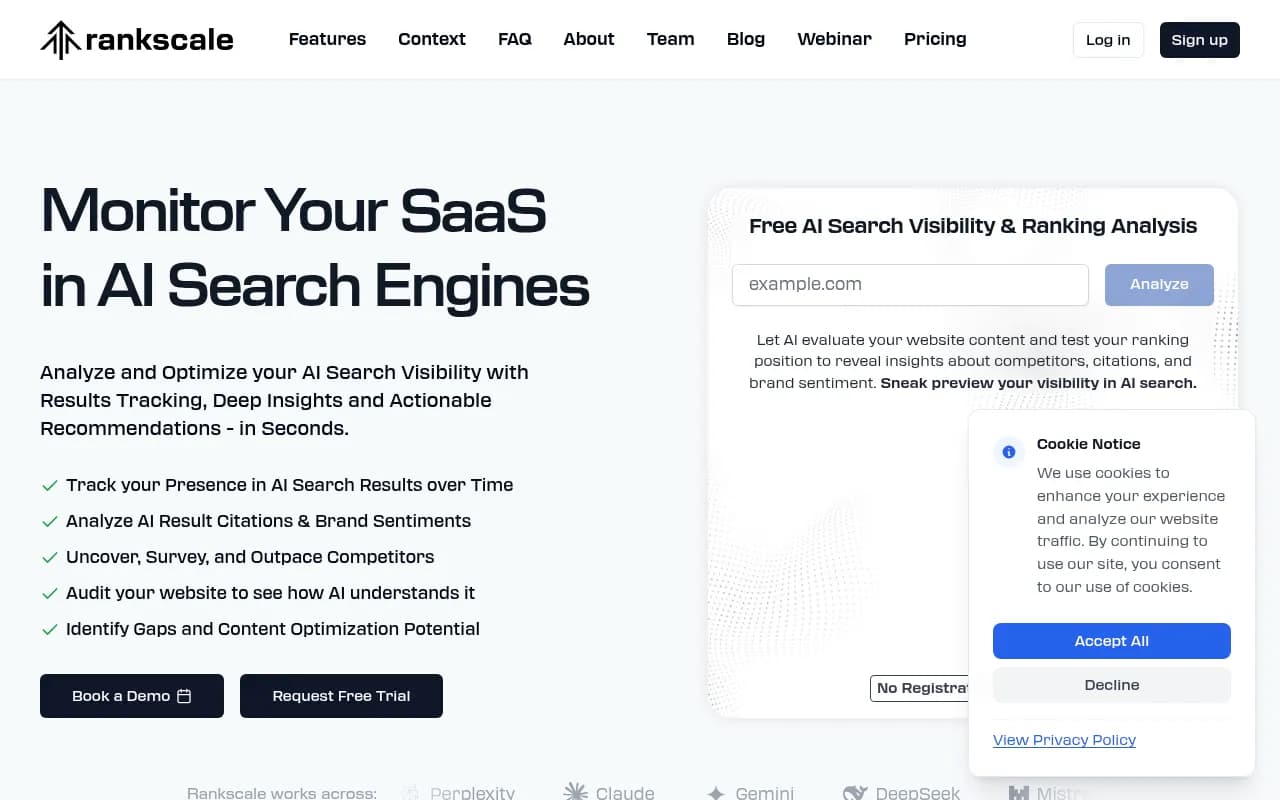
It's clean, well-designed, and reasonably straightforward to use. Agencies in particular seem to like it because the reporting interface works well for client presentations. You can track visibility across several AI models, set up competitor comparisons, and get a sense of where you're winning and losing in AI-generated answers.
What Rankscale doesn't do is tell you what to do about the gaps it finds. It shows you the problem. The fixing part is on you.
What Promptwatch does
Promptwatch is built around a different premise: tracking is only useful if it leads to action. The platform covers the same monitoring ground as Rankscale -- prompt tracking, citation analysis, competitor visibility, multi-model coverage -- but wraps it in a full optimization workflow.

The core loop looks like this:
- Find the gaps: Answer Gap Analysis shows which prompts competitors are visible for but you aren't. You see the specific topics and questions AI models want to answer but can't find on your site.
- Create content that fills them: Content Agents generate articles, listicles, and comparison pages grounded in real prompt data, citation patterns, and competitor analysis. Not generic filler -- content designed around the exact gaps the data surfaces.
- Track what changes: Page-level tracking shows which pages are getting cited, by which models, and how often. Agent Analytics logs AI crawler activity in real time, so you can see when a page gets crawled and when it starts generating citations.
That third step is where Promptwatch closes the loop in a way most tools don't. You can see the timeline from "we published this page" to "Perplexity started citing it" -- and connect that citation activity to actual traffic and revenue.
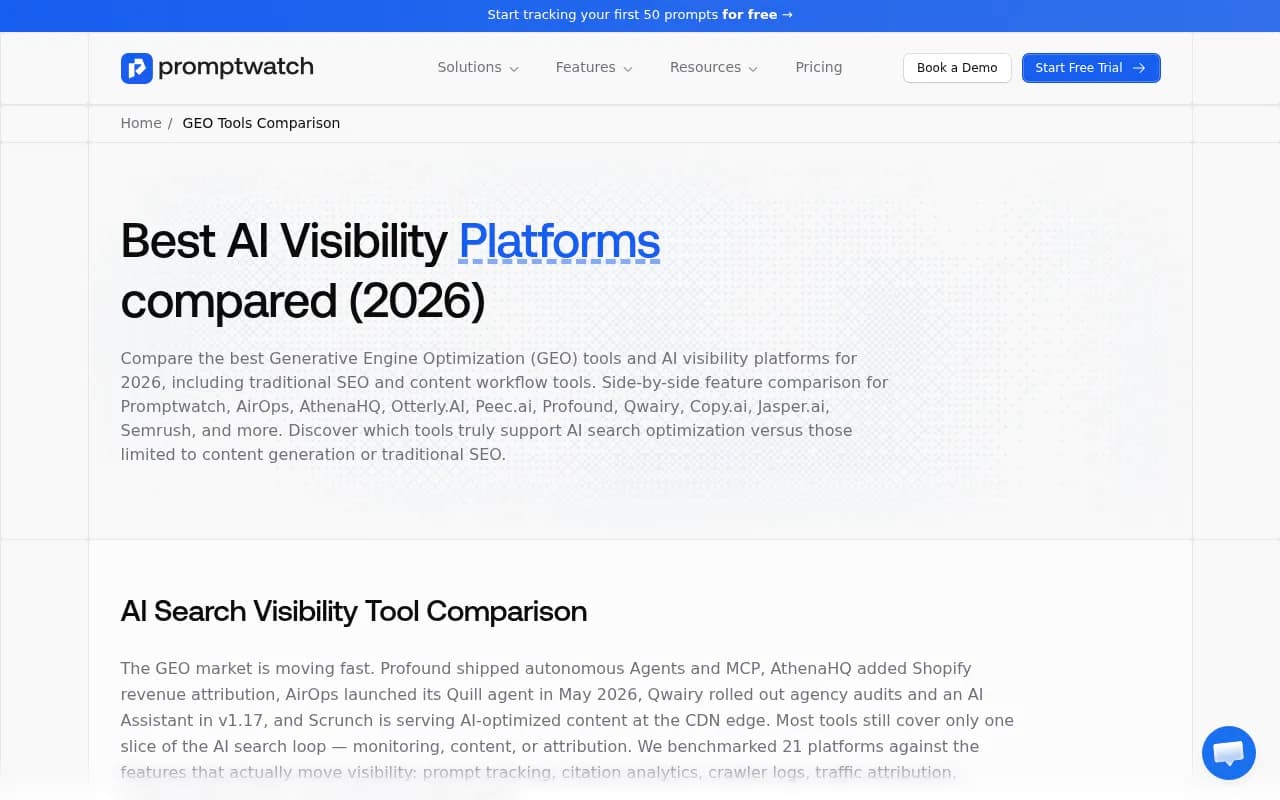
Feature comparison
Here's a direct side-by-side of what each platform covers:
| Feature | Rankscale | Promptwatch |
|---|---|---|
| AI rank/visibility tracking | Yes | Yes |
| Multi-model coverage | Yes (several) | Yes (10 models) |
| Competitor visibility comparison | Yes | Yes |
| Prompt volume & difficulty scoring | Limited | Yes |
| Answer gap analysis | No | Yes |
| Content brief generation | No | Yes |
| AI content generation (articles, listicles) | No | Yes |
| AI crawler logs / agent analytics | No | Yes |
| Page-level citation tracking | No | Yes |
| Traffic attribution from AI search | No | Yes |
| Reddit & YouTube insights | No | Yes |
| ChatGPT Shopping tracking | No | Yes |
| Offsite citation analysis | No | Yes |
| Multi-language / multi-region | Limited | Yes |
| Google Search Console integration | No | Yes |
| Looker Studio / API | No | Yes |
| Agency white-labeling | Yes | Yes (Enterprise) |
The monitoring columns are close. Everything below that line is where the platforms diverge.
Where Rankscale works well
Rankscale makes sense in a few specific scenarios:
You just want a monitoring dashboard. If your team's job is to report on AI visibility -- not necessarily to improve it -- Rankscale gives you a clean, presentable output. The dashboards are built with client reporting in mind.
You're an agency with many clients at different maturity levels. Some clients aren't ready for a full GEO optimization workflow. They want to know if they're visible in ChatGPT. Rankscale answers that question without overwhelming them with data they won't act on.
You already have content and SEO teams who can act on the data independently. If you have writers and strategists who can take a visibility gap and figure out what to do with it, you don't necessarily need the content generation layer. Rankscale gives you the signal; your team handles the response.
Where Promptwatch goes further
The honest case for Promptwatch comes down to one question: what happens after you see the gap?
Most GEO tools -- Rankscale included -- stop at "here's where you're invisible." That's genuinely useful information, but it leaves a big gap between insight and action. You still have to figure out what content to create, brief a writer, publish it, and then manually check weeks later whether anything changed.
Promptwatch compresses that cycle. The Answer Gap Analysis doesn't just show you missing topics -- it shows you the specific prompts competitors are winning, the volume of those prompts, and a difficulty score so you can prioritize. The Content Agents then generate a draft article or brief grounded in that data. And the Agent Analytics logs tell you when AI crawlers visit the new page and when citations start appearing.
For teams that are actively trying to grow their AI search presence (not just measure it), that end-to-end workflow is a meaningful difference.
A few specific capabilities worth calling out:
AI crawler logs. This is rare in the market. Promptwatch shows you real-time logs of GPTBot, ClaudeBot, PerplexityBot, and others hitting your site -- which pages they read, which they skip, and any errors they encounter. Most competitors don't have this at all. It's the difference between guessing why you're not being cited and actually knowing.
ChatGPT Shopping tracking. If you sell products, this matters. Promptwatch tracks when your brand appears in ChatGPT's shopping recommendations and product carousels -- a channel that's growing fast and that almost no other tool monitors.
Reddit and YouTube insights. AI models heavily cite Reddit threads and YouTube videos in their answers. Promptwatch surfaces which discussions are influencing AI recommendations about your category, so you can engage in those channels strategically. Rankscale doesn't cover this.
Pricing comparison
Both platforms offer tiered pricing, though the structures are a bit different:
| Plan | Rankscale | Promptwatch |
|---|---|---|
| Entry | ~$49/mo | $99/mo (Essential: 1 site, 50 prompts, 5 articles) |
| Mid-tier | ~$149/mo | $249/mo (Professional: 2 sites, 150 prompts, 15 articles, crawler logs) |
| Growth | ~$299/mo | $579/mo (Business: 5 sites, 350 prompts, 30 articles) |
| Agency/Enterprise | Custom | Custom |
| Free trial | Yes | Yes |
Rankscale is cheaper at entry level, which matters if you're just starting out or running a lean operation. But the comparison gets murkier when you factor in what you'd need to add to replicate Promptwatch's full feature set -- a separate content tool, a crawler monitoring solution, a traffic attribution layer. Those add up quickly.
If all you need is monitoring, Rankscale's lower price point is a real advantage. If you need the full optimization stack, Promptwatch's pricing reflects what it actually replaces.
What other tools in this space do
It's worth knowing where Rankscale and Promptwatch sit relative to the broader market. A few other tools worth knowing:
Otterly.AI -- Good for basic monitoring, similar to Rankscale in scope. No content generation or crawler logs.
Otterly.AI

AthenaHQ -- Monitoring-focused with some competitive analysis features. Lacks content optimization and generation.

Profound -- Strong enterprise feature set, higher price point, no Reddit tracking or ChatGPT Shopping.
Profound

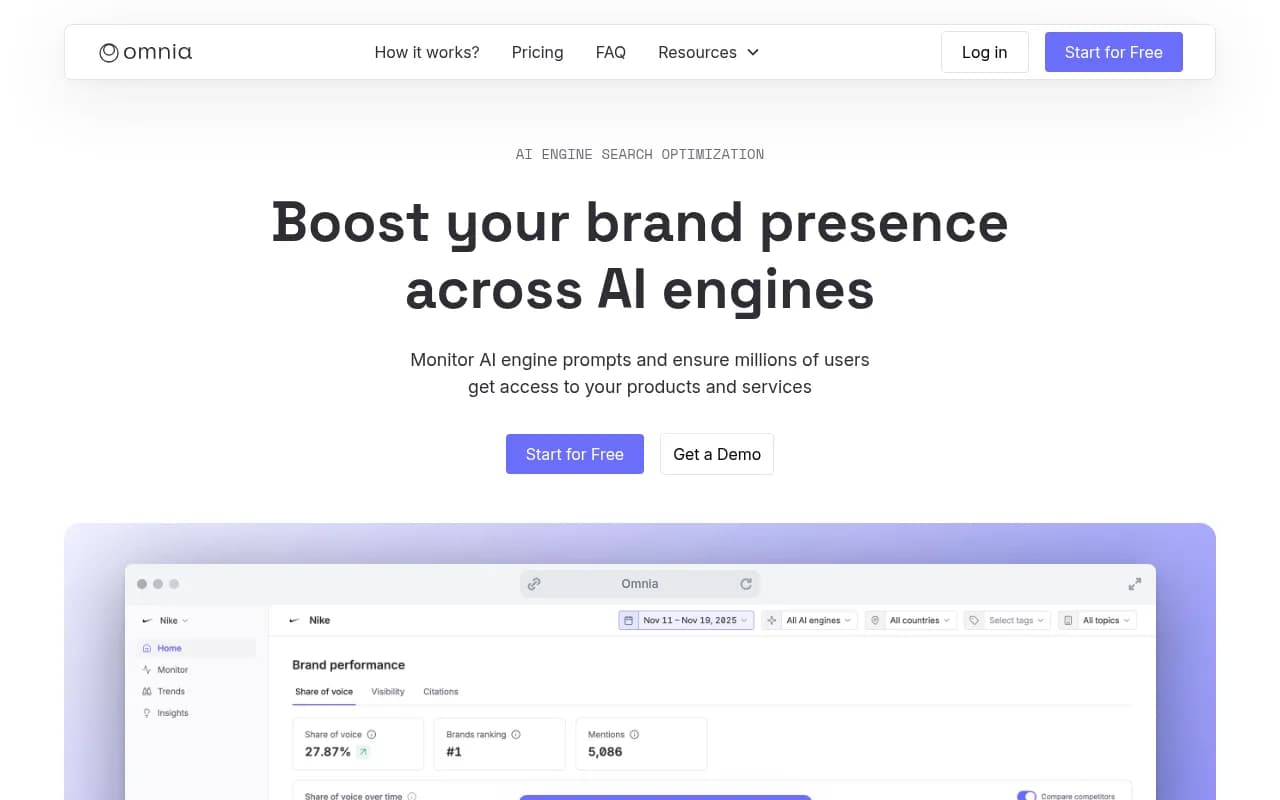
Omnia -- Lighter-weight option focused on measuring brand presence in AI answers. Good for small teams.
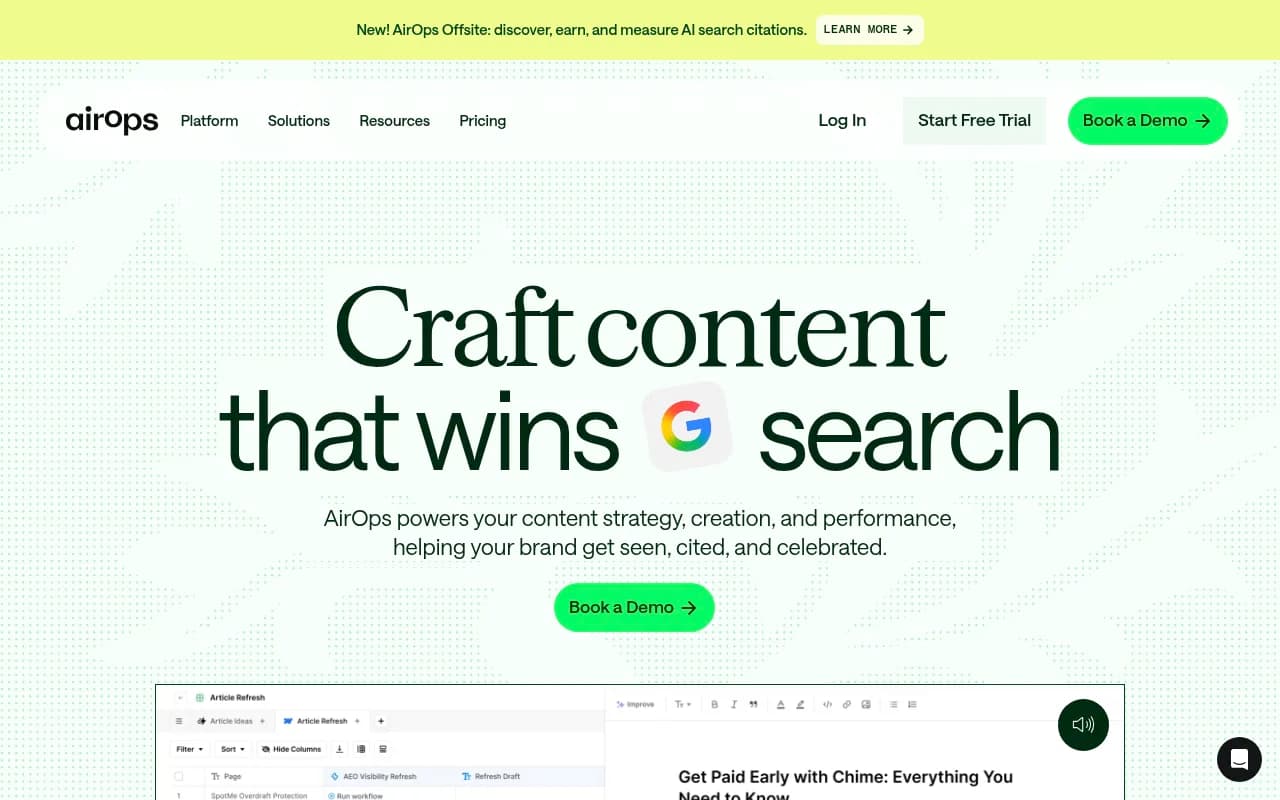
AirOps -- Content engineering platform that launched its Quill agent in May 2026. Stronger on content workflows, less focused on tracking.
The pattern across most of these tools: they cover one slice of the AI search loop well. Monitoring, or content, or attribution -- but rarely all three in one place.
Which one should you choose?
The honest answer depends on what you're trying to accomplish:
Choose Rankscale if:
- You need a clean monitoring dashboard for client reporting
- Your team has the capacity to act on visibility gaps independently
- Budget is a constraint and you don't need content generation or crawler logs
- You're in an early stage of AI search and just want to understand the landscape
Choose Promptwatch if:
- You want to actually improve your AI visibility, not just measure it
- You need content gap analysis and AI-assisted content creation built into the workflow
- You want to understand why AI models are or aren't citing your pages (crawler logs)
- You need to connect AI visibility to traffic and revenue (attribution)
- You're tracking ChatGPT Shopping, Reddit influence, or offsite citations
- You're managing multiple sites or running an agency with clients who want results, not just reports
The GEO market in 2026 is full of tools that show you a problem and leave you to solve it. Promptwatch is one of the few that actually helps you close the loop. That's not a small distinction when the whole point is to rank in AI answers -- not just know that you don't.