Key takeaways
- AirOps is purpose-built for AI search visibility and content engineering -- it covers the full lifecycle from keyword research to publishing to performance tracking, with a strong focus on GEO and AI search citations.
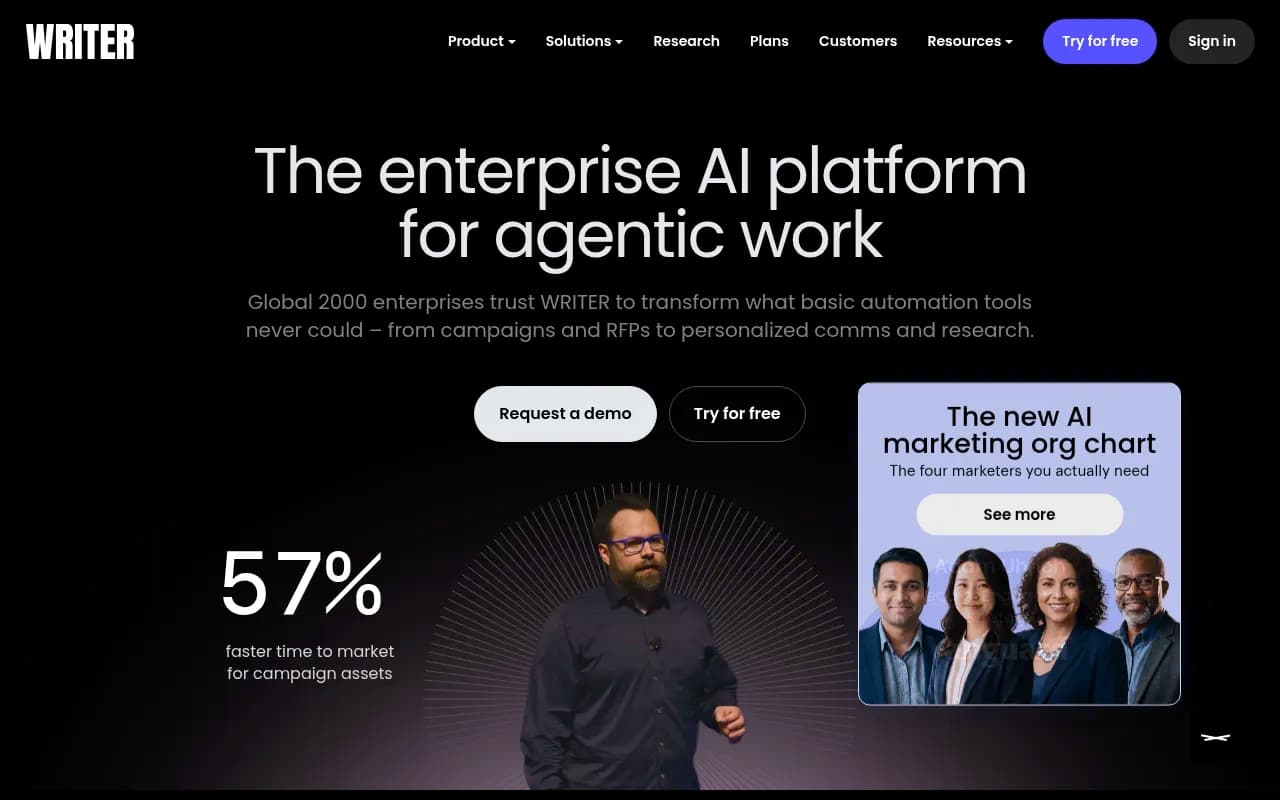
- Writer has evolved into a broad enterprise AI agent platform covering marketing, sales, HR, legal, and operations -- powerful if you need cross-department automation, but often overkill for content teams.
- For content teams focused on ranking in ChatGPT, Perplexity, and Google AI Overviews, AirOps is the more focused choice. For large enterprises deploying AI across multiple departments, Writer makes more sense.
- Pricing is very different: AirOps starts around $199/month with transparent tiers; Writer uses custom enterprise pricing that typically runs significantly higher.
- Neither platform does everything -- teams serious about AI search visibility should consider pairing either tool with a dedicated GEO monitoring platform.
Choosing between AirOps and Writer in 2026 is harder than it looks. Both platforms have "enterprise AI content" in their positioning. Both have real customers with real results. But they're solving fundamentally different problems, and picking the wrong one wastes months of onboarding time and budget.
This guide cuts through the marketing language and gives you a direct comparison: what each platform actually does, where each one wins, what each one costs, and which type of team should use which tool.
What each platform actually is in 2026
Before comparing features, it's worth being honest about what these tools have become -- because both have changed significantly.
AirOps
AirOps started as a workflow automation layer for content teams and has evolved into what it calls a "content engineering platform." The core idea: AI search (ChatGPT, Perplexity, Google AI Overviews) is now a meaningful traffic channel, and winning there requires a different kind of content than traditional SEO. AirOps connects keyword and prompt research, content brief generation, AI-assisted writing, CMS publishing, and performance tracking into one system.
The Webflow case study is a good illustration -- Webflow used AirOps to achieve a 5x increase in content refresh velocity and measurable improvements in AI search citations. Chime went from being cited in 24 to 68 priority AI search questions. Angi saw up to 79% better conversion rates on longtail pages created through the platform. These are content-specific outcomes.

Writer
Writer launched as an AI writing assistant with strong brand voice controls and has since grown into something much larger: a full enterprise AI agent platform. In 2026, Writer deploys agentic workflows across marketing, sales, support, HR, and legal. It handles brand governance, compliance, and enterprise-grade security at a scale that most content teams never asked for.
That's not a criticism -- it's a genuine capability. If you're a VP of Digital Transformation at a 5,000-person company trying to roll out AI across every department, Writer is built for that. But if you're a head of content at a B2B SaaS company trying to get your pages cited in AI search results, you're paying for a lot of infrastructure you won't use.
Feature comparison
Here's a direct side-by-side of the capabilities that matter most for enterprise content teams:
| Feature | AirOps | Writer |
|---|---|---|
| AI search visibility tracking | Yes (core feature) | Limited |
| Content brief generation | Yes | Yes |
| Brand voice controls | Yes | Yes (stronger) |
| Workflow automation | Yes (content-focused) | Yes (cross-department) |
| CMS publishing integrations | Yes | Yes |
| GEO / AI citation optimization | Yes (core focus) | No |
| Agentic workflows (non-content) | Limited | Yes (HR, legal, sales, ops) |
| Enterprise compliance / security | Standard | Enterprise-grade (SOC 2, etc.) |
| Programmatic SEO at scale | Yes | No |
| Prompt/keyword research | Yes | No |
| Performance tracking | Yes | Limited |
| Transparent pricing | Yes ($199/mo+) | No (custom enterprise) |
| Free trial | Yes | Demo-only |
The table makes the core difference clear: AirOps is optimized for content performance in AI search. Writer is optimized for enterprise-wide AI deployment with brand governance.
Where AirOps wins
The full content lifecycle in one place
Most content tools solve one part of the problem. You use one tool for keyword research, another for briefs, another for writing, another for publishing, and then you have no idea what happened to the content after it went live. AirOps connects all of those steps.
The workflow looks roughly like this: identify high-value prompts and keywords that AI models are already answering (and that competitors are winning), generate briefs grounded in that data, produce content with AI assistance, push it to your CMS, and then track whether AI models start citing it. That end-to-end loop is genuinely useful for content teams trying to operate at scale.
GEO and AI search as a first-class concern
Writer doesn't have a meaningful answer to the question "how do I get my content cited in ChatGPT?" AirOps does. For teams where AI search visibility is a priority -- and in 2026, that's most B2B content teams -- this is a significant gap.
AirOps tracks visibility across Google AI Overviews, ChatGPT, Perplexity, and other AI search surfaces, and it connects that visibility data to the content creation workflow. You can see which prompts competitors are winning and build content specifically to close those gaps.
Pricing transparency
AirOps publishes its pricing: $199/month for the professional tier, scaling up from there. You can evaluate it, budget for it, and start a trial without a sales call. Writer requires a demo and custom pricing, which typically means the number is large enough that they'd rather not put it on a webpage.
Where Writer wins
Cross-department enterprise deployment
If your organization needs AI agents handling customer support tickets, generating sales proposals, reviewing legal documents, and producing marketing content -- all with consistent brand voice and enterprise security controls -- Writer is built for that. AirOps isn't.
Writer's strength is governance at scale. When a Fortune 500 company needs to ensure that every piece of AI-generated output across 50 teams stays on-brand, compliant, and auditable, Writer has the infrastructure for it. AirOps doesn't compete here.
Brand voice and compliance controls
Writer's brand voice controls are more sophisticated than AirOps's. It can ingest style guides, terminology lists, and compliance rules, then enforce them across all AI outputs across all departments. For heavily regulated industries (finance, healthcare, legal) where brand and compliance consistency is non-negotiable, this matters.
Established enterprise trust
Writer has been in the enterprise AI space longer and has deeper integrations with enterprise security requirements (SSO, SOC 2, data residency options). If your procurement team has a long security checklist, Writer is more likely to clear it without friction.
The workflow automation question
Both platforms offer workflow automation, but they mean different things by it.
AirOps automation is content-workflow automation: connecting research to briefs to writing to publishing to tracking. The workflows are designed for content teams and SEO teams. They're relatively accessible to non-technical users.
Writer automation is enterprise process automation: AI agents that handle multi-step business processes across departments. It's more powerful in scope but requires more technical setup and organizational buy-in to deploy effectively.
If you're evaluating these tools as a content team, AirOps's automation is more immediately useful. If you're evaluating them as an IT or operations leader, Writer's automation scope is more relevant.
Pricing reality check
AirOps is transparent about pricing. The professional tier at $199/month gives content teams a real starting point. Enterprise tiers scale up, but you can at least get a sense of the cost structure before talking to sales.
Writer doesn't publish pricing. Based on market research and buyer reports, Writer's enterprise contracts typically start in the $30,000-$50,000+ annual range, with larger deployments running significantly higher. That's not inherently wrong -- enterprise software is expensive -- but it means the evaluation process is longer and the commitment is larger.
For a content team at a mid-market B2B company, AirOps is almost certainly the more practical choice on cost alone. For a large enterprise deploying AI across multiple departments, Writer's pricing may be justified by the scope of what it does.
What neither platform does well
Neither AirOps nor Writer gives you deep, standalone AI search monitoring. AirOps has visibility tracking built into its content workflow, but it's oriented around the content you're creating through the platform. Writer has almost no AI search monitoring capability.
If tracking how your brand appears across ChatGPT, Perplexity, Google AI Mode, Grok, Claude, and other AI engines is a priority -- independently of content creation -- you'll want a dedicated platform for that. Promptwatch is worth looking at here: it tracks AI visibility across 10+ models, surfaces citation gaps, and connects visibility data to actual traffic attribution.

For teams using AirOps for content creation, pairing it with a dedicated AI visibility tracker gives you a more complete picture of what's working.
Which tool is right for your team?
The decision comes down to what problem you're actually trying to solve.
Choose AirOps if:
- Your primary goal is ranking in AI search (ChatGPT, Perplexity, Google AI Overviews)
- You need a content workflow that connects research, writing, publishing, and tracking
- You're a content team or SEO team at a B2B company
- You want transparent pricing and a self-serve trial
- Programmatic content at scale is part of your strategy
Choose Writer if:
- You need AI agents deployed across multiple departments (marketing, sales, HR, legal, ops)
- Enterprise compliance, security, and audit trails are non-negotiable requirements
- Brand governance across a large organization is the core problem
- You have the budget and timeline for an enterprise software procurement process
- Content is one of several use cases, not the primary one
Consider alternatives if:
- You need deep AI search monitoring without content creation (look at Promptwatch, Profound, or AthenaHQ)
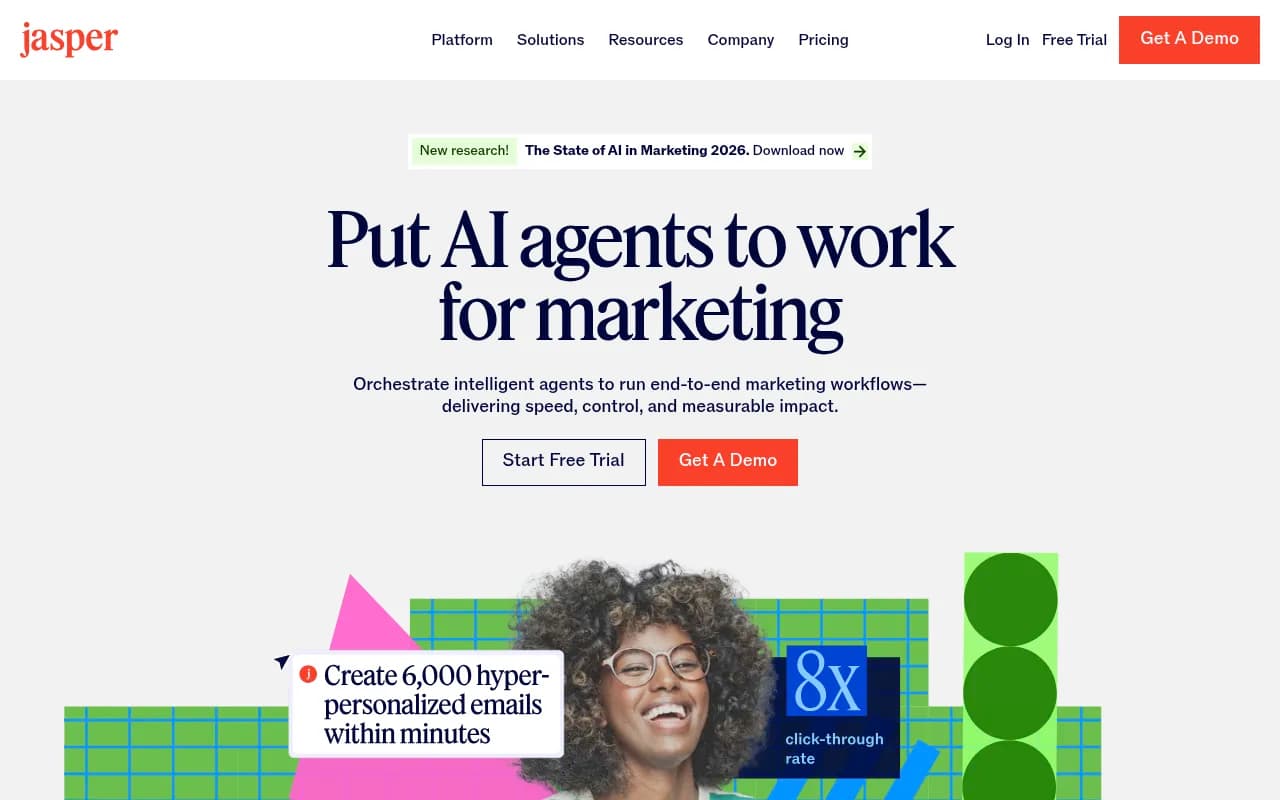
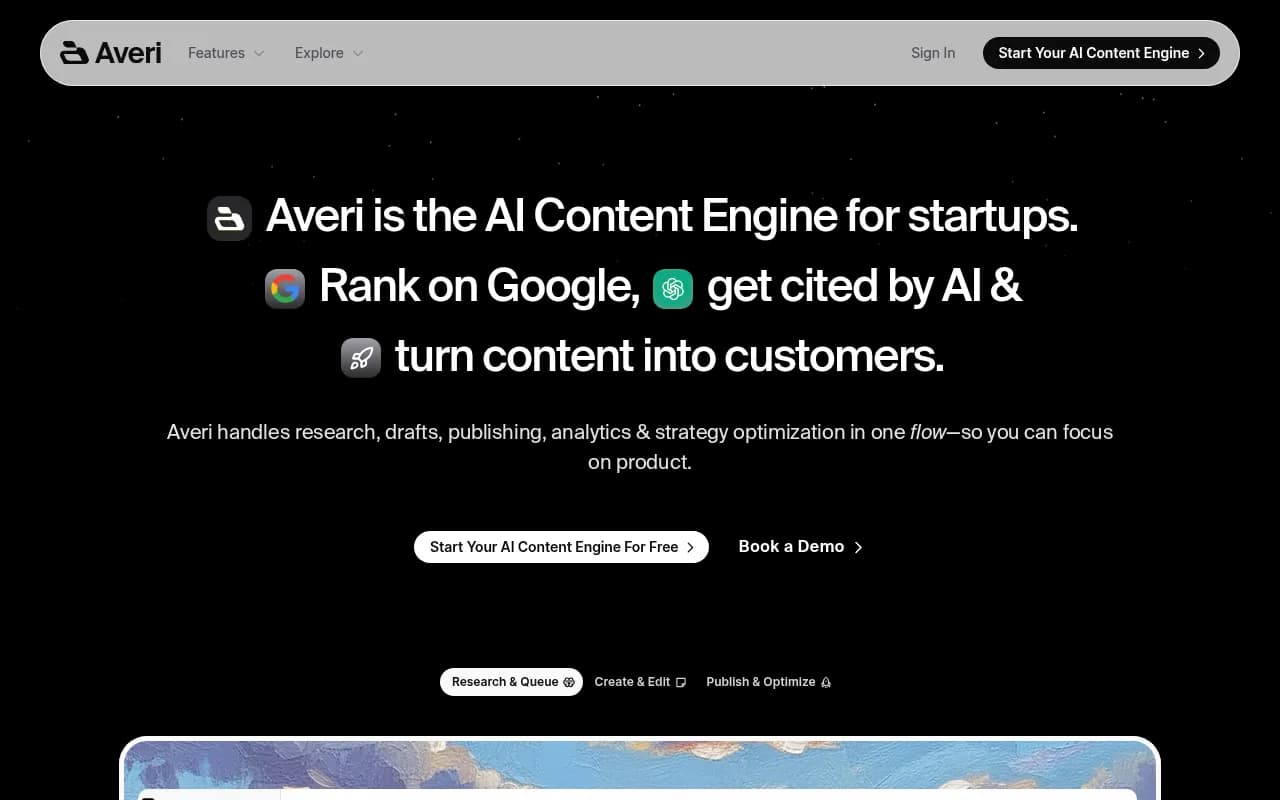
- You want a lighter-weight content tool without enterprise complexity (Jasper, Writesonic, or Averi AI are worth evaluating)
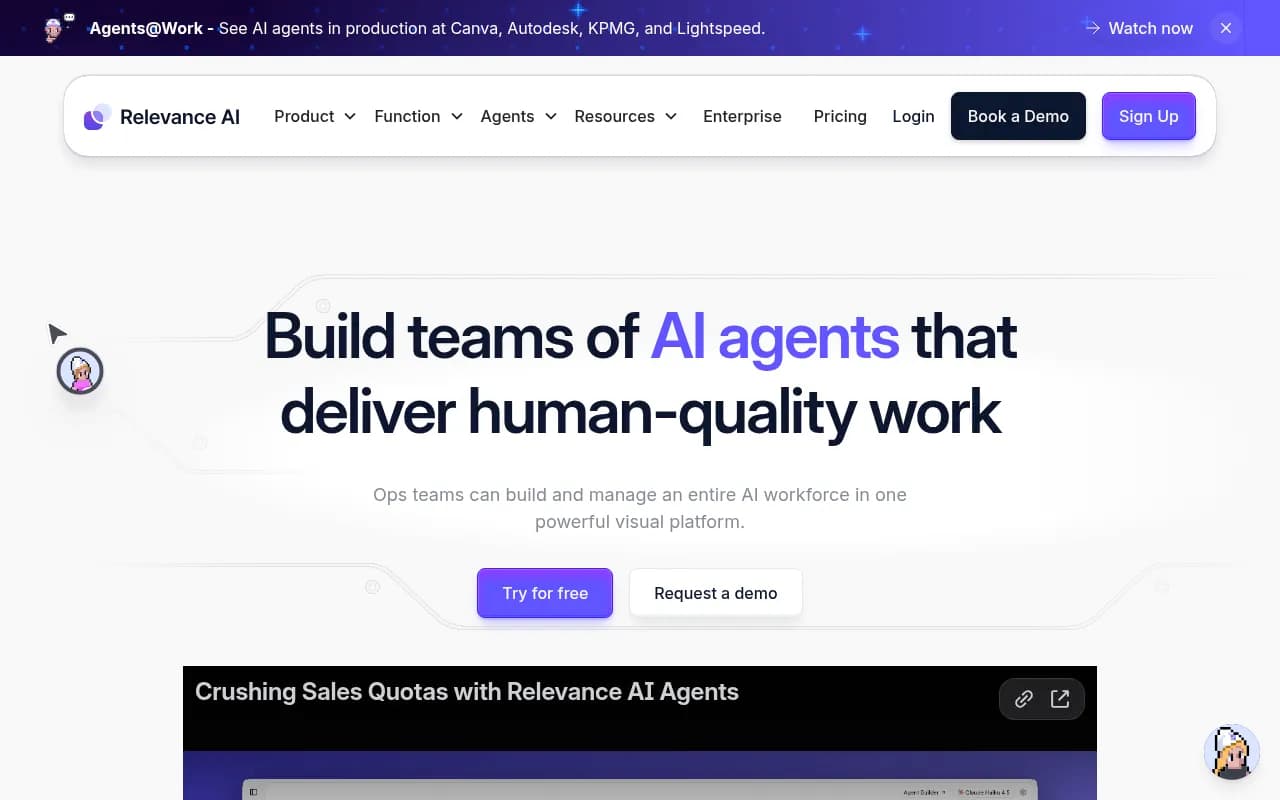
- You need custom AI agent building with maximum technical flexibility (Relevance AI)
A note on the broader competitive landscape
AirOps and Writer are both strong platforms, but the AI content and visibility space has a lot of players in 2026. A few worth knowing about:
- Jasper remains the strongest option for brand-driven marketing content and rapid campaign execution, with 80+ marketing templates and solid style guide enforcement.
- Writesonic has made a real push into GEO and AI search visibility, making it worth considering for teams specifically focused on conversational search.
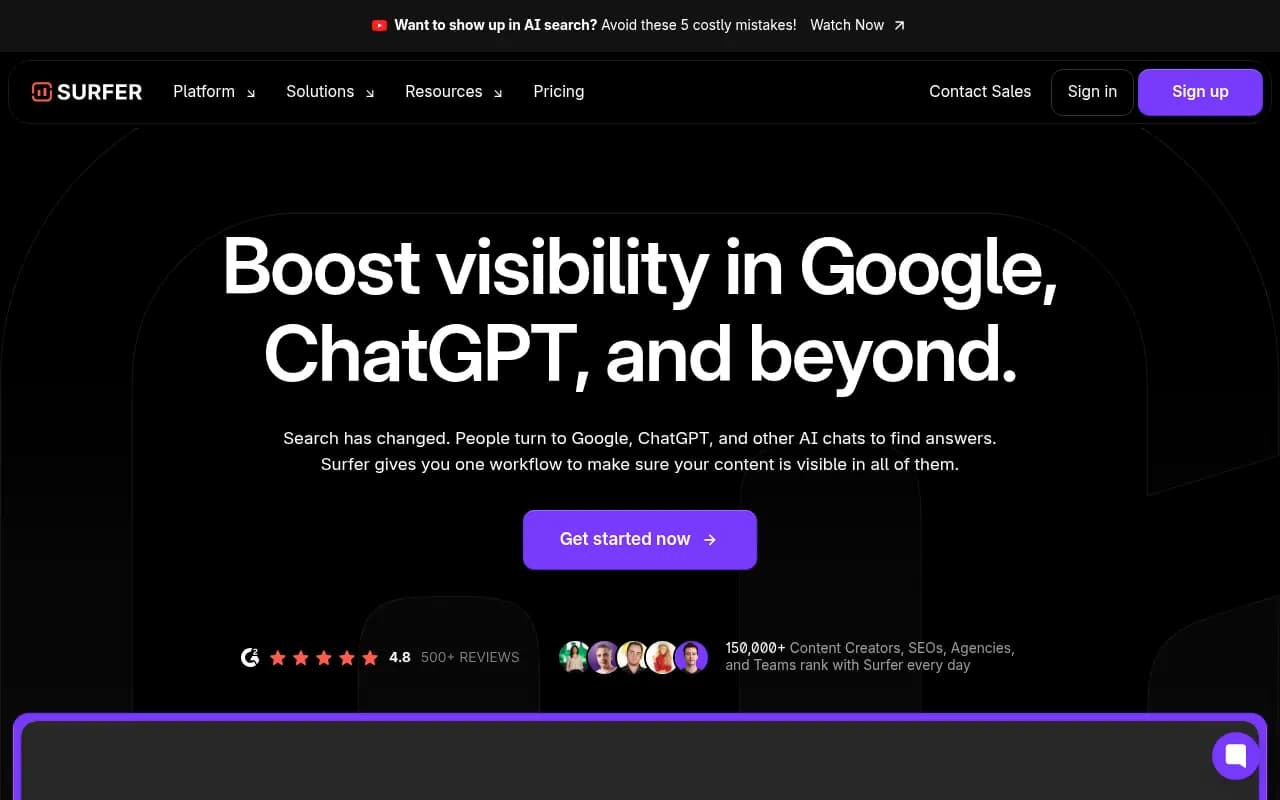
- Surfer SEO is still the deepest on-page optimization tool if traditional SEO is your primary channel alongside AI search.

The honest answer is that no single platform does everything perfectly. Most mature content teams in 2026 are running two or three tools: one for content creation and workflow, one for AI search monitoring, and one for traditional SEO. The question is which combination fits your team's actual workflow and budget.
Bottom line
AirOps and Writer are not really competing for the same buyer. AirOps is for content teams that want to win in AI search. Writer is for enterprises that want to deploy AI across their entire organization with strong governance controls.
If you're a content lead or SEO manager trying to get your pages cited in ChatGPT and Perplexity, AirOps is the more focused, more affordable, and more immediately useful choice. If you're a CTO or VP of Digital Transformation trying to roll out AI at scale across a large organization, Writer's broader platform makes more sense.
The worst outcome is picking Writer because it sounds more "enterprise" and then spending six months trying to get your content team to use a platform designed for a much broader audience. Know what problem you're solving first.