Key takeaways
- All four tools track brand visibility across multiple LLMs, but they differ significantly in what they do with that data
- Peec AI leads on language coverage (115+ languages) and tracking accuracy; good for global brands that need reliable monitoring
- LLMrefs and AICarma are solid entry points for teams new to GEO, with lower price points and simpler interfaces
- Promptwatch is the only platform of the four that closes the full loop: find gaps, generate content, track results -- making it the better choice for teams that want to actually improve their AI visibility, not just watch it

Why this comparison matters in 2026
Tracking your brand in AI search is no longer optional. ChatGPT, Perplexity, Claude, Gemini, and a growing list of AI engines now answer millions of commercial queries every day -- and they do it by citing sources. If your brand isn't one of those sources, you're invisible to a significant chunk of your potential audience.
The problem is that the market for AI visibility tools has exploded. There are now dozens of platforms claiming to help you "rank in AI search," and most of them look similar on a landing page. The real differences show up when you start asking harder questions: Which models do they actually track? Do they help you fix gaps, or just show you where they are? How do they handle multi-language, multi-region queries?
This guide puts four of the most-discussed tools head to head: Peec AI, Promptwatch, LLMrefs, and AICarma. The goal is to give you a clear picture of what each one actually does -- and which one is worth your money depending on where you are in your GEO journey.
What each tool is, in plain terms
Before the comparison table, it helps to understand the basic positioning of each platform.
Peec AI is a monitoring-focused tool built around accuracy and language coverage. It tracks your brand across ChatGPT, Perplexity, Google AI Overviews, and a handful of other models, and it supports 115+ languages -- which is genuinely unusual in this space. The emphasis is on reliable data rather than a broad feature set.

Promptwatch is an end-to-end AI visibility platform. It monitors 10 AI models, surfaces content gaps through Answer Gap Analysis, generates content designed to get cited by LLMs, and tracks traffic attribution back to actual revenue. It's built around a loop: find gaps, create content, measure results.
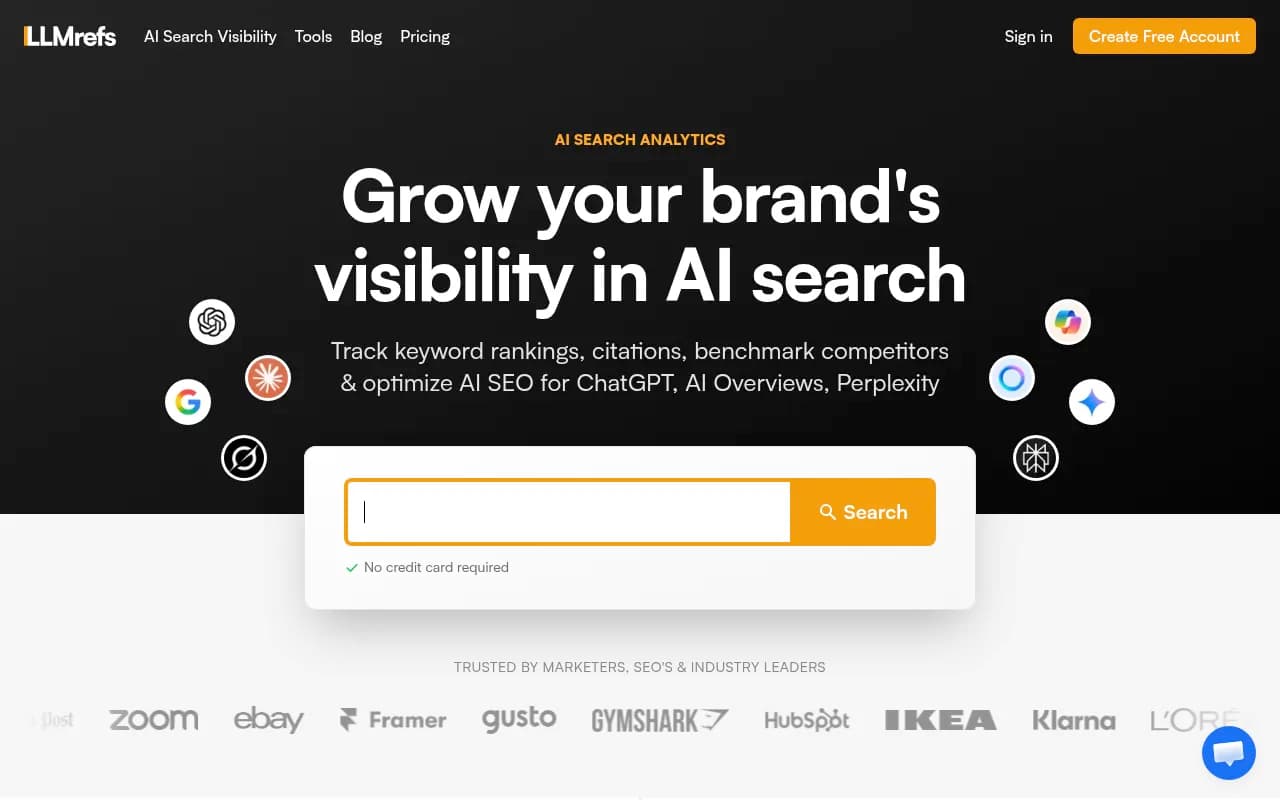
LLMrefs tracks brand visibility across ChatGPT, Perplexity, and nine other AI search engines. It's positioned as a straightforward monitoring tool with a clean interface and competitive pricing. Good for teams that want to get started without a steep learning curve.
LLMrefs
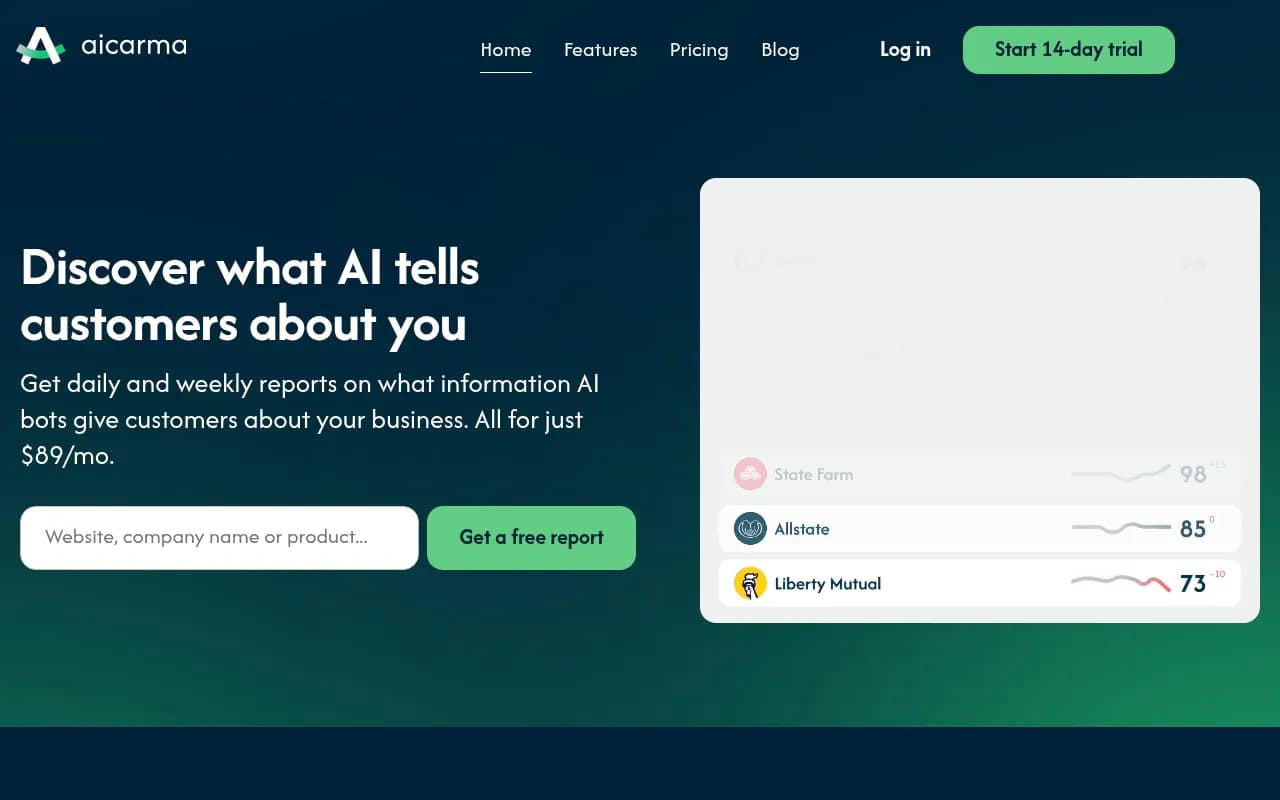
AICarma monitors brand visibility across 14+ language models on a daily basis. It leans into breadth of model coverage and daily refresh rates, which matters if you're tracking fast-moving brand sentiment across a wide range of LLMs.
Feature-by-feature comparison
| Feature | Peec AI | Promptwatch | LLMrefs | AICarma |
|---|---|---|---|---|
| AI models tracked | ChatGPT, Perplexity, AI Overviews + add-ons | 10 (incl. Mistral, Meta, DeepSeek, Grok) | ChatGPT, Perplexity + 9 others | 14+ LLMs |
| Language support | 115+ languages | Multi-language & multi-region | Limited | Limited |
| Content gap analysis | No | Yes (Answer Gap Analysis) | No | No |
| AI content generation | No | Yes (built-in writing agent) | No | No |
| Crawler log monitoring | No | Yes | No | No |
| Reddit & YouTube tracking | No | Yes | No | No |
| ChatGPT Shopping tracking | No | Yes | No | No |
| Prompt volume & difficulty | No | Yes | No | No |
| Traffic attribution | No | Yes (GSC, snippet, server logs) | No | No |
| Citation & source analysis | Basic | Deep (880M+ citations analyzed) | Basic | Basic |
| Competitor heatmaps | Limited | Yes | Limited | Limited |
| Starting price | $85/mo | $99/mo | Freemium available | Varies |
| Free trial | 14 days | Yes | Yes (free tier) | Yes |
The table tells a pretty clear story. Peec AI and LLMrefs are monitoring tools -- they show you what's happening. AICarma adds model breadth. Promptwatch is the only one that also tells you what to do about it.
Peec AI: strong on accuracy, limited on action
Peec AI's main selling point is data quality. The 115+ language support is real differentiation -- most tools in this space are English-first with limited regional coverage. If you're a global brand tracking AI visibility in French, German, Japanese, or Portuguese, Peec AI is one of the few tools that handles this without workarounds.
The 14-day free trial is also generous compared to most competitors.
Where Peec AI falls short is on the "what now?" question. Once you see that your brand is underperforming for a set of prompts, the tool doesn't help you figure out why or what content to create. You're left with data and no clear path forward. For teams that already have strong content operations and just need reliable monitoring data, that's fine. For teams that want a tool to help them actually improve their AI visibility, it's a gap.
Pricing starts at $85/month, which is reasonable for what it offers.
LLMrefs: a clean entry point for GEO beginners
LLMrefs covers a solid range of AI engines and has a free tier, which makes it accessible for smaller teams or individuals just starting to think about AI search visibility. The interface is clean and the setup is quick.
The limitation is depth. LLMrefs doesn't surface why you're being cited (or not), doesn't show you which specific pages are getting picked up by AI models, and doesn't offer any content creation or optimization features. It's a dashboard, not a strategy tool.
That said, if you're a solo marketer or small business owner who just wants to check whether ChatGPT is mentioning your brand when someone asks about your category, LLMrefs gets you there without a significant investment.
AICarma: breadth of model coverage, daily tracking
AICarma's pitch is the number of LLMs it monitors -- 14+ at daily refresh rates. That's genuinely useful if you care about visibility across newer or less-tracked models like Mistral, DeepSeek, or Meta AI, which many tools ignore entirely.
Daily tracking is also a real advantage over tools that only refresh weekly. Brand mentions in AI search can shift quickly, especially after a news event or a product launch, and knowing within 24 hours that something changed is useful.
The trade-off is similar to Peec AI: AICarma is a monitoring platform. It tells you where you stand. It doesn't help you improve your position, generate content, or understand which specific pages are driving (or failing to drive) AI citations.
Promptwatch: the only one built around fixing the problem
The core difference with Promptwatch isn't the number of models it tracks (though 10 is competitive) -- it's what happens after you see the data.
Most AI visibility tools stop at the monitoring layer. You see a dashboard showing your brand mention rate across ChatGPT and Perplexity, maybe a competitor comparison, and that's it. The next step is entirely on you.
Promptwatch is built around a different assumption: that visibility data is only useful if it leads to action. The platform's Answer Gap Analysis shows you the specific prompts where competitors are getting cited and you're not. Not just "you're underperforming in category X" -- the actual questions AI models are answering without referencing your brand, along with what content you'd need to create to close those gaps.
From there, the built-in AI writing agent generates content grounded in real citation data. This isn't generic blog content -- it's articles and comparisons engineered to match the patterns that AI models actually cite. The platform has analyzed over 880 million citations to understand what makes content get picked up by ChatGPT, Claude, Perplexity, and others.
Then the loop closes: page-level tracking shows which of your pages are being cited, by which models, and how often. Traffic attribution (via a code snippet, Google Search Console integration, or server log analysis) connects AI visibility to actual website traffic and revenue.
A few features that none of the other three tools offer:
- AI crawler logs that show when ChatGPT, Claude, or Perplexity crawled your site, which pages they read, and any errors they hit
- Reddit and YouTube tracking, because AI models frequently cite discussions and videos when forming answers
- ChatGPT Shopping tracking for brands that appear in product recommendation carousels
- Prompt volume and difficulty scores, so you can prioritize the prompts worth targeting instead of guessing
The entry price is $99/month for the Essential plan (1 site, 50 prompts, 5 articles). The Professional plan at $249/month adds crawler logs, state/city tracking, and 15 articles per month.
Which tool is right for you?
The honest answer depends on what stage you're at and what you actually need.
If you're a global brand that needs reliable monitoring in multiple languages and you already have a content team that can act on the data, Peec AI's accuracy and language coverage make it worth considering. The 14-day trial is enough time to validate whether the data quality meets your standards.
If you're just starting out and want to understand the basics of AI visibility without spending much, LLMrefs' free tier is a reasonable starting point. Treat it as a learning tool, not a long-term strategy platform.
If model breadth and daily refresh rates are your priority -- say, you're tracking a fast-moving brand situation across a wide range of LLMs -- AICarma's coverage is genuinely broad.
If you want to actually improve your AI visibility rather than just measure it, Promptwatch is the only tool in this comparison that's built for that. The gap analysis, content generation, crawler logs, and traffic attribution form a complete workflow that the other three don't come close to matching. The $99/month entry price is competitive given what you get, and the free trial lets you see the Answer Gap Analysis in action before committing.
A note on what "multi-model tracking" actually means
One thing worth flagging: not all multi-model tracking is equal. Some tools claim to track 10+ AI engines but do so by running the same query through each model once a week and recording whether your brand name appears in the response. That's a very shallow form of tracking.
What matters more is:
- How often queries are refreshed (daily vs. weekly)
- Whether the tool tracks specific pages being cited, not just brand name mentions
- Whether it captures the context of citations (positive, neutral, negative)
- Whether it surfaces the sources AI models are citing (so you know where to publish or optimize)
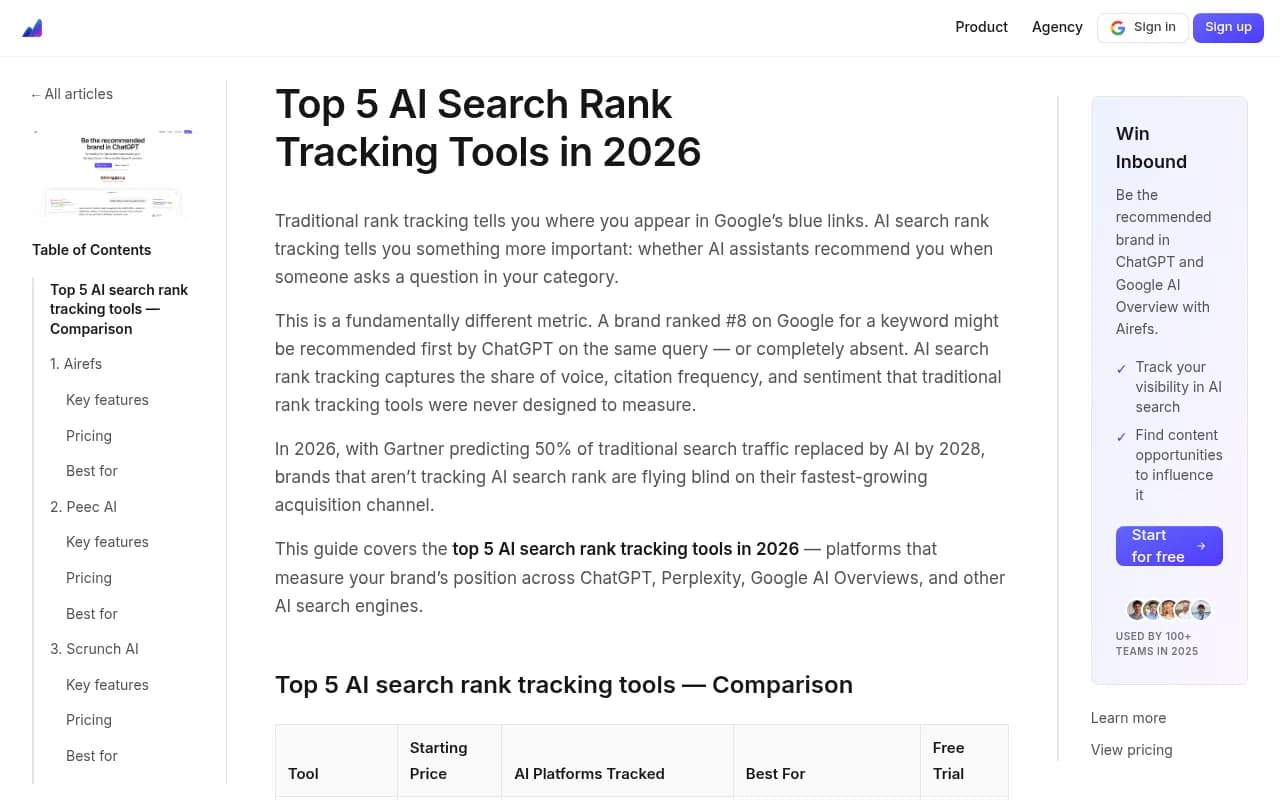
The screenshot above from Airefs' comparison of tracking tools illustrates how starting price and platform coverage vary significantly across the market -- and why those two dimensions alone don't tell the full story.
Among the four tools in this guide, Promptwatch goes deepest on all of these dimensions. Peec AI is strong on accuracy. LLMrefs and AICarma are adequate for surface-level monitoring.
The bottom line
Monitoring your AI visibility is table stakes in 2026. The more interesting question is whether your tool helps you do anything about what you find.
Peec AI, LLMrefs, and AICarma are all legitimate monitoring tools with different strengths -- language coverage, model breadth, and daily refresh rates respectively. If monitoring is all you need, any of them can work depending on your priorities.
But if you're serious about improving how AI models recommend your brand -- not just watching the numbers -- Promptwatch is the only platform in this comparison that's built for that. The combination of gap analysis, content generation grounded in citation data, crawler monitoring, and traffic attribution puts it in a different category from the other three.
Start with the free trial. Run the Answer Gap Analysis on your own brand. The gaps it surfaces will tell you more about your AI visibility strategy than any dashboard metric.