Key takeaways
- Relixir, Bluefish AI, Evertune, and Promptwatch all target enterprise brands, but they solve different problems -- from pure monitoring to full content optimization loops.
- Bluefish AI is built specifically for Fortune 500 scale and regulatory requirements; Evertune focuses on enterprise AI visibility analytics; Relixir positions itself as an end-to-end GEO engine.
- Promptwatch is the only platform in this group rated as a "Leader" across all GEO categories in 2026 comparisons, and the only one that closes the loop from gap identification to content generation to traffic attribution.
- Pricing varies significantly: Promptwatch starts at $99/mo with transparent tiers; Bluefish, Evertune, and Relixir all use custom enterprise pricing with no public rates.
- If you need to actually fix your AI visibility (not just measure it), Promptwatch's built-in content generation and crawler logs put it in a different category from monitoring-first competitors.
The GEO platform market has matured fast. A year ago, most tools were glorified dashboards that told you "ChatGPT mentioned your competitor but not you" and left you to figure out the rest. In 2026, the better platforms have moved beyond that -- but not all of them have moved equally far.
This comparison focuses on four platforms that specifically target enterprise and Fortune 500 use cases: Relixir, Bluefish AI, Evertune, and Promptwatch. They're not the cheapest options in the market, and they're not trying to be. The question is which one actually delivers at enterprise scale.
What "enterprise GEO" actually means in 2026
Before getting into the platforms, it's worth being specific about what enterprise buyers actually need that SMB tools don't provide.
First, scale. A Fortune 500 brand might have dozens of product lines, hundreds of target prompts, multiple languages, and regional variations in how AI models respond. A tool that handles 50 prompts across two AI engines isn't going to cut it.
Second, compliance and security. SOC 2 certification, data residency, SSO, and audit logs matter when procurement and legal are involved. Most lightweight GEO tools skip this entirely.
Third, attribution. Enterprise marketing teams need to connect AI visibility to pipeline and revenue, not just "brand mentions." A dashboard showing citation counts is a starting point, not an answer.
Fourth, and this is where platforms diverge most sharply: the ability to act on what you find. Monitoring tells you where you're invisible. Optimization helps you fix it. Most platforms only do the first thing.
The four platforms at a glance
Relixir
Relixir describes itself as an end-to-end GEO engine for enterprise brands. Its pitch is that it handles the full workflow: identifying where your brand is missing from AI responses, generating content to fill those gaps, and tracking whether that content gets cited.
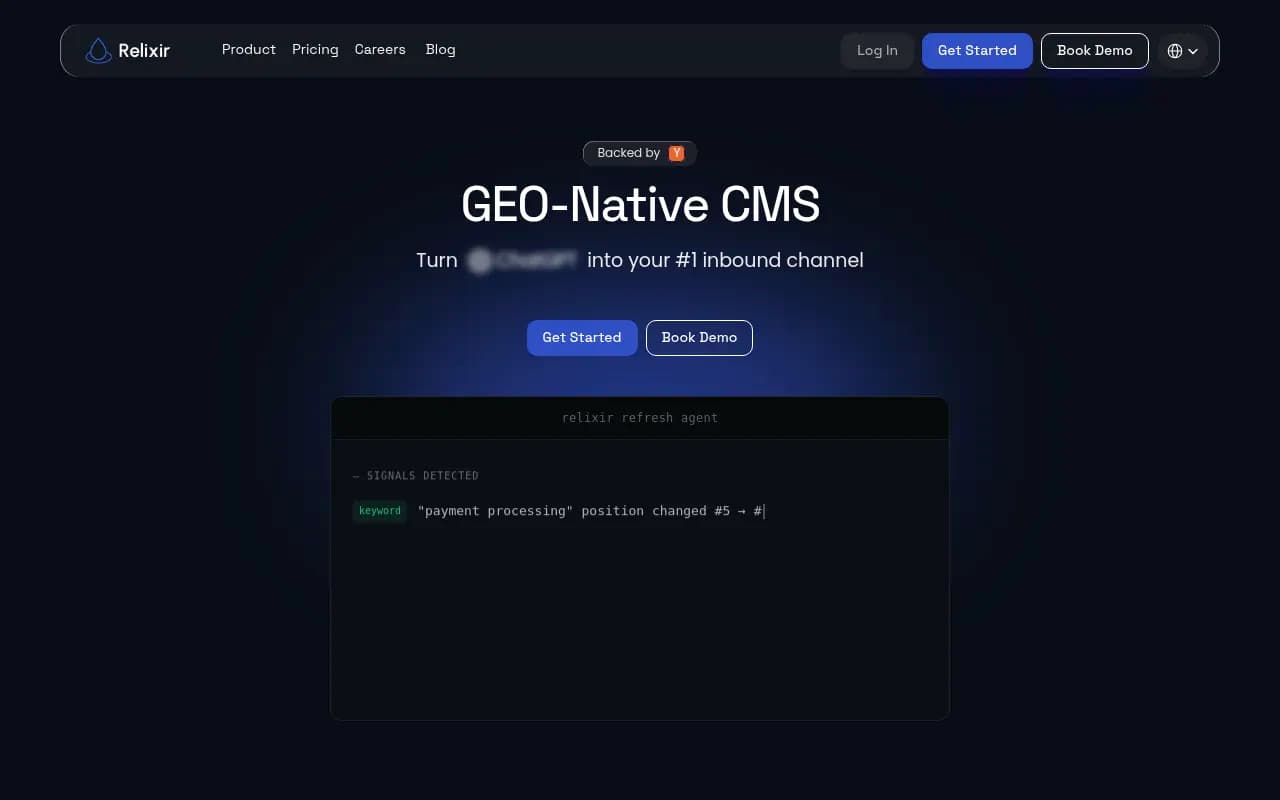
The platform has attracted attention for its focus on what it calls "competitive displacement" -- specifically helping brands appear in AI responses where competitors currently dominate. It tracks multiple LLMs and provides prompt-level analysis.
What's less clear publicly is the depth of its attribution capabilities and how its content generation compares to purpose-built writing tools. Relixir is a newer entrant and pricing is custom/enterprise-only, which makes direct comparisons harder.
Bluefish AI
Bluefish AI has carved out a specific niche: it's built for the scale and compliance requirements of multinational, Fortune 500 brands. Its "AI Brand Architecture" approach is designed around how large organizations structure their brand presence across multiple markets and product lines.
According to LSEO's 2026 platform review, Bluefish's architecture is explicitly designed for the regulatory needs of enterprise brands -- which suggests it's strong on governance, data handling, and multi-market support. It's one of the few GEO platforms that takes compliance seriously as a feature, not an afterthought.
The tradeoff: Bluefish is monitoring-oriented. It shows you where you appear and how you're perceived across AI engines, but it doesn't have the content generation or optimization layer that some competitors offer. For teams with dedicated content resources, that's fine. For teams that need the platform to help them create content that gets cited, it's a gap.
Pricing is custom and enterprise-only -- no public tiers.
Evertune
Evertune positions itself as the enterprise AI visibility platform, with a particular emphasis on analytics depth. It tracks brand mentions across multiple AI engines, provides competitive benchmarking, and offers prompt-level insights.
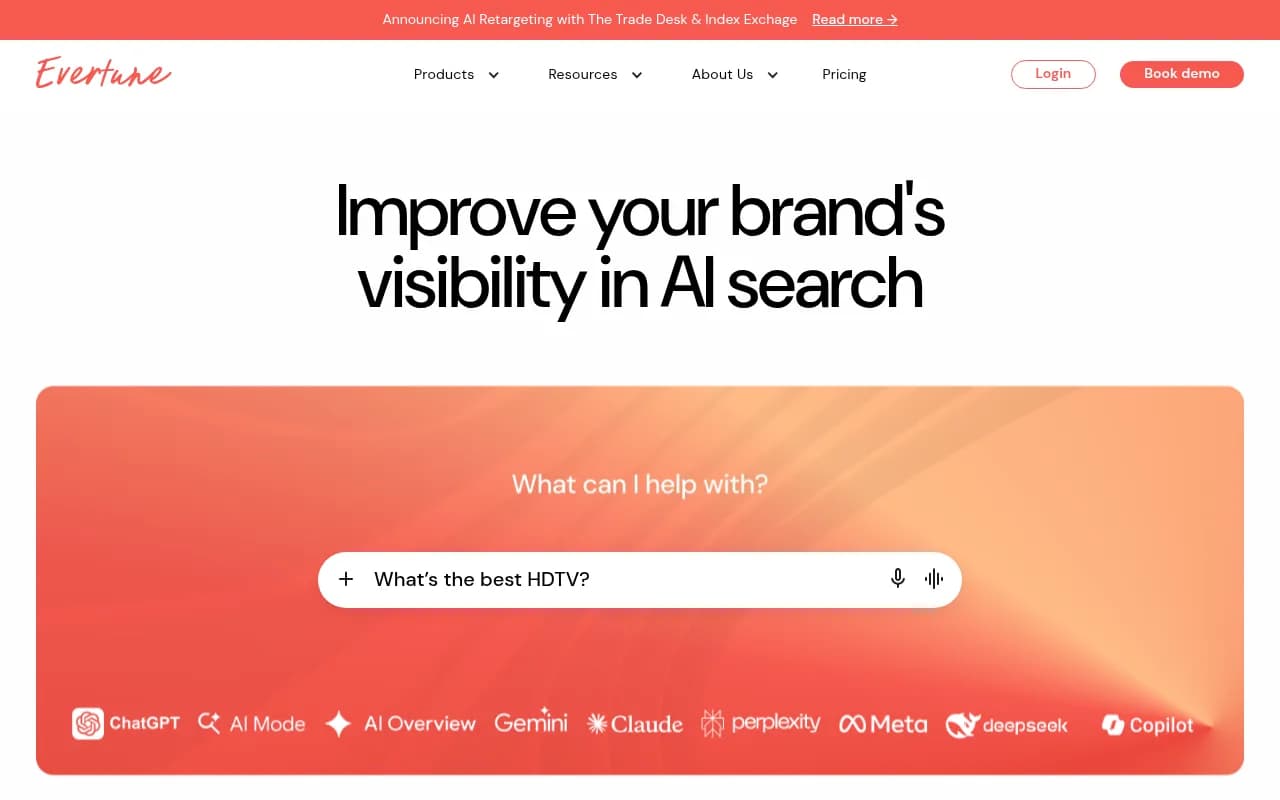
Evertune has published its own "10 Best AI Visibility Tools" list (which includes itself at the top for enterprise use cases), and it explicitly compares itself to Bluefish AI -- suggesting the two are seen as direct competitors in the Fortune 500 segment.
What Evertune does well: analytics. The platform goes deep on how AI models perceive your brand, what language they use, and how that compares to competitors. It's a strong choice if your primary need is understanding your AI brand presence.
What it does less well: the path from insight to action. Like Bluefish, Evertune is primarily a monitoring and analytics platform. There's no built-in content generation or optimization workflow to help you fix the gaps it identifies.
Pricing is custom/enterprise. No public rates available.
Promptwatch
Promptwatch takes a different approach from the other three. Where Relixir, Bluefish, and Evertune are primarily analytics and monitoring platforms, Promptwatch is built around an optimization loop: find gaps, create content, track results.

The platform monitors 10 AI models (ChatGPT, Claude, Gemini, Perplexity, Grok, DeepSeek, Copilot, Mistral, Meta AI, and Google AI Overviews), but the monitoring is the starting point, not the end product. The Answer Gap Analysis shows exactly which prompts competitors are visible for that you're not -- and then the built-in AI writing agent generates content designed to get cited by those models.
Promptwatch also has capabilities that none of the other three platforms in this comparison offer: real-time AI crawler logs (showing which pages ChatGPT, Claude, and Perplexity are actually reading on your site), Reddit and YouTube citation tracking, ChatGPT Shopping monitoring, and query fan-outs that show how a single prompt branches into sub-queries.
On pricing, Promptwatch is the only platform here with transparent public tiers: Essential at $99/mo, Professional at $249/mo, and Business at $579/mo. Enterprise and agency plans are available with custom pricing.
Feature comparison
| Feature | Relixir | Bluefish AI | Evertune | Promptwatch |
|---|---|---|---|---|
| AI models monitored | Multiple (unspecified) | Multiple | Multiple | 10 (ChatGPT, Claude, Gemini, Perplexity, Grok, DeepSeek, Copilot, Mistral, Meta AI, Google AI Overviews) |
| Answer gap analysis | Yes | Limited | Yes | Yes (core feature) |
| Built-in content generation | Yes | No | No | Yes (AI writing agent) |
| AI crawler logs | No | No | No | Yes |
| Reddit/YouTube citation tracking | No | No | No | Yes |
| ChatGPT Shopping tracking | No | No | No | Yes |
| Traffic attribution | Limited | No | No | Yes (GSC, code snippet, server logs) |
| SOC 2 / compliance features | Unspecified | Yes | Yes | Yes |
| Multi-language/region | Yes | Yes | Yes | Yes |
| Prompt volume & difficulty scores | No | No | No | Yes |
| Query fan-outs | No | No | No | Yes |
| Transparent public pricing | No | No | No | Yes |
| Starting price | Custom | Custom | Custom | $99/mo |
| Best for | Enterprise GEO with content focus | Fortune 500 compliance & scale | Enterprise analytics depth | End-to-end optimization for any team size |
Where each platform wins
Bluefish AI wins on compliance and enterprise governance
If you're in a regulated industry or your procurement team has a checklist of security requirements, Bluefish is the most purpose-built option. Its architecture was designed for multinational brands with complex compliance needs. That's a real differentiator that most GEO platforms don't take seriously.
Evertune wins on analytics depth
If your primary need is understanding how AI models perceive your brand -- the language they use, the attributes they associate with you, how that compares to competitors -- Evertune goes deep here. It's the platform for teams that need to present detailed AI brand perception reports to leadership.
Relixir wins on end-to-end positioning (for enterprise-only buyers)
Relixir's pitch as a full GEO engine is compelling, and it's one of the few platforms that explicitly tries to handle the whole workflow. The limitation is that it's newer, pricing is opaque, and the depth of its capabilities is harder to verify independently compared to more established platforms.
Promptwatch wins on the full optimization loop and value
This is where the comparison gets lopsided. Promptwatch is the only platform here that:
- Shows you exactly which prompts you're missing (Answer Gap Analysis)
- Generates content engineered to get cited by AI models (not generic SEO content)
- Tracks whether that content actually gets cited, down to the page level
- Shows you which AI crawlers are visiting your site and what they're reading
- Connects visibility to actual traffic and revenue
The crawler logs alone are a significant differentiator. Knowing that Perplexity's crawler visited your pricing page three times last week but never cited it tells you something actionable. None of the other three platforms in this comparison offer that.
And Promptwatch does this at a price point that doesn't require a six-figure contract. The $249/mo Professional plan includes crawler logs, state/city tracking, and 15 articles per month. For enterprise teams, the Business plan at $579/mo covers 5 sites and 30 articles. Custom enterprise pricing is available for larger deployments.
The monitoring-only trap
One pattern worth naming directly: most GEO platforms, including Bluefish and Evertune, are monitoring-first tools. They're excellent at showing you data. They're not built to help you act on it.
This creates a common situation where marketing teams have a beautiful dashboard showing their AI visibility score, their competitor's AI visibility score, and a list of prompts they're not appearing for -- and then they're on their own to figure out what to do next.
For large enterprises with dedicated content teams and SEO resources, that's manageable. The platform generates the insight; the team executes the fix.
For most teams, though, that gap between insight and action is where GEO programs stall. You know you need to create content that gets cited by ChatGPT. You don't know exactly what that content should say, how it should be structured, or which prompts to prioritize. A monitoring platform doesn't answer those questions.
Promptwatch's Answer Gap Analysis and AI writing agent are specifically designed to close that gap. The content it generates is grounded in 880M+ citations analyzed -- it knows what kinds of content AI models actually cite, and it generates articles, listicles, and comparisons in those formats.
Who should use which platform
The honest answer is that the "right" platform depends on what your team's actual bottleneck is.
If your bottleneck is compliance and security clearance for a regulated enterprise, Bluefish AI is worth evaluating seriously. It's built for that environment.
If your bottleneck is analytics depth and executive reporting on AI brand perception, Evertune is strong. It goes deep on the "how does AI see us" question.
If your bottleneck is the full optimization workflow -- finding gaps, creating content, tracking results, and attributing revenue -- Promptwatch is the most complete option in this comparison, and it's the only one with transparent pricing that doesn't require a sales call to understand.
Relixir is worth watching, particularly for enterprise teams that want an end-to-end approach and have the budget for a custom engagement. But given its relative newness and opaque pricing, it's harder to recommend over established platforms without more independent verification of its capabilities.
A note on the broader GEO platform market
This comparison focuses on four enterprise-oriented platforms, but the GEO market has more options than most buyers realize. Tools like Profound and AthenaHQ are also strong in the enterprise segment. Otterly.AI and Peec.ai serve smaller teams. Scrunch AI is popular with agencies.
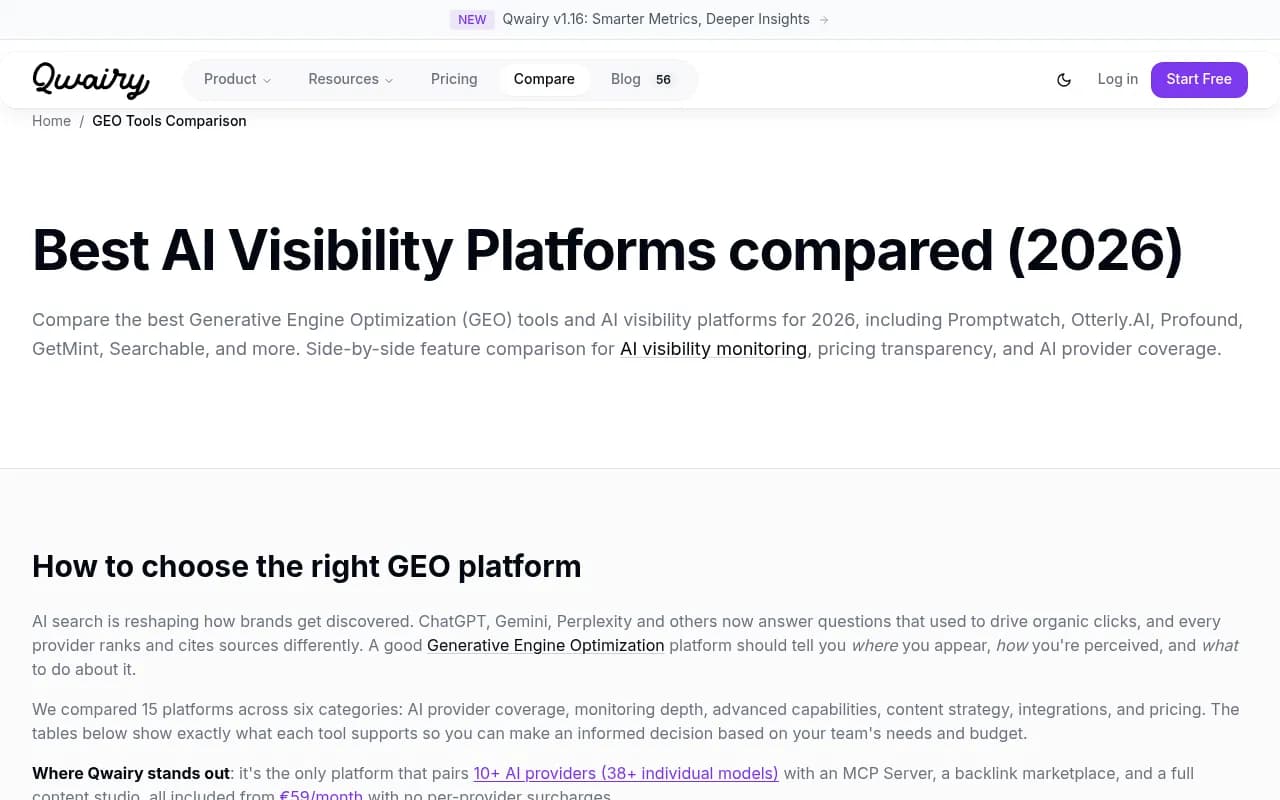
In a 2026 comparison of 12 GEO platforms, Promptwatch was the only platform rated as a "Leader" across all categories -- monitoring, content optimization, attribution, and crawler intelligence. That's a meaningful data point when you're trying to narrow down a shortlist.
The market is also moving fast. Platforms that were monitoring-only a year ago are adding content features. Platforms that started with content are adding monitoring. The gap between leaders and laggards is closing, but it hasn't closed yet.
Bottom line
For Fortune 500 brands evaluating GEO platforms in 2026, the key question isn't "which tool has the best dashboard." It's "which tool will actually improve our AI visibility, not just measure it."
Bluefish AI and Evertune are strong monitoring platforms with enterprise-grade compliance and analytics. They're worth evaluating if those are your primary needs.
Relixir is positioning itself as an end-to-end solution, but it's newer and harder to evaluate independently.
Promptwatch is the most complete platform in this comparison: it monitors more AI models, provides deeper prompt intelligence, generates content that's engineered to get cited, tracks crawler activity on your site, and connects everything to traffic and revenue. It's also the only platform here with transparent public pricing -- which matters when you're trying to build a business case internally.
If you're starting a GEO platform evaluation, Promptwatch's free trial is the lowest-friction way to see what a full optimization loop looks like in practice -- before committing to a custom enterprise contract with any of the other platforms.