Key takeaways
- The scheduling tools with the strongest ROI analytics in 2026 are Sprout Social (tag-based campaign reporting plus the Trellis AI agent), Agorapulse (automated UTM tracking wired straight into Google Analytics), and Metricool (competitor-grade analytics from around $20/month).
- Tier gating is the big trap. Sprout sells Premium Analytics as a paid add-on even on its top self-serve plan, and SocialPilot's cheapest tier ships with no analytics at all. Check what your specific tier includes, not the vendor's feature page.
- A 3:1 return is the standard benchmark across industries; 5:1 is strong for paid campaigns. If your reporting can't ladder up to conversions or revenue, you have nothing to benchmark against.
- No scheduler sees the whole picture. Dark social, meaning shares via DMs and copy-pasted links, accounts for an estimated 69% of global sharing and lands in your analytics as "direct traffic."
- When social is one input in a larger revenue model, scheduling tools run out of depth. That's when platforms like Improvado earn their keep.
Every social team I know has sat in the same meeting. Someone senior asks what social media actually contributed to revenue last quarter. The room goes quiet, someone pulls up an engagement graph, and the conversation moves on before anyone asks the obvious follow-up: engagement from what, leading to which revenue?
That meeting is getting harder to survive in 2026. Here's how to walk into it with numbers that hold up, and which scheduling tools can actually produce them.
Why proving social ROI got harder in 2026
Global social media ad spend is projected to reach $317.33 billion this year. Meta CPMs average $11.20, LinkedIn CPCs have climbed past $5.60, and overall social ad costs are up as much as 25% since 2024. When spend grows that fast, finance teams stop accepting screenshots of follower counts.
There's a second problem: discovery has moved. 41% of Gen Z now uses social media as their primary search engine. People find your product on TikTok or Instagram, form an opinion, then buy through a channel that has nothing to do with the post that started the journey. Last-click attribution gives credit to whatever came last, so social gets systematically undercounted.
Sprout's Impact of Social Media research puts numbers on the measurement gap. 68% of marketing leaders say they define social ROI through engagement, 65% through conversion, and 57% through revenue. The teams Sprout classifies as measurement experts lean much harder on revenue and efficiency metrics than everyone else. The people best at this use money metrics, not applause metrics.
What proving ROI actually requires from a tool
Likes and impressions aren't useless. They're diagnostic. A post with high impressions and no clicks tells you your hook works and your offer doesn't. The mistake is presenting those numbers as evidence of business impact. Use vanity metrics to troubleshoot content, then put conversions in the deck.
A scheduling tool that can prove ROI needs to do four things:
- Tag campaigns so performance groups by initiative, not by individual post
- Generate UTM parameters automatically, because manual UTM entry is where attribution goes to die
- Push data into GA4 or a CRM so clicks connect to conversions
- Retain history beyond the 90 days native platforms cap you at, ideally a year or more
Very few tools do all four well at a price a normal team can pay. Here's the current field.
The best scheduling tools for ROI analytics in 2026
Sprout Social: the analytics benchmark, at a price
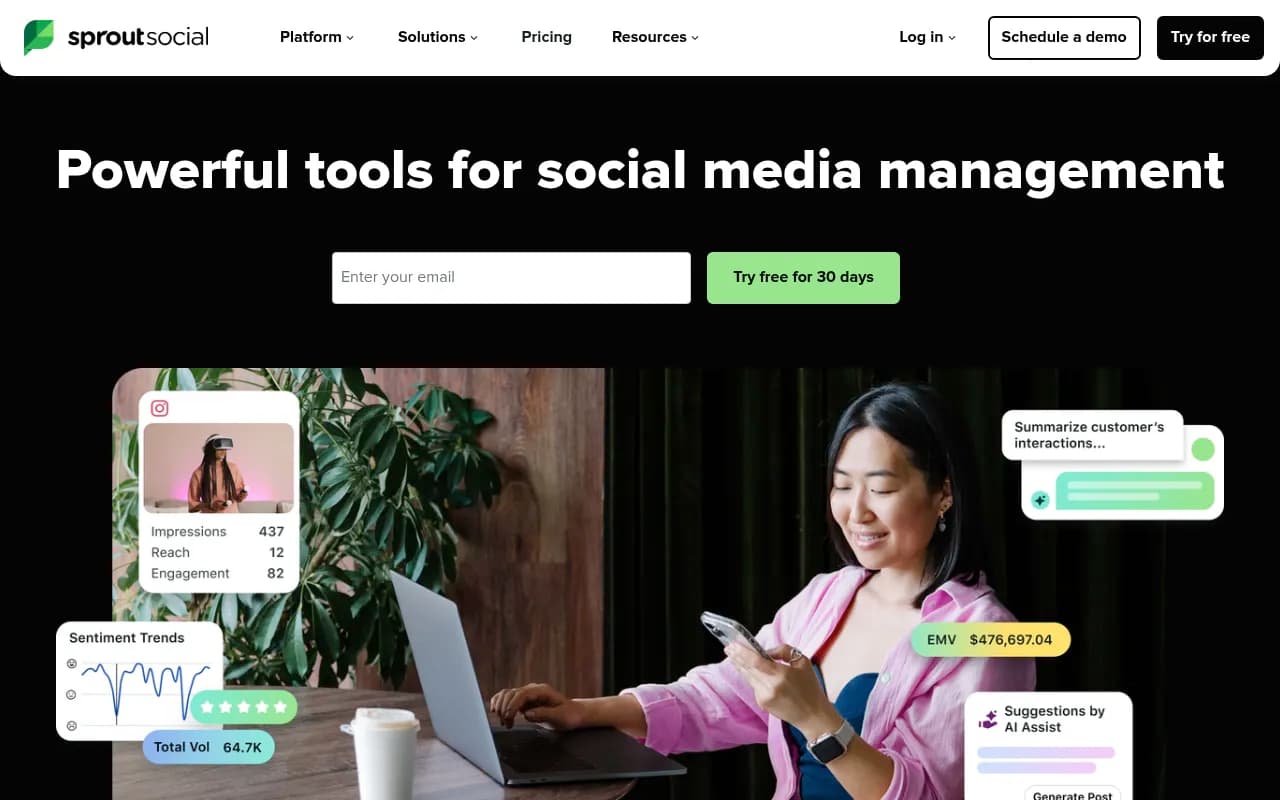
Sprout is the tool other schedulers get compared against, and its analytics are the reason. The Tag Performance Report is the ROI workhorse: you tag posts and messages by campaign or content theme, then see engagement, impressions, and clicks per tag, aggregated or per network. The Report Builder lets you drag those views into custom dashboards for stakeholders. In May 2026, Sprout went further and launched Trellis, an AI agent that sits across publishing, listening, inbox, and reporting and answers questions about your data in plain language.
Two things to know before signing anything. First, Premium Analytics, which unlocks the deeper metrics, interactive charts, and shareable report links, is a paid add-on even on the Advanced plan. Second, the list prices sting. Sprout's site lists $199 to $399 per seat per month depending on tier, and third-party pricing data suggests annual contracts often run higher. A 10-person team on the Professional plan pays roughly $35,880 a year.
Is it worth it? If social demonstrably drives revenue and you have the budget, yes. Sprout's own switch to multi-touch attribution surfaced a 5,800% increase in measured pipeline impact from social, which tells you how badly single-touch models undercount. If you're a three-person team, no.
Agorapulse: the most direct line from post to revenue
Agorapulse doesn't get talked about as much as Sprout, and I've never understood why, because its Social Media ROI feature does the one thing most schedulers avoid: it builds UTM tracking codes automatically, wires them into Google Analytics, and reports conversions and revenue back against specific posts. No spreadsheet gymnastics. That's the whole ballgame.
Pricing runs $69 to $149 per user per month depending on tier. The catch is that the full ROI report, the one connecting conversions and revenue to specific content, requires the Professional plan or above. Standard only includes a basic version tracking clicks and traffic. Data retention scales by tier from 6 months up to 24 on Advanced, and the Reports API for piping data into BI tools is Advanced-only. Agorapulse claims teams switching from other tools save around 30%, which roughly matches what its price list says relative to Sprout.
Hootsuite: fine, but the analytics you want live at Enterprise
Hootsuite still feels like the default answer in a lot of companies, and the 2026 pricing explains why people are shopping around. Standard is $99 a month for one user and ten accounts, and its analytics are thin: post performance reports, benchmarking against five competitors, and listening capped at seven days of history. Advanced at $399 a month adds bulk scheduling, customizable report templates, and benchmarking against 20 competitors. The serious stuff, meaning 13 months of listening history, Salesforce integration, and approval workflows, only arrives at Enterprise, which reportedly runs $16,000 to $18,000 a year for five-plus users with an annual commitment.
There's no free plan anymore, just a 30-day trial. If you're already on Hootsuite and happy, the GA4 integration and report templates do the job. If you're choosing fresh in 2026, the value math is rough.

Metricool: the budget pick that over-delivers
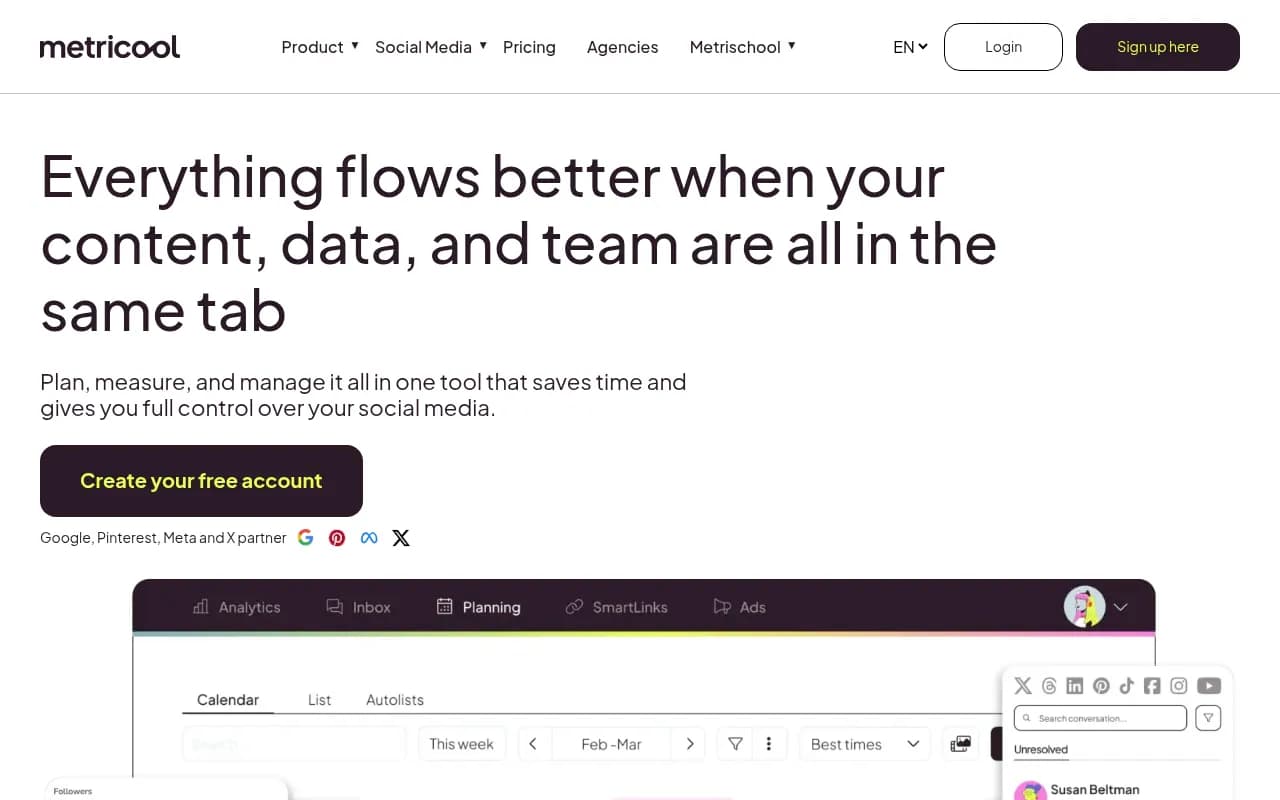
Metricool starts free (one brand, 20 posts a month, 30 days of analytics history with a watermark) and its paid plans start around $20 a month. For that money you get analytics that embarrass tools costing five times more, including competitor analysis for up to 100 profiles, which is more than any rival at this price point.
The gotchas: Advanced Analytics, which unlocks Metricool Studio and unlimited campaign dashboards, is a paid add-on at $10 a month per connected account even on paid plans. X isn't included by default on any plan, it's a per-account paid add-on. And team access with approval workflows only starts at the Advanced tier, $53 and up. For a solo marketer or small brand, none of that hurts much. For a team, budget accordingly.
Buffer: the cheapest legitimate option
Buffer prices per channel rather than per seat, and it changes the math completely. Essentials is $6 per channel per month, or $5 billed annually; Team is $12, or $10. Volume discounts kick in hard: channels 11 to 25 drop to $4, and past 50 channels you're paying $1 to $2 each. A five-channel setup costs about $50 a month, less than Hootsuite charges for a single user.
The analytics are engagement-level: per-channel performance, audience growth, export to GA. Nobody would call it revenue attribution. But for a solo creator or bootstrapped team, Buffer plus a disciplined UTM habit plus GA4 covers the basics of ROI measurement for less than a dinner out. Buffer also shipped a developer API with a hosted MCP server in 2026, which quietly makes it one of the more automation-friendly schedulers if you like wiring things together yourself.
Two more worth knowing: Iconosquare and SocialPilot
Iconosquare built its reputation on deep Instagram and Facebook analytics and positions itself as the analytics-first alternative for SMBs and agencies, with entry pricing around $49 a month, roughly four to five times cheaper than Sprout or Hootsuite. It even added an MCP connector recently so you can pipe its analytics into AI tools. If your world is visual platforms, it belongs on your shortlist.
SocialPilot is the budget agency play, with a twist: the $25.50 Essentials tier includes no analytics at all. Detailed analytics, PDF reports, and scheduled reports start at the Standard tier ($42.50 a month billed annually), and competitor plus white-label reports arrive at Premium ($85). The entry price is a teaser. The real product starts one tier up.
When you outgrow schedulers: Improvado
Every tool above reports on social. None of them can answer "what did social contribute to a deal when the prospect also attended a webinar, opened four emails, and got a call from sales?" That's multi-touch attribution across social, web, and CRM, and it's a different category of software.
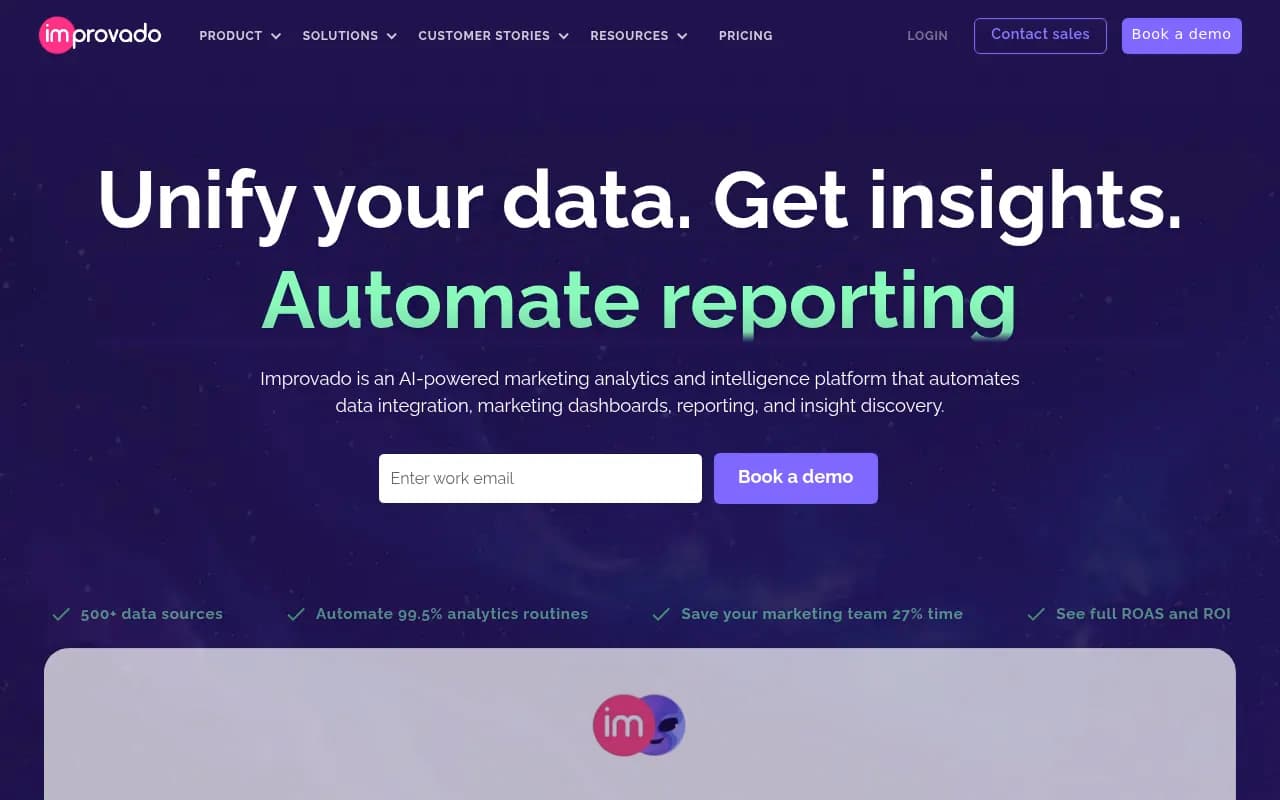
Improvado connects 1,000+ marketing data sources, automatically maps equivalent metrics across platforms (Facebook's "link clicks" means the same thing as LinkedIn's "clicks"), retains two-plus years of history, and pushes everything into Tableau, Looker, or Power BI so social sits next to revenue in one dashboard. Pricing is custom enterprise, with a dedicated customer success manager included rather than sold as an add-on. If your CFO wants social modeled the same way as every other channel, this is the level you're shopping at.
How the tools compare
| Tool | Entry price | Standout ROI feature | Data retention | The catch |
|---|---|---|---|---|
| Sprout Social | $199/seat/mo | Tag Performance Report, Trellis AI agent | Varies by plan | Premium Analytics is a paid add-on even at Advanced |
| Agorapulse | $69/user/mo | Automated UTM plus GA revenue attribution | 6–24 months by tier | Full ROI report needs Professional plan or above |
| Hootsuite | $99/mo | Custom report templates, GA4 integration | Limited at low tiers | Real depth effectively requires Enterprise ($16K+/yr) |
| Metricool | Free, then ~$20/mo | Competitor tracking for up to 100 profiles | 30 days free, more on paid | Advanced Analytics is a $10/mo-per-account add-on |
| Buffer | $5/channel/mo | Per-channel analytics, GA export | Limited | No revenue attribution |
| Iconosquare | ~$49/mo | Deep Instagram/Facebook analytics | Varies | Visual-platform focus |
| SocialPilot | $25.50/mo | White-label and competitor reports (Premium) | Varies | No analytics on the entry tier |
| Improvado | Custom | 1,000+ sources unified into BI with revenue mapping | 2+ years | Enterprise pricing, overkill for small teams |
The blind spot no scheduler solves
Here's the uncomfortable part. An estimated 69% of global sharing happens through dark social: DMs, messaging apps, email, copy-pasted links. Some estimates put hidden traffic as high as 84%. None of it carries your UTMs. It lands in GA4 as "direct traffic," and your carefully tagged campaign looks like it underperformed when it actually seeded a hundred private recommendations.
You can't fully fix this, but you can shrink the blind spot:
- Add a free-text "how did you hear about us" field to your forms, and actually read the answers
- Use promo codes and unique landing pages per campaign so off-platform conversions carry a marker
- Watch branded search volume. A spike after a campaign usually means social drove people to Google, where they searched your name and got misattributed
- Treat engagement as a leading indicator. TikTok's average engagement rate sits around 2.01% in 2026, and engagement often precedes sales by weeks. It's a trust signal, not a result
A workflow that proves ROI with any of these tools
The tool matters less than the discipline. This sequence works with everything above.
- Fix a UTM convention before you schedule anything. If you're on Agorapulse, let it automate this. If not, write the convention down and enforce it.
- Connect GA4 and confirm conversions are recording before the campaign starts, not after.
- Tag every campaign in your scheduler so performance groups by initiative. Sprout's tag reports and Metricool's dashboards both work this way.
- Build one monthly report with two numbers per campaign: total cost (subscription, labor, ad spend) and attributed conversions or revenue. Resist adding follower counts. Nobody in that meeting asked.
- When you're big enough, move to multi-touch. Sprout's internal switch surfaced 5,800% more pipeline impact than its old model credited. Last-click isn't conservative, it's wrong.
- Judge results against the benchmark: 3:1 is standard across industries, 5:1 is strong for paid. Below 3:1 you have a targeting or offer problem, not a reporting problem.
Mistakes I keep seeing
Presenting vanity metrics as ROI. Likes diagnose content problems, they don't prove business impact. Use them for optimization, then put revenue in the deck.
Comparing engagement across platforms without context. A comment on LinkedIn, where people post under their real names, is a different gesture than an anonymous YouTube comment. Benchmarks only mean something within a platform.
Buying the entry tier and expecting the demo. Sprout, Hootsuite, Metricool, and SocialPilot all gate their headline analytics above the cheapest plans. Budget for the tier that actually has the feature you saw.
Ignoring AI reporting. Only 40% of marketers use AI for performance reporting even though it's cited as a top competitive lever in Sprout's 2026 Content Strategy report. Assistants like Trellis cut manual analysis time dramatically. The other 60% are building pivot tables at 11pm.
Quick recommendations
- Sprout Social if you're an enterprise team and social demonstrably drives revenue. Budget for Premium Analytics from day one.
- Agorapulse Professional if you want post-to-revenue attribution without enterprise pricing.
- Metricool if you're a small brand or solo marketer who wants real analytics for pocket change.
- Buffer if you're bootstrapped and engagement-level reporting is enough for now.
- SocialPilot Premium if you're an agency that needs white-label reports on a budget.
- Improvado if social is one input in a company-wide revenue model.
Whatever you pick, buy based on the tier you'll actually pay for, wire up UTMs and GA4 this week, and walk into the next budget meeting with revenue numbers instead of engagement graphs. If you want to compare more options side by side, the reviews and alternatives over at surferstack.com cover the rest of the market.