Key takeaways
- Peec AI is a capable monitoring tool, but it stops at showing you data — it doesn't help you act on it
- Most alternatives fall into the same trap: dashboards that tell you where you're invisible but not what to do about it
- The tools worth switching to are the ones that close the loop between tracking, content creation, and traffic attribution
- Pricing across alternatives ranges from free tiers to $500+/month, so there's a fit for most budgets
- If your team needs to actually improve AI visibility (not just measure it), look for platforms with content gap analysis and built-in optimization workflows
Peec AI got a lot of attention in 2025, and for good reason. It was one of the first tools to give marketers a real window into how their brands appeared in AI-generated answers across ChatGPT, Perplexity, and Google AI Overviews. For teams just waking up to the fact that AI search was eating their organic traffic, it was a useful first step.
But "first step" is the key phrase. The complaints that kept surfacing in SEO Slack groups and Reddit threads were consistent: costs scaled awkwardly for large prompt sets, accuracy varied across industries, and the platform didn't really help you do anything with what you found. You could see you were invisible. You just couldn't fix it.
That's the gap most teams hit eventually. Monitoring is necessary, but it's not sufficient. This guide covers 8 alternatives worth considering in 2026, with honest notes on where each one excels and where it falls short.

What to look for in a Peec AI alternative
Before getting into specific tools, it's worth being clear about what actually matters when evaluating these platforms. The market has exploded with AI visibility trackers, and most of them are solving the same narrow problem in slightly different ways.
The questions worth asking:
- How many AI engines does it cover? ChatGPT and Perplexity are table stakes. Does it also track Claude, Gemini, Google AI Mode, Grok, DeepSeek, Copilot?
- Does it show you why you're not being cited, or just that you're not?
- Can you act on the data inside the platform, or do you need to export everything and figure it out yourself?
- Does it track traffic? Visibility scores are vanity metrics if you can't connect them to actual sessions and revenue.
- What's the pricing model at scale? Some tools look cheap until you add more prompts or sites.
With those filters in mind, here's how the main alternatives stack up.
Comparison table
| Tool | Best for | AI engines covered | Content generation | Starting price |
|---|---|---|---|---|
| Promptwatch | Full optimization loop (track, fix, measure) | 10+ (ChatGPT, Perplexity, Claude, Gemini, Grok, DeepSeek, Copilot, more) | Yes — built-in AI writing agent | $99/mo |
| Otterly.AI | Simple brand mention tracking | ChatGPT, Perplexity, Google AIO | No | ~$49/mo |
| Profound | Enterprise analytics and research | ChatGPT, Google AIO, Perplexity | No | $499/mo |
| AthenaHQ | Multi-engine sentiment and brand control | Google AIO, Perplexity, ChatGPT, Claude | No | $295/mo |
| Scrunch AI | Enterprise brand narrative monitoring | ChatGPT, Perplexity, Gemini, Claude, AIO | Limited | $300/mo |
| SE Ranking (SE Visible) | AI visibility inside a full SEO suite | Google AIO, Perplexity, ChatGPT | No | $189/mo |
| LLMrefs | Lightweight trend tracking for lean teams | ChatGPT, Claude, Gemini, Perplexity, Copilot | No | Free / $79/mo |
| Rankability | Agency reporting with in-editor fixes | ChatGPT, Gemini, Claude, Perplexity, Copilot, AIO | Yes (via Optimizer) | $124/mo |
1. Promptwatch — best for teams that want to actually improve, not just monitor
Most AI visibility tools are dashboards. Promptwatch is built around a different idea: that knowing where you're invisible is only useful if you can do something about it.
The core workflow is a loop. Answer Gap Analysis shows you exactly which prompts your competitors are visible for but you're not — the specific topics and questions AI models want answers to that your site doesn't cover. From there, a built-in AI writing agent generates articles, listicles, and comparisons grounded in real citation data. Then page-level tracking shows whether those new pages are actually getting cited, and by which models.

That's a meaningfully different product from a monitoring dashboard. The gap analysis alone is worth the price for teams that have been staring at visibility scores without knowing what content to create next.
A few other things that stand out: Promptwatch logs AI crawler activity in real time — which pages ChatGPT, Claude, and Perplexity are reading, how often they return, and what errors they hit. Most competitors don't have this at all. It also tracks Reddit and YouTube discussions that influence AI recommendations, monitors ChatGPT Shopping carousels, and covers 10+ AI engines including Grok, DeepSeek, and Mistral.
Traffic attribution is handled via a code snippet, Google Search Console integration, or server log analysis — so you can actually connect visibility improvements to revenue.
Pricing starts at $99/month for one site and 50 prompts, with a Professional tier at $249/month that adds crawler logs, multi-location tracking, and more articles per month. There's a free trial.
The one honest caveat: if you genuinely only need basic monitoring and have no interest in content optimization, this is more tool than you need. But for most marketing teams that have outgrown Peec AI, it's the most complete option available.
2. Otterly.AI — best for simple, no-frills brand tracking
Otterly.AI is a clean, focused monitoring tool. You set up your brand and competitors, pick your prompts, and it tells you how often you appear in AI answers across ChatGPT, Perplexity, and Google AI Overviews.
Otterly.AI

The setup is fast and the interface is genuinely easy to use. For small teams or solo marketers who just want to know if their brand is showing up, it does the job without a steep learning curve.
The limitations become apparent quickly at scale. There's no content gap analysis, no crawler logs, no traffic attribution, and no built-in way to act on what you find. It's monitoring-only, which is fine if that's all you need — but most teams that have been using Peec AI for a while are looking for more than that.
Engine coverage is also narrower than some competitors. If you need Claude, Grok, or DeepSeek tracking, you'll need to look elsewhere.
3. Profound — best for data-rich enterprise analytics
Profound is one of the more serious enterprise options in this space. It covers ChatGPT, Google AI Overviews, and Perplexity with conversation-level insights — not just whether you appeared, but the context around your mentions, what competitors were cited alongside you, and how responses varied across different phrasings of the same question.
Profound

The depth of data is genuinely impressive. Teams doing serious competitive intelligence work or trying to understand how AI models construct their answers will find things here they can't get elsewhere.
The trade-off is price and complexity. Profound's Lite plan starts at $499/month, which puts it out of reach for most small and mid-sized teams. And like most enterprise analytics tools, it's heavy on data and light on telling you what to do with it. There's no built-in content generation, no crawler logs, and no direct traffic attribution.
Worth it for large brands with dedicated analytics resources. Overkill for most.
4. AthenaHQ — best for sentiment-led brand monitoring
AthenaHQ takes a slightly different angle on AI visibility. Rather than just tracking whether you appear, it focuses on how you appear — the sentiment, descriptors, and framing AI models use when they mention your brand.

For brand teams that care about narrative control (not just presence), this is useful. If ChatGPT is describing your product in ways that don't match your positioning, AthenaHQ will surface that.
Multi-engine coverage is solid: Google AIO, Perplexity, ChatGPT, and Claude. Starting price is $295/month.
The gap is the same one that affects most of these tools: it's monitoring-focused. You can see that your brand narrative is off, but the platform doesn't help you fix it. No content generation, no crawler logs, no traffic attribution. It's a good diagnostic tool, but you'll need other tools to act on what it finds.
5. Scrunch AI — best for enterprise brand narrative monitoring
Scrunch positions itself as an "Agent Experience Platform" — the idea being that as AI agents increasingly mediate how people find and evaluate products, you need to optimize for how those agents perceive your brand.
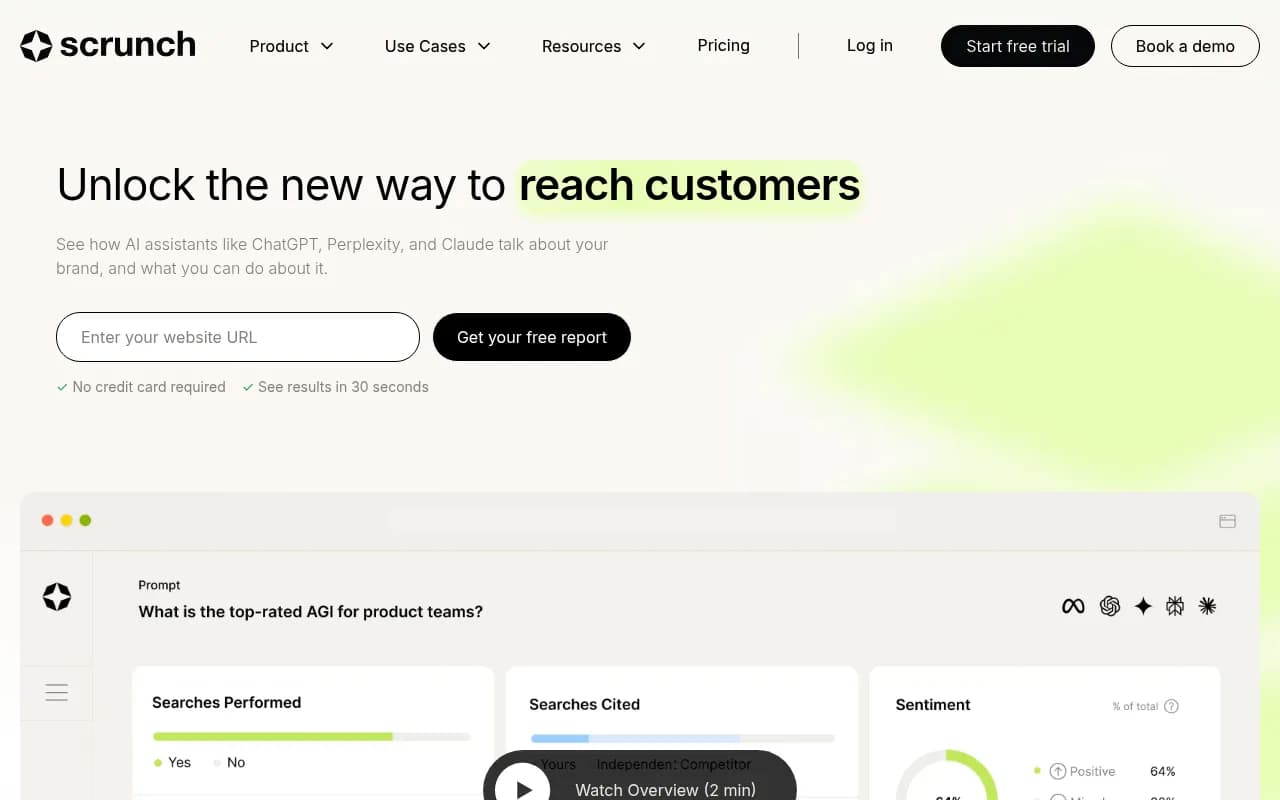
In practice, this means deep brand descriptor and narrative analysis across ChatGPT, Perplexity, Gemini, Claude, and Google AI Overviews. Scrunch is particularly strong at tracking how your brand is characterized over time and across different AI engines.
The enterprise focus is real — this is a tool built for large organizations with dedicated brand and comms teams. Starting price is $300/month for the Starter plan, and the full feature set is considerably more.
For mid-market teams, the price-to-value ratio is harder to justify. The monitoring is thorough, but there's limited actionability built in, and the content optimization features are thin compared to what you'd expect at this price point.
6. SE Ranking (SE Visible) — best for AI visibility inside a full SEO suite
SE Ranking has been a solid traditional SEO platform for years, and its SE Visible product extends that into AI search monitoring. If your team is already using SE Ranking for rank tracking, site audits, and keyword research, adding AI visibility tracking in the same platform has real workflow advantages.
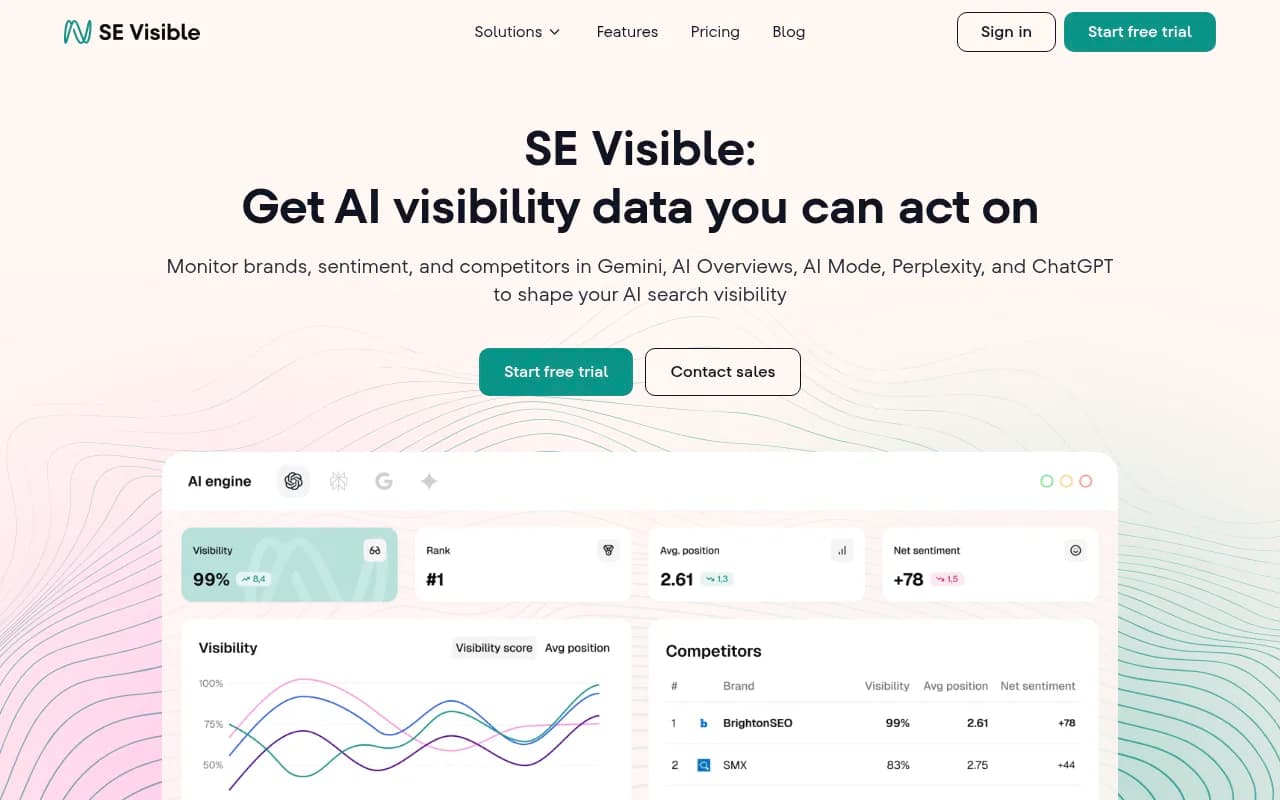
Coverage includes Google AI Overviews, Perplexity, and ChatGPT. The interface is familiar if you've used SE Ranking before, and the data integrates naturally with your existing SEO reporting.
The limitation is depth. SE Visible is a solid addition to an existing SEO workflow, but it's not a purpose-built GEO platform. Prompt-level analytics are less granular than dedicated tools, there's no content gap analysis, and the actionability is limited to what you can infer from the data yourself.
Starting price is around $189/month. Worth considering if you're already in the SE Ranking ecosystem and want to add AI visibility without switching platforms.
7. LLMrefs — best for lean teams on a tight budget
LLMrefs is the most accessible entry point on this list. There's a free tier, and the Pro plan is $79/month — a fraction of what most competitors charge.
LLMrefs
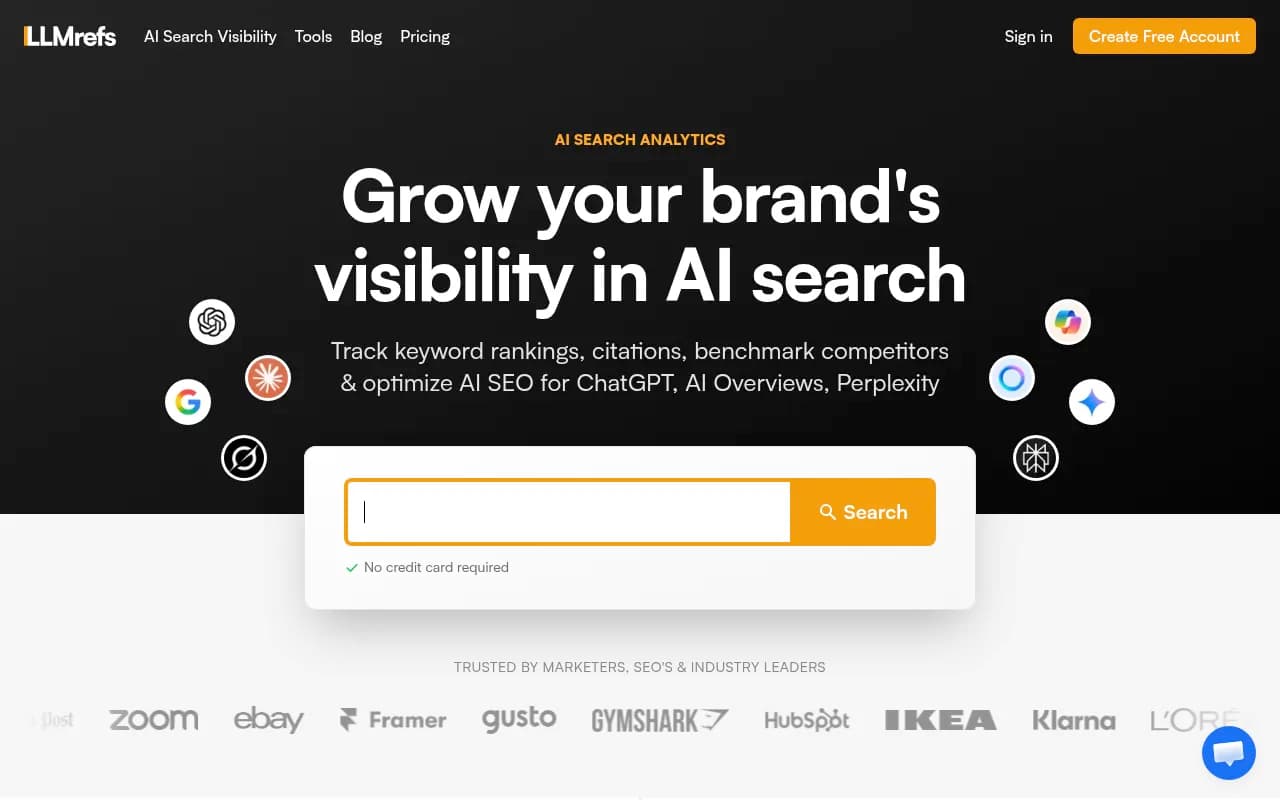
For solo marketers, small agencies, or teams just starting to explore AI visibility, it's a reasonable way to get a sense of where you stand without a significant budget commitment. Coverage includes ChatGPT, Claude, Gemini, Perplexity, and Copilot, with weekly trend data and lightweight scoring.
The trade-offs are real: data updates weekly rather than daily, there's no content gap analysis, no crawler logs, no traffic attribution, and the depth of prompt-level analytics is limited. But if you're trying to answer the basic question "is my brand showing up in AI answers?" without spending $200+/month, LLMrefs gets you there.
8. Rankability — best for agencies that want tracking and in-editor fixes
Rankability is primarily an agency SEO platform, and its Reporter product adds AI visibility tracking to a broader suite that includes content optimization and rank monitoring.
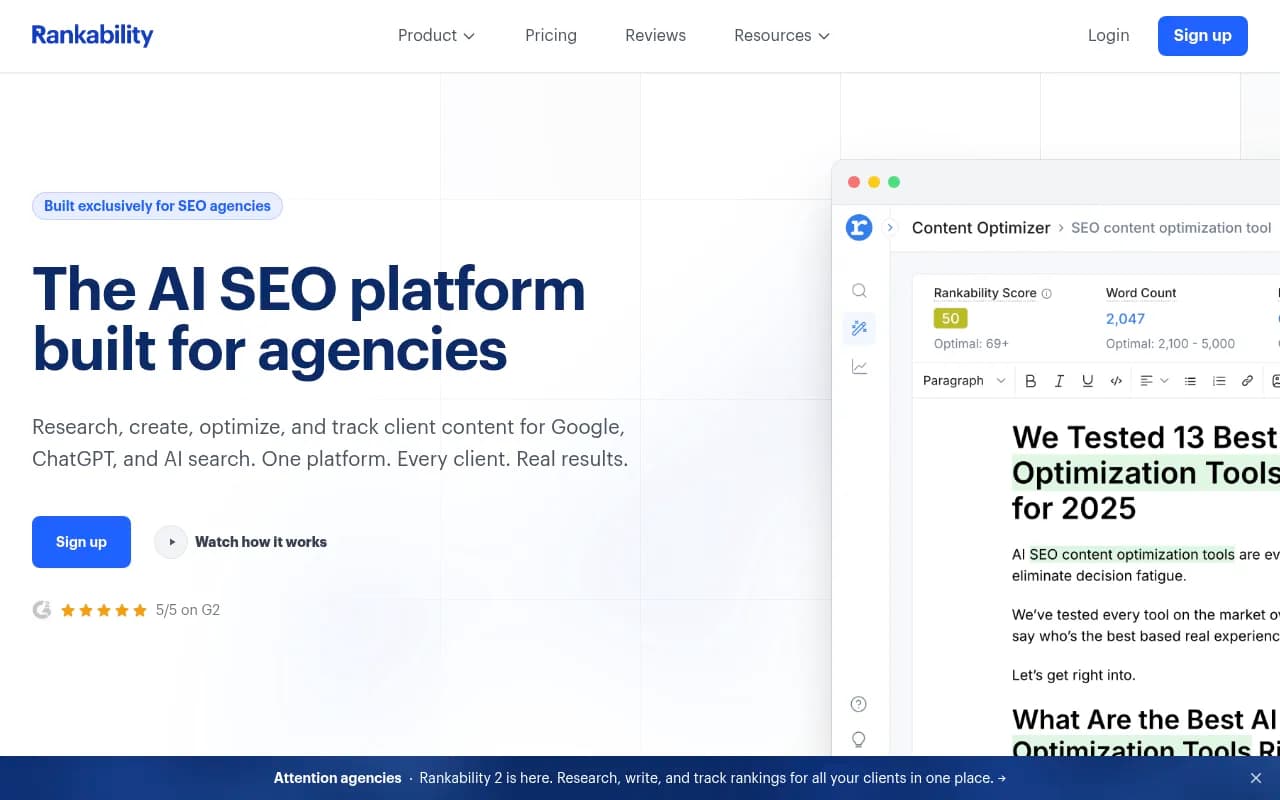
The interesting thing about Rankability is that the tracking connects to the Optimizer — so when you identify a gap in AI visibility, you can work on fixing it within the same platform. That's a more complete workflow than pure monitoring tools offer, even if it's not as deep as a purpose-built GEO platform.
Engine coverage is broad: ChatGPT, Gemini, Claude, Perplexity, Copilot, Google AI Overviews, and Google AI Mode. Starting price is around $124/month billed annually.
For agencies managing multiple clients and wanting a single platform for both traditional SEO and AI visibility, Rankability is worth a serious look. The content optimization workflow is genuinely useful, though the AI-specific features (crawler logs, citation analysis, prompt volume data) are less developed than dedicated GEO tools.
How to choose
The right tool depends almost entirely on what you're trying to accomplish.
If you've already been using Peec AI and the main frustration is that you can see visibility gaps but can't do anything about them, the answer is a platform with built-in content optimization. That's a short list: Promptwatch and Rankability are the two clearest options, with Promptwatch going considerably deeper on the GEO-specific features.
If you're at an enterprise and need deep analytics for research and competitive intelligence, Profound is worth the price. If brand narrative and sentiment are your primary concern, AthenaHQ or Scrunch AI are worth evaluating.
If budget is the binding constraint and you just need basic monitoring, LLMrefs gets you started for free.
The one thing I'd push back on is the idea that monitoring is enough. The teams getting real results from AI search optimization in 2026 are the ones treating it like SEO: systematic content creation, tracking what works, iterating. A dashboard that shows you where you're invisible is only useful if it helps you become visible. Most tools on this list don't do that. A few do.
Final thought
Peec AI was a useful early tool for a problem that didn't have many solutions in 2024. In 2026, the market has matured enough that "basic monitoring" is the floor, not the ceiling. The teams winning at AI search visibility are the ones who've moved past dashboards and into actual optimization workflows.
If you're evaluating alternatives, start by being honest about what you need: pure monitoring, or monitoring plus the ability to act. That single question will narrow the field considerably.