Key Takeaways
- Crawler logs reveal what AI models actually read: While most platforms show you where your brand appears in AI responses, crawler logs show which pages AI engines visit, how often they return, and what errors they encounter—the real data behind visibility
- You can reverse-engineer AI preferences: By analyzing patterns in GPTBot, PerplexityBot, and ClaudeBot traffic, you can identify exactly what content structures, topics, and formats AI models prioritize for citations
- Most brands are flying blind: 90%+ of AI visibility platforms track citations but not crawler behavior—meaning they show you the scoreboard without telling you if you're even allowed on the field
- The action loop starts with crawler data: Find gaps in what AI engines are reading, create content that matches their preferences, then track whether they come back to index it
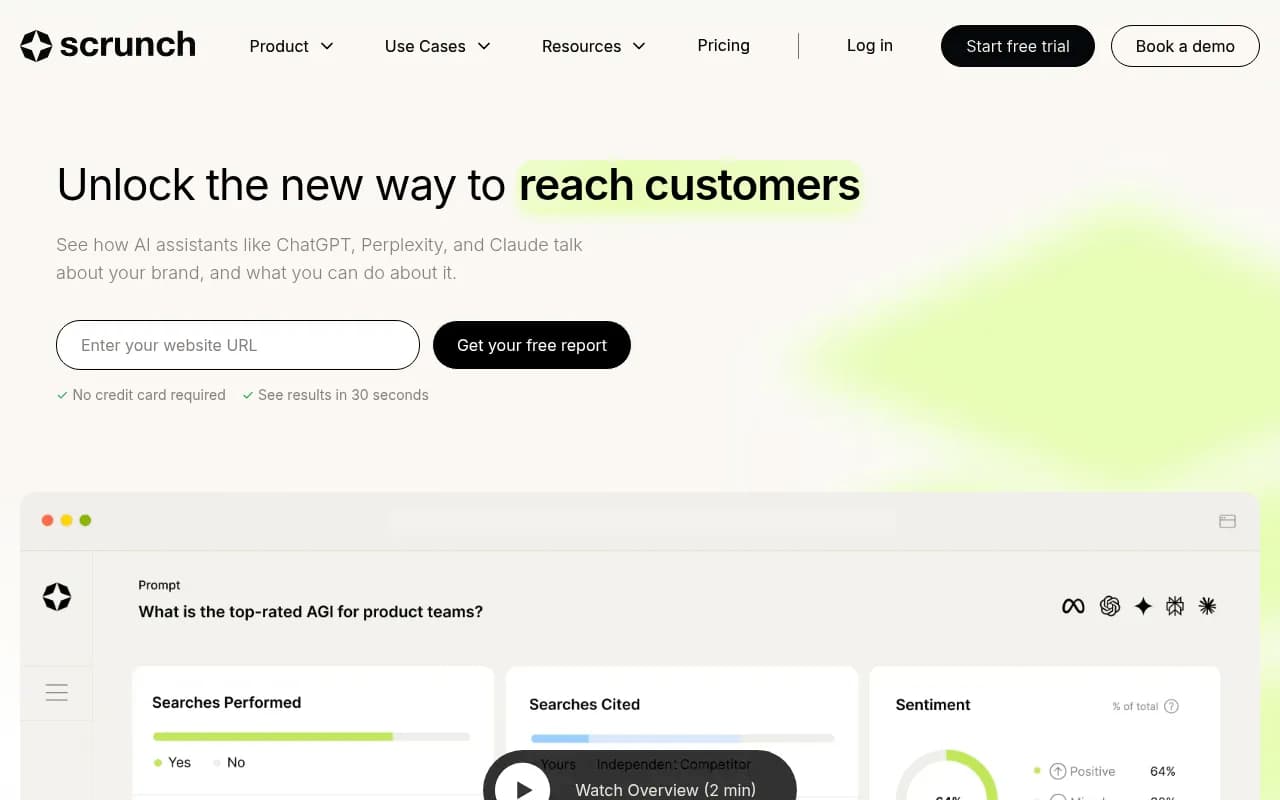
- Only a handful of platforms offer real crawler monitoring: Promptwatch, Scrunch AI, and Profound provide real-time AI crawler tracking with actionable insights
Why Crawler Logs Matter More Than Citation Tracking
Here's the problem most brands face in 2026: they're obsessing over whether ChatGPT mentions them in responses, but they have no idea if ChatGPT's crawler has even visited their website in the last 30 days.
You might see competitors dominating AI search results while your brand is invisible. The usual assumption? "We need better content." But what if the real issue is that GPTBot hit a 403 error on your key pages last week? Or that Perplexity hasn't crawled your site in 45 days because your robots.txt is blocking it?
Citation tracking shows you the outcome. Crawler logs show you the process.
AI crawlers—bots like GPTBot (OpenAI), PerplexityBot, Google-Extended, ClaudeBot, and dozens of others—are the gatekeepers to AI search visibility. They determine which pages get indexed, how fresh your content is in AI training data, whether technical issues are preventing discovery, and which sections of your site AI engines prioritize.
Without crawler logs, you're optimizing content without knowing if AI engines can even see it.
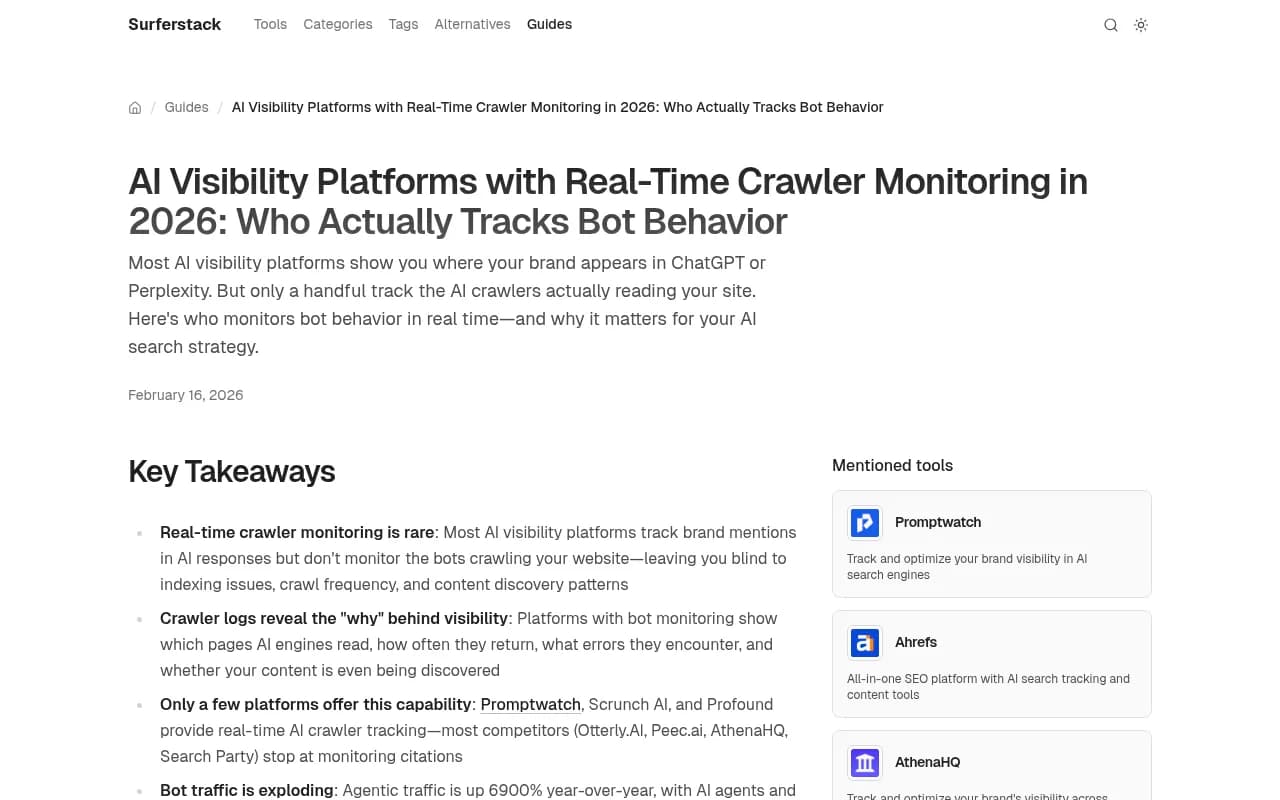
The AI Crawler Landscape: Who's Reading Your Site
The bot ecosystem has evolved dramatically. According to research from multiple sources, agentic traffic is up 6900% year-over-year. AI agents and agentic browsers now generate significant volumes of automated requests alongside traditional crawlers.
Here are the major AI crawlers you should be tracking:
Training & Knowledge Base Crawlers:
- GPTBot (OpenAI): Crawls for ChatGPT training data and retrieval
- ClaudeBot (Anthropic): Powers Claude's knowledge base
- Google-Extended: Feeds Gemini and Google AI products
- PerplexityBot: Indexes content for Perplexity's answer engine
- Applebot-Extended: Powers Apple Intelligence features
- Meta-ExternalAgent: Trains Meta AI/Llama models
Real-Time Retrieval Crawlers:
- ChatGPT-User: Real-time web browsing for ChatGPT responses
- Perplexity-Ask: Live retrieval for Perplexity answers
- YouBot: Powers You.com's AI search
Agentic Crawlers:
- Browser automation agents from Arc, Anthropic, and others
- Task-specific agents performing research and data gathering
- Shopping agents evaluating products and prices
Each crawler has different priorities, crawl frequencies, and content preferences. Understanding these patterns is how you reverse-engineer what AI models value.
The Citation Discovery Method: A Step-by-Step Framework
This method turns crawler logs from passive monitoring into active optimization. Here's how it works.
Step 1: Set Up Crawler Log Monitoring
You need a platform that tracks AI crawler activity in real time. Most traditional analytics tools (Google Analytics, Adobe Analytics) don't distinguish AI crawlers from regular bots.

What to track:
- Which AI crawlers are hitting your site
- Which pages they visit and how often
- Crawl depth (how many pages per session)
- Response codes (200s, 403s, 404s, 500s)
- Time spent on each page
- Return frequency
Platforms with real crawler monitoring:
| Platform | Crawler tracking | Real-time logs | Error detection | Page-level insights |
|---|---|---|---|---|
| Promptwatch | Yes | Yes | Yes | Yes |
| Scrunch AI | Yes | Yes | Limited | Yes |
| Profound | Yes | Yes | Yes | Yes |
| Otterly.AI | No | No | No | No |
| Peec.ai | No | No | No | No |
| AthenaHQ | No | No | No | No |
Profound

Most competitors stop at citation tracking. They'll tell you ChatGPT mentioned your brand 47 times last month, but they can't tell you whether GPTBot is even crawling your site.
Step 2: Identify High-Value Pages AI Crawlers Prefer
Once you have crawler data flowing, look for patterns. Which pages do AI crawlers visit most frequently? Which pages do they spend the most time on? Which pages do they return to repeatedly?
Common patterns we've observed:
-
Comprehensive guides and tutorials: AI models prioritize long-form, structured content that answers questions thoroughly. Pages with clear headings, step-by-step instructions, and examples get crawled more frequently.
-
Comparison and alternative pages: "X vs Y" and "Best X alternatives" pages are crawler magnets. AI models use these to build their knowledge of competitive landscapes.
-
Data-rich pages: Tables, charts, statistics, and research findings get heavy crawler attention. AI models are hungry for structured data they can cite.
-
FAQ and Q&A content: Pages structured around questions and answers align perfectly with how AI models retrieve information.
-
Technical documentation: API docs, configuration guides, and reference material get crawled deeply and frequently.
What to look for in your logs:
- Pages with 3x+ higher crawler visit rates than average
- Pages where crawlers spend 2x+ longer than typical
- Pages crawlers return to within 24-48 hours
- Pages with low bounce rates from crawler traffic
Step 3: Reverse-Engineer Content Preferences
Now comes the insight part. Take your high-performing pages and analyze what they have in common. This is how you reverse-engineer what AI models value.
Content structure patterns:
- Average word count of high-crawler pages
- Heading hierarchy (H2s, H3s, H4s)
- Use of lists, tables, and structured data
- Internal linking patterns
- Image and media inclusion
- Code blocks and technical examples
Topic and angle patterns:
- What questions do these pages answer?
- What search intents do they satisfy?
- What topics cluster together?
- What level of depth and detail?
Technical patterns:
- Page load times
- Mobile responsiveness
- Schema markup usage
- Internal link structure
- URL structure
One brand we studied found that their product comparison pages got 8x more crawler traffic than their feature pages. The comparison pages had tables, clear pros/cons sections, and answered "which is better for X use case" questions. They shifted their content strategy to create more comparison content—and saw their AI citations double in 90 days.
Step 4: Find Content Gaps AI Crawlers Aren't Finding
Crawler logs also reveal what's missing. If AI crawlers visit your homepage but never make it to your case studies, that's a discoverability problem. If they crawl your blog but skip your product pages, that's a signal about content relevance or technical barriers.
Common gaps:
-
Orphan pages: Important content with no internal links. AI crawlers can't find what isn't linked.
-
Blocked resources: Robots.txt rules or meta tags preventing crawler access. Check your robots.txt for accidental blocks on AI crawlers.
-
Slow pages: AI crawlers have timeout limits. Pages that take 5+ seconds to load often get abandoned mid-crawl.
-
JavaScript-heavy pages: Some AI crawlers struggle with client-side rendering. If your content requires JavaScript to display, you might be invisible.
-
Thin content: Pages with <300 words or minimal substance get crawled once and never revisited.
-
Duplicate content: AI crawlers deprioritize pages that are near-duplicates of other pages on your site.
How to find gaps:
- Compare your sitemap to actual crawler coverage
- Identify high-value pages with zero crawler traffic
- Look for sections of your site crawlers never reach
- Check for error codes (403, 404, 500) in crawler logs
- Analyze crawl depth—are crawlers only hitting surface pages?
Step 5: Create Content That Matches AI Preferences
Now you know what AI models like and what they're missing. Time to create content that gets crawled and cited.
Content creation principles based on crawler behavior:
-
Structure for scannability: Use clear headings, short paragraphs, bullet lists, and tables. AI models parse structured content more effectively.
-
Answer questions directly: Lead with the answer, then provide context. AI models prioritize content that gets to the point.
-
Include data and examples: Statistics, case studies, and concrete examples make content more citable.
-
Go deep on topics: 1500-3000 word guides outperform 500-word blog posts in crawler attention.
-
Update regularly: Crawlers return to pages that change. Add new sections, update statistics, refresh examples.
-
Internal linking: Link to related content to help crawlers discover your full knowledge base.
-
Technical optimization: Fast load times, mobile-friendly, clean HTML, proper schema markup.
Promptwatch's AI writing agent uses this exact approach—it analyzes 880M+ citations to understand what AI models prefer, then generates content engineered to get crawled and cited.
Step 6: Track Whether AI Crawlers Return
The final step is closing the loop. After you publish new content or optimize existing pages, watch your crawler logs to see if AI models come back.
Success metrics:
- Crawler visits within 48 hours of publishing
- Increased crawl frequency on updated pages
- Deeper crawl depth (more pages per session)
- Longer time on page from crawlers
- Return visits within 7 days
- Decreased error rates
What to do if crawlers don't return:
- Submit your sitemap to search engines (helps some AI crawlers discover updates)
- Add internal links from high-crawler pages to new content
- Share content on social platforms where AI crawlers monitor
- Check for technical issues (slow load, JavaScript errors, blocked resources)
- Verify your robots.txt isn't blocking AI crawlers
One critical insight: crawler behavior predicts citation performance. Pages that get crawled frequently within the first week after publishing are 5x more likely to get cited in AI responses within 30 days.
Real-World Example: How One Brand Used Crawler Logs to 3x AI Citations
A B2B SaaS company was frustrated. They were publishing 2-3 blog posts per week, but their brand rarely appeared in ChatGPT or Perplexity responses. Their competitors dominated AI search for their category.
They started tracking crawler logs and discovered:
-
GPTBot was only crawling their homepage and pricing page—never their blog. Their blog had a noindex tag left over from a staging environment migration.
-
PerplexityBot was hitting their comparison pages heavily but bouncing from their feature pages. The comparison pages had tables and clear structures; the feature pages were marketing copy.
-
ClaudeBot was crawling their documentation but getting 404 errors on 30% of pages due to a recent URL restructure.
They made three changes:
- Fixed the noindex tag on their blog
- Restructured their feature pages to match the comparison page format (tables, pros/cons, use cases)
- Implemented proper redirects for their documentation URLs
Within 60 days:
- GPTBot crawl frequency increased 12x
- PerplexityBot crawl depth went from 2 pages/session to 15 pages/session
- ClaudeBot error rate dropped from 30% to 2%
- AI citations increased 3x across ChatGPT, Perplexity, and Claude
- Referral traffic from AI platforms increased 240%
The insight? They weren't creating bad content. AI crawlers just couldn't access it properly.
Common Crawler Log Patterns and What They Mean
Here's how to interpret what you see in your crawler logs.
Pattern: High crawl frequency but no citations
- What it means: AI models are reading your content but not finding it citation-worthy
- Fix: Improve content depth, add data and examples, structure for scannability
Pattern: Low crawl frequency despite good content
- What it means: Discoverability problem—crawlers can't find your content
- Fix: Improve internal linking, submit sitemap, add links from high-crawler pages
Pattern: Crawlers visit but bounce immediately
- What it means: Technical issue or thin content
- Fix: Check page load speed, verify content renders properly, add substance
Pattern: Crawlers hit errors (403, 404, 500)
- What it means: Technical barriers preventing access
- Fix: Check robots.txt, fix broken links, resolve server errors
Pattern: Crawlers visit old content but ignore new content
- What it means: New content isn't being discovered or linked properly
- Fix: Add internal links from high-crawler pages, update sitemap, cross-link related content
Pattern: Some crawlers visit, others don't
- What it means: Crawler-specific blocks or preferences
- Fix: Check robots.txt for crawler-specific rules, verify user-agent handling
Tools and Platforms for Crawler Log Analysis
Most traditional analytics platforms don't provide the granularity needed for AI crawler analysis. Here's what actually works.
Full-featured AI visibility platforms with crawler monitoring:
Promptwatch provides real-time AI crawler logs showing exactly which bots hit your site, which pages they read, errors they encounter, and how often they return. It's the only platform that combines crawler monitoring with content gap analysis and AI content generation—the complete action loop.
Profound
Profound offers dedicated "Agent Analytics" designed to show which AI bots access your content and where they get stuck. Strong enterprise focus.
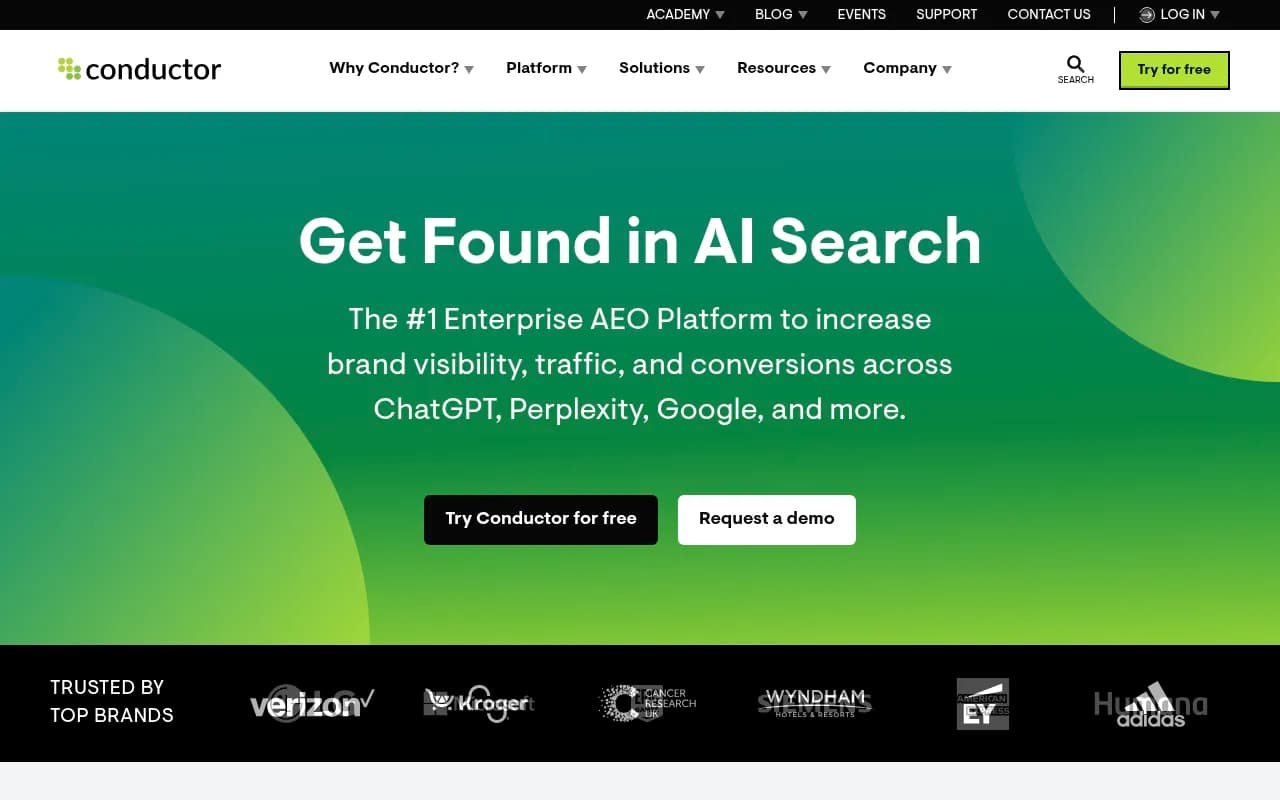
Conductor provides enterprise-grade monitoring focused on AI crawler activity and AI discoverability, with clear "what they see vs what they miss" framing.
Server-level crawler monitoring:
If you want to analyze crawler behavior at the server level, you can parse your access logs directly. Look for user-agents like:
GPTBotChatGPT-UserClaudeBotPerplexityBotGoogle-ExtendedApplebot-ExtendedMeta-ExternalAgent
Tools like GoAccess, AWStats, or custom log analysis scripts can help. But this requires technical expertise and doesn't provide the context and insights that dedicated AI visibility platforms offer.
What most platforms are missing:
The majority of AI visibility tools—Otterly.AI, Peec.ai, AthenaHQ, Search Party, Birdeye, Omnia—focus exclusively on citation tracking. They'll tell you where your brand appears in AI responses, but they can't tell you whether AI crawlers are even visiting your site.
That's like trying to improve your SEO without access to Google Search Console. You can see rankings, but you can't see crawl errors, indexing issues, or technical problems.
The Bigger Picture: From Monitoring to Optimization
Crawler logs are just the starting point. The real value comes from closing the action loop:
-
Find the gaps: Use crawler logs to identify which pages AI models read and which they ignore. See where competitors are getting crawled but you're not.
-
Create content that ranks in AI: Generate articles, comparisons, and guides based on what crawler behavior tells you AI models value. Structure content to match their preferences.
-
Track the results: Monitor whether AI crawlers return to index your new content. Watch your visibility scores improve as AI models start citing your pages.
This is what separates optimization platforms from monitoring dashboards. Most competitors stop at step one—they show you data but leave you stuck. Platforms like Promptwatch close the loop by helping you act on crawler insights.
What to Do Next
If you're not tracking AI crawler behavior, you're optimizing blind. Here's how to get started:
-
Set up crawler monitoring: Choose a platform that provides real-time AI crawler logs (Promptwatch, Profound, or Scrunch AI).
-
Audit your current crawler coverage: Which pages are AI crawlers visiting? Which are they ignoring? Where are they hitting errors?
-
Identify your high-performer patterns: What do your most-crawled pages have in common? Reverse-engineer the content structure, topics, and technical setup.
-
Fix technical barriers: Resolve robots.txt blocks, 404 errors, slow load times, and JavaScript rendering issues preventing crawler access.
-
Create content that matches AI preferences: Use your crawler insights to guide content creation. Structure for scannability, answer questions directly, include data and examples.
-
Monitor whether crawlers return: Track crawl frequency, depth, and time on page for your new content. Adjust based on what works.
The brands winning in AI search aren't guessing. They're using crawler logs to reverse-engineer exactly what AI models value—then creating content that gets crawled, indexed, and cited.
Start with the data. The rest follows.