Key takeaways
- Profound is a solid enterprise AI visibility monitoring platform, covering 9+ AI search engines with strong prompt management and share-of-voice reporting
- Its main limitation: it's primarily a tracking tool. It tells you where you're invisible but doesn't help you fix it -- no content generation, no AI crawler logs, no Reddit/YouTube tracking
- Pricing starts around $500/month and is geared toward mid-market and enterprise brands, not smaller teams or agencies
- If you need to go beyond monitoring and actually optimize your AI search presence, you'll need either a different platform or a second tool alongside Profound
- Best fit: enterprise marketing teams that want structured AI visibility reporting and have a separate content team to act on the data
The AI search visibility space has gotten crowded fast. A year ago, most marketing teams were still debating whether ChatGPT and Perplexity even mattered for brand discovery. Now there are dozens of platforms claiming to track, optimize, and improve how your brand shows up in AI-generated answers.
Profound is one of the more established names in that category. It's been around long enough to have real customers, real data, and a reasonably polished product. But "established" doesn't always mean "right for you." This review covers what Profound actually does, where it genuinely delivers, and where it leaves you on your own.
What Profound is and what it tracks
Profound is an enterprise AI visibility platform. Its core job is to show you how your brand appears (or doesn't appear) across AI search engines -- ChatGPT, Perplexity, Google AI Overviews, Gemini, Claude, and several others.
Profound

You set up a prompt library -- the questions your target customers might ask AI engines -- and Profound runs those prompts across the AI models you care about. It then shows you:
- Whether your brand was mentioned in the response
- Where you ranked relative to competitors
- How often you appeared vs. how often competitors appeared (share of voice)
- How responses change over time
That's the core loop. It's genuinely useful for getting a structured picture of your AI search presence, especially if you're managing a large brand with multiple product lines and need to track dozens or hundreds of prompts systematically.
Where Profound actually delivers
Prompt management at scale
Profound's prompt library is one of its stronger features. You can organize prompts by topic, funnel stage, or persona, which matters when you're tracking 200+ queries across multiple AI models. Most lighter-weight tools make this feel like a spreadsheet hack. Profound treats it more like a proper workflow.
Share-of-voice reporting
The share-of-voice view -- how often your brand appears vs. competitors across a defined prompt set -- is clean and easy to present to stakeholders. If you need to show an executive team that your AI visibility is improving (or declining), this is the kind of output that makes sense in a slide deck.
Multi-model coverage
Profound covers a reasonable range of AI engines. Tracking how your brand appears differently in ChatGPT vs. Perplexity vs. Google AI Overviews is legitimately valuable because those models pull from different sources and behave differently. A brand that dominates in one model can be nearly invisible in another.
Enterprise-grade structure
Profound is built for teams, not individuals. There's proper role management, the ability to handle multiple brands or clients, and reporting that's designed to be shared. If you're a mid-to-large marketing org that needs structured visibility data, the product feels like it was designed with you in mind.
Where Profound breaks down
This is where it gets honest.
It monitors. It doesn't optimize.
Profound will tell you that your competitor is appearing in 68% of AI responses for "best project management software for remote teams" while you're appearing in 12%. That's useful information. What it won't do is tell you why that gap exists, which specific content is missing from your site, or help you create content to close it.
That's a significant gap. Knowing you're invisible is step one. Steps two and three -- understanding what to fix and actually fixing it -- require either a different tool or a lot of manual work.
No AI crawler logs
One of the most underrated capabilities in this space is understanding how AI crawlers actually interact with your website. Which pages are they reading? How often are they returning? Are there errors preventing them from indexing your content? Profound doesn't offer this. You're essentially flying blind on the technical side of AI discoverability.
No content generation
Some platforms in this space have moved toward generating content that's specifically engineered to close AI visibility gaps -- articles, comparison pages, listicles grounded in real prompt data. Profound hasn't gone there. It's a data platform, not a content platform.
No Reddit or YouTube tracking
This matters more than it sounds. AI models like ChatGPT and Perplexity frequently cite Reddit threads, YouTube videos, and third-party review sites in their responses. If a Reddit thread is driving your competitor's AI visibility, you'd want to know that. Profound doesn't surface this.
Pricing is enterprise-only in practice
Profound's pricing isn't publicly listed in a simple tiered format, but based on what's publicly known, it's positioned well above what a small team or independent agency can justify. If you're not spending at least $500-1,000/month on this category, Profound probably isn't the right starting point.
How Profound compares to alternatives
Here's a straightforward comparison of Profound against other platforms in the AI visibility space:
| Platform | AI models tracked | Content generation | Crawler logs | Reddit/YouTube tracking | Pricing tier |
|---|---|---|---|---|---|
| Profound | 9+ | No | No | No | Enterprise |
| Promptwatch | 10+ | Yes (Content Agents) | Yes | Yes | $99-$579/mo |
| Otterly.AI | 3-4 | No | No | No | SMB/Mid-market |
| AthenaHQ | 5+ | No | No | No | Mid-market |
| Peec AI | 4-5 | No | No | No | SMB |
| Scrunch AI | 5+ | No | No | No | Mid-market |
The pattern is consistent: most platforms in this space, including Profound, are monitoring-first. They show you the problem. They don't help you solve it.
Promptwatch is the clearest exception -- it's built around an action loop that goes from gap identification to content creation to tracking results. If you're evaluating Profound specifically because you want to improve your AI visibility (not just measure it), that distinction matters.

Profound vs. Promptwatch: the key difference
Profound and Promptwatch overlap significantly on the monitoring side. Both track brand mentions across major AI engines, both show share-of-voice data, both let you build prompt libraries.
The difference is what happens after you see the data.
With Profound, you see that you're losing to competitors in certain prompt categories. Then you take that information to your content team, brief them manually, and hope they produce something that AI models will eventually cite.
With Promptwatch, the Answer Gap Analysis shows you exactly which prompts competitors are visible for but you're not -- and the Content Agents generate articles, comparisons, and briefs grounded in that specific gap data, prompt volumes, and citation patterns. Then page-level tracking shows you when those new pages start getting cited by AI models.
That's a meaningfully different product philosophy. Profound is a measurement tool. Promptwatch is trying to be an optimization engine.
Neither approach is wrong -- it depends on what you actually need.
Other alternatives worth knowing
If Profound's price point is the issue, there are lighter-weight options:
Otterly.AI covers the basics of AI brand monitoring at a lower price point, though it's limited to a few AI models and has no content or crawler features.
Otterly.AI

Peec AI is another monitoring-focused option with a simpler interface, good for teams just getting started with AI visibility tracking.

AthenaHQ sits closer to Profound in terms of positioning -- mid-market to enterprise, monitoring-focused, with decent prompt management.

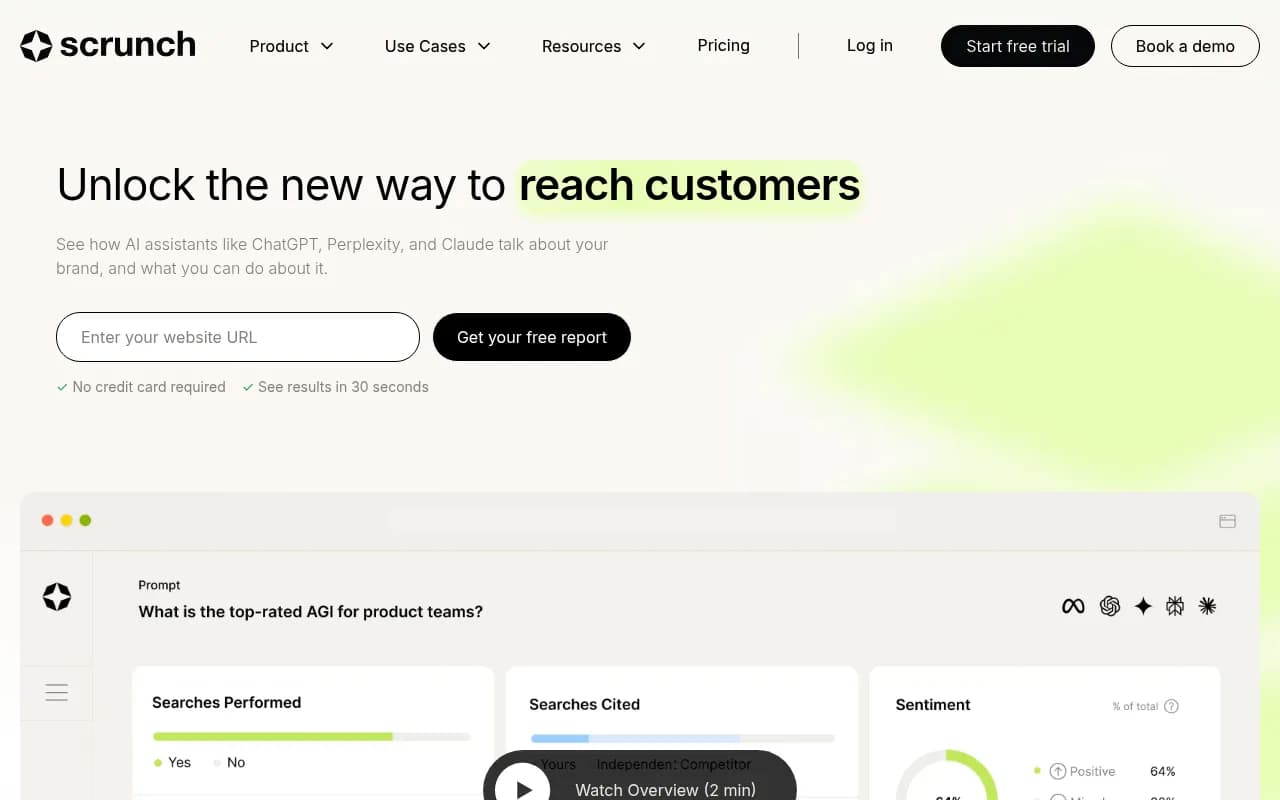
Scrunch AI is worth a look if you want something with a cleaner UI and don't need the full enterprise feature set.
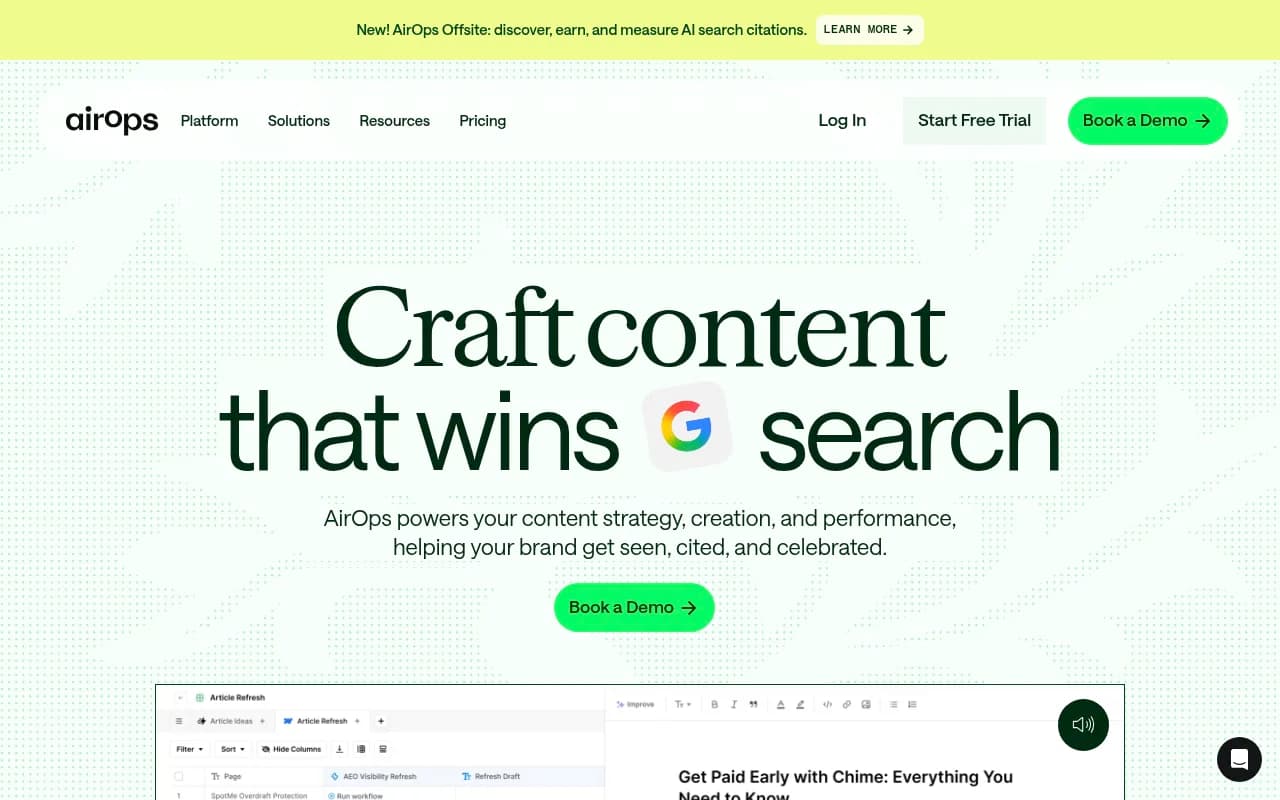
For teams that want to go beyond monitoring entirely, Search Atlas and AirOps both offer content-generation capabilities alongside visibility tracking, though neither has Promptwatch's depth of AI-specific prompt data.
Who Profound is actually built for
Profound makes the most sense for:
- Enterprise marketing teams at brands with significant AI search exposure (financial services, SaaS, healthcare, e-commerce) who need structured, reportable visibility data
- Teams with a dedicated content function that can act on the monitoring data independently
- Organizations that need multi-brand or multi-product tracking with proper role management
- Marketing leaders who need to present AI visibility metrics to executives or boards and want clean, professional reporting
Profound is probably not the right fit for:
- Smaller teams or agencies that can't justify enterprise pricing
- Teams that want a single platform to both identify gaps and fix them
- Brands that are just starting to think about AI visibility and need guidance on where to begin
- Anyone who needs to understand the technical side of AI crawling and indexing
The honest verdict
Profound is a competent enterprise monitoring platform. The prompt management is solid, the share-of-voice reporting is presentation-ready, and the multi-model coverage is real. If your job is to track AI visibility and report it upward, Profound does that job.
But it stops there. In a category where the real value is helping brands actually improve their AI search presence -- not just measure it -- Profound's monitoring-only approach is a genuine limitation. You'll know exactly how invisible you are. You just won't get much help becoming less invisible.
If that's a dealbreaker, you're looking at a different set of tools. If structured, enterprise-grade monitoring is what you actually need, Profound is worth a closer look.