Key takeaways
- Healthcare citations go to authorities. NIH alone earns 5.46% of healthcare citations, and government and public health sites add another 7.06%.
- Travel and auto are dominated by intermediaries. Booking and search sites earn 2.42% of travel citations, and marketplaces plus review sites earn 27.27% of automotive citations.
- Software citations favor docs and help centers (2.64%), followed by vendor sites (2.01%) and review sites and analysts (1.57%).
- Concentration varies a lot. The top 20 healthcare domains earn 15.54%, while the 17 charted travel domains earn only 4.18%.
- The right move differs by industry: publish evidence-backed pages in healthcare, keep listings clean in travel and auto, and keep docs crawlable in software.
Why look at ChatGPT citations by industry
A generic "get cited by AI" checklist falls apart quickly. A hospital, an airline, a SaaS vendor and a car maker all compete for citations, but ChatGPT pulls from completely different kinds of sources for each of them. If you optimize your own site and ignore the sites ChatGPT actually reads, you are working on the wrong half of the problem.
This guide pulls together four first-party reports from Promptwatch Data, which is built on 26B+ analyzed citations, prompts and responses collected from the real interfaces of AI platforms. The numbers are each domain's share of all citations in that industry, not a share of the charted domains.
One caveat before the numbers. The reports cover different date ranges, so don't compare them point by point. Healthcare covers Sep 9 to Oct 8, 2026. Travel and software cover Sep 28 to Oct 4, 2026. Automotive covers all of August 2026. Treat the cross-industry comparison as a pattern, not a scoreboard.

The four industries side by side
| Industry | Period | Leader | Dominant source type | Charted domains' combined share |
|---|---|---|---|---|
| Healthcare | Sep 9 to Oct 8, 2026 | NIH (5.46%) | Government and public health (7.06%) | 15.54% (top 20) |
| Travel | Sep 28 to Oct 4, 2026 | Skyscanner (0.78%) | Booking and search (2.42%) | 4.18% (17 domains) |
| Software | Sep 28 to Oct 4, 2026 | GitHub (1.2%) | Docs and help centers (2.64%) | 7.89% (23 domains) |
| Automotive | Aug 1 to 31, 2026 | Autotrader (5%) | Marketplaces and listings (14.65%) | about 37% (31 domains) |
The short version: healthcare rewards authority, travel and auto reward being listed well on intermediaries, and software rewards documentation.
Healthcare: authority wins
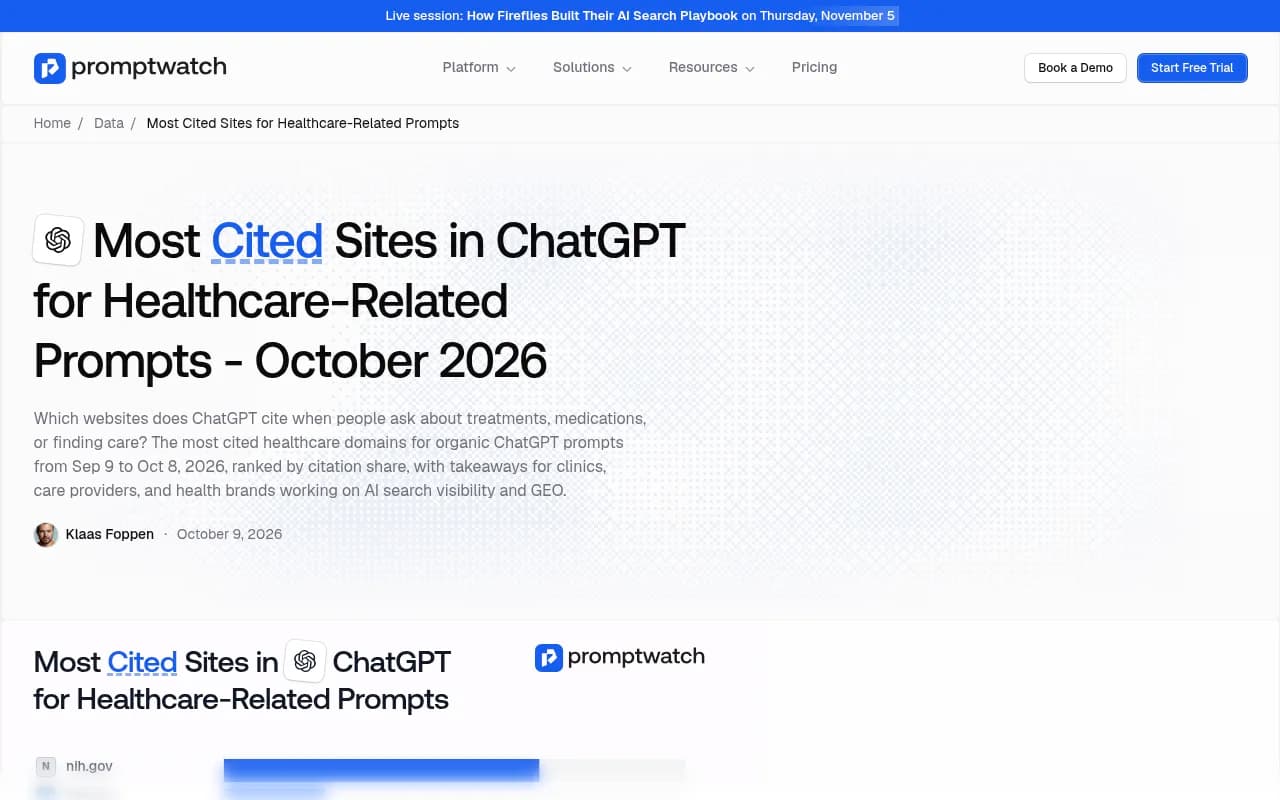
Promptwatch analyzed organic healthcare prompts covering treatments, medications, insurance and finding doctors. The report is at Most Cited Sites in ChatGPT for Healthcare-Related Prompts.
Who gets cited
The top of the chart reads like a reference library, not a marketing list:
| Rank | Domain | Share of healthcare citations |
|---|---|---|
| 1 | NIH (six nih.gov subdomains) | 5.46% |
| 2 | FDA | 1.76% |
| 3 | NHS | 1.10% |
| 4 | American Society of Plastic Surgeons | 0.64% |
| 5 | American Academy of Dermatology | 0.54% |
| 6 | Mayo Clinic | 0.49% |
| 7 | Cleveland Clinic | 0.40% |
| 8 | Boots | 0.28% |
| 9 | Doctify | 0.23% |
| 9 | WebMD | 0.23% |
NIH is the story here. PubMed Central accounts for 2.38% and PubMed for 2.33%, and NIH as a whole earns more than the FDA, NHS, CMS and SAMHSA combined. By source type, government and public health sites take 7.06%, NIH and medical research 5.46%, medical associations 1.39%, hospitals and clinics 0.89%, reviews and directories 0.46%, and pharmacies (Boots only) 0.28%.
Two details I find telling. First, Mayo Clinic and Cleveland Clinic are the only hospitals in the chart, and the AAD and ASPS together (1.18%) out-earn both of them combined. Specialty associations beat famous hospital brands. Second, review sites barely register. Doctify and WebMD are the only ones, at 0.23% each.
What to do about it
- Back clinical claims with peer-reviewed studies and link to PubMed or PubMed Central, since that is what ChatGPT itself leans on.
- Keep pages consistent with FDA, CDC, NHS and NICE guidance. An answer built from those sources will tend to contradict a page that disagrees with them.
- Work with the medical associations in your specialty. If you are a dermatology or plastic surgery practice, the AAD and ASPS pages shape the answer more than your own blog does.
- Keep Doctify and WebMD profiles complete, because they are the review and directory sources that show up.
Most citations in this category go to sources you don't own. Mention counts alone will miss that, so you need reporting by domain and source type. Promptwatch's own write-up on AI visibility for healthcare covers what to track, including local doctor prompts.
Travel: booking and search sites lead
The travel report covers organic prompts about planning trips, comparing flights and finding things to do: Most Cited Sites in ChatGPT for Travel-Related Prompts.
Who gets cited
| Domain | Share of travel citations |
|---|---|
| Skyscanner (.net and .com) | 0.78% |
| Going.com | 0.52% |
| Tripadvisor | 0.49% |
| Kayak | 0.37% |
| Airbnb | 0.27% |
| 0.27% | |
| Expedia | 0.13% |
The whole chart of 17 domains earns just 4.18%, so travel is the most fragmented of the four industries. No one owns the answer. By source type, booking and search sites take 2.42%, reviews and advice (Tripadvisor, Trustpilot, Which?) 0.86%, guides and reference 0.37%, Reddit 0.27%, tours 0.16% and government (transportation.gov) 0.1%.
Surprises: Going.com, a flight-deal service, beats Tripadvisor, and Expedia sits at 0.13%, level with Lonely Planet and Time Out. Size of brand clearly isn't the filter.
What to do about it
- Keep listings accurate on Skyscanner, Kayak, Airbnb and Expedia.
- Collect reviews on Tripadvisor and Trustpilot.
- Get featured in guides like Lonely Planet and Time Out.
Because the field is so spread out, one more tactic matters: track many prompts across countries and languages. A hotel in Lisbon and a tour operator in Bali face entirely different citation sets.
Software: docs, vendors and review sites
The software report is at Most Cited Sites in ChatGPT for Software-Related Prompts.
Who gets cited
| Domain | Share of software citations |
|---|---|
| GitHub | 1.2% |
| learn.microsoft.com | 0.98% |
| G2 | 0.73% |
| AWS docs | 0.41% |
| Google Cloud docs | 0.35% |
| Gartner | 0.34% |
| Capterra | 0.32% |
| Intercom | 0.28% |
| Zapier | 0.24% |
The 23 charted domains earn 7.89%. By source type: docs and help centers 2.64%, vendor sites 2.01%, review sites and analysts 1.57% (G2, Gartner, Capterra, Software Advice), GitHub 1.2% and app stores 0.47%.
Big tech is spread across several domains each. Microsoft earns 1.35% across three, Google 0.98% across four, AWS 0.69% across two and OpenAI 0.42% across two. Docs plus vendor sites total 4.65%, about three times review sites and analysts. Still, the four review and analyst sites together out-earn any single vendor, Microsoft included. So reviews matter, but docs matter more.
What to do about it
- Publish crawlable docs and help pages. This is the biggest source type.
- Keep a public GitHub presence if you sell to developers.
- Keep G2 and Capterra profiles current, since they shape the shortlist and how you get described.
Crawlability is the part teams skip. If a docs site renders poorly or blocks bots, none of the above helps, and IP-verified AI crawler logs will tell you whether GPTBot and friends are actually reading it.
Automotive: marketplaces beat manufacturers
The automotive report covers all of August 2026, so it is older than the other three: ChatGPT Citation Share in the Automotive Industry.
Who gets cited
| Domain | Share of automotive citations |
|---|---|
| Autotrader | 5% |
| Cars.com | 4.6% |
| Chevrolet.com | 2.62% (4th) |
| 1.34% (9th) | |
| birchwoodgroup.co.uk (dealer group) | 0.28% |
Seven of the top eight domains are marketplaces or research and review sites. Chevrolet is the only manufacturer in the top eight. By source type, marketplaces and listings take 14.65%, reviews and research 12.62% (27.27% together), manufacturer sites 7.92%, and community and news, dealerships, and service and finance sites combined 2.12%.
If you sell cars, the strongest position in ChatGPT answers is a good listing, not a good brand site. Manufacturer sites still earn 7.92%, which is real, but they are second to the intermediaries.
What to do about it
- Keep inventory and pricing accurate on marketplaces.
- Maintain DealerRater, Birdeye and BBB profiles.
- Give each model and trim a stable page with structured specs.
What the four reports tell you together
Concentration varies widely
Healthcare's top 20 earn 15.54% and automotive's 31 domains earn about 37%, while software's 23 earn 7.89% and travel's 17 earn 4.18%. In concentrated industries a handful of sources define the answer. In fragmented ones, you win by showing up in many places.
Three different kinds of gatekeeper
- Healthcare: authorities (government, research, associations).
- Travel and auto: commercial intermediaries (booking sites, marketplaces).
- Software: documentation and help centers.
Reddit is uneven
Reddit shows up in travel (0.27%) and automotive (1.34%) but not in the healthcare or software charts. It is also less reliable overall than it used to be. Promptwatch Data found that reddit.com's share of ChatGPT citations fell from roughly 4% to 0.5% on August 14, 2026, so don't build a plan around it. More broadly, ChatGPT drew only 0.46% of its citations from social platforms in the week of Sep 28 to Oct 4, while Google AI Overviews drew 12.2% (social media citations report).
Most citations go to pages you don't control
This is the uncomfortable common thread. In every industry, the biggest share of citations goes to third-party sources. Your own site is one input. The practical work is half content and half reputation management across listings, associations, review platforms and docs.
A practical playbook
- Pull your industry's citation chart and note which source types lead.
- Check your presence on each of the top ten domains. Is the profile complete, accurate and current?
- Run the prompts your customers use, by country and city where it matters, and record which sources ChatGPT cites.
- Compare your own pages against the ones that get cited. What content type are they? Promptwatch Data shows product pages are the most cited content type in ChatGPT at 22.4%, followed by landing pages and listicles.
- Check crawler access and fix errors before writing anything new.
- Refresh content on a schedule. According to Promptwatch's content half-life study, landing pages and docs stay cited longest, while news loses half its pages within 36 days.
- Re-measure monthly. The reports above will look different next quarter.
Tools for tracking this
You need three things: prompt tracking across models, citation reporting by domain and source type, and some way to connect citations to your own traffic and crawler data. Plenty of tools cover the first. Fewer cover all three.
| Need | What to look for | Example options |
|---|---|---|
| Prompt and visibility tracking | Real-interface data, country and city targeting | Promptwatch, Profound, Peec AI, Otterly.AI |
| Citation and source analysis | Reports by domain and source type, third-party mentions | Promptwatch, Profound |
| Crawler and traffic attribution | IP-verified bot logs, AI referral analytics | Promptwatch |
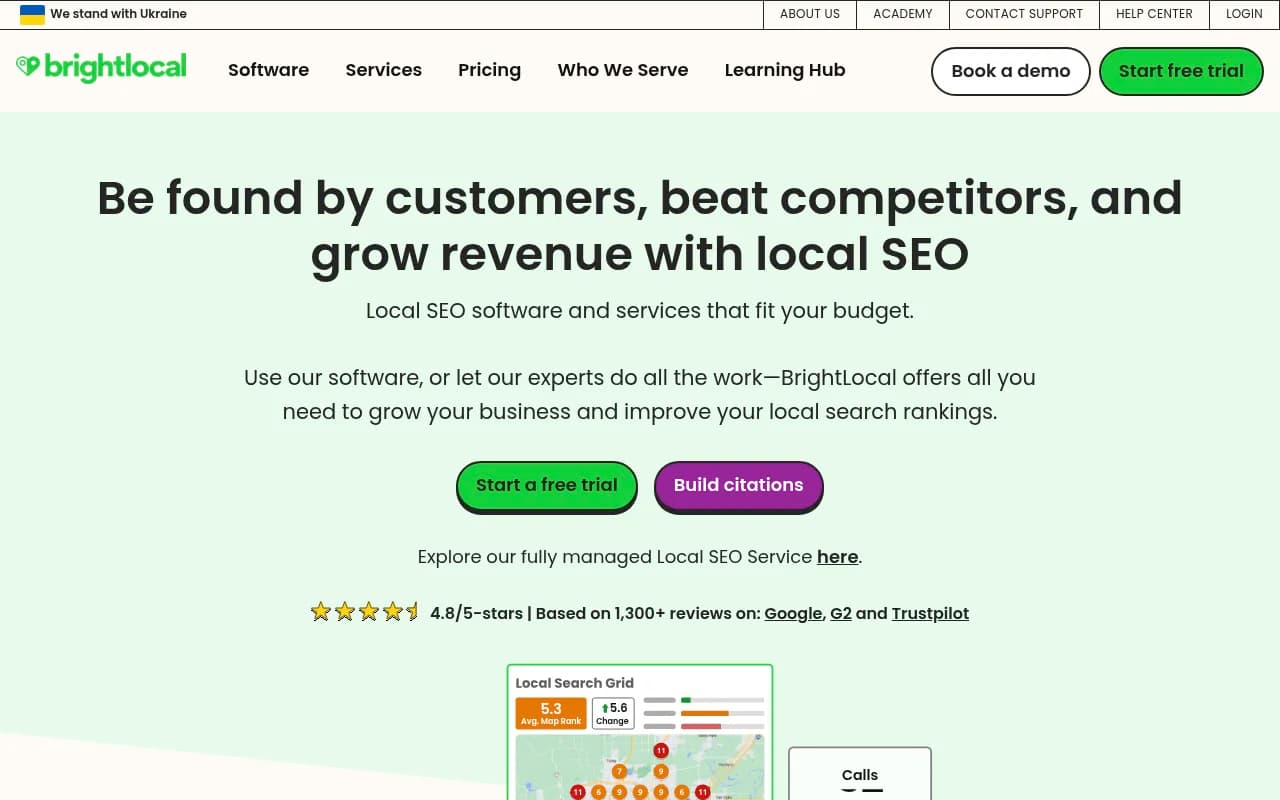
| Local and listing management | Multi-location listing accuracy | Yext, BrightLocal |
Promptwatch is the end-to-end option here. It tracks ChatGPT, Gemini, Perplexity, Claude and Google AI Overviews from the real interfaces, shows which pages and third-party sources get cited, logs AI crawler visits, and measures AI-referred visitors. Its Content Agent and Action Board then turn the gaps into work. If you want to see where you stand first, the free AI visibility report needs no login, and pricing is listed publicly.
Profound


Otterly.AI

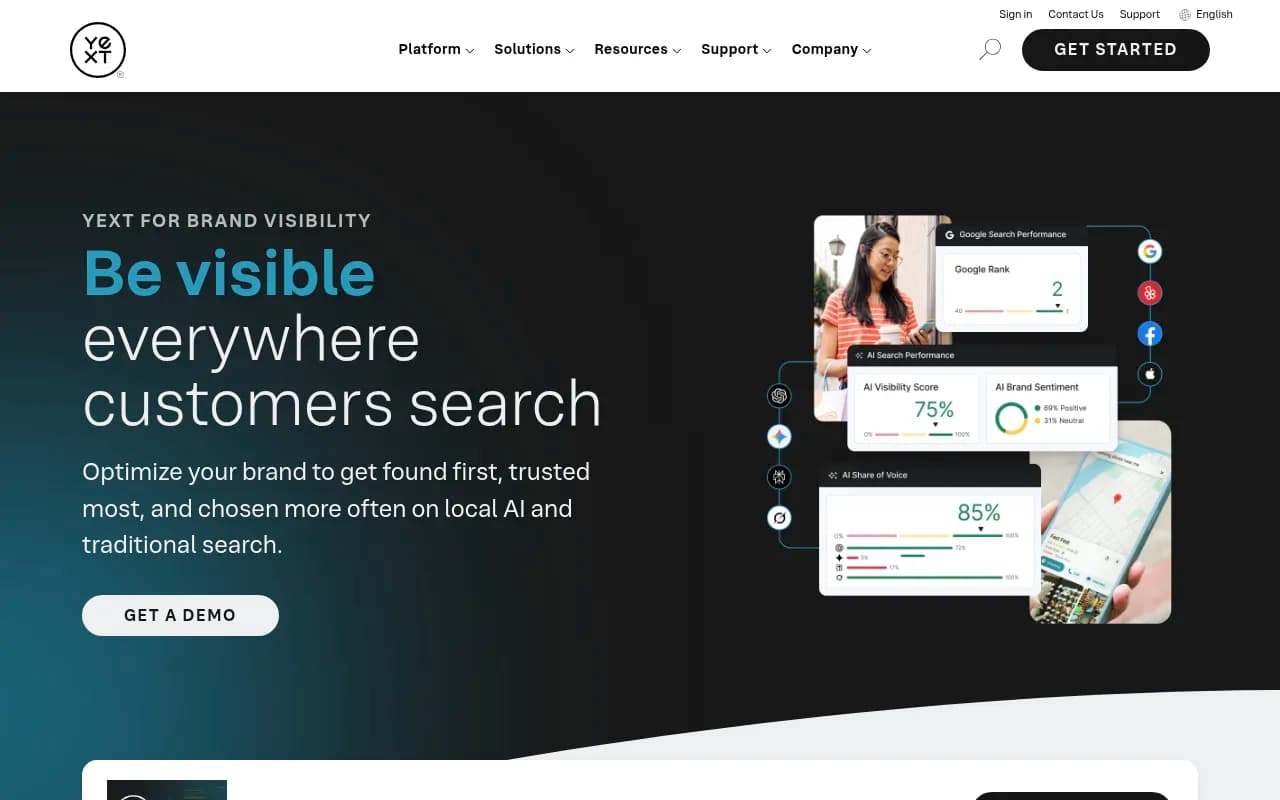
For listing accuracy, which matters a lot in travel and auto, a listings platform helps.
The GEO software directory at bestgeosoftware.com lists more options if you want to compare beyond these.
What I'd do first in each industry
- Healthcare: audit which of your pages cite primary research, and fix the ones that don't. Then check what the AAD, ASPS or equivalent says about your service line.
- Travel: pick the three booking sites that matter for your market and make every listing complete.
- Software: open your docs site in a crawler log and confirm bots can read it before publishing anything else.
- Automotive: audit marketplace inventory accuracy, then build one structured page per trim.
The pattern across all four is simple. ChatGPT cites what each industry already treats as the reference source, so your job is to be present, accurate and consistent in those places.