Key takeaways
- Ecommerce AI search work splits into three jobs: tracking what AI says about client products, fixing the pages AI reads, and proving the traffic and revenue that result. Few tools do all three.
- Product pages and landing pages are the most cited content types in ChatGPT, so catalog quality matters more than blog volume.
- Agencies should weigh multi-client management, white-label reporting, crawler data, and shopping coverage over a pretty visibility score.
- Monitoring-only tools are cheap and fine for pitches. Retainers need a platform that also helps you act and then measure.
- Most of the stack (feeds, schema, reviews, crawl access) is unglamorous. The tools only help if those basics are right.
Why ecommerce clients need a different AI search stack
A SaaS client wants to be named in a "best CRM for startups" answer. An ecommerce client wants a specific product to appear, with the right price, in stock, in a shopping card, next to the right competitors. That is a different problem, and generic brand-mention trackers handle it badly.
The upside is real. One analytics roundup from Raccoon AI, published September 2026, says AI-referred shoppers convert at about 12.3% versus 3.1% for other traffic. Treat that as a vendor-compiled figure, not gospel. But the direction matches what agencies report: AI visitors arrive with intent already formed.

The tools below fall into four buckets, and a good agency stack usually mixes two or three of them:
- AI visibility and GEO platforms (track and, ideally, fix)
- Ecommerce-specific AI shopping analytics
- Traditional SEO suites with AI add-ons
- Content and on-site discovery tools
What the data says about how AI cites ecommerce pages
Before picking tools, know what you are optimizing. Promptwatch Data looked at ChatGPT citations from Sep 28 to Oct 4, 2026. Product pages were the most cited type at 22.4%, landing pages followed at 16.8%, and listicles took 13.6%. On commercial prompts, where buyers compare options, product pages rose to 26.0%, landing pages to 20.6%, and listicles to 15.0%.
Translation for agencies: the product detail page is the citation surface. Complete specs, accurate pricing, and clear positioning on those pages beat another batch of blog posts. Getting listed in the roundups ChatGPT cites for the category is the second lever.
A few other findings worth knowing:
- Almost half of ChatGPT responses cite 10 or more unique domains, so there is room for mid-sized brands (source).
- Sites with domain rank 46-75 earned almost half of ChatGPT citations in August 2026, while DR 91-100 fell to about 3% (source). Small and mid-size stores are not locked out.
- ChatGPT cited social platforms for only 0.46% of citations from Sep 28 to Oct 4, 2026, while Google AI Overviews got 12.2% (source). Channel strategy differs by engine.
- Shopping cards appear on only a low single-digit percentage of web-search responses, far more on commercial and transactional prompts, and the rate moves in steps (source). That report is older, so check current behavior before quoting it to a client.
- From May 20 to Aug 17, 2026, ads showed up in 20.1% of ChatGPT web-search responses on average, peaking at 43.9% (source). Ecommerce clients now compete with paid placements inside AI answers.
What to look for in a tool when you run many ecommerce clients
I would score every candidate on these, in roughly this order:
- Real-interface data rather than only API calls, since shopping cards and citations can differ between the two.
- Product-level tracking, not just brand-level.
- Shopping and ad coverage, because that is where ecommerce revenue shows up.
- Crawler visibility. If AI bots can't read the catalog, nothing else matters.
- Traffic and conversion attribution tied to the client's store.
- Multi-client structure: separate projects, seats that don't cost per head, white-label PDFs.
- A path to action: briefs, content, or tasks, not only charts.
- Price per response, because ecommerce catalogs mean a lot of prompts.
Comparison table
| Tool | Type | Ecommerce relevance | Agency fit | Acts on gaps? |
|---|---|---|---|---|
| Promptwatch | End-to-end AI visibility and GEO platform | ChatGPT Shopping, Alexa product results, Ads Radar, crawler logs, visitor analytics | Agency plans, unlimited projects and seats | Yes: Action Board, Content Agent (Enterprise for agencies), Agent Chat |
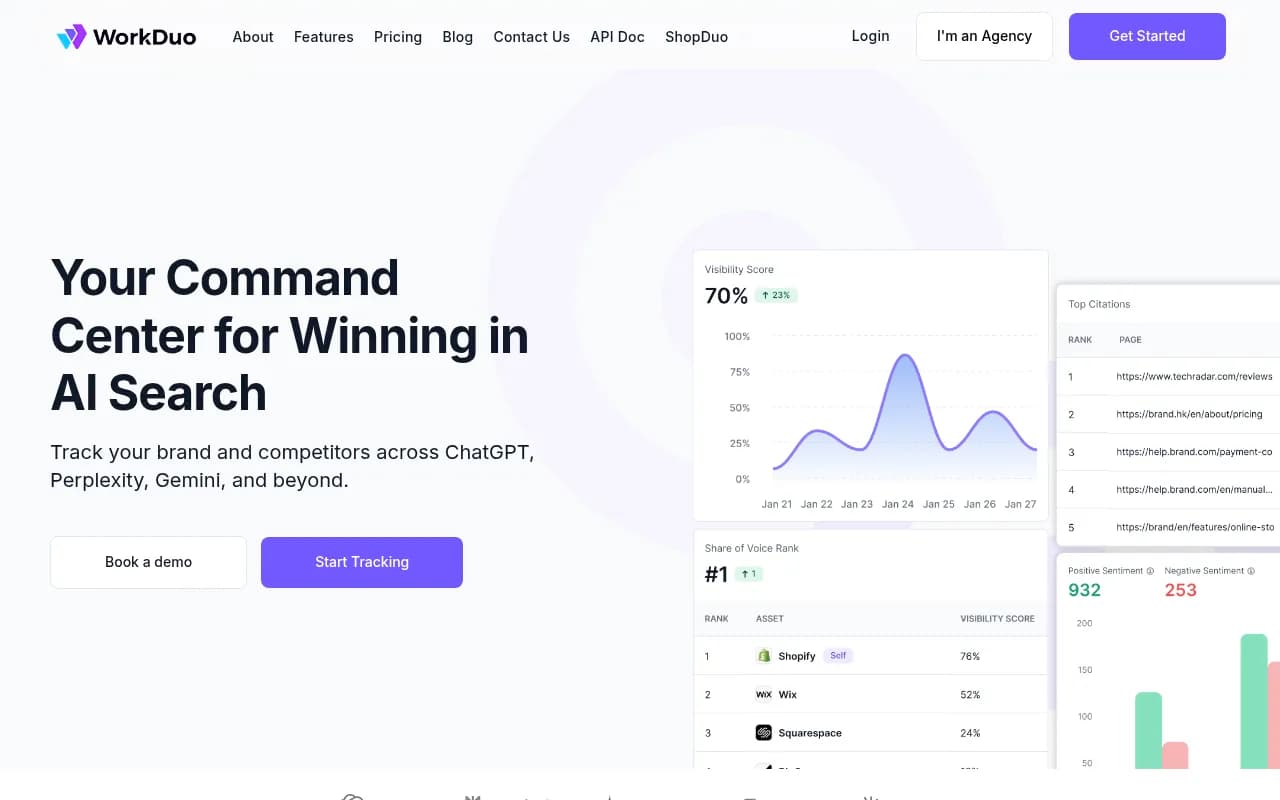
| WorkDuo | AI search analytics | Product-level tracking, source analysis | White-label dashboards, API, benchmarking | Mostly reporting |
| Profound | Enterprise visibility platform | AI shopping analytics | Strong monitoring, higher price | Monitoring-led |
| Semrush | SEO suite with AI toolkit | Familiar workflow, fixed prompt sets | Good if clients already use it | Limited |
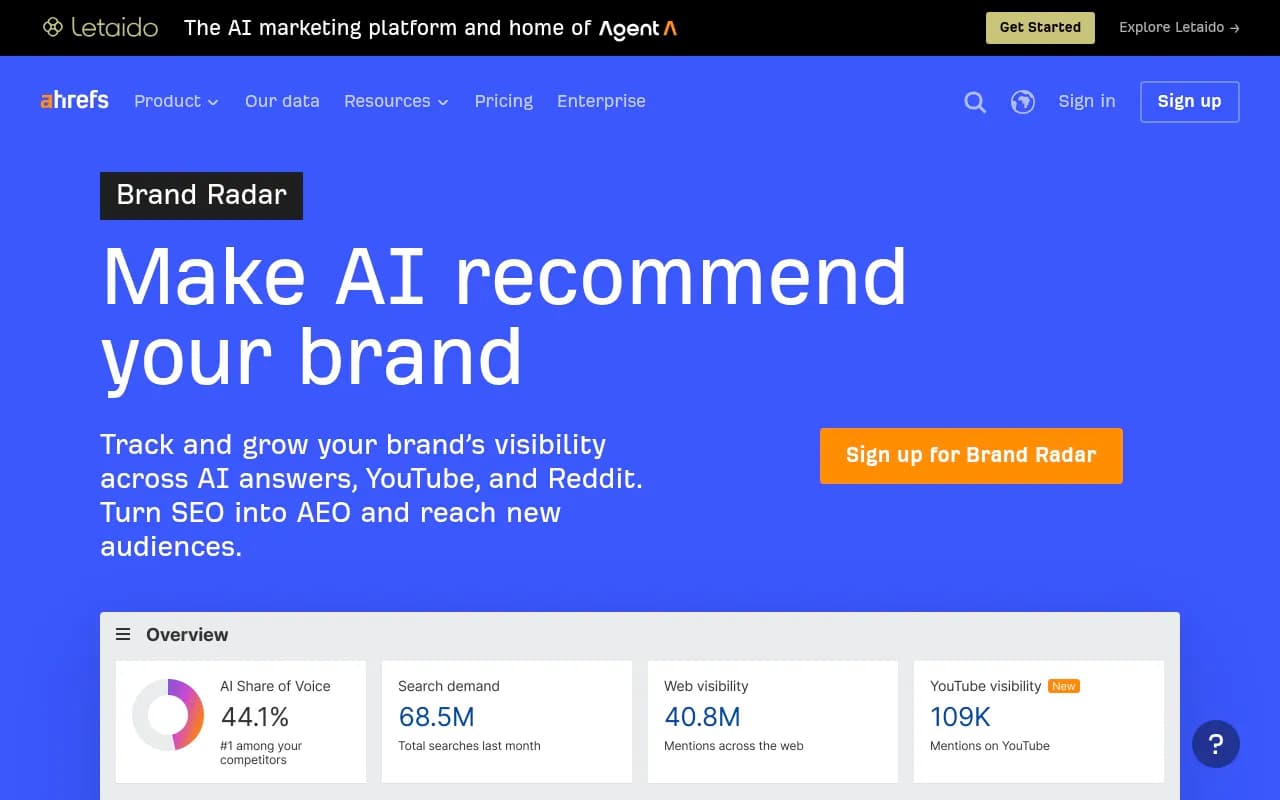
| Ahrefs Brand Radar | SEO suite add-on | Brand mentions in AI answers | Good for SEO-first teams | Limited |
| Otterly.AI / Peec AI | Basic prompt trackers | Brand-level only | Cheap entry for pitches | No |
| Hypotenuse AI | Ecommerce content engine | Product descriptions at scale | Content production | Content only, no visibility data |
| Klaviyo / Omnisend | Lifecycle marketing | Converts AI traffic after arrival | Complementary | n/a |
Prices change often. Confirm on each vendor's pricing page.
The platforms, in more detail
Promptwatch
Promptwatch is the one I would put at the center of an agency stack, partly because it covers the ecommerce-specific pieces that most trackers skip. It tracks ChatGPT Shopping and Amazon Alexa product results (which products AI recommends and which competitors it picks instead), plus sponsored placements through Ads Radar. It pairs that with IP-verified AI crawler logs, so you can tell a client whether the problem is access or content, and visitor analytics to show AI-referred traffic and conversions.

The agency angle: Kick-off ($199/mo), Growth ($399/mo), and Scale ($799/mo) plans include unlimited projects, prompts, and team seats, all models, Agent Chat, crawler logs, visitor analytics, and Ads Radar. Scale adds tracking every 12, 6, or 1 hours, local GEO/SEO targeting, and Fact Check. Note that ChatGPT Shopping insights, the Content Agent, and white-label client portals sit on Business or Enterprise rather than the agency tiers, so scope that before you promise it to clients. Check promptwatch.com/pricing for current numbers.
What it does that dashboards don't: the Action Board turns gaps into a prioritized to-do list, Content Refresh suggests diffs for existing pages, and page tracking shows whether a fixed page actually gets cited. That loop is what justifies a retainer. Monks uses the Answer Gap Report to build content roadmaps for enterprise clients, and Crisp saw 2x higher conversion from AI traffic. Both are vendor-published, so read them as examples rather than guarantees.
Start with the free AI visibility report on a prospect's domain, or the 7-day trial for a client onboarding. Agency specifics are on the agencies page. There is also a head-to-head: Promptwatch vs Profound.
WorkDuo
WorkDuo is pitched squarely at agencies with multiple retail clients: client-ready dashboards, benchmarking, API access, and white-label workflows, starting around $33 per project per month according to Raccoon AI's roundup. That price is attractive for small stores. I haven't verified its feature depth independently, so run a pilot before moving clients over. The catalog also lists [tool:workduo-ai] as a workflow tool for GEO tasks.
Profound
Profound is a mature enterprise monitor that now includes AI shopping analytics. It tends to cost more than agencies like for a mid-size client roster, and it is monitoring-led, so the fixing happens elsewhere.
Profound

Semrush and Ahrefs Brand Radar
If your team already lives in Semrush or Ahrefs, adding their AI modules is the lowest-friction start. Expect fixed prompt sets and shallower AI-specific data than the dedicated platforms, with no crawler logs or AI traffic attribution.
Basic trackers: Otterly.AI, Peec AI, Rankscale
These are fine for a pitch deck or a small client who only wants a monthly mention count. They don't tell you why a product is missing or whether your fix worked.
Otterly.AI


ConvertMate and Hypotenuse AI
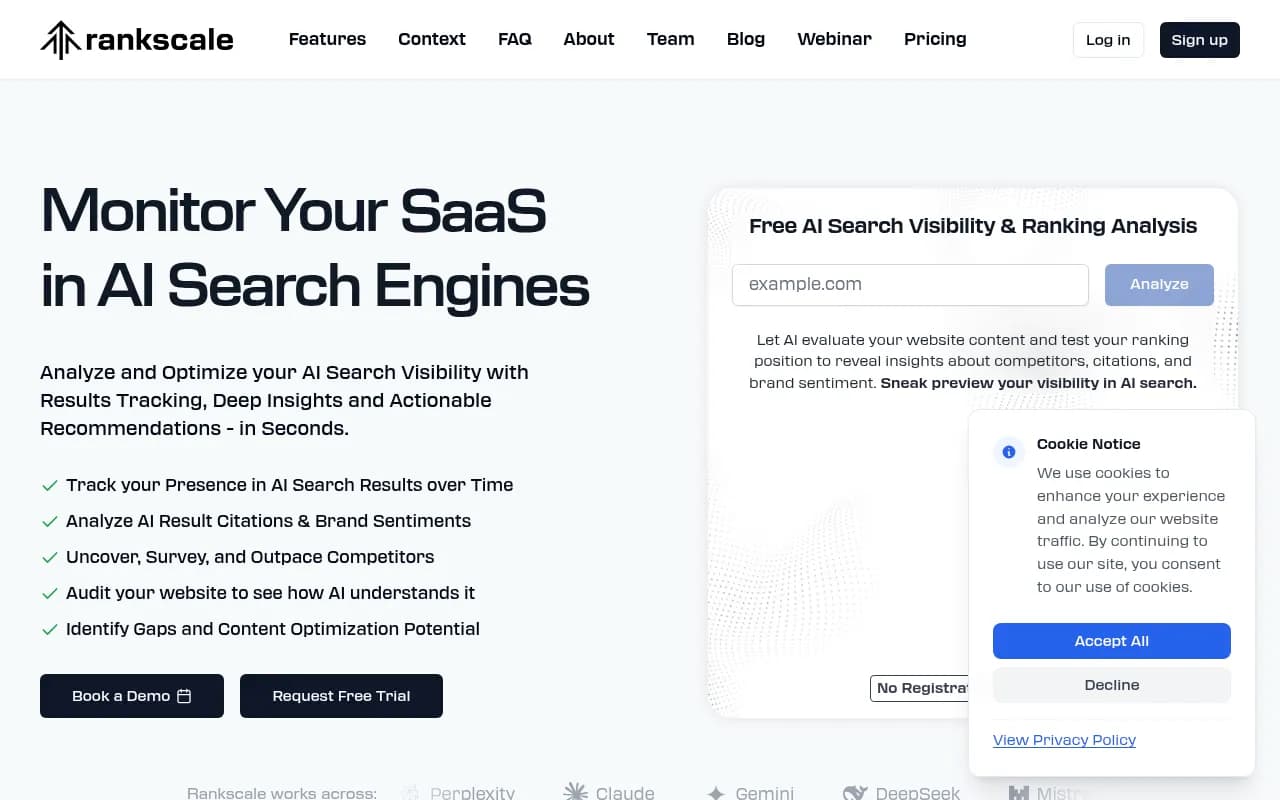
These address the other half of the job: product copy and listing optimization. ConvertMate is an AI SEO platform aimed at ecommerce stores, and Hypotenuse is built for product content at scale. Neither tells you what AI engines currently cite, so pair them with a visibility tool.
On-site discovery and support
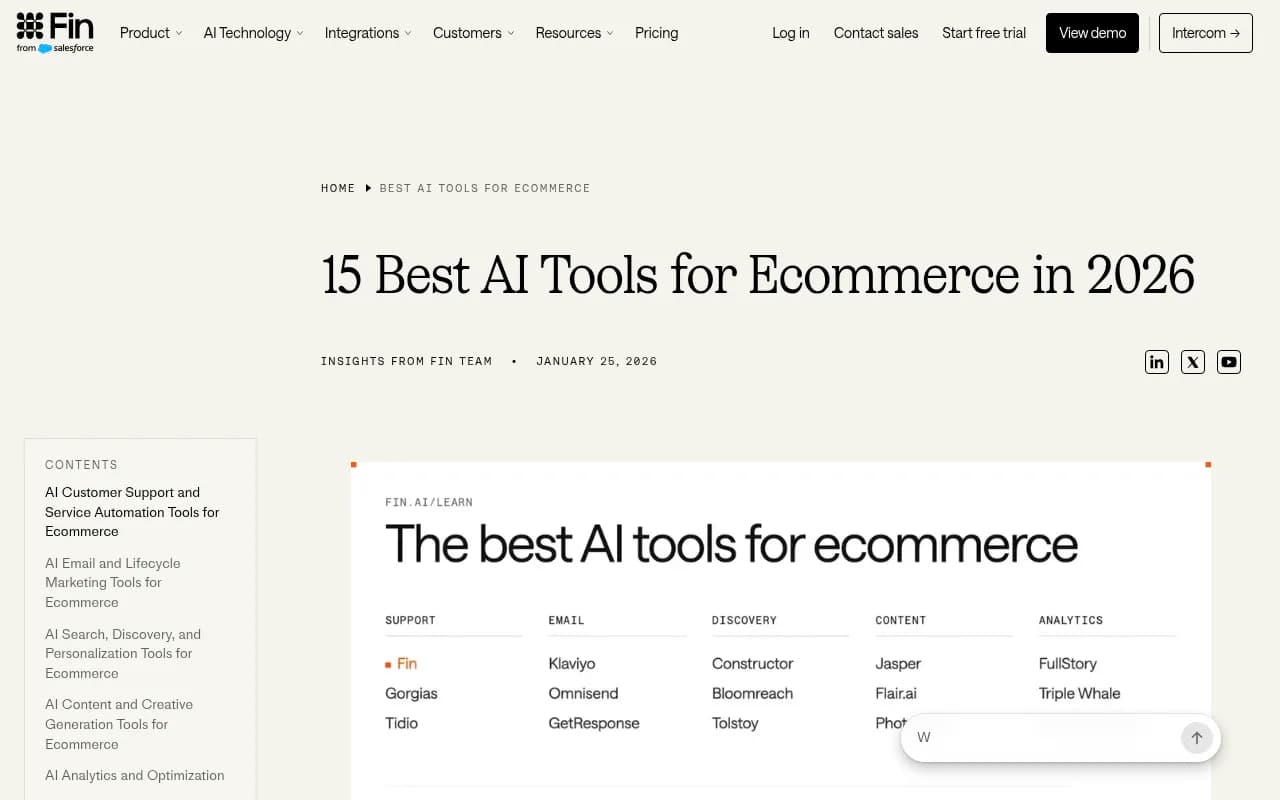
The Fin.ai roundup covers Bloomreach, Algolia, Nosto, and Zoovu for on-site AI search, plus Fin and Gorgias for support. These improve conversion once shoppers land, which matters when AI sends higher-intent visitors. They are a different category from AI search visibility, though agencies often get asked about both.
A workflow agencies can reuse per client
- Build prompt sets around buyer intent: category, comparison, "best X for Y", and branded product queries. Use personas if the client sells to distinct segments.
- Baseline visibility, share of voice, and which competitor products fill shopping cards.
- Check crawler access. Blocked bots or JavaScript-only product pages are the commonest hidden cause. Prerendering tools exist for this, and the free Agentic Readiness Check shows which AI crawlers can read a site.
- Fix the product pages first: complete Product schema, accurate prices and availability, a clean merchant feed.
- Publish comparison pages and pursue placement in the roundups ChatGPT already cites.
- Collect reviews on trusted third-party sites, since branded prompts lean on them (reviews hit 5.6% of branded citations in the Promptwatch content-type data).
- Tie AI visits to revenue. Note that ChatGPT stopped sending a referrer on October 8, 2026, so tag links with utm_source=chatgpt.com or your attribution will undercount.
- Re-measure monthly and refresh pages that decay. The content half-life data shows news pages losing half their citations in about five weeks while landing pages and docs hold for months, so prioritize evergreen product and category pages.
Picking a stack by agency size
| Agency situation | Suggested stack |
|---|---|
| Solo or 2-3 people, small stores | WorkDuo or a basic tracker for reporting, plus a product-copy tool |
| Mid-size, 10-30 ecommerce clients | Promptwatch agency plan as the core, existing SEO suite for keyword work |
| Enterprise retail clients | Promptwatch Enterprise or Business for Shopping, Content Agent, and white-label, plus on-site discovery tools |
| SEO-suite-first shop | Semrush or Ahrefs add-on to start, graduate when clients ask why a fix isn't working |
Common mistakes
- Reporting a single visibility score without separating coverage, prominence, and sentiment problems.
- Ignoring shopping cards and ads, then being surprised when a competitor owns the slot.
- Spending the budget on blog content when the product pages are thin.
- Judging a single day's result. Shopping and ad rates move in steps, so compare across several days.
- Skipping the crawl check.
For wider shortlists, the GEO software directory at bestgeosoftware.com and the tracker listings at ai-rank-tools.com are good places to compare options beyond the ones covered here.
Bottom line
If the client sells products, the stack has to reach the product page, the shopping card, and the checkout. Use a cheap tracker for pitches if you must, but build retainers on a platform that shows crawler behavior, traffic, and the next action, then verifies the fix. Pilot two tools on one real client for a month before committing the whole roster.