Scalenut Review 2026
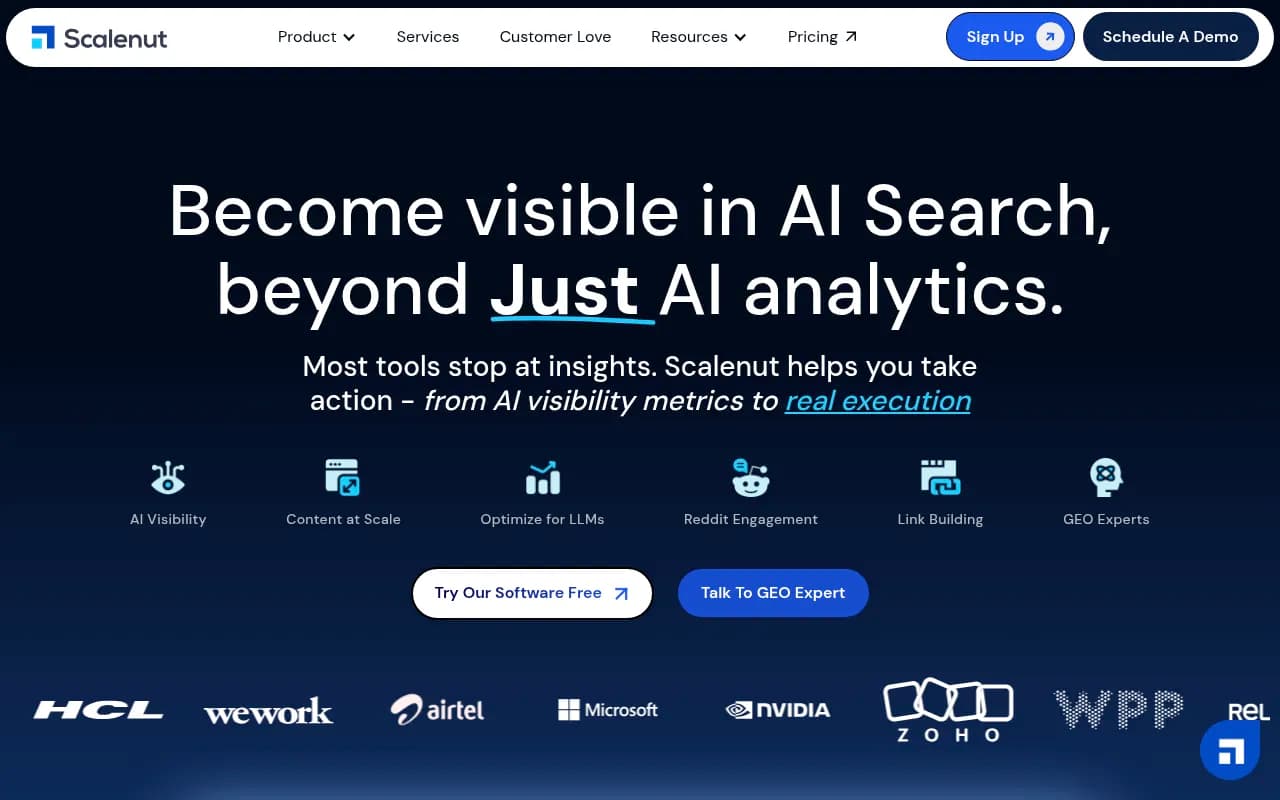
Content optimization and AI search visibility tool helping businesses improve rankings and performance across traditional and AI search engines.
Key Takeaways:
- All-in-one GEO platform: Track AI brand mentions, optimize content for AI citations, and monitor visibility across ChatGPT, Perplexity, Claude, and Google AI Overviews in one dashboard
- Dual optimization approach: Built for both traditional SEO (Google rankings) and Generative Engine Optimization (GEO) to ensure content surfaces in AI-generated answers
- Two service models: DIY software for in-house teams or fully managed expert-led GEO services for hands-off execution
- Comprehensive toolkit: Includes AI writing (Cruise Mode), keyword planner, content optimizer, traffic analyzer, backlinks marketplace, and on-page SEO auditing
- Best for: Marketing teams, SEO agencies, and content-driven businesses (SaaS, e-commerce, publishers) looking to dominate both traditional and AI search channels
Scalenut has evolved from a pure AI content writing tool into a full-stack SEO and GEO (Generative Engine Optimization) platform. Founded to help businesses scale content production, the company pivoted hard into AI search visibility as ChatGPT and other LLMs began reshaping how people discover information. Today, Scalenut serves over 1 million users—from solo marketers to enterprise brands—who need to rank in Google while also getting cited by AI engines.
The platform's core thesis is simple: traditional SEO isn't enough anymore. When users ask ChatGPT or Perplexity for recommendations, your brand either shows up or it doesn't. Scalenut aims to solve both problems—Google rankings and AI citations—in one unified workflow. It's positioned as a direct alternative to tools like Surfer SEO, Clearscope, and Frase, but with a unique focus on AI search visibility that most competitors haven't fully addressed yet.
Scalenut offers two distinct paths: a self-service software platform for teams that want full control, and expert-managed GEO services for businesses that prefer to outsource execution. This dual model is rare in the SEO tools space and reflects the reality that many companies lack the in-house expertise to optimize for AI search engines.
AI Visibility Tracking (GEO Watchtower)
Scalenut's standout feature is its AI visibility tracker, which monitors how often your brand gets mentioned across major LLMs—ChatGPT, Claude, Perplexity, Gemini, and Google AI Overviews. You can track specific prompts (e.g. "best project management tools for remote teams") and see whether AI engines mention your brand, how often, and in what context. The platform shows historical trends, competitor share of voice, and prompt coverage—essentially giving you a "rank tracker" for AI search.
Unlike tools that simulate AI responses via API calls, Scalenut claims to track real user prompts and real AI outputs, though the exact methodology isn't fully transparent on their site. The tracker also monitors Reddit mentions and social listening, recognizing that AI engines increasingly cite Reddit threads and community discussions. You can see which of your pages AI engines are crawling and citing, helping you identify which content is actually working in the AI search ecosystem.
This feature directly competes with Promptwatch (which specializes in AI visibility monitoring) but packages it inside a broader SEO suite rather than as a standalone tool.
Content Creation (Cruise Mode)
Cruise Mode is Scalenut's AI writing assistant, designed to produce SEO-optimized blog posts in under 5 minutes. You enter a target keyword, and the tool generates a full outline based on SERP analysis and competitor content. It pulls in related keywords, suggests headings, and writes sections on demand. The interface is clean and fast—closer to Jasper or Copy.ai than traditional SEO tools.
What sets Cruise Mode apart is its dual optimization: it scores content for both traditional SEO (keyword density, readability, semantic relevance) and GEO (AI-citability). The platform analyzes whether your content is structured in a way that AI engines can easily parse and cite. This includes factual accuracy signals, source attribution, clear answers to common questions, and structured data markup.
The AI writing quality is solid but not exceptional—it produces serviceable first drafts that need human editing. The real value is in the research and structure it provides upfront, saving 30-60 minutes of manual SERP analysis per article. For agencies cranking out 50+ articles per month, this efficiency gain is significant.
Keyword Research & Topic Clustering
Scalenut's Keyword Planner helps you discover content opportunities by grouping related keywords into topic clusters. You enter a seed keyword (e.g. "email marketing"), and it returns hundreds of related terms organized by search intent, difficulty, and volume. The clustering is more sophisticated than basic keyword tools—it identifies parent topics, subtopics, and question-based queries that map to different stages of the buyer journey.
The tool also shows which keywords competitors rank for, helping you identify gaps in your content strategy. You can export keyword lists directly into Cruise Mode to start writing, creating a seamless workflow from research to execution. The data sources include Google Keyword Planner, Ahrefs-style metrics, and Scalenut's proprietary AI search data.
One limitation: the keyword database isn't as comprehensive as Ahrefs or SEMrush for competitive intelligence. If you need deep backlink analysis or historical ranking data, you'll still need a dedicated SEO tool. But for content ideation and planning, Scalenut's keyword planner is more than sufficient for most teams.
Content Optimizer & Auditing
The Content Optimizer analyzes existing pages and suggests improvements to boost rankings. You paste in a URL or draft, select a target keyword, and Scalenut scores your content against top-ranking competitors. It flags missing keywords, suggests related terms to include, checks readability, and evaluates on-page SEO factors like title tags, meta descriptions, and header structure.
What's unique here is the GEO score—a proprietary metric that predicts how likely AI engines are to cite your content. The score considers factors like factual density, source credibility signals, structured data, and answer-box optimization. Scalenut recommends specific edits to improve your GEO score, such as adding statistics with citations, reformatting content into Q&A sections, or including expert quotes.
The Content Audit feature automatically scans your entire site, identifies pages losing traffic, and prioritizes refresh opportunities. It's similar to Surfer SEO's Content Audit but with added AI search optimization recommendations. You can bulk-optimize pages in a few clicks, making it practical for large content libraries (500+ pages).
Traffic Analyzer & Performance Tracking
Scalenut's Traffic Analyzer connects to Google Search Console and Google Analytics to show how your pages and keywords perform over time. You can track rankings, impressions, clicks, and CTR for individual keywords, and see which pages are gaining or losing traffic. The interface is cleaner and more intuitive than GSC's native dashboard, with better filtering and visualization.
The tool also tracks AI search performance separately—showing which pages are getting cited by AI engines and which prompts are driving visibility. This dual-channel reporting (Google + AI search) is rare and valuable, giving you a complete picture of organic performance across both ecosystems.
One gap: Scalenut doesn't offer rank tracking for traditional SEO keywords outside of GSC data. If you want daily rank updates for 500+ keywords, you'll need a tool like AccuRanker or SEMrush. But for most content teams, GSC integration is sufficient.
Backlinks Marketplace
Scalenut's Backlinks Marketplace is a curated network of high-authority sites where you can acquire backlinks without cold outreach. You browse available link placements (e.g. guest posts, niche edits, resource page links), select the ones that fit your niche, and Scalenut handles the rest—content creation, outreach, and link insertion.
Pricing is transparent: each link has a fixed cost (typically $100-$500 depending on domain authority and niche relevance). The marketplace includes DR 50+ sites across industries like SaaS, finance, health, and e-commerce. Scalenut vets publishers to ensure links are contextual, do-follow, and placed on relevant pages.
This feature competes with services like HARO, Respona, and BuzzStream, but with less manual work. The downside: you're limited to Scalenut's network, which is smaller than what you'd find through manual outreach. For teams that lack link-building expertise or time, it's a solid shortcut. For advanced SEOs, it's a nice-to-have but not a replacement for a full link-building strategy.
On-Page SEO (OnPage Pro)
OnPage Pro is Scalenut's technical SEO crawler, similar to Screaming Frog or Sitebulb. It scans your site for on-page issues—broken links, missing alt tags, duplicate content, slow-loading pages, and schema markup errors. The tool prioritizes fixes by impact, so you tackle high-value issues first.
What's different: OnPage Pro integrates with Scalenut's content optimizer, so you can fix on-page issues and optimize content in the same workflow. For example, if the crawler flags a page with a missing meta description, you can generate an optimized one using Scalenut's AI and deploy it directly. This tight integration saves time compared to juggling multiple tools.
The crawler is fast and accurate but not as feature-rich as Screaming Frog for advanced technical SEO. It's best suited for content-focused sites (blogs, SaaS, e-commerce) rather than large enterprise sites with complex technical issues.
AI Humanizer
Scalenut includes an AI detection and humanization tool that rewrites AI-generated content to bypass detectors like GPTZero and Originality.ai. You paste in AI-written text, and the tool rewrites it to sound more human—varying sentence structure, adding conversational phrases, and reducing repetitive patterns.
This feature is controversial (and arguably unnecessary if you're editing AI drafts properly), but it reflects a real concern among content teams worried about Google's stance on AI content. The humanizer works reasonably well but isn't foolproof—heavily AI-generated content will still need manual editing to sound natural.
Integrations & Ecosystem
Scalenut integrates with Google Search Console, Google Analytics, WordPress, Shopify, and Webflow for seamless publishing and tracking. The WordPress plugin lets you write and optimize content directly in the CMS, then publish with one click. There's also a Chrome extension for on-the-fly keyword research and content analysis.
API access is available on higher-tier plans, allowing developers to build custom workflows or integrate Scalenut into existing content pipelines. The platform supports multi-language content creation (50+ languages), making it viable for global teams.
One notable gap: no native integrations with project management tools like Asana, Trello, or Monday.com. If you're managing a large content team, you'll need to manually sync tasks between Scalenut and your PM tool.
Managed GEO Services
For businesses that don't want to DIY, Scalenut offers fully managed GEO services. You book a strategy call, and their team builds a custom plan to increase your AI search visibility. Services include content creation, optimization, backlink acquisition, and ongoing monitoring—essentially a done-for-you SEO + GEO agency.
This is a smart move for Scalenut, as many companies lack the expertise to optimize for AI search engines. The managed service competes with traditional SEO agencies but with a specific focus on AI visibility. Pricing isn't publicly listed (it's custom based on scope), but expect to pay $3,000-$10,000+ per month for comprehensive services.
Who Is Scalenut For?
Scalenut is best suited for:
- SaaS companies with 5-50 employees that rely on organic traffic for customer acquisition and need to rank in both Google and AI search results
- Content marketing agencies managing 10-50 client sites that need to scale content production while maintaining SEO quality
- E-commerce brands with large product catalogs (500+ SKUs) that want to optimize category and product pages for AI-driven shopping queries
- B2B marketers in competitive niches (marketing, sales, HR tech) where AI engines are increasingly influencing buyer research
- Publishers and media companies producing 50+ articles per month that need efficient workflows and AI search optimization
It's less ideal for:
- Enterprise SEO teams that need advanced technical SEO features, custom reporting, or white-label solutions (Scalenut is more mid-market focused)
- Local businesses or service providers where AI search visibility is less critical than local SEO and Google Maps rankings
- Solopreneurs on tight budgets who only need basic keyword research and content writing (cheaper alternatives like Surfer SEO or Frase may suffice)
Pricing & Value
Scalenut offers usage-based pricing with no publicly listed tiers on their main site. Based on industry reports and user reviews, expect:
- Essential Plan: ~$39-$79/mo for basic content creation, keyword research, and limited AI visibility tracking (suitable for freelancers or small blogs)
- Growth Plan: ~$149-$199/mo for full access to Cruise Mode, Content Optimizer, Traffic Analyzer, and expanded AI tracking (best for small teams and agencies)
- Pro Plan: ~$299-$499/mo for unlimited content creation, priority support, API access, and advanced GEO features (for agencies and mid-market companies)
- Managed Services: Custom pricing starting around $3,000/mo for done-for-you GEO execution
All plans include a 7-day free trial. There's no freemium tier, so you'll need to commit to a paid plan after the trial.
Compared to competitors:
- Surfer SEO: $89-$219/mo (similar content optimization, no AI search tracking)
- Clearscope: $189-$399/mo (better content briefs, no AI visibility features)
- Frase: $45-$115/mo (cheaper, less comprehensive)
- Promptwatch: $49-$299/mo (dedicated AI visibility tracking, no content creation tools)
Scalenut sits in the middle—more expensive than basic tools like Frase, but cheaper than enterprise platforms like MarketMuse. The value proposition depends on how much you care about AI search visibility. If GEO is a priority, Scalenut offers unique features you won't find elsewhere. If you only care about Google rankings, Surfer SEO or Clearscope may be better fits.
Strengths
- Unified platform for SEO + GEO: The only tool that combines traditional SEO optimization with AI search visibility tracking in one dashboard
- Real AI visibility data: Tracks actual brand mentions across ChatGPT, Perplexity, Claude, and Google AI Overviews (not just API simulations)
- Fast content creation: Cruise Mode produces SEO-optimized drafts in minutes, saving significant research time
- Backlinks marketplace: Simplifies link acquisition without manual outreach, though limited to Scalenut's network
- Managed services option: Ideal for businesses that lack in-house SEO expertise and want expert-led execution
Limitations
- Keyword data not as deep as Ahrefs/SEMrush: The keyword planner is solid for content ideation but lacks the competitive intelligence depth of dedicated SEO tools
- AI writing quality is average: Cruise Mode produces serviceable drafts but requires heavy editing—don't expect publish-ready content
- No rank tracking for traditional SEO: Relies on Google Search Console data; no daily rank updates for specific keywords
- Pricing transparency: No public pricing tiers make it hard to evaluate cost upfront; you have to book a demo or start a trial
- Limited integrations: No native connections to project management tools (Asana, Trello) or CRMs, which complicates workflow for larger teams
Bottom Line
Scalenut is the best all-in-one platform for businesses that want to dominate both Google and AI search. If you're a SaaS company, agency, or content-driven brand that needs to rank in traditional search while also getting cited by ChatGPT and Perplexity, Scalenut delivers unique value that competitors don't match. The AI visibility tracking alone justifies the cost for brands serious about GEO.
However, if you only care about Google rankings and don't need AI search optimization, you're paying for features you won't use—Surfer SEO or Clearscope may be better fits. And if you need enterprise-grade technical SEO or deep competitive intelligence, you'll still need to supplement Scalenut with tools like Ahrefs or Screaming Frog.
Best use case in one sentence: Mid-market SaaS companies and agencies that need to scale SEO content production while ensuring their brand shows up in AI-generated answers.
Tags:
Similar and alternative tools to Scalenut