Key Takeaways
- Promptwatch is the only complete optimization platform in this comparison—it tracks AI visibility across 10 models, shows you content gaps with Answer Gap Analysis, generates AI-optimized content, and monitors AI crawler behavior with real-time logs
- Brandlight.ai focuses on brand protection and reputation management rather than performance marketing—it's built for enterprises worried about what AI says about them, not teams trying to rank higher
- Bluefish AI carves out a niche in brand safety but lacks the depth needed for true AI search optimization—no content generation, no crawler logs, no traffic attribution
- For most B2B and SaaS teams, Promptwatch delivers the best ROI at $99-579/mo with actionable insights, while Brandlight.ai and Bluefish serve narrow use cases at premium price points
- The market is splitting: monitoring-only tools (Brandlight.ai, Bluefish) show you data but leave you stuck; optimization platforms (Promptwatch) help you actually improve your AI visibility
The AI Visibility Landscape in 2026: Why These Three Tools Matter
AI search is no longer a future trend—it's here. According to 2025 industry data, AI referral traffic already accounts for 1.08% of all website traffic, with IT companies seeing 2.80% of their traffic from AI sources. By 2027, AI search is projected to reach 28% of total global search traffic. The Wall Street Journal reports the global SEO services market will grow from $81.46 billion in 2024 to $171.77 billion by 2030, with AI search optimization driving much of this 13.24% CAGR growth.
In this rapidly evolving landscape, three platforms have emerged with distinct positioning: Promptwatch as the comprehensive optimization leader, Brandlight.ai as the enterprise reputation guardian, and Bluefish AI as the brand safety specialist. But which one actually helps you rank higher in ChatGPT, Perplexity, and Claude?

After testing all three platforms extensively, the differences are stark. Let's break down what each tool does, who it's built for, and where the real value lies.
Promptwatch: The Complete AI Search Optimization Platform
What Makes Promptwatch Different
Promptwatch isn't just another monitoring dashboard—it's the only platform in this comparison built around taking action. While Brandlight.ai and Bluefish stop at showing you data, Promptwatch closes the loop from discovery to optimization to results.
The platform tracks your brand visibility across 10 AI models: ChatGPT, Perplexity, Google AI Overviews, Google AI Mode, Claude, Gemini, Meta/Llama, DeepSeek, Grok, Mistral, and Copilot. But tracking is just the starting point.
The Action Loop: Find Gaps, Create Content, Track Results
1. Find the gaps: Answer Gap Analysis shows exactly which prompts competitors are visible for but you're not. You see the specific content your website is missing—the topics, angles, and questions AI models want answers to but can't find on your site. This is backed by 880M+ citations analyzed across the platform.
2. Create content that ranks in AI: The built-in AI writing agent generates articles, listicles, and comparisons grounded in real citation data, prompt volumes, persona targeting, and competitor analysis. This isn't generic SEO filler—it's content engineered to get cited by ChatGPT, Claude, and Perplexity.
3. Track the results: See your visibility scores improve as AI models start citing your new content. Page-level tracking shows exactly which pages are being cited, how often, and by which models. Close the loop with traffic attribution (code snippet, GSC integration, or server log analysis) to connect visibility to actual revenue.
This cycle—find gaps, generate content, track results—is what makes Promptwatch an optimization platform, not just another tracker. Neither Brandlight.ai nor Bluefish offers anything close to this workflow.
Capabilities That Support Real Optimization
AI Crawler Logs: Real-time logs of AI crawlers (ChatGPT, Claude, Perplexity, etc.) hitting your website—which pages they read, errors they encounter, how often they return. Understand how AI engines discover your content and fix indexing issues. Brandlight.ai and Bluefish lack this entirely.
Prompt Intelligence: Volume estimates and difficulty scores for each prompt, plus query fan-outs that show how one prompt branches into sub-queries. Prioritize high-value, winnable prompts instead of guessing.
Citation & Source Analysis: See exactly which pages, Reddit threads, YouTube videos, and domains AI models cite in their responses. Know where to publish and what to optimize.
Reddit & YouTube Insights: Surface discussions that directly influence AI recommendations—a channel most competitors ignore entirely.
ChatGPT Shopping Tracking: Monitor when your brand appears in ChatGPT's product recommendations and shopping carousels.
Competitor Heatmaps: Compare your AI visibility vs competitors across LLMs. See who's winning for each prompt and why.
Pricing and Target Audience
Promptwatch offers three tiers:
- Essential: $99/mo (1 site, 50 prompts, 5 articles)
- Professional: $249/mo (2 sites, 150 prompts, 15 articles, crawler logs, state/city tracking)
- Business: $579/mo (5 sites, 350 prompts, 30 articles)
Agency and Enterprise custom pricing available. Free trial included.
Target audience: Marketing teams, SEO teams, digital agencies, and any brand that wants to be visible and rank in AI search results. Particularly strong for B2B SaaS, tech companies, and service businesses.
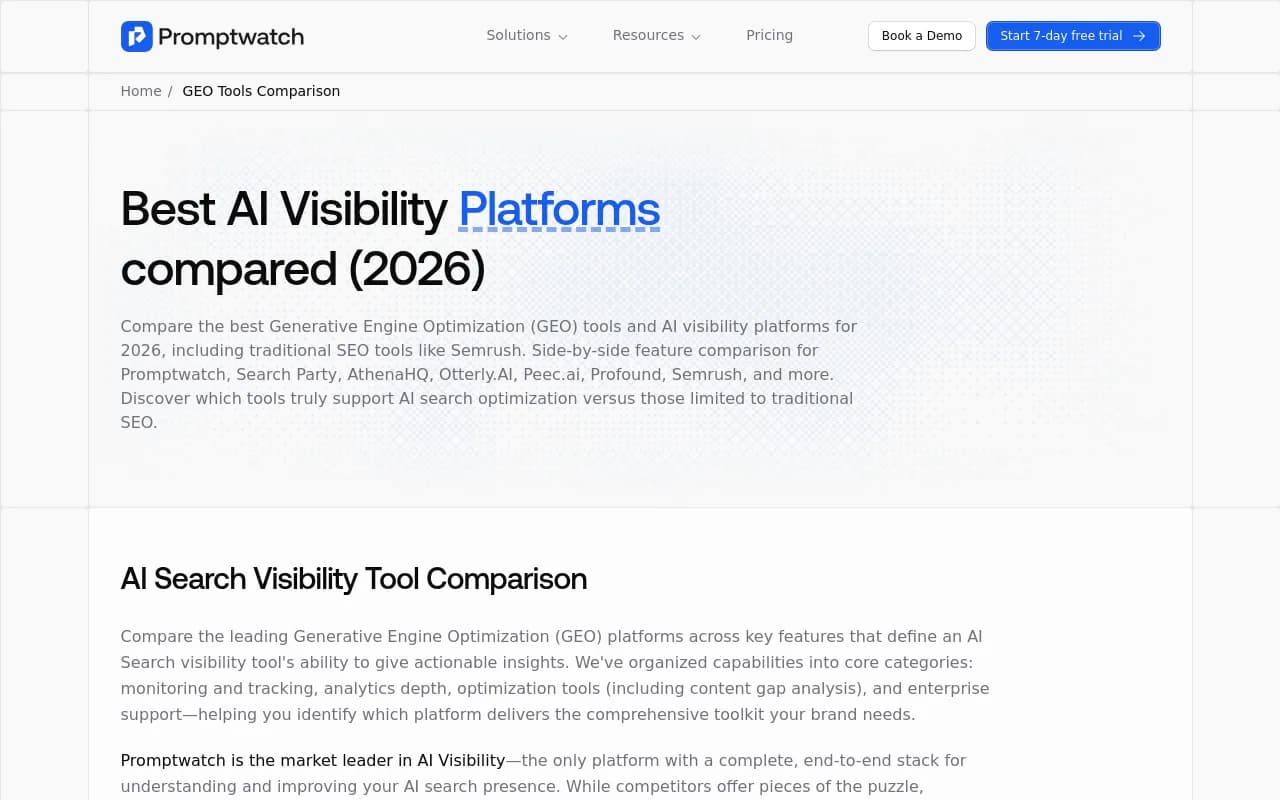
Brandlight.ai: Enterprise Brand Protection and Reputation Management
What Brandlight.ai Actually Does
Brandlight.ai positions itself as a reputation management suite rather than a performance marketing tool. According to EWR Digital's analysis, "Bluefish AI carves out a niche by focusing less on performance marketing and more on brand protection."
The platform monitors how AI engines discover and recommend your brand, with a focus on preventing negative associations and protecting brand reputation. It's built for Fortune 500 companies and large enterprises worried about what ChatGPT and Perplexity say about them—not necessarily teams trying to rank higher.
Key Capabilities
- Brand mention tracking across major AI models
- Reputation monitoring and alert systems
- Sentiment analysis of AI-generated responses
- Competitive brand positioning insights
- Enterprise-grade reporting and dashboards
What's Missing
Brandlight.ai lacks the optimization tools that make Promptwatch valuable:
- No content gap analysis to show you what's missing
- No AI content generation to help you fix gaps
- No crawler logs to understand technical indexing issues
- No traffic attribution to connect visibility to revenue
- No Reddit or YouTube tracking
- No ChatGPT Shopping monitoring
The platform shows you data but doesn't help you act on it. For teams that need to improve their AI search rankings, this is a critical limitation.
Pricing and Target Audience
Brandlight.ai doesn't publish transparent pricing, which typically signals enterprise-level contracts starting at $1,000+/mo. The platform is built for:
- Large enterprises with established brands
- PR and communications teams focused on reputation
- Companies in regulated industries (finance, healthcare, legal)
- Brands worried about negative AI associations
If your primary concern is "what is ChatGPT saying about us?" rather than "how do we rank higher in AI search?", Brandlight.ai might fit. But for most marketing teams, it's overkill.
Bluefish AI: Brand Safety Specialist with Limited Depth
What Bluefish AI Offers
Bluefish AI occupies a similar niche to Brandlight.ai—brand safety and reputation monitoring rather than performance optimization. The platform tracks brand mentions across AI search engines and provides alerts when your brand appears in AI-generated responses.
Core Features
- Multi-engine brand mention tracking
- Sentiment and context analysis
- Competitive brand monitoring
- Alert systems for new mentions
- Basic reporting dashboards
Critical Gaps for Optimization
Like Brandlight.ai, Bluefish AI is a monitoring-only platform:
- No content creation or optimization tools
- No crawler logs or technical insights
- No traffic attribution or revenue connection
- No prompt intelligence or volume data
- No answer gap analysis
- Limited actionable recommendations
The platform tells you where you appear but doesn't help you appear more often or in better contexts.
Pricing and Positioning
Bluefish AI also lacks transparent pricing, suggesting enterprise-focused contracts. The platform targets:
- Enterprise marketing teams
- Brand management professionals
- Companies prioritizing brand safety over growth
- Organizations with compliance requirements
For teams focused on driving traffic and conversions from AI search, Bluefish AI doesn't deliver the tools needed to move the needle.
Head-to-Head Comparison: Which Platform Wins?
Feature Comparison Matrix
Monitoring Capabilities
- Promptwatch: 10 AI models, page-level tracking, owned-page brand mentions ✓
- Brandlight.ai: Major AI models, brand-level tracking ✓
- Bluefish AI: Major AI models, brand-level tracking ✓
Optimization Tools
- Promptwatch: Answer Gap Analysis, AI content generation, crawler logs, prompt intelligence ✓
- Brandlight.ai: None ✗
- Bluefish AI: None ✗
Traffic Attribution
- Promptwatch: Code snippet, GSC integration, server log analysis ✓
- Brandlight.ai: None ✗
- Bluefish AI: None ✗
Advanced Tracking
- Promptwatch: Reddit/YouTube insights, ChatGPT Shopping, competitor heatmaps ✓
- Brandlight.ai: Limited ✗
- Bluefish AI: Limited ✗
Content Creation
- Promptwatch: Built-in AI writing agent with citation data ✓
- Brandlight.ai: None ✗
- Bluefish AI: None ✗
Technical Insights
- Promptwatch: AI crawler logs, indexing analysis ✓
- Brandlight.ai: None ✗
- Bluefish AI: None ✗
Pricing Transparency
- Promptwatch: Clear tiers from $99-579/mo ✓
- Brandlight.ai: Enterprise only, no public pricing ✗
- Bluefish AI: Enterprise only, no public pricing ✗
Use Case Recommendations
Choose Promptwatch if you:
- Need to improve your AI search rankings and drive traffic
- Want actionable insights, not just monitoring data
- Need content creation tools to fix visibility gaps
- Want to track AI crawler behavior and technical issues
- Need to prove ROI by connecting visibility to revenue
- Operate a B2B SaaS, tech company, or digital agency
- Want transparent pricing and flexible plans
Choose Brandlight.ai if you:
- Are a Fortune 500 enterprise focused on brand protection
- Prioritize reputation management over performance marketing
- Have a dedicated PR/communications team monitoring brand mentions
- Operate in a regulated industry with compliance requirements
- Have budget for enterprise contracts without public pricing
- Don't need content optimization or traffic attribution
Choose Bluefish AI if you:
- Need basic brand safety monitoring
- Have similar enterprise requirements to Brandlight.ai
- Don't require deep optimization capabilities
- Are willing to pay premium prices for limited features
The Verdict: Promptwatch Delivers Complete Optimization
After testing all three platforms, the winner is clear for most use cases. Promptwatch is the only tool that helps you actually improve your AI search visibility—not just monitor it.
Brandlight.ai and Bluefish AI serve narrow niches: enterprise brand protection and reputation management. They're monitoring-only dashboards that show you data but leave you stuck. For Fortune 500 companies with dedicated PR teams and unlimited budgets, they might make sense. But for marketing teams trying to drive traffic and revenue from AI search, they're the wrong tools.
Promptwatch delivers the complete stack: tracking across 10 AI models, Answer Gap Analysis to find content opportunities, AI content generation to fix gaps, crawler logs to understand technical issues, and traffic attribution to prove ROI. It's the only platform that closes the loop from discovery to optimization to results.
The pricing reflects this value: Promptwatch starts at $99/mo with transparent tiers, while Brandlight.ai and Bluefish require enterprise contracts with undisclosed pricing. For B2B SaaS, tech companies, and digital agencies, Promptwatch offers dramatically better ROI.
How to Choose the Right Platform for Your Team
Questions to Ask Before Buying
1. What's your primary goal?
- If it's improving AI search rankings and driving traffic → Promptwatch
- If it's monitoring brand reputation and preventing negative mentions → Brandlight.ai or Bluefish AI
2. Do you need optimization tools or just monitoring?
- If you need content gap analysis, AI content generation, and crawler logs → Promptwatch
- If you only need to see where you're mentioned → Brandlight.ai or Bluefish AI
3. What's your budget?
- If you need transparent pricing and flexible plans → Promptwatch ($99-579/mo)
- If you have enterprise budgets for undisclosed contracts → Brandlight.ai or Bluefish AI
4. Who's using the platform?
- If it's marketing/SEO teams focused on growth → Promptwatch
- If it's PR/communications teams focused on reputation → Brandlight.ai or Bluefish AI
5. Do you need to prove ROI?
- If you need traffic attribution and revenue connection → Promptwatch
- If you're measuring brand sentiment and reputation → Brandlight.ai or Bluefish AI
Getting Started with AI Visibility Tracking
Regardless of which platform you choose, start with these steps:
- Audit your current AI visibility: Search for your brand and key topics in ChatGPT, Perplexity, and Claude manually to establish a baseline
- Identify your top competitors: Know who you're competing against in AI search results
- Define success metrics: Whether it's citation count, traffic from AI sources, or brand sentiment
- Set up tracking: Implement your chosen platform and establish monitoring cadence
- Create an optimization plan: If using Promptwatch, leverage Answer Gap Analysis to prioritize content creation
- Monitor and iterate: Track results over time and adjust strategy based on data
Alternative Tools Worth Considering
While this guide focuses on Promptwatch, Brandlight.ai, and Bluefish AI, the AI visibility market includes other players:
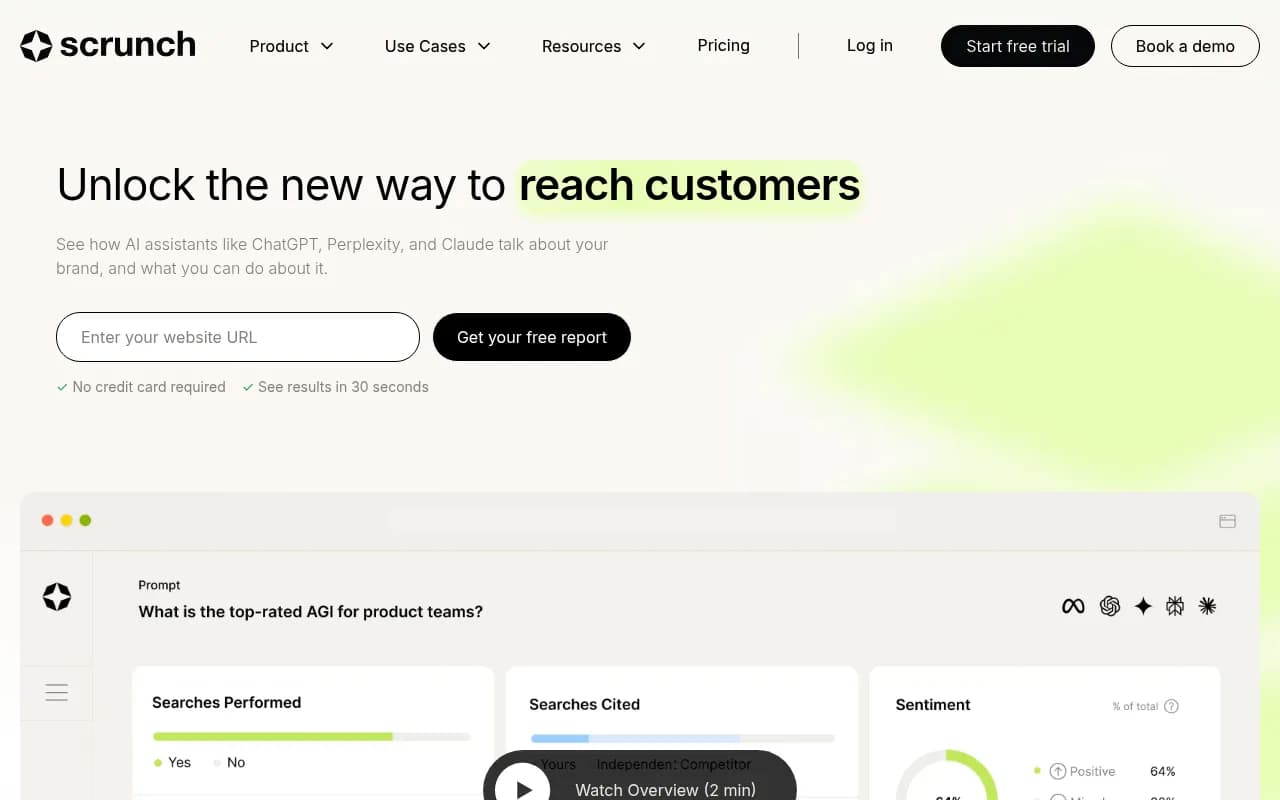
For comprehensive optimization: Scrunch AI offers enterprise-level tracking with prompt-level insights, though at a higher price point than Promptwatch.
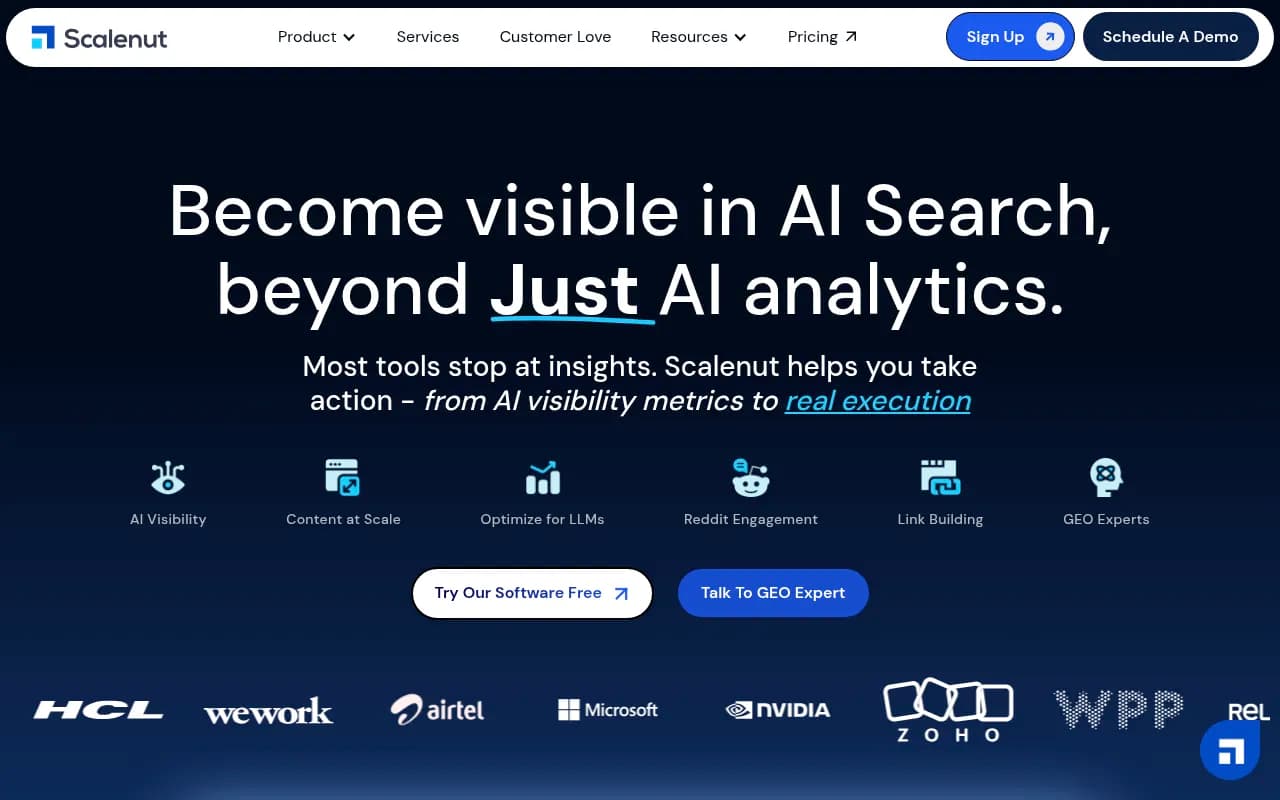
For budget-conscious startups: Scalenut provides basic AI visibility tracking with flexible usage-based pricing, though with fewer features than Promptwatch.
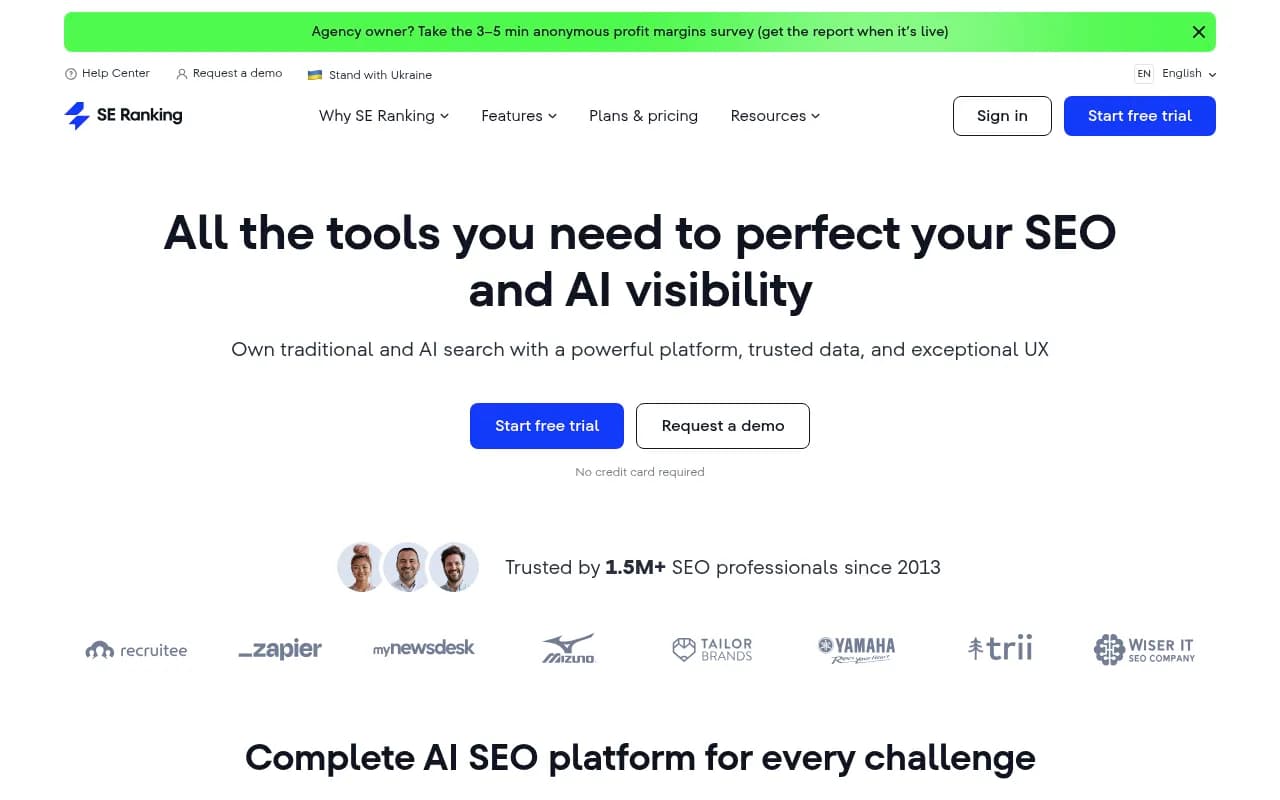
For existing SEO tool users: SE Ranking adds AI visibility to its traditional SEO platform, good for teams wanting one tool for both.
For monitoring-only needs: Otterly.AI tracks brand mentions across ChatGPT, Perplexity, and Google AI Overviews but lacks optimization capabilities.
Otterly.AI

Each of these alternatives has trade-offs in features, pricing, and optimization depth. For most teams, Promptwatch delivers the best balance of comprehensive tracking, actionable optimization tools, and transparent pricing.
Conclusion: Choose Based on Your Real Needs
The AI visibility market is splitting into two camps: monitoring-only dashboards that show you data, and optimization platforms that help you improve. Promptwatch leads the optimization category with Answer Gap Analysis, AI content generation, crawler logs, and traffic attribution. Brandlight.ai and Bluefish AI serve the monitoring category with a focus on enterprise brand protection.
For marketing teams, SEO professionals, and digital agencies trying to rank higher in AI search and drive traffic, Promptwatch is the clear choice. It's the only platform in this comparison that helps you take action on the insights—not just see them.
For Fortune 500 enterprises with dedicated PR teams focused purely on reputation management, Brandlight.ai or Bluefish AI might fit, though at significantly higher price points.
The bottom line: if you want to improve your AI search visibility, choose a platform built for optimization. If you only want to monitor what AI says about you, a monitoring-only tool will suffice. But in 2026, with AI search projected to reach 28% of total search traffic by 2027, most teams need the former—not the latter.
Start with Promptwatch's free trial to see the difference between monitoring and optimization firsthand. Then compare it to Brandlight.ai or Bluefish AI if you have enterprise-specific requirements. The right choice depends on your goals, budget, and team structure—but for most use cases, the winner is clear.