Key Takeaways
- Promptwatch — Best overall alternative with content generation, crawler logs, and Reddit/YouTube tracking that Qwairy lacks. The only platform that helps you fix visibility gaps, not just monitor them.
- Profound — Enterprise-focused with strong prompt volume data and SOC 2 compliance, but significantly more expensive ($499+/mo vs Qwairy's €49/mo starting price).
- Otterly.AI — Most affordable monitoring option at $29/mo, but lacks optimization features and prompt intelligence that Qwairy provides.
- Peec AI — Clean interface with good competitor benchmarking, similar pricing to Qwairy but missing content recommendations and technical analysis modules.
- AthenaHQ — Strong citation tracking and used by major brands like Coinbase, but credit-based pricing model ($295/mo) makes it less predictable than Qwairy's flat-rate plans.
Qwairy has carved out a solid position in the Generative Engine Optimization space with its five-module approach covering visibility tracking, insights, strategy, technical analysis, and analytics. But depending on your specific needs—whether that's deeper content optimization, tighter budgets, or enterprise-grade compliance—there are alternatives worth considering.
The biggest gap most teams hit with Qwairy: it shows you where you're invisible in AI search, but doesn't give you much help actually fixing it. You see the data, identify the problems, then you're on your own to create content and optimize. That's where platforms like Promptwatch differentiate by closing the loop with built-in content generation and gap analysis.
Here's how the leading alternatives stack up.
Promptwatch

Promptwatch is the most complete alternative to Qwairy because it doesn't stop at monitoring—it helps you take action. While Qwairy excels at showing you visibility metrics across 10 AI engines, Promptwatch adds the critical next step: Answer Gap Analysis that shows exactly which prompts competitors rank for but you don't, then an AI writing agent that generates content engineered to get cited by ChatGPT, Claude, and Perplexity.
What it does better than Qwairy:
- AI Crawler Logs: Real-time visibility into which pages ChatGPT, Claude, and Perplexity crawlers are reading on your site, how often they return, and what errors they encounter. Qwairy doesn't offer this level of technical insight.
- Content Generation: Built-in AI agent creates articles, listicles, and comparisons grounded in 880M+ citations analyzed. Qwairy's Content Studio module provides recommendations but doesn't generate the content for you.
- Reddit & YouTube Tracking: Surfaces discussions and videos that influence AI recommendations—a channel Qwairy doesn't monitor.
- ChatGPT Shopping Tracking: Monitors product recommendations and shopping carousels, which Qwairy doesn't cover.
- Prompt Intelligence: Volume estimates, difficulty scores, and query fan-outs that show how prompts branch into sub-queries. More granular than Qwairy's prompt tracking.
What Qwairy does better:
- More AI engines monitored (10 vs Promptwatch's 10, but Qwairy includes DeepSeek which some competitors miss)
- Freemium tier with 100 free credits for testing
- Slightly lower entry price point (€49/mo vs Promptwatch's $99/mo Essential)
Pricing comparison:
- Promptwatch Essential: $99/mo (1 site, 50 prompts, 5 AI-generated articles)
- Promptwatch Professional: $249/mo (2 sites, 150 prompts, 15 articles, crawler logs)
- Qwairy Starter: €49/mo (limited prompts, no content generation)
- Qwairy Growth: ~€300-500/mo (closer feature parity)
Best for: Marketing teams and agencies that want an optimization platform, not just a tracker. If you need to close the loop from visibility gaps to content creation to results tracking, Promptwatch is the strongest alternative. The higher price is justified by the content generation and crawler analytics that Qwairy lacks.
Profound
Profound

Profound positions itself as the enterprise-grade alternative with SOC 2 compliance, custom pricing, and clients like MongoDB, Ramp, and Mercury. It covers similar ground to Qwairy with visibility tracking, citation analysis, and competitor benchmarking, but adds prompt volume data and AI content generation agents that Qwairy's Content Studio doesn't fully match.
What it does better than Qwairy:
- Prompt Volumes: Actual search volume estimates for each prompt, helping you prioritize high-value queries. Qwairy tracks prompts but doesn't provide volume data.
- AI Content Agents: Built-in content generation with templates for listicles, how-tos, and comparisons. More developed than Qwairy's content recommendations.
- Enterprise Features: SOC 2 compliance, dedicated support, and custom integrations that matter for larger organizations.
- Agent Analytics: Tracks AI agent behavior and crawler patterns, similar to Promptwatch's crawler logs but with an enterprise focus.
What Qwairy does better:
- Transparent pricing (Profound requires sales calls for quotes)
- Lower entry point (Qwairy's €49/mo Starter vs Profound's ~$499/mo minimum)
- Five integrated modules vs Profound's more fragmented feature set
- Freemium tier for testing before committing
Pricing comparison:
- Profound Lite: ~$499/mo (3 seats, 24k responses/mo, 2-month history)
- Profound Advanced: ~$449/mo (pricing structure unclear)
- Qwairy Starter: €49/mo
- Qwairy Growth: ~€300-500/mo
Best for: Enterprise teams with budgets over $500/mo who need SOC 2 compliance and dedicated support. If you're a startup or mid-market company, Qwairy's pricing is far more accessible. But if you're MongoDB-sized and need enterprise-grade infrastructure, Profound is worth the premium.
Otterly.AI
Otterly.AI

Otterly.AI is the budget-friendly monitoring alternative, starting at just $29/mo for 15 prompts. It covers six AI engines (ChatGPT, Perplexity, Google AI Overviews, AI Mode, Gemini, Copilot) and provides automated reporting and competitive benchmarking. But it's a monitoring-only tool—no content optimization, no crawler logs, no prompt intelligence.
What it does better than Qwairy:
- Price: $29/mo Lite plan vs Qwairy's €49/mo Starter makes it the most affordable entry point
- Simplicity: Cleaner, more focused interface without the complexity of Qwairy's five modules
- 14-day free trial: No credit card required, easier to test than Qwairy's 100-credit freemium
What Qwairy does better:
- More AI engines monitored (10 vs 6)
- Content recommendations and optimization features
- Technical analysis module for site diagnostics
- Social intelligence and shopping intelligence modules
- Sentiment analysis and local intelligence
- Backlink opportunities and brand perception tracking
Pricing comparison:
- Otterly.AI Lite: $29/mo (15 prompts)
- Otterly.AI Standard: $189/mo (100 prompts)
- Qwairy Starter: €49/mo (better feature set at similar price)
- Qwairy Growth: ~€300-500/mo (far more features than Otterly.AI Standard)
Best for: Small businesses or solopreneurs who just need basic monitoring and can't justify €49+/mo. If you only want to track whether ChatGPT mentions your brand and don't need optimization features, Otterly.AI works. But for most teams, Qwairy's extra €20/mo buys significantly more capability.
Peec AI

Peec AI is Qwairy's closest direct competitor in terms of pricing and feature scope. It tracks visibility, position, and sentiment across ChatGPT, Perplexity, Claude, and Gemini, with clean dashboards and competitor benchmarking. Used by 1,500+ marketing teams, it's a solid monitoring platform—but lacks the content optimization and technical analysis depth that Qwairy provides.
What it does better than Qwairy:
- Interface: Cleaner, more modern UI that's easier to navigate
- Competitor Heatmaps: Visual comparison of your visibility vs competitors is more intuitive
- Tag Organization: Better prompt organization with custom tags
What Qwairy does better:
- Five integrated modules (Visibility, Insights, Strategy, Technical, Analytics) vs Peec's monitoring focus
- Content opportunities and recommendations
- Technical analysis and site diagnostics
- Social intelligence (Reddit/YouTube tracking)
- Shopping intelligence and local intelligence
- Crawler analytics and referrer analytics
- More AI engines monitored (10 vs Peec's 4 primary models)
Pricing comparison:
- Peec AI Starter: €89/mo (50 prompts, 10 models)
- Peec AI Growth: €199/mo (150 prompts, 2 workspaces)
- Qwairy Starter: €49/mo (better value)
- Qwairy Growth: ~€300-500/mo (more features than Peec Growth)
Best for: Teams that want a clean, simple monitoring dashboard without the complexity of Qwairy's five modules. If you don't need content optimization, technical analysis, or social intelligence, Peec AI's focused approach might feel less overwhelming. But you're paying more (€89 vs €49) for fewer features.
AthenaHQ

AthenaHQ is the Y Combinator-backed alternative used by major brands like Coinbase, ZoomInfo, and SoFi. It provides strong citation tracking, source analysis, and competitive benchmarking across ChatGPT, Perplexity, Google AI Overviews, Claude, and other LLMs. The platform focuses on "action on AI search" but uses a credit-based pricing model that's less predictable than Qwairy's flat-rate plans.
What it does better than Qwairy:
- Brand Credibility: Featured in Forbes and WSJ, used by recognizable enterprise clients
- Citation Depth: More granular analysis of which specific pages and sources AI models cite
- Case Studies: Published results like Rootly's 10x citation rate growth and Lago's 50% demo increase
- State of AI Search Report: Annual research report provides industry benchmarking
What Qwairy does better:
- Transparent, predictable pricing (flat monthly rate vs credit-based consumption)
- Lower entry point (€49/mo vs AthenaHQ's $295/mo)
- More AI engines monitored (10 vs AthenaHQ's 5-6)
- Technical analysis module for site diagnostics
- Social intelligence and shopping intelligence
- Freemium tier for testing
Pricing comparison:
- AthenaHQ Self-Serve: $295/mo ($95 first month) credit-based
- AthenaHQ Enterprise: Custom pricing
- Qwairy Starter: €49/mo flat rate
- Qwairy Growth: ~€300-500/mo flat rate
Best for: Mid-market to enterprise companies with $300+/mo budgets who value brand credibility and case study validation. The credit-based model works if your usage is predictable, but Qwairy's flat-rate pricing is easier to budget. If you're a startup or small business, Qwairy's €49/mo entry point is far more accessible.
Nightwatch
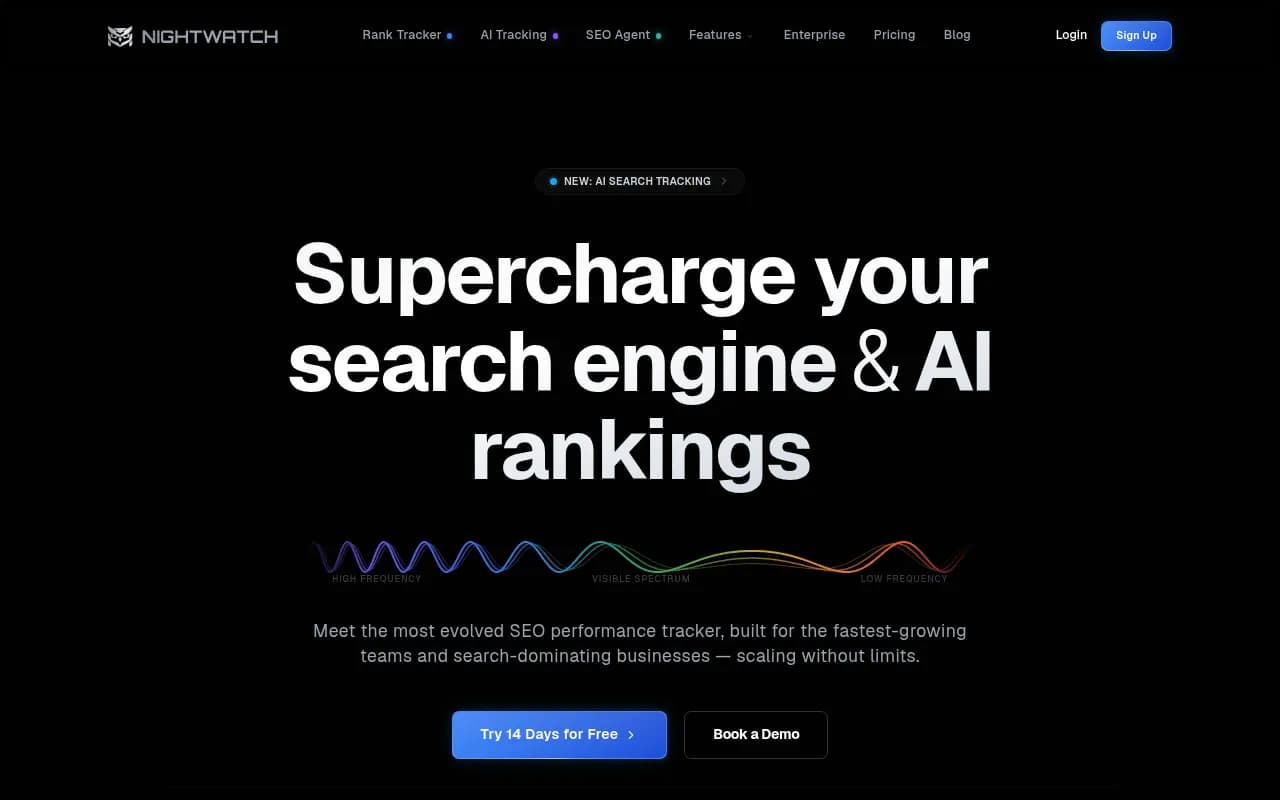
Nightwatch is primarily a traditional SEO rank tracker that recently added AI search monitoring. It tracks Google AI Overviews, ChatGPT, Gemini, Claude, and Perplexity alongside traditional search rankings, making it a hybrid solution. If you need both SEO and AI visibility tracking in one platform, Nightwatch is worth considering—but its AI features are less developed than Qwairy's dedicated GEO focus.
What it does better than Qwairy:
- Unified Platform: Combines traditional SEO rank tracking with AI search monitoring
- Keyword Research: Traditional SEO keyword tools alongside prompt research
- Site Audit: Technical SEO auditing that Qwairy's Technical Analysis module doesn't fully match
- Looker Studio Integration: Native integration for custom reporting
- Lower Entry Price: $24/mo Starter plan vs Qwairy's €49/mo
What Qwairy does better:
- Dedicated GEO focus vs Nightwatch's hybrid approach
- More AI engines monitored (10 vs Nightwatch's 5)
- Content recommendations and optimization features
- Social intelligence (Reddit/YouTube tracking)
- Shopping intelligence and local intelligence
- Sentiment analysis specific to AI responses
Pricing comparison:
- Nightwatch Starter: $24/mo (basic rank tracking + limited AI monitoring)
- Nightwatch Optimize: $59/mo (more keywords and AI tracking)
- Qwairy Starter: €49/mo (dedicated GEO features)
- Qwairy Growth: ~€300-500/mo (comprehensive GEO platform)
Best for: SEO teams that want to add AI search monitoring to their existing rank tracking workflow without switching platforms. If you're already tracking traditional search rankings and want to add AI visibility as a secondary metric, Nightwatch's hybrid approach makes sense. But if AI search is your primary focus, Qwairy's dedicated GEO platform provides more depth.
ZipTie
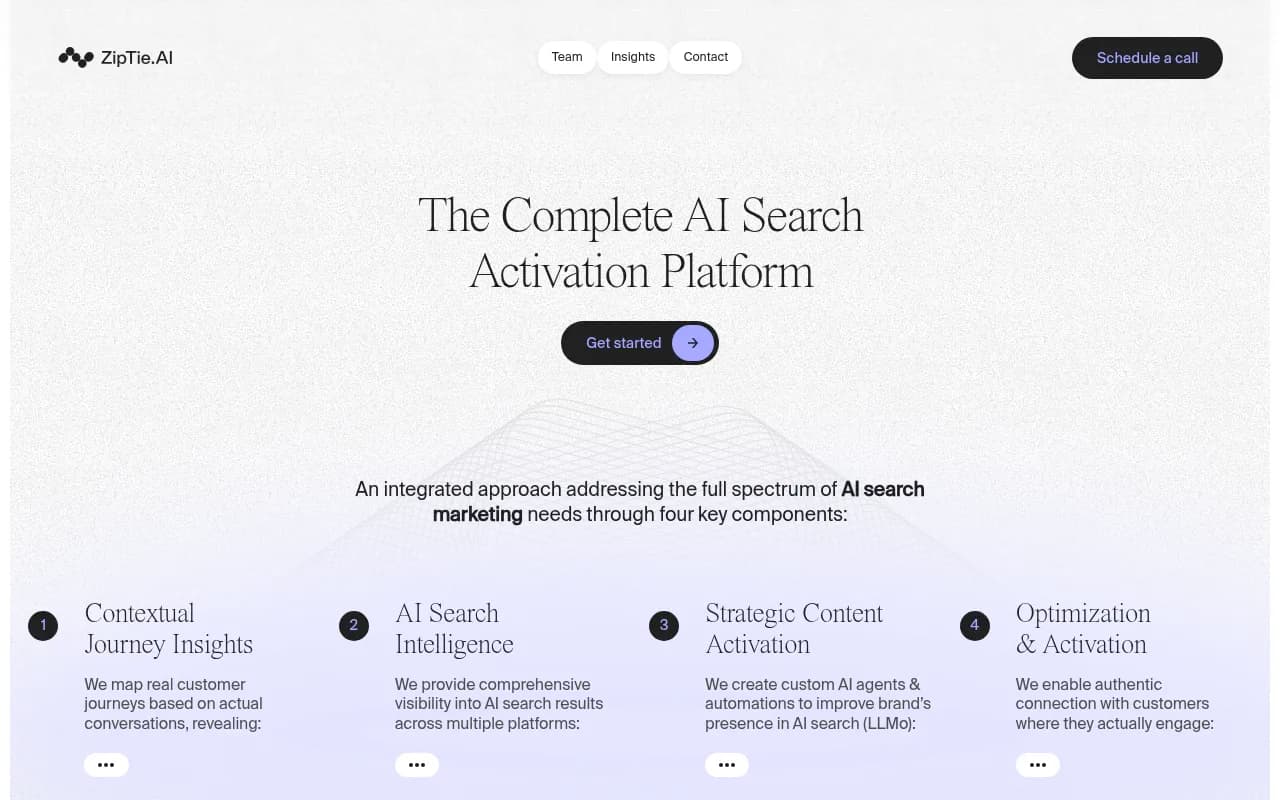
ZipTie takes a different approach than Qwairy by focusing on contextual journey insights and strategic content activation. Rather than just monitoring brand mentions, it maps customer journeys based on actual AI conversations, revealing emotional states, decision dimensions, and exit triggers. It's more of an AI search intelligence platform than a pure monitoring tool.
What it does better than Qwairy:
- Journey Mapping: Maps seven distinct customer journey stages with specific information needs
- Emotional Context: Captures how users feel and what problems they're solving, not just what they search
- Reddit Optimization: Deep Reddit engagement strategy and community activation
- Custom AI Agents: Builds custom automation workflows for content creation and optimization
What Qwairy does better:
- Straightforward monitoring and tracking vs ZipTie's consultative approach
- More AI engines monitored (10 vs ZipTie's unclear coverage)
- Transparent pricing (€49/mo vs ZipTie's $69-799/mo range)
- Self-service platform vs ZipTie's agency-like engagement model
- Technical analysis and site diagnostics
Pricing comparison:
- ZipTie Basic: $69/mo (500 checks)
- ZipTie Pro: $799/mo (10,000 checks)
- Qwairy Starter: €49/mo (better value for basic monitoring)
- Qwairy Growth: ~€300-500/mo (more comprehensive than ZipTie Basic)
Best for: Brands that want deep customer journey insights and strategic Reddit engagement, not just AI search monitoring. ZipTie is more consultative and strategic, while Qwairy is more operational and tactical. If you need to understand why customers abandon their journey or how to activate Reddit communities, ZipTie's approach is unique. But for straightforward AI visibility tracking, Qwairy is more practical.
Search Party
Search Party
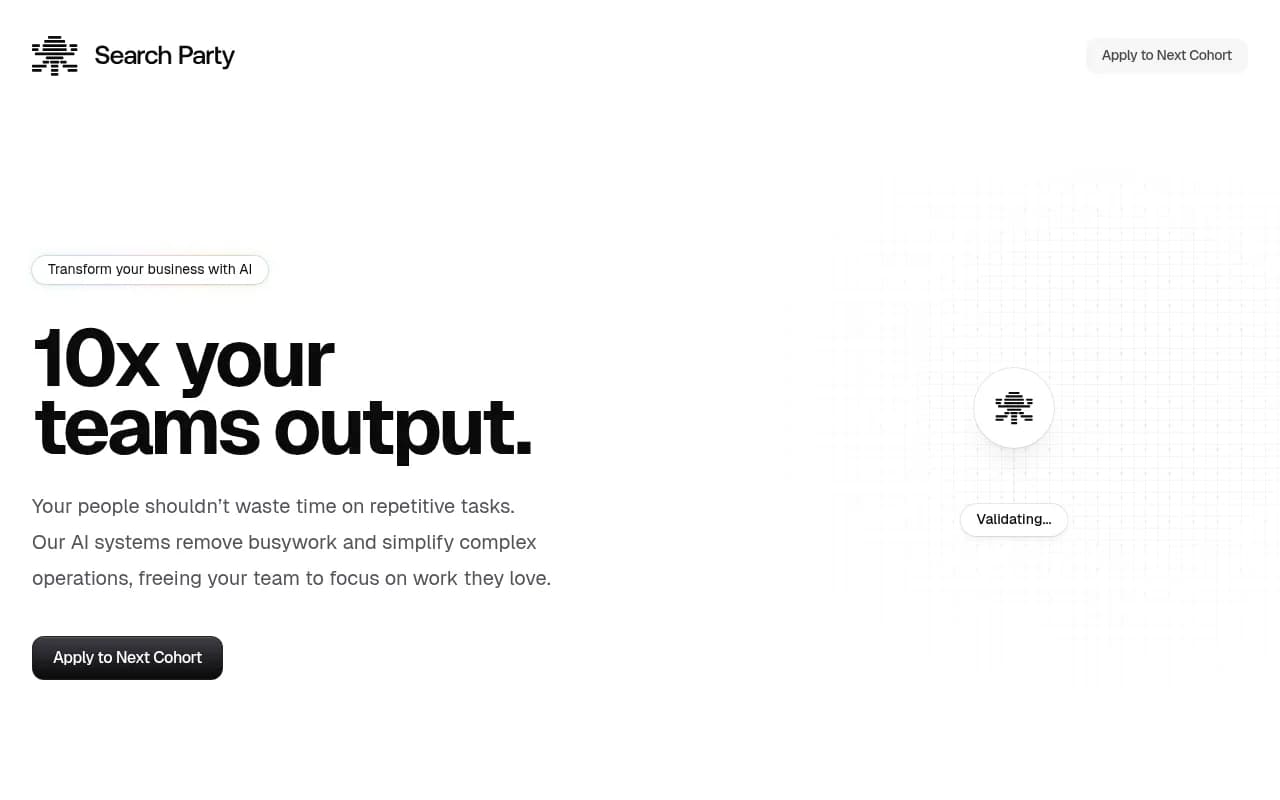
Search Party is fundamentally different from Qwairy—it's not a monitoring platform at all. It's an AI automation consultancy that embeds into businesses to build custom workflow systems. While Qwairy tracks AI search visibility, Search Party eliminates busywork through custom AI agents. Only relevant if you're looking to automate operations beyond just monitoring AI mentions.
What it does better than Qwairy:
- Custom Automation: Builds bespoke AI systems tailored to your specific workflows
- Embedded Engineering: Forward-deployed team that works inside your organization
- Bottleneck Mining: Diagnostic process to identify where headcount outpaces revenue
- ROI Validation: Only moves forward if clear path to ROI is identified
What Qwairy does better:
- Actually monitors AI search visibility (Search Party doesn't do this)
- Self-service platform vs consultative engagement
- Predictable monthly pricing vs custom project fees
- Immediate deployment vs multi-phase implementation
Pricing comparison:
- Search Party: Custom engagement pricing (estimated $50K-$500K+ based on scope)
- Qwairy Starter: €49/mo
- Qwairy Growth: ~€300-500/mo
Best for: This isn't really a Qwairy alternative unless you're looking to automate your entire marketing operations beyond just AI search monitoring. Search Party is for companies that want to decouple revenue growth from headcount by building custom AI systems. If you just need to track ChatGPT mentions, Qwairy is the answer. If you want to eliminate 80% of your team's busywork with custom automation, Search Party is worth exploring—but expect to pay 100x more.
How to Choose the Right Qwairy Alternative
If you want the most complete optimization platform (not just monitoring): Go with Promptwatch. It's the only alternative that helps you fix visibility gaps with content generation, crawler logs, and Reddit/YouTube tracking. The $99/mo Essential plan is worth it if you need to actually improve your AI search rankings, not just watch them.
If you need enterprise-grade compliance and support: Choose Profound. SOC 2 compliance, prompt volume data, and proven results with brands like MongoDB justify the ~$499/mo price tag for larger organizations.
If you're on a tight budget and only need basic monitoring: Otterly.AI at $29/mo is the cheapest option, but you sacrifice most of Qwairy's optimization features. Only makes sense if you truly can't afford €49/mo.
If you want a clean, simple alternative at similar pricing: Peec AI offers a more intuitive interface than Qwairy, but you're paying more (€89/mo) for fewer features. Hard to justify unless you really value UI simplicity.
If you need both SEO and AI search tracking in one platform: Nightwatch combines traditional rank tracking with AI monitoring starting at $24/mo. Good for SEO teams adding AI visibility as a secondary metric.
If you want deep customer journey insights beyond monitoring: ZipTie's contextual journey mapping and Reddit optimization is unique, but it's a different category of tool. More strategic consulting than operational monitoring.
If you want to automate your entire operation beyond just monitoring: Search Party builds custom AI systems, but expect to pay $50K+ for a consultative engagement. Not comparable to Qwairy's $49/mo monitoring platform.
For most teams, Promptwatch is the strongest alternative because it solves Qwairy's biggest limitation: it doesn't just show you where you're invisible in AI search—it helps you fix it with content generation, gap analysis, and optimization tools that Qwairy lacks. The higher price ($99/mo vs €49/mo) is justified by the action-oriented features that turn visibility data into actual results.