Key takeaways
- Promptwatch is the strongest all-around alternative -- it goes beyond monitoring to close the full loop with content gap analysis, AI content generation, and traffic attribution. Best for brands and agencies that want to act on their data, not just read it.
- Profound is the closest competitor to Promptwatch in terms of depth, with solid enterprise features and content agents, but it starts at $499/mo with no free trial -- a real barrier for smaller teams.
- Peec AI and Otterly.AI are solid entry-level options if you mainly want monitoring dashboards. Neither offers content generation or crawler logs, so you'll hit a ceiling quickly.
- AthenaHQ is well-regarded by enterprise marketing teams (Coinbase, ZoomInfo) and has a clean workflow, but it's monitoring-heavy with limited content optimization.
- Semrush is worth considering if you already use it for traditional SEO -- its AI visibility toolkit is a useful add-on, but it's not a GEO-first platform and the fixed prompt approach limits flexibility.
- Writesonic has repositioned itself as a GEO platform with Reddit/UGC tracking and content creation, making it a credible option for teams that want tracking and writing in one tool.
- Relixir and Scrunch round out the list with interesting angles -- Relixir's autonomous "GEO employee" concept is novel, Scrunch has a useful agent experience layer -- but both are earlier-stage than the leaders.
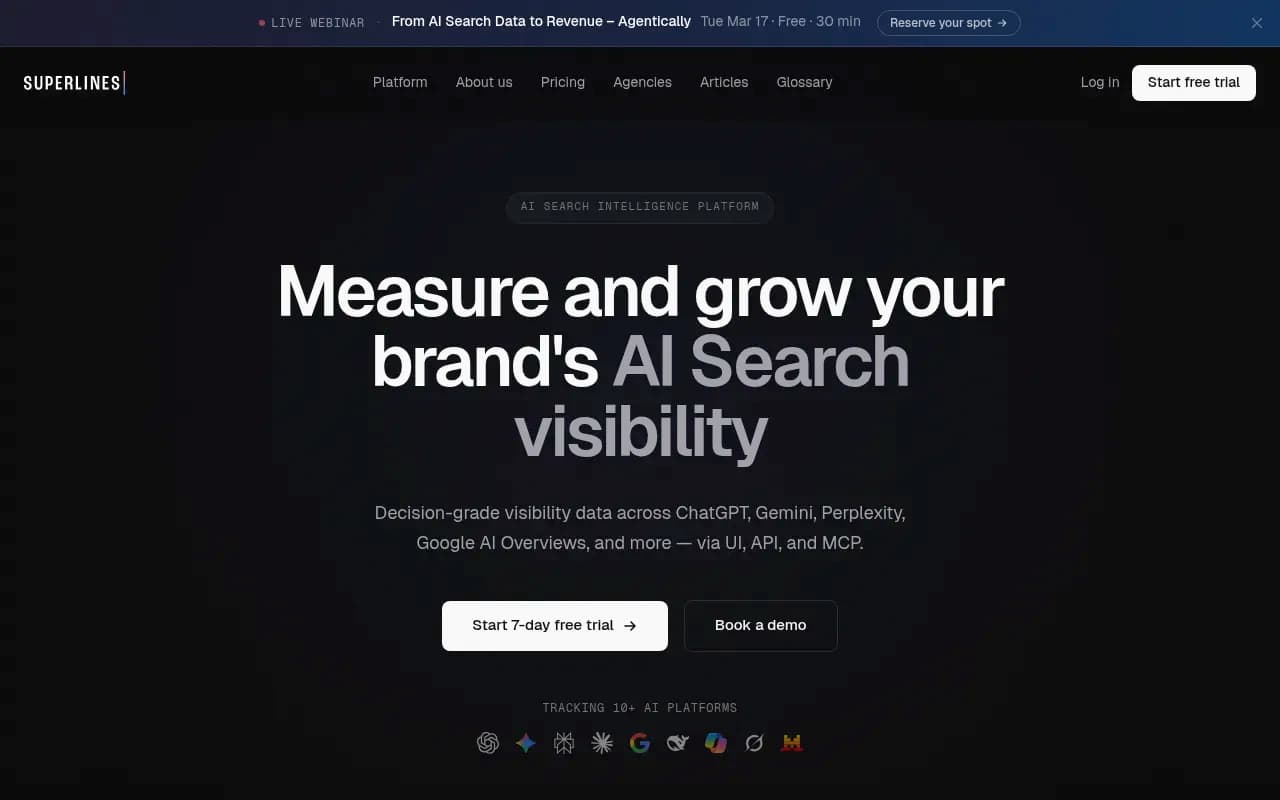
Superlines is a capable AI search intelligence platform. It tracks brand visibility across ChatGPT, Gemini, Perplexity, Claude, and Google AI Overviews, and it positions itself around "decision-grade" data -- meaning it queries actual AI search interfaces rather than just API calls, which gives you a more realistic picture of what users actually see. The MCP and API access is a genuine differentiator for teams that want to pipe visibility data into their own workflows or AI agents.
So why look for alternatives? A few common reasons come up. The platform is relatively newer with a smaller customer base than some competitors, which can matter for teams that want proven enterprise support. Pricing starts at €89/month, which is reasonable, but the feature set at that tier may not cover everything a growing team needs. Some users want deeper content generation capabilities baked in, not just recommendations. And if you're already paying for a broader marketing suite like Semrush, adding another specialized tool requires justification.
Here's an honest look at what else is out there.
Promptwatch

Promptwatch is the most complete GEO platform available right now, and the one most worth comparing seriously against Superlines. The core difference is that Promptwatch doesn't stop at telling you where you're invisible -- it helps you fix it.
The workflow is built around three steps: find the gaps, create content, track results. The Answer Gap Analysis shows you exactly which prompts competitors rank for that you don't, down to the specific content your site is missing. Then the built-in AI writing agent generates articles, listicles, and comparison pages grounded in 880M+ citations analyzed -- not generic SEO filler, but content engineered to get cited by ChatGPT, Claude, Perplexity, and others. Then you track whether it worked, at the page level, with traffic attribution via GSC integration, server log analysis, or a code snippet.
Compared to Superlines, Promptwatch covers more AI models (10 vs Superlines' 9+), has deeper prompt intelligence with volume estimates and difficulty scores, and includes Reddit and YouTube tracking -- channels that directly influence what AI models cite. Superlines has the MCP server angle, which is genuinely useful for agentic workflows, but Promptwatch's API and Looker Studio integration cover most of the same ground for reporting and custom workflows.
Promptwatch also has AI crawler logs -- real-time feeds showing when ChatGPT, Claude, Perplexity, and others crawl your pages, what errors they hit, and how often they return. Superlines mentions visibility signals around which URLs AI models prefer, but the crawler log depth in Promptwatch is more granular.
Pricing: Essential $99/mo (1 site, 50 prompts, 5 articles), Professional $249/mo (2 sites, 150 prompts, 15 articles, crawler logs), Business $579/mo (5 sites, 350 prompts, 30 articles). Free trial available. Rated 4.7/5 on G2, used by 8,000+ brands including Booking.com, Typeform, and Yelp.
Best for: Marketing teams and agencies that want to actually move the needle on AI visibility, not just measure it. If you're tired of dashboards that show you're losing but don't tell you what to do about it, Promptwatch is the right call.
Profound
Profound

Profound is the other serious full-stack GEO platform in this space. It covers the major LLMs (ChatGPT, Perplexity, Claude, Gemini, Grok, Copilot, Meta AI, DeepSeek, Google AI Overviews), includes prompt volume data, agent analytics, and content generation agents. MongoDB, Ramp, and Mercury use it, which signals it's built for teams with real budget and real stakes.
Compared to Superlines, Profound has more depth in content creation -- its AEO-optimized FAQ generator and content agents are genuinely useful for teams that need to produce structured content at scale. The prompt volumes feature (seeing what millions of people actually ask AI) is one of the better implementations of this capability in the market.
The catch is price and access. Profound starts at $499/month for the Lite tier, with no free trial. That's a significant commitment before you've validated whether the platform fits your workflow. Superlines at €89/mo is much more accessible for smaller teams or those just getting started with GEO.
Profound is also SOC 2 compliant, which matters for enterprise procurement. If your company has security review requirements, that's worth noting.
Best for: Enterprise marketing teams with dedicated AEO/GEO budgets who need a full-stack platform with content agents and are comfortable with custom pricing conversations.
Writesonic

Writesonic has made a notable pivot. It started as an AI writing tool, but it's now positioning itself as a full GEO platform -- tracking AI visibility across ChatGPT and 10+ platforms, monitoring mentions, identifying citation gaps, creating and refreshing content, and targeting Reddit and UGC forums.
That last part is interesting. Reddit and user-generated content are increasingly influential in what AI models cite, and Writesonic's explicit focus on this channel puts it ahead of most pure monitoring tools. Superlines doesn't appear to have this depth of UGC tracking.
The content creation angle is also worth taking seriously. Writesonic has years of experience building AI writing tools, so its content generation is likely more mature than newer GEO platforms that bolted on writing as an afterthought. If you need both tracking and content production, and you want them in one tool, Writesonic is worth evaluating.
The main uncertainty is pricing -- it's not clearly published, which usually means it's either in flux or requires a sales conversation. The platform serves teams from Series A to Fortune 500, so there's likely a range.
Best for: Content-heavy marketing teams that want AI visibility tracking and content creation in one place, with particular interest in Reddit and UGC as citation channels.
Semrush
Semrush is the obvious choice if you're already paying for it. Its AI Visibility Toolkit tracks brand presence across ChatGPT, Perplexity, Gemini, and Google AI Overviews, and it integrates with the rest of the Semrush suite -- keyword research, backlink analysis, site audits, content tools, PPC, social.
The honest assessment: Semrush's AI features are an add-on to a traditional SEO platform, not a GEO-first product. The prompt tracking uses fixed prompts rather than letting you define your own, which limits how precisely you can monitor your specific competitive situation. There's no AI traffic attribution, no crawler logs, and no content generation grounded in citation data.
That said, if you're a team of one or two people managing SEO and AI visibility together, having everything in Semrush is genuinely convenient. You're not paying for two tools, and the data integration across SEO and AI visibility is useful for understanding the full picture of your search presence.
Pricing starts at $165/month for the Starter plan, $290/month for Pro+. The AI Visibility Toolkit may require a higher tier or add-on depending on your plan.
Best for: Teams already using Semrush for traditional SEO who want basic AI visibility monitoring without adding another tool to their stack.
Peec AI
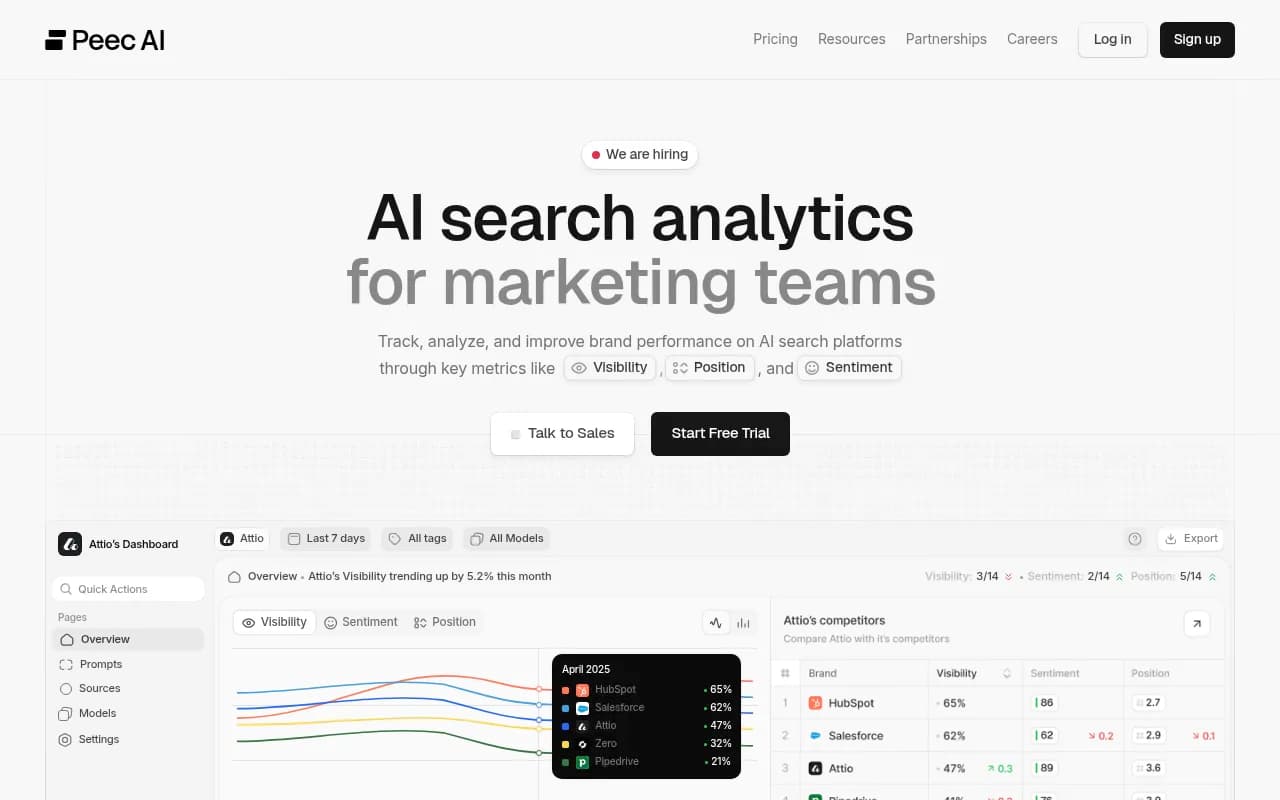
Peec AI is a clean, focused monitoring platform. It tracks visibility, position, and sentiment across ChatGPT, Perplexity, Claude, and Gemini, with competitive benchmarking and citation source analysis. The UI is well-designed and the metrics are clear -- visibility score, position within AI results, sentiment analysis.
Compared to Superlines, Peec AI is at a similar price point (€89/mo for Starter, matching Superlines' entry price) and covers similar monitoring ground. Both are solid for teams that want to understand their AI search presence without a huge investment. The difference is that Superlines emphasizes "decision-grade" data from real AI interfaces rather than API calls, which could matter for accuracy.
What Peec AI doesn't have: content generation, crawler logs, prompt intelligence with volume/difficulty scoring, or Reddit/YouTube tracking. It's a monitoring tool, and a good one, but you'll need other tools to act on what you learn.
Pricing: Starter €89/mo (50 prompts, 10 models), Growth €199/mo (150 prompts, 2 workspaces), Enterprise custom. Free trial available.
Best for: Marketing teams that want straightforward AI visibility monitoring with clear metrics and competitive benchmarking, without needing content generation capabilities.
Otterly.AI
Otterly.AI

Otterly.AI is one of the more established names in AI search monitoring, and it's earned that reputation by being genuinely easy to use. It monitors ChatGPT, Google AI Overviews, Perplexity, Google AI Mode, Gemini, and Copilot, with automated reporting and competitive benchmarking. The GEO Audit tool analyzes 25+ on-page factors to flag what's holding your site back from earning more citations.
The Lite plan at $29/month is the cheapest entry point in this comparison, which makes Otterly.AI worth considering for small teams or individuals just starting to track AI visibility. The 14-day free trial with no credit card required is also a low-friction way to test it.
The limitations are real though. No crawler logs, no prompt volume intelligence, no content generation, no Reddit tracking. Compared to Superlines, Otterly.AI covers fewer AI models and has less depth in the "why" behind your visibility scores. It's a monitoring dashboard, and a good one, but the ceiling is lower than platforms like Promptwatch or Profound.
Pricing: Lite $29/mo (15 prompts), Standard $189/mo (100 prompts), Premium custom. 14-day free trial, no credit card.
Best for: Small teams or solo marketers who want affordable AI visibility monitoring with automated reporting and don't need content generation or deep analytics.
Relixir
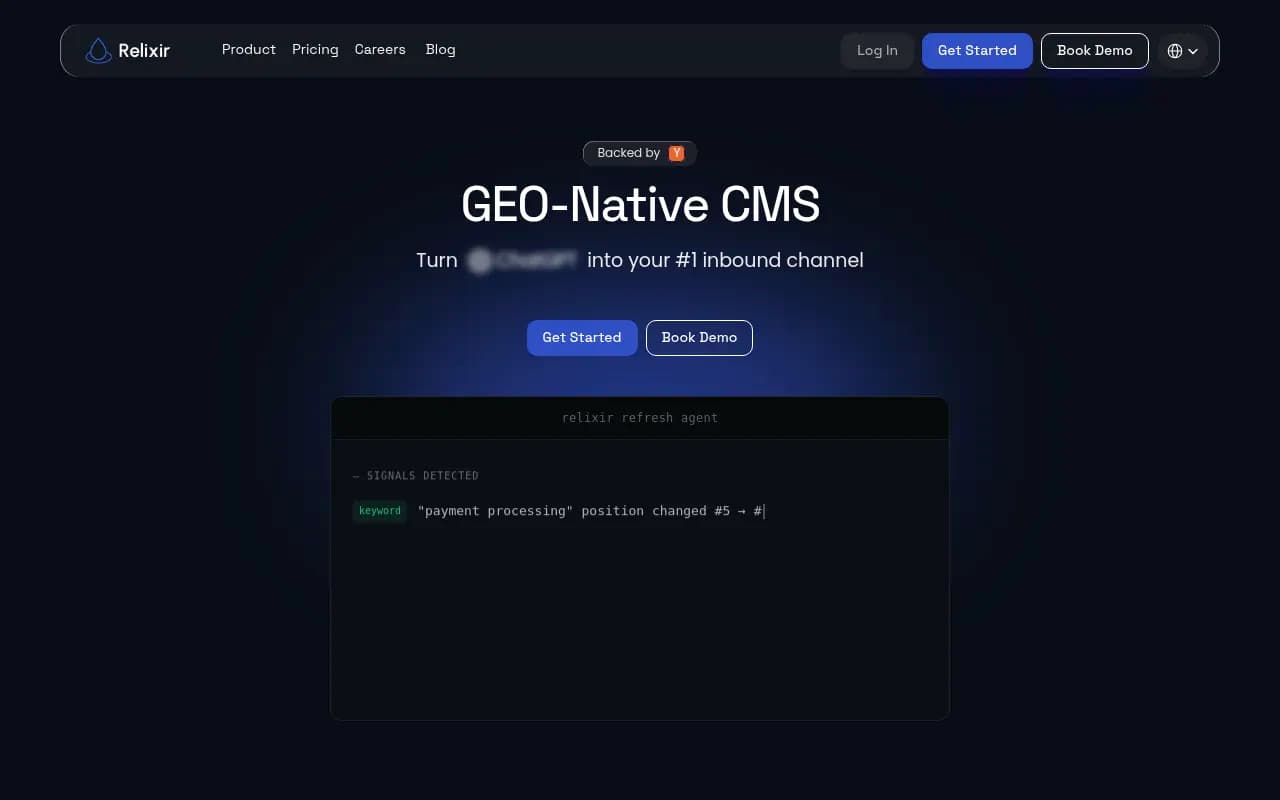
Relixir takes a different angle from most platforms here. Its main product is "Rex" -- an autonomous GEO employee that monitors your brand across ChatGPT, Perplexity, Claude, and Google AI Overviews, then generates and deploys GEO-optimized content automatically. The pitch is that you don't need to manage the optimization loop manually; Rex does it.
That's an interesting concept, and it resonates with B2B teams that don't have dedicated GEO resources. Rippling, Airwallex, and HackerRank are listed as customers, which suggests it's working for real companies.
Compared to Superlines, Relixir is more autonomous and more opinionated -- it's not just giving you data and recommendations, it's taking action. That's appealing if you trust the system, and potentially concerning if you want more control over what content gets published. The starting price of $500/month is also higher than Superlines, and there's no free tier mentioned.
The platform is earlier-stage than some competitors here, with 400+ customers vs. Promptwatch's 8,000+ or Semrush's 10M+ users. That's not necessarily a problem, but it's worth factoring into a decision about long-term platform reliability.
Best for: B2B teams that want autonomous GEO optimization without managing the process themselves, and are comfortable with a higher price point and a newer platform.
AthenaHQ

AthenaHQ has a strong enterprise positioning -- Coinbase, ZoomInfo, SoFi, Wix, and PagerDuty are on its customer list, which is a credible set of names. It covers 8+ LLMs with citation tracking, competitive benchmarking, and content optimization recommendations. The platform is featured in Forbes and the Wall Street Journal, and it came out of Y Combinator.
The workflow is built around a "command center" model -- a unified place to manage your entire AI search optimization strategy. For AEO/GEO managers who are coordinating across content, PR, and brand teams, that structure is genuinely useful. The 50% reduction in time spent on AI visibility tracking that they cite in their marketing is plausible if you're currently doing this manually across multiple tools.
Compared to Superlines, AthenaHQ is more enterprise-focused and more expensive ($295/month self-serve, with a discounted first month at $95). It's monitoring-heavy -- the content optimization is recommendations-based rather than generation-based, so you still need writers or another tool to execute. There's no mention of crawler logs or Reddit/YouTube tracking.
Pricing: Self-Serve $295/mo ($95 first month promo), Enterprise custom. Annual plans with 17% discount. Credit-based model (1 credit = 1 AI query).
Best for: Enterprise marketing teams at established companies who need a structured GEO workflow with strong reporting and are comfortable with a monitoring-first approach.
Scrunch AI
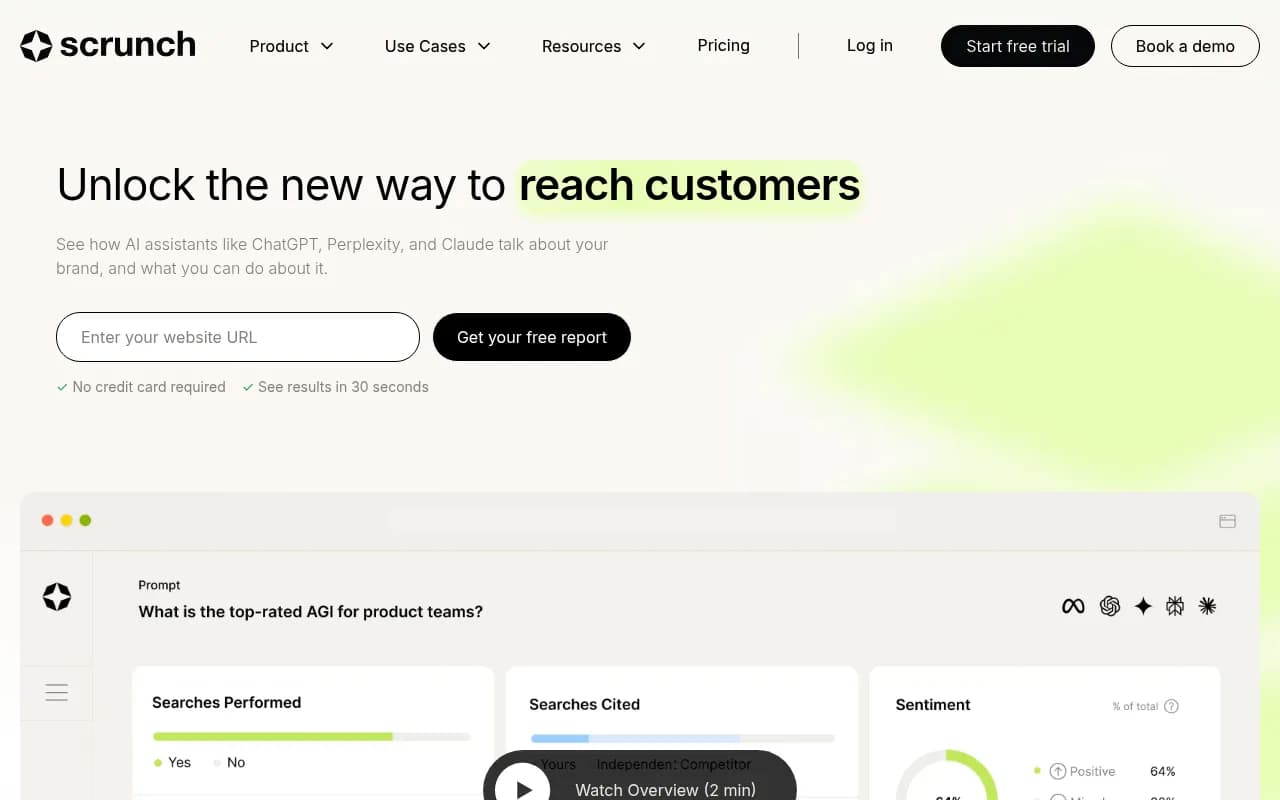
Scrunch has a genuinely interesting feature that most competitors don't: the Agent Experience Platform (AXP). The idea is that AI crawlers are now important visitors to your site, and you should be able to serve them optimized content without disrupting the human UX. That's a forward-looking take on GEO that goes beyond just tracking citations.
The monitoring side covers ChatGPT, Perplexity, and Claude with performance tracking, prompt analytics, and AI traffic data. The crawler error detection -- spotting when AI bots can't access your site and flagging it -- is practical and often overlooked by competitors.
Compared to Superlines, Scrunch has a similar monitoring scope but adds the AXP layer, which is a meaningful differentiator for teams thinking about how to structure their site for AI consumption. The customer list (Lenovo, Crunchbase, Penn State) shows it's working across different verticals.
The platform is smaller than some competitors here (500+ companies vs. Superlines' enterprise clients like Tallink Silja and Tietoevry), and the pricing at $83/month annually is competitive with Superlines' €89/month entry point.
Pricing: Explorer $83/mo (billed annually), Growth $417/mo, Enterprise custom. 7-day free trial.
Best for: Teams that want AI visibility monitoring plus a structured approach to optimizing how AI crawlers experience their site -- particularly useful for content-heavy or technically complex websites.
Which one should you pick?
Here's the honest summary:
If you want the most complete platform that goes from monitoring to content creation to traffic attribution, Promptwatch is the clear choice. It's the only platform in this comparison that closes the full loop -- find gaps, generate content, track results -- and it does it at a price point ($99-$579/month) that's accessible to teams of different sizes.
If you're happy with Superlines but want more content generation depth, Writesonic or Profound are worth a look. Writesonic is particularly interesting for its Reddit/UGC tracking. Profound has more enterprise credibility but costs significantly more.
If budget is the primary constraint, Otterly.AI at $29/month or Peec AI at €89/month give you solid monitoring without breaking the budget. Just go in knowing you'll need other tools to act on what you find.
If you're at an enterprise with a dedicated GEO team and a real budget, AthenaHQ or Profound are the most mature options for that context. Both have the customer logos and compliance posture that enterprise procurement teams expect.
If you want something autonomous that runs the optimization loop for you, Relixir's Rex is the most interesting experiment in that direction -- though it's newer and pricier than most alternatives here.
And if you're already deep in the Semrush ecosystem, the AI Visibility Toolkit is good enough to start with before committing to a specialized GEO platform.