Braintrust Review 2026
Comprehensive prompt management tool for AI teams offering versioning, testing, and monitoring capabilities to optimize AI model interactions.
Key Takeaways:
- Action-oriented platform: Unlike monitoring-only tools, Braintrust combines real-time observability, automated evaluation, and prompt optimization in one workflow -- trace production issues, convert them into test datasets, run experiments, and deploy improvements
- Built for scale: Brainstore database delivers 190x faster full-text search and 20x faster writes than competitors, handling millions of nested AI traces without performance degradation
- Enterprise-ready: SOC 2 Type II certified, HIPAA compliant, with SSO/SAML, RBAC, and hybrid deployment options for regulated industries
- Best for: Engineering teams running AI agents, chatbots, or LLM-powered features in production who need to catch quality issues before users do
- Limitations: Steeper learning curve than basic monitoring dashboards; pricing scales with usage which can get expensive at high trace volumes
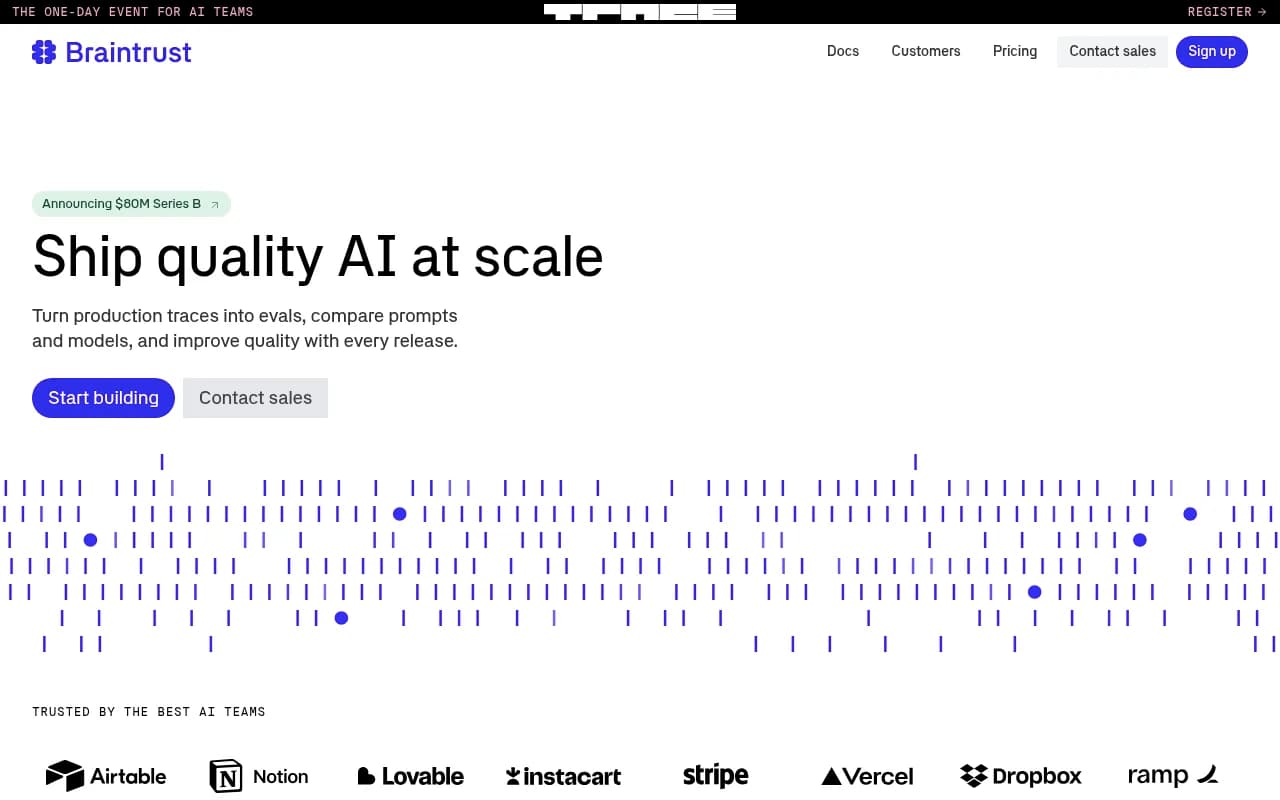
Braintrust is an AI observability and evaluation platform built for teams shipping production AI products. Founded by engineers who previously built machine learning infrastructure at companies like Figma and Airtable, Braintrust addresses a fundamental problem: AI fails differently than traditional software. Models drift, hallucinate, and regress silently, and you can't catch these issues with standard monitoring tools. The platform has raised $80M in Series B funding (announced 2025) and is used by engineering teams at Vercel, Notion, Coursera, Dropbox, Replit, and Navan to monitor, evaluate, and improve AI quality at scale.
The core insight behind Braintrust is that AI observability requires a complete feedback loop -- not just dashboards showing what happened, but tools to understand why it happened and fix it systematically. Most competitors (Langfuse, Helicone, LangSmith) stop at trace logging and basic metrics. Braintrust connects three capabilities that are usually separate products: real-time observability, automated evaluation, and prompt optimization.
Real-Time Observability (Production Monitoring)
Braintrust captures every LLM call, tool invocation, and agent step in production with sub-100ms overhead. The trace viewer shows the full execution tree -- prompts sent, responses received, function calls made, latency at each step, token counts, and costs. You can filter traces by metadata (user ID, session, model, error status), search full-text across inputs and outputs, and drill into individual spans to see exactly what the model saw and generated.
What sets this apart from basic logging: live performance monitoring with custom metrics. You can define scorers (LLM-based, code-based, or human review) that run automatically on production traces. For example, score every customer support response for factuality, sentiment, and policy compliance in real-time. Braintrust tracks these scores over time, surfaces regressions when quality drops, and sends alerts to Slack or PagerDuty before users complain. The platform also logs AI crawler activity -- which pages ChatGPT, Claude, or Perplexity crawlers are reading from your site, how often they return, and any errors they encounter (similar to what Promptwatch does for AI search visibility).
Integrations: Works with OpenAI, Anthropic, Google Gemini, Mistral, Cohere, AWS Bedrock, Azure OpenAI, and any custom model via API. Native SDKs for Python, TypeScript, JavaScript, Go, Ruby, and C#. Supports LangChain, LlamaIndex, Vercel AI SDK, and framework-agnostic implementations. One-line integration in most cases -- wrap your LLM calls with Braintrust's logging decorator and traces appear instantly.
Automated Evaluation (Evals and Experiments)
Braintrust's eval system is where it moves beyond observability into optimization. You define datasets (collections of inputs with expected outputs), run experiments (test different prompts, models, or parameters against those datasets), and compare results side-by-side. The platform tracks every experiment run, versions datasets automatically, and shows score deltas across iterations so you know if a prompt change improved or regressed quality.
The workflow: Pull a dataset from production traces (e.g. "all support conversations where users reported issues"), define scorers (factuality, helpfulness, policy compliance), run an experiment with your current prompt, then iterate -- change the prompt, swap the model, adjust temperature, re-run, and compare. Braintrust shows score distributions, per-example diffs, and statistical significance. You can run evals in CI/CD to block deployments that regress below a quality threshold.
Scoring options: Use built-in LLM-based scorers (factuality, helpfulness, conciseness, security), write custom code scorers in Python or TypeScript, or route traces to human reviewers. The platform includes Autoevals, an open-source library of battle-tested LLM scorers that work across models. For human review, Braintrust provides customizable annotation interfaces -- you can build task-specific UIs (e.g. video annotation for frame-by-frame labeling, side-by-side comparison for A/B tests) without writing frontend code. Just describe the interface you need and Braintrust generates it.
Trace-to-Dataset Conversion: This is a killer feature. When something breaks in production, you can select the failing trace and add it directly to an eval dataset with one click. This turns every production failure into a regression test. Over time, your eval datasets become a living record of edge cases and failure modes, grounded in real user interactions instead of synthetic examples.
Loop (AI-Powered Optimization)
Loop is Braintrust's AI agent that helps you improve your AI. You describe what you want to optimize (e.g. "reduce refund policy hallucinations in my support agent"), and Loop analyzes your traces, identifies patterns in low-scoring outputs, and generates improved prompts, scorers, or datasets. It's like having a prompt engineer on call who has access to all your production data.
Example workflow: Loop queries your logs for traces scoring below 0.5, finds that 18 of 20 failures happen when users ask about subscription refunds, identifies that the agent skips the policy lookup step, and suggests adding an explicit retrieval step before the eligibility check. It then generates the updated prompt and runs an eval to verify the improvement. This closes the loop from observation to action without manual analysis.
Loop also works via MCP (Model Context Protocol) integration with Cursor, Claude Code, Windsurf, Cline, GitHub Copilot, and Gemini. You can query Braintrust logs, run evals, and update prompts directly from your IDE without leaving your coding environment.
Brainstore (Purpose-Built Database)
AI traces are fundamentally different from traditional logs. They're large (prompts can be 100K+ tokens), deeply nested (agents make dozens of tool calls per request), and queried in complex ways (full-text search across inputs/outputs, filtering by metadata, aggregating scores). Standard databases (Postgres, Elasticsearch, ClickHouse) struggle with this workload.
Braintrust built Brainstore, a columnar database optimized for AI trace data. Benchmarks show 190x faster full-text search, 20x faster write latency, and 29x faster span load times compared to competitors. This performance gap matters at scale -- when you're logging millions of traces per day, slow queries mean you can't debug production issues in real-time or run large-scale evals without waiting hours for results.
Brainstore also handles versioning and lineage tracking natively. Every dataset, prompt, and experiment is versioned automatically, so you can roll back to any previous state or compare results across time. This is critical for reproducibility -- you need to know exactly which prompt version, model, and dataset produced a given result.
Security and Compliance
Braintrust is SOC 2 Type II certified with annual audits, GDPR compliant, and HIPAA compliant for healthcare use cases. It supports SSO/SAML (Okta, Google Workspace, Azure AD), RBAC (role-based access control at project and resource level), and audit logs for all user actions. For enterprises with strict data residency requirements, Braintrust offers hybrid deployment -- the control plane runs in Braintrust's cloud, but the data plane (Brainstore) runs in your VPC or on-prem. This keeps sensitive trace data in your infrastructure while still providing the full platform experience.
Who Is Braintrust For?
Braintrust is built for engineering teams running AI in production -- specifically teams building agents, chatbots, RAG systems, code generation tools, or any LLM-powered feature where quality matters. The primary users are ML engineers, backend engineers, and product managers who need to understand why their AI is failing and fix it systematically.
Ideal customer profile: Series A-C startups or enterprise teams with 5-50 engineers, shipping AI features to thousands or millions of users, where a quality regression could impact revenue or user trust. Examples: SaaS companies adding AI assistants, fintech firms using LLMs for document analysis, e-commerce platforms building AI-powered search, developer tools with code generation features.
Team size and structure: Works best when you have at least one engineer dedicated to AI quality (not just shipping features). Smaller teams (1-3 engineers) can use Braintrust but may find the eval workflow overkill if they're still in rapid prototyping mode. Larger teams (10+ engineers) benefit most because they can standardize on Braintrust for all AI observability and avoid tool sprawl (separate tools for logging, evals, prompt management).
Industries: Strong adoption in developer tools (Replit, Vercel, Graphite), productivity software (Notion, Dropbox), education (Coursera), and fintech (Navan, Fintool). Less common in consumer apps or marketing use cases where AI quality is less mission-critical.
Who should NOT use Braintrust: Early-stage teams still experimenting with AI (pre-product-market fit) -- the eval workflow adds overhead that slows down iteration. Teams only running batch jobs or fine-tuning models (not serving real-time inference) -- Braintrust is optimized for production serving, not training pipelines. Non-technical teams looking for a no-code AI builder -- Braintrust requires code integration and assumes engineering resources.
Integrations and Ecosystem
Braintrust integrates with the full AI stack:
- LLM providers: OpenAI, Anthropic, Google Gemini, Mistral, Cohere, AWS Bedrock, Azure OpenAI, Groq, Together AI, Fireworks, Replicate, and any custom API
- Frameworks: LangChain, LlamaIndex, Vercel AI SDK, Haystack, Semantic Kernel, AutoGen, CrewAI
- Developer tools: Cursor, Claude Code, Windsurf, Cline, GitHub Copilot, Gemini (via MCP)
- Observability: Datadog, Sentry, PagerDuty, Slack (for alerts)
- Data warehouses: Snowflake, BigQuery, Redshift (export traces for custom analysis)
- Identity providers: Okta, Google Workspace, Azure AD, OneLogin (SSO/SAML)
The platform also provides a REST API and GraphQL API for custom integrations, plus a Looker Studio connector for building custom dashboards.
Pricing and Value
Braintrust offers three pricing tiers:
- Free: Unlimited traces, 1 project, 1 user, 7-day data retention, community support. Good for individual developers or small side projects.
- Pro: $249/month platform fee + usage-based pricing (traces, evals, storage). Includes unlimited projects, unlimited users, 90-day data retention, email support, SSO, and RBAC. This is the tier most startups and mid-sized teams use.
- Enterprise: Custom pricing. Adds HIPAA compliance, hybrid deployment, dedicated support, SLAs, and custom data retention. Typical contract starts around $2K-5K/month depending on scale.
Usage-based pricing on Pro: Traces are billed per million logged (pricing not publicly listed but estimated at $10-20 per million based on competitor benchmarks). Evals are billed per run (depends on dataset size and scorer complexity). Storage is billed per GB per month.
Value assessment: Braintrust is more expensive than basic logging tools (Langfuse, Helicone) but cheaper than enterprise observability platforms (Datadog APM, New Relic). The value proposition is strongest for teams where AI quality directly impacts revenue -- e.g. if a chatbot hallucination costs you a customer, or a code generation bug blocks a developer. For these teams, catching one major issue before it hits production pays for the annual contract.
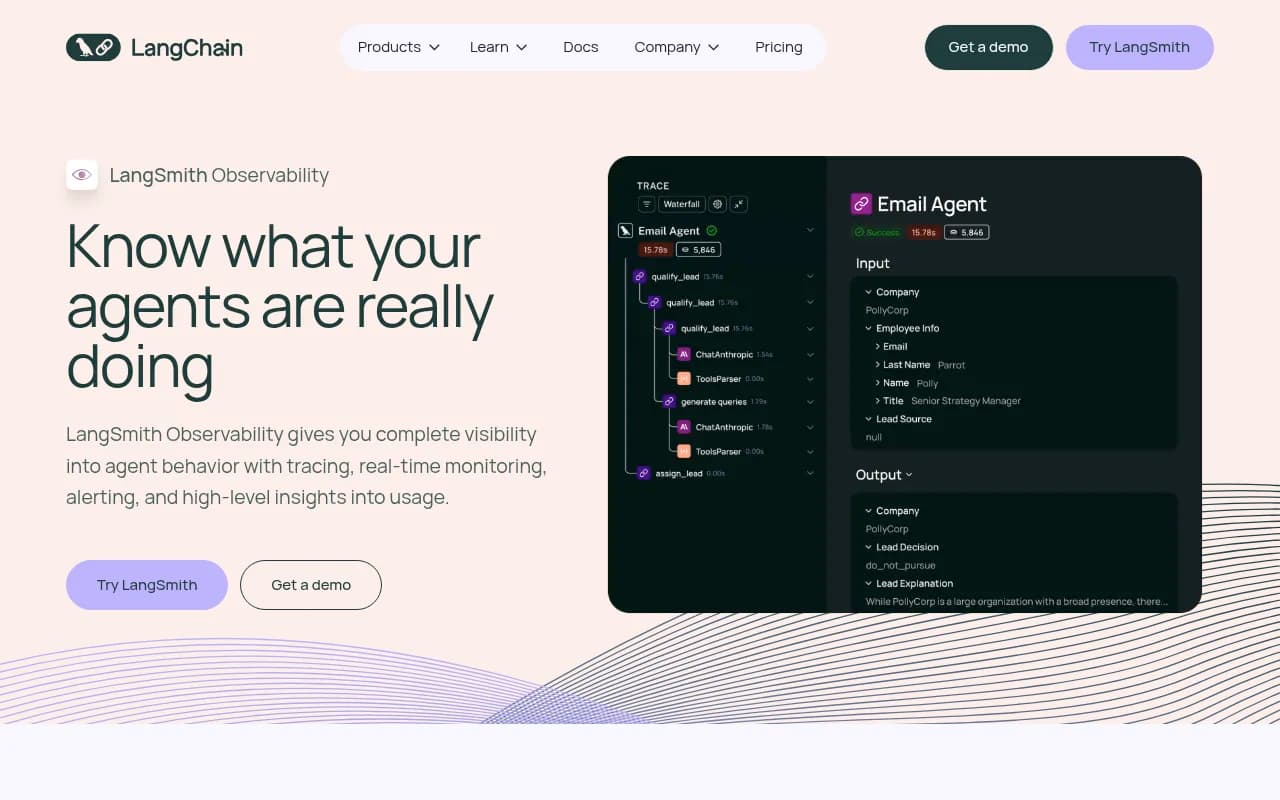
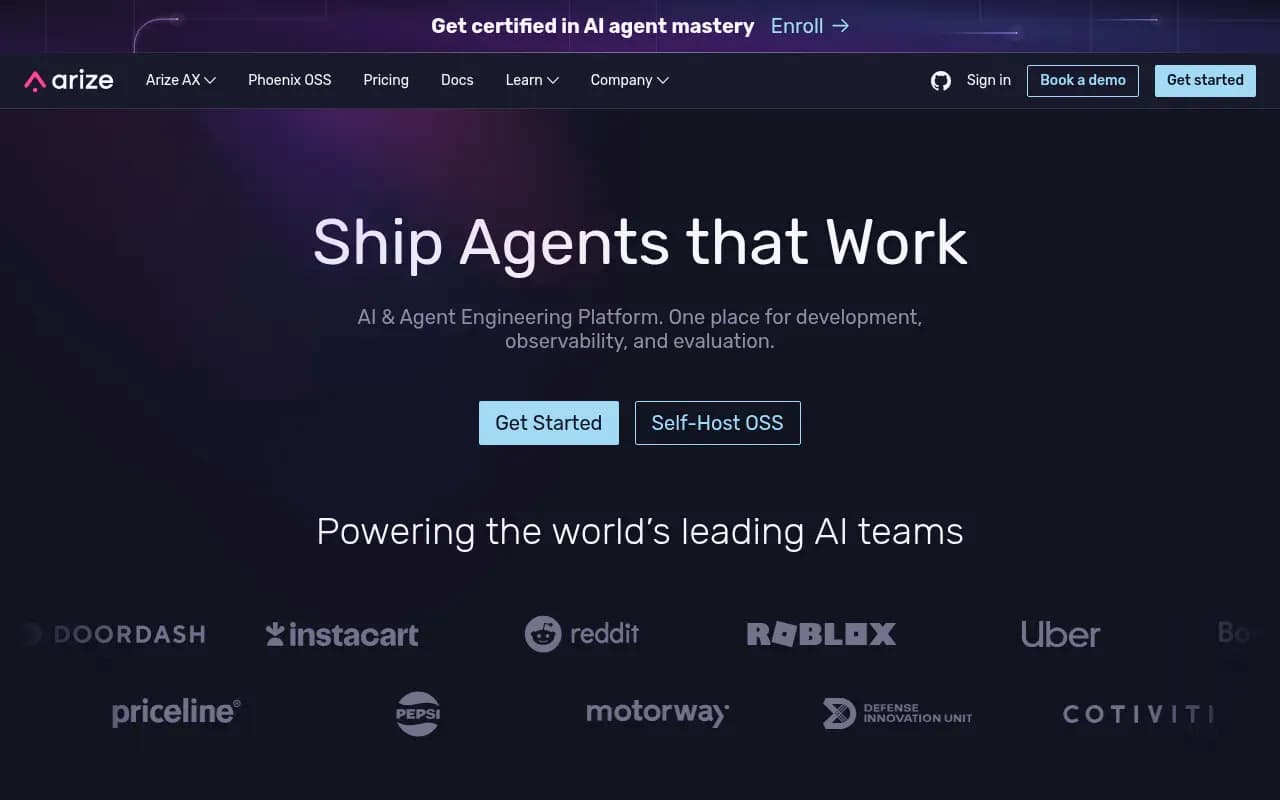
Compared to competitors: LangSmith (LangChain's observability tool) is similar in scope but tightly coupled to LangChain, making it harder to use with other frameworks. Helicone and Langfuse are cheaper but monitoring-only -- no eval system or prompt optimization. Weights & Biases has strong eval capabilities but is designed for ML training, not production serving. Arize AI is enterprise-focused with higher pricing and longer sales cycles.
Strengths
- Complete feedback loop: Only platform that connects observability, evals, and optimization in one workflow. You can go from "something broke in production" to "here's the fix, tested and deployed" without switching tools.
- Performance at scale: Brainstore's speed advantage (190x faster search) is real and matters when you're debugging production issues or running large evals.
- Trace-to-dataset conversion: Turning production failures into regression tests with one click is a game-changer for building robust eval suites.
- Framework agnostic: Works with any LLM provider or framework, no vendor lock-in.
- Enterprise-ready: SOC 2, HIPAA, SSO, RBAC, and hybrid deployment out of the box -- most competitors require enterprise contracts for these features.
Limitations
- Learning curve: More complex than basic monitoring dashboards. Teams need to invest time learning the eval workflow and setting up scorers.
- Pricing opacity: Usage-based pricing isn't fully transparent on the website, making it hard to estimate costs before signing up.
- Overkill for simple use cases: If you're just running a basic chatbot with low traffic, Braintrust's eval system may be more than you need. Simpler tools like Helicone or Langfuse might suffice.
- Limited no-code options: Requires code integration (SDKs) -- no drag-and-drop UI for non-technical users.
Bottom Line
Braintrust is the best choice for engineering teams running production AI at scale who need to catch quality issues before users do. If you're shipping AI features to thousands of users, dealing with model drift or hallucinations, and want a systematic way to improve quality with every release, Braintrust delivers the full stack in one platform. The combination of real-time observability, automated evals, and AI-powered optimization (Loop) makes it the most action-oriented platform in the space -- not just showing you what's broken, but helping you fix it. Best use case: AI-first SaaS companies or enterprise teams where AI quality directly impacts revenue or user trust, and where the cost of a production failure exceeds the platform fee.
Similar and alternative tools to Braintrust