Key Takeaways
- Pricing gap is massive: Bluefish AI starts around $4,000+/month with custom enterprise quotes. AI Peekaboo is estimated at $50-79/month with a 7-day free trial. You're comparing a Fortune 500 platform to a small business tool.
- Bluefish offers depth, Peekaboo offers simplicity: Bluefish has custom audiences, tailored prompts, deep performance analytics, and agentic commerce tracking. Peekaboo is a basic monitoring dashboard -- track mentions, see scores, that's it.
- Neither platform helps you fix visibility gaps: Both are monitoring-only tools. No AI crawler logs, no content gap analysis, no built-in content generation. You see the data but you're on your own to improve it.
- Target audience is completely different: Bluefish is built for enterprise marketing teams at brands like those in the Fortune 500. Peekaboo is aimed at agencies managing multiple small clients and startups watching a handful of prompts.
- AI model coverage: Bluefish covers AI search and agentic commerce channels (exact models not specified on site). Peekaboo explicitly tracks ChatGPT, Perplexity, Gemini, Google AI Overviews, and Google AI Mode.
- White-labeling matters for agencies: Peekaboo offers full white-labeling and Looker Studio integration, making it a solid pick for agencies reselling AI visibility reports. Bluefish is enterprise-only and doesn't position itself for agency resale.
Overview
Bluefish AI
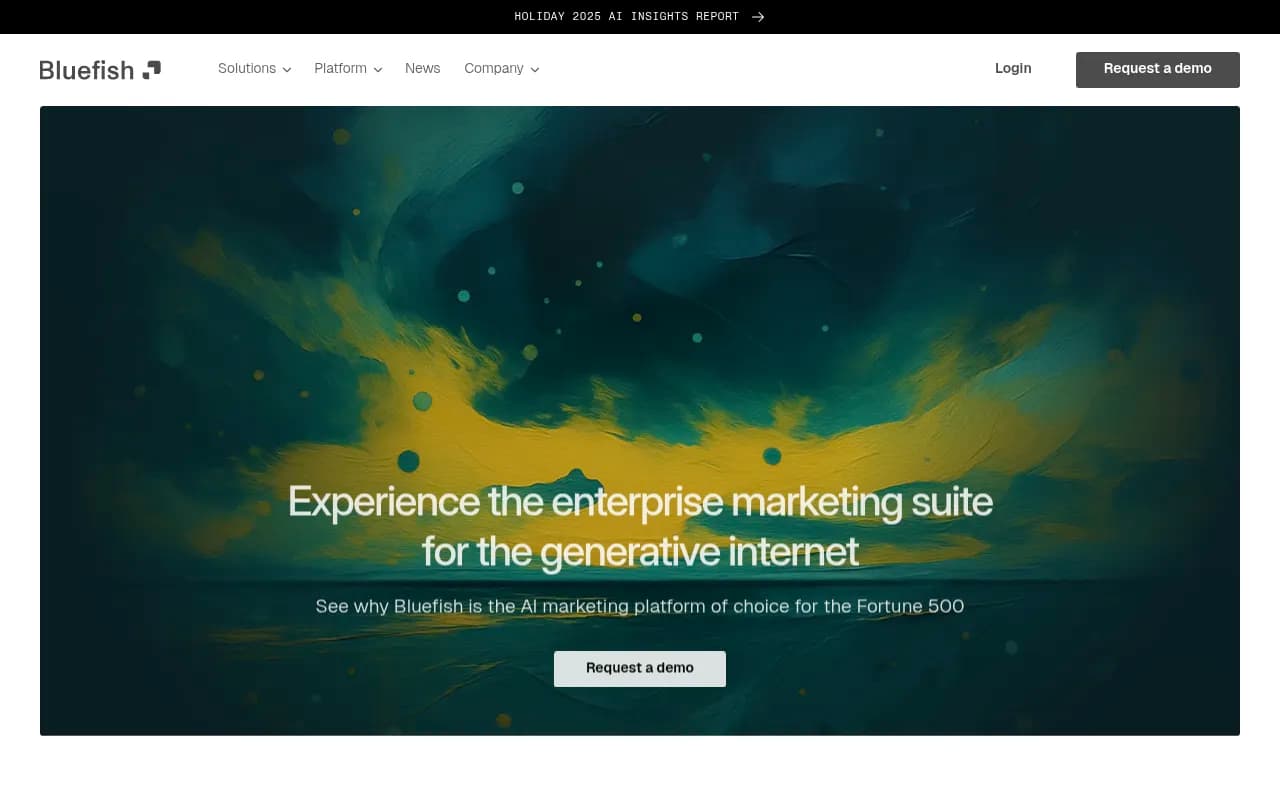
Bluefish AI is an enterprise AI marketing platform designed for Fortune 500 brands. It focuses on "authority, influence, and control" across AI channels -- going beyond basic visibility metrics to help large marketing teams understand how AI models "think" about their brand. The platform offers custom audiences, tailored prompts, and deep performance analytics across AI search and agentic commerce. Pricing is custom quote-based (estimated $4,000+/month), and there's no self-service option. Bluefish positions itself as the choice for category leaders who need differentiation and depth, not generic datasets.
AI Peekaboo
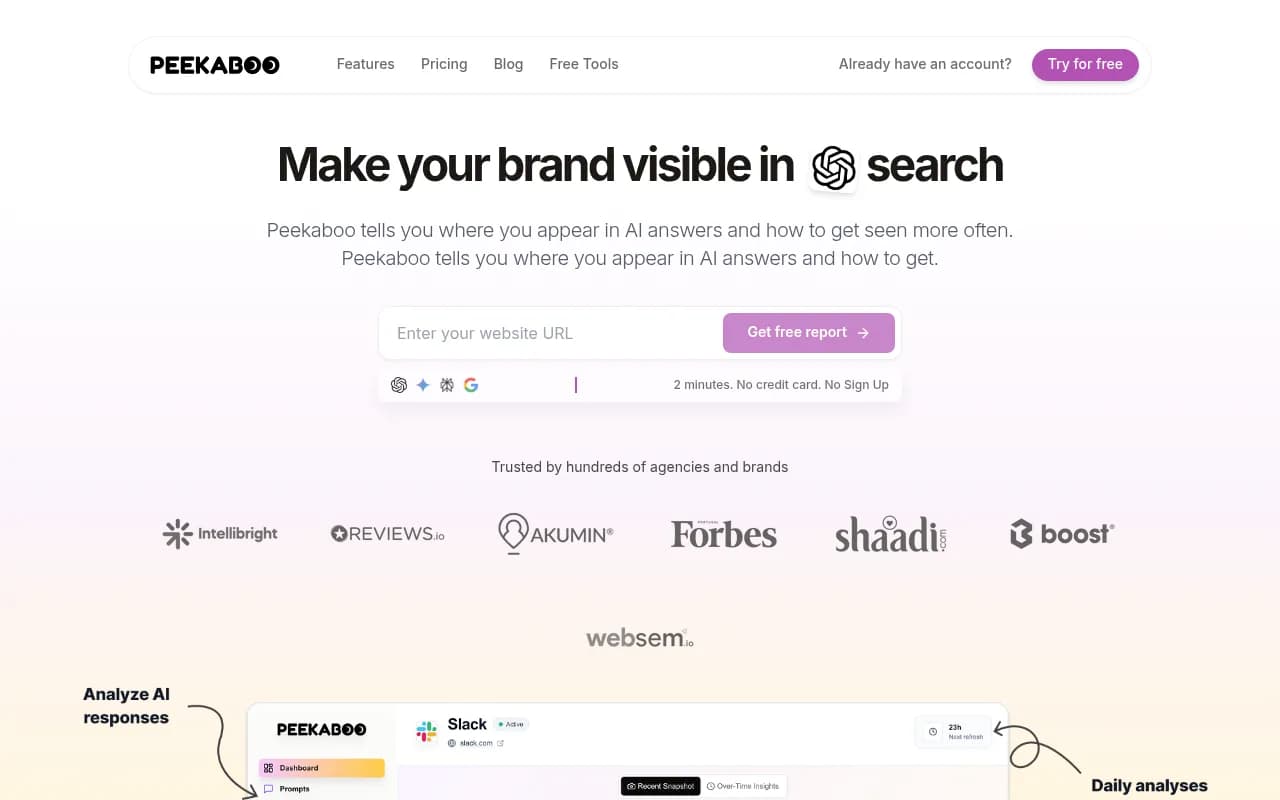
AI Peekaboo (often just called Peekaboo) is a straightforward AI visibility monitoring tool that tracks brand mentions across ChatGPT, Perplexity, Gemini, Google AI Overviews, and Google AI Mode. It's built for agencies and small brands who want simple dashboards, multi-client management, and white-labeling. Pricing isn't publicly listed but market research suggests it starts around $50-79/month -- a fraction of enterprise platforms. Peekaboo offers a 7-day free trial and integrates with Google Search Console and Looker Studio. It's a monitoring tool, not an optimization platform.
Side-by-Side Comparison
| Feature | Bluefish AI | AI Peekaboo |
|---|---|---|
| Pricing | Custom quote ($4,000+/mo estimated) | ~$50-79/mo (estimated, not public) |
| Free trial | No (demo required) | 7-day free trial |
| Target audience | Fortune 500 enterprise marketing teams | Agencies, small brands, startups |
| AI models tracked | AI search + agentic commerce (models not specified) | ChatGPT, Perplexity, Gemini, Google AIO, Google AI Mode |
| Custom audiences | Yes (enterprise feature) | No |
| Tailored prompts | Yes | Basic prompt tracking |
| White-labeling | No | Yes (full white-label for agencies) |
| Multi-client management | Enterprise accounts only | Yes (agency-focused) |
| Content gap analysis | No | No |
| AI crawler logs | No | No |
| Content generation | No | No |
| GSC integration | Not mentioned | Yes |
| Looker Studio integration | Not mentioned | Yes |
| API access | Likely (enterprise) | Yes |
| Ease of setup | Requires sales demo + custom onboarding | Self-service, quick setup |
Pricing: Enterprise vs small business
Bluefish AI does not publish pricing. Based on its Fortune 500 positioning and enterprise feature set, estimates put it at $4,000+/month minimum, likely scaling up significantly for larger brands. You have to request a demo and go through a sales process. There's no free trial or self-service option. This is standard for enterprise software -- if you have to ask the price, you're probably not the target buyer.
AI Peekaboo also doesn't publish exact pricing on its website, but market research and comparisons with similar tools (like the "$50/month" reference in alternative guides) suggest it starts around $50-79/month. There's a 7-day free trial, and you can sign up without talking to sales. This is a self-service product aimed at agencies and small brands who need basic monitoring without enterprise overhead.
The pricing gap here is 50-80x. These tools are not competing for the same buyer.
Feature depth: Custom analytics vs basic dashboards
Bluefish AI's core value proposition is depth. It offers custom audiences (segment prompts by persona, region, or use case), tailored prompts (not just generic queries), and what it calls "deep performance analytics" that go beyond share-of-voice. The platform claims to help marketers understand how AI models "think" -- presumably through sentiment analysis, influence scoring, or context mapping. Bluefish also tracks agentic commerce channels, which is a newer category (think AI shopping assistants, product recommendation engines). This is a platform built for competitive markets where generic datasets aren't enough.
AI Peekaboo is a monitoring dashboard. You pick prompts, it tracks them across five AI models, and you see visibility scores and mention frequency. There's multi-client management for agencies, white-labeling for reselling reports, and integrations with GSC and Looker Studio. It's clean, simple, and functional -- but there's no custom audience segmentation, no tailored prompt frameworks, and no advanced analytics. You get the data, not the insights.
If you need to present AI visibility data to a Fortune 500 CMO and justify a seven-figure marketing budget, Bluefish's depth makes sense. If you're an agency tracking 10 clients and need a white-labeled report each month, Peekaboo's simplicity is the point.
What both platforms are missing
Neither Bluefish AI nor AI Peekaboo helps you fix visibility gaps. They show you where you're invisible, but they don't tell you why or what to do about it.
No AI crawler logs: You can't see which pages AI models are actually reading on your site, what errors they're hitting, or how often they return. This is critical for diagnosing indexing issues.
No content gap analysis: Neither platform shows you which prompts competitors are visible for but you're not, or what specific content you're missing. You're left guessing what to create.
No content generation: You can't generate articles, listicles, or comparisons grounded in citation data and prompt volumes. You have to build content yourself and hope it works.
This is where platforms like Promptwatch come in -- they close the loop by showing you the gaps, helping you create content that ranks in AI search, and tracking the results. Bluefish and Peekaboo are monitoring-only tools. You see the scoreboard but you don't get a playbook.

AI model coverage
Bluefish AI's website mentions "AI search and agentic commerce" but doesn't list specific models. Based on its enterprise positioning, it likely covers the major players (ChatGPT, Perplexity, Gemini, Claude) plus emerging agentic commerce channels. The lack of transparency here is frustrating -- enterprise buyers should know exactly which models they're paying to monitor.
AI Peekaboo explicitly lists five models: ChatGPT, Perplexity, Gemini, Google AI Overviews, and Google AI Mode. This is solid coverage of the most popular AI search engines, though it's missing Claude, Meta AI, Grok, DeepSeek, Mistral, and Copilot. For a basic monitoring tool, five models is reasonable. For agencies tracking mainstream AI visibility, it's probably enough.
If you need comprehensive coverage across 10+ models, neither platform is ideal. Promptwatch tracks 10 models including the ones Peekaboo misses.
Agency features: White-labeling and multi-client management
AI Peekaboo is explicitly built for agencies. It offers full white-labeling (rebrand the dashboard and reports as your own), multi-client management (switch between client accounts easily), and Looker Studio integration (export data for custom reports). The $50-79/month price point makes sense for agencies who want to resell AI visibility monitoring as a service. You can charge clients $200-500/month for white-labeled reports and keep the margin.
Bluefish AI is not an agency tool. It's designed for in-house enterprise marketing teams. There's no mention of white-labeling or multi-client management. If you're an agency serving Fortune 500 clients, you might use Bluefish as part of a larger service offering, but you're not reselling the platform itself.
Verdict: If you're an agency, Peekaboo is the obvious choice. If you're an enterprise brand, Bluefish is built for you.
Ease of use and setup
AI Peekaboo is self-service. Sign up, add your prompts, connect your GSC account, and you're tracking mentions within minutes. The interface is simple -- probably too simple for enterprise buyers who want depth, but perfect for agencies who need to onboard clients quickly. The 7-day free trial lets you test it risk-free.
Bluefish AI requires a sales demo. You fill out a form, talk to a rep, go through a discovery process, and eventually get a custom quote and onboarding plan. This is standard for enterprise software, but it means you can't just try it out. The barrier to entry is high by design -- Bluefish is filtering for serious buyers with serious budgets.
If you want to start tracking AI visibility today, Peekaboo wins. If you're okay with a multi-week sales cycle, Bluefish is fine.
Performance and reliability
Both platforms are relatively new (Bluefish launched around 2024-2025, Peekaboo around the same time), so long-term reliability data is limited. Bluefish's enterprise positioning suggests it has passed infosec reviews and meets SOC 2 or similar compliance standards -- the website explicitly mentions "consistently passing infosec reviews with ease." This matters for Fortune 500 buyers.
AI Peekaboo doesn't mention security certifications or compliance. For a $50/month tool aimed at agencies and small brands, this is probably fine -- most buyers at that price point aren't running infosec audits. But if you're handling sensitive client data or operating in a regulated industry, the lack of transparency is a red flag.
Integrations and API access
AI Peekaboo offers Google Search Console integration (connect your GSC account to correlate AI visibility with traditional search traffic) and Looker Studio integration (export data for custom dashboards). It also has API access, which is useful for agencies building custom reporting workflows.
Bluefish AI's website mentions that "data teams get more ways to customize, segment, and optimize data in ways competitors can't match," which implies API access and custom data exports. But specifics aren't listed. Enterprise platforms usually have robust APIs -- you just have to ask your account rep.
Neither platform integrates with content management systems, marketing automation tools, or AI writing platforms. They're monitoring tools, not workflow tools.
Who should pick Bluefish AI
- You're a Fortune 500 brand or a large enterprise with a seven-figure marketing budget
- You need custom audiences, tailored prompts, and deep performance analytics
- You want to track agentic commerce channels, not just AI search
- You have a dedicated team to manage the platform and act on insights
- You're willing to go through a sales process and pay $4,000+/month
- You need a platform that passes enterprise infosec reviews
Bluefish is overkill for small brands and agencies. It's built for category leaders who compete in markets where generic datasets aren't enough.
Who should pick AI Peekaboo
- You're an agency managing multiple small clients and need white-labeling
- You want a simple, affordable monitoring tool (~$50-79/month)
- You need to track ChatGPT, Perplexity, Gemini, and Google AI visibility
- You want self-service setup with a 7-day free trial
- You need Looker Studio integration for custom client reports
- You don't need advanced analytics or custom audience segmentation
Peekaboo is a solid choice for agencies and small brands who want basic AI visibility monitoring without enterprise complexity or cost.
Final verdict
Bluefish AI and AI Peekaboo are not competitors -- they target completely different buyers at completely different price points. Bluefish is a $4,000+/month enterprise platform for Fortune 500 brands who need depth, custom analytics, and agentic commerce tracking. Peekaboo is a $50-79/month monitoring tool for agencies and small brands who need simple dashboards and white-labeling.
If you're an enterprise marketer with a big budget and complex needs, Bluefish is worth exploring (though you'll have to sit through a sales demo to find out if it's actually worth the price). If you're an agency or small brand, Peekaboo is a straightforward, affordable option.
But here's the catch: both platforms are monitoring-only. They show you the data but don't help you fix visibility gaps. No crawler logs, no content gap analysis, no AI content generation. You're stuck manually creating content and hoping it works. For a complete AI visibility solution that actually helps you optimize -- not just monitor -- look at platforms that close the action loop from gap analysis to content creation to results tracking.