Key Takeaways
- Pricing transparency: Authoritas starts at £99/mo with public tiers; Bluefish requires custom quotes (estimated $4,000+/mo) with no self-service option
- Target audience: Bluefish is built exclusively for Fortune 500 enterprise teams; Authoritas serves eCommerce brands, publishers, and agencies at multiple budget levels
- Content optimization: Neither platform offers AI content generation or crawler log analysis -- both are monitoring-focused tools that show you data but don't help you create content that ranks
- Publisher focus: Authoritas has unique licensing insights and IP tracking for publishers; Bluefish focuses on brand reputation and agentic commerce for consumer brands
- Feature depth: Bluefish emphasizes custom audiences and tailored prompts for competitive differentiation; Authoritas combines AI tracking with traditional SEO tools in one platform
- Enterprise requirements: Bluefish passes infosec reviews consistently and offers deep segmentation for large teams; Authoritas provides more accessible entry points for mid-market brands
Overview
Bluefish AI
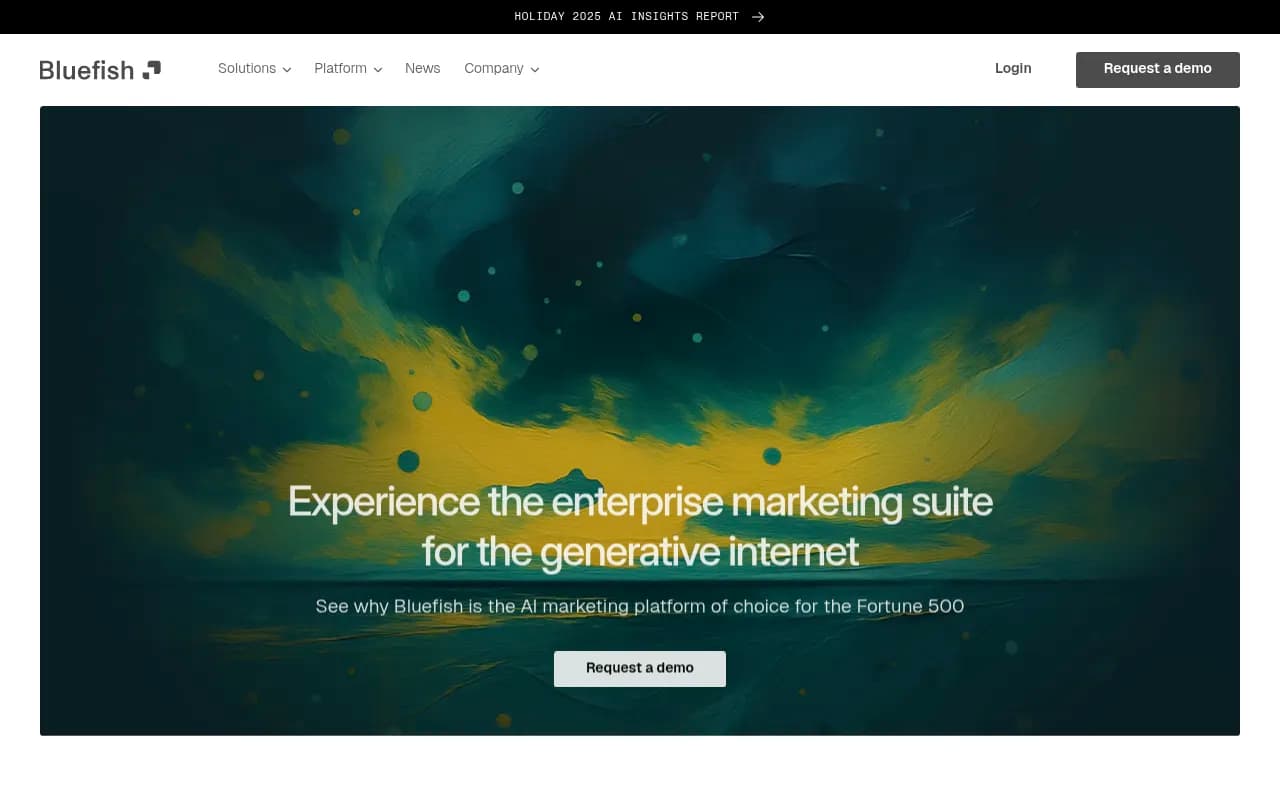
Bluefish AI positions itself as "the AI marketing platform of choice for the Fortune 500." It's an enterprise-only solution that tracks brand visibility and influence across AI search engines and agentic commerce channels. The platform emphasizes custom audiences, tailored prompts, and what they call understanding how AI "thinks" -- going beyond basic share-of-voice metrics to measure impact and influence. Bluefish requires a sales conversation to get started, with no transparent pricing or self-service signup.
Authoritas AI Tracker

Authoritas combines AI search monitoring with traditional SEO tools in a single platform. It tracks brand mentions, sentiment, and visibility across ChatGPT, Perplexity, Claude, Gemini, DeepSeek, Google AI Overviews, and Bing AI. Built for eCommerce brands, publishers, and agencies, Authoritas offers public pricing starting at £99/mo and includes unique features for publishers like licensing agreement tracking and IP protection insights. The platform markets itself as bridging the gap between traditional SEO and the new world of AI-driven search.
Side-by-Side Comparison
| Feature | Bluefish AI | Authoritas AI Tracker |
|---|---|---|
| Starting price | Custom quote (~$4,000+/mo) | £99/mo (Essential plan) |
| Free trial | No (demo only) | Not specified |
| Target audience | Fortune 500 enterprises | eCommerce, publishers, agencies |
| AI models tracked | Major AI channels (specific list not public) | ChatGPT, Perplexity, Claude, Gemini, DeepSeek, Google AIO, Bing AI |
| Traditional SEO tools | No | Yes (rankings, keywords, etc.) |
| Content generation | No | No |
| Crawler logs | No | No |
| Custom audiences | Yes (core feature) | Not specified |
| Publisher licensing insights | No | Yes (unique to Authoritas) |
| Agentic commerce tracking | Yes | Not specified |
| Self-service signup | No | Yes |
| API access | Not specified | Not specified |
| Multi-language support | Not specified | Global tracking mentioned |
Pricing comparison
| Plan | Bluefish AI | Authoritas AI Tracker |
|---|---|---|
| Entry tier | Custom quote (estimated $4,000+/mo) | £99/mo (Essential) |
| Mid tier | Custom quote | £799/mo (Expert) |
| Enterprise | Custom quote | Custom pricing |
| Billing | Annual contracts typical | Monthly or annual |
| Free trial | No | Not specified |
The pricing difference here is stark. Bluefish operates entirely on custom enterprise quotes with no public pricing -- you need a sales conversation to even get a number. Based on their Fortune 500 positioning and enterprise-only focus, estimates put their entry point around $4,000/month or higher. Authoritas publishes transparent tiers starting at £99/mo (~$125/mo), making it accessible to mid-market brands and agencies. If you're not a Fortune 500 company with a six-figure marketing budget, Bluefish likely isn't an option.
Feature deep-dive
AI search monitoring capabilities
Both platforms track brand visibility across major AI engines, but they take different approaches.
Bluefish emphasizes "impact and influence" over basic visibility metrics. They claim to help marketers understand how AI "thinks" and optimize beyond share-of-voice. The platform offers custom audiences and tailored prompts -- meaning you can define specific customer segments and track how AI responds to questions those segments would ask. This is useful for competitive markets where generic prompt sets don't capture the nuances of how your actual customers search. Bluefish also tracks agentic commerce channels, monitoring when AI platforms recommend products or make purchase suggestions.
Authoritas takes a more straightforward monitoring approach. It tracks brand mentions, sentiment, and visibility across seven named AI platforms: ChatGPT, Perplexity, Claude, Gemini, DeepSeek, Google AI Overviews, and Bing AI. The platform shows you where your brand appears, how often, and in what context. For publishers specifically, Authoritas includes licensing insights -- tracking which AI platforms have licensing agreements with which publishers and how content is being consumed. This is a unique angle that Bluefish doesn't cover.
Verdict: Bluefish wins on customization depth for enterprise brands with complex segmentation needs. Authoritas wins on transparency and publisher-specific features.
Traditional SEO integration
This is where the platforms diverge completely.
Bluefish is AI-only. It doesn't track traditional search rankings, keywords, backlinks, or any of the standard SEO metrics. If you want to see how your brand performs in Google organic search alongside AI search, you'll need a separate tool.
Authoritas combines both worlds. The platform includes traditional SEO tools -- keyword rankings, competitor analysis, backlink tracking, technical SEO audits -- alongside AI search monitoring. For teams that need to report on both traditional and AI search performance, this consolidation saves time and budget. You're not paying for two separate platforms or juggling data from multiple dashboards.
Verdict: Authoritas wins decisively if you need traditional SEO tools. Bluefish isn't trying to compete here.
Content optimization and generation
Neither platform helps you create content that ranks in AI search. Both are monitoring-only tools.
Bluefish shows you performance data and lets you segment by custom audiences, but it doesn't identify content gaps, suggest topics, or generate articles. You see the results; you're on your own for the optimization work.
Authoritas has the same limitation. It tracks where you appear and where you don't, but it won't tell you what content to create or help you write it. If you're looking to track how your brand shows up in AI search results and also need help creating content that actually gets cited, tools like Promptwatch cover that angle with built-in content gap analysis and AI writing agents grounded in citation data.

Verdict: Tie. Both platforms leave you to figure out content strategy on your own.
Enterprise features and scalability
Bluefish is built for enterprise from the ground up. They consistently pass infosec reviews, offer deep data segmentation, and provide what they describe as "control and differentiation" through custom audiences and tailored prompts. The platform is designed for large marketing teams managing multiple brands, regions, or product lines. Data teams get extensive customization options for how they slice and analyze performance.
Authoritas offers enterprise plans with custom pricing, but the platform is fundamentally designed to serve a broader market -- from small agencies at £99/mo to large enterprises. It doesn't emphasize infosec compliance or the kind of deep customization Bluefish highlights. For mid-market brands, this is fine. For Fortune 500 companies with strict security requirements and complex organizational structures, Bluefish's enterprise focus is a real advantage.
Verdict: Bluefish wins for true enterprise needs. Authoritas wins for everyone else.
Publisher-specific features
Authoritas has a unique angle here. The platform tracks licensing agreements between AI platforms and publishers, monitors how content is being consumed across AI engines, and provides insights for IP protection and monetization. If you're a publisher trying to understand which AI platforms are using your content, negotiate licensing deals, or protect your intellectual property, Authoritas built features specifically for you.
Bluefish doesn't address publishers at all. It's focused on consumer brands tracking reputation and product recommendations in AI search and agentic commerce.
Verdict: Authoritas wins by default -- it's the only option for publishers.
User interface and learning curve
Bluefish emphasizes "actionability" and automation of optimization workflows. The interface is designed for enterprise marketers who need to customize measurement frameworks and focus on metrics that matter to their specific business. Based on their positioning, expect a steeper learning curve in exchange for more control.
Authoritas combines AI tracking with traditional SEO tools, which means the interface needs to handle more surface area. For teams already familiar with SEO platforms, the learning curve should be manageable. For teams new to both AI search and traditional SEO, there's more to absorb.
Neither platform has public user reviews or detailed interface walkthroughs available, so it's hard to make a definitive call here.
Verdict: Unclear without hands-on testing, but Bluefish likely has a steeper learning curve given its enterprise customization focus.
Pros and cons
Bluefish AI
Pros:
- Built specifically for Fortune 500 enterprise needs with infosec compliance
- Custom audiences and tailored prompts for competitive differentiation
- Agentic commerce tracking for product recommendations
- Deep segmentation and data customization for large teams
- Focus on "impact and influence" beyond basic visibility metrics
Cons:
- No transparent pricing -- requires sales conversation
- Estimated $4,000+/mo puts it out of reach for most brands
- No content generation or optimization features
- No traditional SEO tools if you need those
- No self-service signup or trial
- Not suitable for publishers
Authoritas AI Tracker
Pros:
- Transparent pricing starting at £99/mo
- Combines AI search monitoring with traditional SEO tools
- Unique publisher features (licensing insights, IP tracking)
- Tracks seven named AI platforms
- Accessible to eCommerce brands, agencies, and mid-market companies
- Self-service signup available
Cons:
- No content generation or crawler log analysis
- Less customization depth than Bluefish for complex enterprise needs
- Doesn't emphasize agentic commerce tracking
- Interface may feel cluttered if you only need AI monitoring
- No clear infosec compliance messaging for enterprise buyers
Who should pick which tool
Choose Bluefish AI if:
- You're a Fortune 500 brand with a six-figure marketing budget
- You need custom audience segmentation and tailored prompts for competitive markets
- Agentic commerce tracking (AI product recommendations) is critical for your business
- You require a platform that passes enterprise infosec reviews
- You're willing to go through a sales process and sign an annual contract
- You don't need traditional SEO tools or content generation features
Choose Authoritas AI Tracker if:
- You're an eCommerce brand, publisher, or agency with a more modest budget
- You want transparent pricing and the ability to start at £99/mo
- You need both AI search monitoring and traditional SEO tools in one platform
- You're a publisher looking for licensing insights and IP protection features
- You prefer self-service signup over enterprise sales cycles
- You're managing multiple clients or brands and need a cost-effective solution
Look elsewhere if:
- You need content generation and optimization tools, not just monitoring -- platforms like Promptwatch offer content gap analysis and AI writing agents alongside tracking
- You want crawler logs to see how AI engines are actually reading your website
- You need a free tier or trial to test before committing
- You're looking for a platform that helps you take action on the data, not just view it
Final verdict
These platforms serve fundamentally different markets. Bluefish AI is an enterprise-only tool for Fortune 500 brands with deep pockets and complex needs. Authoritas AI Tracker is a more accessible option for eCommerce brands, publishers, and agencies that want AI monitoring combined with traditional SEO tools.
If you're a large enterprise with a six-figure budget and you need custom audience segmentation, Bluefish is worth the sales conversation. For everyone else, Authoritas offers better value and transparency. But here's the catch: neither platform helps you optimize. They show you where you're invisible in AI search, but they don't help you fix it. You're left to figure out content strategy, creation, and optimization on your own. That's the core limitation of monitoring-only tools in 2026.