Key Takeaways
- Pricing gap is massive: Otterly.AI starts at $29/mo with a free tier; Bluefish AI requires custom quotes estimated at $4,000+/mo -- a 100x+ difference for small teams
- Target audience split: Bluefish AI is built exclusively for Fortune 500 enterprise marketing teams; Otterly.AI serves 20,000+ marketers from solopreneurs to mid-market brands
- Feature depth vs breadth: Bluefish offers custom audiences and deep performance analytics for large teams; Otterly.AI covers 6 AI platforms with GEO audits and keyword research but lacks enterprise customization
- Neither platform generates content: Both are monitoring-only tools -- you'll need a separate solution if you want AI-powered content creation to fix the gaps you discover
- Self-service vs white-glove: Otterly.AI has transparent pricing and instant signup; Bluefish requires sales demos and custom contracts
- Enterprise scale matters: If you're managing multiple brands across global markets with complex infosec requirements, Bluefish's enterprise infrastructure is worth the premium; otherwise Otterly.AI delivers 80% of the value at 5% of the cost
Overview
Bluefish AI: Enterprise-grade AI marketing platform
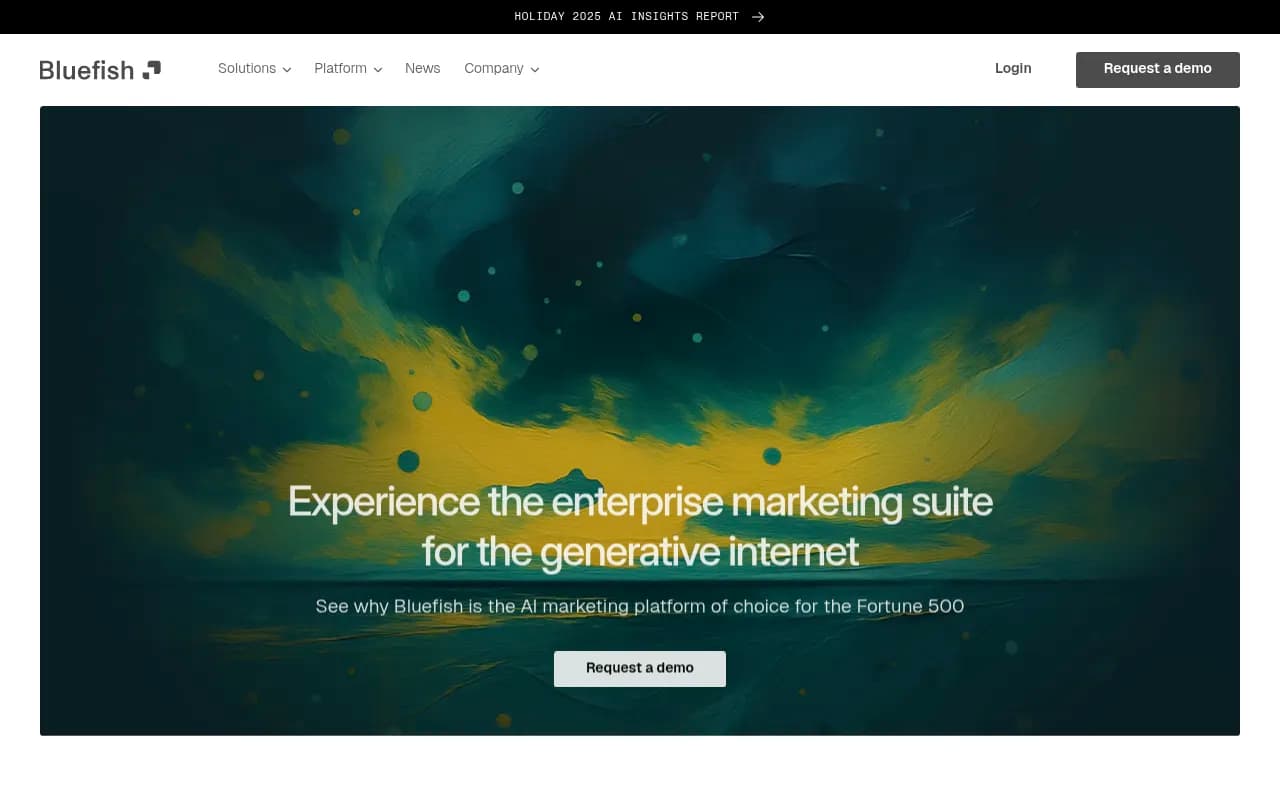
Bluefish AI positions itself as "the AI marketing platform of choice for the Fortune 500." It's designed for large enterprise marketing teams that need deep control over brand presence across AI search engines and agentic commerce channels. The platform emphasizes custom audiences, tailored prompts, and performance analytics that go beyond basic share-of-voice metrics. Bluefish passes enterprise infosec reviews and offers data segmentation capabilities that smaller platforms can't match. The trade-off: no transparent pricing, no self-service signup, and a feature set that assumes you have a dedicated team managing it.
Otterly.AI: Accessible AI search monitoring for everyone
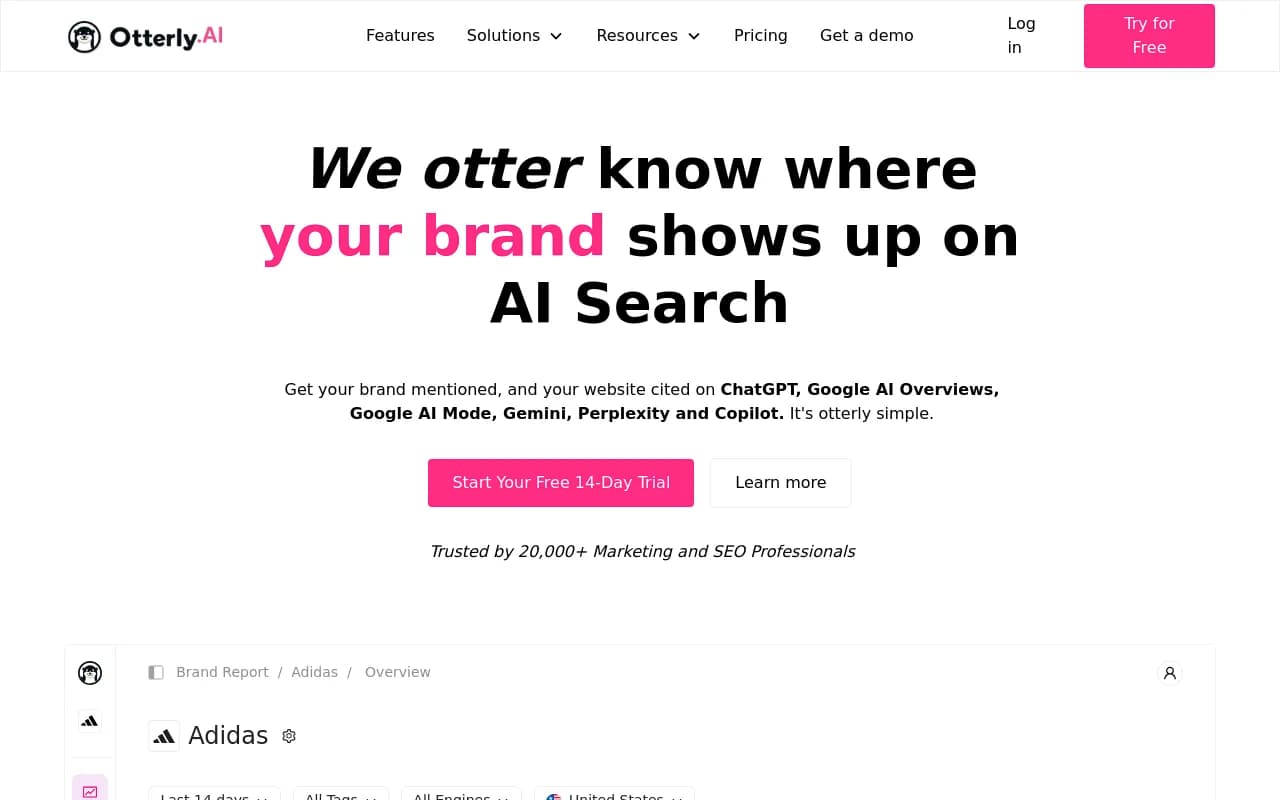
Otterly.AI takes the opposite approach -- it's built for the 20,000+ marketers who need AI search visibility but don't have Fortune 500 budgets. The platform monitors brand mentions and website citations across ChatGPT, Google AI Overviews, Perplexity, Gemini, Copilot, and AI Mode. You get visibility dashboards, competitive benchmarking, GEO audits, and AI keyword research. Pricing is transparent (free tier available, paid plans from $29/mo), and you can sign up and start tracking in minutes. The limitation: less customization depth and no enterprise-specific features like custom audience segmentation.
Side-by-Side Comparison
| Feature | Bluefish AI | Otterly.AI |
|---|---|---|
| Starting price | ~$4,000+/mo (estimated) | $29/mo (Lite plan) |
| Free tier | No | Yes (limited) |
| AI platforms monitored | ChatGPT, Perplexity, AI Overviews, agentic commerce | ChatGPT, Perplexity, AI Overviews, AI Mode, Gemini, Copilot |
| Custom audiences | ✓ Yes | ✗ No |
| GEO audits | Limited | ✓ Yes (25+ factors) |
| AI keyword research | Not specified | ✓ Yes |
| Content generation | ✗ No | ✗ No |
| Crawler logs | ✗ No | ✗ No |
| Self-service signup | ✗ No (demo required) | ✓ Yes |
| Enterprise infosec | ✓ Yes | Not emphasized |
| Target audience | Fortune 500 brands | Solopreneurs to mid-market |
| User base | Undisclosed | 20,000+ marketers |
Pricing comparison
The pricing gap between these two platforms is the most significant differentiator.
| Plan | Bluefish AI | Otterly.AI |
|---|---|---|
| Free tier | Not available | Available (limited prompts) |
| Entry plan | Custom quote (~$4,000+/mo estimated) | $29/mo (Lite: 15 prompts) |
| Mid-tier | Custom quote | $189/mo (Standard: 100 prompts) |
| Enterprise | Custom quote | Premium tier (pricing not public) |
Bluefish AI doesn't publish pricing -- you have to request a demo and go through a sales process. Based on their enterprise positioning and feature set, industry estimates put their entry point around $4,000-$10,000 per month for a single brand. Otterly.AI's transparent pricing starts at $29/mo for 15 prompts, scaling to $189/mo for 100 prompts. That's a 100x+ price difference at the low end.
For context, if you're also looking to track how your brand shows up in AI search results and want the ability to generate optimized content based on what you find, Promptwatch sits between these two extremes -- it offers monitoring, content gap analysis, and an AI writing agent starting at $99/mo.

AI platform coverage
Both platforms monitor the major AI search engines, but with different emphases.
Bluefish AI covers:
- ChatGPT
- Perplexity
- Google AI Overviews
- Agentic commerce channels (specific platforms not detailed on their site)
Their focus is on "AI native experiences" and they emphasize depth over breadth -- custom audiences and tailored prompts for each platform rather than broad coverage.
Otterly.AI covers:
- ChatGPT
- Google AI Overviews
- Perplexity
- Google AI Mode
- Gemini
- Microsoft Copilot
Otterly.AI wins on breadth with 6 platforms vs Bluefish's 4 (plus unspecified commerce channels). For most brands, Otterly's coverage hits the platforms that matter. Bluefish's "agentic commerce" tracking is interesting for retail brands but details are sparse.
Feature depth: Monitoring and analytics
Bluefish AI's enterprise approach
Bluefish emphasizes going "beyond superficial metrics" with:
- Custom audiences: Segment tracking by customer personas, regions, or business units
- Tailored prompts: Create brand-specific prompt sets rather than using generic queries
- Deep performance analytics: Understand how AI models "think" about your brand, not just visibility scores
- Automated optimization workflows: Enterprise-scale automation for large teams
The platform is built for scenarios like: a global CPG brand tracking 50+ products across 20 markets with different customer segments in each region. You need granular control and the ability to slice data dozens of ways. Bluefish delivers that -- at a price.
Otterly.AI's practical toolkit
Otterly.AI focuses on actionable insights:
- Brand monitoring: Track mentions and share of voice across all 6 platforms
- Website citation tracking: See which pages get cited and how often
- GEO audits: Analyze 25+ on-page factors to identify what's blocking citations
- AI keyword research: Discover conversational prompts your audience is actually asking
- Competitive benchmarking: Compare your visibility against competitors
Otterly's strength is making AI search monitoring accessible. You don't need a data science team to interpret the dashboards. The GEO audit tool is particularly useful -- it tells you exactly what to fix on your pages to earn more citations.
The gap: Otterly.AI doesn't offer custom audience segmentation or tailored prompt libraries. You get their standard prompt sets, which cover most use cases but won't match the granularity Bluefish offers for complex enterprise scenarios.
What's missing from both platforms
Neither Bluefish AI nor Otterly.AI offers:
- Content generation: Both show you where you're invisible but don't help you create the content to fix it
- AI crawler logs: No visibility into which AI bots are crawling your site, when, or what errors they encounter
- Traffic attribution: Neither platform connects AI visibility to actual website traffic or revenue
- Prompt volume data: No estimates of how often specific prompts are being asked
These are monitoring-only platforms. You'll discover gaps in your AI visibility, but you're on your own to close them. More comprehensive GEO platforms like Promptwatch, Profound, or Scrunch include content optimization and generation tools to help you act on the insights.
User experience and onboarding
Bluefish AI: Enterprise sales process. You request a demo, go through discovery calls, get a custom quote, negotiate a contract, then onboard with a dedicated team. This takes weeks to months. The upside: white-glove service and a platform configured for your specific needs. The downside: you can't just sign up and start tracking today.
Otterly.AI: Self-service signup. Create an account, add your brand and prompts, start monitoring within minutes. The free tier lets you test before committing. The interface is designed for individual marketers or small teams who need to move fast. No hand-holding, but also no friction.
If you need to show results to your CMO next week, Otterly.AI is the only realistic option. If you're planning a 6-month enterprise rollout with budget approval and stakeholder buy-in, Bluefish's process makes sense.
Enterprise capabilities
Bluefish AI wins decisively on enterprise infrastructure:
- Infosec compliance: Built to pass Fortune 500 security reviews
- Data segmentation: Slice visibility data by business unit, region, product line, customer segment
- Multi-brand management: Track dozens of brands in a single account
- Custom integrations: API access and data export for enterprise BI tools
- Dedicated support: Account teams and strategic consulting
Otterly.AI doesn't emphasize these capabilities. Their site mentions nothing about infosec certifications, SOC 2 compliance, or enterprise SLAs. For a 10-person marketing team, that's fine. For a publicly traded company with strict data governance requirements, it's a dealbreaker.
Competitive intelligence
Both platforms offer competitive benchmarking, but with different approaches.
Bluefish AI: Custom competitor sets with deep performance comparisons. You can track how competitors are positioned across different customer segments and prompt categories. The analytics go beyond "who's winning" to "why are they winning and what can we learn."
Otterly.AI: Standard competitive tracking showing share of voice and citation frequency. You see which brands are mentioned most often and which websites get cited. It's useful for spotting trends but lacks the depth Bluefish offers.
For most brands, Otterly's competitive data is enough to inform strategy. If you're in a hyper-competitive category where small positioning differences matter (think insurance, banking, enterprise SaaS), Bluefish's depth pays off.
Pros and cons
Bluefish AI
Pros:
- Enterprise-grade infrastructure and security
- Custom audiences and tailored prompts for complex use cases
- Deep performance analytics that go beyond surface metrics
- White-glove service and strategic consulting
- Built for multi-brand, multi-region scenarios
Cons:
- Pricing starts around $4,000+/mo (estimated) -- prohibitive for small teams
- No self-service option or transparent pricing
- Sales process takes weeks to months
- Overkill for single-brand monitoring
- No content generation or optimization tools
- Missing crawler logs and traffic attribution
Otterly.AI
Pros:
- Affordable pricing starting at $29/mo with a free tier
- Covers 6 major AI platforms
- Self-service signup -- start tracking in minutes
- GEO audit tool identifies specific on-page issues
- AI keyword research for content planning
- Used by 20,000+ marketers (proven at scale)
Cons:
- No custom audience segmentation
- Limited enterprise features (no infosec certifications mentioned)
- Monitoring-only -- no content generation
- Less depth in performance analytics vs Bluefish
- No crawler logs or traffic attribution
- Competitive intelligence is basic
Who should choose which platform
Choose Bluefish AI if:
- You're a Fortune 500 brand or large enterprise with $50k+ annual AI search budget
- You need to track multiple brands across global markets with different customer segments
- Your company requires SOC 2 compliance and passes rigorous infosec reviews
- You have a dedicated team managing AI search visibility (not a side project for one marketer)
- Custom audience segmentation and tailored prompts are critical for your use case
- You want strategic consulting and white-glove support, not just a software tool
Choose Otterly.AI if:
- You're a solopreneur, small business, or mid-market brand with limited budget
- You need to start tracking AI search visibility this week, not in 3 months
- You want transparent pricing and the ability to test before committing
- Your team is 1-10 people and needs a tool that's easy to use without training
- GEO audits and AI keyword research are more valuable to you than custom audiences
- You're monitoring 1-3 brands, not managing a portfolio of 50+
Consider alternatives if:
- You need content generation to fix the gaps you discover (both platforms are monitoring-only)
- You want crawler logs to see which AI bots are hitting your site
- Traffic attribution and ROI tracking are critical
- You need prompt volume estimates to prioritize optimization efforts
Platforms like Promptwatch, Profound, or Scrunch offer more comprehensive GEO capabilities including content optimization and generation tools.
Final verdict
Bluefish AI and Otterly.AI serve completely different markets. Bluefish is an enterprise platform for Fortune 500 brands with complex needs and big budgets. Otterly.AI is an accessible monitoring tool for the other 99% of marketers who need AI search visibility without enterprise overhead.
The pricing gap -- $4,000+/mo vs $29/mo -- reflects this positioning. Bluefish's custom audiences, deep analytics, and enterprise infrastructure justify the premium if you're managing multiple brands across global markets. For a single-brand business or small marketing team, Otterly.AI delivers 80% of the value at 5% of the cost.
Neither platform is a complete GEO solution. Both are monitoring-only tools that show you where you're invisible but don't help you create content to fix it. If you need end-to-end optimization -- from discovery to content generation to tracking results -- you'll want a more comprehensive platform.
Bottom line: If you're a Fortune 500 CMO with a 7-figure marketing budget, Bluefish AI is worth the investment. If you're everyone else, start with Otterly.AI and upgrade later if you outgrow it.