Key Takeaways
- Pricing transparency: PromptRank offers early access with volume-based pricing, while Bluefish AI requires custom quotes starting around $4,000+/month -- a 10-20x difference for most teams
- Target audience: Bluefish AI is built exclusively for Fortune 500 enterprises with dedicated infosec requirements; PromptRank targets startups, agencies, and mid-market teams who need AI visibility without enterprise overhead
- Feature depth: Bluefish AI offers custom audiences, tailored prompts, and deep performance analytics but lacks content generation and crawler logs; PromptRank focuses on core monitoring with competitor benchmarking and source analysis
- Self-service vs white-glove: PromptRank is designed for self-service setup and quick wins; Bluefish AI requires sales demos, custom implementation, and ongoing account management
- Action vs monitoring: Both platforms are monitoring-focused -- neither offers built-in content generation or optimization workflows to actually fix visibility gaps (tools like Promptwatch fill that gap with AI content generation and Answer Gap Analysis)
- Best for most teams: PromptRank wins on accessibility and speed-to-value unless you're a Fortune 500 brand with a six-figure marketing tech budget
Overview
Bluefish AI
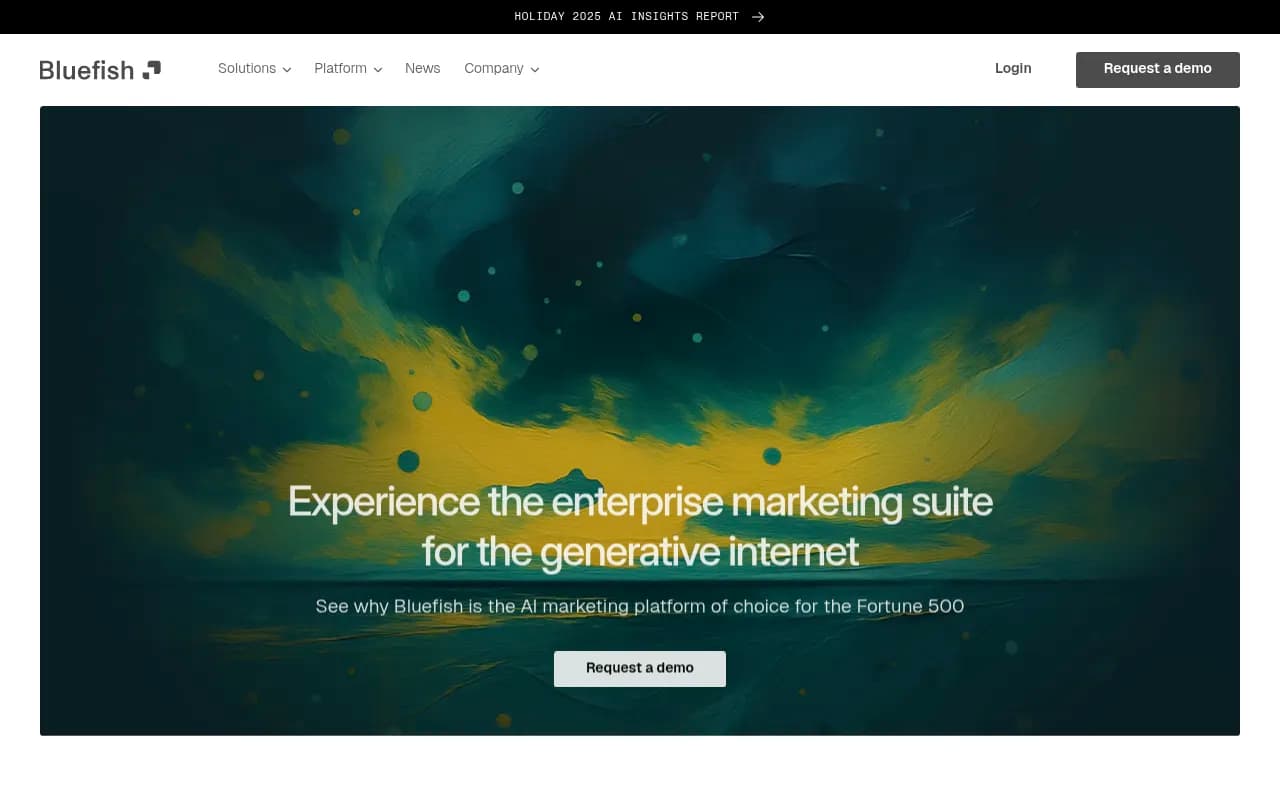
Bluefish AI positions itself as "the AI marketing platform of choice for the Fortune 500." It's an enterprise-grade monitoring platform that tracks brand visibility across AI search engines and what they call "agentic commerce" channels. The platform emphasizes custom audiences, tailored prompts, and deep performance analytics designed for large marketing teams with complex segmentation needs.
The trade-off: Bluefish AI operates entirely on custom quote-based pricing (estimated $4,000+/month), requires sales demos for access, and lacks several optimization features like content generation, crawler logs, and self-service onboarding. It's built for brands that pass infosec reviews and need white-glove service, not teams that want to sign up and start tracking today.
PromptRank
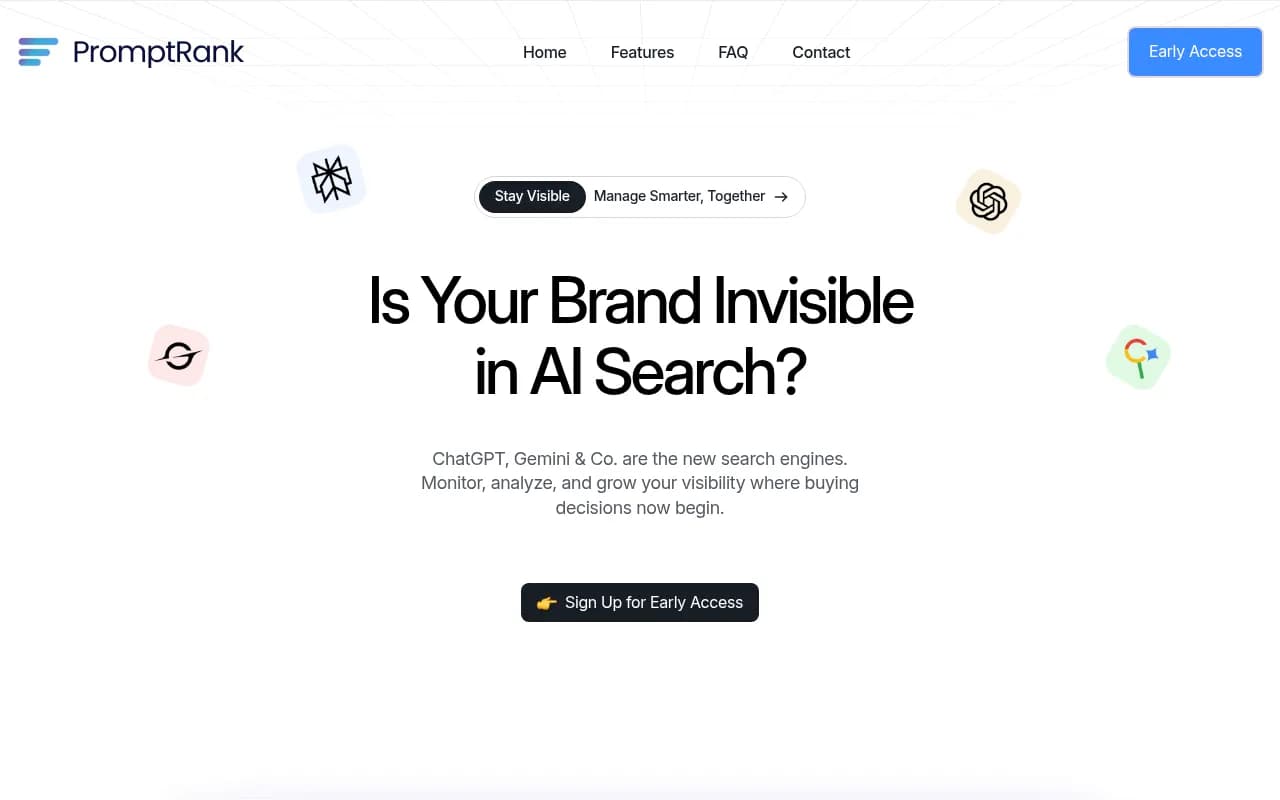
PromptRank takes a more accessible approach to AI visibility tracking. It monitors how brands appear in ChatGPT, Gemini, Perplexity, DeepSeek, and other AI search engines, with a focus on competitor benchmarking, source analysis, and custom prompt tracking. The platform is designed for marketers, SEO teams, and agencies who want to understand their AI presence without enterprise complexity.
PromptRank is currently in early access with volume-based pricing (specific tiers not yet public), but the positioning suggests a self-service model aimed at startups and mid-market teams. The feature set is leaner than Bluefish AI's -- no custom audiences or deep segmentation -- but it covers the core monitoring needs most teams actually use.
Side-by-Side Comparison
| Feature | Bluefish AI | PromptRank |
|---|---|---|
| Pricing | Custom quote ($4,000+/mo estimated) | Early access, volume-based (not public) |
| Free tier | No | No |
| Target audience | Fortune 500 enterprises | Startups, agencies, mid-market |
| Self-service signup | No (requires demo) | Yes (early access) |
| AI models tracked | ChatGPT, Gemini, Perplexity, others | ChatGPT, Gemini, Perplexity, DeepSeek, others |
| Competitor benchmarking | ✓ (custom audiences) | ✓ |
| Source/citation analysis | ✓ | ✓ |
| Custom prompt tracking | ✓ (tailored prompts) | ✓ |
| Content generation | ✗ | ✗ |
| Crawler logs | ✗ | ✗ |
| Real-time alerts | ✓ | ✓ |
| API access | Likely (enterprise) | Unknown |
| Infosec/compliance | Enterprise-grade | Standard |
Pricing: Enterprise quotes vs accessible tiers
This is where the two platforms diverge most sharply.
Bluefish AI operates on a fully custom pricing model. You request a demo, go through a sales process, and receive a quote based on your company size, needs, and implementation scope. Based on their enterprise positioning and feature set, estimates put entry pricing around $4,000-$10,000+ per month. This makes sense for Fortune 500 brands with dedicated AI visibility budgets, but it's a non-starter for startups, small agencies, or teams testing AI search optimization for the first time.
The upside: you get white-glove service, custom audiences, tailored prompt libraries, and a platform built to pass enterprise infosec reviews. The downside: no transparency, no self-service, and a multi-week sales cycle before you see the product.
PromptRank is in early access with volume-based pricing that scales with the number of prompts tracked and AI models monitored. Specific tiers aren't public yet, but the positioning suggests a self-service model with transparent pricing once it exits early access. This approach works for teams that want to sign up, add their brand, and start tracking within hours -- not weeks.
The trade-off: you won't get custom audiences or deep segmentation out of the box, but most teams don't need that level of granularity when they're just trying to understand if ChatGPT mentions their brand at all.
Verdict: PromptRank wins on accessibility and speed-to-value for 95% of teams. Bluefish AI makes sense only if you're a large enterprise with a six-figure marketing tech budget and complex segmentation requirements.
Feature depth: Custom audiences vs core monitoring
Bluefish AI emphasizes "depth and control" with custom audiences, tailored prompts, and what they describe as understanding how AI "thinks." In practice, this means:
- Custom audience segmentation (track visibility for different buyer personas, regions, or use cases)
- Tailored prompt libraries built for your specific category and competitors
- Deep performance analytics with custom metrics and reporting frameworks
- Enterprise-grade data export and integration capabilities
What's missing: content generation tools, crawler logs (to see how AI models access your site), and optimization workflows that help you actually fix visibility gaps. Bluefish AI tells you where you stand but doesn't help you improve it.
PromptRank focuses on core monitoring features that most teams need:
- Competitor benchmarking (side-by-side visibility comparisons)
- Source analysis (which URLs and domains AI models cite)
- Custom prompt tracking (test different phrasings and use cases)
- Real-time alerts when visibility changes
- Actionable insights (recommendations on next steps -- coming soon)
The feature set is leaner, but it covers the 80% use case: "Is my brand showing up in AI search? How do I compare to competitors? What sources are influencing these results?"
What's also missing: content generation, crawler logs, and deep optimization tools. PromptRank is a monitoring dashboard, not an optimization platform.
Verdict: Bluefish AI offers more granular control for enterprise teams with complex needs. PromptRank delivers the core features most teams actually use without the overhead. Neither platform helps you create content or optimize for AI visibility -- for that, you'd need a tool like Promptwatch, which combines monitoring with Answer Gap Analysis and AI content generation to actually improve your rankings.

AI models and coverage
Both platforms track the major AI search engines, but with slightly different emphasis.
Bluefish AI monitors:
- ChatGPT (OpenAI)
- Gemini (Google)
- Perplexity
- Other AI channels (not specified, but likely includes Claude, Meta AI)
- "Agentic commerce" channels (AI-driven product recommendations and shopping experiences)
The agentic commerce angle is interesting -- Bluefish AI is positioning for a future where AI agents make purchasing decisions on behalf of users. This matters for e-commerce brands and B2C companies, less so for B2B SaaS or service businesses.
PromptRank explicitly lists:
- ChatGPT
- Gemini
- Perplexity
- DeepSeek
- "More" (likely Claude, Meta AI, others)
The coverage is similar, with PromptRank calling out DeepSeek specifically -- a signal that they're tracking newer entrants as they gain traction.
Verdict: Roughly equivalent coverage. Bluefish AI's agentic commerce focus is a differentiator for e-commerce brands; PromptRank's explicit DeepSeek support shows they're keeping up with emerging models.
User experience and onboarding
This is where the platforms feel most different.
Bluefish AI requires:
- Requesting a demo via their website
- Sales qualification call
- Custom quote and contract negotiation
- Implementation and onboarding (likely weeks)
- Ongoing account management and support
This is standard for enterprise software, but it's a barrier for teams that want to test AI visibility tracking before committing. You can't just sign up and poke around.
PromptRank offers:
- Early access signup (self-service)
- Add your brand and competitors
- Start tracking within hours
- Explore insights and reports immediately
The early access model suggests they're still refining the product, but the self-service approach is a huge advantage for teams that want to move fast.
Verdict: PromptRank wins decisively on speed and accessibility. Bluefish AI's enterprise sales process is appropriate for their target market but excludes everyone else.
Competitor benchmarking and insights
Both platforms offer competitor tracking, but with different levels of sophistication.
Bluefish AI provides:
- Custom competitor sets (not limited to a fixed number)
- Side-by-side visibility comparisons across custom audiences
- Performance metrics tailored to your category
- Deep segmentation (compare visibility by region, persona, use case)
This is overkill for most teams but valuable if you're a large brand competing in a crowded category with multiple buyer segments.
PromptRank offers:
- Side-by-side competitor benchmarking
- Visibility gap analysis (where competitors appear but you don't)
- Source overlap (which domains influence both your results and competitors')
The feature set is simpler but covers the core question: "How do I stack up against competitors, and where are the gaps?"
Verdict: Bluefish AI offers more granular segmentation for enterprise needs. PromptRank delivers the insights most teams need without the complexity.
What's missing from both platforms
Neither Bluefish AI nor PromptRank offers:
- Content generation: They tell you where you're invisible but don't help you create content to fix it
- Crawler logs: No visibility into how AI models access your website (which pages, how often, errors)
- Optimization workflows: No Answer Gap Analysis or prompt-level recommendations on what content to create
- Traffic attribution: No way to connect AI visibility to actual website traffic or revenue
These are monitoring dashboards, not optimization platforms. They show you the problem but leave you to figure out the solution.
This is where a platform like Promptwatch becomes relevant -- it combines monitoring with Answer Gap Analysis (showing exactly which prompts competitors rank for but you don't), AI content generation (creating articles optimized for AI search), and crawler logs (tracking how AI models access your site). The difference: Promptwatch helps you take action, not just observe.
Pros and cons
Bluefish AI pros
- Enterprise-grade platform built for Fortune 500 brands
- Custom audiences and deep segmentation capabilities
- Tailored prompt libraries for your specific category
- White-glove service and account management
- Passes infosec reviews and compliance requirements
- Agentic commerce tracking for e-commerce brands
Bluefish AI cons
- Custom pricing starting around $4,000+/month (estimated)
- No self-service signup or transparent pricing
- Requires sales demos and multi-week implementation
- Lacks content generation and crawler logs
- No optimization workflows or Answer Gap Analysis
- Overkill for startups and small teams
PromptRank pros
- Self-service early access (no sales demos required)
- Accessible pricing aimed at startups and mid-market
- Fast setup -- start tracking within hours
- Core monitoring features most teams actually need
- Competitor benchmarking and source analysis
- Real-time alerts and actionable insights (coming soon)
PromptRank cons
- Still in early access (features and pricing evolving)
- No custom audiences or deep segmentation
- Lacks content generation and crawler logs
- No optimization workflows or Answer Gap Analysis
- Less suitable for large enterprises with complex needs
- Limited public information on API access and integrations
Who should pick which tool
Choose Bluefish AI if you:
- Work at a Fortune 500 company with a six-figure marketing tech budget
- Need custom audiences and deep segmentation across buyer personas or regions
- Require enterprise-grade infosec and compliance
- Want white-glove service and dedicated account management
- Are tracking agentic commerce channels for e-commerce brands
- Can commit to a multi-week sales and implementation process
Choose PromptRank if you:
- Run a startup, agency, or mid-market company
- Want to start tracking AI visibility today, not in three weeks
- Need core monitoring features without enterprise complexity
- Prefer transparent, volume-based pricing over custom quotes
- Want competitor benchmarking and source analysis out of the box
- Don't need custom audiences or deep segmentation
Choose neither (or supplement with Promptwatch) if you:
- Need content generation to actually improve your AI visibility
- Want crawler logs to see how AI models access your website
- Need Answer Gap Analysis to identify exactly what content you're missing
- Want optimization workflows that connect monitoring to action
- Need traffic attribution to measure ROI from AI search visibility
Final verdict
For 95% of teams, PromptRank is the better choice. It delivers the core AI visibility monitoring features most companies need -- competitor benchmarking, source analysis, custom prompt tracking -- without the enterprise overhead and six-figure price tag of Bluefish AI. The self-service model means you can start tracking today instead of waiting weeks for a sales cycle.
Bluefish AI makes sense only if you're a Fortune 500 brand with complex segmentation needs, dedicated infosec requirements, and a marketing tech budget that can absorb $50,000+ per year for AI visibility monitoring. The custom audiences and tailored prompts are valuable at that scale, but they're overkill for everyone else.
The bigger question: do you just want to monitor your AI visibility, or do you want to improve it? Both platforms are monitoring dashboards that show you where you stand but don't help you fix gaps. If you're serious about ranking in AI search, you need a platform that combines monitoring with optimization -- Answer Gap Analysis, content generation, crawler logs, and traffic attribution. That's a different category entirely, and it's where tools like Promptwatch operate.
One-liner summary: PromptRank wins on accessibility and speed-to-value for most teams; Bluefish AI is the enterprise choice for Fortune 500 brands with complex needs and matching budgets.