Key Takeaways
- Gauge starts at $95/mo (annual billing) vs Ceyo at $49/mo -- Ceyo is roughly half the price at entry level
- Both platforms track the same core AI engines (ChatGPT, Claude, Gemini, Perplexity) plus a few extras each
- Gauge emphasizes actionable recommendations and content gap analysis; Ceyo focuses on sentiment tracking and prompt-level analytics
- Gauge's Growth plan ($399/mo) includes more advanced features like affiliate targeting and social source engagement (Reddit)
- Ceyo offers multi-region and multi-language tracking explicitly in its marketing; Gauge's site doesn't detail this as clearly
- Neither platform includes built-in AI content generation -- both stop at insights and recommendations
Overview
Gauge
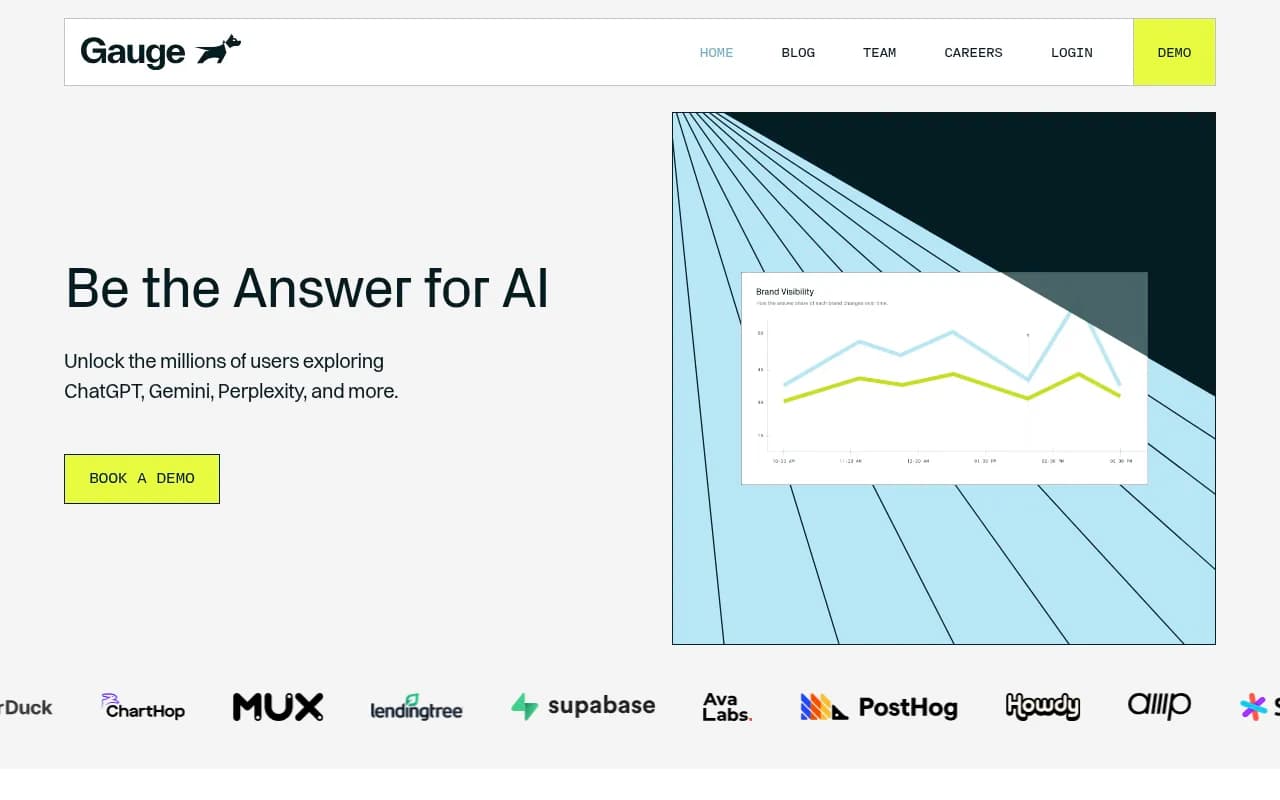
Gauge positions itself as a complete AI visibility platform with a "track, understand, act" workflow. It monitors brand mentions across ChatGPT, Claude, Gemini, Perplexity, Copilot, AI Mode, and AI Overviews. The platform analyzes citation patterns, identifies content gaps, and delivers onsite and offsite recommendations. Gauge targets marketing teams and agencies that want to move beyond passive monitoring into active optimization. The company highlights clients like MotherDuck, Supabase, and Howdy.
Ceyo
Ceyo
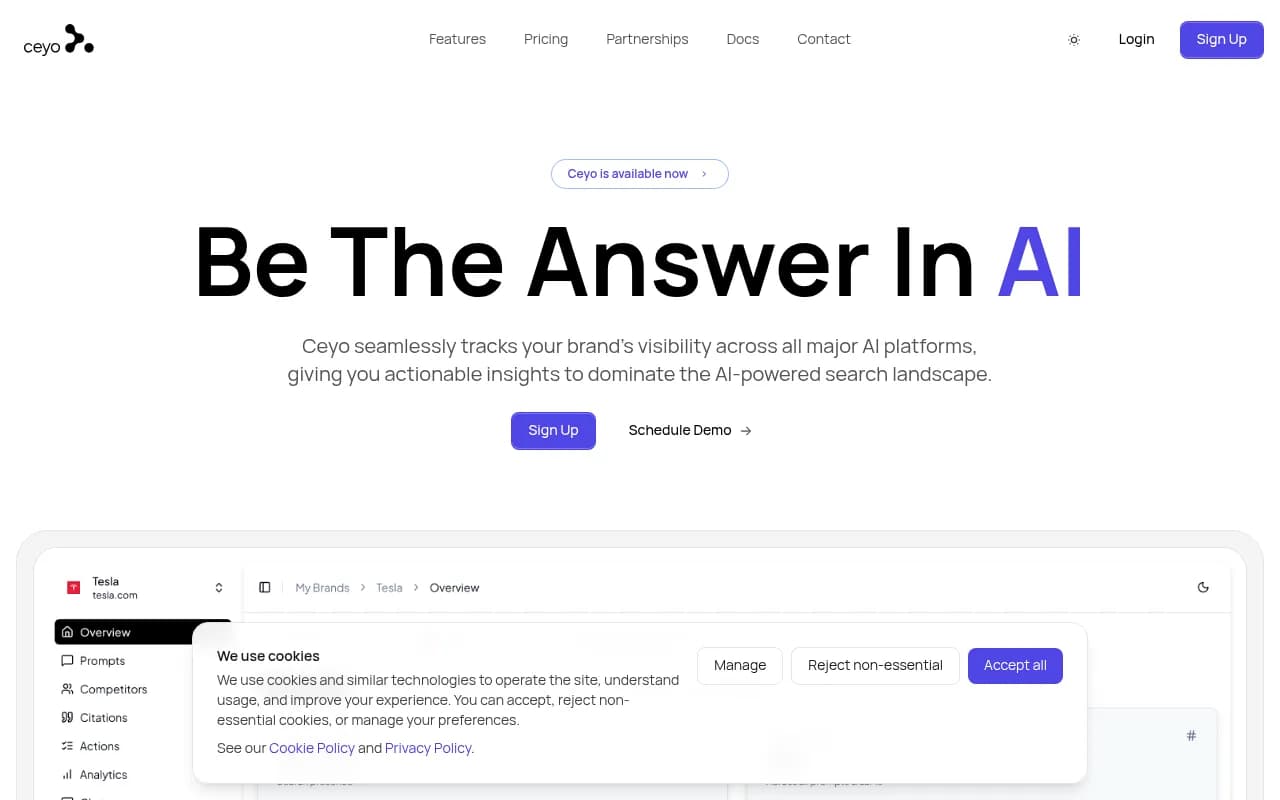
Ceyo is a GEO platform built around prompt-level analytics. It tracks brand visibility, sentiment, and competitor mentions across thousands of queries in ChatGPT, Gemini, Claude, and Perplexity. The dashboard shows visibility percentages, sentiment scores, average position, and impact metrics for each prompt. Ceyo emphasizes multi-region and multi-language tracking, making it a fit for brands operating in multiple markets. Partners include Brandfirm, Zigt, and Enreach.
Side-by-side comparison
| Feature | Gauge | Ceyo |
|---|---|---|
| Starting price | $95/mo (annual) | $49/mo |
| AI engines tracked | ChatGPT, Claude, Gemini, Perplexity, Copilot, AI Mode, AI Overviews | ChatGPT, Claude, Gemini, Perplexity |
| Prompt tracking | Yes | Yes (thousands of prompts) |
| Sentiment analysis | Not highlighted | Yes (positive/neutral/negative) |
| Competitor tracking | Yes | Yes |
| Content gap analysis | Yes | Not highlighted |
| Actionable recommendations | Yes (onsite + offsite) | Yes |
| Multi-region tracking | Not detailed | Yes (explicit) |
| Multi-language support | Not detailed | Yes (explicit) |
| Reddit/social tracking | Yes (Growth plan) | Not mentioned |
| Affiliate targeting | Yes (Growth plan) | Not mentioned |
| AI content generation | No | No |
| Free trial | Yes | Not mentioned |
| Annual billing discount | Yes | Yes |
Pricing breakdown
| Plan | Gauge | Ceyo |
|---|---|---|
| Entry tier | $95/mo (annual billing) | $49/mo (Core) |
| Mid tier | $399/mo (Growth) | Standard (price not public) |
| Enterprise | Custom pricing | Custom pricing |
Gauge's entry price is nearly double Ceyo's. If you're a small team or solo marketer testing the GEO waters, Ceyo's $49/mo Core plan is easier to justify. Gauge's $95/mo tier likely includes more engines (7 vs 4) and deeper feature access, but the site doesn't break down exactly what you get at each level. Ceyo's Standard and Enterprise tiers don't list public pricing, so you'll need to contact sales for a quote.
AI engine coverage
Gauge tracks seven AI platforms: ChatGPT, Claude, Gemini, Perplexity, Copilot, AI Mode, and AI Overviews. That's broader than Ceyo's four (ChatGPT, Claude, Gemini, Perplexity). If you care about Microsoft Copilot or Google's AI Mode and AI Overviews specifically, Gauge has you covered. Ceyo focuses on the big four LLMs that most brands prioritize.
Neither platform mentions tracking DeepSeek, Grok, Mistral, or Meta AI -- engines that some competitors (like Promptwatch) include. If you need visibility into those newer or niche models, you'll want to look elsewhere.

Prompt tracking and analytics
Both platforms let you monitor how your brand shows up for specific prompts. Ceyo's dashboard (visible in their screenshots) shows a table with columns for visibility percentage, sentiment, average position, impact level, competing brands, category, and region. Each prompt gets scored and categorized. This is useful if you want granular, per-query insights.
Gauge's site talks about tracking "AI-generated answers" and analyzing "what content is cited" but doesn't show the same level of per-prompt detail in their marketing. The emphasis is more on aggregate insights and content gaps than on drilling into individual query performance. If you're a data nerd who wants to see exactly how you rank for "best project management tool" vs "top CRM for startups," Ceyo's interface looks more built for that.
Sentiment analysis
Ceyo explicitly tracks sentiment (positive, neutral, negative) for each prompt. You can see at a glance whether AI engines are mentioning your brand favorably or not. Gauge doesn't highlight sentiment tracking in their messaging -- the focus is on presence/absence and citation patterns rather than tone.
For reputation-sensitive brands (think consumer goods, healthcare, finance), sentiment matters. If an LLM is mentioning you but framing it negatively, that's a different problem than not being mentioned at all. Ceyo gives you that signal; Gauge (at least publicly) doesn't.
Content gap analysis and recommendations
Gauge's "Understand" and "Act" phases emphasize finding gaps where your brand is invisible and then giving you onsite/offsite recommendations to fix it. The site mentions auditing existing pages, writing new content, targeting affiliates, and engaging with social sources like Reddit. This is closer to an optimization workflow than pure monitoring.
Ceyo provides "actionable insights" but doesn't detail what those look like. The dashboard shows data; whether it tells you "write a page about X" or "target this Reddit thread" isn't clear from the public materials. If you want a platform that not only shows the problem but also suggests specific fixes, Gauge seems more opinionated.
Neither platform includes AI-powered content generation. If you want a tool that writes optimized articles for you based on citation data, you'd need something like Promptwatch's built-in AI writing agent or a separate content tool.
Multi-region and multi-language tracking
Ceyo's site explicitly calls out multi-region and multi-language support. Their prompt table shows flags (US, UK, Germany, Singapore, Netherlands, France, Japan) indicating where each query was run. If you're a global brand or operate in non-English markets, this is a big deal.
Gauge's site doesn't mention region or language targeting. That doesn't mean it's not possible -- it just isn't a highlighted feature. If you need to track how your brand appears in French Gemini queries or Japanese ChatGPT responses, ask Gauge directly before committing.
Reddit and social source tracking
Gauge's Growth plan ($399/mo) includes "engage with social sources like Reddit." AI models often cite Reddit threads, YouTube videos, and forum discussions when answering queries. If you can identify which threads influence AI recommendations, you can participate in those conversations or create content that gets linked.
Ceyo doesn't mention Reddit or social tracking. If that's a priority, Gauge (or a platform like Promptwatch that surfaces Reddit insights) is the better pick.
Competitor tracking
Both platforms track competitor mentions. Ceyo's dashboard shows which brands appear alongside yours for each prompt. Gauge talks about analyzing "how your brand stacks up against competitors" and finding gaps where competitors are visible but you're not.
The difference is presentation. Ceyo gives you a per-prompt competitor list. Gauge seems to aggregate competitor data into broader insights and recommendations. If you want to see "for this exact query, these three competitors beat us," Ceyo's interface looks clearer. If you want "here are the top 10 content gaps where competitors dominate," Gauge's approach fits better.
Ease of use and onboarding
Gauge offers a free trial and a "deep dive report" if you book a demo. The site emphasizes white-glove onboarding -- they'll pull an in-depth analysis of your current AI presence before you start. This is helpful if you're new to GEO and want guidance.
Ceyo has a sign-up link but doesn't mention a free trial or demo process. The interface (based on screenshots) looks data-dense -- lots of tables and metrics. If you're comfortable with analytics dashboards, you'll be fine. If you need hand-holding, Gauge's demo-first approach might be easier.
What Gauge does better
- Broader AI engine coverage (7 platforms vs 4)
- Actionable recommendations for content and optimization
- Reddit and social source tracking (Growth plan)
- Affiliate targeting features (Growth plan)
- Emphasis on closing the loop from insight to action
- Free trial and demo-driven onboarding
What Ceyo does better
- Half the price at entry level ($49/mo vs $95/mo)
- Explicit sentiment tracking for every prompt
- Multi-region and multi-language support clearly highlighted
- Granular per-prompt analytics with visibility percentages and impact scores
- Data-dense dashboard for teams that want to dig into the numbers
Who should pick Gauge
Gauge is the better choice if you want a platform that not only shows you the data but also tells you what to do about it. The content gap analysis, onsite/offsite recommendations, and Reddit tracking (on the Growth plan) make it more of an optimization tool than a pure monitoring dashboard. If you're willing to pay $95-$399/mo for a more guided, action-oriented experience, Gauge delivers.
It's also the pick if you need to track Microsoft Copilot, Google AI Mode, or AI Overviews specifically. Those engines aren't on Ceyo's list.
Who should pick Ceyo
Ceyo makes sense if you're budget-conscious and want solid prompt-level analytics without the higher price tag. At $49/mo, it's accessible for small teams, solo marketers, or agencies testing GEO for the first time. The sentiment tracking and multi-region support are strong differentiators if those matter to your use case.
If you're comfortable interpreting data and building your own action plan (rather than needing the platform to suggest next steps), Ceyo gives you the raw insights at a lower cost.
Final verdict
Gauge is the more expensive, more opinionated platform. It costs twice as much at the entry level but covers more AI engines and pushes you toward specific optimization actions. Ceyo is the budget-friendly option with strong per-prompt analytics and explicit multi-region support. If you want a tool that tells you what to fix, pick Gauge. If you want a dashboard that shows you the numbers and lets you decide, pick Ceyo. Neither platform generates content for you -- they stop at insights -- so if you need that, look at tools like Promptwatch that close the full loop from gap analysis to content creation to tracking results.