Key Takeaways
- GeoGen is cheaper for basic tracking: Starts at €20/mo vs LLM Pulse's €49/mo, making it better for small brands on tight budgets
- LLM Pulse tracks more AI models: 10+ models including enterprise-tier coverage (Claude, Meta AI, DeepSeek) vs GeoGen's 5 core models
- LLM Pulse has stronger analytics: Share of voice, sentiment analysis, and competitor benchmarking are more developed than GeoGen's feature set
- GeoGen wins on entry-level pricing: The Micro plan at €20/mo is the cheapest way to start monitoring AI visibility, though with limited features
- LLM Pulse offers a free trial: 14-day trial with no credit card required; GeoGen doesn't advertise one
- Both are monitoring-focused: Neither platform offers content gap analysis or AI content generation -- they show you the data but leave optimization largely up to you
Overview: Two AI visibility trackers with different approaches
GeoGen
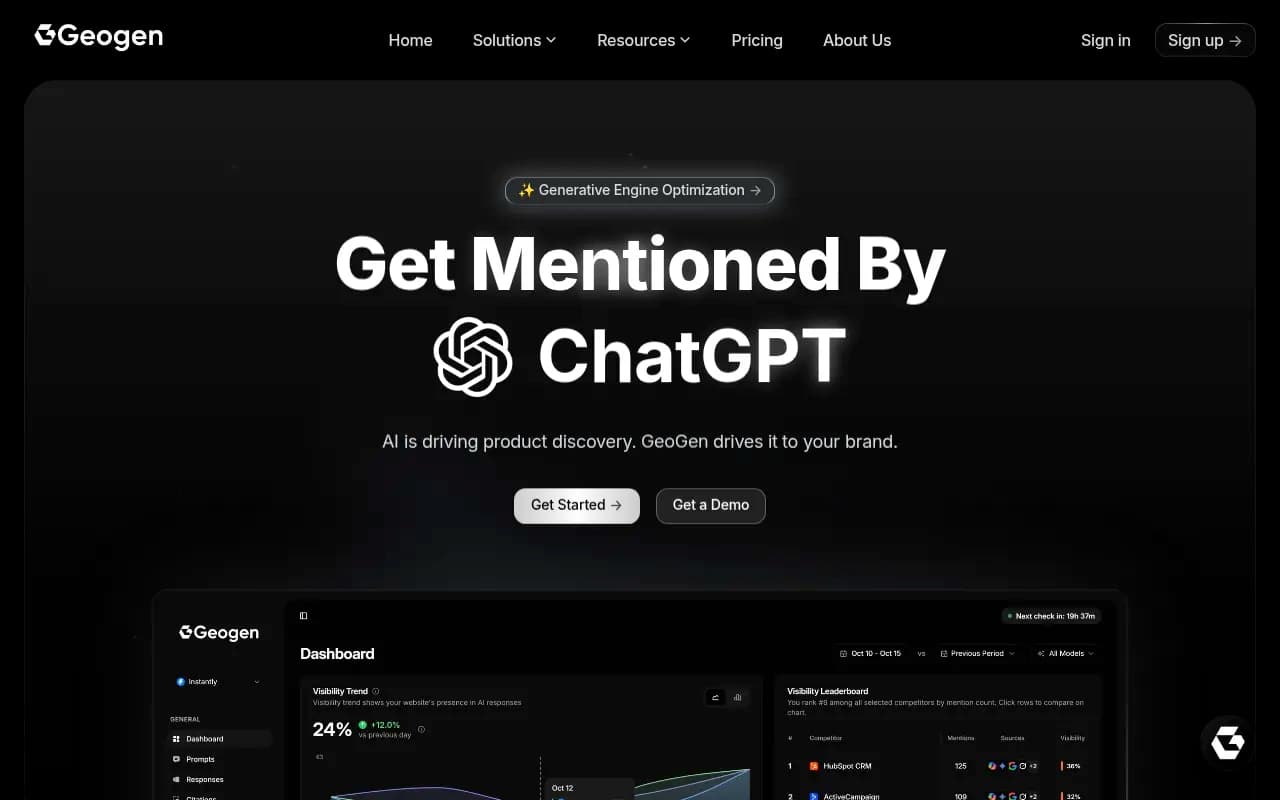
GeoGen positions itself as a Generative Engine Optimization platform for tracking brand mentions across ChatGPT, Perplexity, Gemini, Grok, and Microsoft Copilot. The platform targets small to mid-sized brands looking for basic AI visibility tracking without the complexity of enterprise-grade tools. Their pricing starts at €20/mo, making it one of the most affordable entry points in the AI search monitoring space.
The platform covers the essential AI models and provides recommendations to improve visibility, but the feature set is relatively straightforward compared to more comprehensive platforms. GeoGen's client roster includes CloudBlast, GdprWise, ProxyScrape, and TextBroker.
LLM Pulse
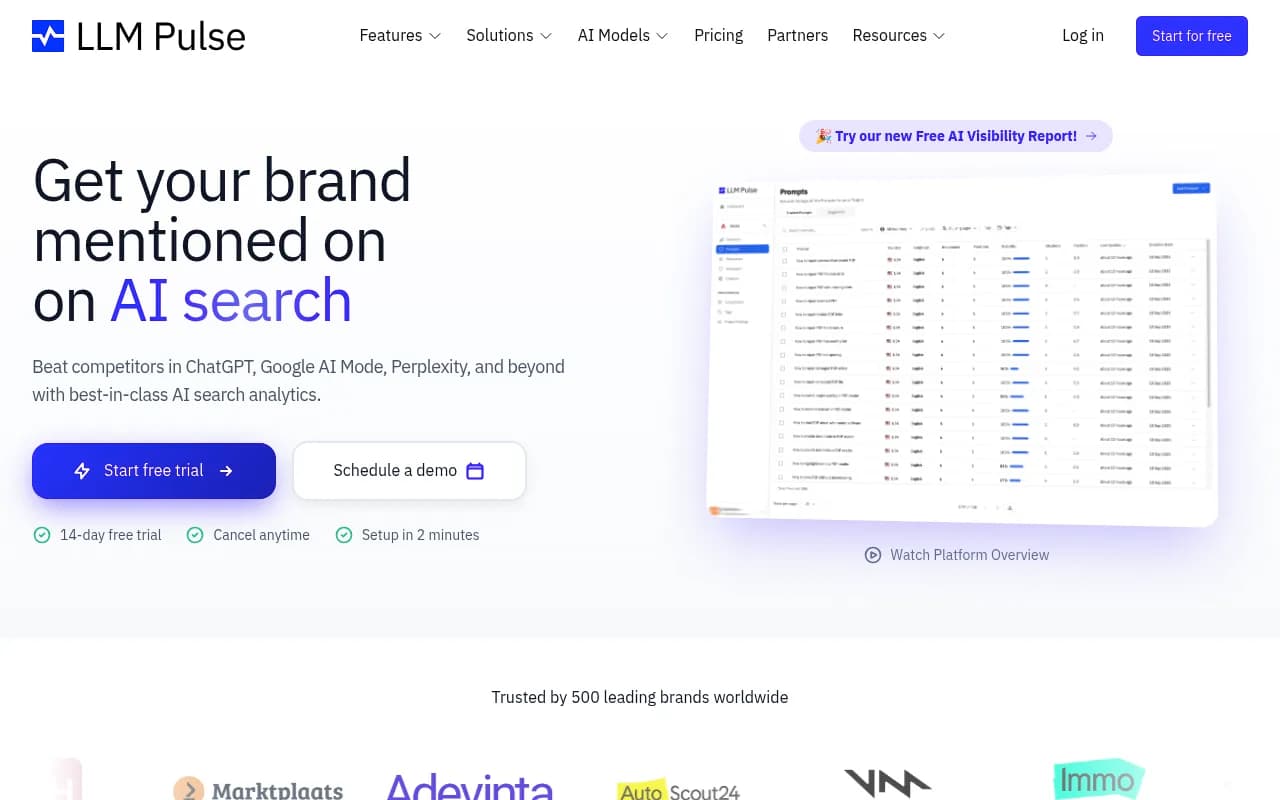
LLM Pulse takes a more analytics-heavy approach to AI search visibility tracking. Used by 500+ brands including Swiss Marketplace Group and Voicemod, the platform monitors 10+ AI models with weekly prompt tracking, citation analysis, sentiment scoring, and share of voice metrics. Their three-step workflow -- Track, Analyze, Optimize -- emphasizes turning visibility data into actionable insights.
LLM Pulse starts at €49/mo and includes a 14-day free trial. The platform's strength is in comparative analytics and competitor benchmarking, with AI-powered content recommendations to help improve how your brand appears in LLM responses.
Side-by-side comparison
| Feature | GeoGen | LLM Pulse |
|---|---|---|
| Starting price | €20/mo (Micro) | €49/mo (Starter) |
| Free trial | Not advertised | 14 days, no credit card |
| AI models tracked | 5 (ChatGPT, Perplexity, Gemini, Grok, Copilot) | 10+ (adds Claude, Meta AI, DeepSeek, AI Overviews, Google AI Mode) |
| Tracking frequency | Not specified | Weekly |
| Citation analysis | Basic | Detailed source tracking |
| Sentiment analysis | Not specified | Yes |
| Competitor benchmarking | Rankings | Share of voice, comparative metrics |
| Content recommendations | Yes | AI-powered suggestions |
| Client base | Small-mid brands | 500+ brands, enterprise clients |
| Annual discount | 20% | 17% |
| Top-tier plan | €399/mo (Pro) | €299/mo (Scale) |
| Enterprise pricing | Custom | Custom (implied) |
| Setup time | Not specified | 2 minutes (claimed) |
Pricing breakdown
Both platforms use tiered monthly pricing with annual discounts, but the entry points and value propositions differ significantly.
| Plan tier | GeoGen | LLM Pulse |
|---|---|---|
| Entry | €20/mo (Micro) | €49/mo (Starter) |
| Mid | Not specified | €99/mo (Growth) |
| High | €399/mo (Pro) | €299/mo (Scale) |
| Enterprise | Custom | Custom (implied) |
| Annual discount | 20% off | 17% off (saves ~2 months) |
GeoGen's €20/mo Micro plan is the cheapest way to get started with AI visibility tracking, but details on what's included at each tier aren't publicly listed on their homepage. LLM Pulse's transparent three-tier structure (Starter/Growth/Scale) makes it easier to understand what you're getting at each price point.
Interestingly, LLM Pulse's top public tier (€299/mo Scale) is cheaper than GeoGen's Pro plan (€399/mo), despite LLM Pulse tracking more AI models and offering more robust analytics. This suggests GeoGen's pricing may not scale as competitively for larger teams.
LLM coverage: Breadth vs. essentials
GeoGen: Core models only
GeoGen tracks five AI models:
- ChatGPT
- Perplexity
- Gemini
- Grok
- Microsoft Copilot
This covers the most widely-used consumer AI search engines, which is enough for most small brands. If your customers are primarily using ChatGPT and Perplexity, you're covered. But you're missing visibility into Claude (popular with developers and researchers), Meta AI (integrated into Facebook/Instagram/WhatsApp), DeepSeek (growing in enterprise), and Google AI Overviews (the AI snippets in traditional Google Search results).
LLM Pulse: Enterprise-grade coverage
LLM Pulse monitors 10+ models:
- ChatGPT
- Perplexity
- Gemini
- Google AI Mode
- AI Overviews (Google Search)
- DeepSeek (Enterprise tier)
- Grok (Enterprise tier)
- Claude (Enterprise tier)
- Copilot (Enterprise tier)
- Meta AI (Enterprise tier)
The platform explicitly labels some models as "Enterprise," suggesting they're only available on higher-tier plans. But even the base coverage (ChatGPT, Perplexity, Gemini, Google AI Mode, AI Overviews) is broader than GeoGen's.
The inclusion of Google AI Overviews is particularly valuable -- these are the AI-generated snippets that appear in traditional Google Search results, which still drives significantly more traffic than pure AI chatbots. If you care about visibility in Google's AI features, LLM Pulse covers it and GeoGen doesn't.
Verdict: LLM Pulse wins on breadth. GeoGen covers the essentials, but if you need comprehensive AI model coverage or care about Google AI Overviews, LLM Pulse is the better choice.
Analytics depth: Basic tracking vs. competitive intelligence
GeoGen's approach
GeoGen's homepage emphasizes "AI Visibility analytics and improvement" but doesn't detail specific metrics. The dashboard screenshots show prompt tracking and brand mention monitoring, with recommendations to improve visibility. The analytics appear functional but not particularly deep.
What's missing from their public-facing materials:
- Specific metrics tracked (visibility score, citation rate, etc.)
- Sentiment analysis capabilities
- Share of voice calculations
- Historical trend depth
This doesn't mean these features don't exist, but the lack of detail suggests analytics may not be GeoGen's primary differentiator.
LLM Pulse's analytics stack
LLM Pulse breaks down their analytics into specific capabilities:
Core metrics:
- Visibility score (how often you're mentioned)
- Citation rate (how often sources cite you)
- Sentiment analysis (positive/negative/neutral framing)
- Share of voice (your mentions vs. competitors)
Competitive features:
- Direct competitor benchmarking
- Model-by-model comparison (which AI models favor you vs. competitors)
- Citation source analysis (which websites/sources AI models trust)
Tracking features:
- Weekly prompt monitoring
- Historical trend tracking
- Detailed response capture (exact wording AI uses)
The "Analyze" step in their three-part workflow is clearly the platform's strength. You're not just seeing whether you're mentioned -- you're seeing how you compare to competitors, which sources are driving citations, and where sentiment is trending.
Verdict: LLM Pulse has significantly more developed analytics. If you need competitive intelligence and detailed metrics, LLM Pulse is the clear winner. GeoGen works for basic "are we being mentioned?" tracking.
Content optimization: Recommendations vs. action
Neither platform offers built-in content generation or gap analysis, which is where both fall short compared to more comprehensive platforms. But they do approach optimization differently.
GeoGen
GeoGen claims to provide "recommendations to improve your AI search presence" but doesn't detail what those recommendations look like. Are they generic tips? Specific content suggestions? Competitor-based insights? The homepage doesn't say.
LLM Pulse
LLM Pulse's "Optimize" step includes "AI-powered content recommendations to improve how you appear in LLM responses." This suggests the platform analyzes your current visibility and suggests specific content improvements.
The citation analysis feature is particularly useful here -- if you can see which sources AI models trust in your space, you know where to publish guest posts, get backlinks, or create similar content.
That said, LLM Pulse still leaves the actual content creation up to you. You get the recommendations, but you have to execute them yourself.
Verdict: LLM Pulse's recommendations are likely more actionable because they're grounded in citation and competitor data. But both platforms are monitoring-first tools, not optimization platforms. If you want a platform that actually helps you create content that ranks in AI search, you'll need something like Promptwatch, which combines gap analysis with AI content generation.

User experience and setup
GeoGen
GeoGen doesn't specify setup time or ease of use on their homepage. The dashboard screenshots look clean and modern, but there's no detail on onboarding, integrations, or how quickly you can start tracking.
LLM Pulse
LLM Pulse claims "Setup in 2 minutes" and offers a 14-day free trial with no credit card required. This low-friction approach makes it easy to test the platform before committing. The three-step workflow (Track, Analyze, Optimize) is clearly communicated and easy to understand.
The platform also advertises a free AI Visibility Report, which likely gives you a snapshot of your current AI search presence before you sign up.
Verdict: LLM Pulse wins on user experience. The free trial, quick setup, and transparent workflow make it easier to get started and evaluate the platform.
Enterprise readiness
GeoGen
GeoGen offers custom enterprise pricing and positions itself as suitable for "small to mid-sized brands." The client logos (CloudBlast, GdprWise, ProxyScrape, TextBroker) are mostly smaller companies, suggesting the platform is optimized for that market.
LLM Pulse
LLM Pulse serves 500+ brands including Swiss Marketplace Group (a major European marketplace operator) and Voicemod (a popular voice-changing software with millions of users). The platform's enterprise-tier LLM coverage (Claude, Meta AI, DeepSeek) and robust analytics suggest it's built to handle larger organizations.
The fact that LLM Pulse explicitly labels certain AI models as "Enterprise" implies they have a developed enterprise offering with additional features and support.
Verdict: LLM Pulse is more enterprise-ready. GeoGen works for small brands, but if you're a larger organization or need enterprise-grade features, LLM Pulse is the safer bet.
Pros and cons
GeoGen pros
- Cheapest entry point at €20/mo
- Covers the core AI models (ChatGPT, Perplexity, Gemini)
- 20% annual discount
- Clean, modern interface
GeoGen cons
- No free trial advertised
- Limited LLM coverage (5 models vs. LLM Pulse's 10+)
- Less detailed analytics and competitive intelligence
- Fewer publicly available details on features and metrics
- Smaller client base and less enterprise credibility
LLM Pulse pros
- 14-day free trial, no credit card required
- Tracks 10+ AI models including Google AI Overviews
- Robust analytics: sentiment, share of voice, citation tracking
- Strong competitor benchmarking features
- 500+ brand client base with enterprise customers
- AI-powered content recommendations
- Transparent pricing and feature breakdown
LLM Pulse cons
- Higher entry price (€49/mo vs. GeoGen's €20/mo)
- Some advanced LLM coverage locked to Enterprise tier
- Still a monitoring tool, not a full optimization platform
Who should choose which platform?
Choose GeoGen if:
- You're a small brand or solopreneur on a tight budget
- You only need basic AI visibility tracking for the core models (ChatGPT, Perplexity, Gemini)
- You don't need deep competitive analytics or sentiment tracking
- €20-50/mo is your maximum budget for AI monitoring
Choose LLM Pulse if:
- You want comprehensive AI model coverage including Google AI Overviews
- You need competitive intelligence and share of voice metrics
- You want to test the platform before paying (14-day free trial)
- You're a mid-sized or enterprise brand that needs robust analytics
- You care about citation analysis and understanding which sources AI models trust
- You want AI-powered content recommendations grounded in real data
Consider a more comprehensive platform if:
- You need content gap analysis that shows exactly what your competitors rank for but you don't
- You want built-in AI content generation to create articles that rank in AI search
- You need crawler logs to see how AI models are indexing your site
- You want traffic attribution to connect AI visibility to actual revenue
For those use cases, platforms like Promptwatch go beyond monitoring to actually help you optimize and create content that ranks in AI search engines.
Final verdict
LLM Pulse is the better platform for most brands. It costs more at the entry level (€49/mo vs. €20/mo), but you get significantly more value: broader LLM coverage, deeper analytics, competitive benchmarking, and a free trial to test it out. The 500+ brand client base and enterprise customers give it more credibility than GeoGen's smaller portfolio.
GeoGen makes sense if you're a very small brand or solopreneur who just needs basic tracking and can't afford €49/mo. The €20/mo Micro plan is the cheapest way to start monitoring AI visibility. But you're sacrificing analytics depth, LLM coverage, and competitive intelligence.
For brands serious about AI search visibility, LLM Pulse is the smarter investment. For budget-conscious small brands who just want to dip their toes in, GeoGen gets you in the door cheaply. Neither platform is a full optimization solution -- they show you the data but leave the content creation and gap analysis up to you.