Key Takeaways
- Atomic AGI is a full-stack SEO platform that happens to include AI search tracking, while Omnia is laser-focused on AI visibility -- if you need traditional SEO tools (audits, rank tracking, backlink analysis), Atomic AGI covers both worlds; if you only care about how you show up in ChatGPT and Perplexity, Omnia is more streamlined
- Pricing starts similar (Omnia €63/mo yearly, Atomic AGI $99/mo per domain), but Atomic AGI's per-domain pricing can get expensive fast if you manage multiple sites -- Omnia's pricing scales differently
- Atomic AGI includes AI agents and workflow automation for repetitive SEO tasks (schema generation, content optimization, technical fixes), while Omnia focuses on monitoring and insights with a roadmap feature that suggests next steps
- Both track the same core AI engines (ChatGPT, Perplexity, Gemini, Claude, Copilot), but Atomic AGI also monitors traditional Google search rankings in the same dashboard
- Omnia offers prompt discovery to surface real questions people ask AI about your industry -- Atomic AGI doesn't emphasize this as much, focusing instead on citation analysis and competitor benchmarking
- If you're already using Ahrefs or Semrush for SEO, Omnia slots in as a complementary AI visibility layer; if you want to consolidate tools, Atomic AGI can replace some of your existing stack
Overview
Omnia
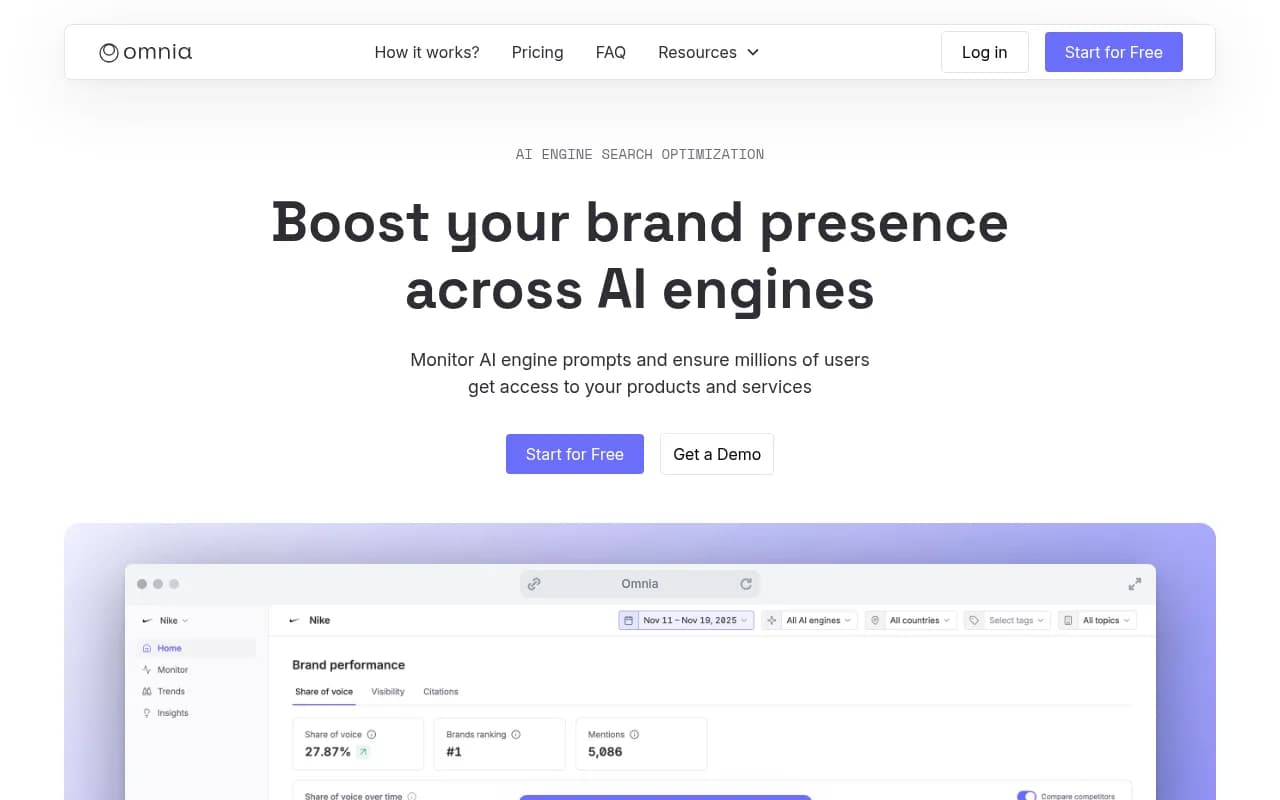
Omnia is built specifically for tracking how your brand appears in AI-generated answers. It monitors citations and mentions across ChatGPT, Perplexity, Gemini, and Copilot, giving you visibility into where AI engines pull information about you and how you stack up against competitors. The platform is designed for SEO and marketing teams who want clear metrics on AI search performance without the complexity of a full SEO suite. Omnia's core value is showing you the real questions customers ask AI, then helping you understand which prompts matter and where you're missing.
Atomic AGI
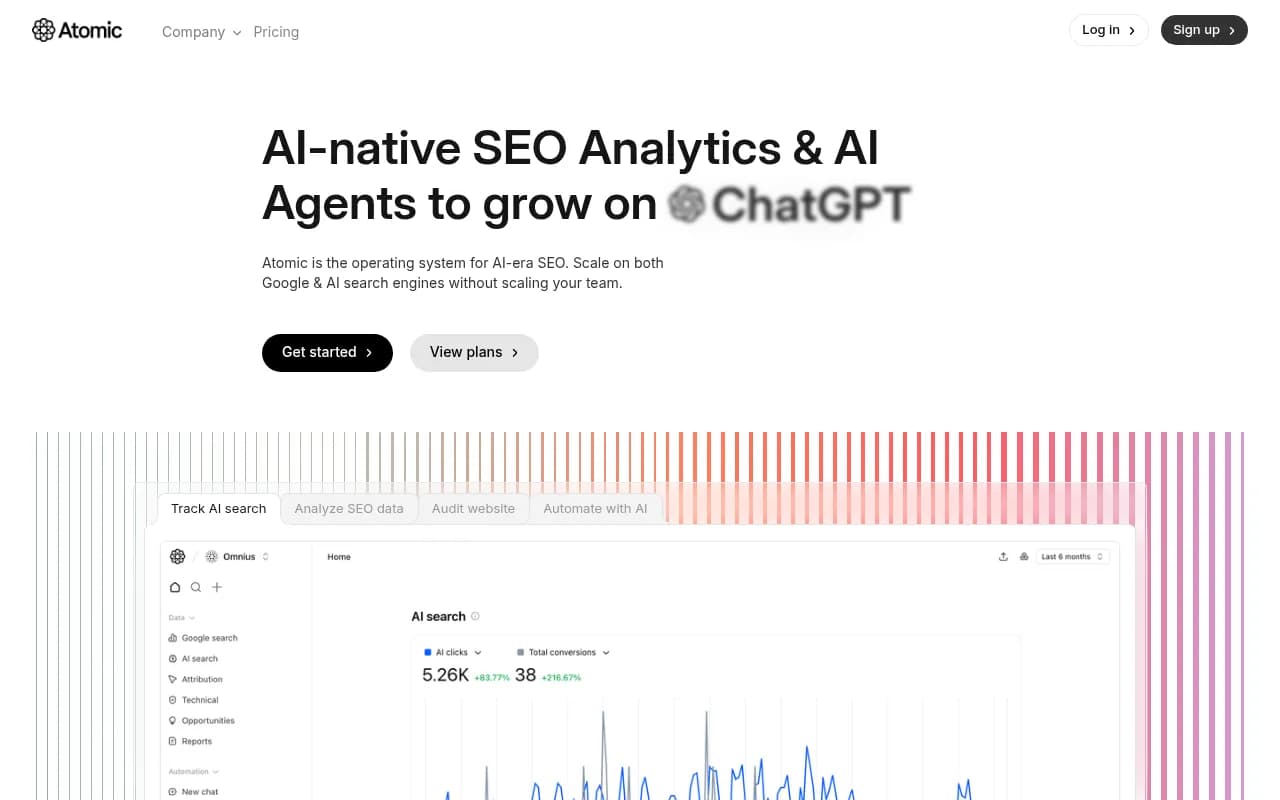
Atomic AGI positions itself as an "AI-native SEO platform" -- it tracks both traditional Google search and AI search engines in one place. Beyond monitoring, it includes technical SEO audits, rank tracking, backlink analysis, and AI agents that automate repetitive tasks like schema markup generation and content optimization. The pitch is consolidation: instead of juggling separate tools for Google SEO and AI visibility, Atomic AGI handles both. It's built for teams that want to scale organic growth across all search surfaces without adding headcount.
Side-by-side comparison
| Feature | Omnia | Atomic AGI |
|---|---|---|
| AI engines tracked | ChatGPT, Perplexity, Gemini, Copilot | ChatGPT, Perplexity, Gemini, Claude, Copilot |
| Google search tracking | No | Yes (rankings, traffic, keywords) |
| Prompt discovery | Yes -- surfaces real questions people ask | Limited -- focuses on citation analysis |
| Citation tracking | Yes | Yes |
| Competitor benchmarking | Yes (share of voice, citation comparison) | Yes (multi-engine comparison) |
| Technical SEO audits | No | Yes (site crawls, issue detection) |
| AI agents/automation | No -- roadmap suggests actions manually | Yes (schema generation, content optimization, workflow automation) |
| Content gap analysis | Implied through prompt discovery | Yes |
| Free plan | Free trial only | Yes (limited features) |
| Starting price | €63/mo (yearly) or €79/mo (monthly) | $99/mo per domain |
| Multi-site pricing | Scales with plan tier | $99/mo per additional domain |
| API access | Not mentioned | Likely available (not prominent on site) |
| Integrations | Not detailed | Google Search Console, analytics platforms |
Tracking and monitoring
AI engine coverage
Both platforms cover the major AI search engines -- ChatGPT, Perplexity, Gemini, and Copilot. Atomic AGI also explicitly lists Claude, though Omnia may track it without highlighting it. The real difference is that Atomic AGI monitors traditional Google search in the same dashboard, so you see organic rankings, traffic, and AI citations side by side. Omnia doesn't touch Google at all -- it's purely AI-focused.
If you're trying to understand how AI search impacts your overall organic strategy, Atomic AGI's unified view is useful. If you already have Google covered with Ahrefs or Semrush and just need the AI layer, Omnia is cleaner.
Citation and source analysis
Omnia shows you which sources AI engines cite when they mention your brand -- URLs, competitor sites, third-party content. You can see share of voice across prompts and benchmark against competitors. The interface emphasizes "seeing your brand through AI's eyes," which translates to understanding what information AI models associate with you.
Atomic AGI does citation tracking too, with a focus on citation-share analysis and competitor benchmarking across multiple engines. The difference is presentation: Omnia's UI is built around this as the core feature, while Atomic AGI treats it as one component of a broader analytics suite.
Verdict: Tie on citation tracking depth. Omnia's interface is more focused; Atomic AGI's is more comprehensive.
Prompt discovery and intelligence
Omnia's standout feature is prompt discovery -- it surfaces real questions people are asking AI about your industry or product. This helps you understand what prompts to monitor and what content gaps exist. The platform shows you trending queries and lets you prioritize which ones matter for your brand.
Atomic AGI doesn't emphasize prompt discovery the same way. It focuses more on analyzing the prompts you already care about and showing how you perform on them. You can track specific queries and see citation breakdowns, but the proactive "here's what people are asking" angle is less prominent.
Verdict: Omnia wins on prompt intelligence. If understanding the question landscape is critical, Omnia gives you more.
Automation and workflow
AI agents and task automation
This is where Atomic AGI pulls ahead. The platform includes AI agents that automate repetitive SEO work -- generating schema markup, optimizing content for specific keywords, fixing technical issues flagged in audits. The idea is to reduce manual grunt work so your team can focus on strategy.
Omnia doesn't have automation in the same sense. It provides a roadmap feature that translates tracking data into suggested actions (content creation, technical SEO fixes, content placement), but you execute those actions manually or with other tools.
Verdict: Atomic AGI wins decisively if you want automation. Omnia is monitoring and insights; Atomic AGI is monitoring plus execution.
Actionable insights and roadmaps
Omnia's roadmap feature is its answer to "what do I do with this data?" It maps out content creation opportunities, technical optimizations, and placement strategies based on where you're not showing up. Think of it as a prioritized to-do list grounded in your visibility gaps.
Atomic AGI provides insights through its analytics dashboards and audit reports, but the roadmap concept isn't as explicit. You get data and recommendations, but the step-by-step action plan is less structured.
Verdict: Omnia's roadmap is clearer for teams that want guided next steps. Atomic AGI assumes you know what to do with the data.
Traditional SEO capabilities
Google search tracking and analytics
Atomic AGI tracks Google search rankings, traffic, and keyword performance alongside AI search data. It integrates with Google Search Console and provides the kind of rank tracking you'd expect from a traditional SEO tool. You can see which pages rank for which keywords, track position changes over time, and analyze traffic trends.
Omnia doesn't do any of this. It's AI-only.
Verdict: Atomic AGI is the only option if you need Google search tracking in the same platform.
Technical SEO audits
Atomic AGI includes site crawling and technical audits -- it flags broken links, missing meta tags, slow pages, schema issues, and other technical problems. The AI agents can even auto-fix some of these (like generating missing schema).
Omnia has no technical audit features. If you need this, you're using Screaming Frog or Sitebulb separately.
Verdict: Atomic AGI wins. Omnia isn't trying to compete here.
Backlink analysis
Atomic AGI mentions backlink tracking as part of its SEO analytics suite, though it's not the primary focus. Omnia doesn't touch backlinks at all.
If backlink analysis matters, you're probably using Ahrefs or Majestic anyway, so this isn't a dealbreaker for Omnia. But Atomic AGI's inclusion means one less tool in your stack.
Verdict: Atomic AGI has it; Omnia doesn't need it.
Pricing comparison
| Plan | Omnia | Atomic AGI |
|---|---|---|
| Free tier | Free trial (duration not specified) | Yes (limited features, unclear limits) |
| Starter | €63/mo (yearly) or €79/mo (monthly) | $99/mo per domain |
| Mid-tier | Not publicly detailed | Likely higher tiers (not detailed on site) |
| Enterprise | Custom pricing | Custom pricing |
| Per-domain pricing | Scales with plan tier | $99/mo per additional domain |
Omnia's pricing is straightforward if you're tracking one brand or a small set of sites. The yearly discount (€63 vs €79) is meaningful if you commit upfront. Atomic AGI's per-domain pricing can get expensive quickly -- if you manage five sites, you're paying $495/mo just for the base tier. That said, Atomic AGI includes traditional SEO features that might replace other tools, so the total cost of ownership could be lower if you're consolidating.
Neither platform is transparent about what you get at each tier beyond the starting price, which is frustrating. You'll need to request a demo or trial to see feature limits.
Verdict: Omnia is cheaper for single-site or small-scale use. Atomic AGI's per-domain model favors agencies or teams managing many sites only if they're replacing multiple tools.
User experience and learning curve
Omnia's interface is clean and focused. Because it only does AI visibility, there's less to learn. You set up your prompts, monitor your citations, check competitor benchmarks, and review the roadmap. The onboarding is quick.
Atomic AGI has more surface area -- AI search tracking, Google analytics, technical audits, AI agents, workflow automation. That means more power but also more complexity. If you're already comfortable with SEO platforms like Semrush or Ahrefs, the learning curve is manageable. If you're new to SEO tooling, it's steeper.
Verdict: Omnia is easier to get started with. Atomic AGI requires more time to unlock its full value.
Integration and ecosystem
Atomic AGI integrates with Google Search Console and likely other analytics platforms, though the website doesn't detail every integration. The API access (implied but not prominent) suggests you can build custom workflows if needed.
Omnia doesn't highlight integrations on its site. It's possible they exist, but the platform seems designed to be standalone.
If you're running a complex martech stack and need data flowing between tools, Atomic AGI is more likely to fit. Omnia is more of a point solution.
Verdict: Atomic AGI is more integration-friendly.
Who should pick Omnia
- You only care about AI search visibility -- you're not looking for Google rank tracking, technical audits, or backlink analysis
- You already have a traditional SEO stack (Ahrefs, Semrush, Screaming Frog) and just need the AI layer
- You want prompt discovery to understand what questions people are asking AI about your industry
- You manage one or a few sites and Omnia's pricing makes sense
- You prefer a focused tool with a clear, narrow purpose over a Swiss Army knife platform
- You want a roadmap feature that tells you exactly what to do next based on your visibility gaps
Who should pick Atomic AGI
- You want one platform for both Google and AI search instead of juggling multiple tools
- You need technical SEO audits and site crawling in the same place as your AI visibility tracking
- You value automation -- the AI agents that generate schema, optimize content, and fix technical issues save you time
- You manage multiple domains and can justify the per-domain pricing by consolidating other tools
- You're comfortable with complexity and want deep analytics across all organic channels
- You want to scale SEO without scaling headcount (Atomic AGI's pitch) and automation is key to that
If you're also tracking how your brand shows up in AI search results more broadly -- beyond just ChatGPT and Perplexity -- Promptwatch covers additional angles like Reddit discussions, YouTube mentions, and ChatGPT Shopping carousels, with content gap analysis and AI-generated articles to fill those gaps.

Final verdict
Omnia and Atomic AGI solve overlapping problems but with different philosophies. Omnia is a specialist -- it does AI visibility tracking well and doesn't try to be anything else. Atomic AGI is a generalist -- it wants to be your all-in-one SEO platform, covering Google, AI search, technical audits, and automation.
Pick Omnia if you want a clean, focused tool that slots into your existing SEO workflow. Pick Atomic AGI if you're ready to consolidate tools and want automation to reduce manual work. Neither is objectively better -- it depends on whether you value depth in one area or breadth across many.