Key Takeaways
- Pricing gap: Omnia starts at €63/mo with transparent tiers and a free trial. Bluefish AI requires custom enterprise quotes (estimated $4,000+/month) with no self-service option.
- Target audience: Omnia is built for SEO teams and mid-market brands. Bluefish AI explicitly targets Fortune 500 companies with dedicated account management.
- Optimization depth: Omnia provides actionable insights and a step-by-step roadmap for improving AI visibility. Bluefish AI focuses on monitoring and measurement but lacks content generation and crawler log analysis.
- Feature completeness: Omnia covers prompt discovery, monitoring, and optimization workflows. Bluefish AI offers custom audiences and deep analytics but misses several optimization tools found in comprehensive GEO platforms.
- Accessibility: Omnia's freemium model and transparent pricing make it accessible to teams of any size. Bluefish AI's enterprise-only approach locks out smaller teams entirely.
- Best for: Pick Omnia if you want affordable, actionable AI visibility tracking with optimization tools. Pick Bluefish AI if you're a Fortune 500 brand with a large budget and need custom audience segmentation.
Overview
Omnia
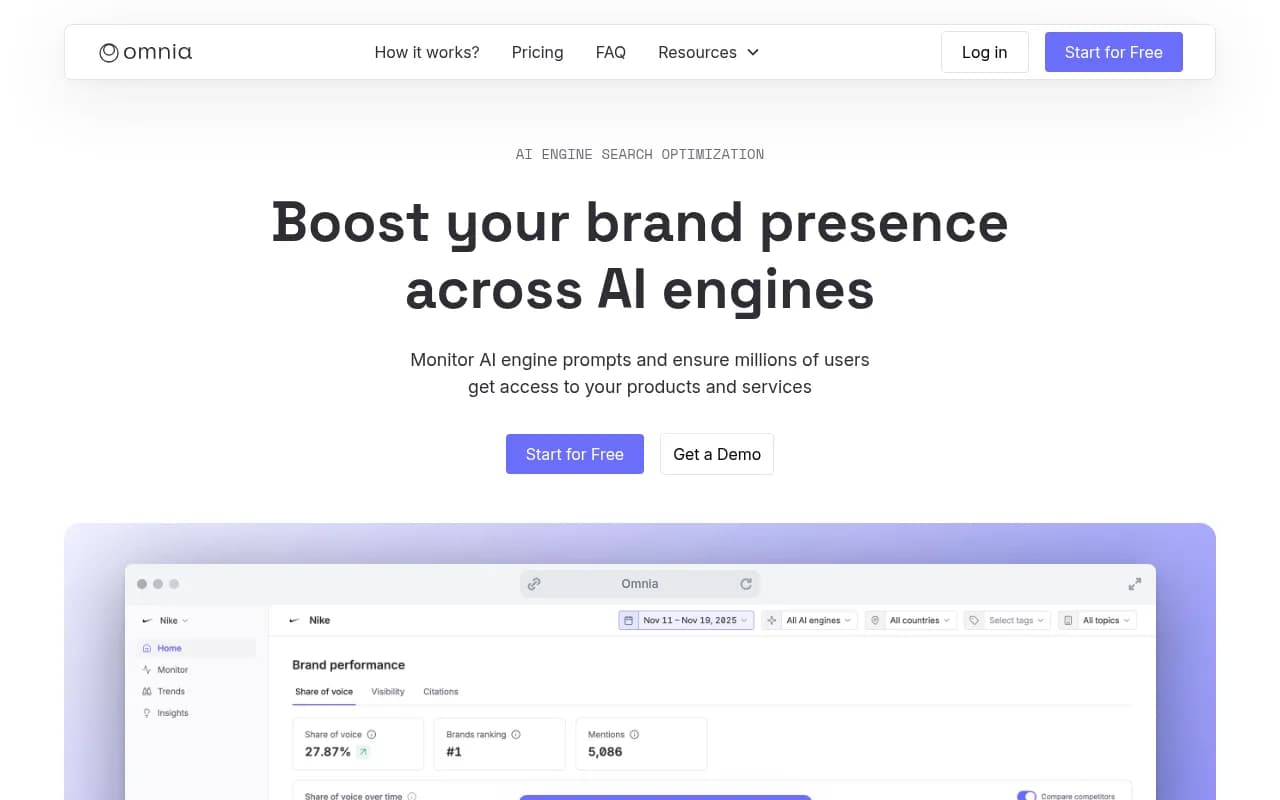
Omnia is a practical AI visibility platform designed for SEO and marketing teams. It tracks how your brand appears across ChatGPT, Perplexity, Gemini, and Microsoft Copilot, then translates that data into a step-by-step roadmap for improvement. The platform helps you discover what prompts to monitor, see where you show up versus competitors, and understand which citations AI engines are pulling from. Omnia's approach is hands-on -- it doesn't just show you the data, it tells you what to do about it.
Pricing starts at €63/month (yearly billing) or €79/month (monthly), with a free trial available. The platform is used by brands like Exoticca, Ironhack, and Growth Hackers.
Bluefish AI
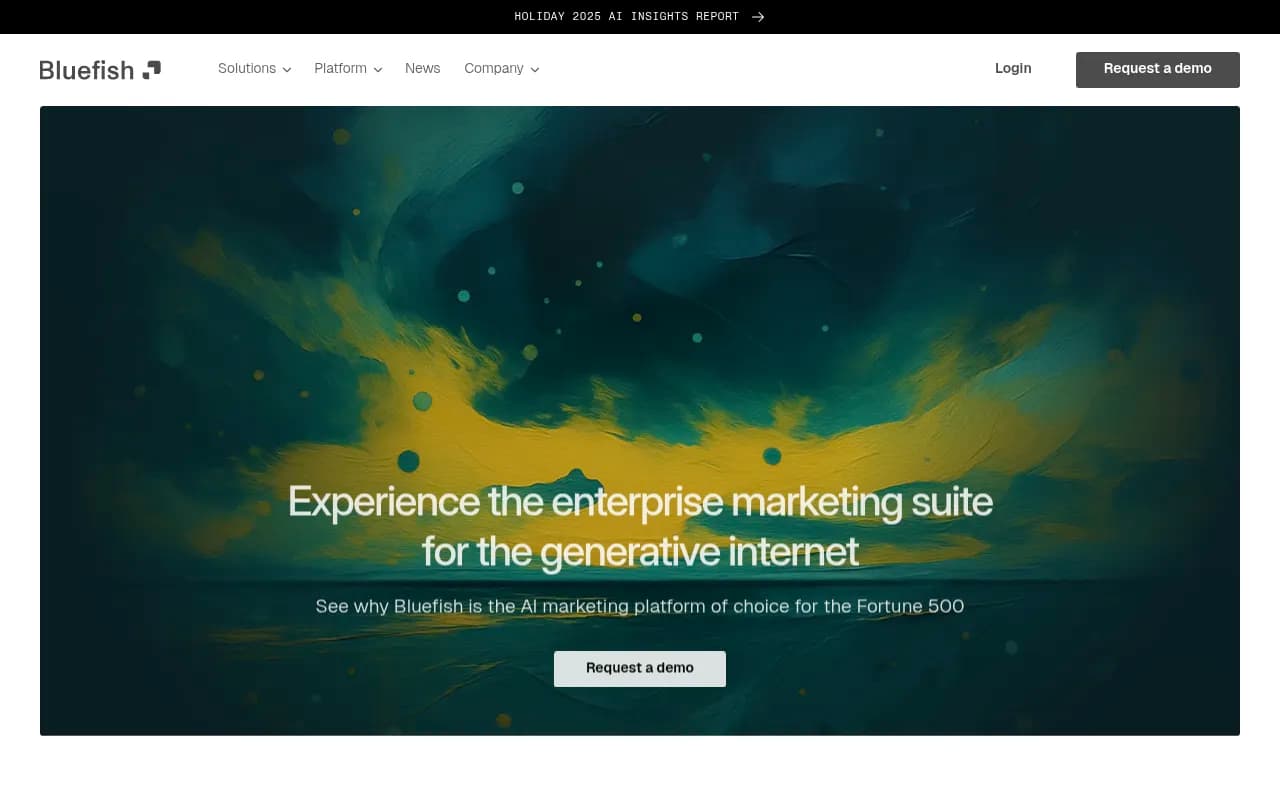
Bluefish AI positions itself as the enterprise AI marketing platform for Fortune 500 brands. It offers deep visibility into brand performance across AI search engines and agentic commerce channels, with a focus on custom audiences, tailored prompts, and advanced analytics. The platform emphasizes control and differentiation for category leaders operating in competitive markets.
Pricing is custom quote-based with no transparent tiers -- estimates suggest $4,000+/month for enterprise plans. There's no self-service signup or free trial. Bluefish AI is built specifically for large marketing teams with dedicated budgets and infosec requirements.
Side-by-side comparison
| Feature | Omnia | Bluefish AI |
|---|---|---|
| Starting price | €63/mo (yearly) | Custom quote (~$4,000+/mo) |
| Free trial | Yes | No |
| Transparent pricing | Yes | No |
| Target audience | SEO teams, mid-market brands | Fortune 500 enterprises |
| AI engines monitored | ChatGPT, Perplexity, Gemini, Copilot | Multiple (specific list not disclosed) |
| Prompt discovery | ✓ | ✓ |
| Custom audiences | Not specified | ✓ |
| Competitor benchmarking | ✓ | ✓ |
| Citation tracking | ✓ | ✓ |
| Optimization roadmap | ✓ | Limited |
| Content generation | Not specified | ✗ |
| Crawler logs | Not specified | ✗ |
| Self-service signup | ✓ | ✗ |
| Infosec compliance | Standard | Enterprise-grade |
Pricing comparison
| Plan | Omnia | Bluefish AI |
|---|---|---|
| Free tier | Free trial available | None |
| Starter | €63/mo (yearly) or €79/mo (monthly) | Not available |
| Mid-tier | Not disclosed | Not available |
| Enterprise | Custom pricing available | Custom quote (~$4,000+/mo) |
The pricing difference here is stark. Omnia's entry point is accessible to small and mid-sized teams -- you can start tracking AI visibility for less than the cost of a basic SaaS tool. Bluefish AI's enterprise-only model means you need a substantial budget just to get in the door. If you're a startup or a marketing team with limited resources, Bluefish AI isn't an option.
User interface and accessibility
Omnia's interface is designed for practitioners. You can sign up, start a free trial, and begin monitoring prompts without talking to sales. The platform surfaces real questions people are asking AI engines, shows you where your brand appears in responses, and provides a roadmap for closing gaps. It's built for teams that want to move quickly.
Bluefish AI requires a demo request and custom quote before you see anything. The platform emphasizes depth and control -- custom audiences, tailored prompts, advanced segmentation -- but you need to commit significant budget and go through an enterprise sales process to access it. For large organizations with complex needs, this might be worth it. For everyone else, it's a barrier.
Monitoring and tracking capabilities
Both platforms track brand mentions and citations across AI search engines. Omnia monitors ChatGPT, Perplexity, Gemini, and Microsoft Copilot explicitly. Bluefish AI covers "major AI channels" but doesn't list specific engines publicly.
Omnia shows you:
- What prompts trigger mentions of your brand
- How you benchmark against competitors
- Which citations AI engines pull information from
- Share of voice across tracked prompts
Bluefish AI offers:
- Custom audience segmentation
- Tailored prompt libraries
- Deep performance analytics
- AI commerce tracking (agentic commerce channels)
Bluefish AI's custom audiences are a differentiator if you need to track how different customer segments interact with AI engines. Omnia's approach is more straightforward -- track the prompts that matter, see where you show up, understand the gaps.
If you're tracking how your brand appears in AI shopping recommendations or need to segment data by specific customer personas, Bluefish AI has an edge. If you want clear visibility into citations and competitor performance without the complexity, Omnia delivers.
Optimization and actionability
This is where the platforms diverge sharply.
Omnia provides a step-by-step AI visibility roadmap. The platform translates tracking data into specific actions: content creation, technical SEO fixes, content placement strategies. Each recommendation is mapped to fill real gaps in your brand's AI presence. You see the problem and get a plan to fix it.
Bluefish AI focuses on measurement and influence but lacks content generation tools and crawler log analysis. The platform helps you understand how AI "thinks" about your brand and optimize workflows, but it doesn't generate content or show you how AI crawlers interact with your website. You get deep analytics and custom segmentation, but you're on your own for execution.
For teams that want to track and optimize in one platform, Omnia's integrated approach is more practical. For teams with dedicated content and SEO resources who just need measurement and insights, Bluefish AI's analytics depth might be enough.
Worth noting: if you're also looking to track how your brand shows up in AI search results with even more depth -- including crawler logs, content gap analysis, and AI-generated content -- Promptwatch covers that angle with 880M+ citations analyzed and tools that go beyond monitoring to actually help you create content that ranks.

Enterprise features and compliance
Bluefish AI is built for enterprise. The platform consistently passes infosec reviews, offers advanced data segmentation, and provides dedicated account management. If you're a Fortune 500 brand with strict security requirements and complex organizational needs, Bluefish AI is designed for you.
Omnia doesn't emphasize enterprise compliance features publicly, but it's used by established brands like Exoticca and Ironhack. For most mid-market companies, Omnia's feature set and security will be sufficient. If you need SOC 2 compliance, custom data residency, or dedicated support, you'll want to ask Omnia directly or consider Bluefish AI.
Prompt discovery and intelligence
Omnia surfaces real questions customers are asking AI engines about your industry or product. You see what prompts you should monitor and discover gaps in your coverage. This is practical -- you're not guessing what to track, you're seeing actual queries.
Bluefish AI offers tailored prompt libraries and custom audiences. You can segment prompts by customer type, intent, or other dimensions. This is powerful for large brands with diverse product lines or customer segments, but it adds complexity.
For most teams, Omnia's prompt discovery is enough to get started and maintain coverage. For enterprises managing multiple brands or product categories, Bluefish AI's customization might justify the cost.
AI commerce and agentic channels
Bluefish AI explicitly tracks agentic commerce -- AI-driven shopping recommendations and product suggestions. This is a differentiator if you're an e-commerce brand or retailer trying to understand how AI engines recommend products.
Omnia doesn't highlight commerce-specific features. It tracks brand mentions and citations across AI search engines, but it's not clear if it monitors shopping recommendations or product carousels.
If AI commerce is a priority, Bluefish AI has the edge. If you're focused on brand visibility and thought leadership in AI search, Omnia covers the core use case.
Data and reporting
Omnia provides clear visibility metrics: where you show up, how you compare to competitors, what citations AI engines use. The platform is designed for practitioners who need to make decisions quickly.
Bluefish AI emphasizes depth. You get advanced performance tools, custom segmentation, and the ability to tailor measurement frameworks. Data teams can customize and optimize in ways competitors can't match, according to Bluefish AI's positioning.
The trade-off: Omnia is faster to insights. Bluefish AI offers more control but requires more setup and expertise to use effectively.
Pros and cons
Omnia pros
- Transparent pricing starting at €63/mo
- Free trial available
- Self-service signup -- no sales calls required
- Step-by-step optimization roadmap
- Prompt discovery shows real customer questions
- Clear competitor benchmarking
- Used by established brands
Omnia cons
- Enterprise compliance features not emphasized
- Custom audience segmentation not highlighted
- AI commerce tracking not explicitly mentioned
- Feature set less comprehensive than some GEO platforms
Bluefish AI pros
- Custom audiences and tailored prompts
- Deep performance analytics
- AI commerce and agentic channel tracking
- Enterprise-grade infosec compliance
- Built for Fortune 500 scale
- Dedicated account management
Bluefish AI cons
- No transparent pricing (estimated $4,000+/mo)
- No free trial or self-service option
- Lacks content generation tools
- No crawler log analysis
- Enterprise-only positioning locks out smaller teams
- Requires sales process to access platform
Who should pick which tool
Pick Omnia if:
- You're an SEO team or mid-market brand with a limited budget
- You want to start tracking AI visibility quickly without a sales process
- You need actionable insights and a roadmap, not just data
- Transparent pricing and a free trial matter to you
- You're focused on brand mentions and citations in AI search
Pick Bluefish AI if:
- You're a Fortune 500 brand with a substantial marketing budget
- You need custom audience segmentation and tailored prompt libraries
- AI commerce and agentic channels are strategic priorities
- You require enterprise-grade infosec compliance and dedicated support
- You have the resources to execute on insights without built-in optimization tools
- You're willing to go through an enterprise sales process
Consider other options if:
- You need content generation, crawler logs, and comprehensive optimization tools in one platform (look at Promptwatch or similar GEO platforms)
- You want a middle ground between Omnia's simplicity and Bluefish AI's enterprise complexity
- You need specific integrations or features neither platform highlights
Final verdict
Omnia and Bluefish AI serve different markets. Omnia is the practical choice for SEO teams and mid-market brands who want affordable, actionable AI visibility tracking. Bluefish AI is built for Fortune 500 companies with large budgets and complex needs.
If you're deciding between these two, the decision usually comes down to budget and organizational scale. Omnia's €63/mo starting price and free trial make it accessible to most teams. Bluefish AI's enterprise-only model means you need a substantial budget just to get started.
For most readers, Omnia is the better starting point. You can try it, see results, and scale up if needed. Bluefish AI is only worth considering if you're a large enterprise with specific needs around custom audiences, AI commerce tracking, and dedicated support -- and you have the budget to match.