Key Takeaways
- XFunnel is being acquired by HubSpot (announced early 2026), which creates uncertainty for standalone users. Bluefish AI remains independent but is a pure-play enterprise monitoring tool.
- Bluefish AI is more expensive and less transparent -- estimated $4,000+/month with no public pricing. XFunnel also required custom quotes but had a broader customer base beyond just Fortune 500.
- Neither platform generates content or tracks AI crawlers -- both are monitoring-only. If you need content gap analysis, AI writing tools, or crawler logs, you'll need a different platform like Promptwatch.
- Bluefish AI emphasizes custom audiences and brand safety -- built for large enterprises that need tailored prompt sets and deep segmentation. XFunnel focused more on conversion optimization and experimentation.
- XFunnel had better customer diversity -- used by mid-market and enterprise brands (Wix, Monday.com, MyFitnessPal). Bluefish AI targets only Fortune 500 and explicitly markets itself as "not for everyone."
- Both lack key optimization features -- no Reddit/YouTube tracking, no prompt volume estimates, no content generation, no AI traffic attribution. They show you the data but leave you to figure out what to do with it.
Overview
XFunnel
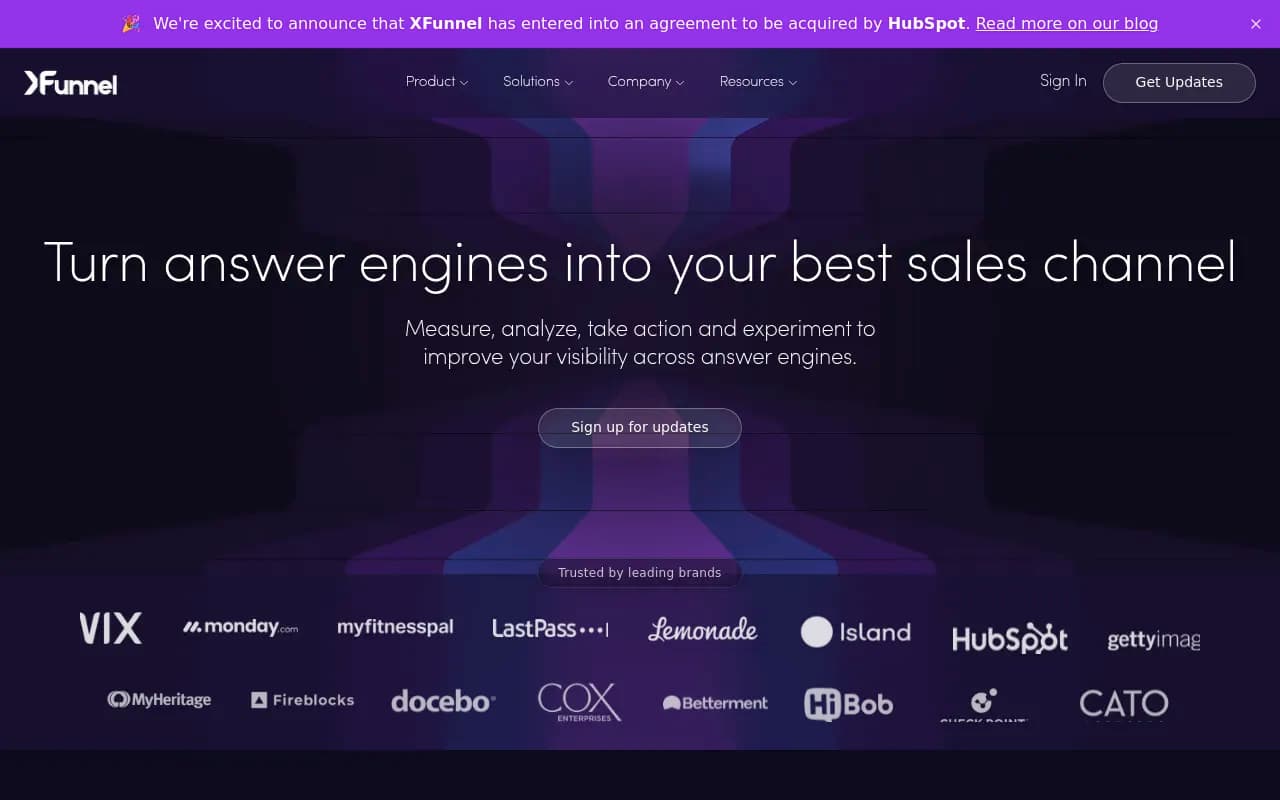
XFunnel positioned itself as a conversion-focused GEO platform for marketing teams. The pitch: measure, analyze, and experiment to improve visibility across AI-powered search engines. It tracked citations, surfaced relevant search questions, and helped brands understand where they appeared in AI-generated results.
The customer list was impressive -- Wix, Monday.com, MyFitnessPal, LastPass, Lemonade, Getty Images, and others. The platform emphasized daily use by marketing teams and framed AI search as a "sales channel" you could optimize.
Then in early 2026, XFunnel announced it had entered into an agreement to be acquired by HubSpot. The blog post was light on details about what happens next -- integration timeline, product roadmap, whether XFunnel continues as a standalone offering. For current users, this creates real uncertainty. For new buyers, it's a reason to pause.
Bluefish AI
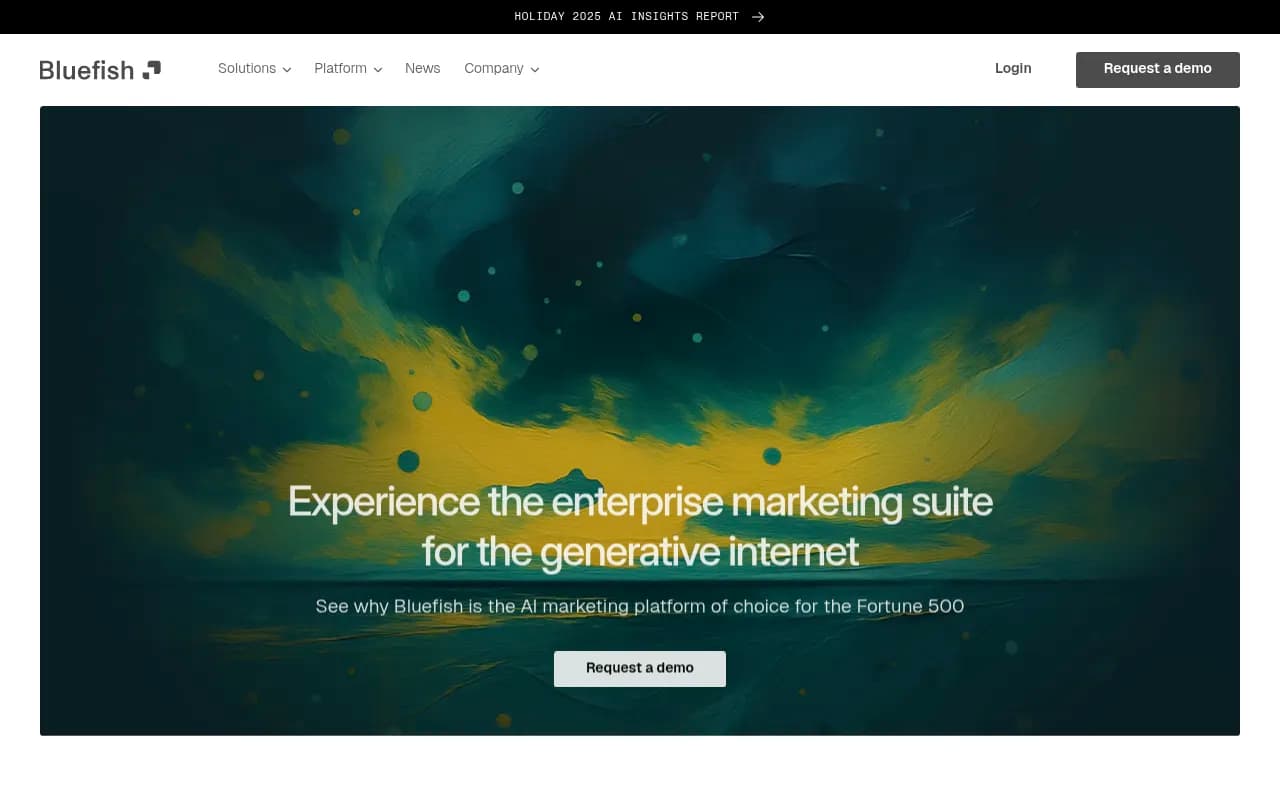
Bluefish AI takes a different approach: it's explicitly built for Fortune 500 brands and doesn't pretend otherwise. The messaging is all about "enterprise scale," "custom audiences," "tailored prompts," and "deep expertise." They want you to know this isn't a self-service tool for SMBs.
The platform monitors AI search and what they call "agentic commerce" -- how brands show up in AI shopping recommendations. They emphasize brand safety, crisis monitoring, and "understanding how AI thinks" beyond just visibility metrics.
Bluefish markets four core capabilities: AI Monitoring, AI Optimization (GEO), GEO Measurement, and AI Commerce. But when you dig into what "optimization" means here, it's not content generation or gap analysis -- it's workflow automation and custom measurement frameworks. You still have to figure out what to do with the insights yourself.
Pricing is opaque. No public tiers, no self-service signup. Estimates put enterprise plans at $4,000+/month. They consistently pass "infosec reviews with ease," which tells you who they're selling to.
Side-by-side comparison
| Feature | XFunnel | Bluefish AI |
|---|---|---|
| Pricing | Custom enterprise (contact sales) | Custom quote ($4,000+/mo estimated) |
| Target market | Mid-market to enterprise | Fortune 500 only |
| Free tier | No | No |
| Self-service signup | No | No |
| AI models tracked | Multiple (ChatGPT, Perplexity, others) | Multiple (ChatGPT, Perplexity, Gemini, others) |
| Custom audiences | Limited | Yes (core feature) |
| Tailored prompts | Standard prompt sets | Yes (enterprise customization) |
| AI commerce tracking | Basic | Yes (dedicated feature) |
| Content generation | No | No |
| AI crawler logs | No | No |
| Reddit/YouTube tracking | No | No |
| Prompt volume data | No | No |
| AI traffic attribution | No | No |
| Brand safety monitoring | Basic | Yes (emphasized) |
| API access | Unknown | Yes (enterprise) |
| Company status | Being acquired by HubSpot (2026) | Independent |
Head-to-head feature breakdown
Platform focus and positioning
XFunnel framed itself around conversion and experimentation. The homepage talked about "turning answer engines into your best sales channel" and emphasized daily use by marketing teams. The customer logos spanned mid-market SaaS (Monday.com, Wix) to enterprise (Getty Images, Cox). It felt like a tool trying to serve a broad range of companies.
Bluefish AI is unapologetically enterprise-only. The messaging is "designed for enterprise marketers," "the Fortune 500's platform of choice," and "generic datasets aren't enough." They want large brands with complex needs, custom segmentation requirements, and big budgets. If you're a startup or mid-market company, they're not interested.
Verdict: XFunnel was more accessible (before the acquisition). Bluefish AI is explicitly not for you unless you're Fortune 500.
Monitoring and tracking capabilities
Both platforms monitor how brands appear across AI search engines -- ChatGPT, Perplexity, Gemini, and others. Both track citations, share of voice, and brand mentions in AI-generated responses.
XFunnel emphasized discovering "relevant search questions" and tracking where you appear in AI results. The focus was on actionable insights for conversion optimization.
Bluefish AI goes deeper on custom audiences and tailored prompts. If you need to segment by region, persona, or specific use cases, Bluefish gives you more control. They also emphasize "understanding how AI thinks" -- not just where you appear, but how AI models reason about your brand.
Neither platform offers AI crawler logs. You can't see when ChatGPT or Claude actually hit your website, which pages they read, or how often they return. That's a blind spot if you want to understand how AI engines discover your content.
Verdict: Bluefish AI has more depth for enterprise segmentation. XFunnel was simpler but broader. Both miss crawler-level visibility.
AI commerce and shopping tracking
Bluefish AI markets "agentic commerce" as a dedicated feature -- tracking how brands show up in AI shopping recommendations and product suggestions. This is relevant if you're an e-commerce brand or consumer product company worried about AI models recommending competitors.
XFunnel had basic commerce tracking but didn't emphasize it as heavily. The focus was more on general AI search visibility.
If AI shopping recommendations matter to your business, Bluefish AI is the better fit here.
Verdict: Bluefish AI wins on commerce tracking.
Content optimization and generation
Neither platform generates content. Both are monitoring-only tools.
XFunnel showed you where you're missing citations and surfaced relevant questions, but you had to create the content yourself. Bluefish AI gives you "actionability" through workflow automation and custom measurement, but again -- no content creation.
This is where both platforms fall short compared to action-oriented GEO tools. Knowing you're invisible for 200 prompts is useful. Having a tool that shows you exactly what content is missing and then helps you create it is better. Platforms like Promptwatch combine monitoring with content gap analysis and an AI writing agent that generates articles grounded in citation data.

Verdict: Both platforms leave you stuck at the "now what?" stage. You see the gaps but have to fill them manually.
Brand safety and crisis monitoring
Bluefish AI emphasizes brand safety and crisis monitoring as core features. If your brand gets mentioned negatively in AI responses or if there's a PR crisis, Bluefish helps you track how AI models are talking about you.
XFunnel had basic reputation tracking but didn't market it as heavily.
For large enterprises worried about brand safety in AI-generated content, Bluefish AI is built for this.
Verdict: Bluefish AI is stronger on brand safety.
Pricing and accessibility
Neither platform has transparent pricing. Both require custom quotes.
XFunnel's customer base suggests it was more accessible to mid-market companies, though still enterprise-focused. Bluefish AI is estimated at $4,000+/month and explicitly targets Fortune 500 budgets.
If you're a smaller company or want to try before committing to a massive contract, both platforms are a hard sell. You'd be better off with a platform that has transparent tiers and a free trial.
Verdict: Both are expensive and opaque. XFunnel was slightly more accessible before the acquisition.
The HubSpot acquisition factor
This is the elephant in the room. XFunnel announced in early 2026 that it's being acquired by HubSpot. The blog post was vague about what happens next.
For existing XFunnel customers, this could be great -- integration with HubSpot's CRM, marketing automation, and analytics. Or it could mean the standalone product gets sunset and features get absorbed into HubSpot's broader platform.
For new buyers, it's a red flag. Why commit to a platform that might not exist as a standalone product in six months? If you need a stable, independent GEO platform, Bluefish AI or alternatives like Promptwatch are safer bets.
Verdict: The acquisition creates uncertainty. Bluefish AI is independent and stable.
Pricing comparison
Neither platform publishes pricing, so this is based on estimates and market positioning:
| Plan type | XFunnel | Bluefish AI |
|---|---|---|
| Entry point | Custom quote (enterprise) | Custom quote ($4,000+/mo estimated) |
| Target customer | Mid-market to enterprise | Fortune 500 |
| Free trial | Unknown | No |
| Self-service | No | No |
| Annual contracts | Likely required | Required |
Both platforms are built for enterprise budgets. If you're looking for transparent pricing or a way to try before you buy, you won't find it here.
For comparison, Promptwatch starts at $99/month with a free trial, transparent tiers, and no sales calls required.
Pros and cons
XFunnel pros
- Broader customer base (mid-market to enterprise)
- Conversion and experimentation focus
- Used daily by marketing teams at recognizable brands
- Surfaced relevant search questions for content planning
XFunnel cons
- Being acquired by HubSpot (uncertain future as standalone product)
- No transparent pricing
- No content generation or gap analysis
- No AI crawler logs or traffic attribution
- No Reddit/YouTube tracking
- No prompt volume data
Bluefish AI pros
- Deep custom audiences and tailored prompts for enterprise segmentation
- Strong brand safety and crisis monitoring
- Dedicated AI commerce tracking
- Independent platform (not being acquired)
- Built for Fortune 500 scale and infosec requirements
Bluefish AI cons
- Extremely expensive (estimated $4,000+/month)
- No transparent pricing or self-service option
- Explicitly not for mid-market or smaller companies
- No content generation or gap analysis
- No AI crawler logs or traffic attribution
- No Reddit/YouTube tracking
- Monitoring-only -- leaves you to figure out optimization yourself
Who should pick which tool
Pick XFunnel if:
- You're already a HubSpot customer and want to wait for the integration
- You're comfortable with the acquisition uncertainty
- You need a conversion-focused GEO platform and don't mind the lack of content tools
Pick Bluefish AI if:
- You're a Fortune 500 brand with a large budget ($4,000+/month)
- You need deep custom audiences and tailored prompt sets
- Brand safety and crisis monitoring are top priorities
- AI commerce tracking matters to your business
- You want an independent platform that's not being acquired
Pick neither if:
- You need content generation or gap analysis (look at Promptwatch instead)
- You want AI crawler logs to see how AI models discover your content
- You need Reddit/YouTube tracking or prompt volume data
- You want transparent pricing and a free trial
- You're a mid-market or smaller company without a Fortune 500 budget
Final verdict
This comparison is complicated by the XFunnel acquisition. Before HubSpot entered the picture, XFunnel was the more accessible option -- broader customer base, conversion focus, used by mid-market and enterprise brands. Bluefish AI was (and is) the ultra-enterprise play for Fortune 500 companies with complex needs and big budgets.
Now? If you're evaluating these two platforms in 2026, Bluefish AI is the safer bet for stability -- it's independent, built for enterprise scale, and not going through an acquisition. But it's also extremely expensive and explicitly not for mid-market companies.
The bigger issue: both platforms are monitoring-only. They show you where you're invisible in AI search but don't help you fix it. No content generation, no gap analysis, no crawler logs, no Reddit/YouTube tracking. You see the problem but you're on your own to solve it.
If you want a platform that goes beyond monitoring to actually help you optimize -- showing you what content is missing, generating AI-optimized articles, tracking crawler activity, and connecting visibility to traffic -- you need a different kind of tool. That's where platforms like Promptwatch come in, combining monitoring with action-oriented features that help you close the gap.
Bottom line: Bluefish AI if you're Fortune 500 and need deep enterprise features. XFunnel if you're already in the HubSpot ecosystem and willing to wait. Neither if you want content optimization, transparent pricing, or a platform that helps you take action on the insights.