Key takeaways
- XFunnel was acquired by HubSpot in 2024 and now operates as part of the HubSpot ecosystem with enterprise-only pricing, while Gauge remains independent with transparent pricing starting at $95/mo
- Gauge offers more accessible entry points for small to mid-size teams and agencies, while XFunnel targets enterprise clients with deep HubSpot integration needs
- Both platforms monitor major AI engines (ChatGPT, Claude, Gemini, Perplexity), but Gauge typically ships feature updates faster as an independent platform
- XFunnel's pricing requires sales contact and is bundled with HubSpot services; Gauge publishes clear pricing tiers with annual and monthly options
- For pure AI visibility tracking without HubSpot lock-in, Gauge provides more flexibility; for teams already invested in HubSpot, XFunnel offers tighter integration
- Neither platform includes built-in AI content generation -- both focus on monitoring and optimization recommendations
Overview
XFunnel
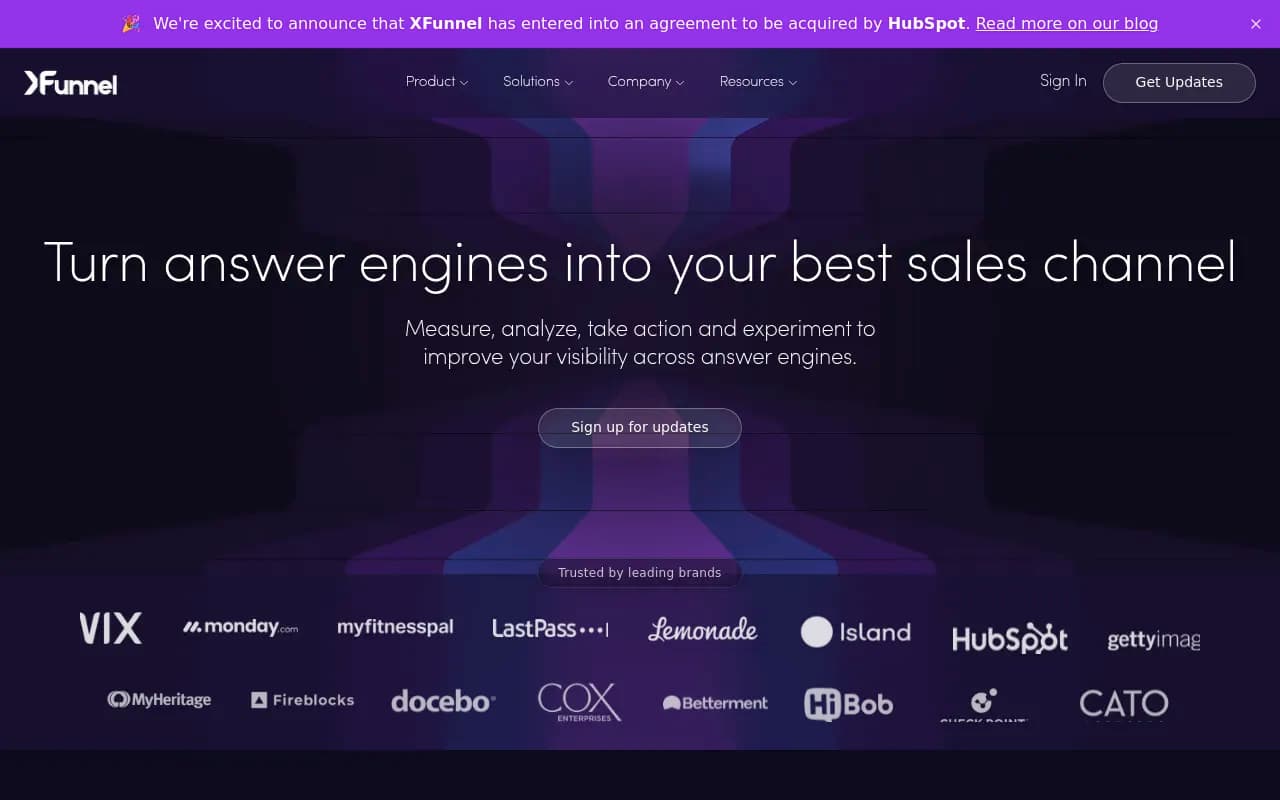
XFunnel started as an independent GEO platform focused on helping marketing teams track brand visibility across AI-powered search engines. In 2024, HubSpot acquired XFunnel, integrating it into their marketing suite. The platform monitors how brands appear in AI-generated responses across ChatGPT, Perplexity, Claude, and other answer engines. XFunnel's client roster includes major brands like Wix, Monday.com, MyFitnessPal, and LastPass. Since the HubSpot acquisition, XFunnel operates with enterprise-focused pricing and deeper integration with HubSpot's CRM and marketing automation tools.
Gauge
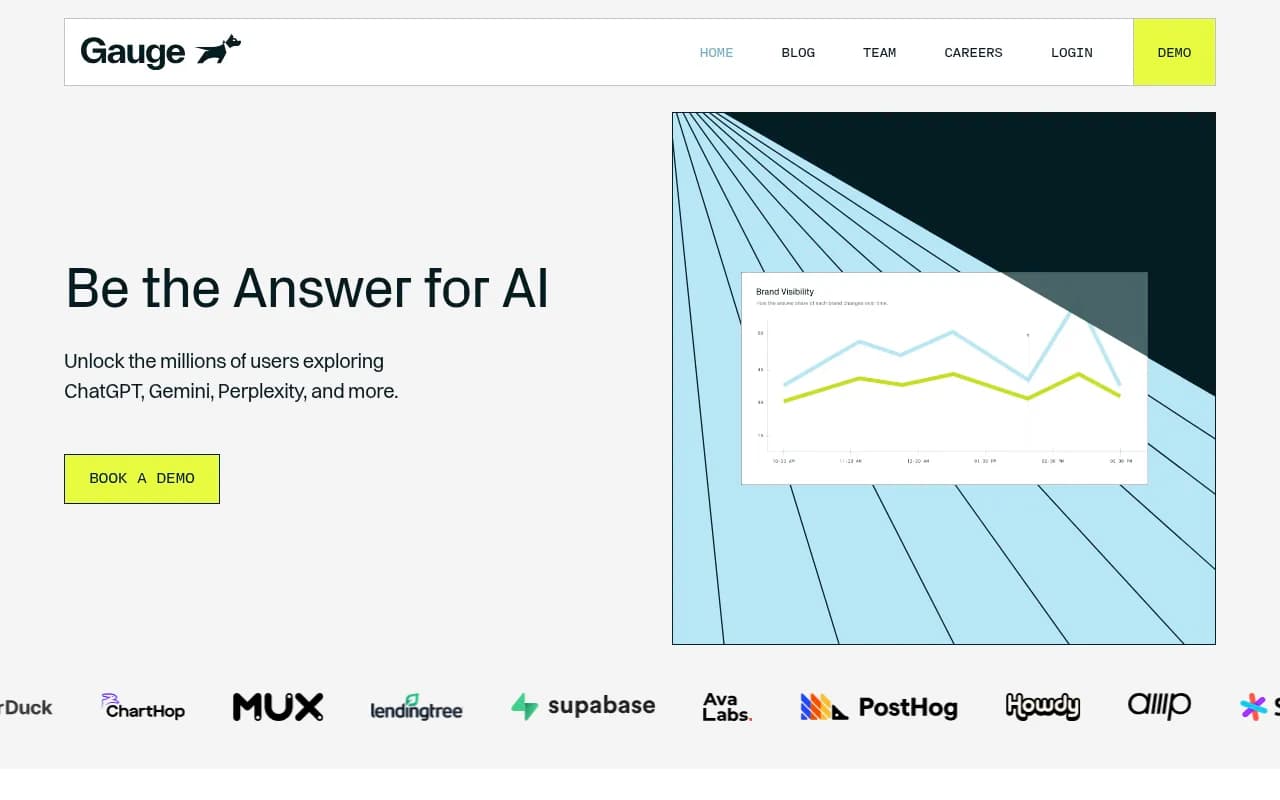
Gauge is an independent AI visibility platform that tracks brand mentions across ChatGPT, Claude, Gemini, Perplexity, and other LLMs. The platform analyzes citation patterns, identifies content gaps, and provides actionable recommendations to improve AI search presence. Gauge targets marketing teams and agencies with transparent pricing tiers, making it accessible for teams of different sizes. The platform emphasizes citation analysis and competitor benchmarking without requiring enterprise sales cycles or platform lock-in.
Side-by-side comparison
| Feature | XFunnel | Gauge |
|---|---|---|
| Pricing model | Custom enterprise (contact sales) | Transparent tiers: $95-$399/mo + Enterprise |
| Free trial | Not publicly listed | Available |
| AI engines monitored | ChatGPT, Claude, Gemini, Perplexity, others | ChatGPT, Claude, Gemini, Perplexity, others |
| Parent company | HubSpot (acquired 2024) | Independent |
| HubSpot integration | Native (part of HubSpot) | Via API/webhooks |
| Multi-client management | Enterprise tier | Growth plan ($399/mo) and up |
| Citation tracking | Yes | Yes |
| Content gap analysis | Yes | Yes |
| AI content generation | No | No |
| Competitor benchmarking | Yes | Yes |
| API access | Enterprise tier | Growth plan and up |
| Target audience | Enterprise, HubSpot users | SMBs, agencies, marketing teams |
Pricing comparison
This is where the two platforms diverge sharply.
| Plan tier | XFunnel | Gauge |
|---|---|---|
| Entry-level | Contact sales (enterprise only) | $95/mo (annual billing) |
| Mid-tier | Contact sales | $399/mo Growth plan |
| Enterprise | Custom pricing | Custom pricing |
| Free trial | Not listed | Available |
| Billing options | Custom contracts | Monthly or annual (discount on annual) |
XFunnel doesn't publish pricing. As a HubSpot property, it's sold through HubSpot's enterprise sales process, which typically means multi-month sales cycles and pricing bundled with other HubSpot services. This works if you're already a HubSpot customer and want everything in one ecosystem. It's a barrier if you just want AI visibility tracking without the HubSpot commitment.
Gauge publishes clear pricing: $95/mo gets you started with basic tracking, $399/mo Growth plan adds multi-client management and API access, and Enterprise is custom for larger deployments. You can sign up and start tracking today without talking to sales.
Platform ownership and ecosystem
XFunnel's HubSpot acquisition changes the game. If you're already using HubSpot for CRM, marketing automation, and content management, XFunnel's native integration is valuable. Your AI visibility data flows directly into HubSpot dashboards, and you can trigger workflows based on citation changes. The downside: you're locked into HubSpot's ecosystem and pricing model. If you're not a HubSpot shop, XFunnel becomes a harder sell.
Gauge operates independently. It integrates with other tools via API and webhooks, but it's not married to any specific marketing stack. This flexibility matters if you're using Salesforce, Marketo, or a custom stack. You're not forced into a broader platform decision just to track AI visibility.
AI engine coverage and monitoring
Both platforms monitor the major AI search engines: ChatGPT, Claude, Gemini, and Perplexity. Both track brand mentions, citation patterns, and competitor visibility. The core monitoring capabilities are comparable.
The difference is in update velocity. Gauge, as an independent platform, typically ships new AI engine support and feature updates faster. When a new AI search engine gains traction, smaller platforms can pivot quickly. XFunnel, now part of HubSpot, moves at HubSpot's pace -- which means more testing and integration work but potentially slower feature releases.
Neither platform currently monitors Reddit discussions or YouTube citations in depth, which is a gap compared to more comprehensive GEO platforms like Promptwatch.
Citation tracking and analysis
Both platforms track when and how your brand appears in AI-generated responses. You can see which queries trigger mentions, which competitors appear alongside you, and which pages get cited.
Gauge emphasizes citation pattern analysis -- showing you trends over time, identifying which content types get cited most, and highlighting gaps where competitors appear but you don't. The interface is built around these insights.
XFunnel focuses on conversion optimization. It tracks citations but frames everything around funnel metrics -- how AI visibility drives traffic, leads, and revenue. This makes sense given HubSpot's focus on inbound marketing and conversion tracking.
If you want pure visibility analytics, Gauge is cleaner. If you need to tie AI visibility to HubSpot's funnel metrics, XFunnel's integration wins.
Content gap identification
Both platforms identify content gaps -- queries where competitors get cited but you don't. This is table stakes for any GEO platform.
Gauge surfaces these gaps with specific recommendations: which topics to cover, which questions to answer, which angles competitors are using. The output is actionable but stops short of generating content for you.
XFunnel integrates gap analysis with HubSpot's content strategy tools. You can see gaps alongside your existing content calendar and assign content creation tasks within HubSpot. The workflow integration is smoother if you're already managing content in HubSpot.
Neither platform includes AI content generation. If you want a platform that not only identifies gaps but also generates optimized content to fill them, you'd need to look at tools like Promptwatch, which combines gap analysis with an AI writing agent trained on 880M+ citations.

Multi-client and agency features
Gauge's Growth plan ($399/mo) includes multi-client management, white-label reporting, and API access. Agencies can manage multiple brands from one dashboard, generate client reports, and integrate data into their own tools. The pricing is transparent and scales predictably.
XFunnel's agency features exist but are buried in enterprise pricing. You'll need to negotiate a custom contract through HubSpot's sales team. If you're a HubSpot partner agency already managing client accounts in HubSpot, this integration is seamless. If you're not, it's a heavy lift.
Competitor benchmarking
Both platforms let you track competitors' AI visibility alongside your own. You can see who's winning for specific queries, which brands dominate certain topics, and how your visibility compares over time.
Gauge presents this as side-by-side dashboards and heatmaps. XFunnel integrates competitor data into HubSpot's competitive intelligence tools. The data is similar; the presentation depends on where you want to see it.
Integration and API access
XFunnel's HubSpot integration is its core value prop. All data flows natively into HubSpot. If you live in HubSpot, this is seamless. If you don't, you're stuck with limited export options.
Gauge offers API access on Growth and Enterprise plans. You can pull data into your own dashboards, trigger alerts in Slack, or build custom workflows. The API is RESTful and well-documented. This matters if you're integrating AI visibility data into a broader marketing analytics stack.
Reporting and dashboards
XFunnel's dashboards live inside HubSpot. They follow HubSpot's design language and integrate with HubSpot's reporting tools. If you're already building HubSpot dashboards, adding XFunnel data is straightforward.
Gauge has standalone dashboards with customizable views, exportable reports, and white-label options for agencies. The interface is clean and focused on AI visibility metrics without the clutter of a broader marketing platform.
Support and onboarding
XFunnel's support runs through HubSpot's enterprise support channels. You get dedicated account management if you're on an enterprise plan, but you're also navigating HubSpot's support structure.
Gauge offers direct support with faster response times typical of smaller platforms. Onboarding is self-service for lower tiers, with dedicated onboarding for Growth and Enterprise plans.
Pros and cons
XFunnel pros
- Native HubSpot integration for existing HubSpot users
- Enterprise-grade infrastructure and support
- Strong focus on conversion metrics and funnel optimization
- Trusted by major brands (Wix, Monday.com, LastPass)
- Deep integration with HubSpot's content and CRM tools
XFunnel cons
- No transparent pricing -- requires sales contact
- HubSpot lock-in limits flexibility
- Slower feature updates as part of larger platform
- Not accessible for small teams or agencies outside HubSpot ecosystem
- Limited standalone value if you're not using HubSpot
Gauge pros
- Transparent pricing starting at $95/mo
- Independent platform with no ecosystem lock-in
- Faster feature updates and new AI engine support
- Multi-client management on Growth plan
- Clean, focused interface for AI visibility tracking
- API access for custom integrations
Gauge cons
- Less mature than XFunnel for enterprise deployments
- No native HubSpot integration (API only)
- Smaller brand recognition compared to HubSpot-backed XFunnel
- Limited conversion funnel integration compared to XFunnel
Who should choose which platform
Choose XFunnel if:
- You're already a HubSpot customer and want native integration
- You need AI visibility data flowing directly into HubSpot dashboards and workflows
- You're an enterprise with budget for custom pricing and long sales cycles
- Conversion tracking and funnel metrics matter more than pure visibility analytics
- You're a HubSpot partner agency managing client accounts in HubSpot
Choose Gauge if:
- You want transparent pricing and fast onboarding without sales calls
- You're a small to mid-size team or agency not locked into HubSpot
- You need multi-client management without enterprise pricing
- You want API access to integrate AI visibility data into your own stack
- You prefer independent platforms over ecosystem lock-in
- You're managing clients across different marketing platforms
Final verdict
XFunnel vs Gauge comes down to ecosystem fit. XFunnel is the right choice if you're already invested in HubSpot and want AI visibility tracking that plugs directly into your existing workflows. The HubSpot acquisition makes it a natural extension of the platform you're already using, but it also means you're paying HubSpot enterprise prices and accepting HubSpot's pace of innovation.
Gauge wins for teams that want AI visibility tracking without platform lock-in. The transparent pricing, faster feature velocity, and multi-client support make it a better fit for agencies and marketing teams that aren't married to HubSpot. You get the core GEO capabilities -- citation tracking, content gap analysis, competitor benchmarking -- without the enterprise sales cycle or ecosystem commitment.
For most teams evaluating these two platforms in 2026, Gauge offers better value and flexibility unless you're already deep in the HubSpot ecosystem.