Key takeaways
- Most AI visibility tools are monitoring dashboards — they show you data but don't help you act on it
- The best platforms in 2026 close the full loop: find gaps, generate content, track results
- Promptwatch is the only platform rated "Leader" across all categories in a 2026 comparison of 12 GEO tools
- Profound is the strongest enterprise-tier option with deep citation analysis and agency features
- Peec AI is a solid entry point for citation tracking but lacks content generation and crawler data
- Choosing the right tool depends on whether you need monitoring only, or full optimization capability
- Free trials are available for most platforms on this list
The AI search visibility space has exploded. Two years ago, barely anyone was asking "does ChatGPT mention our brand?" Now it's a standing agenda item in marketing meetings at companies of every size.
The problem is that the tooling hasn't kept pace with the urgency. Most platforms that launched in 2023 and 2024 were built to answer one question: "Are we being mentioned?" That's useful, but it's table stakes now. The real question is: "What do we do about it?"
This guide focuses on platforms that go beyond monitoring. Some are better at this than others. A few are still mostly dashboards dressed up with optimization language. I'll be honest about which is which.
What separates a monitoring tool from an optimization platform
Before diving into specific tools, it's worth being clear about what "going beyond monitoring" actually means in practice.
A monitoring tool tracks brand mentions across AI engines. You set up prompts, it runs them periodically, and you see whether your brand appears. That's the baseline. It's useful for awareness but doesn't tell you what to do next.
An optimization platform does more:
- It identifies which prompts your competitors rank for that you don't (gap analysis)
- It helps you create content specifically engineered to get cited by AI models
- It tracks whether that content actually moves your visibility scores
- It connects AI visibility to real traffic and revenue
The distinction matters because the gap between "we're being mentioned less than competitors" and "here's exactly what content to create to fix that" is where most teams get stuck.
With that framing in mind, here are the seven platforms worth knowing in 2026.
1. Promptwatch
Promptwatch is the most complete AI visibility platform available right now. It's the only tool in a 2026 comparison of 12 GEO platforms to be rated "Leader" across every category, and that's because it's built around a full action loop rather than just a reporting dashboard.

The core workflow is three steps: find the gaps, create content that ranks in AI, and track the results. The Answer Gap Analysis shows you exactly which prompts your competitors are visible for that you're not. You see the specific topics, angles, and questions that AI models want answers to but can't find on your site. That's genuinely useful intelligence.
From there, the built-in AI writing agent generates articles, listicles, and comparisons grounded in real citation data. Promptwatch has analyzed over 880 million citations, so the content recommendations aren't generic SEO filler -- they're based on what AI models actually cite. Once content is published, page-level tracking shows which pages are being cited, how often, and by which models.
A few features that most competitors simply don't have:
- AI Crawler Logs: Real-time logs of AI crawlers (ChatGPT, Claude, Perplexity, etc.) hitting your website. You can see which pages they read, errors they encounter, and how often they return. This is critical for diagnosing indexing issues.
- Prompt Intelligence: Volume estimates and difficulty scores per prompt, plus query fan-outs showing how one prompt branches into sub-queries. This lets you prioritize high-value, winnable prompts instead of guessing.
- Reddit and YouTube Insights: Surface discussions that directly influence AI recommendations -- a channel most competitors ignore entirely.
- ChatGPT Shopping Tracking: Monitor when your brand appears in ChatGPT's product recommendations and shopping carousels.
Promptwatch monitors 10 AI models including ChatGPT, Claude, Gemini, Perplexity, Grok, DeepSeek, Copilot, Meta AI, Mistral, and Google AI Overviews. It's used by 6,700+ brands and agencies including Booking.com and Center Parcs.
Pricing starts at $99/month (Essential: 1 site, 50 prompts, 5 articles), $249/month (Professional: 2 sites, 150 prompts, crawler logs), and $579/month (Business: 5 sites, 350 prompts, 30 articles). Free trial available.
Best for: Marketing and SEO teams that want to actually improve AI visibility, not just measure it.
2. Profound
Profound is the strongest enterprise-tier option in this space. It tracks how your brand appears in AI answers across ChatGPT, Perplexity, and 9+ other AI search engines, with particularly strong citation analysis -- you can see exactly which sources are driving AI mentions and which competitors are getting cited instead of you.
Profound

The platform has an Agency mode that's genuinely well-designed, with brand configurations and pitch environments that make it practical for agencies managing multiple clients. The citation and source tracking is detailed enough to inform real content strategy decisions.
Where Profound falls short compared to Promptwatch: there's no Reddit tracking, no ChatGPT Shopping monitoring, and the content generation capabilities are more limited. It's strong on the "understand" side of the equation, less strong on the "fix it" side. Pricing is also higher, which makes it harder to justify for smaller teams.
That said, if you're an enterprise brand or agency that needs deep citation intelligence and can build your own content workflow on top of it, Profound is a serious platform.
Best for: Enterprise brands and agencies that prioritize citation analysis and competitive intelligence.
3. Peec AI
Peec AI is a solid mid-market option that's particularly good at citation analysis. One interesting technical detail: Peec AI collects AI responses using UI scraping rather than API data, which means it simulates real user interactions with AI tools rather than querying APIs directly. In theory, this gives you responses closer to what actual users see.

The platform handles multi-client projects well and covers the main AI engines. It's a reasonable choice if your primary need is understanding which sources AI models cite and how your brand appears across different prompts.
The limitations are real, though. There's no AI content generation, no crawler logs, no visitor analytics, and no Reddit or YouTube tracking. It's a monitoring tool with good citation features -- not an optimization platform. If you're comfortable building your content strategy separately and just need reliable visibility data, Peec AI works. If you want a single platform that closes the loop, you'll hit its ceiling quickly.
Best for: Teams that need citation analysis and are comfortable handling content creation separately.
4. Otterly.AI
Otterly.AI is one of the more established names in AI search monitoring. It covers ChatGPT, Perplexity, and Google AI Overviews, and the interface is clean and easy to navigate. For teams just getting started with AI visibility tracking, it's a reasonable entry point.
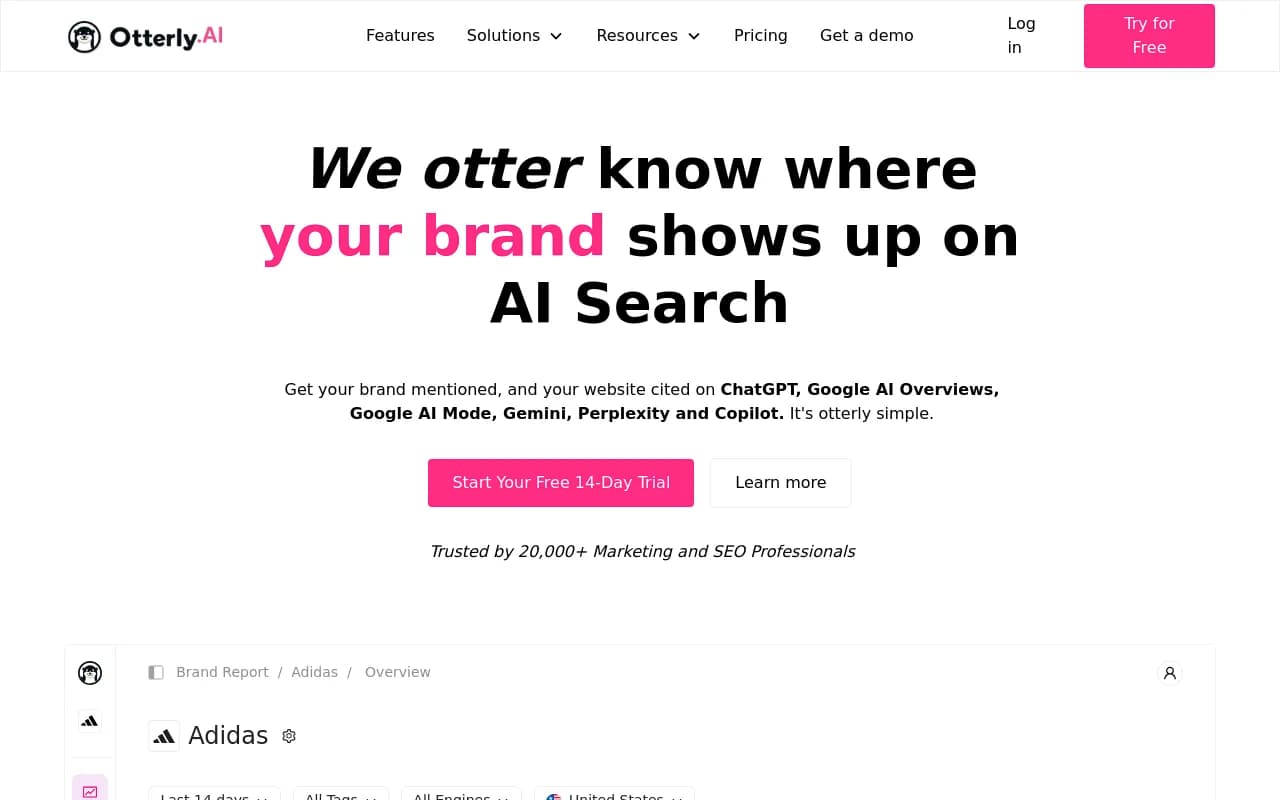
The honest assessment: Otterly.AI is a monitoring tool. It shows you brand mention data, tracks sentiment, and lets you compare against competitors. What it doesn't do is help you act on that data. There's no content gap analysis, no AI writing capabilities, no crawler logs, and no traffic attribution. You get the "what" without much help on the "so what."
For teams that want a lightweight dashboard and are willing to do the strategic work themselves, Otterly.AI is fine. For teams that want to actually move the needle on AI visibility, it's a starting point, not a destination.
Best for: Teams new to AI visibility tracking who want a simple, clean monitoring dashboard.
5. SE Ranking (AI Visibility Tracking)
SE Ranking is primarily known as a traditional SEO platform, and its AI visibility tracking features are an extension of that existing product rather than a ground-up AI search tool.
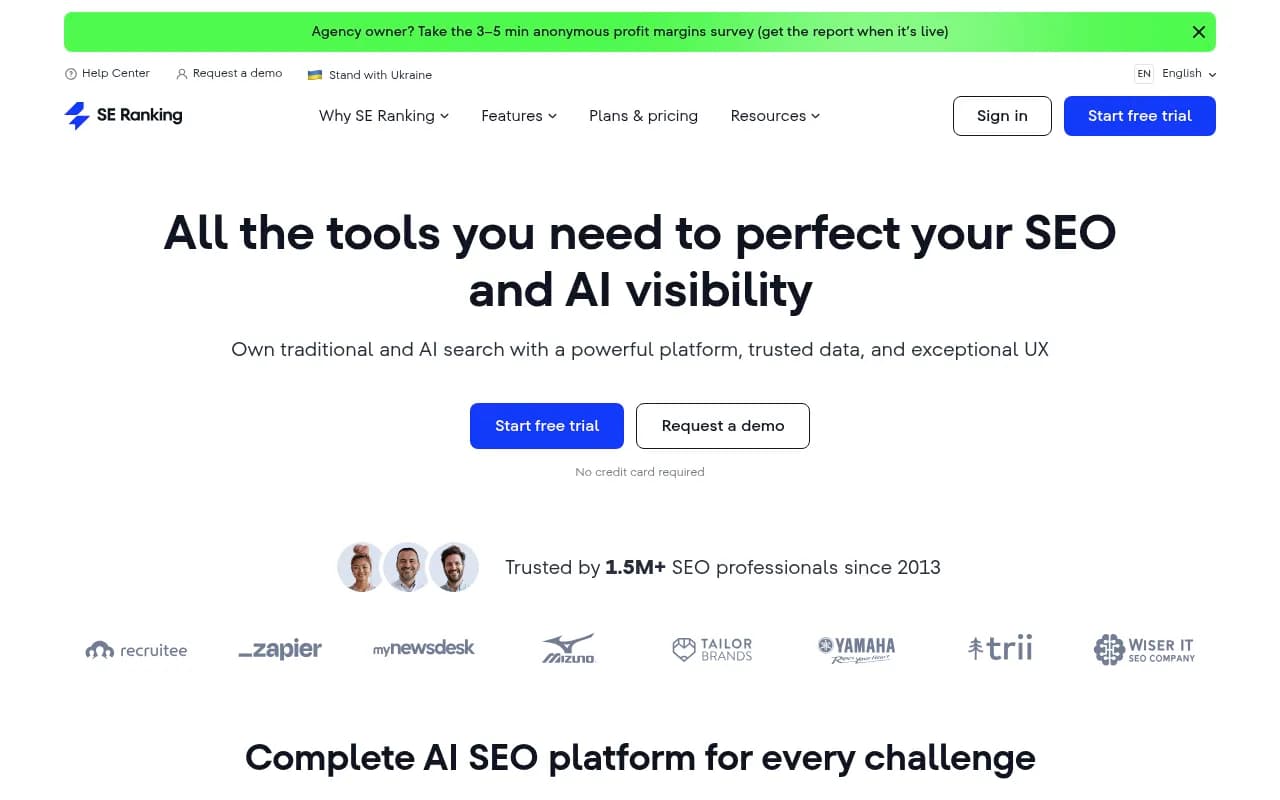
What works: if you're already using SE Ranking for traditional SEO, the AI visibility features integrate naturally into your existing workflow. You don't need to manage a separate platform. The rank tracking is reliable, and the overall platform is well-maintained.
What doesn't: the AI visibility features are more limited than dedicated GEO platforms. The prompt set is less flexible, and there's no content generation or gap analysis built around AI citation data. It's useful for teams that want AI monitoring without adding another tool to their stack, but it won't replace a dedicated platform if AI visibility is a serious priority.
Best for: Existing SE Ranking users who want basic AI visibility data without switching platforms.
6. Scrunch AI
Scrunch AI positions itself as an actionable GEO insights platform, and it does more than pure monitoring. The platform tracks brand mentions across LLMs and provides recommendations for improving visibility.
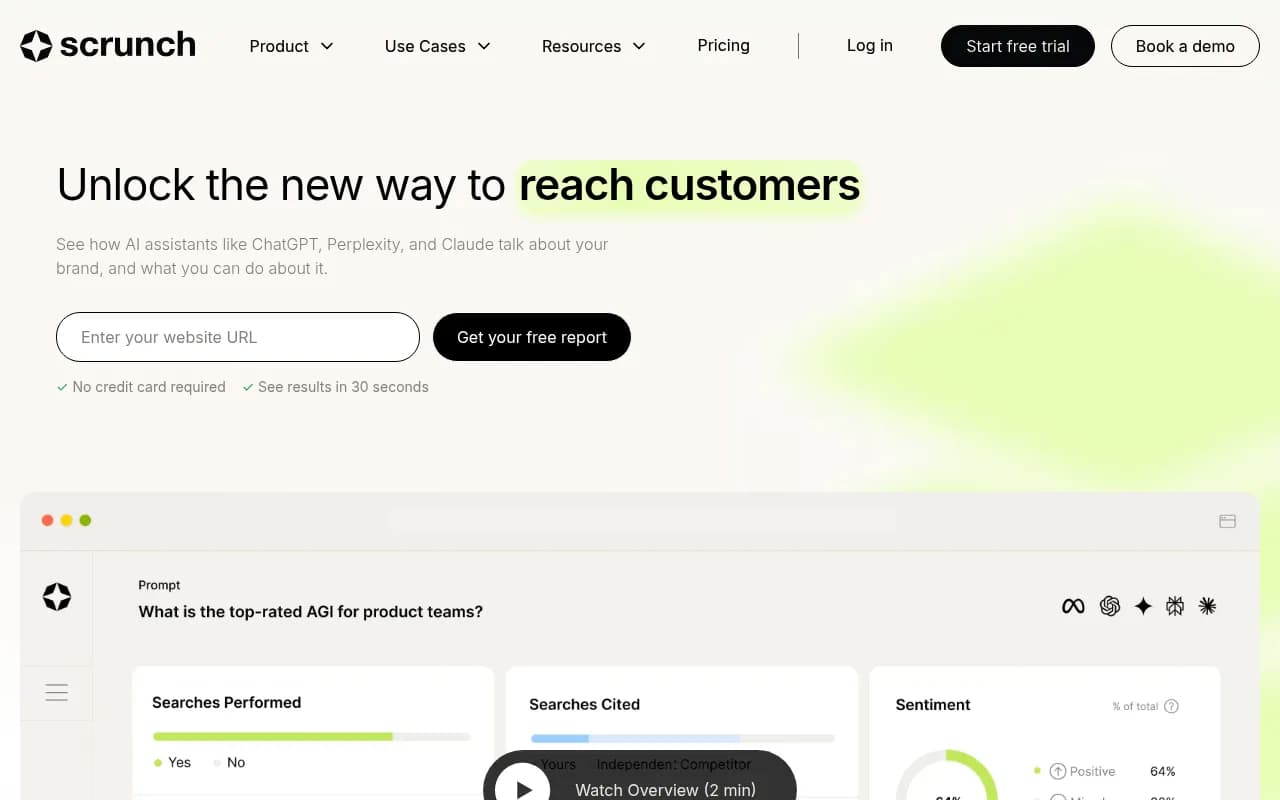
Scrunch has stronger optimization features than Otterly.AI or Peec AI, with content recommendations and competitive analysis built in. The interface is reasonably clean and the data is presented in a way that's actionable rather than just informational.
The gap compared to Promptwatch is meaningful: no AI crawler logs, no Reddit/YouTube tracking, no ChatGPT Shopping monitoring, and the content generation is less sophisticated. But for teams that want something between a basic monitoring dashboard and a full optimization platform, Scrunch occupies a reasonable middle ground.
Best for: Mid-market teams that want actionable insights but don't need the full feature set of an enterprise platform.
7. Nightwatch
Nightwatch is primarily a rank tracking platform that has added AI search monitoring capabilities. It covers AI visibility alongside traditional search rankings, which makes it a practical choice for teams that want to track both in one place.
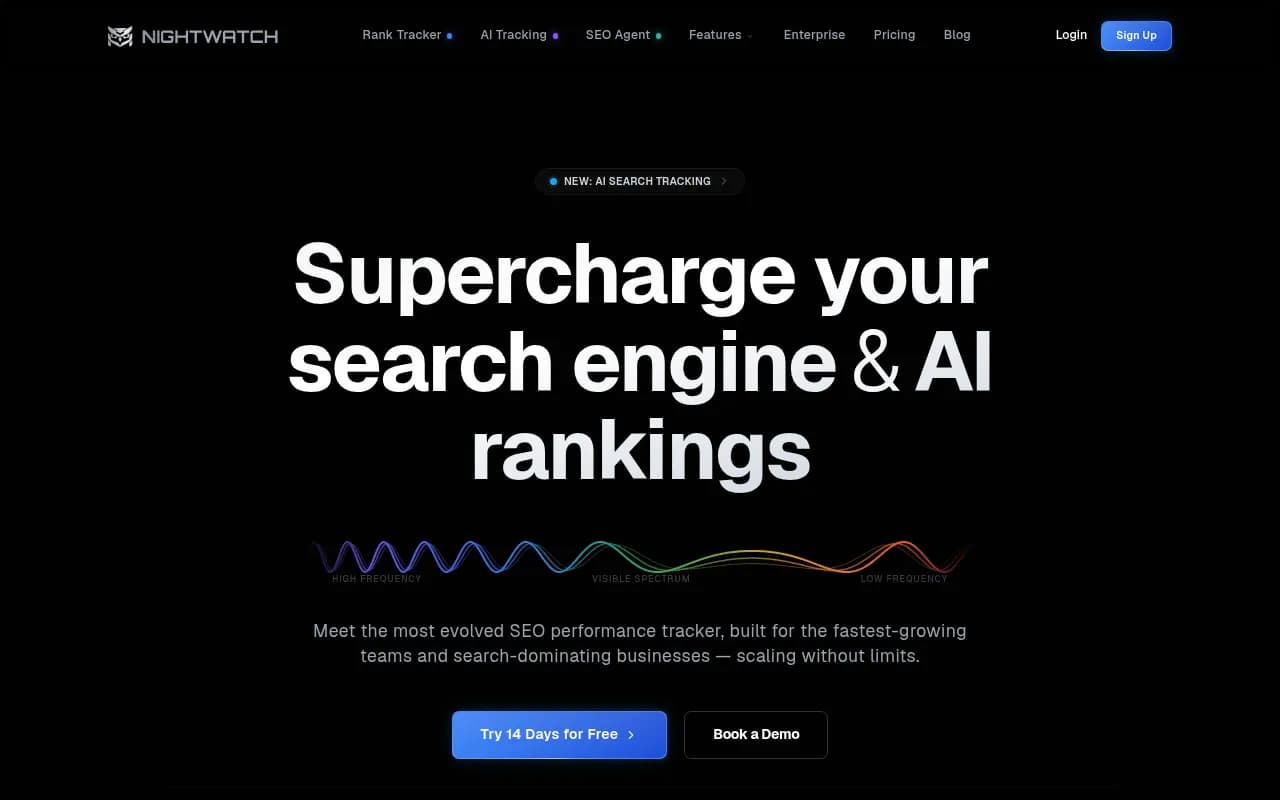
The AI monitoring features are competent but not deep. You can track brand mentions across AI engines and see how visibility changes over time. What you won't get is content gap analysis, AI writing tools, crawler logs, or the kind of citation intelligence that dedicated GEO platforms provide.
Nightwatch makes sense if you're a smaller team or agency that needs rank tracking as your primary function and wants AI visibility as a secondary feature. If AI search is a core priority, you'll want a more specialized platform.
Best for: Teams that need traditional rank tracking with AI visibility as a secondary feature.
How the platforms compare
| Platform | AI models monitored | Content generation | Crawler logs | Citation analysis | Reddit/YouTube tracking | ChatGPT Shopping | Starting price |
|---|---|---|---|---|---|---|---|
| Promptwatch | 10 | Yes (AI writing agent) | Yes | Yes (880M+ citations) | Yes | Yes | $99/mo |
| Profound | 9+ | Limited | No | Yes (deep) | No | No | Higher |
| Peec AI | Multiple | No | No | Yes | No | No | Mid-range |
| Otterly.AI | 3+ | No | No | Basic | No | No | Lower |
| SE Ranking | Multiple | No | No | Basic | No | No | Varies |
| Scrunch AI | Multiple | Limited | No | Yes | No | No | Mid-range |
| Nightwatch | Multiple | No | No | Basic | No | No | Lower |
Which tool should you actually use?
The answer depends on what you're trying to accomplish.
If you want to understand and improve AI visibility as a serious marketing priority, Promptwatch is the clear choice. The combination of gap analysis, AI content generation grounded in citation data, crawler logs, and traffic attribution means you're not just watching a dashboard -- you're running a repeatable optimization process. No other platform on this list closes the full loop.
If you're an enterprise brand with a large content team and need deep citation intelligence to feed into your own workflow, Profound is worth evaluating. The citation analysis is genuinely strong, and the agency features are well-designed.
If you're just starting out and want to understand the basics of AI visibility before committing to a more sophisticated platform, Otterly.AI or Nightwatch give you a low-friction entry point. Just go in knowing you'll outgrow them.
Peec AI and Scrunch sit in the middle: more capable than basic monitoring tools, but not full optimization platforms. They're reasonable choices if your budget or workflow doesn't support a more comprehensive platform yet.
SE Ranking is really only the right answer if you're already a customer and want to add AI visibility without managing another tool.
The bottom line
The AI search visibility space is maturing fast. A year ago, just knowing whether your brand appeared in ChatGPT responses felt like a win. Now, brands that are serious about GEO are running structured optimization programs: identifying gaps, publishing content engineered for AI citation, and measuring the results in terms of actual traffic and revenue.
The tools that will matter in 2026 are the ones built around that full cycle, not just the monitoring piece. Most platforms on this list are useful. Only a few are genuinely built to help you act.