Key takeaways
- Searchable is a solid AI search visibility tracker, but it doesn't help you create content to close the gaps it finds
- The best alternatives in 2026 combine monitoring with built-in content generation, so you can find where you're invisible and fix it in the same platform
- Promptwatch is the only platform rated "Leader" across all GEO categories in 2026, with an end-to-end loop from gap analysis to AI content generation to traffic attribution
- Platforms like Metaflow AI, Search Atlas, and AirOps also offer meaningful content creation capabilities alongside visibility tracking
- If you only need basic monitoring and have a tight budget, tools like Otterly.AI and Peec AI still get the job done — just don't expect them to write anything for you
Searchable does what it says on the tin. You connect your brand, set up some prompts, and it tells you how often you show up in ChatGPT, Perplexity, and other AI engines. For a lot of teams, that's a useful starting point.
The problem is it's just a starting point. Once you know you're invisible for a cluster of prompts, Searchable doesn't tell you what to do about it. There's no content gap analysis, no writing tools, no way to close the loop between "we're not showing up here" and "we published something that fixes that."
That gap matters more now than it did a year ago. AI search is moving fast, and the brands winning in ChatGPT and Perplexity aren't just the ones tracking their visibility — they're the ones actively creating content that AI models want to cite.
So if you're looking for a Searchable alternative that actually helps you act on what you find, here are the seven worth considering in 2026.
Quick comparison
| Tool | AI visibility tracking | Built-in content generation | Crawler logs | Pricing starts at |
|---|---|---|---|---|
| Promptwatch | 10 AI models | Yes (AI writing agent) | Yes | $99/mo |
| Metaflow AI | Yes | Yes (AI content automation) | No | Custom |
| Search Atlas | Yes | Yes (full SEO content suite) | No | ~$99/mo |
| AirOps | Yes | Yes (content engineering) | No | Custom |
| Semrush | Limited (fixed prompts) | Yes (ContentShake AI) | No | $139/mo |
| Otterly.AI | Yes | No | No | $Free–$99/mo |
| Peec AI | Yes | No | No | ~$49/mo |
1. Promptwatch — best overall for the full optimization loop
Most AI visibility tools show you a dashboard. Promptwatch shows you a dashboard and then helps you do something about it.
The core workflow is built around three steps: find the gaps, create content to fill them, then track whether it worked. The Answer Gap Analysis is the part that makes this genuinely useful — it shows you the specific prompts your competitors are winning for that you're not, and surfaces the content your site is missing that would change that.
From there, the built-in AI writing agent generates articles, listicles, and comparisons grounded in real citation data. Not generic SEO filler — content engineered around what AI models actually cite. The platform has processed over 880 million citations, so when it recommends a content angle, there's real data behind it.
The tracking side is equally thorough. Page-level visibility shows which pages are being cited, how often, and by which AI model. AI crawler logs show you when ChatGPT or Perplexity actually visits your site, which pages they read, and any errors they hit. Traffic attribution connects all of this to actual revenue via a code snippet, GSC integration, or server log analysis.
It also covers things most competitors skip entirely: Reddit and YouTube tracking (both influence AI recommendations heavily), ChatGPT Shopping carousels, prompt volume and difficulty scoring, and query fan-outs that show how one prompt branches into sub-queries.
In a 2026 comparison of 12 GEO platforms, Promptwatch was the only one rated "Leader" across all categories. The core reason: everyone else monitors. Promptwatch optimizes.

Pricing: Essential at $99/mo (1 site, 50 prompts, 5 articles), Professional at $249/mo (2 sites, 150 prompts, 15 articles, crawler logs), Business at $579/mo (5 sites, 350 prompts, 30 articles). Free trial available.
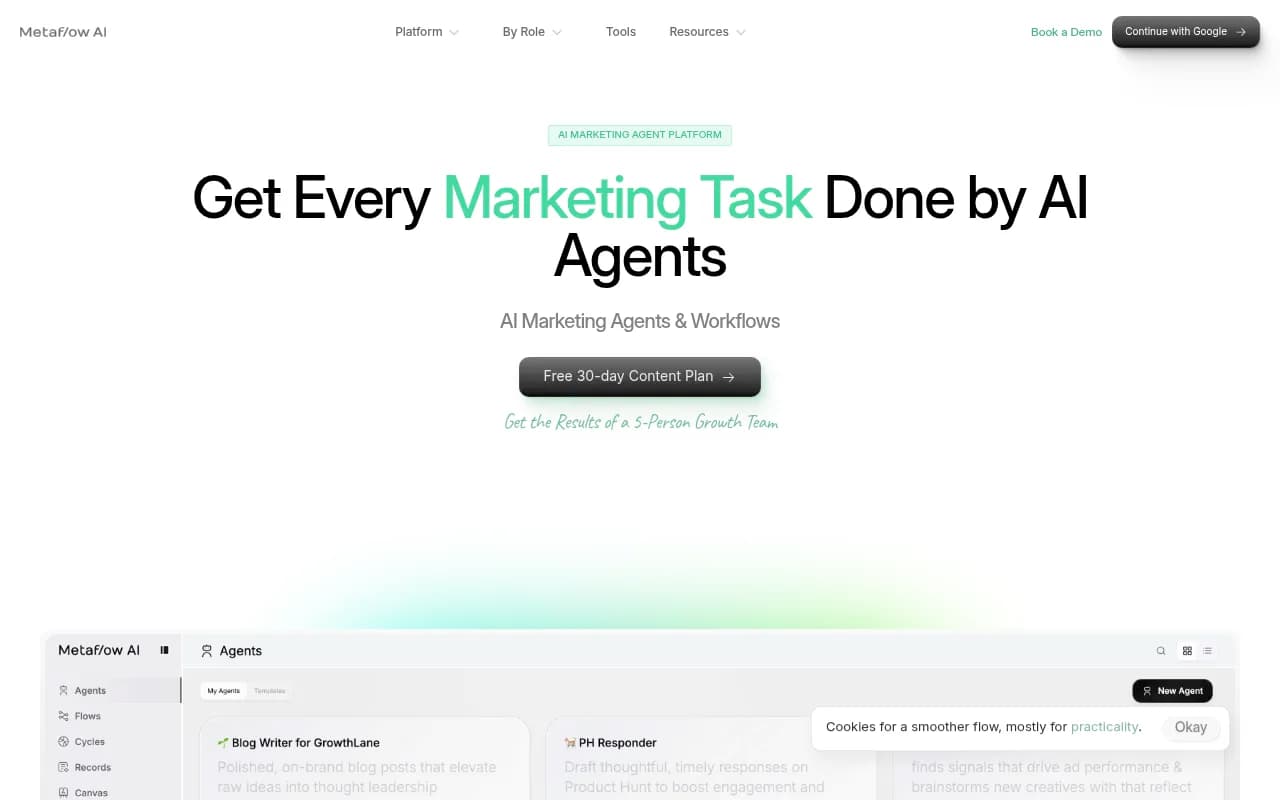
2. Metaflow AI — best for growth operators who want to execute fast
Metaflow positions itself as an AI content automation platform for teams that need to scale output quickly. It's less focused on pure GEO tracking and more on using AI to generate content at volume — but it does include AI visibility features that make it relevant here.
Where it stands out is execution speed. If your primary bottleneck is producing enough content to compete across a wide range of prompts, Metaflow's automation layer can help you move faster than most alternatives. It's particularly well-suited to growth teams that already know where their gaps are and need a tool to help them fill them.
The trade-off is depth. Metaflow doesn't have the citation analysis, crawler logs, or prompt intelligence that Promptwatch offers. You're getting content automation with some visibility features bolted on, rather than a true end-to-end GEO platform.
3. Search Atlas — best for agencies that want SEO automation plus AI-aware content
Search Atlas is an AI-powered SEO platform that has been steadily adding AI search features. It covers traditional rank tracking, technical SEO, and content creation — and the content tools are genuinely good.
The OTTO AI feature automates a lot of the SEO workflow: it identifies issues, prioritizes fixes, and can publish content directly to your CMS. For agencies managing multiple clients, that automation layer is valuable. The content generation is solid and produces articles that are optimized for both Google and AI search.
Where Search Atlas falls short compared to Promptwatch is on the AI-specific side. It doesn't have dedicated crawler logs for AI bots, the prompt tracking is less granular, and there's no Reddit or YouTube citation tracking. It's a strong all-rounder for teams that want one platform for traditional SEO and AI search, but it's not a pure-play GEO tool.
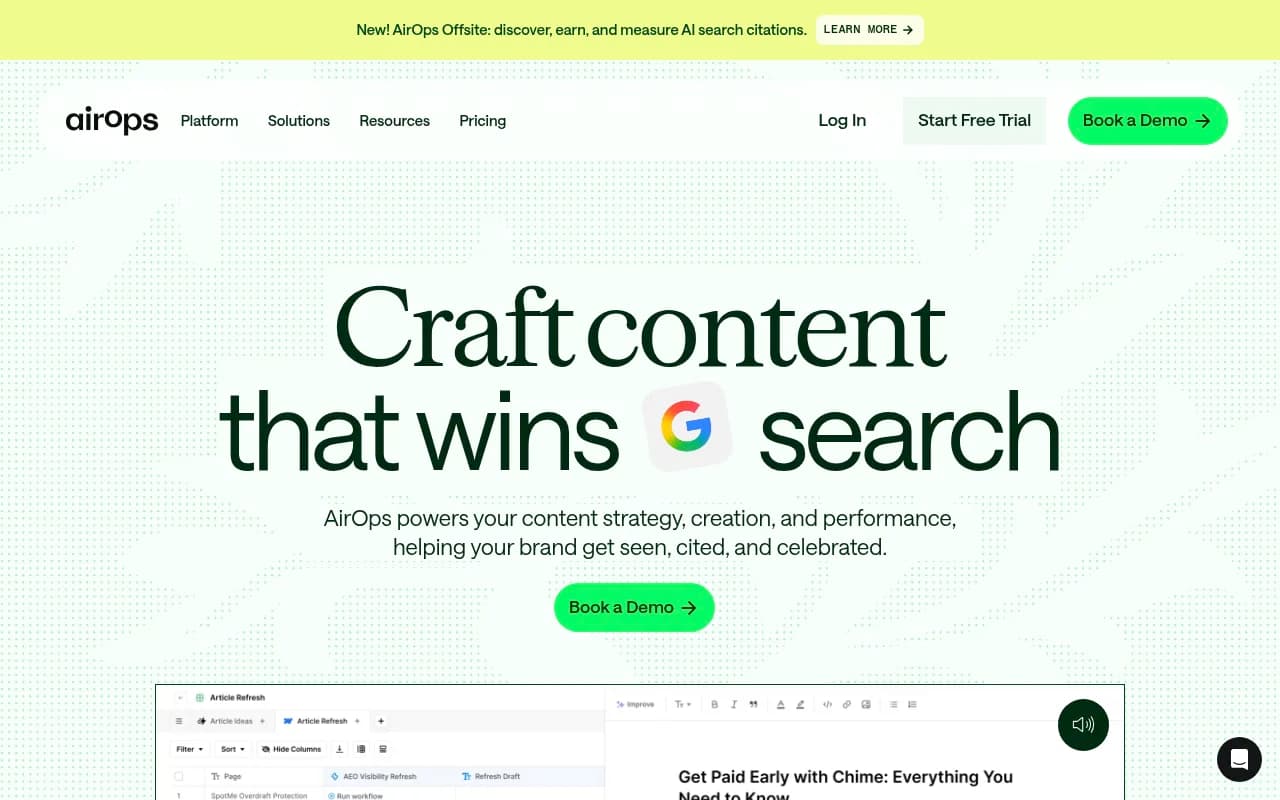
4. AirOps — best for content engineering at scale
AirOps describes itself as a content engineering platform, which is a useful framing. It's built for teams that want to systematically create content optimized for AI search — not one-off articles, but repeatable workflows that produce content at scale.
The platform combines AI visibility data with content generation in a way that's more workflow-oriented than most alternatives. You can build templates, run them across large keyword sets, and publish directly to your site. For content-heavy operations — large e-commerce sites, publishers, agencies with high output requirements — this approach makes sense.
It's less suited to teams that want a simple dashboard with clear visibility scores. AirOps requires more setup and is more of a content operations tool than a monitoring tool. But if content production is your primary lever for improving AI visibility, it's worth a serious look.
5. Semrush — best for teams already invested in the Semrush ecosystem
Semrush has been adding AI search features to its existing platform, and the combination of traditional SEO data and emerging AI visibility tools is genuinely useful for teams that already use it.
The ContentShake AI tool generates SEO-optimized articles with competitor analysis built in. The AI visibility tracking monitors brand mentions across AI engines. And the breadth of the traditional SEO suite — keyword research, backlink analysis, site audits — means you're not giving anything up by staying in the platform.
The limitations are real, though. Semrush uses fixed prompts for AI tracking, which means you're not getting the kind of custom prompt intelligence that dedicated GEO tools offer. There's no AI traffic attribution, no crawler logs, and the AI visibility features feel like additions to an SEO tool rather than a purpose-built GEO platform. If you're starting fresh and AI search is your primary focus, you'll outgrow the AI features quickly.
6. Otterly.AI — best monitoring-only option if you don't need content generation
Otterly.AI is one of the cleaner monitoring tools in the space. It tracks brand mentions across ChatGPT, Perplexity, and Google AI Overviews, and the interface is genuinely easy to use. For teams that just want to know where they stand in AI search without a lot of setup friction, it's a reasonable choice.
The honest caveat: Otterly.AI is a monitoring tool. It doesn't generate content, doesn't have crawler logs, doesn't do traffic attribution, and doesn't help you act on what you find. If you're looking for a Searchable alternative specifically because you want content generation, Otterly.AI isn't the answer. But if you want a step up from Searchable's monitoring capabilities at a similar price point, it's worth considering.
Otterly.AI

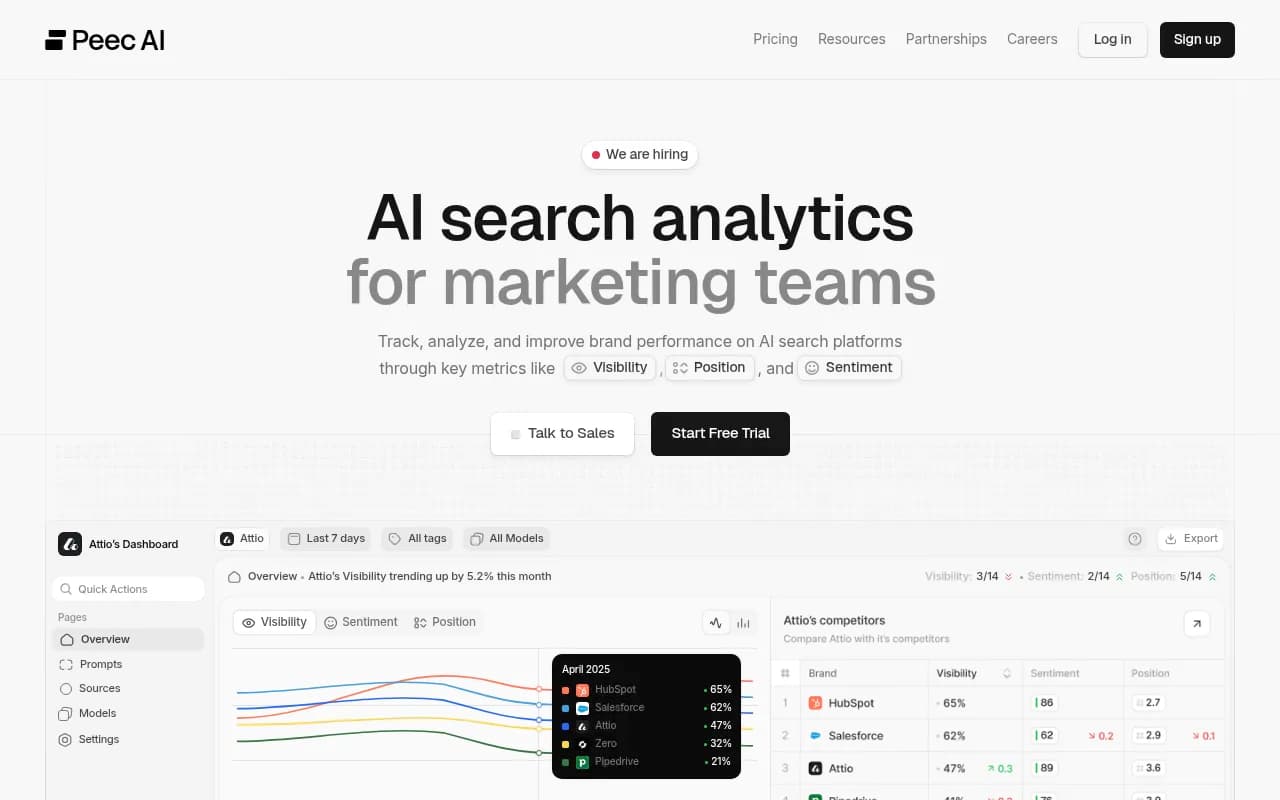
7. Peec AI — best for multilingual and global AI visibility tracking
Peec AI focuses on brands that need to monitor AI visibility across multiple languages and regions. If you're operating in markets where English-language tools give you incomplete data — European markets, Latin America, Southeast Asia — Peec AI's multilingual support is a meaningful differentiator.
Like Otterly.AI, it's primarily a monitoring tool. There's no built-in content generation, no crawler logs, and no traffic attribution. But the breadth of language and region support is genuinely strong, and for global brands trying to understand how they appear in AI search across different markets, it fills a gap that most alternatives don't address well.
What to look for when choosing a Searchable alternative
The most important question is whether you need monitoring or optimization. Most tools in this space — including Searchable itself — are monitoring tools. They show you data. The platforms that actually help you improve your AI visibility are a smaller subset.
A few things worth checking before you commit:
Content generation quality. Some platforms generate generic SEO content that won't get cited by AI models. The better ones ground their content in real citation data — what AI models actually reference when answering questions in your category.
Prompt customization. Fixed prompt sets (common in Semrush and Ahrefs) limit what you can track. You want to be able to define the specific questions your customers ask, not just a generic set of industry prompts.
Traffic attribution. Visibility scores are useful, but connecting AI citations to actual website traffic and revenue is what turns a monitoring tool into a business case. Most tools don't have this.
AI crawler logs. Understanding when and how AI bots crawl your site is increasingly important for diagnosing why you're not being cited. Very few tools offer this.
Reddit and YouTube tracking. Both platforms heavily influence what AI models recommend. If your tool ignores them, you're missing a significant part of the picture.
If you need all of these in one place, Promptwatch is the only platform that currently delivers the full stack. If you have a tighter budget or more specific needs, Search Atlas (for agencies), Metaflow AI (for content automation), or Otterly.AI (for clean monitoring) are all reasonable choices depending on your situation.
The tools that just show you where you're invisible are useful. The ones that help you become visible are where the real value is.