Key takeaways
- Ask whether the tool collects from the real AI interfaces or from APIs. The answers can differ, and the vendor should say which one it is.
- Check the unit of tracking. Brand-level reports are common, but SKU-level views (offered by Ranketta and Peec AI, per Ranketta's own comparison) matter if you sell products.
- Find out what happens after the report: does the tool publish or fix anything, or does it only chart the problem?
- Read the contract for notice periods and minimum terms, and price the plan you will use after the intro period, not the headline entry price.
- Test on your own prompts and product list during a trial before committing to anything annual.
Why this checklist exists
The GEO tool market got crowded fast. The tools catalog we maintain lists well over a hundred products that claim to track brand visibility in ChatGPT, Perplexity and Google's AI features. Many do the same four jobs: mention tracking, citation tracking, sentiment and share of voice. The differences that matter sit underneath, and they rarely show up in a landing page feature grid.
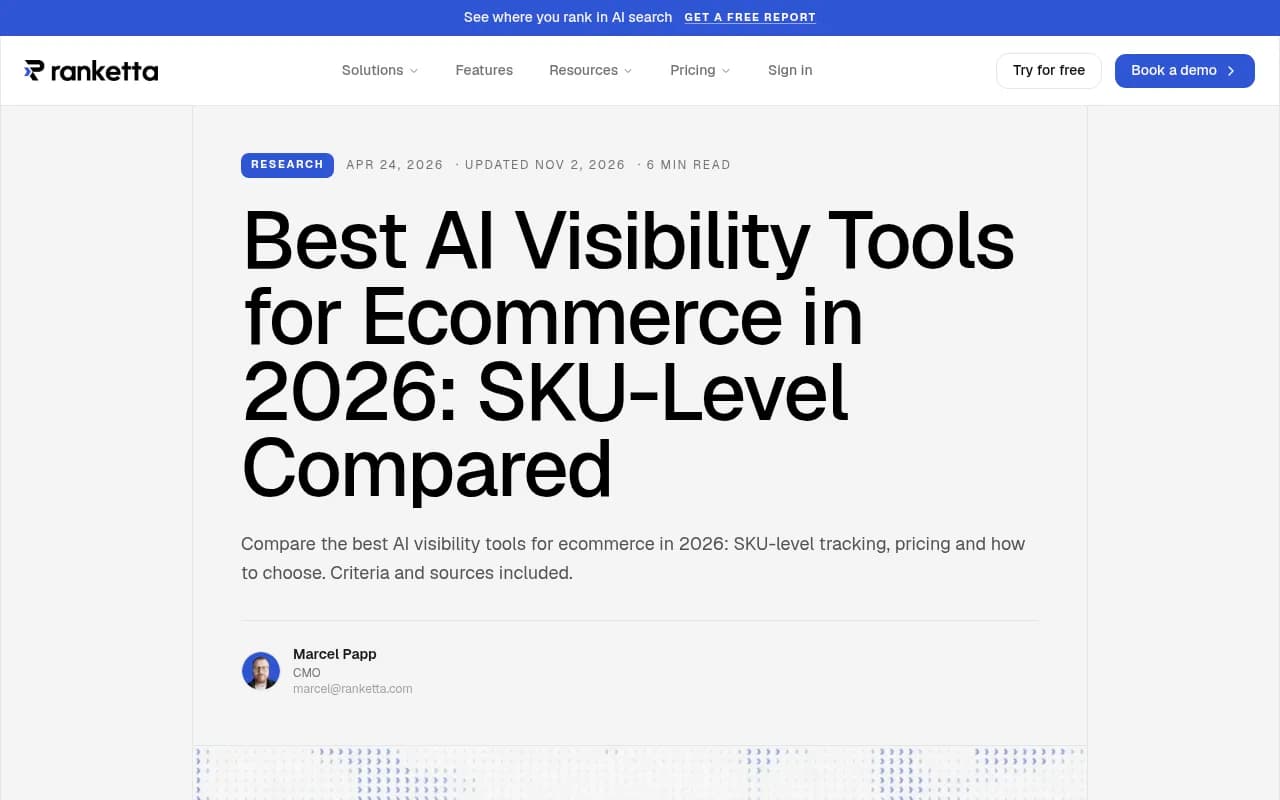
Ranketta is a good example of a newer entrant worth evaluating. Its ecommerce comparison lists SKU-level tracking, with a €29/mo Tracker plan (2 AI models, 30 prompts per model, 1 website) and a €79/mo Starter plan that adds product data enrichment, per prices Ranketta says it checked on 2 Nov 2026. I have not independently verified those numbers, and I did not test Ranketta myself, so treat them as the vendor's claims. The seven questions below are the ones I would put to Ranketta, and to any other tool, before paying.
A caveat on sources: most buyer's guides, including Ranketta's, are published by vendors that appear in their own rankings. Read them for the questions, then verify the answers yourself.
Question 1: Which AI engines are covered on the plan I can afford?
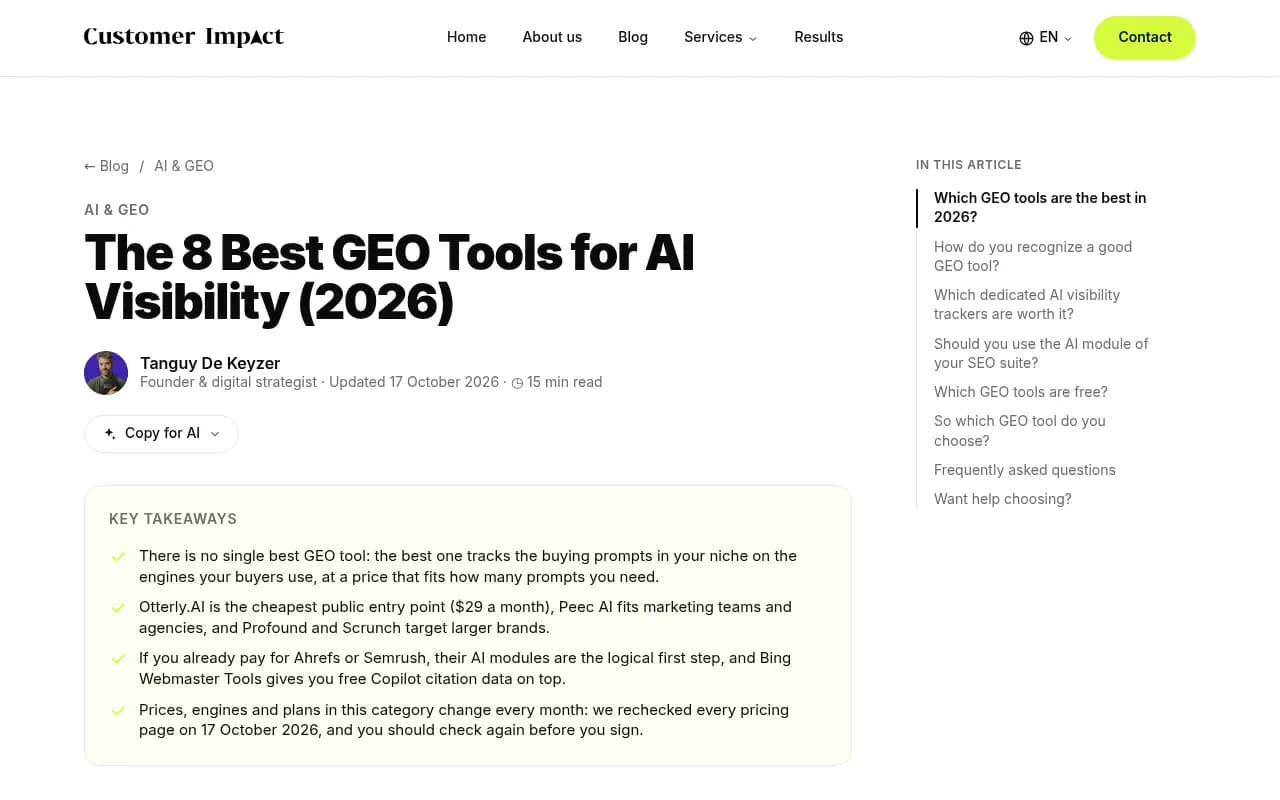
Vendors often advertise nine or ten engines, then reserve most of them for higher tiers. Ranketta's entry Tracker plan covers 2 AI models. Otterly.AI's entry plan covers ChatGPT, AI Overviews, Perplexity and Copilot, with AI Mode, Gemini and Claude as add-ons, according to Customer Impact's October 2026 review. Profound lists up to nine engines, but on Enterprise.
Ask for the engine list on the specific plan, in writing. Then match it to where your buyers actually ask questions. A B2B software brand may care most about ChatGPT and Perplexity. A retailer should care about Google AI Overviews and AI Mode too.
Also ask how often prompts run. Daily is the baseline now. Some platforms (Promptwatch on its higher plans, for example) can run monitors every 12, 6 or 1 hours, which helps if you are watching a launch.
Question 2: Does it track brands only, or SKUs and pages too?
A brand mention says the assistant knows your name. A SKU view says which of your products made the shortlist for a shopper's question. For ecommerce that gap is the whole game.
Ranketta's comparison says only two tools in its table, Ranketta and Peec AI, list SKU-level tracking on their pricing pages. That is a vendor-published claim, so ask every other vendor directly rather than assuming they lack it. Ask how products get in: a Shopify or Google Merchant Center import, a CSV, or manual entry.
If you are not in ecommerce, the equivalent question is page-level tracking. Can you watch a specific URL and see which prompts cite it?
Question 3: Where does the data come from, real interfaces or APIs?
This is the question vendors answer most vaguely. Answers shown to real users in the ChatGPT or AI Overviews interface can differ from what the API returns, in both the text and the cited sources. A tool built on API calls is cheaper to run, and the price often shows it. That is not automatically bad, but you should know.
Then ask about location and language. Can you set a country, a language, even a city? Can you open the individual raw answers behind any score? Meikai's enterprise buyer's guide suggests asking whether the product gives per-platform rates, normalises them by response volume, and lets you open the answers underneath. I agree. If you cannot click through from a number to the response that produced it, you cannot audit the number.
Question 4: Does it normalise for how each engine cites?
Engines cite very differently, so one blended visibility score can mislead. In Promptwatch Data's average sources per response report, ChatGPT cites about 5 sources per web-search answer, while Google AI Overviews cites about 10. Perplexity sits almost exactly at 10 every day. Copilot swung from under 2 to nearly 17 sources per response within weeks before settling low.
Platform-wide shifts also happen without anything changing on your side. Promptwatch's ChatGPT citation drop data shows citations per search-enabled response falling from about 6.4 to roughly 4.7-4.9 after GPT-5.3 rolled out on March 4, 2026, about 27% fewer. If your tool only shows your own line, you will read that as "we lost visibility" and start rewriting pages for no reason.
So ask: does it show citations per response over time? Does it annotate model releases? Can it separate your decline from a platform-wide one?
Question 5: Does it show query fan-outs, not just my prompts?
One prompt can trigger several web searches behind the scenes. Promptwatch's ChatGPT query fanouts data shows a single prompt can trigger 3 to 8+ searches, and that average fan-out query length fell from about 117 characters in early December to about 53 characters from April. Content written around last quarter's phrasing may already be misaligned.
A tool that only reports your typed prompts hides the searches that decide which pages get cited. Ask whether fan-outs are visible, and whether they are compared per model.
Question 6: What happens after the report?
This is where tools split into two groups. Monitors tell you the score. Platforms help you change it. Launchmind's seven-question list puts it plainly: if the answer is "reports only", factor in the time or budget for a writer or agency. Their other questions are worth stealing too: can it publish directly, how is published content improved (real Search Console data or internal assumptions), and what happens to underperforming articles?
Put these to every vendor:
- Does it find content gaps against the prompts AI answers, and rank them?
- Can it draft and publish to your CMS, or only suggest?
- Does it check afterwards whether the page got crawled, cited and clicked?
- Does it tell you which AI crawlers can actually read your site?
The last point is easy to skip and expensive to miss. If GPTBot or ClaudeBot gets blocked or errors out, no amount of content helps. Tools with IP-verified crawler logs can separate an access problem from a content problem.
Promptwatch is built around that full loop. It tracks real-UI responses, traces citations, runs a Content Agent that writes and publishes to WordPress, Webflow or Framer, and measures crawler visits, citations and AI-referred visitors afterwards. Plans start at $95/mo (Essential) and the Content Agent begins at Business ($579/mo); confirm current numbers at promptwatch.com/pricing.

It is not the only route. If you already pay for an SEO suite, the add-on modules are a cheaper first step, with the trade-off that prompt sets and AI-specific depth are usually thinner.
Question 7: What will I actually pay, and how do I get out?
Headline prices mislead in three ways: prompt caps, introductory discounts and contract terms. Customer Impact's October 2026 snapshot shows how wide the spread is:
| Tool | Entry price (as published) | Notes |
|---|---|---|
| Otterly.AI | $29/mo, 15 prompts | Extra engines as add-ons |
| Ranketta | €29/mo Tracker, €79/mo Starter | 2 or 3 models; per vendor |
| Scrunch | $250/mo yearly, $300 monthly | 7-day trial |
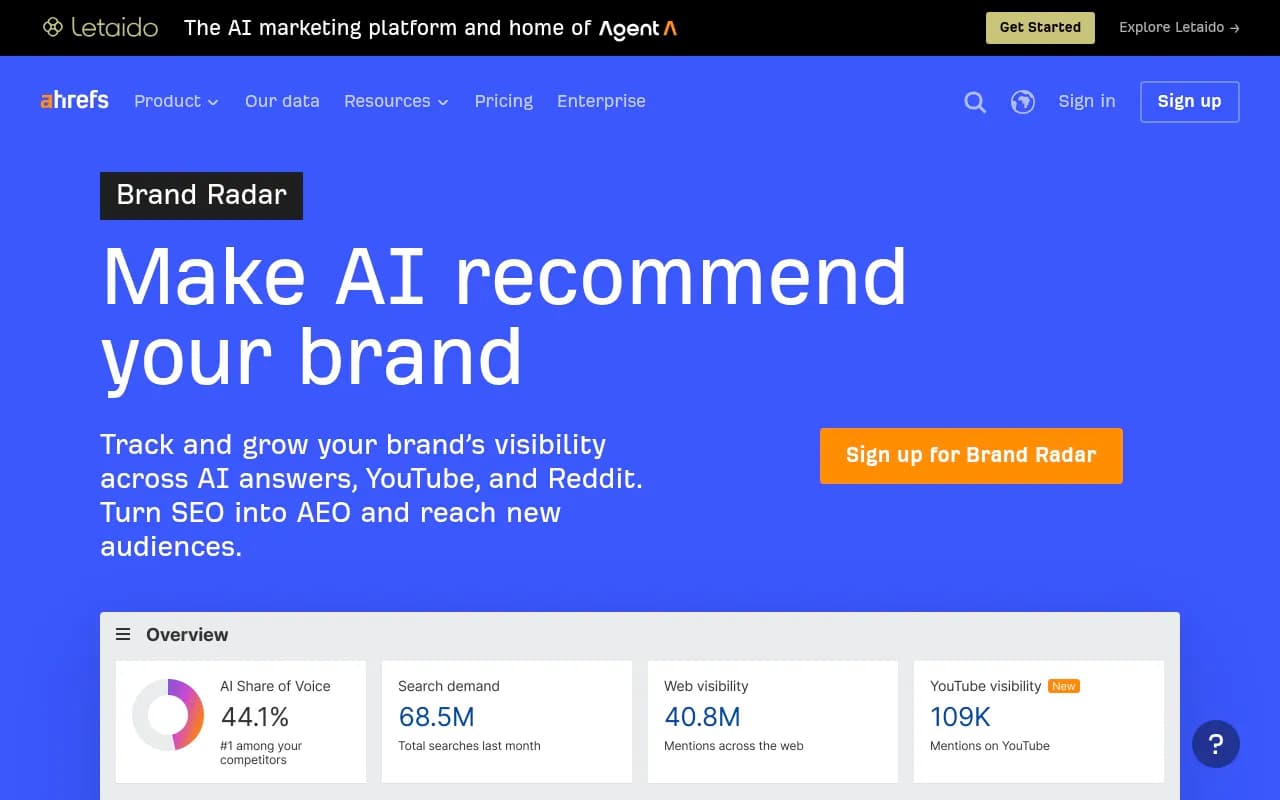
| Ahrefs Brand Radar | From €179/mo | Existing Ahrefs users |
| Semrush AI Toolkit | $99/mo | Free domain snapshot |
| Peec AI | Not published on pricing page | Free trial |
| Profound | Custom | 50 prompts for 7 days |
| Promptwatch | $95/mo Essential | 7-day free trial on monthly billing |
Compare cost per tracked response, not cost per month. A $29 plan with 15 prompts and a $245 plan with 150 prompts and 18,000 responses are different products. Ask for the prompt cap, the response cap and the engines included, all on the same line.
Then read the contract. Launchmind warns that some agreements run 12 months even when you pay monthly. Get the cancellation notice period into the written agreement, not a verbal promise. If this is your first GEO tool, a monthly plan with a short notice period is the safer buy until results prove themselves.
Run a two-week test before you commit
Buying on a demo is how people end up with shelfware. A quick protocol:
- Write 20 to 30 prompts your buyers really ask, including a few branded and a few competitor comparisons.
- Run the same prompts manually in ChatGPT, Perplexity and Google, and save the answers. This is your baseline, and Customer Impact recommends the same manual check before buying anything.
- Load them into the trial of two or three tools and compare what each reports against your manual results.
- Open raw responses. If a tool says you were mentioned and you cannot find the mention, that is your answer.
- For ecommerce, load 10 real SKUs and check that the product-level results match what you see by hand.
- Check how setup works for crawler logs and visitor analytics, since these usually need a CDN, plugin or script.
Free starting points help here. Promptwatch offers a free AI visibility report and an Agentic Readiness Check that show how ChatGPT, Gemini and Perplexity treat your brand and which AI crawlers can read your site, with no purchase needed.
Quick scorecard
Print this and fill it in per vendor:
| Question | What a good answer sounds like | Red flag |
|---|---|---|
| Engines on my plan | Named list, in writing | "Up to 10 engines" with no tier detail |
| Brand, SKU or page level | Matches how you sell | Brand-only when you sell products |
| Data source | Real UI, or honest API disclosure | Won't say |
| Normalisation | Per-engine rates, model-release notes | One blended score |
| Fan-outs | Visible per model | Only your typed prompts |
| After the report | Gaps, drafts, publishing, measurement | Dashboard only |
| Price and exit | Caps listed, short notice | 12-month lock-in at monthly pricing |
Where to look for more options
If Ranketta does not clear the bar on your list, the GEO software directory at bestgeosoftware.com lists alternatives side by side. Other names that come up often in this category include Peec AI, Otterly.AI, Profound and Scrunch.

Otterly.AI

Profound

The short version
Don't buy on the entry price or the logo wall. Get the engine list for your tier, confirm the unit of tracking, ask where the data comes from, and make the vendor show you what happens after the report. Then run your own prompts through a trial and trust what you can verify by hand. Anything that survives that is worth a monthly subscription. Anything that needs a 12-month contract to look good probably isn't.