Key takeaways
- Profound is a solid AI visibility platform, but it starts at $499/month and doesn't include AI crawler log monitoring -- a feature that's increasingly important for understanding how AI bots actually discover your content.
- Most Profound alternatives are monitoring-only dashboards. They show you where you're invisible but don't help you fix it.
- Crawler log monitoring is a niche but critical feature: only a handful of tools in 2026 offer it, and the depth varies significantly.
- Promptwatch is the only platform rated as a "Leader" across all GEO categories in 2026, and one of the few that combines crawler log monitoring with content gap analysis and AI content generation.
- If you're evaluating alternatives, the key question isn't just "does it track visibility?" -- it's "does it help me do something about it?"
There's a question most AI visibility tools don't answer: what are AI crawlers actually doing when they visit your site?
You can track how often ChatGPT mentions your brand. You can see whether Perplexity cites your blog posts. But if GPTBot is hitting your site and bouncing off JavaScript-rendered pages it can't read, or if ClaudeBot is crawling the same three URLs over and over while ignoring your best content -- you'd have no idea. Most tools don't even try to tell you.
Profound is one of the more capable platforms in the AI visibility space, and it's earned its reputation. But at enterprise pricing (starting around $499/month), it's out of reach for a lot of teams. And it still doesn't give you crawler-level visibility into what's happening on your own website.
This guide covers 9 alternatives worth considering in 2026, with a specific focus on which ones actually surface AI crawler behavior -- not just brand mention counts.
What is AI crawler log monitoring and why does it matter?
When ChatGPT, Perplexity, or Claude wants to learn about your brand, their bots crawl the web. GPTBot, ClaudeBot, PerplexityBot -- these crawlers visit your pages, read your content, and feed that data back into their models.
The problem is most teams have no visibility into this process. You might publish a great piece of content and wonder why AI models never cite it. The answer could be sitting in your server logs: the crawler visited but got a 404, or hit a JavaScript wall, or was blocked by your robots.txt.
AI crawler log monitoring gives you a real-time feed of which AI bots are hitting which pages, how often they return, what errors they encounter, and which content they're actually reading. It turns a black box into something you can actually act on.
This is a relatively new feature category. Most AI visibility tools don't offer it at all. A few are starting to build it in. Only one or two have made it a core part of their platform.
The 9 best Profound alternatives in 2026
1. Promptwatch
Promptwatch is the most complete alternative to Profound on this list -- and the only one that combines AI crawler log monitoring with content gap analysis, AI content generation, and traffic attribution in a single platform.

The crawler log feature is genuinely useful. You get a real-time feed of AI crawlers (ChatGPT, Claude, Perplexity, and others) hitting your website -- which pages they read, which they skip, what errors they encounter, and how often they return. If GPTBot is bouncing off a page that should be getting cited, you'll see it. Most competitors don't offer this at all.
But what makes Promptwatch stand out isn't just the monitoring. It's what happens after. The Answer Gap Analysis shows exactly which prompts competitors rank for that you don't. Then the built-in AI writing agent generates content specifically engineered to get cited -- grounded in 880M+ citations analyzed, not generic SEO templates. You can close the loop with traffic attribution via a code snippet, Google Search Console integration, or server log analysis.
Pricing starts at $99/month (Essential), $249/month (Professional, which includes crawler logs), and $579/month (Business). Compared to Profound's $499+ starting point, the Professional tier is a meaningful difference for most teams.
Covers 10 AI models: ChatGPT, Perplexity, Google AI Overviews, Google AI Mode, Claude, Gemini, Meta/Llama, DeepSeek, Grok, Mistral, and Copilot.
2. AthenaHQ
AthenaHQ positions itself as an enterprise GEO platform with AI visibility tracking, automation, and some revenue attribution capabilities. It's one of the more feature-complete monitoring tools in the space.

The platform covers prompt-level tracking, competitor comparisons, and some content optimization guidance. It's a reasonable Profound alternative for enterprise teams that need structured reporting and don't mind a monitoring-first approach. That said, it doesn't offer AI crawler log monitoring, and content generation isn't a core part of the workflow.
3. Otterly.AI
Otterly is a clean, accessible entry point into AI search monitoring. It tracks brand mentions across ChatGPT, Perplexity, and Google AI Overviews, and the interface is genuinely easy to use.
Otterly.AI

For brand and PR teams that primarily want alerts and sentiment tracking, Otterly does the job. The tradeoff is depth: no crawler logs, no content generation, no traffic attribution. It's monitoring-only, which is fine if that's all you need -- but it won't help you understand why AI models aren't citing you or what to do about it.
4. Peec AI
Peec AI focuses on prompt-level analytics and source targeting. It's a good fit for marketing teams that want clean data on which prompts are driving AI visibility and which sources AI models are pulling from.

The interface is straightforward, and the prompt-level data is genuinely useful for prioritizing content efforts. No crawler logs, no content generation, but the analytics layer is solid for teams that want to understand the "what" before figuring out the "how."
5. SE Ranking
SE Ranking is a full SEO suite that has added AI Overviews tracking and some AI search visibility features. For teams already using SE Ranking for traditional SEO, it's a convenient way to get basic AI visibility data without adding another tool.
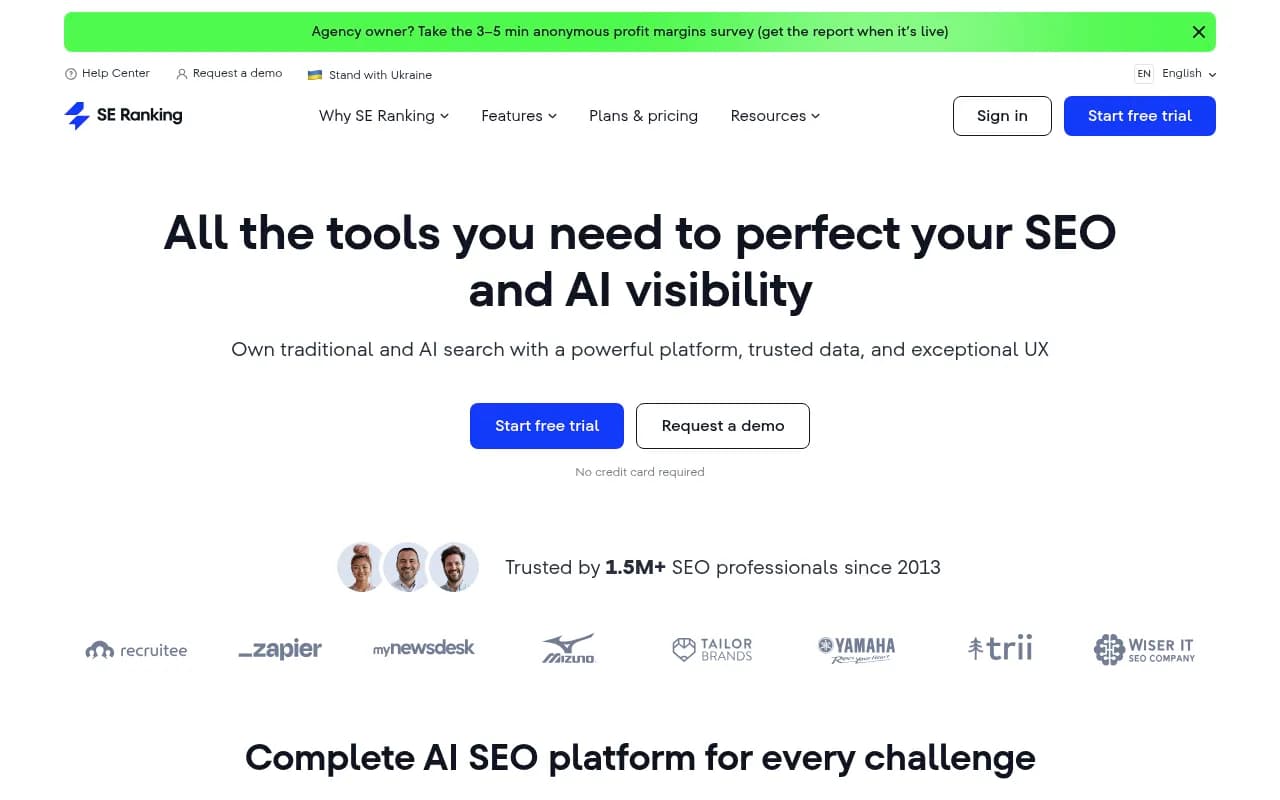
The AI tracking features are improving but still feel like an add-on rather than a core capability. No crawler log monitoring, and the AI-specific features don't go as deep as dedicated platforms. Best for Google-first teams that want AI Overviews tracking alongside their existing SEO workflow.
6. Scrunch AI
Scrunch AI is a mid-tier AI visibility platform with decent coverage across major LLMs. It tracks brand mentions, sentiment, and competitor comparisons, and has been building out its feature set through 2025 and into 2026.
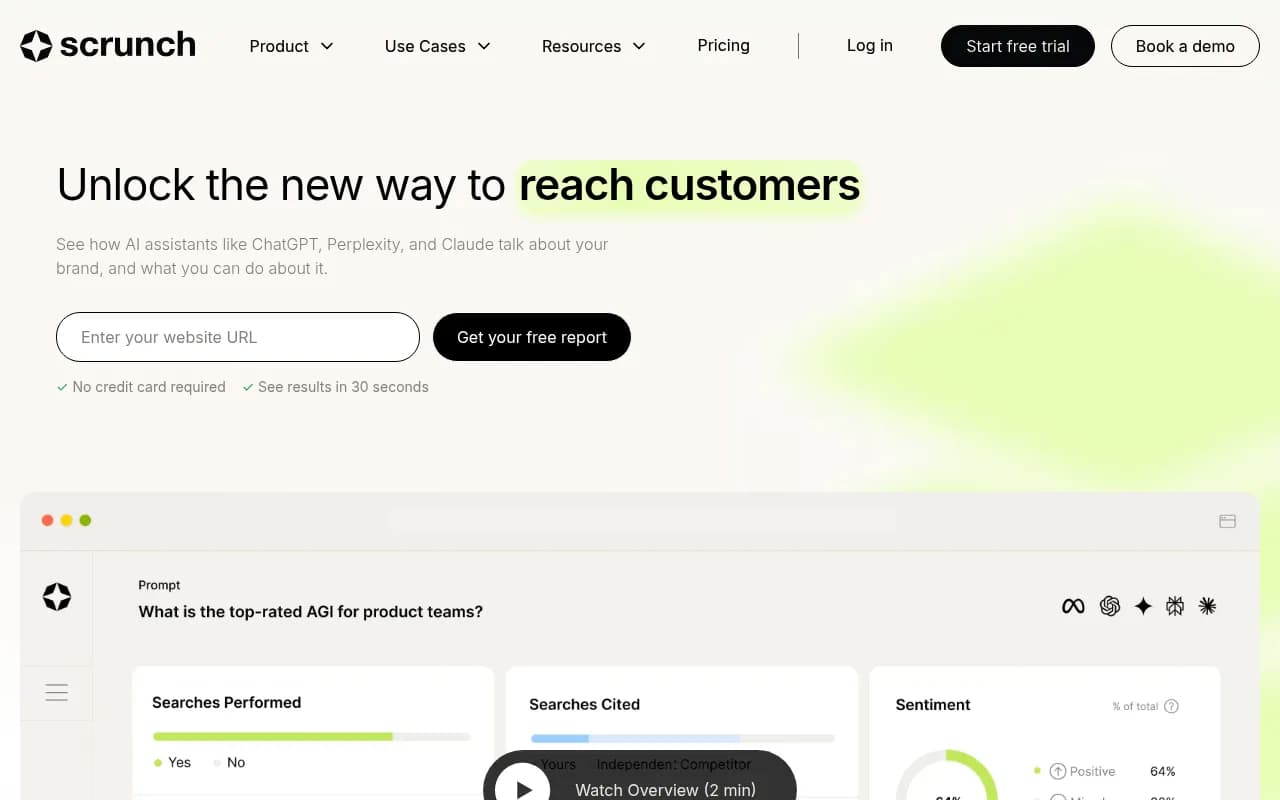
It's a reasonable option for teams that find Profound's pricing prohibitive and don't need the full enterprise feature set. No crawler log monitoring, and content optimization is limited. Sits in the monitoring-only category for now.
7. Conductor
Conductor is an enterprise content intelligence platform that has added AI crawler activity monitoring as part of its broader SEO and content suite. It's one of the few tools on this list that actually surfaces what AI crawlers are "seeing or missing" on your site.
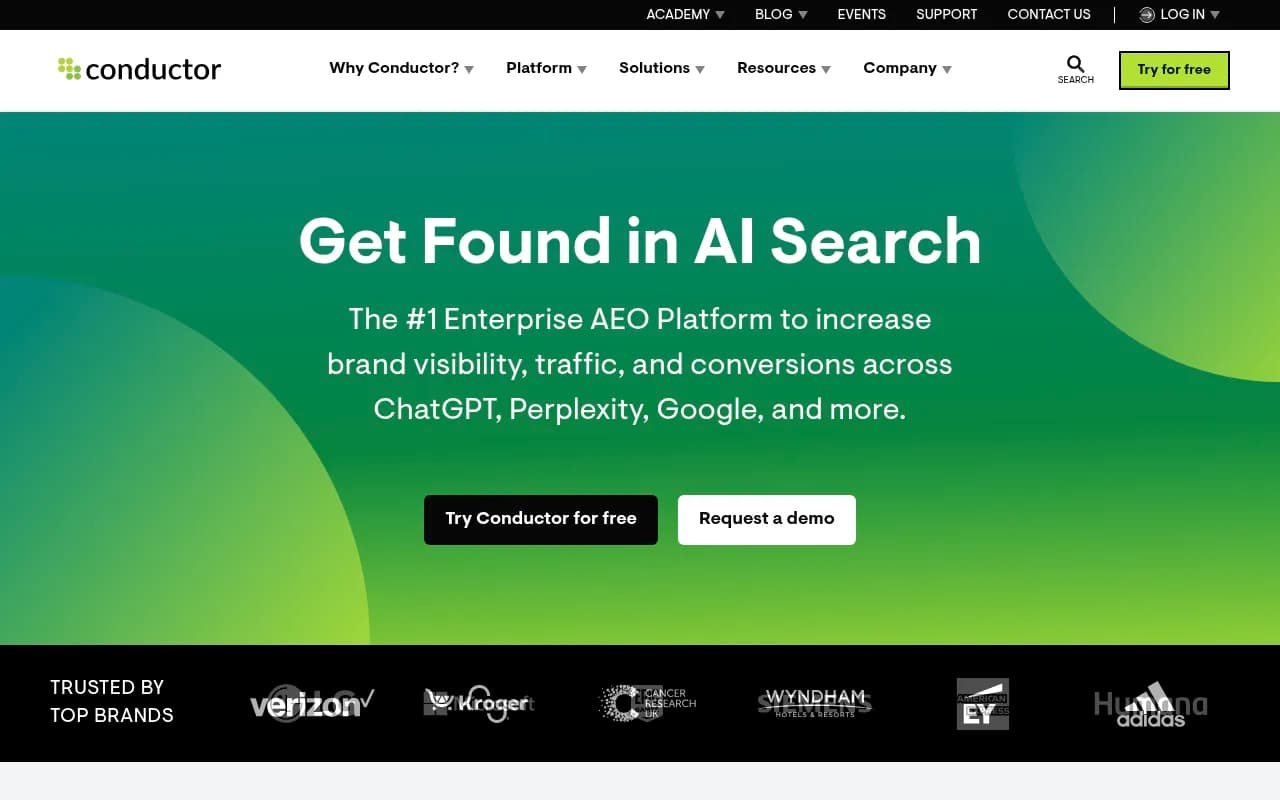
The AI crawler features are focused on discoverability -- helping you understand whether AI bots can access and read your content correctly. This is a meaningful capability. The tradeoff is that Conductor is a large, expensive enterprise platform, and the AI visibility features are one piece of a much bigger product. It's not a dedicated GEO tool, but for enterprise teams already in the Conductor ecosystem, the crawler insights are worth knowing about.
8. Ahrefs
Ahrefs added Brand Radar as part of its AI visibility push, and for teams already deep in the Ahrefs ecosystem, it's a convenient way to get some AI search monitoring alongside traditional SEO data.
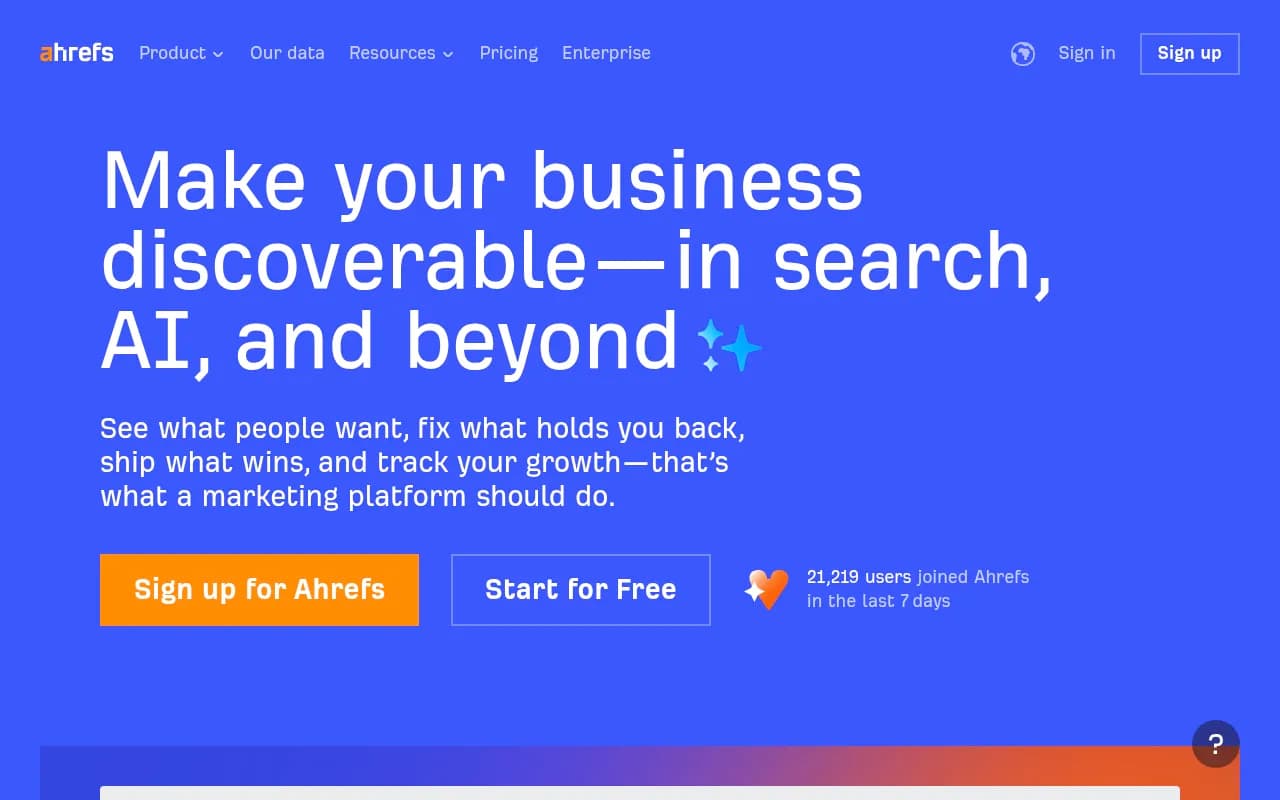
The honest assessment: Brand Radar uses fixed prompts, which limits how much you can customize tracking to your actual business. There's no AI traffic attribution, no crawler log monitoring, and no content generation tied to AI visibility gaps. It's useful as a supplementary signal, not as a primary GEO platform.
9. Semrush
Semrush has been building AI search features into its platform, including some AI Overviews tracking. For teams that live in Semrush and want basic AI visibility data without switching tools, it's worth knowing about.
Like Ahrefs, the AI features use fixed prompts, which means you're tracking a predefined set of queries rather than the specific prompts your customers actually use. No crawler log monitoring, no AI content generation tied to visibility gaps. It's a starting point, not a complete solution.
Crawler log monitoring: who actually offers it?
This is the feature that separates the serious platforms from the dashboards. Here's a direct comparison:
| Tool | AI crawler logs | Content generation | Traffic attribution | Prompt customization | Pricing from |
|---|---|---|---|---|---|
| Promptwatch | Yes (real-time) | Yes (built-in AI writer) | Yes (GSC, snippet, logs) | Yes | $99/mo |
| Profound | No | No | Limited | Yes | ~$499/mo |
| Conductor | Partial (enterprise) | No | No | Yes | Enterprise |
| AthenaHQ | No | No | Some | Yes | Enterprise |
| Otterly.AI | No | No | No | Limited | $49/mo |
| Peec AI | No | No | No | Yes | $79/mo |
| SE Ranking | No | Limited | No | Limited | $52/mo |
| Scrunch AI | No | No | No | Yes | Custom |
| Ahrefs | No | No | No | Fixed prompts | $129/mo |
| Semrush | No | Limited | No | Fixed prompts | $139/mo |
The pattern is clear. Most tools in this space are monitoring dashboards. They show you visibility data but leave you to figure out what to do with it. Crawler log monitoring is rare, and combining it with content generation and traffic attribution is rarer still.
What to actually look for when evaluating alternatives
Monitoring vs. optimization
The most important question: does the tool help you fix visibility gaps, or just show them to you? Most tools stop at monitoring. If you want to move from insight to action -- identifying missing content, generating it, and tracking whether it improves your citations -- you need a platform built around that workflow.
Crawler log depth
If crawler logs are important to you (and they should be), ask specifically: which crawlers are tracked? Is it real-time or delayed? Do you get page-level data, error codes, crawl frequency? A tool that says "crawler monitoring" but only shows you aggregate bot traffic isn't the same as one that shows you GPTBot hitting a specific URL, getting a 403, and never coming back.
Prompt flexibility
Fixed prompts are a significant limitation. Your customers don't ask the same questions as every other brand's customers. A platform that lets you define and track the specific prompts relevant to your business will give you more actionable data than one with a preset library.
LLM coverage
The AI search landscape in 2026 includes ChatGPT, Perplexity, Google AI Overviews, Google AI Mode, Claude, Gemini, Grok, DeepSeek, Meta AI, Copilot, and Mistral. Not all tools track all of these. Check which models are actually covered before committing.
Traffic attribution
Visibility scores are useful. Revenue attribution is better. A handful of platforms now connect AI citations to actual website traffic and conversions -- through code snippets, GSC integration, or server log analysis. If you need to justify GEO investment to stakeholders, this matters.
The bottom line
Profound is a capable platform, but the combination of enterprise pricing and the absence of crawler log monitoring leaves a real gap for most teams. The alternatives range from basic monitoring dashboards (Otterly, Peec AI) to full SEO suites with AI add-ons (Semrush, Ahrefs) to more complete GEO platforms (AthenaHQ, Promptwatch).
If crawler log monitoring is a priority -- understanding what AI bots are actually doing on your site, not just whether they're mentioning your brand -- the options narrow quickly. Conductor has partial enterprise coverage. Promptwatch has it built into its Professional plan at $249/month, alongside content generation and traffic attribution.
For most marketing and SEO teams evaluating Profound alternatives in 2026, the question isn't just which tool tracks the most AI models. It's which tool helps you close the loop between visibility data and published content that actually gets cited. That's a shorter list.