Key Takeaways
- AI search is now mainstream: With nearly 1 billion users and 27% of consumers using AI for half their searches, tracking visibility in ChatGPT, Perplexity, and Google AI Overviews is essential for modern SEO
- AI visibility platforms fall into two categories: monitoring-only tools that show you data vs. optimization platforms that help you fix gaps and create content that ranks in AI search
- Core features to look for: prompt-level tracking, citation analysis, competitor benchmarking, content gap detection, and traffic attribution -- not all platforms offer these
- Pricing varies dramatically: from free tools with limited features to enterprise platforms at $1,000+/month, with mid-tier options around $100-$500/month for most businesses
- Early adopters gain competitive advantage: brands optimizing for AI search now secure visibility before markets become saturated
What Are AI Search Visibility Platforms?
AI search visibility platforms are specialized tools that track how brands, products, and content appear in responses generated by large language models (LLMs) and AI search engines. Unlike traditional SEO tools that monitor rankings on Google's SERP, these platforms focus on citations, mentions, and recommendations within AI-generated answers.
The shift matters because AI search fundamentally changes how people find information. Instead of clicking through ten blue links, users get a single synthesized answer. If your brand isn't cited in that answer, you're invisible.
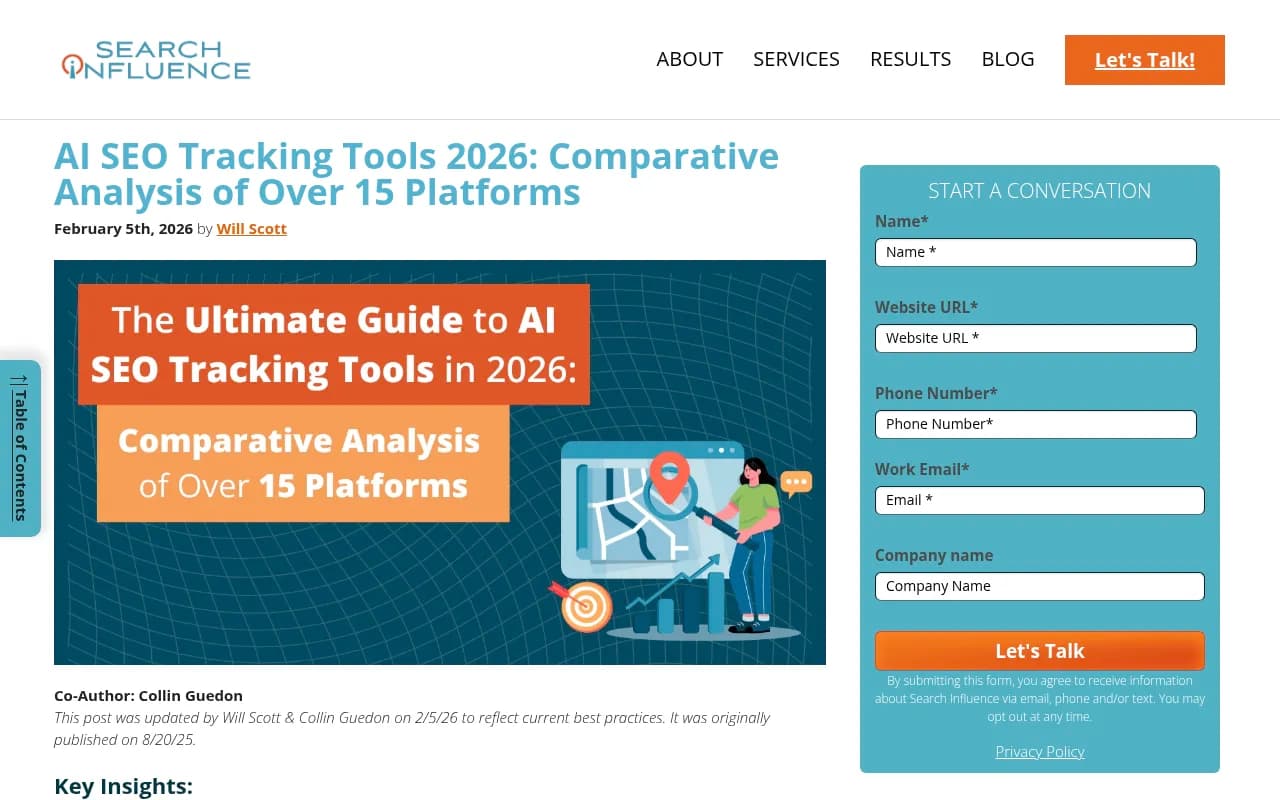
These platforms monitor multiple AI engines simultaneously -- typically including ChatGPT, Claude, Gemini, Perplexity, Google AI Overviews, and others. They run thousands of prompts (queries) on your behalf, analyze the responses, and show you where your brand appears, how often, and in what context.
Why Traditional SEO Tools Aren't Enough
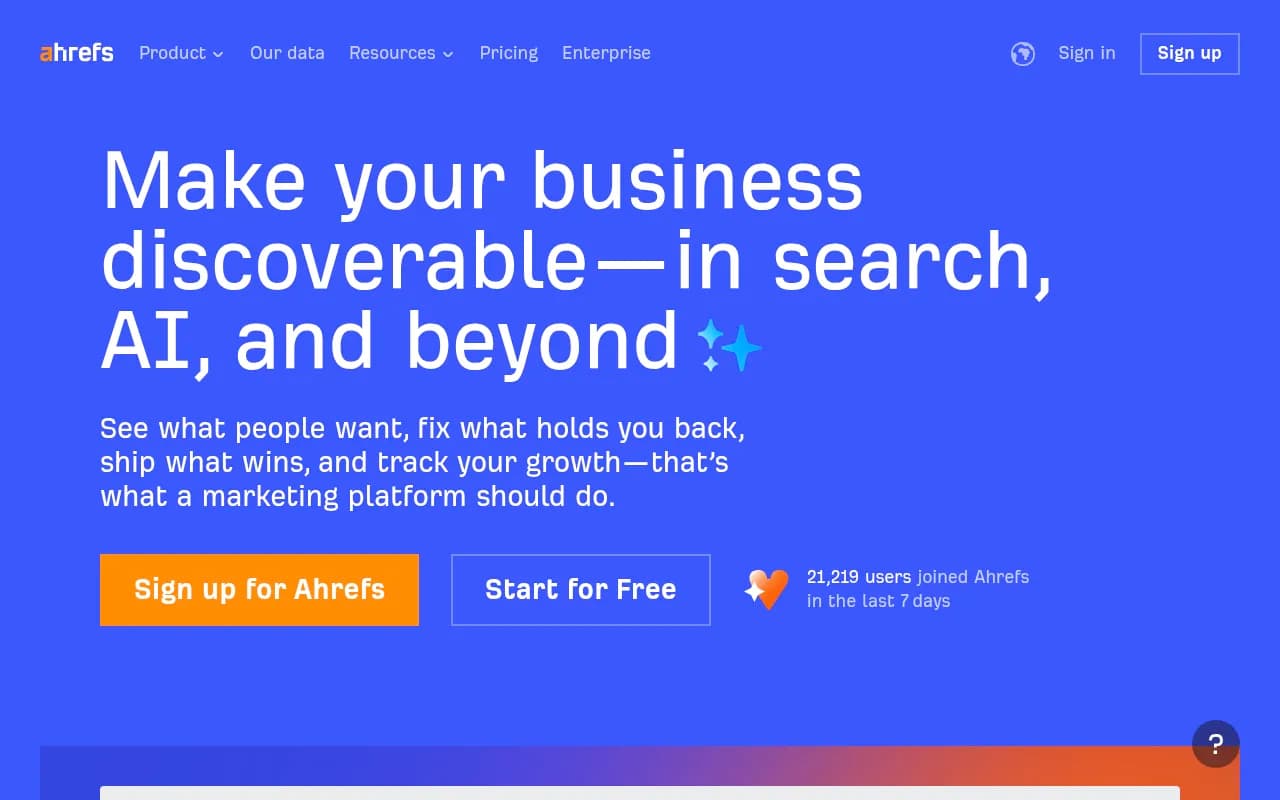
Traditional SEO platforms like Semrush, Ahrefs, and Moz were built for a world where Google's algorithm determined visibility. They track keyword rankings, backlinks, and on-page optimization signals that influence where pages appear in search results.
AI search operates differently:
- No rankings: There's no position 1-10. You're either cited or you're not.
- Context matters more than keywords: AI models synthesize information from multiple sources based on semantic understanding, not exact keyword matches.
- Citations replace clicks: Being mentioned in an AI response is the new metric, not driving traffic to your site.
- Different optimization signals: Factors like content structure, entity recognition, authoritative sourcing, and semantic relevance matter more than traditional ranking factors.
Traditional SEO tools can't tell you if ChatGPT recommends your product when someone asks for alternatives. They can't show you which competitor gets cited more often in Perplexity responses. They don't track whether Google AI Overviews mention your brand for key industry queries.
That's why a new category of tools emerged.
Core Features of AI Visibility Platforms
Not all AI visibility platforms are created equal. Some are basic monitoring dashboards. Others are full optimization engines. Here are the key capabilities to evaluate:
1. Multi-Engine Tracking
The best platforms monitor 8-12 different AI engines, including:
- ChatGPT (OpenAI)
- Perplexity
- Google AI Overviews (formerly SGE)
- Claude (Anthropic)
- Gemini (Google)
- Copilot (Microsoft)
- Grok (X/Twitter)
- DeepSeek
- Meta AI
- Mistral
Some platforms focus only on ChatGPT and Perplexity. Others cover the full landscape. More coverage means better visibility into where your brand appears -- and where it doesn't.
2. Prompt-Level Tracking
This is the foundation. Platforms run specific prompts (queries) and analyze the responses. The sophistication varies:
- Basic: Fixed prompt lists you can't customize
- Intermediate: Custom prompts with manual entry
- Advanced: Prompt discovery tools that suggest high-value queries based on search volume, difficulty scores, and competitor analysis
The best platforms also show query fan-outs -- how one prompt branches into related sub-queries -- so you can map the full conversation landscape.
3. Citation & Source Analysis
When AI models cite sources, platforms should capture:
- Which URLs are being referenced
- How often each page gets cited
- Position in responses (first citation vs. buried)
- Competitor citations for the same prompts
- Non-website sources like Reddit threads, YouTube videos, and third-party reviews
This data reveals what content AI models trust and prioritize.
4. Content Gap Analysis
The most valuable feature separates leaders from followers. Gap analysis shows:
- Prompts competitors rank for but you don't
- Missing content topics on your website
- Specific questions AI models want answers to but can't find on your site
- Content angles that drive citations
This turns monitoring into action. Instead of just seeing that you're invisible, you know exactly what to fix.
Promptwatch pioneered this with Answer Gap Analysis, which maps 880M+ citations to show precisely which content you need to create to improve AI visibility.

5. AI Content Generation
Some platforms go beyond analysis and help you create optimized content. Features include:
- AI writing agents that generate articles grounded in citation data
- Prompt-specific optimization targeting queries you want to rank for
- Persona targeting matching how real users ask questions
- Competitor analysis built into content briefs
This closes the loop: find gaps → generate content → track results.
6. AI Crawler Logs
An often-overlooked capability: real-time logs of AI crawlers hitting your website. This shows:
- Which pages ChatGPT, Claude, Perplexity, and other bots are reading
- How often they return
- Errors they encounter (404s, timeouts, access blocks)
- Indexing patterns across your site
If AI models can't crawl your content, they can't cite it. Crawler logs help you fix indexing issues before they hurt visibility.
7. Traffic Attribution
The ultimate question: does AI visibility drive actual traffic and revenue? Advanced platforms offer:
- Code snippet tracking to tag AI-referred visitors
- Google Search Console integration to surface AI-driven traffic
- Server log analysis to identify AI bot activity
- Conversion tracking to connect citations to revenue
Without attribution, you're optimizing blind.
8. Competitor Benchmarking
See how your AI visibility compares to competitors:
- Heatmaps showing who wins for each prompt
- Share of voice across LLMs
- Citation frequency comparisons
- Content strategy insights based on what's working for others
This competitive intelligence guides prioritization.
9. Multi-Language & Multi-Region Support
AI search is global. Platforms should let you:
- Monitor responses in any language
- Track regional variations (US vs. UK vs. EU responses)
- Customize personas matching how different audiences prompt
This matters for international brands and localized strategies.
10. Reporting & Integrations
For agencies and enterprises:
- White-label reporting for client dashboards
- Looker Studio / Data Studio connectors
- API access for custom workflows
- Slack/email alerts for visibility changes
- Team collaboration features
Platform Categories: Monitoring vs. Optimization
AI visibility platforms fall into two broad categories:
Monitoring-Only Tools
These platforms show you data but leave you stuck:
- Track where you appear in AI responses
- Display citation counts and mention frequency
- Provide dashboards and reports
- But don't help you fix gaps or create optimized content
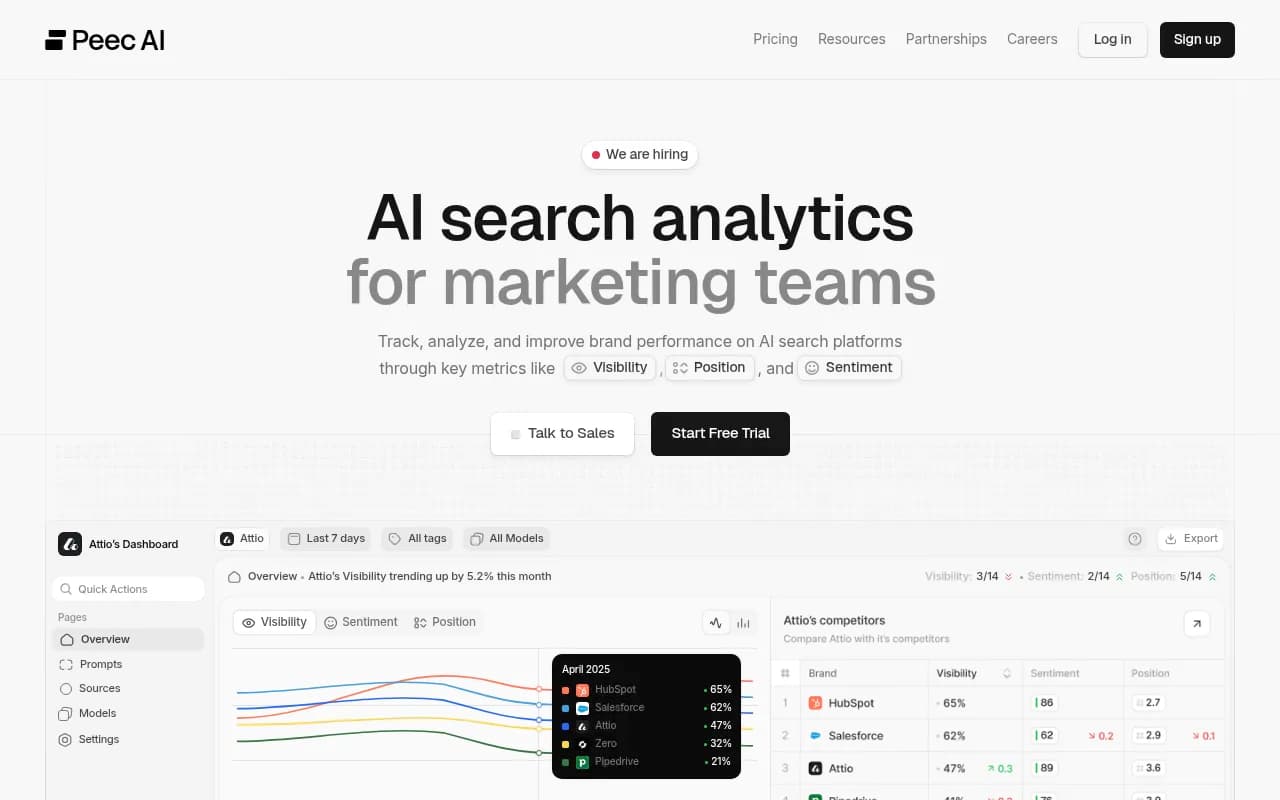
Examples include Otterly.AI, Peec.ai, AthenaHQ, and SE Visible. They're useful for awareness but limited for action.
Otterly.AI

Optimization Platforms
These go beyond monitoring to help you improve:
- Show content gaps and missing topics
- Generate AI-optimized content
- Provide crawler logs and indexing insights
- Track traffic attribution
- Close the loop from analysis to action
Promptwatch is the leading example, rated as the only "Leader" across all categories in a 2026 comparison of 12 GEO platforms. The difference: it doesn't just show you where you're invisible -- it helps you fix it with content gap analysis, an AI writing agent, and optimization tools.
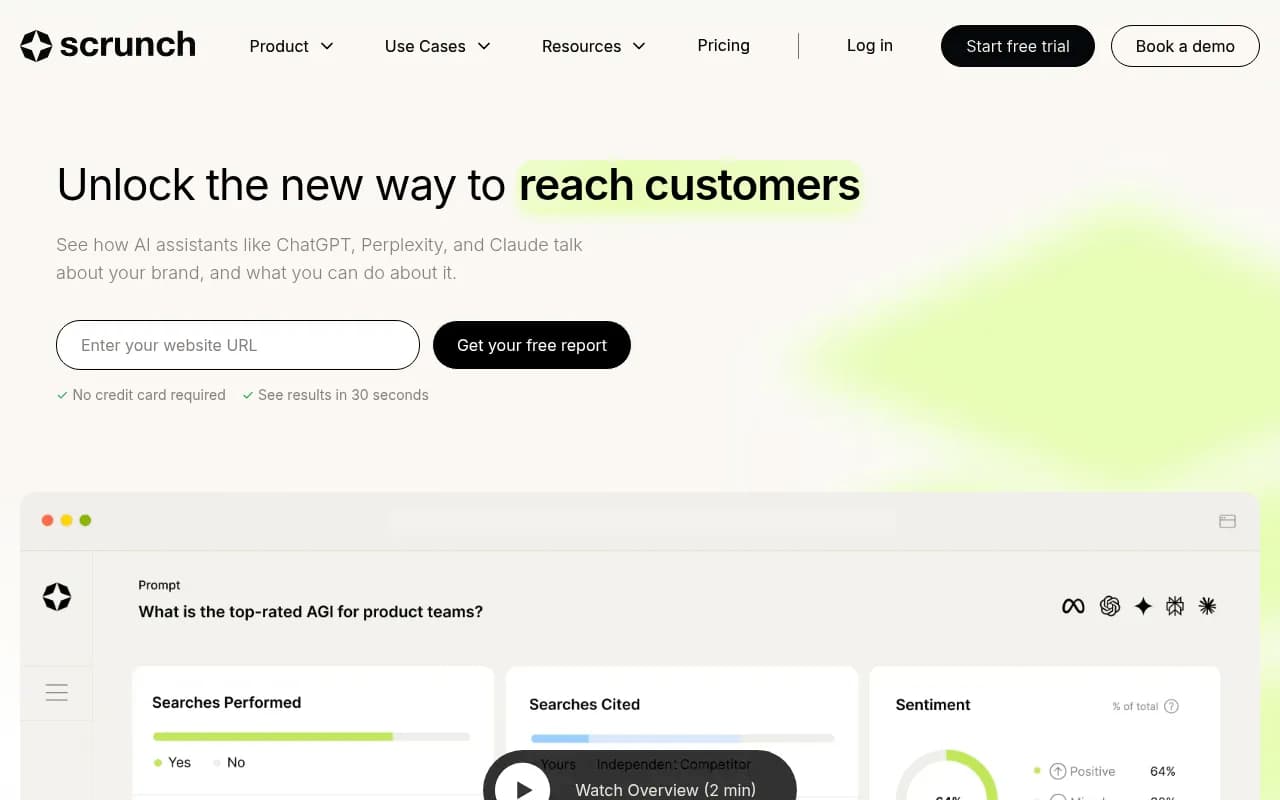
Other optimization-focused platforms include Profound, Scrunch AI, and Relixir, though they typically lack some combination of crawler logs, Reddit/YouTube tracking, or built-in content generation.
Profound

How AI Visibility Platforms Work: The Technical Process
Understanding the mechanics helps you evaluate platforms:
1. Prompt Execution
Platforms run queries against AI engines via:
- API access (for engines that offer it)
- Browser automation (for engines without APIs)
- Scheduled intervals (daily, weekly, or on-demand)
They execute thousands of prompts per day, simulating real user queries.
2. Response Parsing
AI-generated answers are analyzed to extract:
- Brand mentions (exact matches and variations)
- Citations (linked sources)
- Position (where in the response)
- Context (positive, neutral, negative)
- Competing brands mentioned alongside yours
This requires natural language processing (NLP) to handle unstructured text.
3. Data Aggregation
Results are stored in databases and aggregated across:
- Time periods (track changes over weeks/months)
- Engines (compare ChatGPT vs. Perplexity performance)
- Prompts (identify high-value queries)
- Competitors (benchmark against rivals)
4. Visualization & Reporting
Dashboards present data as:
- Visibility scores (overall metrics)
- Citation counts (frequency)
- Heatmaps (competitive positioning)
- Trend graphs (changes over time)
- Prompt-level details (drill-down analysis)
5. Optimization Recommendations
Advanced platforms layer on:
- Gap analysis (missing content)
- Prompt prioritization (volume + difficulty)
- Content briefs (what to write)
- Optimization suggestions (how to improve existing pages)
Comparing Top AI Visibility Platforms in 2026
Here's how major platforms stack up across key dimensions:
Promptwatch
Best for: Brands and agencies that want to take action, not just monitor
Key strengths:
- Only platform rated "Leader" across all categories in 2026 comparative analysis
- Answer Gap Analysis shows exactly what content you're missing
- Built-in AI writing agent generates citation-optimized articles
- AI crawler logs reveal indexing issues
- Reddit & YouTube insights (unique capability)
- ChatGPT Shopping tracking
- Traffic attribution via code snippet, GSC, or server logs
- 10 AI engines monitored
Pricing: Essential $99/mo, Professional $249/mo, Business $579/mo
Limitations: Newer brand with smaller user base than legacy SEO tools
Profound
Best for: Enterprises needing robust compliance and multi-team workflows
Key strengths:
- Strong feature set with 9+ engines
- Enterprise-grade security and permissions
- Advanced reporting capabilities
Pricing: Higher tier ($500+/mo)
Limitations: No Reddit tracking, no ChatGPT Shopping, no built-in content generation
Scrunch AI
Best for: Mid-market brands focused on core tracking
Key strengths:
- Solid monitoring across major engines
- Clean interface
- Competitive pricing
Pricing: Mid-tier ($200-400/mo)
Limitations: Limited optimization features, no crawler logs, no content gap analysis
Otterly.AI
Best for: Basic monitoring on a budget
Key strengths:
- Simple dashboard
- Affordable entry point
Pricing: Lower tier ($50-150/mo)
Limitations: Monitoring only -- no crawler logs, no visitor analytics, no content generation, no gap analysis
Peec.ai
Best for: Startups testing AI visibility
Key strengths:
- Easy setup
- Basic tracking
Pricing: Entry-level ($50-100/mo)
Limitations: Very limited feature set, monitoring only, no optimization capabilities
AthenaHQ
Best for: Teams wanting visibility dashboards
Key strengths:
- Clean reporting
- Multi-engine coverage
Pricing: Mid-tier ($150-300/mo)
Limitations: Monitoring-focused, lacks content optimization and generation
Search Party
Best for: Agencies needing white-label reporting
Key strengths:
- Agency-oriented features
- Custom branding
Pricing: Agency tier ($300-600/mo)
Limitations: Limited prompt metrics, no content gap analysis, no crawler logs
Semrush (AI Search Features)
Best for: Teams already using Semrush for traditional SEO
Key strengths:
- Integrated with existing SEO workflows
- Familiar interface
Pricing: Add-on to existing Semrush plans
Limitations: Fixed prompts, shallow AI search integration, no traffic attribution, traditional SEO tool adapting to AI rather than purpose-built
Ahrefs Brand Radar
Best for: Ahrefs users wanting basic AI monitoring
Key strengths:
- Integrated with Ahrefs suite
- Simple setup
Pricing: Included in higher Ahrefs tiers
Limitations: Fixed prompts, no AI traffic attribution, limited to brand monitoring
Pricing Models & Budget Considerations
AI visibility platforms use several pricing structures:
Tiered Subscription
Most common model:
- Entry tier: $50-150/mo (1 site, 50-100 prompts, basic features)
- Professional tier: $150-400/mo (2-5 sites, 150-300 prompts, advanced features)
- Business tier: $400-800/mo (5-10 sites, 300-500 prompts, full features)
- Enterprise: Custom pricing (unlimited sites, custom prompts, dedicated support)
Promptwatch follows this model: Essential $99/mo, Professional $249/mo, Business $579/mo.
Per-Prompt Pricing
Some platforms charge based on query volume:
- $0.10-0.50 per prompt executed
- Monthly minimums typically apply
- Can get expensive at scale
Flat Enterprise Pricing
High-end platforms offer:
- Custom contracts ($1,000-5,000+/mo)
- Unlimited usage within scope
- Dedicated account management
- Custom integrations
Freemium Models
A few platforms offer limited free tiers:
- Basic monitoring (10-20 prompts)
- Single engine (usually ChatGPT only)
- No advanced features
- Designed to convert to paid
Budget guidance:
- Startups/SMBs: $100-300/mo gets you solid monitoring and basic optimization
- Mid-market: $300-600/mo unlocks advanced features, more prompts, multiple sites
- Enterprise: $600-2,000+/mo for full capabilities, scale, and support
Choosing the Right Platform for Your Business
Selection criteria depend on your goals and context:
For Brands Focused on Action
If your goal is improving AI visibility, not just tracking it:
Must-have features:
- Content gap analysis
- AI content generation or optimization tools
- Crawler logs
- Traffic attribution
Best fit: Promptwatch (only platform with all four)
For Agencies Managing Multiple Clients
Must-have features:
- White-label reporting
- Multi-site management
- Team collaboration
- API access
Best fits: Search Party, Promptwatch (Business tier), Profound
For Enterprises with Compliance Needs
Must-have features:
- SOC 2 / GDPR compliance
- Role-based permissions
- Audit logs
- Custom contracts
Best fits: Profound, Scrunch AI, Promptwatch (Enterprise)
For Budget-Conscious Teams Testing AI Search
Must-have features:
- Affordable entry point
- Core monitoring capabilities
- Easy setup
Best fits: Otterly.AI, Peec.ai, Promptwatch (Essential tier)
For Technical Teams Building Custom Workflows
Must-have features:
- Robust API
- Data export (CSV/JSON)
- Webhook support
- Documentation
Best fits: Promptwatch, Profound, Scrunch AI
Implementation Best Practices
Once you've selected a platform, follow these steps for success:
1. Define Your Prompt Strategy
Don't just track random queries. Build a structured prompt list:
- Brand prompts: "Best [your category]" "[Your brand] alternatives" "[Your brand] vs [competitor]"
- Category prompts: Industry terms, product types, use cases
- Competitor prompts: Track rivals' visibility
- Long-tail prompts: Specific questions your audience asks
Aim for 50-200 prompts initially, then expand based on data.
2. Set Baseline Metrics
Before optimizing, establish current state:
- Overall visibility score
- Citation count per engine
- Competitor benchmarks
- Top-performing prompts
This lets you measure improvement.
3. Prioritize Content Gaps
Use gap analysis to identify:
- High-volume prompts you're missing (biggest opportunity)
- Low-difficulty prompts you can win quickly (fast wins)
- Competitor-dominated prompts worth fighting for (strategic)
Focus on 10-20 gaps initially.
4. Create Optimized Content
For each gap:
- Write comprehensive, authoritative content
- Structure with clear headings and lists
- Include entity-rich language (proper nouns, technical terms)
- Add schema markup
- Link to authoritative sources
- Optimize for semantic relevance, not just keywords
If your platform has AI content generation, use it to accelerate this.
5. Monitor Crawler Activity
Check crawler logs to ensure:
- AI bots are discovering new content
- No errors blocking access
- Crawl frequency is adequate
Fix any indexing issues immediately.
6. Track Results Weekly
Monitor changes in:
- Visibility scores
- Citation counts
- New prompts you rank for
- Competitor movements
Adjust strategy based on what's working.
7. Attribute Traffic
Implement tracking to connect AI visibility to:
- Website traffic
- Lead generation
- Revenue
This proves ROI and guides investment.
Common Mistakes to Avoid
Mistake 1: Monitoring Without Action
Many teams buy a platform, set up tracking, then... do nothing. They watch dashboards but don't create content or fix gaps. Monitoring alone doesn't improve visibility.
Solution: Choose a platform with optimization features, or commit to acting on insights.
Mistake 2: Tracking Too Few Prompts
Some platforms limit you to 10-20 prompts. That's not enough to understand your AI visibility landscape.
Solution: Start with 50+ prompts, expand to 100-200 as you learn.
Mistake 3: Ignoring Crawler Logs
If AI models can't crawl your content, they can't cite it. Many teams overlook indexing issues.
Solution: Use a platform with crawler logs (like Promptwatch) and fix errors proactively.
Mistake 4: Focusing Only on ChatGPT
ChatGPT is popular, but users also rely on Perplexity, Claude, Gemini, and Google AI Overviews. Single-engine tracking misses the full picture.
Solution: Choose a platform monitoring 8+ engines.
Mistake 5: Not Tracking Competitors
You can't improve in a vacuum. Understanding where competitors win reveals opportunities.
Solution: Add 3-5 competitors to your tracking from day one.
Mistake 6: Expecting Instant Results
AI visibility optimization takes time. Content needs to be crawled, indexed, and incorporated into model responses.
Solution: Set realistic timelines (4-12 weeks for meaningful improvement) and track trends, not daily fluctuations.
The Future of AI Search Visibility
The landscape is evolving rapidly:
More AI Engines
New models launch constantly (DeepSeek, Grok, regional players). Platforms must keep pace.
Deeper E-commerce Integration
ChatGPT Shopping and similar features will expand. Tracking product recommendations becomes critical for retailers.
Personalization
AI responses increasingly vary by user context, location, and history. Platforms will need to simulate different personas.
Real-Time Optimization
Future platforms may automatically update content based on AI visibility changes, closing the loop entirely.
Regulatory Pressure
As AI search grows, regulators may require transparency in how models select sources. This could change optimization strategies.
Consolidation
The market has 50+ platforms today. Expect consolidation as leaders acquire smaller players and features converge.
Getting Started with AI Visibility Tracking
Ready to begin? Follow this roadmap:
Week 1: Research & Selection
- Identify your goals (monitoring vs. optimization)
- Compare 3-5 platforms based on features and budget
- Start free trials
- Test with 20-30 prompts
Week 2: Setup & Baseline
- Choose a platform
- Build initial prompt list (50-100 queries)
- Add competitors
- Capture baseline metrics
Week 3-4: Gap Analysis
- Review content gaps
- Prioritize 10-20 opportunities
- Create content briefs
Month 2: Content Creation
- Write/generate optimized content
- Publish and promote
- Monitor crawler activity
Month 3+: Optimization Loop
- Track visibility changes
- Expand prompt coverage
- Refine content based on results
- Attribute traffic and revenue
The brands that start now will dominate AI search in 2026 and beyond. The question isn't whether to track AI visibility -- it's which platform will help you win.
For teams serious about taking action (not just monitoring), Promptwatch offers the most complete solution: gap analysis, content generation, crawler logs, and traffic attribution in one platform. Start with the Essential tier at $99/mo or try the free trial to see the difference between tracking and optimizing.