Key takeaways
- MCP (Model Context Protocol) lets Claude read live data from external tools, turning passive dashboards into interactive workflows
- Most AI visibility platforms stop at monitoring -- MCP bridges the gap between "here's your data" and "here's what to do next"
- The 7 use cases below cover everything from automated content briefs to competitor alerts to crawl error triage, all run from inside Claude
- Tools like Promptwatch expose the kind of structured data (citation scores, answer gaps, crawler logs) that makes these workflows genuinely useful rather than just clever demos
There's a pattern that plays out with almost every AI visibility tool. You set it up, connect your prompts, watch your citation scores populate, and then... sit there. The dashboard looks great. The data is interesting. And then you close the tab and go back to your actual work.
The problem isn't the data. It's that the data lives in one place and the work happens somewhere else. You have to mentally translate a visibility score into a content decision, then open a doc, then write a brief, then hand it to someone. Every step is a context switch, and context switches kill momentum.
MCP changes this. The Model Context Protocol -- Anthropic's open standard for connecting AI models to external tools and data sources -- lets Claude reach into your visibility platform, pull live data, and act on it in the same conversation. No copy-pasting. No tab-switching. Just: "show me where we're losing to competitors, then draft the content that closes the gap."
This guide covers 7 concrete use cases. Some are simple. Some require a bit of setup. All of them move AI visibility data from "interesting to look at" to "actually useful."
What MCP actually does (the short version)
MCP is a protocol that lets AI models like Claude connect to external services through standardized "servers." Think of it like USB-C for AI integrations -- one consistent interface, many different tools.
When a visibility platform exposes an MCP server, Claude can query it directly. Ask Claude "which prompts are my competitors ranking for that I'm not?" and instead of guessing, it fetches the real answer from your visibility data and works with it.
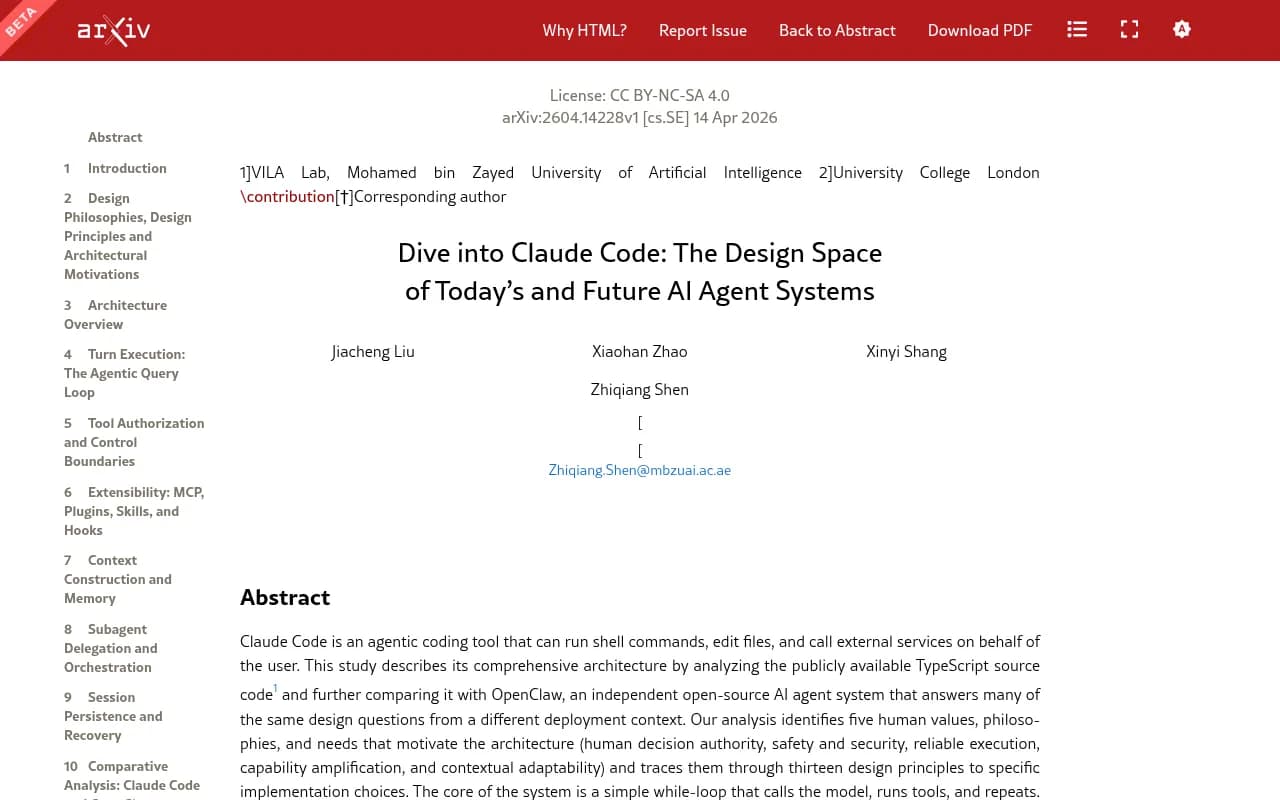
A recent paper from MBZUAI analyzing Claude Code's architecture identified MCP as one of four core extensibility mechanisms -- alongside plugins, skills, and hooks. The point being: this isn't a side feature. It's how Anthropic intends Claude to connect to the outside world.
Use case 1: Answer gap analysis on demand
The most valuable thing an AI visibility platform can tell you is which prompts your competitors appear in that you don't. This is the gap -- the specific questions where ChatGPT, Perplexity, or Claude recommends a competitor but not you.
Without MCP, you look at this in a dashboard and then manually decide what to do. With MCP, you ask Claude directly:
"Pull my answer gap report for the past 30 days. For each gap where a competitor appears in 3+ AI models, draft a one-paragraph content brief explaining what angle we're missing and why."
Claude fetches the gap data, identifies the highest-priority items, and produces actionable briefs -- all in one shot. What used to be a 2-hour analysis session becomes a 5-minute conversation.

Use case 2: Automated content generation from citation data
Knowing you have a gap is one thing. Knowing exactly what to write to close it is another. This is where citation data becomes genuinely powerful.
AI models don't cite pages at random. They cite pages that answer specific questions in specific ways -- with the right structure, the right entities, the right depth. If you have data on which pages are being cited for which prompts, you can reverse-engineer what "good" looks like for any given topic.
The MCP workflow here:
- Claude pulls citation data for a target prompt category
- It identifies the structural patterns in cited pages (FAQ sections, comparison tables, specific entity mentions)
- It generates a full article draft that mirrors those patterns, targeting the prompts where you're invisible
This isn't generic AI writing. It's content engineered against real citation evidence. The difference in output quality is noticeable.
Use case 3: Crawl error triage and prioritization
Most teams don't think of crawler logs as an AI visibility asset. They should.
AI crawlers -- GPTBot, ClaudeBot, PerplexityBot -- hit your site constantly. When they encounter errors (404s, slow response times, blocked pages), they may skip content that would otherwise be cited. You're invisible not because your content is bad, but because the bot never successfully read it.
With MCP connected to crawler log data, you can ask Claude:
"Show me pages that AI crawlers attempted to access in the last 7 days but received errors. Group by error type and estimate the citation impact based on how often those pages appear in competitor responses."
Claude can then prioritize which errors to fix first based on actual citation opportunity -- not just technical severity. A 404 on a page that would rank for 50 high-volume prompts is more urgent than a 404 on a page nobody queries for.
Use case 4: Competitor visibility alerts with suggested responses
Monitoring competitor visibility is useful. Getting an alert when a competitor suddenly starts appearing in prompts you care about is more useful. Getting that alert with a suggested response is actually useful.
Set up a recurring Claude workflow (via MCP) that:
- Checks competitor visibility scores weekly for your tracked prompt set
- Flags any competitor that gained more than X% visibility in a given category
- Pulls the specific prompts where they gained ground
- Drafts a short analysis: what content they likely published, what angle they're using, what you could do to compete
This turns a passive monitoring feed into an active competitive intelligence loop. Instead of noticing a competitor is winning three weeks after it happened, you catch it in week one and respond.
Use case 5: Prompt volume prioritization for content planning
Not all prompts are equal. Some are asked constantly. Some are asked by the right people (high purchase intent, right persona). Some are theoretically valuable but practically unwinnable because the competition is entrenched.
Visibility platforms that provide prompt volume estimates and difficulty scores give you the raw material for content prioritization. MCP lets Claude do the prioritization work for you.
"Given my current visibility scores, prompt volumes, and difficulty ratings, build me a 90-day content calendar that maximizes expected citation gains. Prioritize prompts where we're close to appearing but not quite there -- the near-miss opportunities."
Claude can weight these factors, apply whatever prioritization logic makes sense for your business, and output a structured calendar. You review and approve. The analysis work is done.
Use case 6: Reddit and YouTube source analysis
Here's something most teams miss: AI models don't just cite brand websites. They cite Reddit threads, YouTube videos, forum discussions, and community content. If a Reddit thread is consistently cited when someone asks about your product category, that thread has more influence over your AI visibility than most of your blog posts.
With MCP access to source analysis data, Claude can:
"Show me the Reddit threads and YouTube videos that AI models cite when answering prompts in my category. For each one, tell me what angle it covers, how often it's cited, and whether we have any owned content that covers the same ground."
From there, Claude can identify gaps in your owned content versus community content, suggest where you should publish (your site vs. Reddit vs. YouTube), and even draft content designed to fill those gaps.
This is a channel most visibility platforms ignore entirely. The ones that track it give you a meaningful edge.
Use case 7: Traffic attribution reporting from visibility data
The hardest question in AI visibility is: "Is this actually driving revenue?" Visibility scores are nice, but CFOs want to see traffic and conversions.
If your visibility platform connects to traffic data (via GSC integration, a code snippet, or server log analysis), MCP can close the loop inside Claude:
"Pull my AI visibility scores for the past quarter alongside traffic data from AI referrers. Show me which prompts are driving actual clicks, which have high visibility but low click-through, and calculate estimated revenue impact based on our average conversion rate."
Claude can build this report from scratch, format it for a stakeholder presentation, and flag the highest-ROI visibility investments. This is the kind of analysis that used to require a data analyst and a BI tool. With MCP, it's a conversation.
Putting it together: the action loop
These 7 use cases aren't independent. They form a cycle:
- Find gaps (use cases 1, 4, 6)
- Prioritize what to fix (use cases 2, 5)
- Create content that closes the gap (use case 2)
- Track whether it worked (use cases 3, 7)
The platforms that support this full loop are rare. Most stop at step one. A few get to step two. The ones worth using in 2026 help you get all the way to step four.
| Capability | Monitoring-only tools | Full action loop tools |
|---|---|---|
| Track brand mentions | Yes | Yes |
| Answer gap analysis | Sometimes | Yes |
| Prompt volume + difficulty | Rarely | Yes |
| Content generation from citation data | No | Yes |
| Crawler log analysis | No | Yes |
| Reddit/YouTube source tracking | No | Yes |
| Traffic attribution | No | Yes |
| MCP-compatible data export | Varies | Yes |
What to look for in a platform before building MCP workflows
Before you invest time building these workflows, check whether your visibility platform actually supports the data you need:
- Structured prompt data with volume and difficulty scores (not just mention counts)
- Citation-level data showing which pages AI models are citing, not just whether your brand appeared
- Crawler logs showing which AI bots visited your site and what they found
- Traffic attribution connecting visibility to actual sessions and conversions
- An API or MCP server that exposes this data in a queryable format
If the platform only gives you a dashboard with no export or API, the MCP workflows above won't work. You need the data to be accessible.
Promptwatch is one of the few platforms that covers all of these -- citation data from 880M+ citations analyzed, crawler logs, prompt volumes, Reddit/YouTube source tracking, and traffic attribution. It's also the platform most likely to have MCP support as the ecosystem matures, given its API and Looker Studio integration already exist.
The practical reality of MCP in 2026
MCP adoption is accelerating. By mid-2026, most serious AI tooling has some form of MCP support -- either native servers or community-built connectors. The barrier to entry has dropped significantly from where it was 18 months ago.
That said, these workflows still require some setup. You need to configure the MCP server, authenticate with your visibility platform, and build the prompts that make Claude useful for your specific use cases. It's not a one-click install.
The payoff is real though. Teams that have connected their visibility data to Claude report spending significantly less time in dashboards and significantly more time acting on insights. The data doesn't change -- the friction to act on it does.
The developer community has been clear that MCP's value isn't in the protocol itself -- it's in what becomes possible when AI models have real-time access to real data. AI visibility is one of the clearest examples of that. The data has always been there. MCP just makes it actionable.
Where to start
If you're new to this, don't try to build all 7 workflows at once. Start with use case 1 (answer gap analysis) because it has the clearest ROI and the most direct path from data to action. Get that working, see the value, then add use cases 3 and 7 to close the measurement loop.
The goal isn't to have a clever MCP setup. The goal is to spend less time staring at dashboards and more time publishing content that gets cited. Everything else is just plumbing.