Key takeaways
- Most GEO platforms in this comparison are monitoring-first tools -- they show you where you're invisible but don't help you fix it
- Promptwatch is the only platform in this group with a full optimization loop: gap analysis, AI content generation, and traffic attribution
- Peec AI and Geoptie are solid mid-market options for teams that want affordable tracking with some optimization features
- Atomic AGI and Superlines are newer entrants with interesting workflow angles but limited tracking depth compared to established players
- Geostar is the thinnest option here -- useful for a quick pulse check, not a primary GEO stack
The GEO tool market has exploded. Two years ago there were maybe five platforms worth mentioning. Now there are dozens, each claiming to be the definitive way to track your brand in ChatGPT, Perplexity, and Google AI Overviews. The noise is real.
This comparison focuses on six platforms that come up repeatedly in mid-market and agency conversations: Peec AI, Promptwatch, Atomic AGI, Geostar, Geoptie, and Superlines. Some are well-established. Others are newer and still finding their footing. The question isn't which one has the most features on a spec sheet -- it's which one actually moves the needle on AI search visibility.
To evaluate them, I looked at two things: tracking depth (how many models, how much data, how granular) and optimization capability (can you actually improve your visibility, or just watch it).
What "tracking depth" actually means
Before getting into the platforms, it's worth defining the term. Tracking depth isn't just "how many AI models does it monitor." That's table stakes in 2026 -- almost every tool covers ChatGPT, Perplexity, and Google AI Overviews at minimum.
Real tracking depth means:
- Prompt-level granularity: can you see which specific questions trigger citations, not just aggregate brand mention counts?
- Competitor visibility: can you see which prompts your competitors own that you don't?
- Source attribution: do you know which pages, Reddit threads, or YouTube videos are being cited in the answers?
- AI crawler logs: can you see when AI bots are actually crawling your site, which pages they're reading, and whether they're hitting errors?
- Traffic attribution: can you connect AI visibility to actual website visits and conversions?
By that definition, most tools in this comparison are shallow. A few go deep. One goes deepest.
The six platforms at a glance
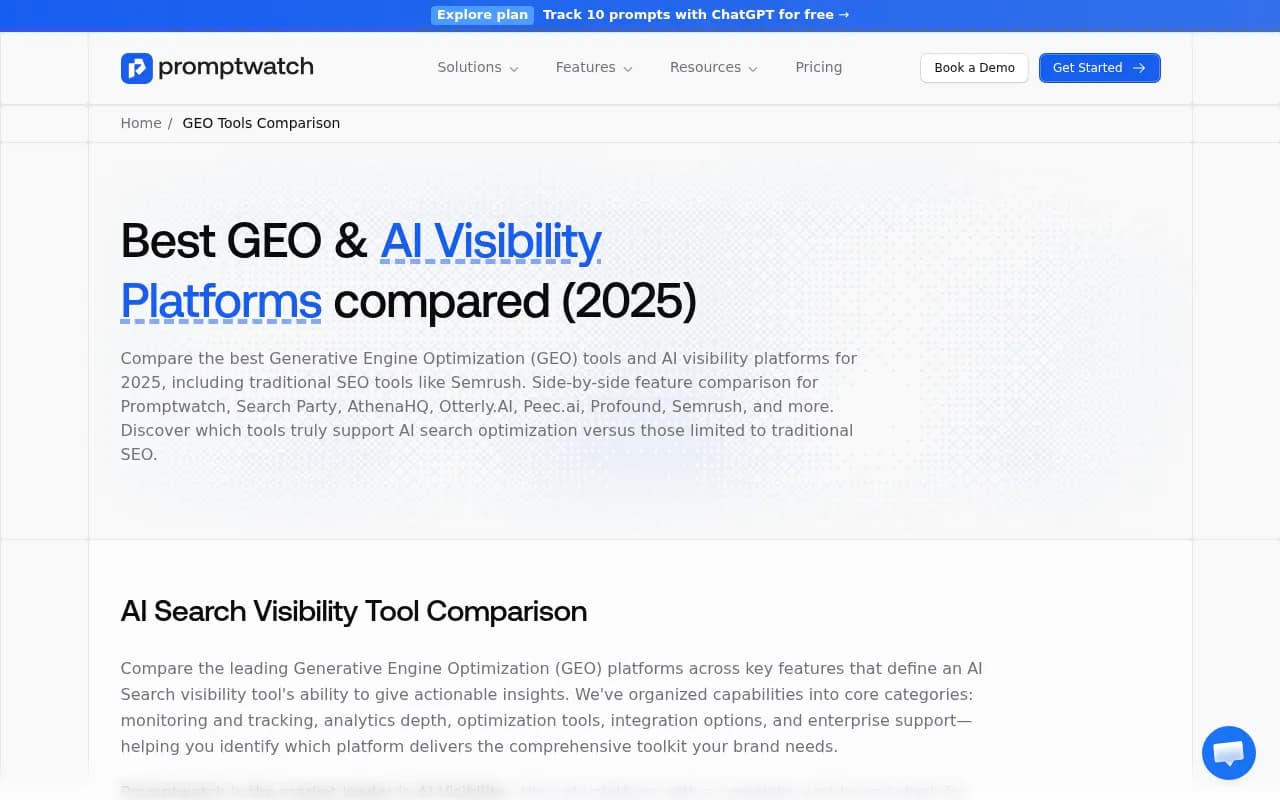
| Platform | Starting price | AI models tracked | Content generation | Crawler logs | Traffic attribution | Best for |
|---|---|---|---|---|---|---|
| Promptwatch | $99/mo | 10+ | Yes (built-in AI writer) | Yes | Yes (GSC, snippet, logs) | Full optimization loop |
| Peec AI | €89/mo | 5+ | No | No | No | Visibility analytics |
| Atomic AGI | Custom | 6+ | Partial (workflow tools) | No | Limited | Workflow automation |
| Geostar | Free / paid | 3-5 | No | No | No | Quick pulse checks |
| Geoptie | $49/mo | 5 | Yes (content studio) | No | No | Budget all-in-one |
| Superlines | Custom | 5+ | Yes (AI content) | No | Limited | Content-led GEO |
Promptwatch
Promptwatch is the most complete platform in this comparison, and it's not particularly close. Where most tools stop at showing you a visibility score, Promptwatch is built around a three-step loop: find the gaps, create content that fills them, then track whether it worked.

The Answer Gap Analysis is the standout feature. It shows you the specific prompts where competitors are getting cited and you're not -- not just "you're missing coverage in category X" but the actual questions, with prompt volume estimates and difficulty scores attached. That's the difference between knowing you have a problem and knowing exactly what to do about it.
The built-in AI writing agent then generates articles, listicles, and comparisons grounded in citation data from over 880 million analyzed citations. This isn't generic content -- it's engineered around the prompts where you need visibility, the competitors you're losing to, and the personas asking the questions.
On the tracking side, Promptwatch monitors 10+ AI models including ChatGPT, Claude, Perplexity, Gemini, Google AI Overviews, DeepSeek, Grok, Copilot, Meta AI, and Mistral. The AI crawler logs are a feature most competitors don't offer at all -- real-time logs showing when GPTBot, ClaudeBot, and Perplexity's crawler hit your site, which pages they read, and what errors they encounter. This is genuinely useful for diagnosing why AI models aren't citing you.
Traffic attribution closes the loop. You can connect AI visibility to actual visits via a code snippet, Google Search Console integration, or server log analysis. Most GEO tools leave you guessing whether any of this matters for revenue. Promptwatch doesn't.
Pricing starts at $99/month for the Essential plan (1 site, 50 prompts, 5 articles). Professional is $249/month, Business $579/month. A free trial is available.
The one honest limitation: the platform has a learning curve. The feature set is dense, and getting the most out of the Answer Gap Analysis requires some upfront prompt configuration. Teams that want a quick setup and simple dashboards might find it overwhelming at first.
Peec AI
Peec AI is a solid visibility analytics platform aimed at marketing teams that want clear, actionable data without enterprise complexity.

Its core strength is multi-seat access -- Peec AI offers unlimited seats on its plans, which makes it genuinely useful for agencies or collaborative marketing teams where multiple people need to see the data. Most competitors charge per seat or restrict access at lower tiers.
The platform tracks brand mentions across major AI models, shows share-of-voice metrics, and provides competitor comparisons. The interface is clean and the onboarding is fast -- you can be tracking within an hour of signing up.
Where Peec AI falls short is on the optimization side. There's no content generation, no crawler logs, and no traffic attribution. You get good visibility data, but the platform doesn't help you act on it. For teams that already have a content workflow and just need reliable monitoring data to feed it, that's fine. For teams that want one tool to handle the full GEO workflow, it's not enough.
Starting price is €89/month with a free trial available.
Atomic AGI
Atomic AGI takes a different angle from most GEO tools -- it's positioned as an AI-native SEO platform that combines multi-engine tracking with workflow automation.
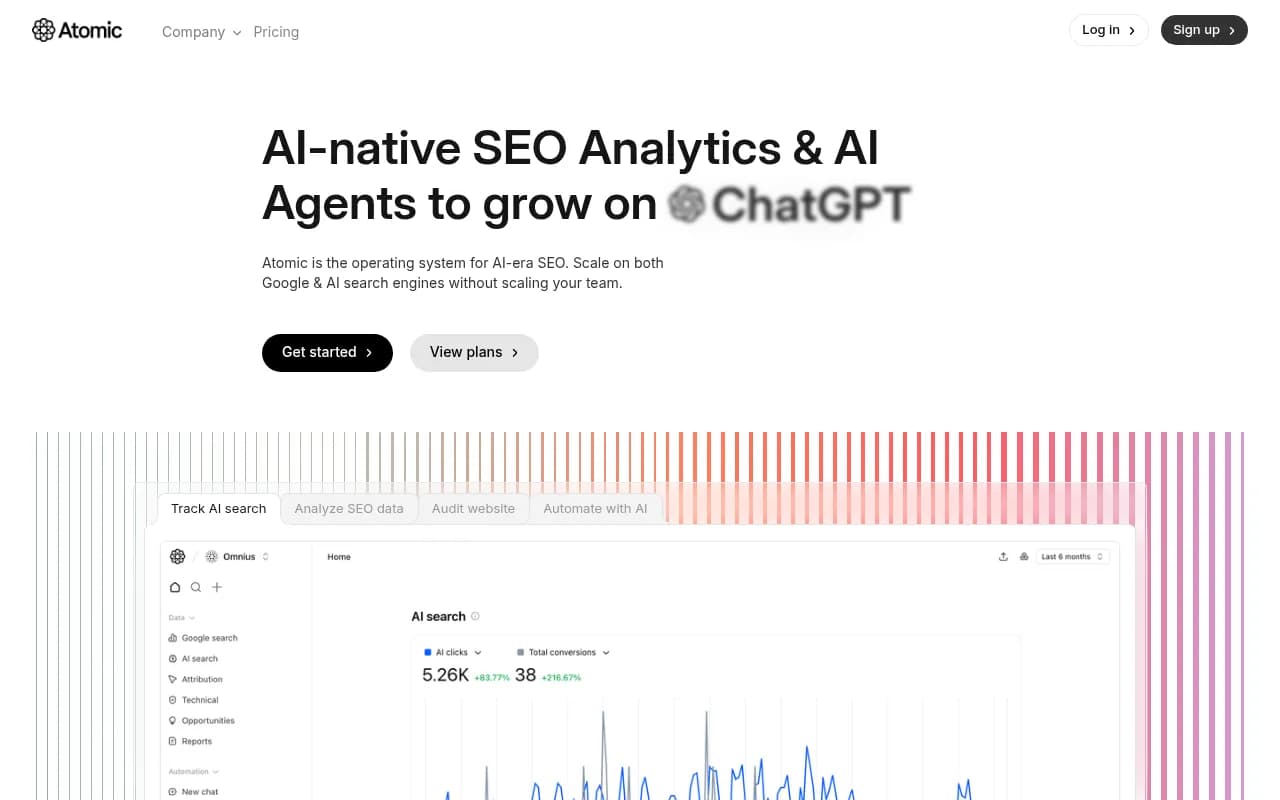
The workflow automation angle is genuinely interesting. Rather than just showing you data, Atomic AGI is built around automating the repetitive tasks in an AI search optimization workflow: monitoring, alerting, content briefing, and publishing triggers. For teams that are already running structured GEO workflows and want to reduce manual work, this is a real differentiator.
Tracking covers around six AI models with reasonable depth on prompt-level data. The competitor analysis features are functional but not as granular as Promptwatch's Answer Gap Analysis.
The limitation is that Atomic AGI's content generation is partial -- it can generate briefs and outlines but doesn't produce publish-ready content the way Promptwatch or Geoptie do. It's more of a workflow orchestration layer than a full GEO stack. Pricing is custom, which means you'll need to talk to sales before knowing if it fits your budget.
Geostar
Geostar is the lightest tool in this comparison.
It tracks brand visibility across a handful of AI models and surfaces basic mention data. The free tier makes it accessible for individuals or small teams that want a quick sense of where they stand. The interface is simple and the setup takes minutes.
But that simplicity comes at a cost. Geostar doesn't offer competitor analysis at any meaningful depth, there's no content optimization, no crawler logs, and no traffic attribution. It's essentially a brand mention counter for AI search. That's useful as a starting point -- if you've never tracked your AI visibility before, Geostar will show you something. But it won't tell you why you're invisible or what to do about it.
For teams that are serious about GEO, Geostar works best as a free sanity check, not a primary tool.
Geoptie
Geoptie is the most interesting budget option in this comparison. At $49/month for the Starter plan, it offers a surprisingly complete feature set.
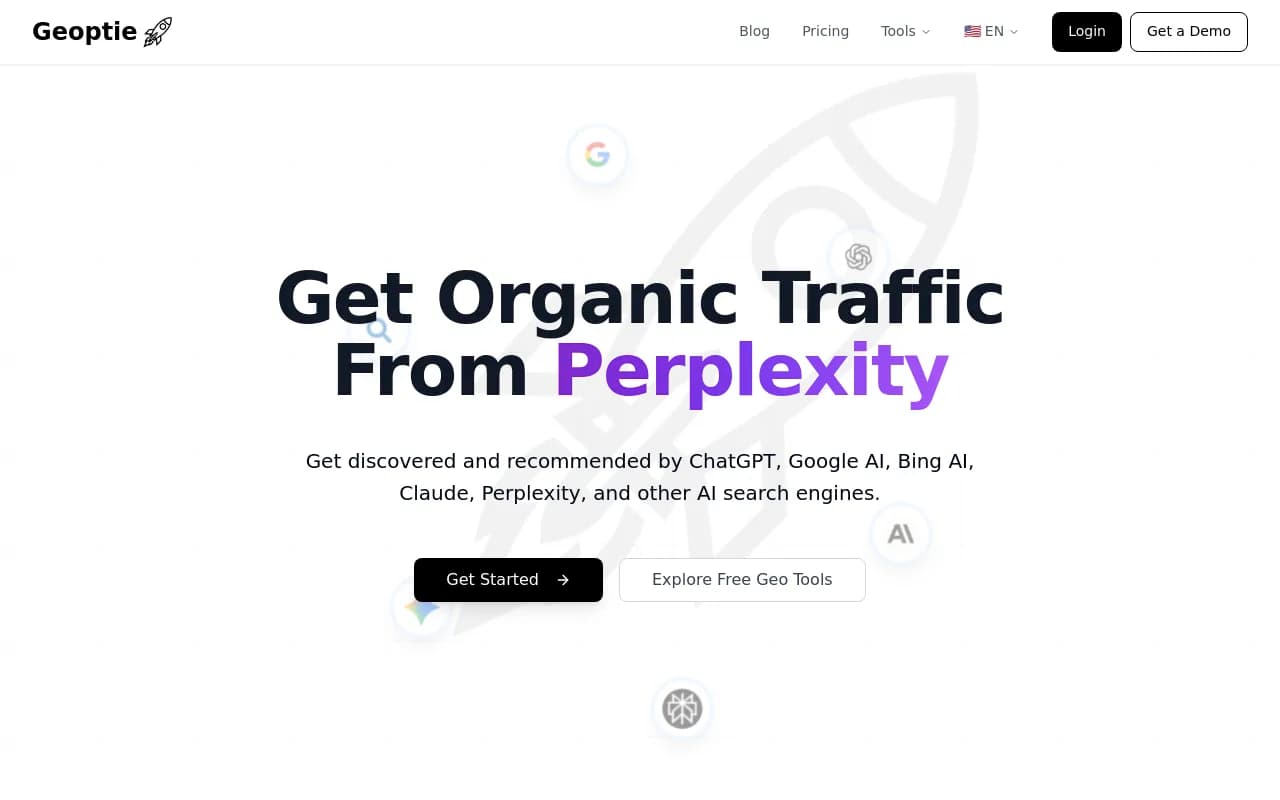
The platform tracks visibility across ChatGPT, Claude, Perplexity, Google AI Overviews, and Gemini. It includes a content studio for creating AI-optimized content, a keyword finder for discovering AI search opportunities, competitor citation analysis, and GEO audit reports. There's also a free GEO audit tool that's genuinely useful for a quick site assessment.
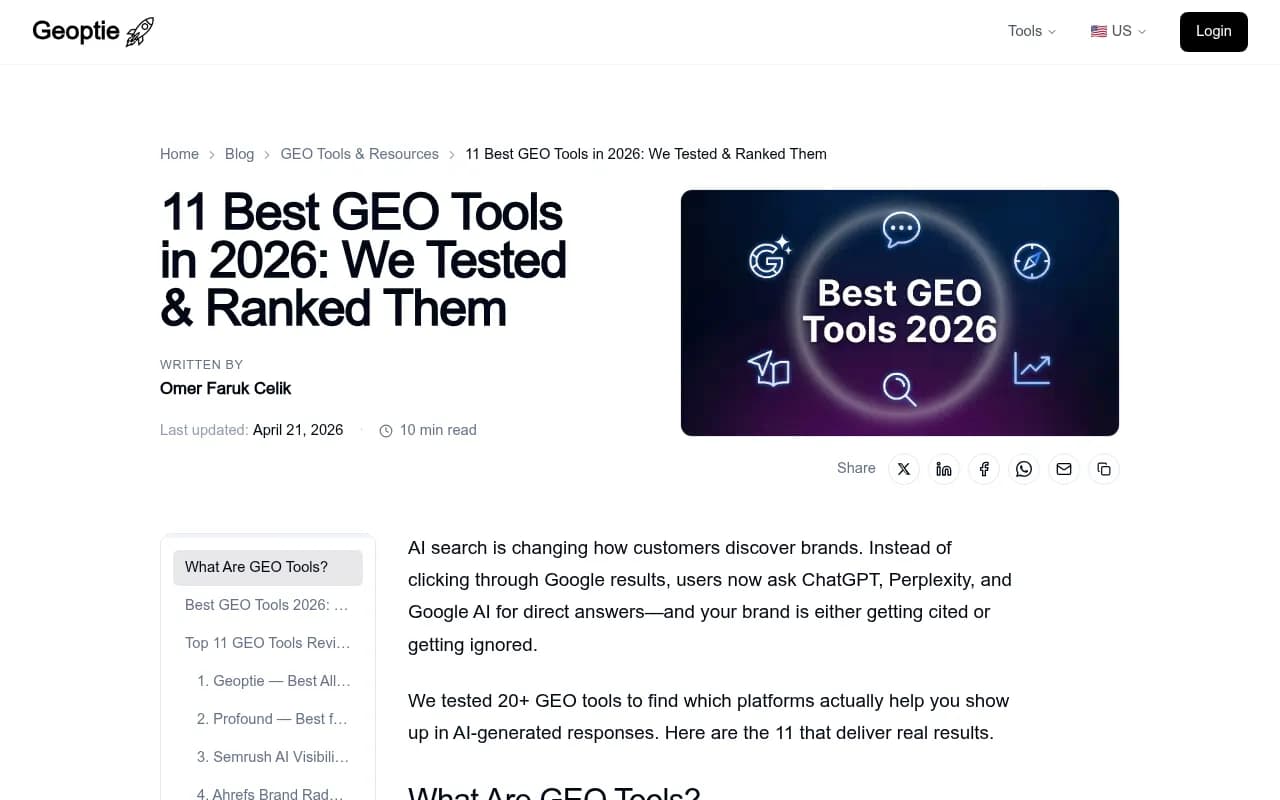
The content studio is the standout feature at this price point. Most tools at $49/month are pure monitoring plays. Geoptie actually helps you create content, which puts it in a different category from Peec AI or Geostar.
The honest limitation is depth. Geoptie's tracking doesn't go as deep as Promptwatch -- no crawler logs, no traffic attribution, and the prompt volume data is less granular. The content generation is also more template-driven than Promptwatch's citation-grounded AI writer. For a $49/month tool, these are reasonable trade-offs. For teams with serious GEO ambitions, they're real gaps.
The Professional plan ($99/month, 100 prompts, 10 brands) is where Geoptie gets genuinely competitive. At that price, you're getting monitoring plus content tools in a single platform, which is a reasonable deal.
Superlines
Superlines is a content-led GEO platform that positions itself around creating AI-optimized content at scale.
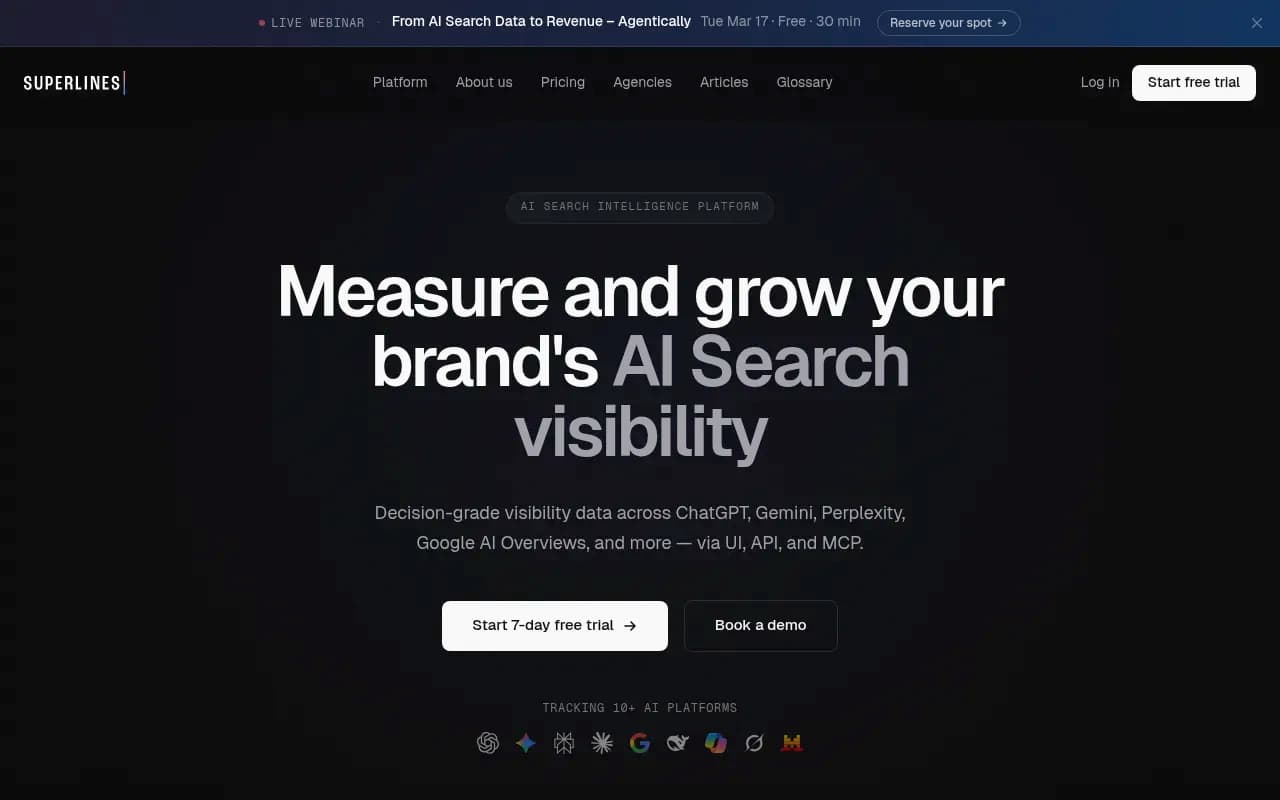
The content generation angle is its primary differentiator. Superlines is built for teams that want to produce a high volume of AI-search-optimized content quickly. The platform includes content creation tools, some visibility tracking, and optimization recommendations.
Where it gets complicated is the tracking side. Superlines covers five or more AI models but the monitoring depth is lighter than dedicated tracking platforms. The traffic attribution is limited, and there are no crawler logs. It's a content-first tool with monitoring features bolted on, rather than a monitoring-first tool with content features added.
For content teams that are already producing a lot of material and want to optimize it for AI search, Superlines has a reasonable value proposition. For teams that want to start with data and let the data drive content decisions, the workflow feels backwards.
Pricing is custom, which again means a sales conversation before you know what you're getting into.
Head-to-head: tracking depth
This is where the real differences show up.
| Feature | Promptwatch | Peec AI | Atomic AGI | Geostar | Geoptie | Superlines |
|---|---|---|---|---|---|---|
| AI models tracked | 10+ | 5+ | 6+ | 3-5 | 5 | 5+ |
| Prompt-level data | Yes | Yes | Partial | No | Yes | Partial |
| Competitor gap analysis | Yes (Answer Gap) | Basic | Basic | No | Yes | Basic |
| Source/citation analysis | Yes | No | No | No | Partial | No |
| AI crawler logs | Yes | No | No | No | No | No |
| Reddit/YouTube tracking | Yes | No | No | No | No | No |
| ChatGPT Shopping tracking | Yes | No | No | No | No | No |
| Traffic attribution | Yes (3 methods) | No | Limited | No | No | Limited |
| Prompt volume scores | Yes | No | No | No | No | No |
| Multi-language/region | Yes | Limited | No | No | No | No |
The gap between Promptwatch and the rest is widest on the data infrastructure side. Crawler logs, traffic attribution, and Reddit/YouTube tracking are features that most competitors simply haven't built. These aren't nice-to-haves -- they're what turns monitoring data into actionable decisions.
Head-to-head: optimization capability
| Feature | Promptwatch | Peec AI | Atomic AGI | Geostar | Geoptie | Superlines |
|---|---|---|---|---|---|---|
| Content generation | Yes (AI writer) | No | Partial (briefs) | No | Yes (studio) | Yes |
| Citation-grounded content | Yes (880M+ citations) | No | No | No | No | No |
| Content gap analysis | Yes | No | No | No | Partial | No |
| Optimization recommendations | Yes | Basic | Yes | No | Yes | Yes |
| Workflow automation | Partial | No | Yes | No | No | Partial |
| Free trial | Yes | Yes | No | Yes (free tier) | Yes (14 days) | No |
On optimization, the field narrows to three real contenders: Promptwatch, Geoptie, and Superlines. The others either don't generate content at all (Peec AI, Geostar) or only generate briefs (Atomic AGI).
The meaningful difference between the three is what drives the content. Geoptie's content studio works from templates and keyword data. Superlines works from content strategy inputs. Promptwatch's AI writer is grounded in actual citation data -- it knows which sources AI models are currently citing, which competitors are winning specific prompts, and what topics are missing from your site. That's a fundamentally different quality of output.
Who should use what
These aren't one-size-fits-all tools, and the right choice depends on where you are in your GEO journey.
If you're starting from zero and want to understand your AI visibility quickly, Geostar's free tier or Geoptie's Starter plan at $49/month are reasonable entry points. You'll get a sense of where you stand without a major commitment.
If you're a marketing team or agency that needs reliable monitoring data with multi-seat access, Peec AI is worth a look. The unlimited seats model is genuinely useful for collaborative workflows, even if the optimization features are thin.
If workflow automation is your priority -- you already have a GEO strategy and want to reduce manual work -- Atomic AGI's approach is interesting, though you'll need to talk to sales to understand the actual scope.
If you want content generation plus monitoring in a single affordable package, Geoptie's Professional plan at $99/month is the best value in this comparison for teams that don't need deep data infrastructure.
If you want to actually move the needle on AI search visibility -- not just track it, but systematically find gaps, create content that fills them, and verify it's working -- Promptwatch is the only platform here that supports the full loop. The crawler logs alone are worth it for diagnosing why AI models aren't citing your site. The Answer Gap Analysis turns competitor data into a content roadmap. And the traffic attribution means you can show stakeholders that GEO work is driving real results.
The honest summary
Most GEO tools in 2026 are still monitoring dashboards with a content feature or two bolted on. They show you a visibility score, maybe a competitor comparison, and leave you to figure out what to do next.
The platforms that are actually useful are the ones that close the loop: data tells you what's missing, tools help you create it, attribution confirms it worked. In this comparison, only Promptwatch does all three. Geoptie does two of the three at a lower price point. The others do one, or none.
That doesn't mean the others are useless -- Peec AI's multi-seat model and Atomic AGI's workflow automation are real differentiators for specific use cases. But if your goal is to improve how often AI models cite your brand, the question to ask any GEO tool is: "After you show me the data, what do I actually do?" The answer to that question separates the tools worth paying for from the ones that just add another dashboard to your stack.