Geostar Review 2026
Generative Engine Optimization tool that monitors brand visibility across AI models and helps teams identify content opportunities to improve LLM citation rates.
Key takeaways
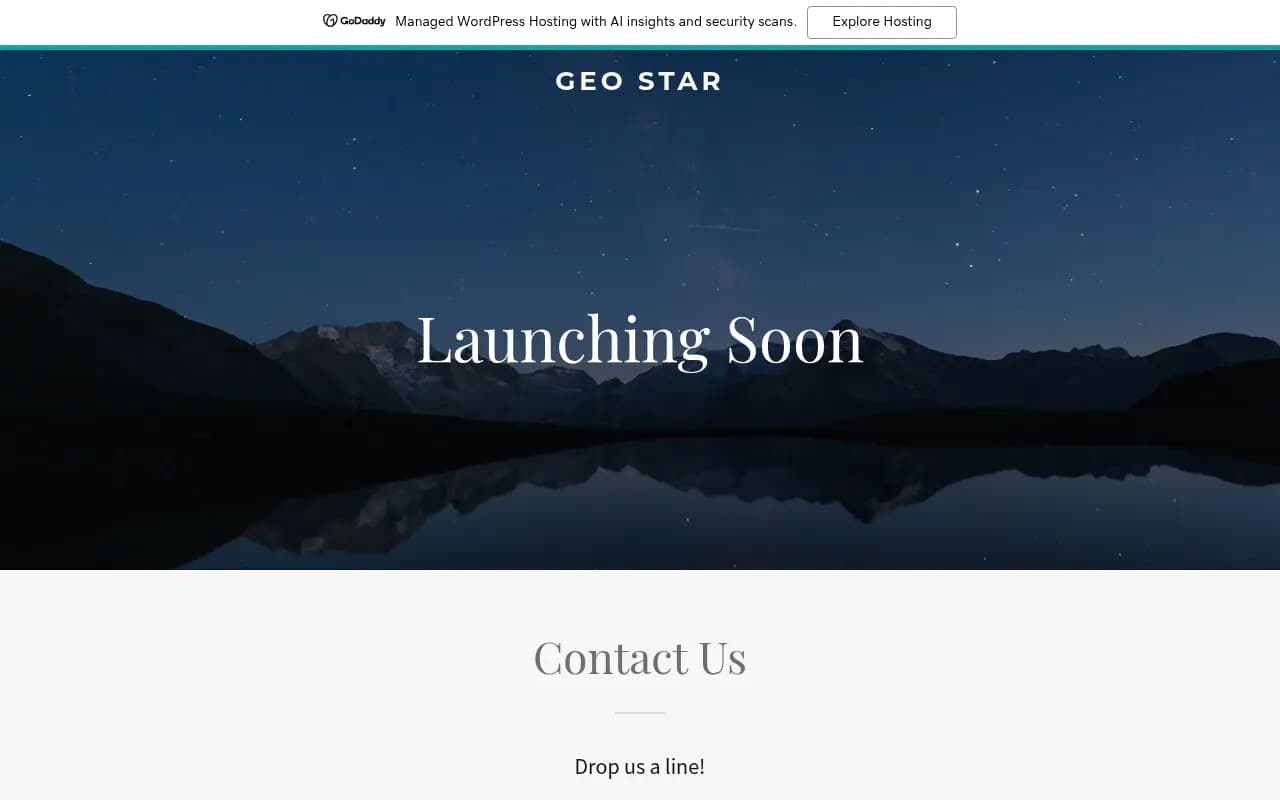
- Geostar is a pre-launch (or very early-stage) GEO/AI visibility platform -- the main website at geostar.io currently shows a "Launching Soon" page with no live product to evaluate
- Pricing information suggests three tiers (Lite, Enterprise, Full-Service) but specific numbers are not publicly available
- Compared to Promptwatch, Geostar appears to be monitoring-focused with no evidence of content generation, AI crawler logs, traffic attribution, Reddit/YouTube tracking, or prompt volume scoring
- No confirmed integrations, API, or live feature set can be verified from available public information
- Best treated as a tool to watch rather than one to buy today
The GEO (Generative Engine Optimization) space has exploded over the past two years, and Geostar is one of several new entrants trying to carve out a position in it. The pitch is straightforward: as more people use ChatGPT, Perplexity, Claude, and Google's AI Overviews to find products and services, brands need to know whether they're showing up in those answers. Geostar aims to be the platform that tells them.
The problem is that as of early 2026, geostar.io is still a "Launching Soon" landing page. There's a contact form, a logo, and a GoDaddy parking-style redirect -- but no live product, no demo, no feature documentation, and no pricing page accessible from the main domain. What we know about Geostar's feature set and pricing comes from third-party review aggregators and cached search results, not from the product itself. That's worth keeping in mind throughout this review: we're evaluating a tool that hasn't fully launched yet, based on limited secondary information.
Third-party sources describe Geostar as a GEO platform focused on monitoring brand visibility across AI models and helping teams identify content opportunities to improve LLM citation rates. That positions it squarely in the same category as tools like Otterly.AI, Peec.ai, AthenaHQ, and Promptwatch. Whether it can compete with those platforms -- some of which have been live and iterating for over a year -- remains to be seen.
Key features
Based on available secondary information, here's what Geostar is described as offering. Given the pre-launch status, treat these as intended features rather than confirmed, tested capabilities.
-
AI brand visibility monitoring: The core function appears to be tracking how often and where a brand appears in AI-generated responses across major LLMs. This is table stakes for any GEO platform in 2026 -- every competitor does this.
-
Content opportunity identification: Geostar is described as helping teams identify content gaps where competitors are visible but the tracked brand isn't. This is a useful feature in principle, though the depth of this analysis (does it show specific prompts? competitor comparisons? topic clusters?) is unclear from available information.
-
Multi-model tracking: The platform presumably monitors more than one AI model, though which specific models (ChatGPT, Perplexity, Claude, Gemini, Grok, etc.) are covered isn't confirmed in any public documentation.
-
Three-tier pricing structure: Third-party sources mention Lite, Enterprise, and Full-Service tiers. The Full-Service tier suggests a managed or agency-style offering where Geostar's team handles the optimization work, not just the monitoring. That's an interesting positioning choice -- it implies some level of hands-on service rather than pure SaaS.
-
Team collaboration: The platform appears aimed at marketing and SEO teams rather than individual users, suggesting some form of multi-user access or shared reporting.
What's notably absent from any description of Geostar: AI crawler logs, traffic attribution, Reddit and YouTube source tracking, ChatGPT Shopping monitoring, prompt volume and difficulty scoring, query fan-out analysis, or a built-in AI content writing agent. These are features that more mature platforms in this space have developed, and their absence (or at least non-mention) is a meaningful gap.
Who is it for
Given the limited information available, Geostar seems to be targeting marketing teams and SEO professionals at small-to-mid-size businesses who want to start tracking their AI search visibility without committing to a more complex or expensive platform. The "Lite" tier name suggests an entry-level option for smaller organizations.
The "Full-Service" tier is interesting -- it hints at an audience that wants AI visibility results but doesn't have the internal resources to act on data themselves. Agencies or smaller brands without dedicated SEO staff might find that appealing, assuming the service delivery is solid.
Who should probably not use Geostar right now: anyone who needs a live, tested product immediately. The "Launching Soon" status means there's real uncertainty about when the platform will be available, what the final feature set will look like, and whether the pricing described in third-party sources is accurate. Enterprise teams with serious AI visibility needs should look at platforms that are already live and have a track record.
Integrations and ecosystem
No confirmed integrations are publicly documented. There's no mention of Google Search Console connectivity, Looker Studio support, Zapier compatibility, or API access in any available source. The website itself provides no technical documentation.
This is a significant unknown. In 2026, a GEO platform without at least GSC integration and some form of data export is going to feel incomplete to most professional users. Whether Geostar has these capabilities planned or already built is simply not verifiable from current public information.
Pricing and value
Third-party review sources describe three tiers:
- Lite: Aimed at small businesses. Specific pricing not publicly confirmed.
- Enterprise: For larger organizations. Specific pricing not publicly confirmed.
- Full-Service: A complete hands-off AI visibility offering, presumably the highest tier.
No specific dollar amounts are available from the main website or any confirmed official source. This makes it impossible to assess value relative to competitors. For context, comparable platforms in this space range from around $99/month at the entry level (Promptwatch's Essential tier) to several hundred dollars per month for professional and business tiers.
The Full-Service model is worth noting as a differentiator -- if Geostar is offering managed GEO services bundled with the platform, that's a different value proposition than pure SaaS. But without pricing transparency, it's hard to know whether that's genuinely competitive or just a way to obscure costs.
Strengths and limitations
What could work in its favor
- The three-tier structure including a managed Full-Service option is a potentially smart positioning move for teams that want outcomes without doing the work themselves
- Entering the GEO market now, while it's still relatively early, gives Geostar a chance to build a user base before the space gets even more crowded
- A Lite tier suggests accessibility for smaller businesses that can't afford enterprise-level tools
Honest limitations
The limitations here are substantial, and they're worth being direct about:
-
The product isn't live. As of early 2026, geostar.io shows a "Launching Soon" page. You cannot sign up, try a demo, or verify any feature claims. This is the most fundamental limitation -- it's not a product you can buy today.
-
No evidence of optimization capabilities. Every description of Geostar focuses on monitoring. There's no mention of content generation, answer gap analysis, AI crawler log access, or traffic attribution. Monitoring-only platforms tell you where you're invisible but don't help you fix it. That's a meaningful gap compared to platforms like Promptwatch, which combines visibility tracking with a built-in AI writing agent, crawler logs, and prompt-level gap analysis.
-
No confirmed integrations or API. Professional teams need data portability. Without confirmed GSC integration, export options, or API access, Geostar would be a closed system -- which limits its usefulness in real workflows.
-
Limited model coverage details. Which AI models are tracked? How often? With what prompt methodology? None of this is documented publicly, making it impossible to assess the quality or completeness of the monitoring.
-
No Reddit, YouTube, or ChatGPT Shopping tracking. These are increasingly important channels for AI citation analysis. Reddit threads and YouTube content directly influence what AI models recommend, and ChatGPT's shopping features are a growing commercial channel. Geostar shows no sign of covering these.
-
No prompt intelligence features. Volume estimates, difficulty scores, query fan-outs -- the features that help you prioritize which prompts to target -- aren't mentioned anywhere in Geostar's available descriptions.
Bottom line
Geostar is a pre-launch GEO platform with an unclear feature set, unconfirmed pricing, and no live product to evaluate. If it launches with a solid monitoring suite and a genuinely useful Full-Service tier, it could find an audience among smaller businesses and teams that want managed AI visibility support. But right now, there's simply not enough to go on.
For teams that need AI search visibility tracking and optimization today, Promptwatch is the more complete option -- it's live, it covers 10+ AI models, and it goes well beyond monitoring with content gap analysis, an AI writing agent, crawler logs, and traffic attribution. Geostar might be worth revisiting once it actually launches, but it's not a tool you can rely on in 2026.
Best use case: A tool to bookmark and evaluate once it launches -- not a platform for teams with immediate AI visibility needs.
Frequently asked questions
What is Geostar?
Is Geostar available to use right now?
How much does Geostar cost?
How does Geostar compare to Promptwatch?
What AI models does Geostar track?
Does Geostar have a free trial?
Similar and alternative tools to Geostar