Key takeaways
- AirOps is a no-code content workflow platform built for SEO and content teams that want to scale production without losing quality control.
- Its AI search visibility tracking (called AirOps Insights) is a genuine differentiator -- it shows which pages appear in Google AI Overviews and what structural signals correlate with citation.
- Content generation is strong for teams with an existing process. If you don't have clear briefs, brand guidelines, and editorial standards already, the output quality will be inconsistent.
- AirOps does not track citations across ChatGPT, Perplexity, Claude, or Grok. Its LLM visibility coverage is narrower than dedicated GEO platforms.
- Best suited for content teams that need to scale production and want some AI search visibility data in the same tool. Not a replacement for a dedicated GEO monitoring platform.
AirOps has been through a few identity changes. It started as a workflow automation tool, then leaned hard into AI content generation, and by 2026 it's positioning itself as what it calls a "growth platform for AI search." That's a big claim. So I spent time digging into what it actually does, what the research says about its citation-worthiness claims, and where the gaps are.
The short version: AirOps is genuinely useful for content teams that need to scale. But the "AI search visibility" angle is more limited than the marketing suggests, and if getting cited in ChatGPT or Perplexity is your primary goal, you'll need more than this tool alone.
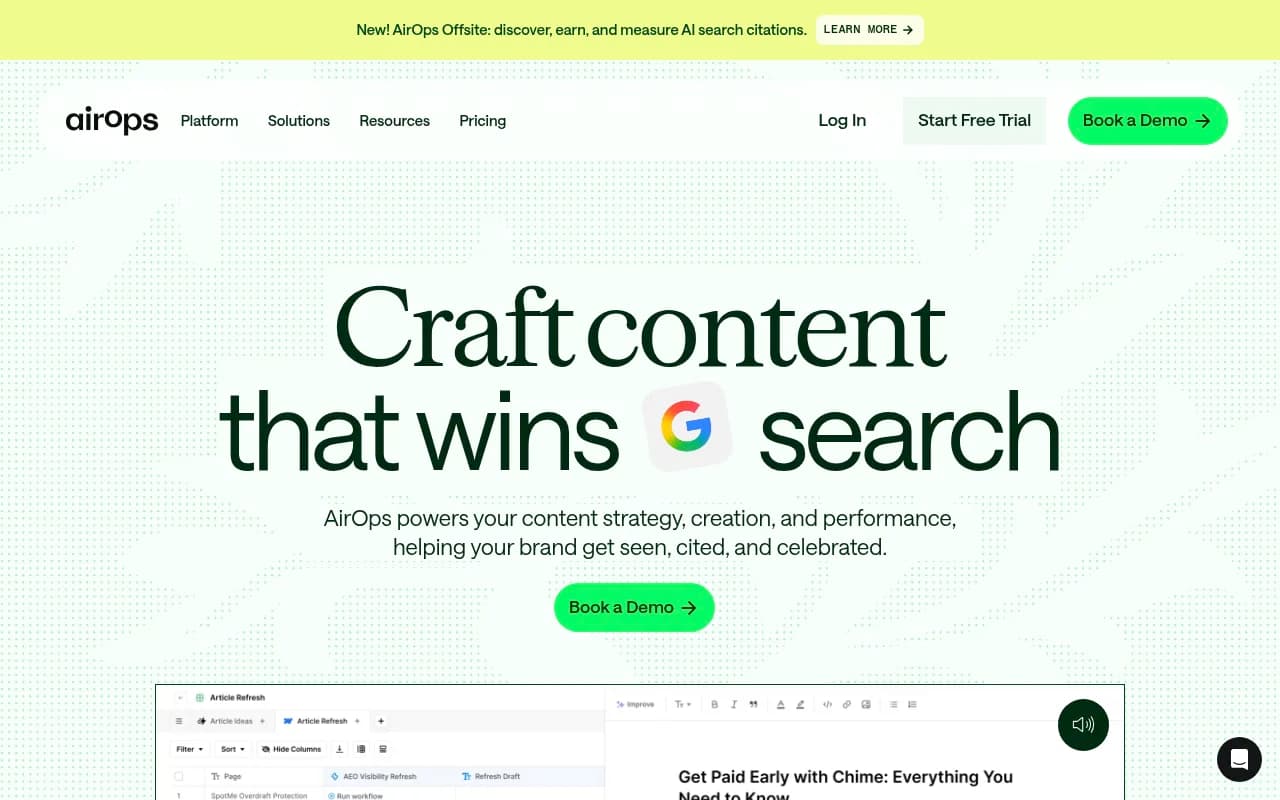
What AirOps actually is
At its core, AirOps is a no-code workflow platform. You build pipelines that combine AI models, your own data sources, brand guidelines, and content briefs -- then run them at scale to produce articles, listicles, product descriptions, comparisons, and similar content types.
The pitch, as one independent review put it, is "content at scale at quality." The emphasis on quality is what separates AirOps from basic bulk AI writers. You're not just prompting GPT-4 and dumping the output. You're building structured workflows with inputs, review steps, and outputs that can be connected to your CMS.
That's a meaningful distinction. Teams that have invested in defining their content process -- personas, brand voice, topic clusters, internal linking rules -- can encode all of that into AirOps workflows and apply it consistently across hundreds of pieces.
Teams that haven't done that work yet will find AirOps amplifies whatever process they have, good or bad.
The AI search visibility angle
This is where AirOps has made its most interesting moves in 2026. The platform now includes AirOps Insights, which tracks which of your pages appear in Google AI Overviews and surfaces the structural signals that correlate with citation inclusion.
AirOps published research analyzing 12,000+ URLs to identify what makes content citation-worthy in AI search. Their findings align with what most GEO practitioners have observed: AI Overviews favor pages that deliver clear, citation-ready answers grounded in real expertise. Clean headings, concise sections, explicit definitions, and direct answers to questions all correlate with higher citation rates. Generic explanations that don't commit to a specific answer tend to get skipped.
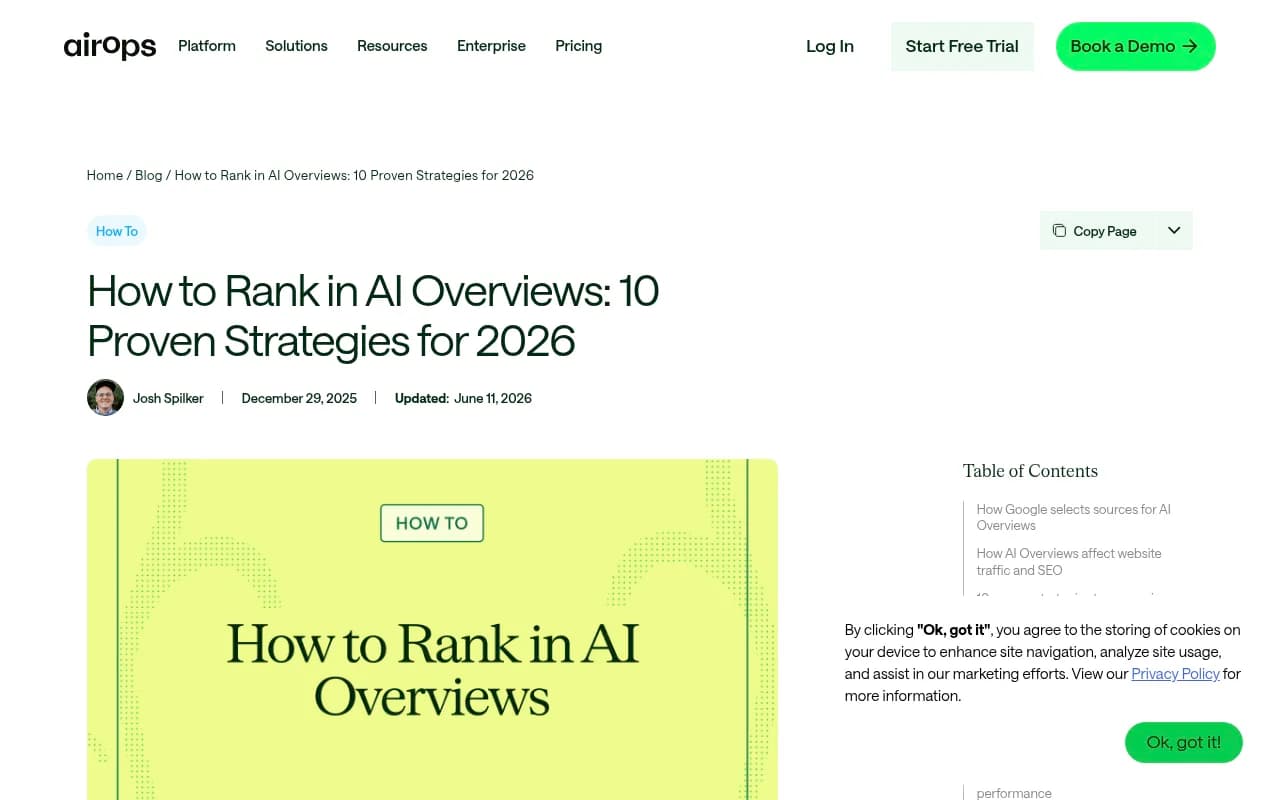
That research is legitimately useful. And the fact that AirOps bakes those insights into its content generation workflows -- so the output is structurally optimized for AI citation from the start -- is a real advantage over generic AI writers.
But here's the limitation: AirOps Insights focuses primarily on Google AI Overviews. It doesn't track your citation presence in ChatGPT, Perplexity, Claude, Gemini, Grok, or DeepSeek. If you want to know whether ChatGPT is recommending your brand when someone asks about your category, AirOps won't tell you.
What the content generation actually produces
The content quality depends almost entirely on the quality of your workflow setup. AirOps supports a range of content types:
- Long-form SEO articles and guides
- Listicles and comparison pages
- Product descriptions at scale
- Content briefs for human writers
- FAQ sections and structured Q&A content
The platform integrates with OpenAI, Anthropic, and other model providers, so you can choose which model handles which step. Some teams use GPT-4o for drafting and Claude for editing passes, for example.
Where AirOps genuinely earns its reputation is in the workflow logic. You can build in steps that pull competitor data, check against your brand guidelines, enforce heading structure, add internal link suggestions, and flag content that doesn't meet a minimum quality threshold before it goes to a human reviewer. That's not something you get from a basic AI writer.
The downside is setup time. Building a workflow that produces consistently good output takes real effort. The tool rewards teams that invest in that setup. Teams looking for a quick solution will be disappointed.
The citation-worthiness question
AirOps ran a webinar with Crystal Carter from Wix in April 2025 specifically on LLM visibility metrics -- how to track brand mentions in AI responses, what the WRAP framework (Regular, Accurate, Prominent, Positive) means for measuring citation quality, and how to connect LLM visibility to business KPIs.
That's good educational content. But there's a gap between "we teach you about LLM visibility" and "our platform tracks your LLM visibility." AirOps does the former well. The latter is still limited to Google AI Overviews.
The honest answer to the question in this review's title -- does AirOps actually get you cited in LLMs? -- is: it helps you create content that is structurally more likely to be cited, but it doesn't track whether that's actually happening across the major AI engines.
For teams that want to close that loop -- create content, track citations, find gaps, repeat -- you need a dedicated GEO platform alongside AirOps. Promptwatch covers that tracking layer across 10+ AI models including ChatGPT, Perplexity, Claude, Gemini, and Google AI Overviews, with page-level citation tracking and content gap analysis that shows exactly which prompts your competitors are visible for but you're not.

How AirOps compares to alternatives
Here's a direct comparison of AirOps against the tools that overlap most with what it does:
| Tool | Content generation | AI search tracking | LLM coverage | Best for |
|---|---|---|---|---|
| AirOps | Strong (workflow-based) | Google AI Overviews only | Limited | Content teams scaling production |
| Promptwatch | Via Content Agents | 10+ AI models | Broad | GEO + content optimization end-to-end |
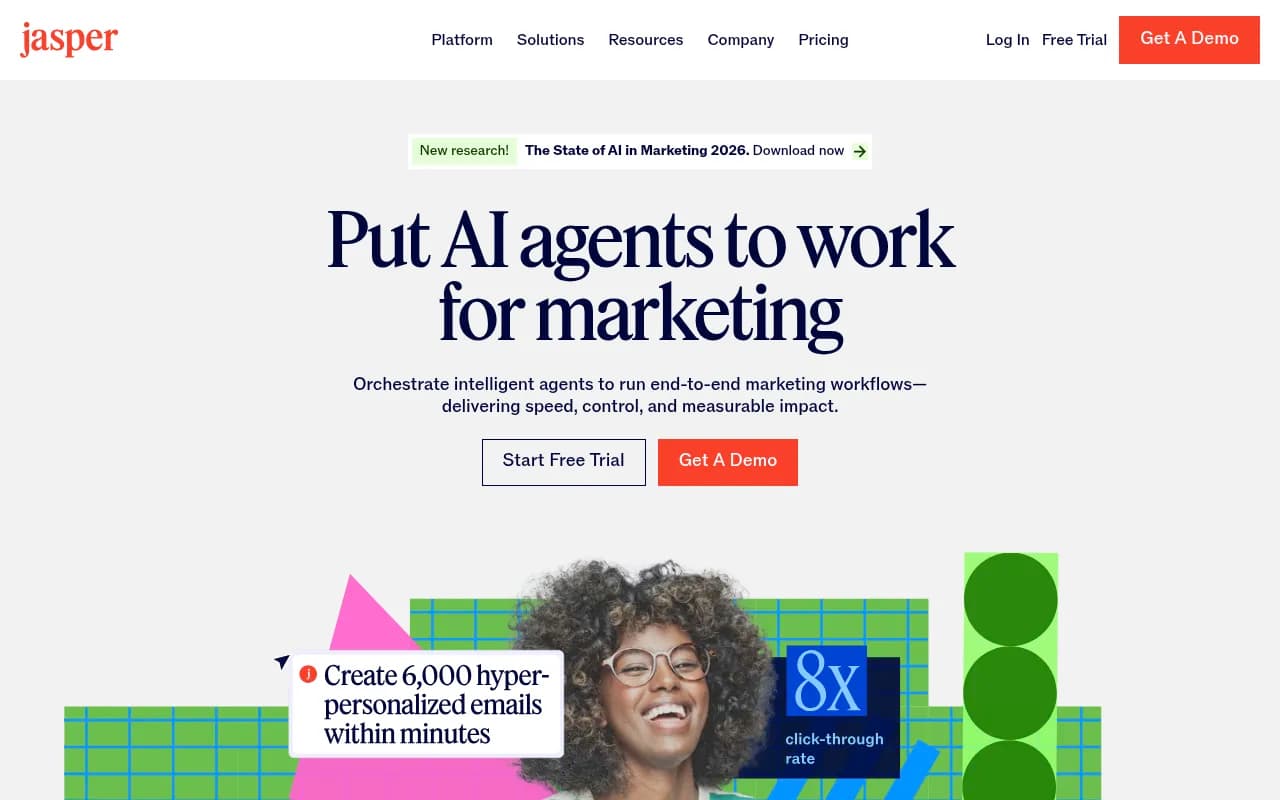
| Jasper | Strong (marketing copy) | None | None | Marketing copy at scale |
| Surfer SEO | Brief-based optimization | Limited | None | On-page SEO optimization |
| Profound | None | Strong | 9+ models | Enterprise AI visibility monitoring |
| Frase | Brief + draft | None | None | Content research and briefs |
Profound

A few observations from that comparison:
AirOps sits in an interesting middle ground. It's more sophisticated than a pure AI writer like Jasper for content teams with complex workflows. But it's not a GEO platform. Profound, for example, has deeper AI visibility monitoring but no content generation. AirOps has the content generation but shallower monitoring.
The Profound review of AirOps (yes, a competitor reviewing a competitor -- take that with appropriate skepticism) makes a fair point: AirOps offers content workflows but falls short on AI visibility monitoring for enterprise brands that need comprehensive tracking across models.
Who AirOps is actually for
The clearest use case is a content team at a mid-size company or agency that:
- Already has a defined content process and wants to scale it
- Publishes primarily to rank in Google and wants to optimize for AI Overviews
- Has someone technical enough to build and maintain workflows
- Doesn't need cross-LLM citation tracking as a primary deliverable
If you're a solo blogger or small team looking for a quick AI writing tool, AirOps is overkill. The workflow setup investment doesn't pay off at low volume.
If you're an enterprise brand that needs to track your visibility across ChatGPT, Perplexity, Gemini, and Grok -- and understand why competitors are getting cited when you're not -- AirOps alone won't get you there.
Pricing and practical considerations
AirOps doesn't publish pricing on its main site and pushes users toward a demo or free trial. Based on available information, it's positioned as a mid-to-enterprise product. The free trial is available, which is worth using before committing.
One thing worth noting: the platform's value is heavily tied to workflow quality. Budget time for setup, not just subscription cost. Teams that treat it as a "plug in and go" tool tend to be disappointed. Teams that invest two to four weeks building proper workflows tend to see real efficiency gains.
What's missing
A few gaps worth calling out explicitly:
Cross-LLM citation tracking. AirOps Insights covers Google AI Overviews. It doesn't tell you if Perplexity is citing your competitors, or if ChatGPT is recommending a rival brand in your category. For that you need a dedicated GEO platform.
Prompt intelligence. AirOps doesn't show you prompt volume estimates, difficulty scores, or query fan-outs -- the data that helps you prioritize which topics to create content for based on actual AI search behavior.
Offsite citation analysis. You can't see which Reddit threads, YouTube videos, or third-party sites are driving AI citations for your competitors. That's a meaningful blind spot for GEO strategy.
AI crawler logs. No visibility into which AI crawlers are hitting your site, how often, which pages they're reading, or whether they're encountering errors. This matters for diagnosing why content isn't getting cited.
These aren't criticisms of what AirOps is -- they're clarifications of what it isn't. It's a content production platform with some AI search optimization baked in. It's not a GEO monitoring platform.
The bottom line
AirOps is a legitimate tool for content teams that need to scale production while maintaining some quality control. The workflow-based approach is genuinely more sophisticated than bulk AI writers, and the research backing its citation-optimization recommendations is real.
The AI search visibility angle is the most interesting part of the product, but also the most overstated in its marketing. Google AI Overviews tracking is useful. It's not the same as knowing how your brand appears across the full AI search ecosystem.
If your primary goal is scaling content production with some Google AI Overviews optimization built in, AirOps is worth a trial. If your primary goal is understanding and improving your visibility across ChatGPT, Perplexity, Claude, and the rest, you need a dedicated GEO platform -- either instead of or alongside AirOps.
For teams that want both the content creation and the full-spectrum tracking in one place, tools like Promptwatch combine content gap analysis, AI content generation grounded in real citation data, and cross-model tracking in a single workflow. That end-to-end loop -- find gaps, create content, track results -- is harder to replicate by stitching AirOps together with a separate monitoring tool, though it's doable.
The AI search visibility space is moving fast. AirOps is a solid bet for content production. Just be clear-eyed about what the visibility tracking does and doesn't cover before you commit.