Key takeaways
- Peec AI is analytics-first: clean dashboards, three core metrics (Visibility, Position, Sentiment), but limited when it comes to acting on what you find
- Geoptie takes an execution-first approach with a built-in Content Studio and Audit Reports, making it a closer competitor to full-stack platforms
- Geostar is a newer entrant with solid tracking fundamentals but fewer optimization features than the other three
- Promptwatch is the only platform in this comparison rated as a "Leader" across all GEO categories in 2026, combining deep tracking with content gap analysis, AI writing, and crawler log monitoring
- If your goal is to understand your AI visibility, any of these will help. If your goal is to improve it, the gap between platforms widens fast
The GEO platform market has moved quickly. Two years ago, most teams were still debating whether AI search was worth tracking at all. Now there are dozens of platforms competing for the same budget line, and the differences between them matter more than the marketing copy suggests.
This comparison focuses on four platforms that come up regularly in 2026 buying conversations: Peec AI, Promptwatch, Geostar, and Geoptie. They're all positioned as GEO or AI visibility tools, but they approach the problem from different angles. Understanding those angles is the point of this guide.
What we're actually comparing
Before getting into the platforms, it's worth being clear about what "tracking depth" and "optimization capability" mean in practice.
Tracking depth covers: how many AI engines are monitored, how granular the prompt data is, whether you get citation-level detail, and whether the platform shows you what competitors are winning for.
Optimization capability covers: whether the platform helps you create content that improves your visibility, whether it identifies specific gaps in your coverage, and whether it connects visibility data to actual traffic and revenue.
Most platforms are strong on tracking. The gap shows up in optimization.
Peec AI
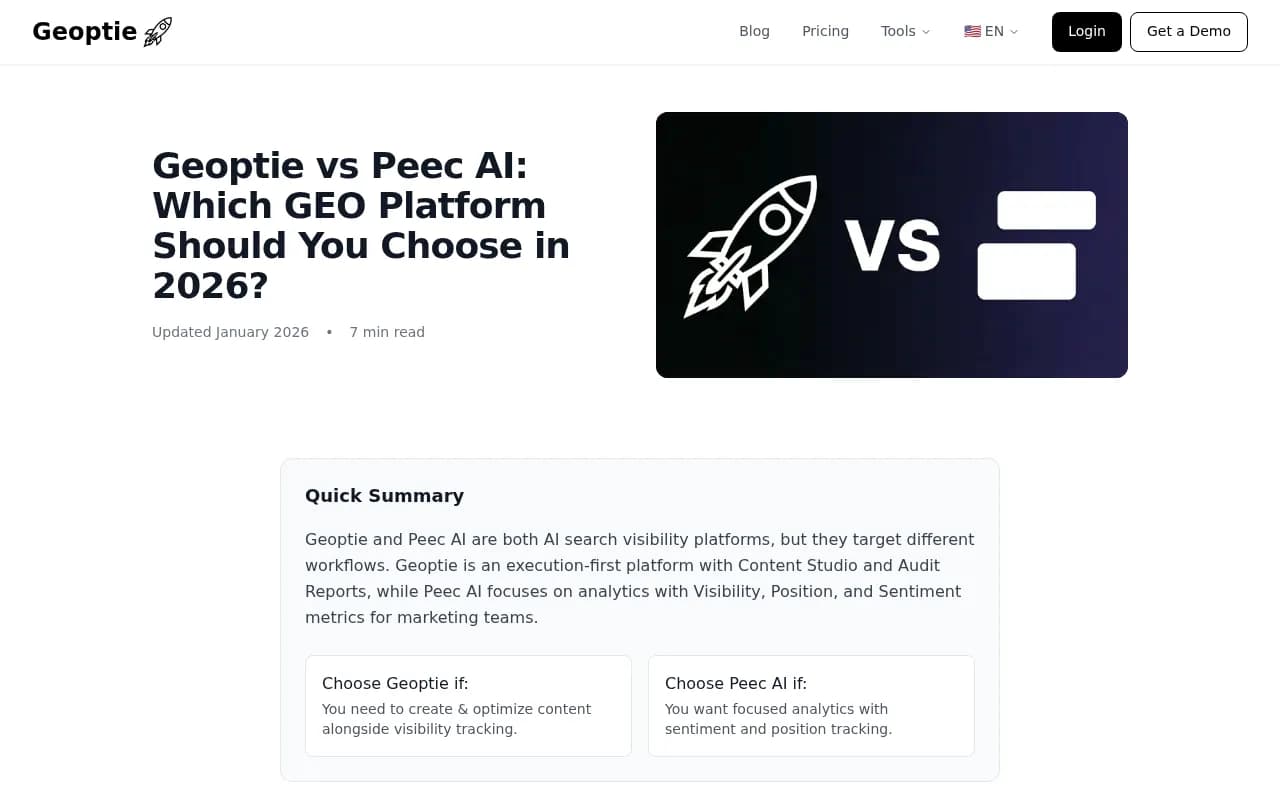
Peec AI has built a following among marketing teams who want clean, focused AI visibility data without a lot of noise. The platform tracks three core metrics: Visibility (share of mentions across AI engines), Position (where your brand appears in AI responses), and Sentiment (how AI models characterize your brand).

That simplicity is genuinely useful. A lot of GEO platforms try to surface everything at once, and the result is dashboards that look impressive but don't tell you what to do next. Peec's interface avoids that problem.
Where Peec runs into limits is on the optimization side. The platform offers "actionable recommendations," but these are more directional than prescriptive. You'll know that you're underperforming for a set of prompts, but you won't get specific content to fix it. Teams using Peec typically need to pair it with a separate content tool or do the writing work manually.
Peec supports ChatGPT natively, with Claude and other engines available as add-ons depending on the plan. That's a meaningful constraint if you're trying to monitor visibility across Gemini, Perplexity, Grok, and DeepSeek simultaneously.
One thing Peec does well: prompt organization. Setting up and tagging prompts is straightforward, and the platform is fast to get running. For teams that want a focused analytics layer without a steep learning curve, it's a reasonable starting point.
Best for: Marketing teams that want clean AI visibility reporting and are comfortable handling content optimization separately.
Geoptie
Geoptie positions itself as "execution-first," which is a meaningful distinction in a market full of monitoring-only tools. The platform includes AI visibility tracking alongside a Content Studio for creating AI-optimized content and Audit Reports that identify specific technical and content issues on your site.
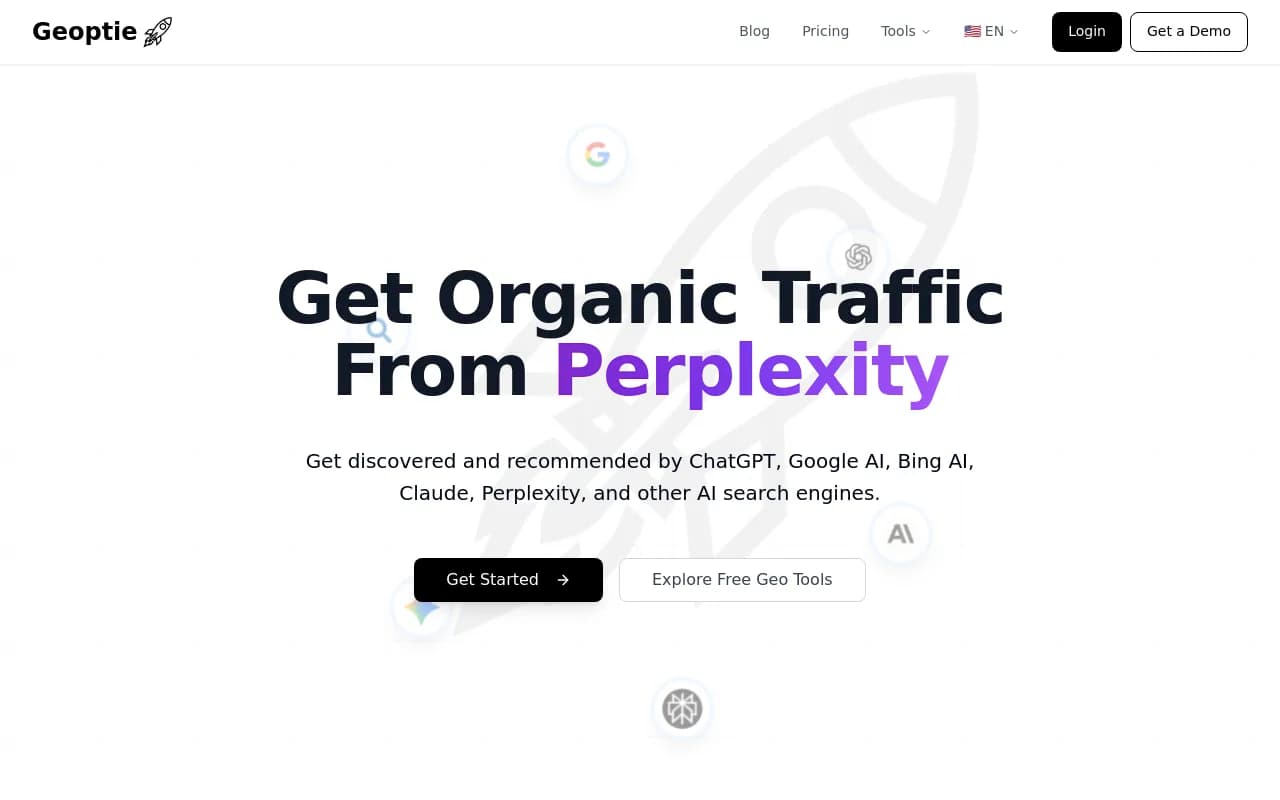
That combination puts Geoptie closer to a full-stack GEO platform than Peec. You're not just seeing where you're invisible — you're getting a structured path to fix it. The Audit Reports in particular are useful: they surface specific gaps between what AI models want to answer and what your site actually covers.
The Content Studio is functional, though it's worth noting that the quality of AI-generated content varies across platforms. Geoptie's content tools are solid for teams that need to produce AI-optimized articles at volume, but they're not as deeply grounded in citation data as some competitors.
Multi-engine support is present, covering the major AI engines. Competitor tracking is included, which lets you see which brands are appearing in AI responses for prompts you care about.
Where Geoptie has room to grow: crawler log monitoring (understanding how AI bots are actually crawling your site) and traffic attribution (connecting AI visibility to actual revenue). These are capabilities that matter more as teams move from "are we visible?" to "is this visibility driving anything?"
Best for: Teams that need both visibility tracking and content creation tools in one platform, without the complexity of an enterprise-tier solution.
Geostar
Geostar is a newer platform in this comparison, and it shows in some areas. The core tracking functionality is solid — prompt monitoring, competitor visibility, citation tracking across major AI engines. The interface is clean and the setup process is relatively quick.
What Geostar lacks, at least in its current form, is depth on the optimization side. There's no built-in content generation, no gap analysis that tells you specifically which content your site is missing, and no crawler log monitoring. It's primarily a tracking and reporting tool.
That's not necessarily a dealbreaker. For teams that are early in their GEO journey and want to understand their baseline visibility before investing in optimization, Geostar gives you the data you need. The question is whether you'll outgrow it quickly.
The platform covers the core AI engines (ChatGPT, Perplexity, Google AI Overviews) but coverage of newer models like DeepSeek, Grok, and Mistral is less clear. If you're tracking visibility across a broad set of AI engines, that's worth verifying before committing.
Best for: Teams that want straightforward AI visibility tracking and don't yet need optimization capabilities built into the same platform.
Promptwatch
Promptwatch takes a different approach than the other three platforms in this comparison. Where Peec AI and Geostar are primarily monitoring tools, and Geoptie adds content creation on top of monitoring, Promptwatch is built around a full optimization loop: find gaps, create content that addresses them, track the results.

The tracking depth is comprehensive. Promptwatch monitors 10 AI engines including ChatGPT, Claude, Gemini, Perplexity, Grok, DeepSeek, Copilot, Mistral, Meta AI, and Google AI Overviews. Prompt Intelligence features include volume estimates and difficulty scores for each prompt, plus query fan-outs that show how a single prompt branches into related sub-queries. That's a level of granularity that most platforms don't offer.
The Answer Gap Analysis is where Promptwatch separates from the field. It shows you exactly which prompts competitors are visible for that you're not, and identifies the specific content your site is missing. This isn't a generic "you should write more content" recommendation — it's a specific list of topics, angles, and questions that AI models want to answer but can't find on your site.
The built-in AI writing agent then generates content grounded in citation data (over 880 million citations analyzed), prompt volumes, and competitor positioning. The output is designed to get cited by AI models, not just to rank in traditional search.
Crawler logs are another differentiator. Promptwatch shows you in real time which AI crawlers (ChatGPT, Claude, Perplexity, etc.) are hitting your site, which pages they're reading, and what errors they encounter. Most platforms in this comparison don't offer this at all.
Traffic attribution closes the loop: you can connect AI visibility improvements to actual traffic and revenue through a code snippet, Google Search Console integration, or server log analysis.
Additional capabilities include Reddit and YouTube tracking (surfacing discussions that influence AI recommendations), ChatGPT Shopping monitoring, competitor heatmaps, and multi-language/multi-region support.
Best for: Marketing teams, SEO teams, and agencies that want to move beyond tracking and actually improve their AI visibility through content gap analysis, AI-generated content, and closed-loop attribution.
Feature comparison
| Feature | Peec AI | Geoptie | Geostar | Promptwatch |
|---|---|---|---|---|
| AI engines monitored | 3+ (add-ons) | Multi-engine | Core engines | 10 engines |
| Prompt tracking | Yes | Yes | Yes | Yes |
| Competitor monitoring | Yes | Yes | Yes | Yes |
| Citation/source tracking | Yes | Yes | Limited | Yes |
| Sentiment analysis | Yes | Limited | No | Yes |
| Content gap analysis | No | Partial (Audit Reports) | No | Yes (Answer Gap Analysis) |
| Built-in content generation | No | Yes (Content Studio) | No | Yes (AI writing agent) |
| AI crawler log monitoring | No | No | No | Yes |
| Traffic attribution | No | No | No | Yes |
| Reddit/YouTube tracking | No | No | No | Yes |
| ChatGPT Shopping tracking | No | No | No | Yes |
| Prompt volume/difficulty scores | No | No | No | Yes |
| Query fan-outs | No | No | No | Yes |
| Multi-language/region | Limited | Limited | Limited | Yes |
How to choose
The right platform depends on where you are in your GEO journey and what you actually need to do with the data.
If you're just starting out and want to understand your baseline AI visibility, Peec AI or Geostar will get you there quickly. Both have clean interfaces and relatively low setup friction. The limitation is that you'll hit a ceiling when you want to start improving, not just measuring.
If you need visibility tracking plus content creation in one tool, Geoptie is worth a close look. The Content Studio and Audit Reports give you a path from data to action that Peec and Geostar don't offer.
If you want the full picture — deep tracking, specific gap identification, AI content generation grounded in citation data, crawler monitoring, and traffic attribution — Promptwatch covers the most ground. It's the platform to consider when you're past the "understand the problem" phase and into "fix it systematically."
Pricing overview
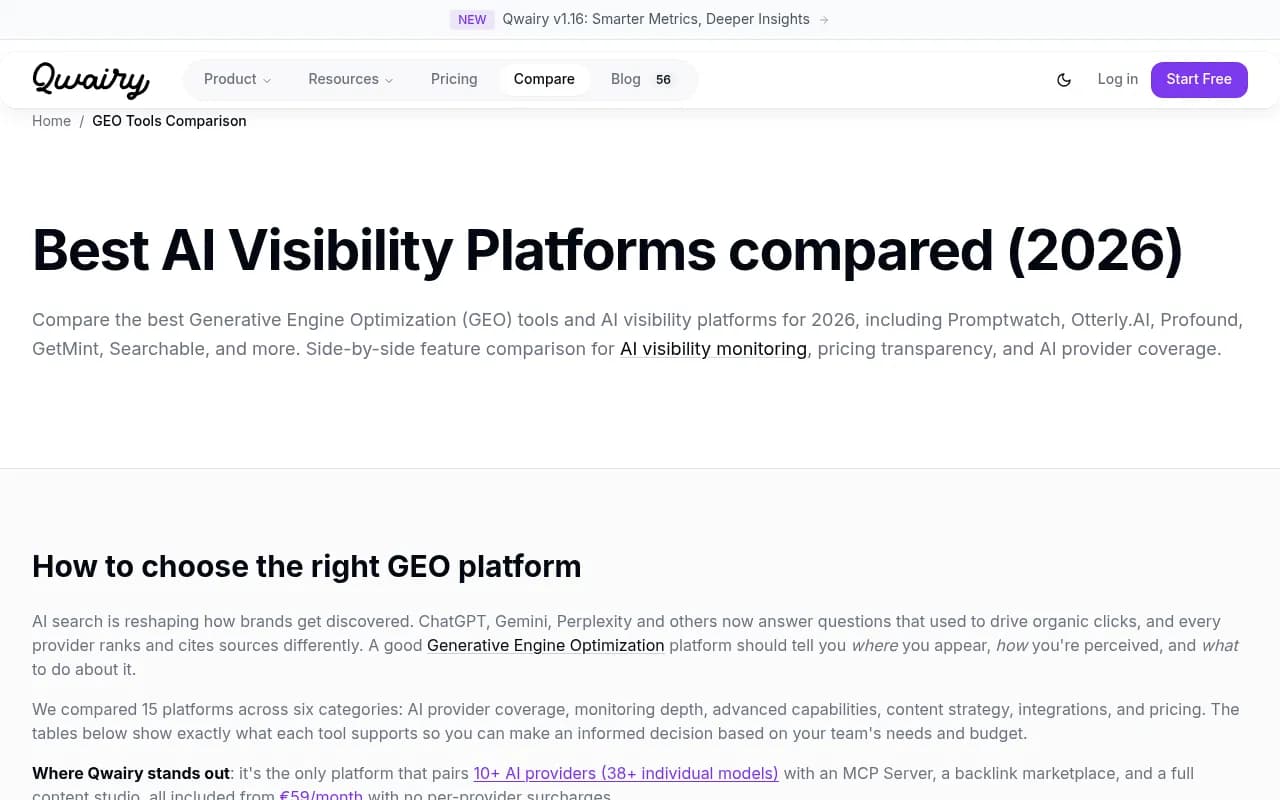
Pricing in this category moves frequently, so treat these as directional rather than definitive. Peec AI and Geostar are generally positioned at lower price points, making them accessible for smaller teams. Geoptie sits in the mid-market range. Promptwatch's pricing starts at $99/month for the Essential plan (1 site, 50 prompts, 5 articles), $249/month for Professional (2 sites, 150 prompts, 15 articles, crawler logs), and $579/month for Business (5 sites, 350 prompts, 30 articles). A free trial is available.
The pricing comparison matters less than the capability comparison. A cheaper monitoring tool that doesn't help you improve your visibility is a cost, not a saving.
The bottom line
Four platforms, four different philosophies. Peec AI is clean and analytics-focused. Geostar is straightforward tracking. Geoptie adds execution capability on top of monitoring. Promptwatch is the only one in this group that covers the full loop from gap identification to content creation to traffic attribution.
The GEO market is consolidating fast. By 2027, most platforms will have added content generation features. The question right now is whether you want to wait for that convergence or use a platform that already connects tracking to optimization. For teams that are serious about improving their AI visibility, not just reporting on it, that distinction is the one that matters.