Key takeaways
- AirOps is a content engineering platform focused on generating SEO and AEO content at scale, with strong workflow automation but limited AI visibility tracking.
- Writer is an enterprise AI platform built around brand governance, agent deployment, and internal productivity -- not AI search visibility.
- Promptwatch is the only platform of the three that closes the full loop: track where you're invisible in AI search, generate content to fix the gaps, and measure the results.
- If your goal is to rank in ChatGPT, Perplexity, Google AI Overviews, or other LLMs, the choice between these three comes down to whether you need content production, brand governance, or end-to-end AI visibility optimization.
The enterprise AI content platform market has fractured into three distinct categories, and the problem is that most buyers don't realize it until they've already signed a contract.
AirOps, Writer, and Promptwatch all get pitched as "AI platforms for marketing teams." They all use similar language about content, AI, and efficiency. But they're solving fundamentally different problems -- and if you pick the wrong one, you'll spend six months wondering why your brand still doesn't appear in ChatGPT responses.
This guide breaks down what each platform actually does, who it's built for, and where it stops being useful.
What problem is each platform actually solving?
Before comparing features, it's worth being honest about what each tool is designed to do.
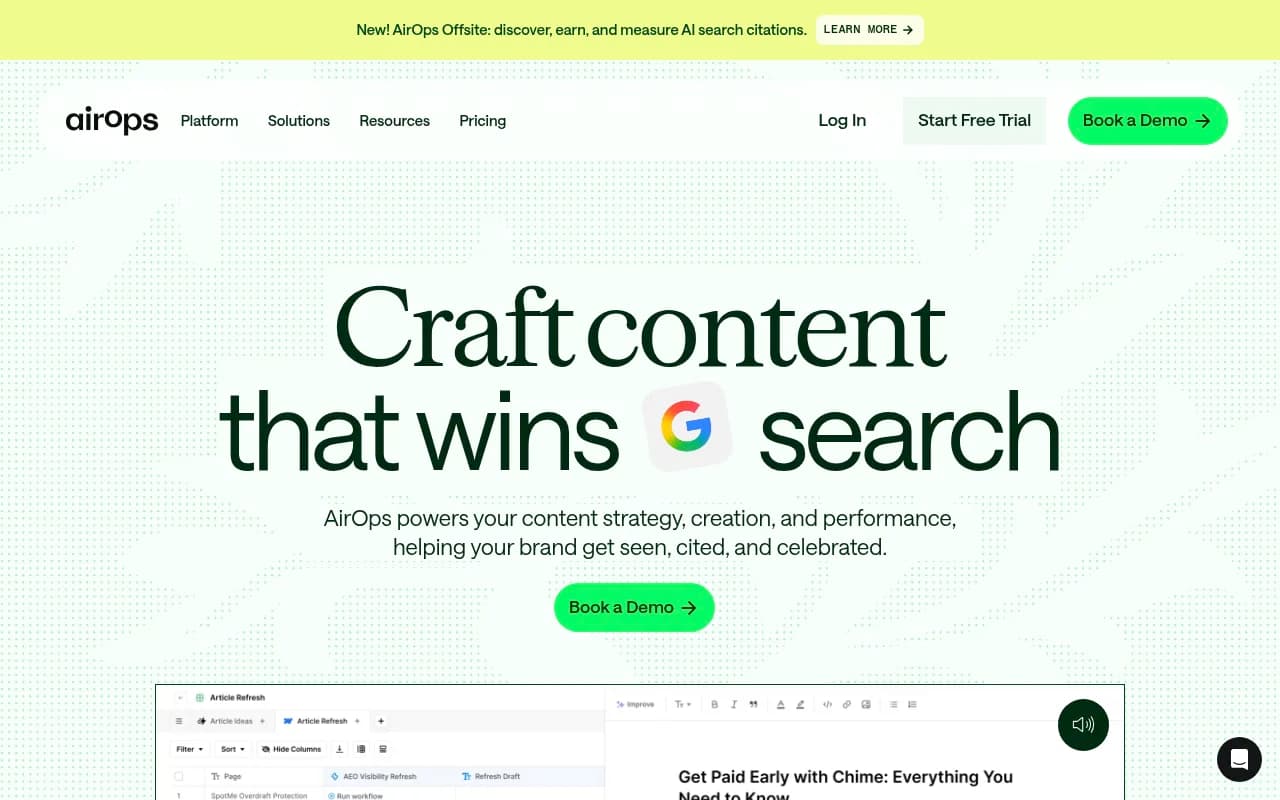
AirOps is a content operations platform. Its core job is to help teams produce more content, faster, with AI -- specifically content that's engineered to perform in both traditional search and AI search engines. It launched its Quill agent in May 2026, which automates content workflows end-to-end.
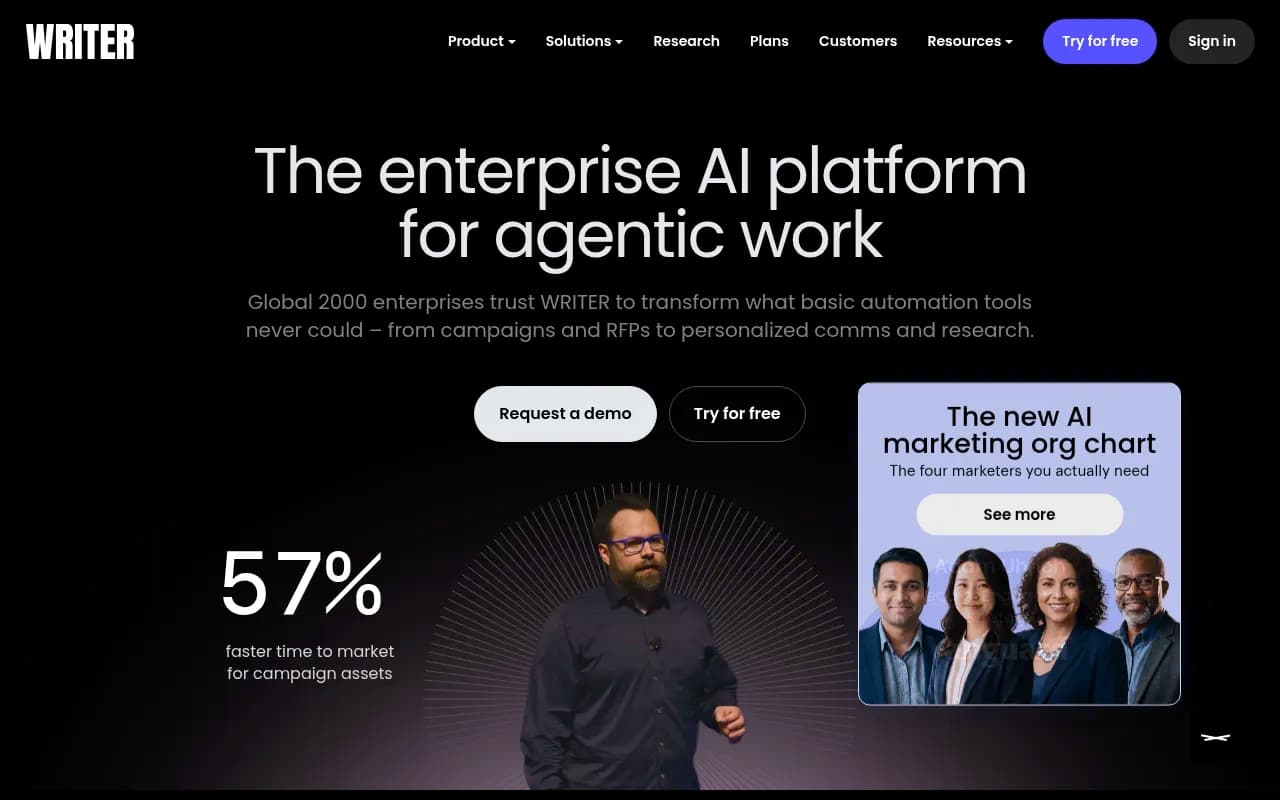
Writer is an enterprise AI platform focused on deploying AI agents across business workflows. Think of it as a way to bring AI into your entire organization -- not just marketing, but legal, HR, finance, and ops. Brand governance (keeping AI outputs on-brand and compliant) is central to what it does.
Promptwatch is an AI search visibility and GEO (Generative Engine Optimization) platform. Its job is to track where your brand appears -- or doesn't appear -- in AI-generated answers, then help you create content specifically designed to get cited by those AI models.
These aren't interchangeable. AirOps helps you produce content. Writer helps you govern AI across your org. Promptwatch helps you rank in AI search.
AirOps: content engineering for AI search
AirOps describes itself as more than an AI writing tool -- it's a "full content ops platform that connects AI generation with AI search, AEO, SEO data, brand kits, and competitor analysis." That's a fair description.
What AirOps does well
AirOps is genuinely strong at the content production side of AI search optimization. You can build workflows that pull in SEO data, competitor analysis, and brand guidelines, then generate content briefs and full articles at scale. The Quill agent, launched in mid-2026, takes this further by automating the full content pipeline from keyword research to published article.
For teams that have identified their content gaps and just need to produce a lot of high-quality content quickly, AirOps is a solid choice. It's particularly useful for agencies managing multiple clients or in-house teams with ambitious publishing targets.
Where AirOps falls short
AirOps is primarily a production tool. It doesn't have deep AI visibility monitoring -- you can't see which prompts your competitors are winning in ChatGPT or Perplexity, you won't get AI crawler logs showing whether GPTBot has indexed your pages, and there's no page-level citation tracking to tell you which of your articles are actually being referenced by AI models.
In other words, AirOps can help you create content, but it can't tell you whether that content is working in AI search. You'd need a separate tool to close that loop.
Writer: enterprise AI governance, not AI search
Writer is a different beast entirely. It's an enterprise AI platform used by large organizations to deploy AI agents across business functions. The platform is built around the idea that enterprises need AI that's on-brand, compliant, and consistent -- which is a real problem, but a different one from AI search visibility.
What Writer does well
Writer excels at enterprise AI deployment. If you're a Fortune 500 company that wants to roll out AI writing assistance across 500 employees while ensuring every output follows brand guidelines and legal requirements, Writer is purpose-built for that. Its agent framework lets you build custom AI workflows for specific business processes.
For marketing teams specifically, Writer can help with content creation, brand consistency, and scaling AI-assisted writing across a large team. It's a serious enterprise product with serious enterprise pricing.
Where Writer falls short for AI search
Writer doesn't track AI search visibility. It doesn't show you where your brand appears in ChatGPT responses, which prompts your competitors are winning, or whether your content is being cited by Perplexity. It's not designed for GEO or AEO -- it's designed for internal AI deployment and governance.
If your goal is to rank in LLMs, Writer is the wrong starting point. It might be a useful complement to a GEO platform, but it won't replace one.
Promptwatch: the full AI visibility loop
Promptwatch is built around a different premise: that tracking AI visibility is only useful if you can act on it. Most monitoring tools show you data and leave you stuck. Promptwatch is designed to move you from "we're invisible in ChatGPT" to "here's the content we need to publish to fix that" to "here's proof it's working."

The core workflow
The platform works in three stages:
Find the gaps. Answer Gap Analysis shows you exactly which prompts your competitors appear for in AI responses -- and you don't. You see the specific topics, questions, and angles that AI models want answers to but can't find on your site. This isn't guesswork; it's based on real prompt data from actual AI search interfaces, not just API outputs.
Create content that gets cited. Content Agents generate articles, listicles, comparisons, and briefs grounded in real citation data, prompt volumes, persona targeting, and competitor analysis. The content is engineered to answer the specific gaps AI models are exposing -- not generic SEO filler.
Track the results. Page-level tracking shows exactly which pages are being cited, how often, and by which AI models. AI Crawler Logs show when GPTBot, ClaudeBot, and other AI crawlers hit your site, which pages they read, and when those pages move from crawl to citation. Traffic attribution connects AI visibility to actual revenue.
What makes Promptwatch different
A few things stand out. First, Promptwatch tracks how AI search engines behave in real user interfaces -- not just through APIs. This matters because the answers users actually see can differ from what you'd get hitting the API directly.
Second, the Reddit and YouTube insights are genuinely useful. AI models frequently cite Reddit threads and YouTube videos in their responses, and Promptwatch surfaces which discussions are influencing AI recommendations. Most competitors ignore this channel entirely.
Third, ChatGPT Shopping tracking is something almost no other platform offers. If you sell products and want to know when your brand appears in ChatGPT's shopping recommendations, that's a Promptwatch-specific capability.
The platform monitors 10 AI models: ChatGPT, Perplexity, Google AI Overviews, Google AI Mode, Claude, Gemini, Meta/Llama, DeepSeek, Grok, Mistral, and Copilot.
Feature comparison
Here's how the three platforms stack up across the capabilities that matter for teams trying to rank in LLMs:
| Capability | AirOps | Writer | Promptwatch |
|---|---|---|---|
| AI content generation | Yes (strong) | Yes (strong) | Yes (via Content Agents) |
| Brand governance / compliance | Limited | Yes (core feature) | Limited |
| AI search visibility tracking | Limited | No | Yes (10 models) |
| Answer gap analysis | No | No | Yes |
| AI crawler logs | No | No | Yes |
| Page-level citation tracking | No | No | Yes |
| Prompt volume / difficulty scoring | No | No | Yes |
| Reddit & YouTube insights | No | No | Yes |
| ChatGPT Shopping tracking | No | No | Yes |
| Traffic attribution from AI | No | No | Yes |
| Multi-language / multi-region | Limited | Yes | Yes |
| Enterprise agent workflows | Yes (Quill) | Yes (core feature) | Limited |
| Pricing (starting) | Custom | Custom | $99/mo |
The pattern is clear: AirOps and Writer are strong on content production and enterprise AI deployment respectively, but neither was built to track or optimize AI search visibility. Promptwatch was.
Who should use which platform?
Use AirOps if...
You've already identified your content gaps and need to produce a high volume of SEO and AEO-optimized content quickly. AirOps is best for teams with a clear content strategy who need production muscle -- agencies managing multiple clients, in-house teams with aggressive publishing targets, or anyone who wants to automate the content pipeline from brief to published article.
It's worth pairing with a visibility platform if you want to know whether that content is actually getting cited by AI models.
Use Writer if...
You're deploying AI across a large enterprise and need brand governance, compliance controls, and custom AI agents for multiple business functions. Writer is the right choice when the problem is "how do we roll out AI safely and consistently across our entire organization" -- not "how do we rank in ChatGPT."
Marketing teams at large enterprises might use Writer for internal content production while using a separate GEO platform for AI search visibility.
Use Promptwatch if...
Your goal is to appear in AI-generated answers -- in ChatGPT, Perplexity, Google AI Overviews, or any of the other major AI search engines. Promptwatch is the right choice when you want to understand where you're invisible, create content specifically designed to close those gaps, and track whether it's working. It's used by 1,480+ brands and agencies including Booking.com, Center Parcs, and Everflow.
It's the only platform of the three that was built specifically for GEO and AI search visibility optimization.
The monitoring-only trap
One thing worth flagging: a lot of teams buy a monitoring tool, see that they're invisible in AI search, and then have no idea what to do next. The data is interesting but not actionable.
This is the core problem with monitoring-only platforms. They show you the gap but don't help you close it. AirOps solves the production side but doesn't show you the gap. Writer doesn't address AI search at all.
Promptwatch is designed to avoid this trap by connecting visibility data directly to content creation and then to results tracking. The gap analysis tells you what to write, the Content Agents help you write it, and the citation tracking tells you whether it worked.

Pricing reality check
Writer and AirOps are both enterprise-priced tools with custom pricing -- you'll need to talk to sales to get a number, and it's typically significant.
Promptwatch has published pricing: Essential at $99/month (1 site, 50 prompts, 5 articles), Professional at $249/month (2 sites, 150 prompts, 15 articles, crawler logs), and Business at $579/month (5 sites, 350 prompts, 30 articles). Agency and enterprise plans are available with custom pricing. There's a free trial.
For teams that want to start tracking AI visibility without a large upfront commitment, Promptwatch's entry-level pricing is meaningfully more accessible than the alternatives.
Other tools worth knowing about
If you're evaluating this space more broadly, a few other platforms are worth a look depending on your specific needs.
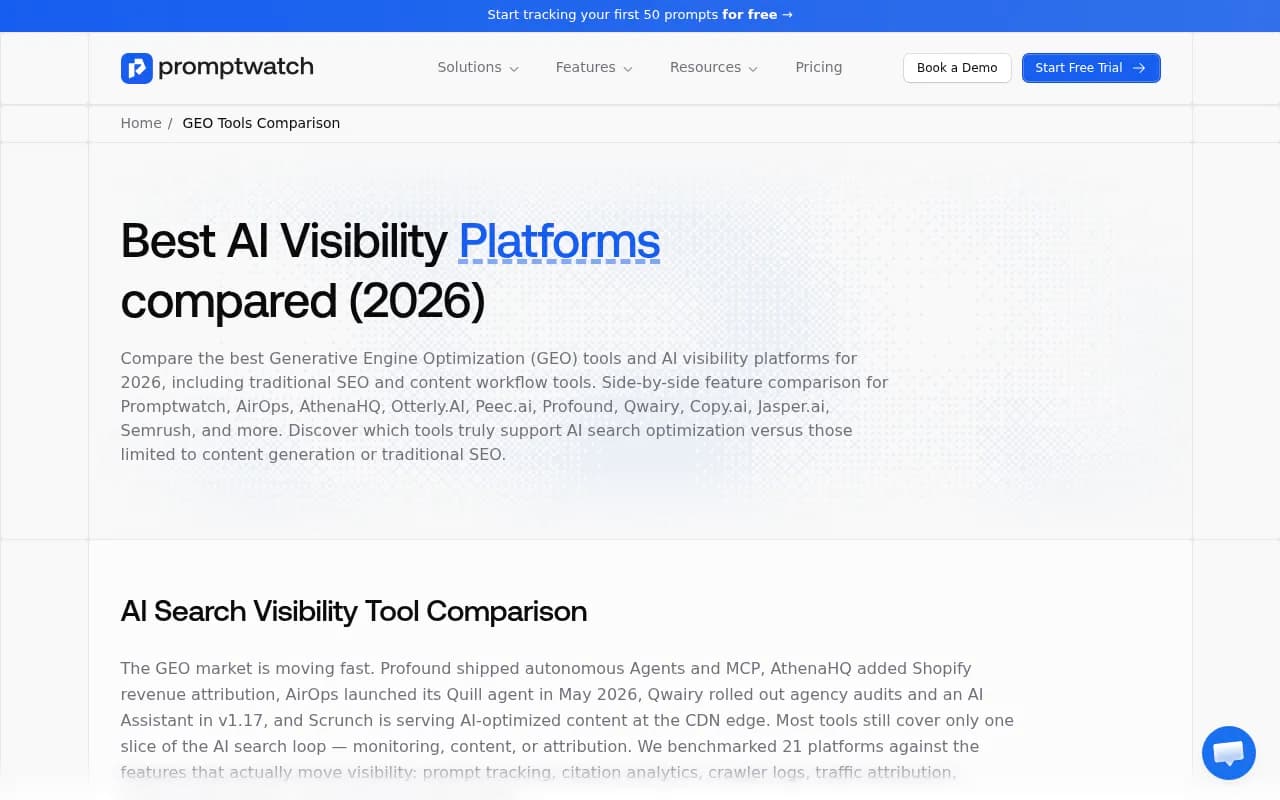
For AI visibility monitoring specifically, Profound has a strong feature set at the enterprise level, and AthenaHQ added Shopify revenue attribution in 2026 which is useful for ecommerce brands.
Profound


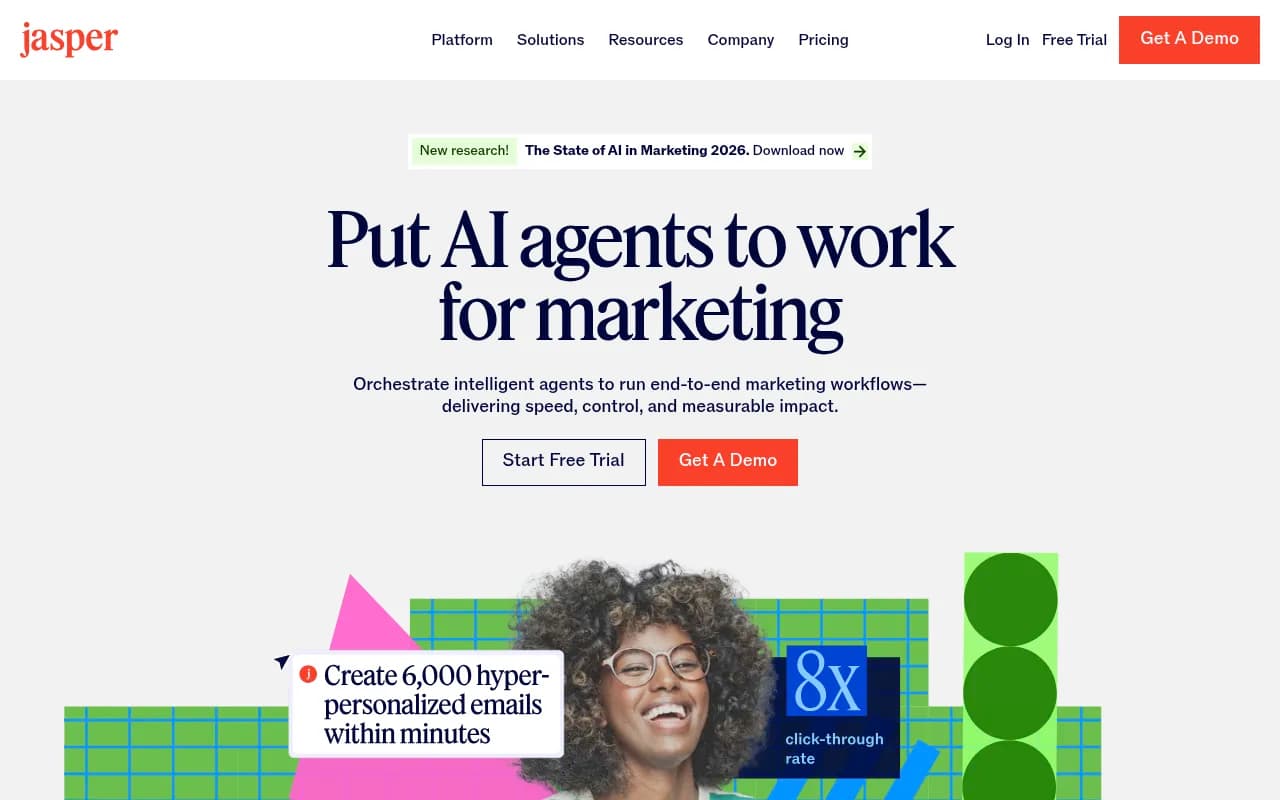
For content optimization that sits between pure writing tools and full GEO platforms, Jasper has moved toward a full marketing workflow platform with agent capabilities.
For teams that want AI visibility data without the full platform investment, Otterly.AI and Peec AI offer basic monitoring -- though neither has content generation or crawler logs.
Otterly.AI


The bottom line
AirOps, Writer, and Promptwatch are all legitimate platforms, but they're not competing for the same job.
If you need to produce AI-optimized content at scale, AirOps is built for that. If you need enterprise AI governance across your whole organization, Writer is the serious choice. If you need to actually rank in LLMs -- to understand where you're invisible, create content that gets cited, and track the results -- Promptwatch is the platform built for that specific problem.
Most teams trying to improve their AI search visibility will find that Promptwatch is the right starting point, with AirOps potentially useful as a content production complement once the strategy is clear.
The worst outcome is spending months producing content without knowing whether AI models are actually citing it. That's the gap these platforms exist to close -- just in very different ways.