Key takeaways
- Google core updates in 2026 affect both traditional rankings and AI-generated answers — you need to track both to understand the full impact.
- Traditional rank trackers won't show you if ChatGPT, Perplexity, or Google AI Overviews stopped citing your content after an update.
- The best platforms go beyond monitoring: they show you which content gaps appeared after the update and help you create content to close them.
- Promptwatch, Profound, Scrunch AI, and SE Ranking are among the strongest options depending on your team size and budget.
- If you only have one tool, pick one that tracks AI citations AND traditional rankings together — the update picture is incomplete without both.
Why core updates now affect AI search too
Google core updates used to be a traditional SEO problem. Rankings would shift, traffic would drop or spike, and you'd spend weeks diagnosing what changed. That's still true. But in 2026, there's a second layer most teams aren't tracking: what happened to your visibility inside AI-generated answers.
About 68% of Google searches ended without a click in early 2026, according to SparkToro's analysis of Similarweb clickstream data. ChatGPT hit roughly 900 million weekly active users in February 2026 (OpenAI, via TechCrunch). Google's AI Overviews reach an estimated 2 billion people monthly. When a core update reshuffles which sources Google trusts, it doesn't just move your blue-link ranking — it can change which pages get cited in AI Overviews, which domains Perplexity pulls from, and whether ChatGPT recommends your brand at all.
The problem is that most teams only look at one side of this. They check Google Search Console, watch their rank tracker, and diagnose the traditional SERP impact. Meanwhile, their AI citation share quietly collapses and nobody notices until a sales rep asks why leads dried up.
This guide covers the platforms that give you the full picture after a core update — traditional rankings and AI visibility together.
What to look for in a post-update tracking platform
Not every AI visibility tool is built for the specific job of diagnosing a core update. Here's what actually matters:
Speed of data. Core updates roll out over one to two weeks. You need near-real-time data to separate the update's effect from normal variance. Platforms that only refresh weekly will leave you guessing.
Coverage across AI engines. A drop in Google AI Overviews is different from a drop in Perplexity citations. You need to see both, ideally alongside your traditional rank data, so you can tell whether the update hit your traditional authority, your AI visibility, or both.
Page-level tracking. Aggregate brand visibility scores are useful for headlines. But to diagnose a core update, you need to know which specific pages lost citations and which gained them. That's where the actual fix lives.
Competitor comparison. Core updates are relative. If your visibility dropped 15% but your competitor's dropped 30%, you're actually in better shape. Heatmaps and share-of-voice comparisons tell you whether you're losing ground or just moving with the market.
Content gap analysis. The most useful thing a platform can do after a core update is tell you what content is now missing from your site that AI models want to cite. That's the actionable output, not just the damage report.
The best platforms for tracking AI visibility after a core update
Promptwatch
Promptwatch is the platform I'd reach for first after a core update, specifically because it doesn't stop at the alert. Most tools will show you that your visibility dropped. Promptwatch shows you which prompts you're no longer appearing for, which competitors filled the gap, and what content you'd need to create to reclaim it.

The Answer Gap Analysis is particularly useful in a post-update context. It maps exactly which prompts competitors are visible for that you're not — the specific topics and questions AI models want answers to but can't find on your site. After a core update, this is often where the damage shows up first: not in your rankings, but in the content gaps that the update exposed.
The AI Crawler Logs are another feature that matters here. You can see in real time which pages AI crawlers are hitting, how often they return, and when pages move from crawl to citation. If a core update caused Googlebot or GPTBot to deprioritize certain pages, you'll see it in the logs before it shows up in your citation data.
Promptwatch monitors 10 AI models (ChatGPT, Perplexity, Google AI Overviews, Google AI Mode, Claude, Gemini, Meta/Llama, DeepSeek, Grok, Mistral, Copilot) and includes Content Agents that generate articles grounded in real prompt data and citation patterns. Pricing starts at $99/month for the Essential plan.
Profound
Profound is the enterprise choice. It tracks more than ten AI engines and goes deep on the "why did we appear or disappear" question — which matters a lot when you're trying to explain a core update's impact to a CMO or board.
Profound

Where Profound earns its price point is in governance and compliance features, and in the depth of its citation analysis. For large brands with multiple product lines and regions, the ability to segment visibility by topic cluster and compare against specific competitors is genuinely useful for post-update diagnosis. The tradeoff is cost — Profound sits at the higher end of the market, and smaller teams may find they're paying for capabilities they don't use.
Scrunch AI
Scrunch AI positions itself as a "command center" for AI visibility, and that framing is accurate. It covers multiple AI engines in a single dashboard, tracks competitor visibility alongside your own, and produces clean reporting that stakeholders can actually read.
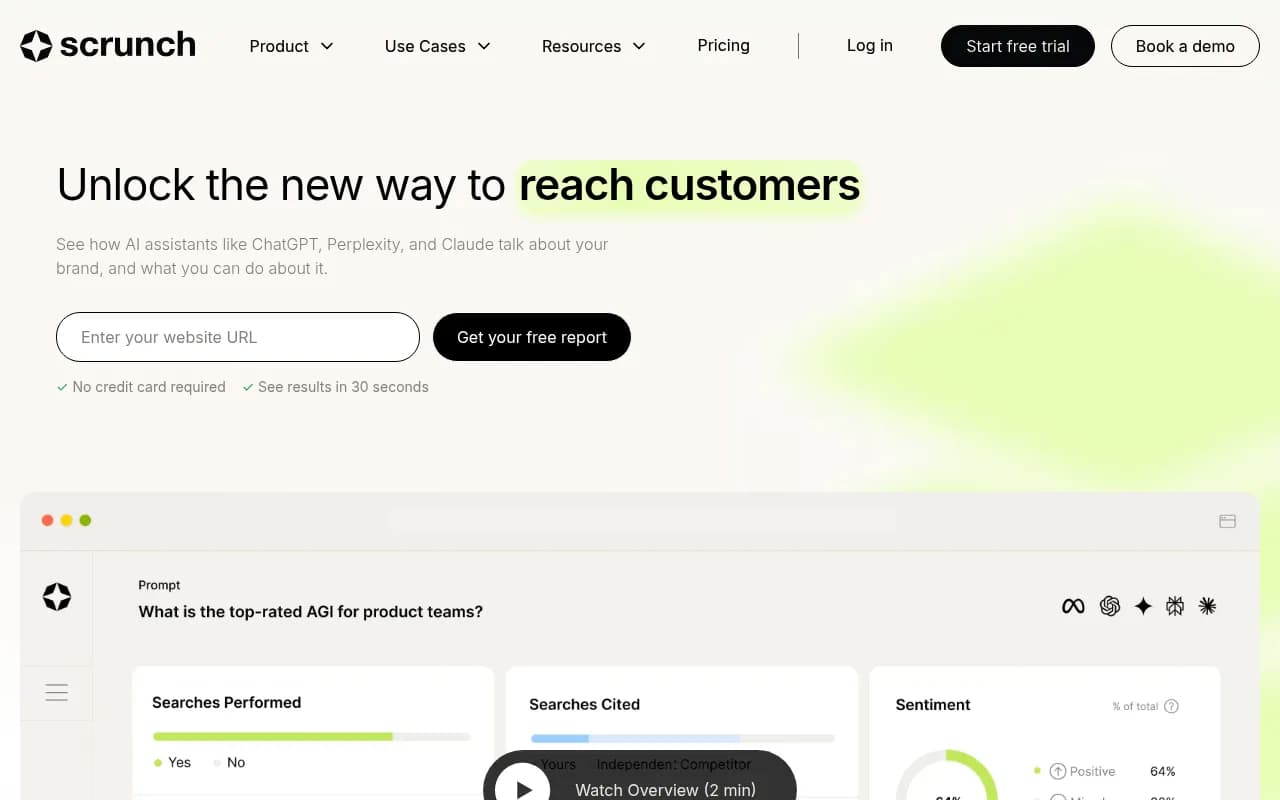
For a post-update workflow, Scrunch's strength is breadth. You can quickly see across many surfaces whether your visibility moved, and the competitor comparison makes it easy to contextualize the change. The weakness noted in several reviews is that it's stronger at showing you what happened than telling you what to do next. If you pair it with a content tool, that gap closes, but out of the box it's primarily a monitoring platform.
SE Ranking
SE Ranking is worth including here because it bridges the traditional SEO and AI visibility worlds better than most tools at its price point. After a core update, you want to see both your traditional rank changes and your AI citation changes in the same interface — SE Ranking gets you closer to that than most.
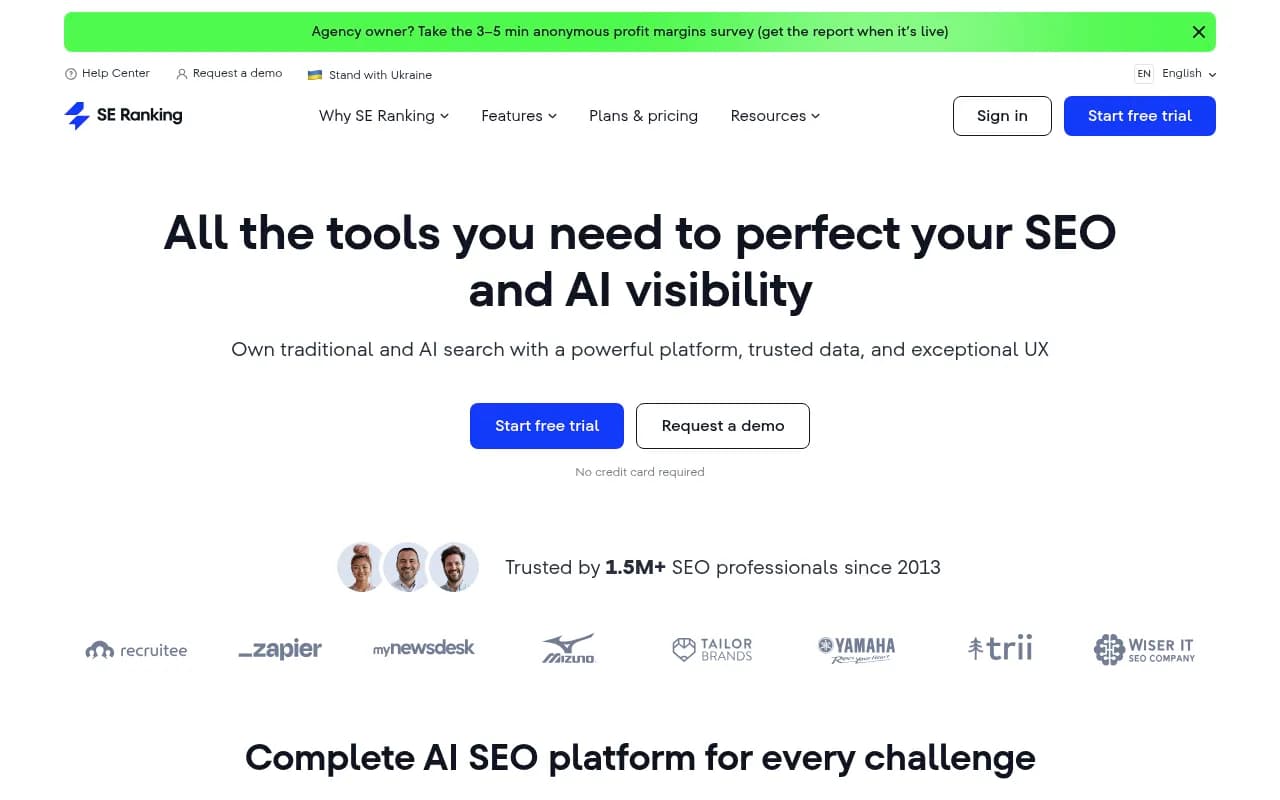
It tracks Google AI Overviews alongside traditional rankings, which is the most direct connection between core update impact and AI visibility. The platform also includes site audit and content tools, so you can move from diagnosis to fix without switching platforms. It's not as deep on multi-engine AI tracking as Promptwatch or Profound, but for teams that are primarily Google-focused, it covers the ground that matters most.
Semrush
Semrush added AI visibility tracking to its existing platform, and for teams already standardized on Semrush, this is the path of least resistance. The AI Toolkit monitors Google AI Overviews and some other AI surfaces, and it sits alongside the rank tracking, site audit, and backlink data you're already using.
The honest limitation: Semrush uses fixed prompts rather than letting you build custom prompt sets, and it doesn't have AI traffic attribution or crawler log data. For a quick post-update check on whether your AI Overview presence moved, it's fine. For a deeper investigation into why it moved and what to do about it, you'll hit the ceiling quickly.
Otterly.AI
Otterly.AI is a focused monitoring tool that tracks brand mentions across ChatGPT, Perplexity, and Google AI Overviews. It's simpler than the enterprise platforms and priced accordingly, which makes it a reasonable starting point for smaller teams that want AI visibility data without a large investment.
Otterly.AI

The limitation in a post-update context is that Otterly stops at monitoring. It shows you where your visibility stands but doesn't help you diagnose the root cause or generate content to fix it. For a team that already has a content workflow and just needs the data layer, that's fine. For a team that needs the full loop from diagnosis to fix, it's a starting point, not a complete solution.
Ahrefs
Ahrefs added Brand Radar for AI search tracking, and it integrates with the existing Ahrefs data set — backlinks, organic rankings, content explorer — which is genuinely useful for post-update diagnosis. If a core update hit your backlink profile or your topical authority, Ahrefs will show you that alongside the AI visibility data.
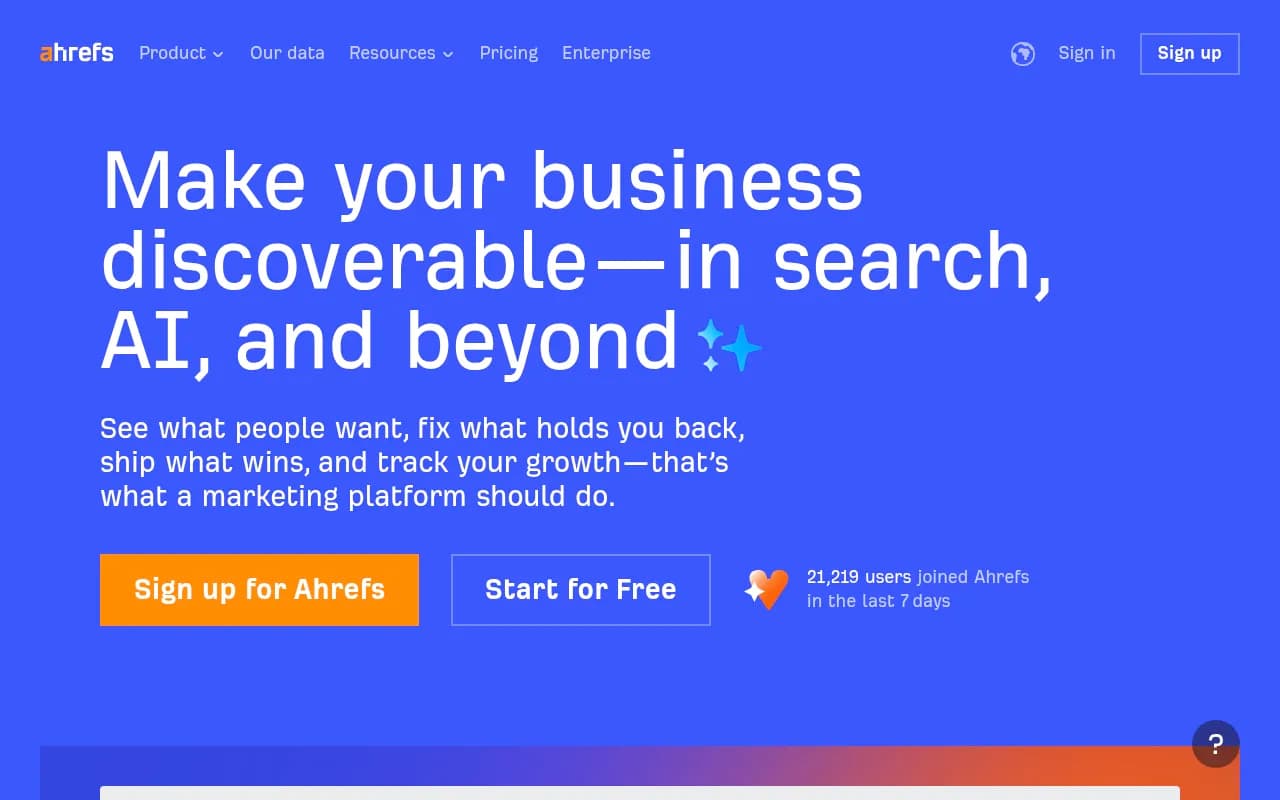
The limitation is similar to Semrush: fixed prompts, no AI traffic attribution, and the AI tracking is an add-on to a traditional SEO platform rather than a purpose-built AI visibility tool. Useful if you're already an Ahrefs user, but not the first choice if AI visibility is your primary concern.
Peec AI
Peec AI is a clean, focused AI visibility tracker aimed at marketing teams that want prompt-level data without enterprise complexity. It tracks brand mentions across the major AI engines and gives you competitor comparisons.

Like Otterly, Peec AI is a monitoring tool. It doesn't have crawler logs, content generation, or traffic attribution. For a post-update workflow where you need to understand what changed and why, you'd need to pair it with other tools. But the interface is clean and the data is accessible, which matters for teams that don't have dedicated SEO analysts.
Platform comparison
| Platform | AI engines tracked | Crawler logs | Content generation | Competitor heatmaps | Traffic attribution | Best for |
|---|---|---|---|---|---|---|
| Promptwatch | 10+ | Yes | Yes (Content Agents) | Yes | Yes | Full action loop: find gaps, fix them, track results |
| Profound | 10+ | No | No | Yes | No | Enterprise depth and governance |
| Scrunch AI | Multiple | No | No | Yes | No | Broad monitoring with clean reporting |
| SE Ranking | Google AI + traditional | No | Basic | Limited | No | Teams bridging traditional SEO and AI |
| Semrush | Google AI + some | No | No | Limited | No | Existing Semrush users |
| Otterly.AI | ChatGPT, Perplexity, AI Overviews | No | No | Basic | No | Simple monitoring on a budget |
| Ahrefs | Multiple (Brand Radar) | No | No | Limited | No | Existing Ahrefs users |
| Peec AI | Multiple | No | No | Yes | No | Marketing teams wanting clean prompt data |
How to use these tools after a core update
The diagnostic workflow matters as much as the tool you pick. Here's how to approach it:
Step 1: Establish what changed in traditional search first
Before you can understand the AI impact, you need to know what the core update did to your traditional rankings. Pull your Google Search Console data for the two weeks before and after the update. Identify which pages lost impressions and clicks. This tells you which content Google's quality signals downgraded.
Step 2: Cross-reference with AI citation data
Now check whether the same pages lost AI citations. This is where the platform matters. In Promptwatch, you can see page-level citation data across AI engines — which pages are being cited, how often, and by which models. If the pages that lost traditional rankings also lost AI citations, the core update likely hit your topical authority or content quality signals. If the AI citations held while traditional rankings dropped, the issue may be more technical.
Step 3: Run a competitor comparison
Check whether your competitors gained visibility where you lost it. This tells you whether the update rewarded a specific type of content or source that you're not producing. Promptwatch's competitor heatmaps and Profound's share-of-voice data are both useful here.
Step 4: Identify the content gaps
This is where most teams stop too early. They see the damage, write a report, and wait for the next update. The better move is to run a content gap analysis immediately. In Promptwatch, Answer Gap Analysis shows you exactly which prompts competitors are now visible for that you're not — the specific questions AI models want answers to but can't find on your site. These are your recovery targets.
Step 5: Create and track
Build content that addresses the gaps. Track when AI crawlers pick it up (Promptwatch's crawler logs show you this in real time), and monitor when it starts generating citations. This closes the loop from update to recovery.
A note on Google AI Mode specifically
Google's AI Mode is worth calling out separately. It's different from AI Overviews — it's a full conversational interface that replaces the traditional SERP for users who opt in. Core updates affect AI Mode differently than they affect traditional rankings, and most platforms are still catching up on tracking it specifically.
Promptwatch and SE Ranking both track Google AI Mode alongside other surfaces. If you're seeing traffic drops that don't fully explain themselves through traditional rank changes, AI Mode is worth checking separately.
The bottom line
A Google core update in 2026 isn't just a traditional SEO event. It's an AI visibility event too, and the two don't always move together. The teams that recover fastest are the ones tracking both, diagnosing the gap between them, and creating content that addresses what AI models now want to cite.
The platform you pick should match where you are in that workflow. If you're starting from scratch and want a single tool that covers monitoring, gap analysis, and content generation, Promptwatch is the strongest option. If you're enterprise and need governance and depth, Profound is worth the investment. If you're already on Semrush or Ahrefs and just want to add AI tracking, use what you have — but know the ceiling.
The core update isn't the end of the story. It's the beginning of a content gap you now need to close.