Key takeaways
- Most AI visibility platforms are priced for marketing teams, not solo operators — but several genuinely affordable options exist starting at $29-$99/month
- The biggest distinction is monitoring-only vs. optimization: cheaper tools show you where you're invisible, but don't help you fix it
- Freelancers and consultants have different needs than agencies — you need fast setup, low overhead, and clear ROI on a single site
- For solo operators who want to actually improve their AI search presence (not just watch it), Promptwatch is the only platform in this price range that combines tracking, content gap analysis, and content generation in one place
- Free tools exist but have real limitations — they're fine for a quick audit, not ongoing optimization
Why AI search visibility matters for solo operators
If you're a freelance consultant, independent strategist, or one-person agency, you've probably noticed that the old playbook for getting found online is quietly breaking. Google still matters. But a growing slice of your potential clients now start their vendor search by asking ChatGPT, Perplexity, or Google's AI Overviews something like "who's the best B2B content strategist for SaaS companies?" or "what SEO consultant should I hire for a fintech startup?"
Those AI models answer with a short list of names. You're either on it or you're not.
The problem is that most tools built to help with this were designed for companies with dedicated marketing teams, six-figure software budgets, and a VP of Growth to justify the spend. Profound raised $155M and targets Fortune 500 clients. Evertune is explicitly enterprise. AthenaHQ, Scrunch, Bluefish — same story.
So what do you actually use when you're running a one-person operation and your monthly tool budget is somewhere between "reasonable" and "I need to see ROI on this"?
That's what this guide is for.
What "AI search visibility" actually means for a freelancer
Before spending anything, it's worth being clear on what you're measuring. AI visibility (sometimes called GEO — Generative Engine Optimization — or AEO — Answer Engine Optimization) is about how often AI models recommend or cite you when someone asks a relevant question.
For a freelancer or consultant, that usually means:
- Does ChatGPT mention you when someone asks for a consultant in your niche?
- Does Perplexity cite your website when someone researches your service area?
- Does Google's AI Overview pull from your content when someone searches for what you do?
The challenge is that AI models don't just pull from Google rankings. They pull from a mix of sources: your website content, third-party mentions, Reddit threads, review sites, LinkedIn posts, and more. Tracking this is genuinely different from traditional rank tracking, which is why a new category of tools has emerged.
The real pricing landscape in 2026
Here's an honest look at where the market sits right now for solo operators:
| Tool | Starting price | Monitoring | Content generation | Crawler logs | Best for |
|---|---|---|---|---|---|
| Promptwatch | $99/mo | Yes (10 models) | Yes (AI Content Agents) | Yes | Solo operators who want to fix gaps, not just find them |
| Otterly.AI | $29/mo | Yes (basic) | No | No | Cheapest entry point for monitoring |
| Peec AI | $95/mo | Yes (multi-engine) | No | No | Clean dashboards, multi-language |
| Rankshift | ~$49/mo | Yes | No | No | Budget brand tracking |
| LLM Pulse | Freemium | Yes (limited) | No | No | Free tier exploration |
| Ahrefs Brand Radar | Bundled with Ahrefs | Yes (limited) | No | No | Existing Ahrefs users |
| Semrush AI features | Bundled with Semrush | Yes (limited) | No | No | Existing Semrush users |
| SE Ranking | Bundled | Yes | No | No | All-in-one SEO + AI monitoring |
| ProductRank | Free | Yes (basic) | No | No | Zero-budget starting point |
A few things stand out here. First, the monitoring-only tools are cheap but they leave you stuck. You can see that you're invisible in Perplexity, but the tool won't tell you why or what to create to fix it. Second, the tools that actually help you take action (content gap analysis, content generation, optimization workflows) are mostly priced for teams — with one notable exception.
The monitoring-only trap
This is worth dwelling on because it's where most freelancers waste money.
Tools like Otterly.AI, Rankshift, LLM Pulse, and similar entry-level platforms are genuinely useful for one thing: showing you a number. Your brand mention rate across ChatGPT, Perplexity, Google AI Overviews. Maybe a competitor comparison. That's it.
If you're already doing well in AI search and just want to track it, that's fine. But most freelancers and consultants reading this guide are not already visible in AI search. They're trying to get there. And a monitoring dashboard that shows you "0% mention rate" every week doesn't help you change that number.
Otterly.AI


The monitoring-only tools are best used as a diagnostic starting point — run a quick audit, understand your baseline, then move to a platform that helps you act on what you find.
Tools worth considering for solo operators
Promptwatch: the only action-oriented option at this price point
At $99/month for the Essential plan (1 site, 50 prompts, 5 articles per month), Promptwatch is priced at the upper end of what a solo operator might spend on a single tool — but it's doing something fundamentally different from the monitoring-only alternatives.
The core loop: it finds the specific prompts where competitors are getting cited but you're not (Answer Gap Analysis), then helps you create content designed to close those gaps (Content Agents), then tracks whether your new content actually starts getting cited. That's a complete workflow, not just a dashboard.
For a freelancer, this matters because your time is the constraint. You don't have a team to turn data into action. A tool that shows you the gap and helps you write the article to fill it is worth more than two separate tools that each do half the job.
It also tracks across 10 AI models (ChatGPT, Perplexity, Google AI Overviews, Claude, Gemini, Grok, DeepSeek, Meta AI, Copilot, Mistral), includes AI crawler logs so you can see when GPTBot or ClaudeBot actually visits your site, and has prompt volume estimates so you can prioritize which gaps are worth filling first.
Promptwatch is the platform I'd point a solo consultant to if they're serious about improving their AI visibility, not just measuring it.

Otterly.AI: the cheapest serious entry point
At $29/month, Otterly.AI is genuinely accessible. It tracks brand mentions across ChatGPT, Perplexity, and Google AI Overviews, gives you a basic competitor comparison, and has a clean enough interface that you won't spend an hour figuring it out.
What it doesn't do: content gap analysis, content generation, crawler logs, prompt volume data, or any kind of optimization workflow. It's a monitoring tool, full stop.
If you're just starting out and want to understand your baseline before committing to a more capable platform, Otterly.AI is a reasonable first step. Just don't expect it to help you move the needle.
Otterly.AI
Peec AI: clean multi-engine tracking with a mid-market price
Peec AI sits at around $95/month and offers solid multi-engine tracking with clean dashboards and strong global coverage (115+ languages). It's a well-built monitoring platform, particularly if you work with international clients or need multi-language tracking.
Like Otterly.AI, it's monitoring-focused. No content generation, no crawler logs, no optimization workflow. But if your primary need is accurate, multi-engine tracking with a professional interface, Peec AI delivers that.

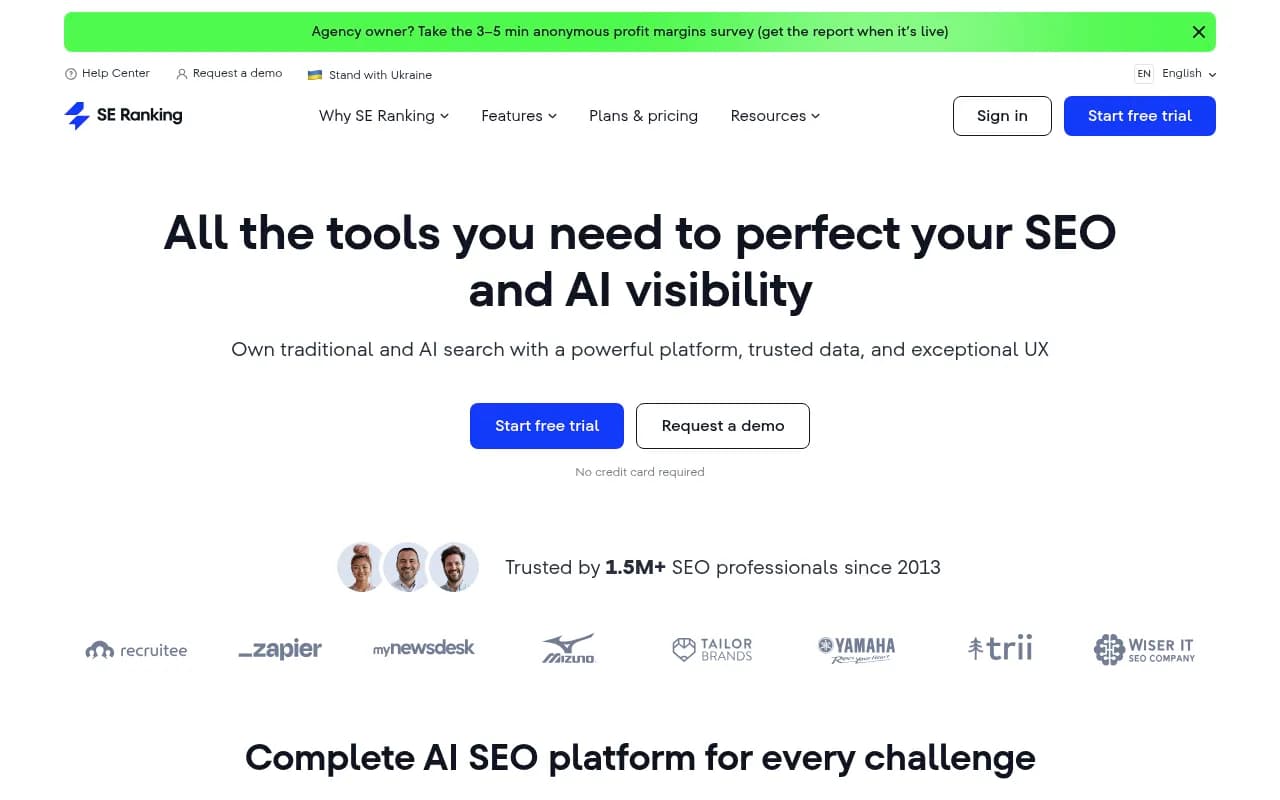
SE Ranking: if you want AI monitoring bundled into your SEO tool
SE Ranking has added AI visibility features to its existing SEO platform. If you're already paying for SE Ranking for traditional rank tracking and site audits, the AI monitoring features are a reasonable add-on rather than a separate subscription.
The AI visibility features are less deep than dedicated platforms — you won't get crawler logs or content gap analysis — but for a solo operator who wants one tool for everything, it's worth considering.
Rankshift: budget brand tracking
Rankshift is one of the more affordable dedicated AI visibility trackers, with a clean interface focused on brand mention tracking across ChatGPT, Perplexity, and similar engines. It's a reasonable option if you want something cheaper than Promptwatch and more focused than a bundled SEO tool.
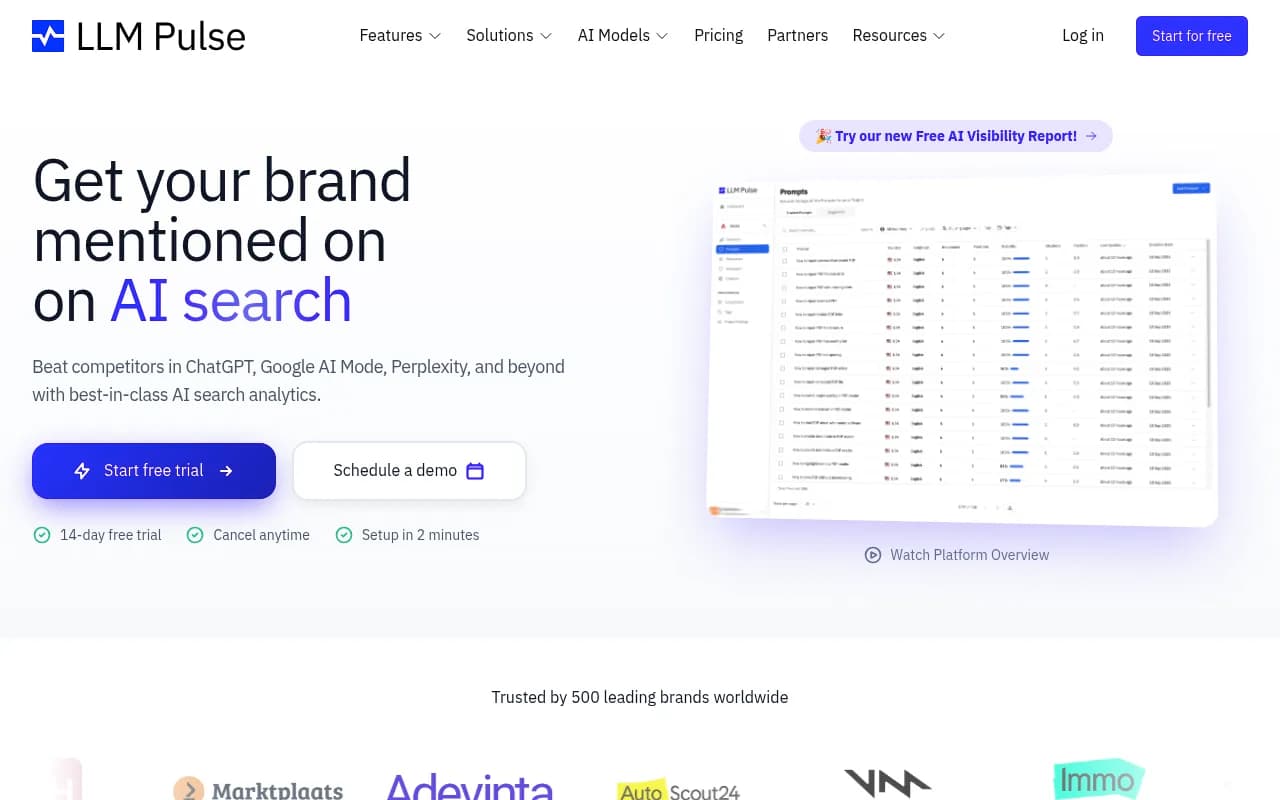
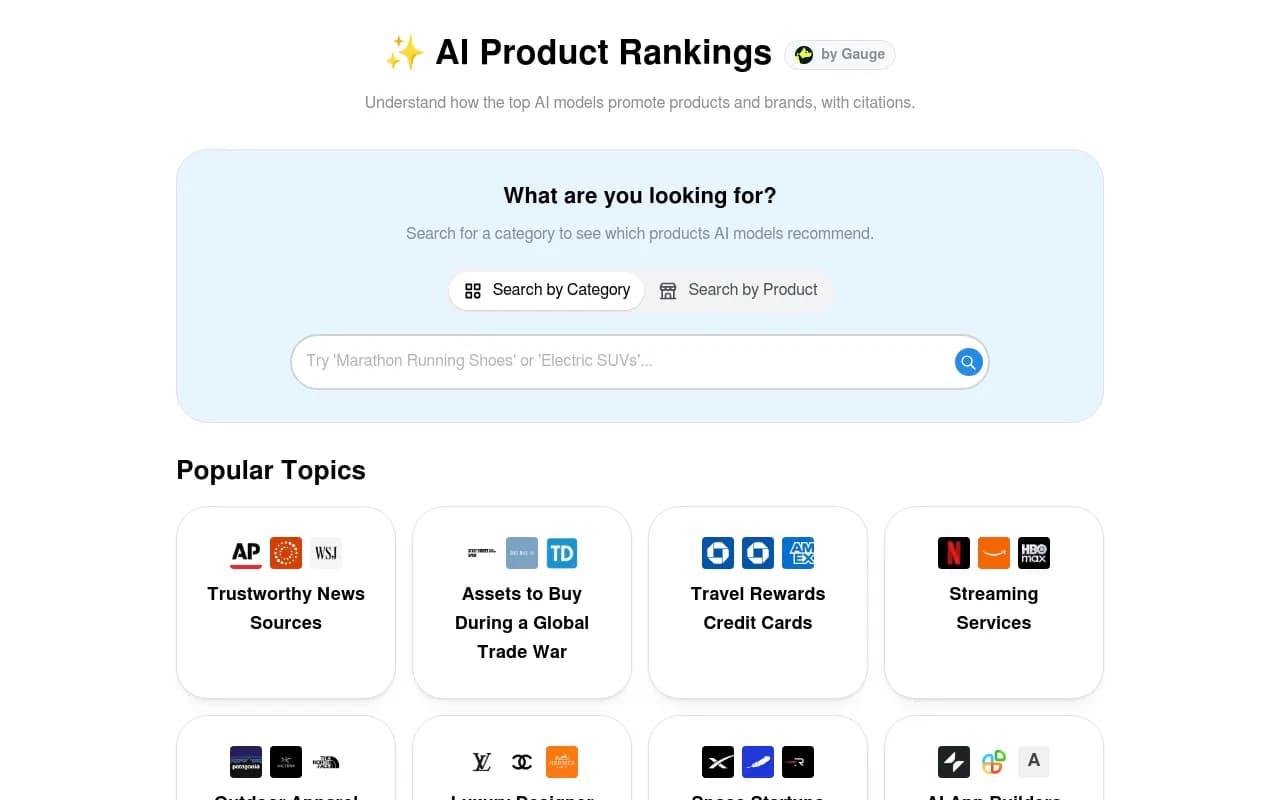
LLM Pulse and ProductRank: free tier options
Both LLM Pulse and ProductRank have free tiers that let you run basic visibility checks without spending anything. They're useful for a one-time audit or to get a rough sense of where you stand, but the free tiers are limited enough that they're not viable for ongoing tracking.
What to look for as a freelancer specifically
Enterprise buyers evaluate AI visibility tools on data depth, API access, team seats, and white-label reporting. As a solo operator, your criteria are different:
Single-site pricing. Most platforms charge per site or per brand. Make sure the entry tier covers your use case without forcing you into a multi-site plan you don't need.
Prompt limits that make sense. A "50 prompts" limit sounds restrictive, but for a solo consultant tracking your own brand and a handful of competitors, 50 well-chosen prompts is actually enough. The question is whether the tool helps you pick the right prompts.
Time to value. You don't have an onboarding team. The tool needs to be usable within an hour of signing up, not after a three-week implementation.
Monitoring vs. optimization. If you just want to know where you stand, a $29/month monitoring tool is fine. If you want to improve your position, you need a platform that helps you create and optimize content — and that means paying more, but getting more.
Content generation quality. Not all AI content tools are equal. The difference between generic AI filler and content that actually gets cited by AI models is whether the tool grounds its output in real prompt data, citation patterns, and competitor analysis. Generic content won't move your visibility scores.
A realistic workflow for a solo consultant
Here's how a freelancer might actually use an AI visibility tool in practice:
-
Set up tracking for 10-15 prompts that represent how your ideal clients would search for someone like you. "Best [your specialty] consultant for [your niche]" type queries.
-
Run a baseline audit. Where do you appear? Where do competitors appear instead of you? Which AI models are most relevant to your audience?
-
Identify the highest-value gaps. Which prompts have meaningful search volume and are winnable? A tool with prompt volume data (like Promptwatch) helps you prioritize instead of guessing.
-
Create content to fill those gaps. This might be a detailed article answering a question AI models can't currently find a good answer to on your site. Or it might be getting mentioned on third-party sites that AI models already cite.
-
Track the results over 4-8 weeks. AI models re-crawl content regularly. You should start seeing citation improvements within a month or two of publishing well-targeted content.
-
Repeat. AI search is not a one-time fix. New competitors enter, models update, and the prompts that matter shift over time.
What to skip
A few categories worth avoiding as a solo operator:
Enterprise platforms with enterprise pricing. Profound ($155M raised, Fortune 500 clients), Evertune, AthenaHQ, Bluefish, Scrunch — these are genuinely good platforms, but they're not built for you and the pricing reflects that. Don't waste time on demos.
Profound


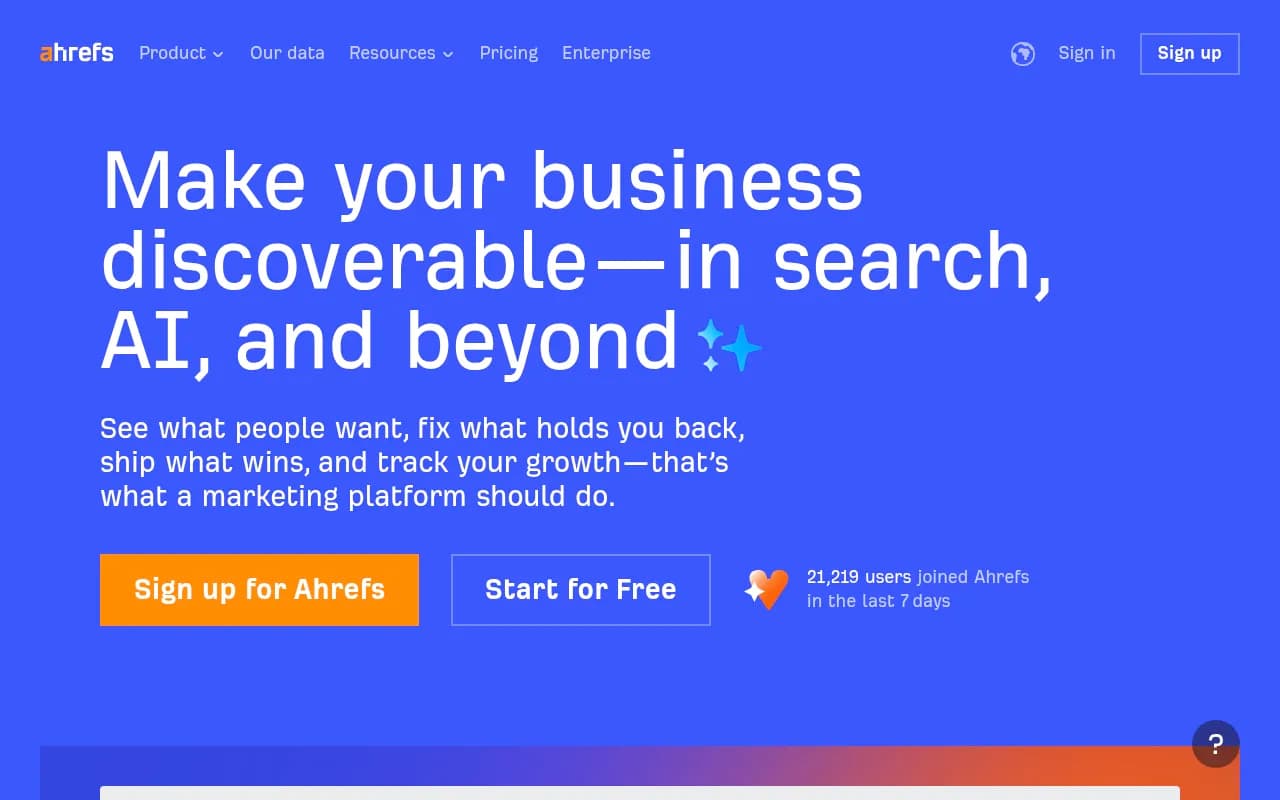
Traditional SEO tools with bolted-on AI features. Semrush and Ahrefs have added AI visibility modules, but they use fixed prompt sets and don't give you the depth of a dedicated platform. If you're already paying for these tools, use the AI features as a supplement. Don't buy them specifically for AI visibility.
Free tools as a long-term strategy. Free tiers are fine for exploration. They're not a substitute for real tracking. The data is usually delayed, the prompt coverage is thin, and there's no path to optimization.
The honest bottom line
The AI visibility tool market in 2026 is mostly built for companies, not consultants. The enterprise platforms are excellent but irrelevant to your budget. The cheap monitoring tools are accessible but leave you with data and no direction.
The sweet spot for a solo operator who wants to actually improve their AI search presence — not just measure it — is a platform that closes the loop from gap identification to content creation to citation tracking. Right now, Promptwatch does that at $99/month, which is high for a single tool but reasonable when you consider what it replaces: a monitoring tool, a content brief tool, and a content generation tool, all stitched together around real AI search data.
If $99/month is too much right now, start with Otterly.AI at $29/month to understand your baseline, then graduate to a more capable platform once you've seen enough to know which gaps are worth closing.
The worst move is spending months watching a dashboard that tells you you're invisible without doing anything about it.