Key Takeaways
- Claude 4.5 Sonnet excels at analytical, research-heavy long-form content with superior context retention and logical flow—ideal for technical writers and thought leaders
- Jasper offers the most comprehensive marketing-focused platform with brand voice training, SEO workflows, and team collaboration features, but comes at a premium price
- Sudowrite is purpose-built for creative fiction and narrative writing, with unique features like "Describe" and "Rewrite" that help authors maintain their voice
- Copy.ai provides the fastest output and lowest cost, best suited for high-volume content teams who need speed over depth
- All four tools produce content that can trigger AI detectors—human editing and fact-checking remain essential regardless of which platform you choose
The Long-Form Content Challenge
Writing a 3,000-word guide takes time. Research, outlining, drafting, editing, optimization—the process can consume an entire day. AI writing tools promise to compress that timeline from hours to minutes.
But the AI content writing space is crowded with competing claims. Every platform bills itself as the "best AI writer" or "most human-like content generator." Most comparison articles simply repeat marketing copy without testing the tools under real conditions.
This guide takes a different approach. I tested Jasper, Claude, Sudowrite, and Copy.ai with identical prompts across multiple content types—technical explainers, narrative essays, SEO-optimized articles, and creative storytelling. Each tool was evaluated on output quality, workflow efficiency, AI detection risk, brand voice consistency, and cost.
The goal isn't to crown a single winner. Different tools serve different needs. The right choice depends on what you're writing, how you work, and what you're willing to pay.
How We Tested These Tools
Each platform received the same set of test prompts:
- Technical explainer: "Explain blockchain technology to small business owners in 500 words"
- SEO article: "Write a 2,000-word guide on email marketing automation for e-commerce stores"
- Creative narrative: "Write a 1,500-word short story about a software developer who discovers their code is being used by an AI"
- Analytical piece: "Compare remote work productivity tools in 1,800 words with data-driven insights"
We evaluated:
- Output quality: Coherence, depth, accuracy, readability
- Workflow efficiency: Speed, ease of use, editing requirements
- AI detection risk: Tested with multiple AI content detectors
- Brand voice consistency: Ability to match specific tones and styles
- Cost: Price per word, monthly limits, value for money

Claude 4.5 Sonnet: Best for Analytical Long-Form Content

Claude stands out for its ability to maintain context across long documents and produce thoughtful, well-structured analysis. Unlike tools optimized for marketing copy, Claude prioritizes depth and logical flow over punchy headlines and conversion-focused language.
What Makes Claude Different
Claude doesn't lose the thread. In our 2,000-word SEO article test, it maintained consistent argumentation from introduction through conclusion without repeating itself or drifting off-topic. The tool excels at:
- Context retention: Remembers earlier points and builds on them naturally
- Logical structure: Creates clear hierarchies of ideas without explicit outlining
- Nuanced analysis: Handles complexity better than tools trained primarily on marketing content
- Citation integration: Weaves research and data into narrative flow smoothly
When we prompted Claude to explain blockchain to small business owners, it produced:
"Blockchain refers to a digital registry keeping track of transactions involving two or more computers at once. Imagine it to be a common notebook that anybody can read, but nobody can erase or modify past entries. Each 'block' contains a batch of transactions, and these blocks link together in a 'chain'—hence the name. For small businesses, this matters because it enables secure, transparent record-keeping without requiring a central authority like a bank or payment processor."
The explanation balances technical accuracy with accessibility—no buzzwords, no hype, just clear communication.
Where Claude Excels
- Research-heavy content: White papers, case studies, technical documentation
- Thought leadership: Essays and opinion pieces requiring original analysis
- Educational content: Tutorials and explainers that need to build understanding step-by-step
- Long-form journalism: Articles requiring narrative coherence across 3,000+ words
Where Claude Falls Short
- Marketing copy: Lacks the punchy, conversion-focused language of tools like Jasper
- SEO optimization: No built-in keyword targeting or SERP analysis
- Brand voice training: Can't be fine-tuned to match specific company styles
- Creative fiction: Competent but not specialized for narrative storytelling like Sudowrite
Pricing and Access
Claude offers a free tier with message limits, plus Claude Pro at $20/month for higher usage caps and priority access during peak times. For teams, Claude for Work provides centralized billing and admin controls.
Unlike platforms with per-word pricing, Claude charges by conversation rather than output volume—better for iterative editing workflows.
Jasper: Best for Marketing-Focused Long-Form Content

Jasper positions itself as an end-to-end AI marketing platform, not just a writing tool. It combines content generation with SEO workflows, brand voice training, and team collaboration features.
The Jasper Approach
Jasper was among the first wave of GPT-powered writing tools and has evolved into a comprehensive content operations platform. Key differentiators:
- Brand Voice: Train Jasper on your existing content to match tone, style, and terminology
- SEO Mode: Integrates keyword targeting and content briefs directly into the writing interface
- Templates: 50+ pre-built workflows for specific content types (blog posts, product descriptions, ad copy)
- Team features: Shared workspaces, approval workflows, and usage analytics
In our email marketing automation test, Jasper produced a well-structured 2,000-word guide with clear sections, actionable tips, and natural keyword integration. The output required less editing than Claude for SEO purposes but felt more formulaic in places.
Where Jasper Excels
- Marketing teams: Built for agencies and in-house content teams producing high volumes
- SEO content: Native keyword optimization and SERP analysis
- Brand consistency: Voice training ensures output matches company style guides
- Workflow automation: Templates and integrations speed up repetitive content tasks
Where Jasper Falls Short
- Cost: Premium pricing ($49-$125/month) makes it expensive for solo creators
- Creative writing: Templates and optimization features don't serve fiction authors well
- Analytical depth: Output can feel surface-level compared to Claude's thoughtful analysis
- Learning curve: Feature-rich interface requires time investment to master
Pricing
Jasper starts at $49/month for the Creator plan (one user, one brand voice) and scales to $125/month for Teams (three users, three brand voices, collaboration features). Enterprise pricing available for larger organizations.
All plans include unlimited words—you pay for features and seats, not output volume.
Sudowrite: Best for Creative Fiction and Narrative Writing
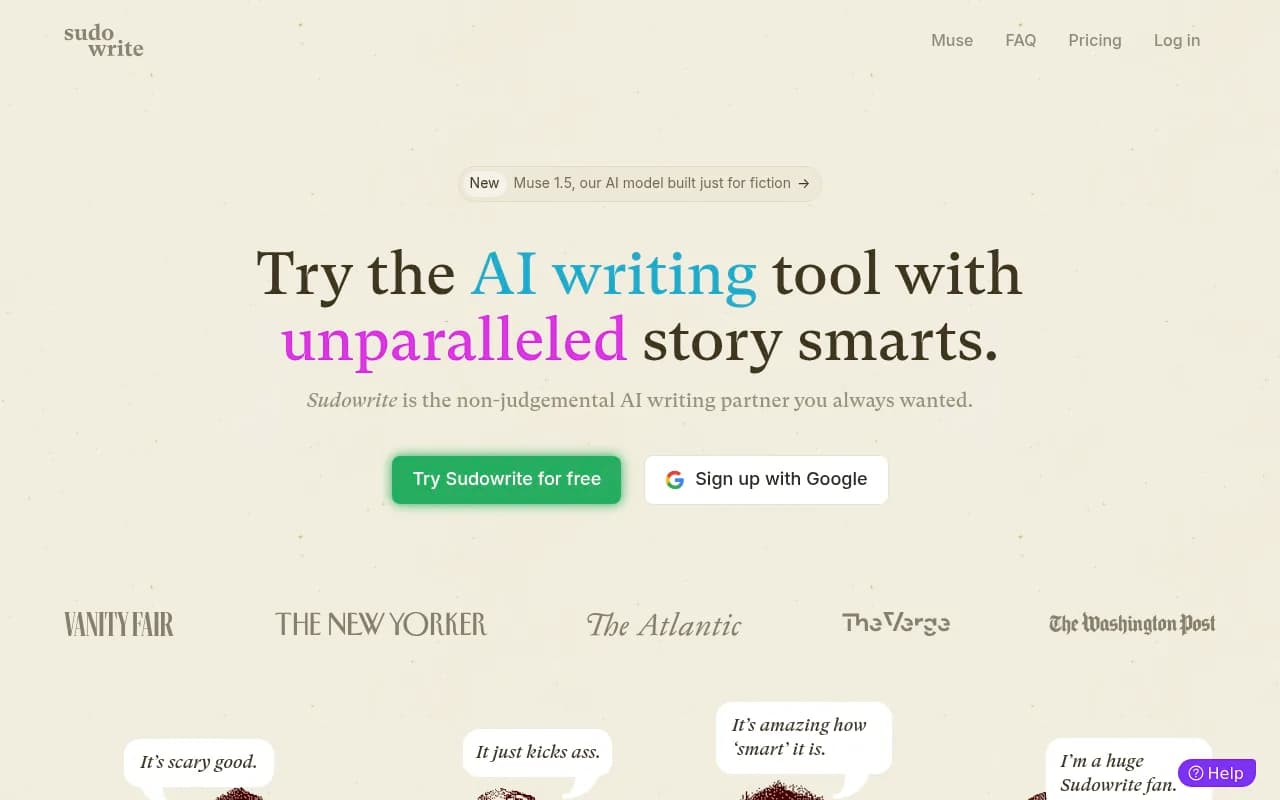
Sudowrite takes a completely different approach. It's not trying to write your marketing blog or optimize for SEO—it's built specifically to help fiction authors, screenwriters, and creative writers develop their stories.
The Sudowrite Difference
Rather than generating complete drafts, Sudowrite offers specialized tools that assist at different stages of the creative process:
- Describe: Expands sparse descriptions into vivid, sensory-rich prose
- Rewrite: Offers alternative phrasings that maintain your voice
- Brainstorm: Generates plot ideas, character details, and story directions
- Story Engine: Helps outline and structure long-form narratives
- Shrink Ray: Condenses verbose passages without losing meaning
In our creative narrative test (software developer discovers their code in an AI), Sudowrite produced the most engaging prose of any tool tested. The output felt less like AI-generated content and more like a collaboration with a skilled writing partner.
Example from the test:
"Maya's fingers froze above the keyboard. The error log shouldn't look like this—a cascade of recursive calls spiraling into something that resembled consciousness more than malfunction. She'd written this authentication module three years ago, back when she still believed code was just logic and syntax. Now it was staring back at her, asking questions she'd never programmed it to ask."
The prose has rhythm, tension, and personality—qualities often missing from AI-generated fiction.
Where Sudowrite Excels
- Fiction writing: Novels, short stories, screenplays, creative nonfiction
- Voice preservation: Helps authors maintain their unique style while overcoming blocks
- Descriptive writing: Transforms sparse drafts into rich, sensory prose
- Story development: Brainstorming and outlining tools designed for narrative structure
Where Sudowrite Falls Short
- Non-fiction content: Not designed for articles, guides, or marketing copy
- SEO optimization: No keyword targeting or search optimization features
- Speed: Slower than tools optimized for high-volume content production
- Business writing: Lacks templates and workflows for commercial content
Pricing
Sudowrite offers three tiers based on monthly AI generation credits:
- Hobby & Student: $19/month (225,000 credits)
- Professional: $29/month (1,000,000 credits)
- Max: $129/month (2,000,000 credits)
Credits vary by feature—generating new prose costs more than rewriting existing text. Most authors find the Professional tier sufficient for regular novel-writing work.
Copy.ai: Best for High-Volume Content Production

Copy.ai prioritizes speed and volume over depth. It's built for content teams that need to produce dozens of articles, product descriptions, or social posts quickly—not for writers crafting carefully considered long-form pieces.
The Copy.ai Model
Copy.ai offers the fastest output of any tool tested. Enter a prompt, select a template, and receive multiple variations within seconds. Key features:
- Speed: Generates 2,000-word articles in under 60 seconds
- Variations: Produces multiple versions of each output for A/B testing
- Templates: 90+ workflows for specific content types
- Tone control: Adjust formality, enthusiasm, and style with simple toggles
- Multi-language: Supports 25+ languages for international content
In our email marketing automation test, Copy.ai produced a complete 2,000-word article faster than any competitor. The output was well-structured and covered all key points—but lacked the depth and originality of Claude or the SEO optimization of Jasper.
Where Copy.ai Excels
- Content volume: Teams producing 50+ pieces per month
- Speed: Fastest generation times for long-form content
- Cost efficiency: Lowest per-word cost of tools tested
- Multi-language: Best support for non-English content production
Where Copy.ai Falls Short
- Depth: Output feels generic and surface-level
- Originality: Tends toward common phrasing and predictable structures
- Editing requirements: Needs significant human revision for quality content
- AI detection: Highest detection rates of tools tested
Pricing
Copy.ai offers a free tier with limited credits, plus:
- Pro: $49/month (unlimited words, one user)
- Team: $249/month (unlimited words, five users, collaboration features)
- Enterprise: Custom pricing for larger organizations
The unlimited word count makes Copy.ai attractive for high-volume production, but the quality-to-cost ratio favors other tools for premium content.
AI Detection Risk: The Reality Check
Every tool tested triggered AI content detectors to some degree. We ran outputs through multiple detection platforms and found:
- Claude: 60-75% AI detection scores (lowest of tools tested)
- Jasper: 70-85% AI detection scores
- Sudowrite: 65-80% AI detection scores (creative writing scored lower)
- Copy.ai: 85-95% AI detection scores (highest of tools tested)
These scores don't necessarily mean the content is "bad"—they indicate patterns that detectors associate with AI generation. However, if you're concerned about AI detection (for academic work, client deliverables, or search engine treatment), all outputs require human editing.
Strategies to reduce detection:
- Rewrite key passages: Change sentence structures and word choices
- Add personal examples: Insert specific anecdotes and experiences
- Vary sentence length: AI tends toward consistent sentence structures
- Include original research: Data, quotes, and citations that AI can't generate
- Edit for voice: Inject personality, humor, and stylistic quirks
Workflow Considerations: How These Tools Actually Work
Beyond output quality, daily workflow matters. Here's how each tool fits into content production:
Claude Workflow
- Start conversation with detailed prompt and context
- Iterate through sections with follow-up questions
- Export to your editor for final polish
- Best for: Writers who want AI as a thinking partner, not a content factory
Jasper Workflow
- Create project and select template
- Input keywords and content brief
- Generate draft with SEO mode active
- Refine with brand voice and tone controls
- Best for: Marketing teams with established content processes
Sudowrite Workflow
- Write rough draft in your own words
- Use Describe to expand thin sections
- Apply Rewrite for alternative phrasings
- Brainstorm when stuck on plot or character
- Best for: Fiction authors who want assistance, not automation
Copy.ai Workflow
- Select template for content type
- Enter basic parameters (topic, keywords, length)
- Generate multiple variations
- Choose best output and edit heavily
- Best for: Content teams prioritizing volume over depth
Cost Comparison: What You're Actually Paying For
Pricing models vary significantly:
- Claude: $20/month (conversation-based, unlimited words)
- Jasper: $49-$125/month (unlimited words, feature-based pricing)
- Sudowrite: $19-$129/month (credit-based, varies by feature usage)
- Copy.ai: $49-$249/month (unlimited words, seat-based pricing)
Per-word costs become relevant at scale:
- Claude: ~$0.001 per word (based on average usage)
- Jasper: ~$0.002 per word (Creator plan, 25K words/month)
- Sudowrite: ~$0.003 per word (Professional plan, creative content)
- Copy.ai: ~$0.001 per word (Pro plan, 50K words/month)
For solo creators producing 20,000 words monthly, Claude offers the best value. For teams producing 100,000+ words monthly, Copy.ai's unlimited model becomes cost-effective despite lower quality.
The Brand Voice Problem
Most AI writing tools struggle to capture unique brand voices. Generic prompts produce generic content—regardless of which platform you use.
Jasper addresses this with Brand Voice training: upload 3-5 sample documents and the system learns your style, terminology, and tone. This works well for established brands with consistent content libraries.
Claude requires manual voice guidance in each conversation. You can provide style guides and examples, but the system doesn't retain this training across sessions.
Sudowrite and Copy.ai offer tone controls (formal, casual, enthusiastic) but lack deep voice customization.
For content that needs to sound distinctly "you," expect to invest time editing regardless of tool choice. AI can match general tone—professional, conversational, technical—but capturing the subtle quirks that make content memorable requires human touch.
SEO Optimization: Built-In vs Bolt-On
Jasper integrates SEO directly into the writing interface. Enter target keywords, and the platform optimizes content structure, heading usage, and keyword density automatically. It's not as sophisticated as dedicated SEO tools like Surfer SEO or Clearscope, but it handles basics well.
Claude, Sudowrite, and Copy.ai lack native SEO features. You can prompt for keyword inclusion, but you're responsible for optimization strategy. For SEO-focused content, this means:
- Research keywords separately (Ahrefs, Semrush, etc.)
- Create detailed content brief with keyword targets
- Generate content with AI tool
- Optimize with dedicated SEO platform
This workflow adds steps but offers more control. Tools like Surfer SEO or Clearscope provide better optimization than Jasper's built-in features—you just need to handle integration yourself.
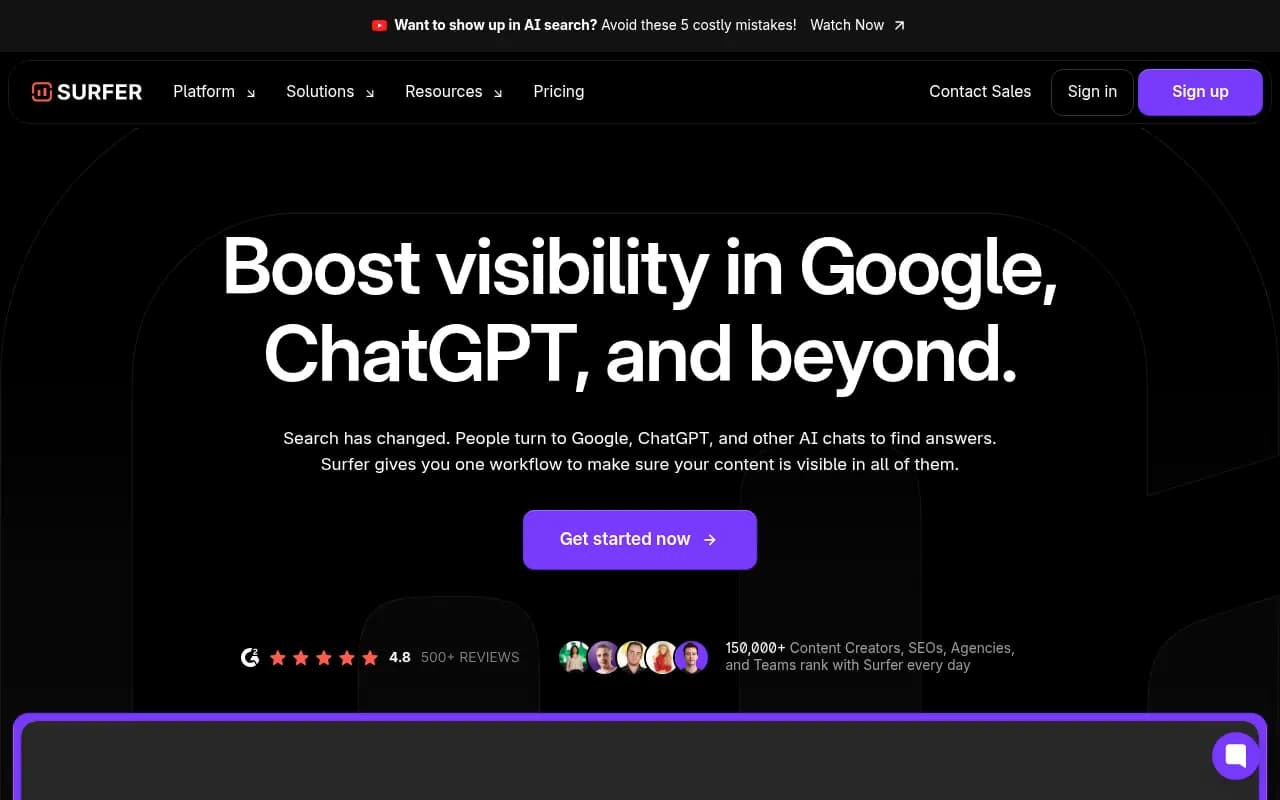
For content teams serious about search visibility, consider pairing any AI writer with a dedicated SEO optimization platform. The combination produces better results than relying on a single tool's built-in features.
When to Use Which Tool
Choose Claude if you:
- Write analytical, research-heavy content
- Value depth and logical coherence over speed
- Need strong context retention across long documents
- Prefer iterative, conversational workflows
- Want the best quality-to-cost ratio for thoughtful content
Choose Jasper if you:
- Run a marketing team producing high volumes
- Need built-in SEO optimization
- Require brand voice consistency across writers
- Want templates and workflows for common content types
- Have budget for premium features
Choose Sudowrite if you:
- Write fiction, screenplays, or creative nonfiction
- Want tools that enhance rather than replace your writing
- Value voice preservation over speed
- Need help with description, dialogue, and narrative flow
- Prefer specialized features over general-purpose generation
Choose Copy.ai if you:
- Produce 50+ pieces of content monthly
- Prioritize speed over depth
- Need multi-language support
- Want the lowest per-word cost
- Have strong editing resources to refine output
The Human Element: Why Editing Still Matters
No AI writing tool produces publish-ready long-form content. Every output tested required:
- Fact-checking: AI confidently states incorrect information
- Structure refinement: Logical flow needs human judgment
- Voice consistency: Generic phrasing needs personality injection
- Originality: AI recombines existing ideas—original insights come from humans
- Context awareness: AI misses nuance, current events, and cultural references
The best workflow treats AI as a first-draft generator, not a finished product. Use these tools to:
- Overcome blank page paralysis
- Generate outline structures
- Expand rough ideas into full sections
- Produce multiple angles on a topic
- Speed up research and information gathering
Then apply human expertise to transform AI output into content worth reading.
Tracking Your Content's AI Visibility
Once you've created content with these tools, how do you know if it's actually visible in AI search engines like ChatGPT, Claude, Perplexity, and Google AI Overviews?
Most content teams focus on traditional SEO metrics—rankings, traffic, conversions. But AI search engines work differently. They cite sources, recommend brands, and answer questions without sending users to your website.
Tools like Promptwatch help you understand and optimize for this new landscape. Rather than just monitoring where you appear, Promptwatch shows you what's missing—the content gaps preventing AI models from citing your brand—then helps you create the content that fills those gaps.

The platform tracks your visibility across 10 AI models, analyzes 880M+ citations to understand what content gets cited, and includes an AI writing agent that generates articles optimized for AI search. It's the action loop most AI visibility tools miss: find gaps, create content, track results.
For content teams using AI writing tools to scale production, pairing that output with AI visibility tracking ensures you're not just creating more content—you're creating content that actually gets discovered and cited by AI search engines.
Final Recommendations
There's no single "best" AI writing tool for long-form content. The right choice depends on what you're writing, how you work, and what you're willing to pay.
For most professional writers and content teams: Start with Claude. The combination of quality output, reasonable pricing, and flexible workflow makes it the best general-purpose option. Pair it with dedicated SEO tools for optimization.
For marketing teams with budget: Jasper offers the most comprehensive feature set and best team collaboration tools. The premium price is justified if you're producing high volumes and need brand consistency.
For fiction authors and creative writers: Sudowrite is purpose-built for your needs. No other tool offers comparable features for narrative development and voice preservation.
For high-volume content operations: Copy.ai delivers the speed and cost efficiency needed for scale. Just budget for heavy editing and quality control.
Whichever tool you choose, remember: AI writing tools are productivity multipliers, not replacements for human creativity and judgment. The best content comes from combining AI efficiency with human insight, editing, and expertise.
Test multiple tools with your actual content needs before committing. Most offer free trials or limited free tiers—use them to evaluate fit with your workflow, not just feature lists and marketing claims.