Key takeaways
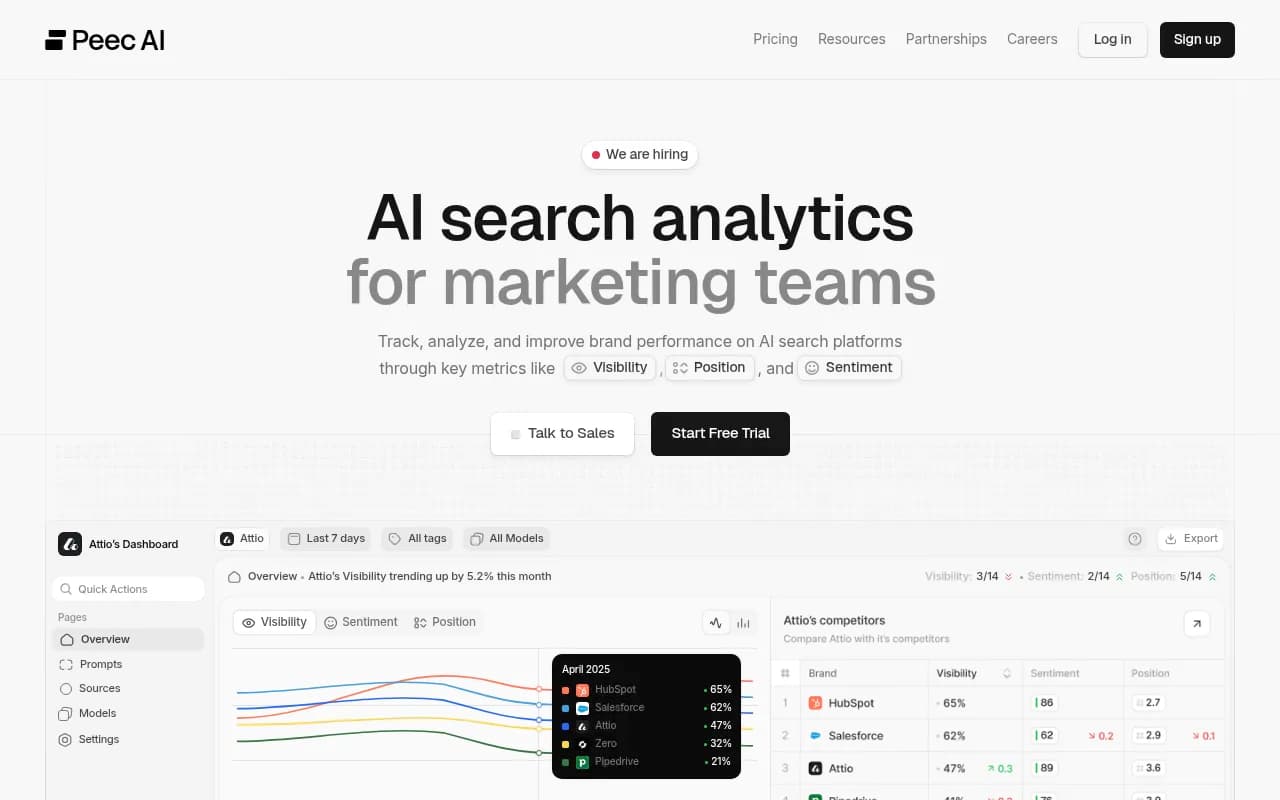
- Peec AI is a clean, easy-to-set-up monitoring tool, but it caps at three AI models and offers no content creation, SEO features, or traffic attribution.
- Teams that need to act on visibility data (not just see it) consistently outgrow Peec AI and end up stacking it with other tools.
- Promptwatch is the strongest all-around alternative for teams that want to find gaps, create content, and track results in one place.
- Profound and Scrunch AI are the best options for large enterprise teams that need deep analytics.
- Otterly.AI and SE Ranking are good fits for teams on tighter budgets or those already invested in traditional SEO workflows.
Peec AI does a few things well. The setup is genuinely fast (around three minutes), the interface is clean, and the citation tracking works reliably. For a team that just wants to know whether their brand shows up in ChatGPT or Perplexity, it's a reasonable starting point.
But most teams don't stay at that starting point for long.
The core problem: Peec AI's standard plans only cover three AI models. If you want broader coverage, you're talking to sales. And regardless of which plan you're on, Peec AI is a monitoring tool. It shows you where you're invisible. It doesn't help you do anything about it. No content generation, no answer gap analysis, no traffic attribution, no crawler logs.
So you end up paying for Peec AI plus a content tool plus an SEO platform plus something to track results. That stack gets expensive and fragmented fast.
This guide covers the best alternatives, ranked honestly by use case. Some are better for enterprise teams. Some are better for agencies. Some are better for teams that want everything in one place.
Why teams switch away from Peec AI
Before getting into alternatives, it's worth being specific about the gaps that drive people to look elsewhere.
The three-model limit is the most common complaint. Most teams want to track at least ChatGPT, Perplexity, Google AI Overviews, Gemini, and Claude. Peec AI's standard tiers don't cover that.
The second issue is actionability. Peec AI tells you your visibility score. It doesn't tell you which specific content gaps are causing you to lose citations to competitors, and it can't generate content to fill those gaps. You're left staring at a dashboard wondering what to actually do next.
Third: no traffic attribution. Knowing you're cited in AI answers is useful. Knowing which of those citations are driving actual visitors and revenue is what marketing teams need to justify budget.
The best Peec AI alternatives in 2026
Promptwatch — best overall for teams that want to act, not just monitor
Promptwatch is the most complete option in this space. The difference from Peec AI (and most other monitoring tools) is that it's built around an action loop rather than a reporting dashboard.
The workflow is: find the gaps, create content that fills them, track the results. Answer Gap Analysis shows you exactly which prompts competitors are visible for but you're not. Content Agents then generate articles, listicles, and comparisons grounded in real prompt data and citation patterns. Page-level tracking shows which pages are getting cited, by which models, and how often.
It also covers things most competitors skip entirely: AI crawler logs (real-time data on when ChatGPT, Claude, and Perplexity crawl your site and which pages they read), Reddit and YouTube citation tracking, ChatGPT Shopping monitoring, and query fan-outs that show how one prompt branches into sub-queries.
Coverage spans 10+ AI models including ChatGPT, Perplexity, Google AI Overviews, Google AI Mode, Claude, Gemini, Grok, DeepSeek, Copilot, and Meta AI.
Pricing starts at $99/month for the Essential plan (1 site, 50 prompts, 5 articles), with Professional at $249/month and Business at $579/month. Free trial available.

Profound — best for enterprise AI analytics depth
Profound is the strongest option for large enterprise teams that need granular analytics across multiple brands, markets, and AI engines. The platform goes deep on share-of-voice data, competitive benchmarking, and prompt-level insights.
Where it falls short relative to Promptwatch: it's primarily an analytics and monitoring tool. Content generation isn't a core part of the workflow, and Reddit/YouTube tracking isn't available. It also sits at a higher price point, which makes it harder to justify for mid-market teams.
That said, if you're a Fortune 500 brand running AI visibility programs across multiple regions and need enterprise-grade data infrastructure, Profound is worth evaluating seriously.
Profound

Scrunch AI — best for enterprise-wide AI monitoring
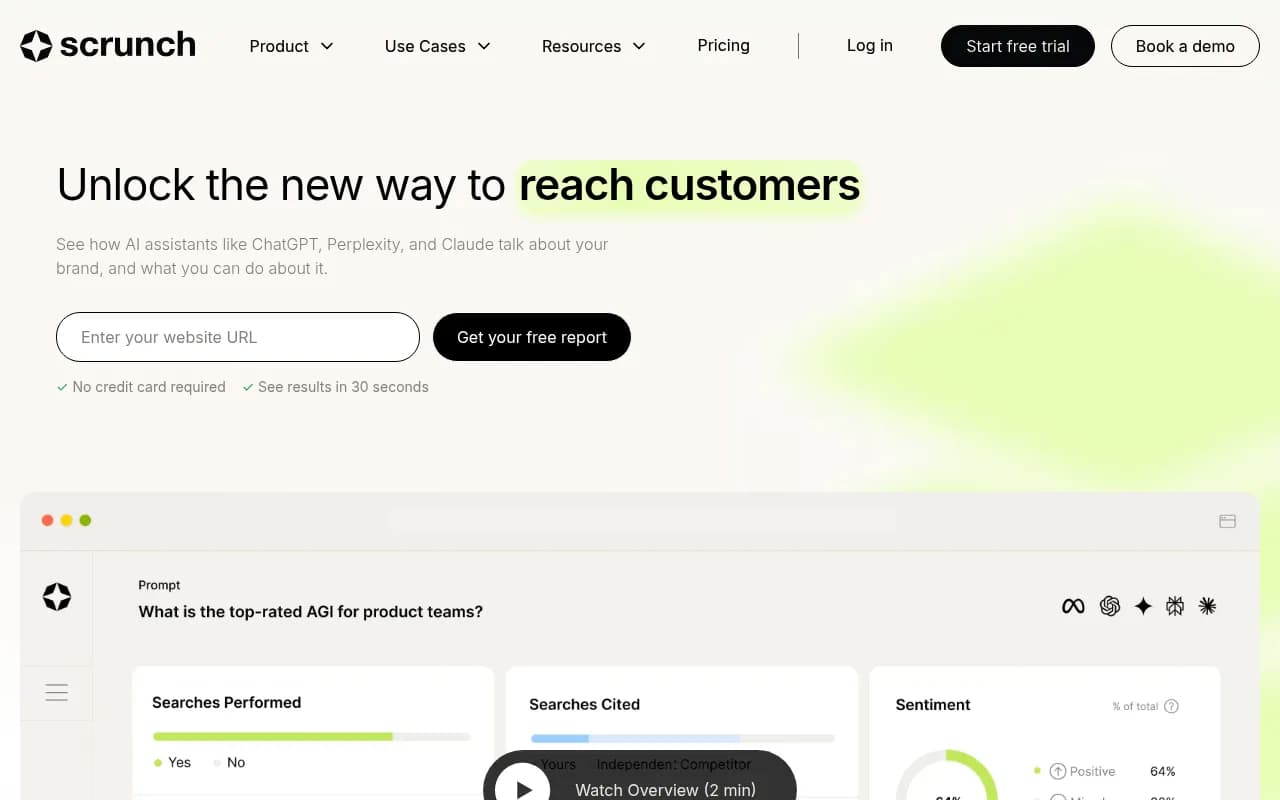
Scrunch AI is built for large organizations that need to monitor AI visibility across multiple product lines, geographies, and stakeholder groups. The platform handles multi-brand tracking well and has solid reporting for executive audiences.
Like Profound, it's primarily a monitoring platform. The actionability gap is real — Scrunch AI shows you the data but doesn't help you create content or fix what it finds. For teams that already have a content operation and just need robust monitoring infrastructure, that's fine. For teams that need an end-to-end solution, it's not enough on its own.
Otterly.AI — best entry-level option for focused AI search monitoring
Otterly.AI is the most accessible option on this list. It tracks brand mentions across ChatGPT, Perplexity, and Google AI Overviews, the interface is straightforward, and the pricing is reasonable for smaller teams.
The trade-offs are significant though. No crawler logs, no visitor analytics, no content generation, no Reddit or YouTube tracking. It's a monitoring-only tool, and a fairly basic one at that. If you're a solo marketer or small team that just wants to know whether your brand is showing up in AI answers, Otterly.AI works. If you need to do anything with that information, you'll need other tools alongside it.
Otterly.AI

AthenaHQ — best for sentiment-led brand monitoring
AthenaHQ takes a different angle than most tools here. It focuses on how AI models describe your brand, not just whether they mention it. Sentiment analysis, brand perception tracking, and competitive positioning in AI answers are its strengths.
This makes it genuinely useful for brand teams and PR functions that care about narrative control in AI responses. It's less useful for SEO teams that want to drive citation volume and traffic. And like most tools in this space, it doesn't help you create content to improve what it finds.

SE Ranking — best for teams already invested in traditional SEO
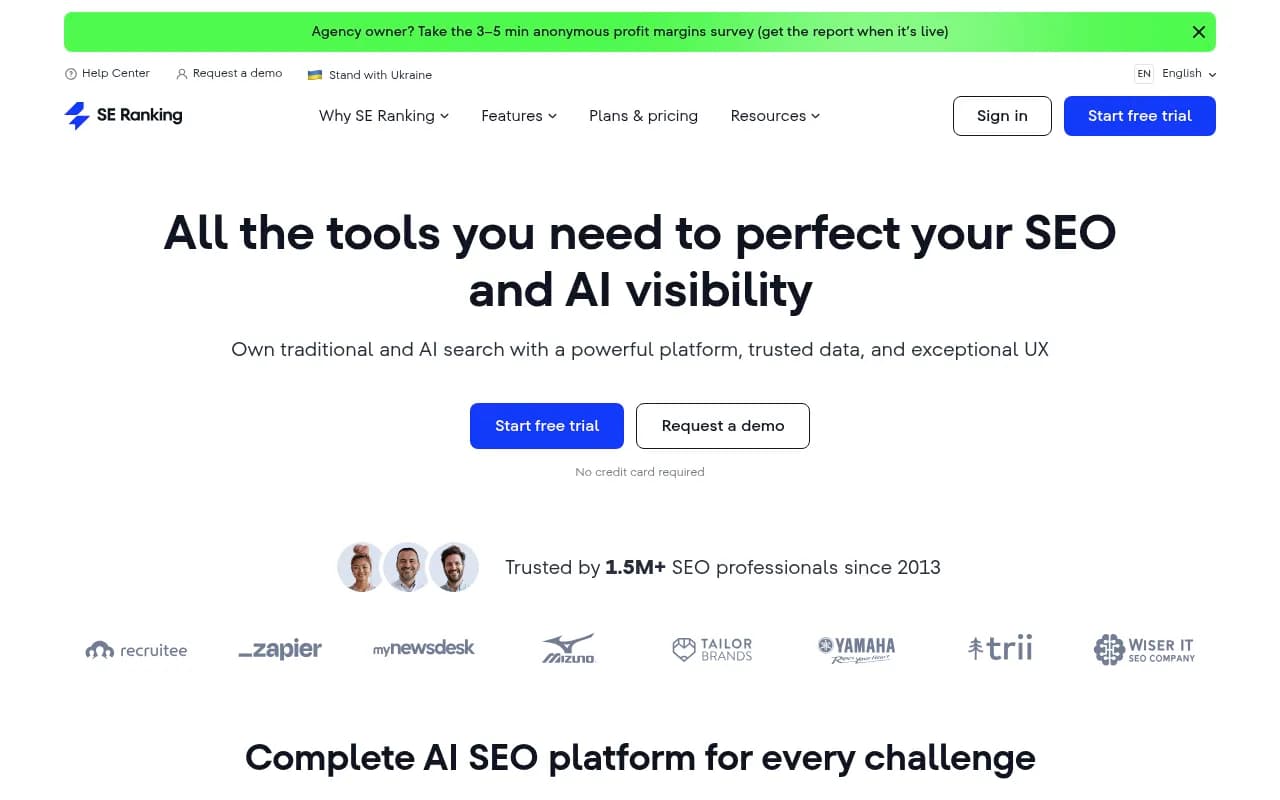
SE Ranking's AI Visibility module is a solid addition to an existing SEO workflow. If your team already uses SE Ranking for rank tracking, site audits, and keyword research, adding AI visibility monitoring to that workflow makes sense.
The advantage is consolidation — one platform for traditional SEO and AI search monitoring. The limitation is depth. SE Ranking's AI visibility features are newer and less mature than dedicated GEO platforms. Prompt volumes, difficulty scoring, and content gap analysis aren't as developed as what you'd get from Promptwatch or Profound.
Ahrefs — best for SEO professionals who want AI visibility added on
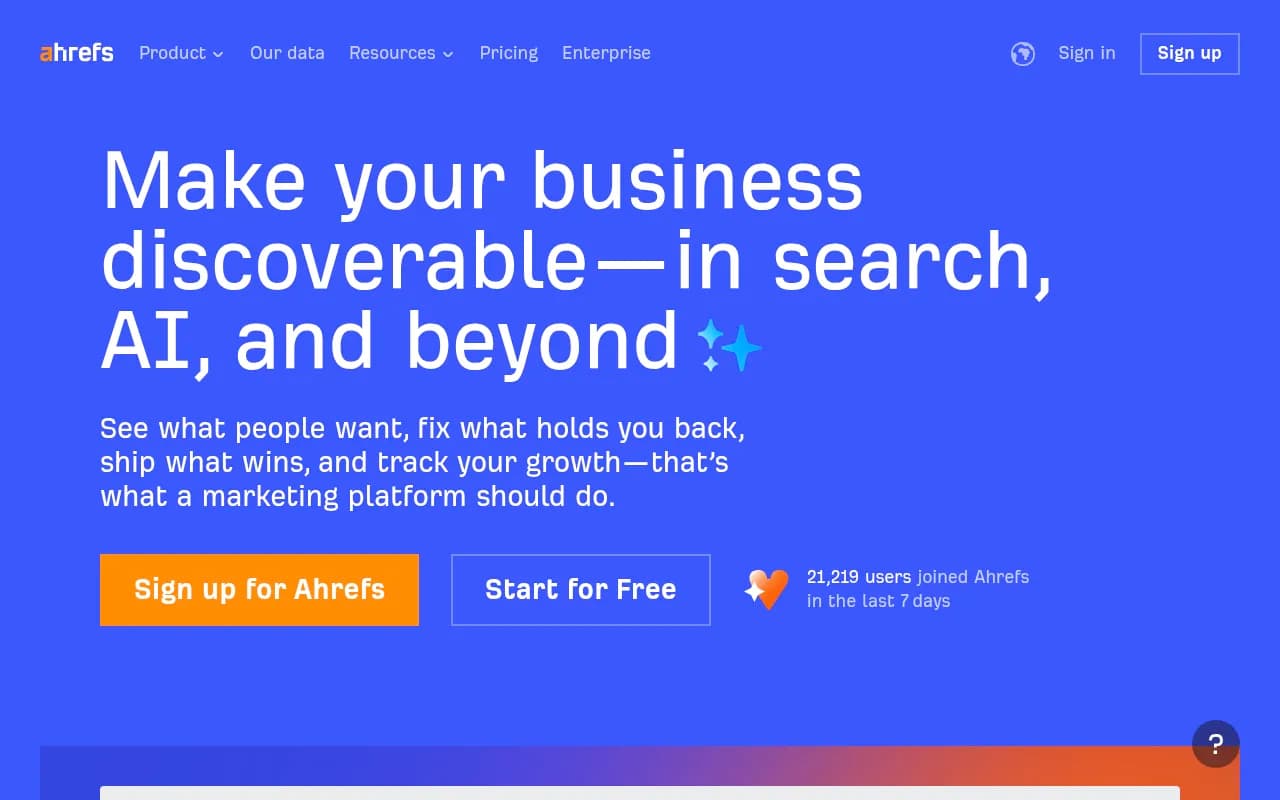
Ahrefs added Brand Radar to give SEO teams a way to track AI visibility alongside their existing keyword and backlink workflows. If you're already paying for Ahrefs and want basic AI monitoring without adding another tool, it's convenient.
The honest assessment: Brand Radar uses fixed prompts, which limits how useful the data is for teams trying to understand real user behavior. There's no AI traffic attribution, no content generation, and no crawler logs. It's a monitoring add-on, not a GEO platform.
Semrush — best for teams that want AI visibility inside a large marketing suite
Semrush's AI Toolkit gives large marketing teams a way to track AI visibility without leaving the Semrush ecosystem. The platform's breadth is its main selling point — keyword research, competitor analysis, content tools, and now AI monitoring in one place.
The limitation is the same as Ahrefs: fixed prompts, no traffic attribution, and AI visibility features that feel bolted on rather than purpose-built. For teams that want serious GEO capabilities, Semrush isn't the right choice. For teams that want basic AI monitoring inside a tool they already pay for, it's fine.
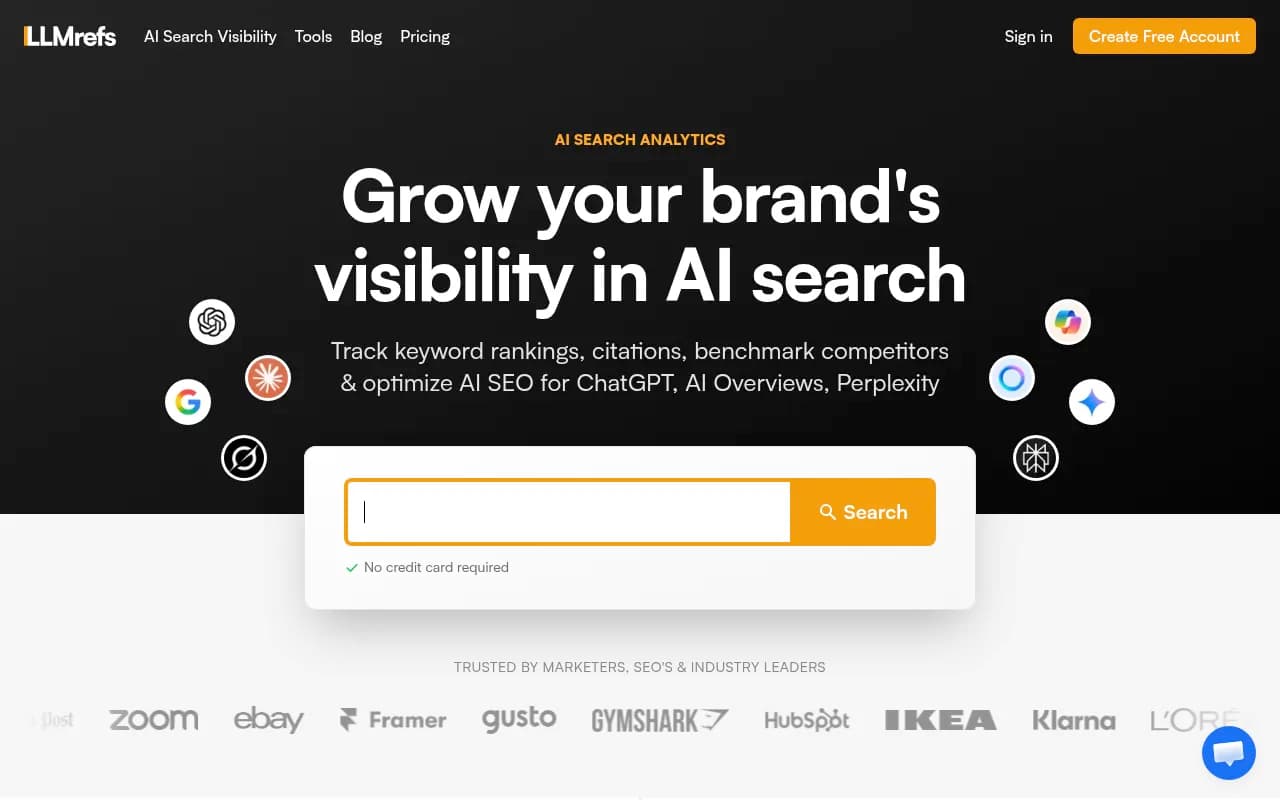
LLMrefs — best for AI citation and source tracking
LLMrefs focuses specifically on citation tracking — which pages, domains, and sources AI models are citing in their responses. This is genuinely useful data for teams trying to understand where to publish content, which third-party sites to target for mentions, and how citation patterns shift across models.
It's a narrow tool, but it does its specific job well. Don't expect content generation or full GEO workflow support.
LLMrefs
Head-to-head comparison
Here's how the main alternatives stack up across the features that matter most:
| Tool | AI models covered | Content generation | Crawler logs | Traffic attribution | Reddit/YouTube tracking | Best for |
|---|---|---|---|---|---|---|
| Promptwatch | 10+ | Yes | Yes | Yes | Yes | Full-stack GEO optimization |
| Profound | 9+ | No | No | Limited | No | Enterprise analytics |
| Scrunch AI | Multiple | No | No | No | No | Enterprise monitoring |
| Otterly.AI | 3-5 | No | No | No | No | Entry-level monitoring |
| AthenaHQ | Multiple | No | No | No | No | Brand sentiment |
| SE Ranking | 4-6 | Limited | No | No | No | SEO suite add-on |
| Ahrefs Brand Radar | 3-6 (fixed) | No | No | No | No | SEO professional add-on |
| Semrush AI Toolkit | Multiple (fixed) | Limited | No | No | No | Marketing suite add-on |
| LLMrefs | 9+ | No | No | No | No | Citation research |
| Peec AI | 3 (standard) | No | No | No | No | Basic monitoring |
How to choose the right alternative
The decision comes down to what you actually need to do with AI visibility data.
If you need to monitor and act on it: Promptwatch is the clear choice. The answer gap analysis, content generation, and crawler logs form a complete workflow that no other tool in this space matches end-to-end.
If you're at an enterprise and need deep analytics: Profound or Scrunch AI are worth evaluating. They're expensive and monitoring-only, but the data depth is real.
If you're on a tight budget and just want basic monitoring: Otterly.AI gets the job done for simple use cases. Just know you'll hit its ceiling quickly.
If you're already deep in a traditional SEO platform: SE Ranking's AI module or Ahrefs Brand Radar are the path of least resistance. Neither is a serious GEO platform, but they avoid adding another tool to your stack.
If you care specifically about how AI models describe your brand: AthenaHQ's sentiment focus makes it worth a look, particularly for brand and PR teams.
One thing worth saying plainly: most teams that take AI visibility seriously end up needing more than a monitoring dashboard. The platforms that only show you data without helping you improve it have a fundamental limitation. The search landscape has shifted enough that "we know we're invisible" isn't a useful endpoint — you need a path from that insight to actually showing up.
That's the gap most Peec AI alternatives still don't close. Promptwatch is the one that does.