Key takeaways
- Profound is a solid enterprise platform, but its pricing (starting at $499/month) puts it out of reach for most small businesses and lean marketing teams
- Most Profound alternatives are monitoring-only tools -- they show you where you're invisible in ChatGPT or Perplexity but don't help you do anything about it
- The best alternatives combine tracking with content gap analysis and optimization, so you can actually improve your AI visibility, not just measure it
- Promptwatch is the only platform in this comparison rated as a "Leader" across all GEO categories, and it starts at $99/month
- For small businesses, the right tool depends on budget, how many AI models you need to track, and whether you want just monitoring or a full optimization workflow
Why small businesses are looking beyond Profound
Profound raised $35 million in a Series B led by Sequoia Capital, and it shows in the product. It's a well-built platform with solid AI crawler analytics, multi-model tracking, and brand monitoring across major LLMs. For a Fortune 500 marketing team with a dedicated budget, it makes sense.
For a small business? The math doesn't work. Profound's entry-level plan starts at $499/month for daily tracking of a single company. Enterprise plans run into thousands per month. That's a significant chunk of a small business's entire marketing budget, before you've even created a single piece of content.
There's also a feature mismatch. Profound is built around monitoring and reporting. It tells you where you stand. But for a small business trying to grow AI visibility from scratch, knowing you're invisible isn't the problem -- figuring out what to do next is. Most small teams need a tool that bridges the gap between "you're not being cited" and "here's how to fix that."
That's the gap this guide addresses. Below are the best Profound alternatives for small businesses in 2026, evaluated on price, features, and whether they actually help you rank in AI search -- not just track it.
What to look for in a Profound alternative
Before jumping into the tools, it's worth being clear about what actually matters for a small business evaluating these platforms.
Price per value. A $99/month tool that helps you create AI-optimized content is worth more than a $500/month dashboard that only shows you data.
Model coverage. ChatGPT and Perplexity dominate right now, but Google AI Overviews, Claude, Gemini, and Grok are all growing. You want a tool that covers at least 5-6 models, not just one or two.
Content gap analysis. The most useful thing any of these tools can do is tell you which prompts your competitors rank for but you don't. That's where the opportunity is.
Content generation. Some tools stop at identifying gaps. The best ones help you fill them with content that's actually designed to get cited by AI models.
Traffic attribution. Knowing you got cited is nice. Knowing that citation drove 200 visitors and 12 leads is better. Look for tools that connect AI visibility to actual traffic.
Crawler logs. Understanding how AI bots (GPTBot, ClaudeBot, PerplexityBot) crawl your site is surprisingly useful. If they're hitting error pages or ignoring key content, you need to know.
The best Profound alternatives for small businesses in 2026
1. Promptwatch -- best overall for small businesses that want to actually rank
Promptwatch is the most complete alternative to Profound for teams that want to do more than monitor. Where most tools in this space show you a dashboard and leave you to figure out the rest, Promptwatch is built around a closed loop: find gaps, create content, track results.

The Answer Gap Analysis feature is particularly useful for small businesses. It shows you the specific prompts your competitors are being cited for but you're not -- not vague categories, but actual questions AI models are answering with competitor content. From there, the built-in AI writing agent generates articles and listicles grounded in citation data from over 880 million analyzed citations. This isn't generic content; it's engineered to match what AI models want to cite.
Pricing starts at $99/month for the Essential plan (1 site, 50 prompts, 5 articles), which is a fraction of Profound's entry price. The Professional plan at $249/month adds crawler logs, state/city tracking, and 15 articles per month. It covers 10 AI models including ChatGPT, Perplexity, Claude, Gemini, Google AI Overviews, Grok, DeepSeek, and more.
The crawler logs are worth calling out specifically. Most competitors don't have this at all. Seeing exactly which pages GPTBot or ClaudeBot visited, which ones returned errors, and how frequently they return gives you a technical edge that pure monitoring tools can't offer.
In a 2026 comparison of 12 GEO platforms, Promptwatch was the only tool rated as a "Leader" across all categories. For a small business that needs both visibility and a path to improving it, it's the strongest option in this price range.
2. Peec AI -- best for budget-conscious monitoring
If your primary need is monitoring and you want the lowest possible entry price, Peec AI is worth considering. It tracks brand visibility across ChatGPT, Perplexity, and Claude, and its pricing starts around €89/month, making it one of the more accessible options in the market.

The trade-off is depth. Peec AI is a monitoring tool -- it shows you where you appear and where you don't, but it doesn't help you fix the gaps. There's no content generation, no crawler logs, and no traffic attribution. For a small business just starting to understand AI visibility, it's a reasonable starting point. For one that wants to grow visibility over time, you'll likely outgrow it quickly.
3. Otterly.AI -- solid monitoring with a clean interface
Otterly.AI has built a decent reputation for AI search monitoring, tracking brand visibility across ChatGPT, Google AI Overviews, Perplexity, Gemini, and a few others. The interface is clean and relatively easy to navigate, which matters when you don't have a dedicated analytics team.
Otterly.AI

Like Peec AI, Otterly.AI is primarily a monitoring platform. It tells you how often your brand appears in AI responses and tracks sentiment, but it doesn't offer content gap analysis or content generation. It's a good choice if you want a straightforward visibility dashboard without a lot of complexity, but it won't help you move the needle on its own.
4. Scrunch AI -- good for technical teams
Scrunch AI takes a more technical approach to AI visibility, with a focus on what it calls "generative engine visibility." It's one of the more direct competitors to Profound in terms of feature depth, particularly for teams that care about how AI engines discover and process their content.
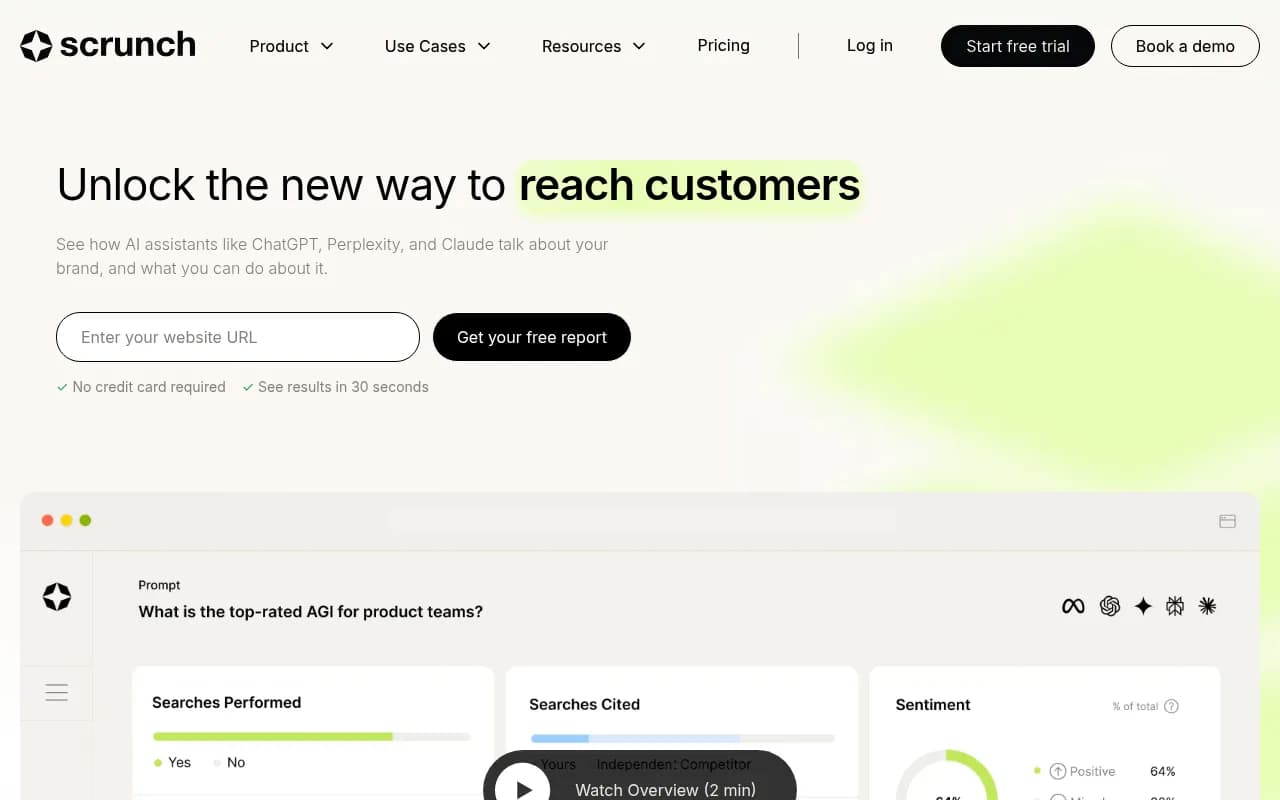
The platform is better suited to CTOs and technically-minded marketers than to small business owners without a technical background. The setup and interpretation of data requires more effort than some of the simpler tools in this list. Pricing is also on the higher end for what small businesses typically budget.
5. Nightwatch -- for teams that want AI tracking alongside traditional SEO
Nightwatch is primarily a rank tracking and SEO platform that has added AI tracking capabilities. If you're already using a traditional SEO tool and want to add AI visibility monitoring without switching platforms entirely, Nightwatch is a reasonable option.
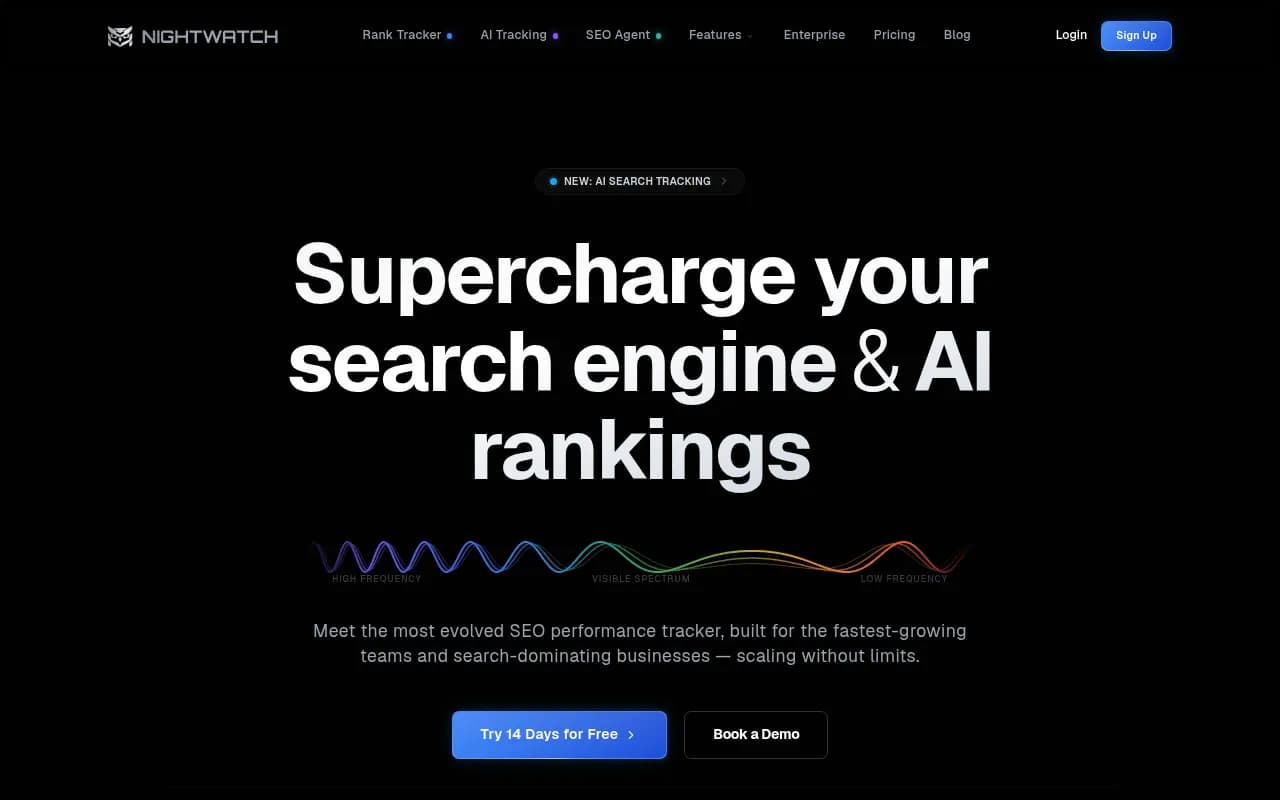
The AI tracking features cover Google AI Overviews and some LLM monitoring, but it's not as deep as dedicated GEO platforms. The strength here is the integration with traditional rank tracking -- you get a unified view of your search presence across both traditional and AI search. For small businesses that are still heavily invested in Google SEO and want to dip into AI visibility without a separate tool, it's worth evaluating.
6. Cognizo -- affordable entry-level monitoring
Cognizo is a newer entrant in the AI visibility space, positioned as an affordable option for teams beginning to formalize their AI visibility tracking. It covers the basics: brand mention tracking across ChatGPT, Perplexity, and other answer engines.
Cognizo
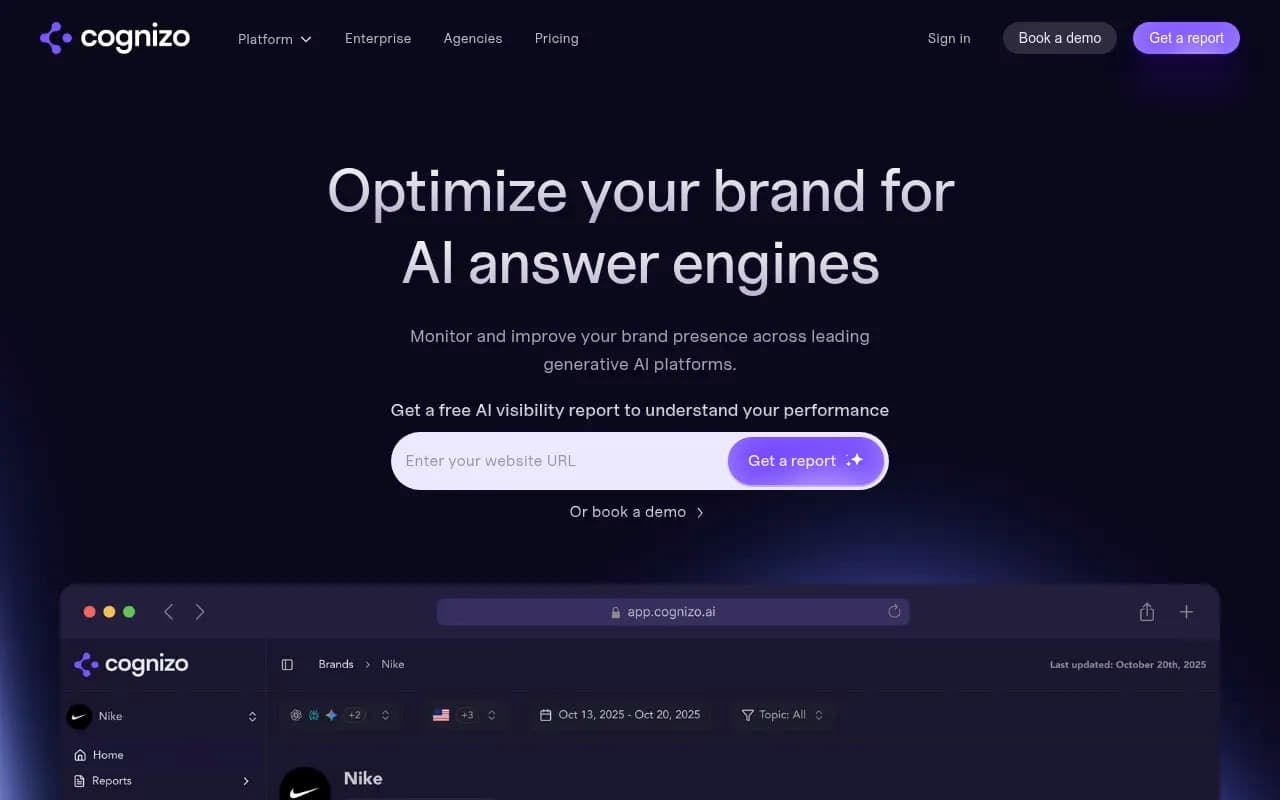
It's light on advanced features -- no content generation, no crawler logs, no traffic attribution -- but the price point is accessible for small businesses that just want to start measuring. Think of it as a first step rather than a complete solution.
7. Airefs -- very affordable with basic tracking
Airefs positions itself as one of the most affordable options in the AI visibility space, with pricing starting at $24/month. For a small business with a very tight budget that just wants to know whether it's appearing in AI search results, it covers the basics.
The feature set is limited compared to more established platforms, but the price makes it accessible for freelancers, solopreneurs, and very early-stage businesses. Don't expect deep analytics or content optimization capabilities at this price point.
8. SE Visible -- for SEO agencies transitioning to GEO
SE Visible is built by SE Ranking and is aimed at SEO agencies that are starting to incorporate AI visibility into their service offering. It combines traditional SEO data with AI visibility tracking, which makes it useful for agencies that want to show clients a unified picture of their search presence.
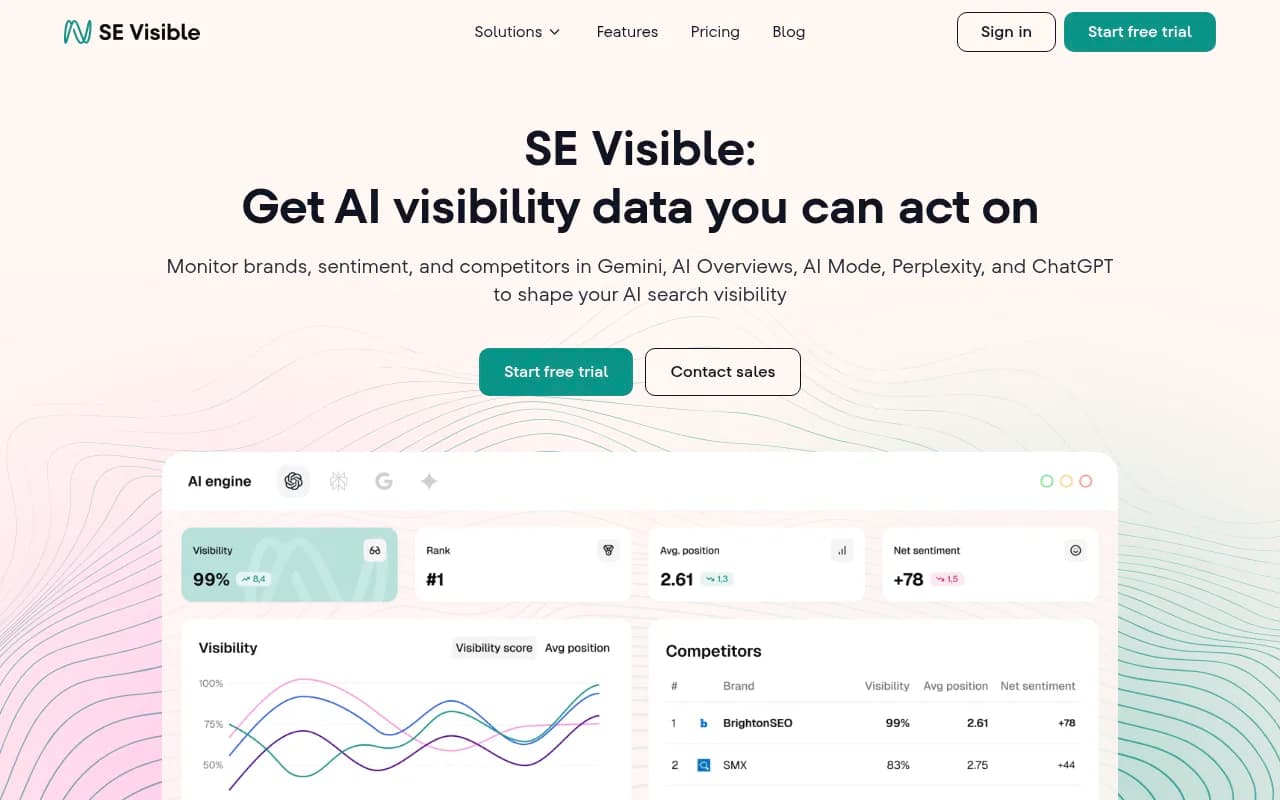
For small businesses (rather than agencies), it's less of a natural fit. The platform is designed around agency workflows and reporting, so the features and pricing structure reflect that. But if you're a small agency looking to add GEO services, it's worth a look.
Side-by-side comparison
| Tool | Starting price | AI models tracked | Content generation | Crawler logs | Traffic attribution | Best for |
|---|---|---|---|---|---|---|
| Promptwatch | $99/mo | 10 | Yes (AI writing agent) | Yes | Yes | Small businesses wanting full optimization |
| Peec AI | ~€89/mo | 3-4 | No | No | No | Budget monitoring only |
| Otterly.AI | ~$99/mo | 5-6 | No | No | No | Clean monitoring dashboard |
| Scrunch AI | Higher | 5+ | Limited | Partial | No | Technical teams |
| Nightwatch | $39/mo+ | 2-3 | No | No | No | Teams combining AI + traditional SEO |
| Cognizo | Low | 3-4 | No | No | No | Entry-level monitoring |
| Airefs | $24/mo | 2-3 | No | No | No | Solopreneurs on tight budgets |
| SE Visible | Add-on | 4-5 | No | No | No | SEO agencies |
| Profound | $499/mo+ | 9+ | No | Yes | Limited | Enterprise teams |
The monitoring-only trap
One thing worth flagging: most of the tools in this list are monitoring platforms. They show you data. That's useful, but it's not sufficient on its own.
Here's the problem. You find out that ChatGPT mentions your competitor when someone asks "best project management tool for freelancers" but doesn't mention you. Now what? Most tools leave you there. You know the gap exists, but you have no guidance on what content to create, how to structure it, or what signals AI models are actually looking for when they decide what to cite.
This is why the distinction between monitoring tools and optimization platforms matters so much for small businesses. A small business doesn't have a team of content strategists who can take raw data and turn it into an action plan. They need the tool to do more of that work.
Promptwatch's approach -- analyzing 880 million citations to understand what AI models actually cite, then generating content designed to match those patterns -- is meaningfully different from a dashboard that shows you a visibility score. The former gives you something to act on. The latter gives you something to worry about.
How to choose the right tool for your situation
If you're just starting out and have a very limited budget: Airefs at $24/month or Cognizo gets you basic monitoring without a major commitment. Use it to understand the landscape before investing more.
If you want monitoring without complexity: Peec AI or Otterly.AI are clean, straightforward tools that won't overwhelm you. Good for getting a baseline read on your AI visibility.
If you want to actually improve your AI visibility: Promptwatch is the clear choice. The combination of gap analysis, content generation, and traffic attribution gives you a complete workflow rather than just a dashboard. At $99/month, it's accessible for most small businesses.
If you're an SEO agency adding GEO services: SE Visible or Nightwatch make sense because they integrate with existing SEO workflows.
If you have an enterprise budget and need deep technical capabilities: Profound is genuinely good at what it does. The price reflects real capability. But for most small businesses reading this, it's not the right fit.
A note on what "ranking" in AI search actually means
Traditional SEO has a clear output: your page appears at position X for keyword Y. AI search is messier. There's no position 1. Instead, AI models decide whether to cite your content at all, how prominently, and with what framing.
Getting cited consistently requires a few things: content that directly answers the questions people are asking AI models, a site that AI crawlers can actually access and understand, and enough topical authority that the model trusts your content as a source.
The tools in this guide help with different parts of that equation. Monitoring tools tell you whether you're being cited. Optimization platforms like Promptwatch help you build the content and technical foundation that leads to more citations over time.
For a small business, the goal isn't to match Profound's enterprise feature set. It's to find a tool that fits your budget and actually moves the needle on AI visibility -- not just measures it.