Key takeaways
- Rankshift is a solid credit-based AI visibility tracker with unlimited seats and 8 AI engine coverage, but it has no content generation, no white-label reporting, and no GA4 integration
- Most Rankshift alternatives fall into two camps: monitoring-only dashboards (Otterly.AI, Peec AI, LLM Pulse) and full optimization platforms (Promptwatch, Profound)
- Promptwatch is the only platform in this comparison rated as a "Leader" across all GEO categories -- it goes beyond tracking to help you find content gaps and generate content that actually gets cited by AI models
- Budget matters: entry-level options start around $29/month (Otterly.AI) while enterprise platforms like Profound start at $99/month for a single AI model
- The right choice depends on whether you need monitoring only, or a full loop from gap analysis to content creation to traffic attribution
Rankshift has earned a decent reputation in the AI visibility space. Credit-based pricing, unlimited projects, unlimited seats, and coverage across eight AI engines (ChatGPT, Gemini, Perplexity, Claude, AI Overviews, AI Mode, Mistral, Llama) -- starting at €69/month for 9,500 credits. For agencies that want flexibility in how they allocate tracking resources, it checks a lot of boxes.
But the gaps are real. There's no white-label reporting. No GA4 integration. No content generation or optimization tooling. Crawler analytics exist, but the platform essentially hands you visibility data and leaves the rest to you.
If you're hitting those walls -- or just evaluating what else is out there -- this guide covers the best Rankshift alternatives in 2026 with honest comparisons and clear guidance on which tool fits which situation.

Quick comparison: Rankshift vs top alternatives
| Tool | Starting price | AI engines | Content generation | White-label | Crawler logs | Best for |
|---|---|---|---|---|---|---|
| Rankshift | €69/mo | 8 | No | No | Yes | Flexible credit-based monitoring |
| Promptwatch | $99/mo | 10+ | Yes | Yes (agency) | Yes | Full optimization loop |
| Profound | $99/mo | 1 (Starter) | No | No | No | Enterprise compliance |
| Peec AI | €85/mo | 3+ | No | Yes | No | Agency workspaces |
| LLM Pulse | €49/mo | 5 (10+ Enterprise) | No | No | No | Budget monitoring |
| Otterly.AI | $29/mo | 4+ | No | No | No | Entry-level tracking |
| AthenaHQ | Custom | Multiple | No | No | No | Monitoring-focused teams |
| Scrunch AI | Custom | Multiple | No | No | No | Mid-market brands |
1. Promptwatch -- best overall Rankshift alternative
If Rankshift's main limitation is that it stops at monitoring, Promptwatch is the direct answer to that problem. It's the only platform in this comparison that closes the full loop: find the gaps, create content to fill them, track the results.
Promptwatch covers 10+ AI engines (ChatGPT, Perplexity, Claude, Gemini, Google AI Overviews, Google AI Mode, DeepSeek, Grok, Mistral, Meta AI, Copilot) and adds capabilities that most competitors don't have at all. The Answer Gap Analysis shows you exactly which prompts competitors are visible for but you're not -- not just a vague "you're missing coverage here" but the specific topics and questions AI models want answered that your site doesn't address. The built-in AI writing agent then generates articles, listicles, and comparisons grounded in 880M+ citations analyzed, prompt volumes, and competitor data. That's not generic content -- it's engineered to get cited.
On top of that: real-time AI crawler logs (see which pages ChatGPT and Perplexity are actually reading), ChatGPT Shopping tracking, Reddit and YouTube citation analysis, prompt difficulty scores, query fan-outs, and traffic attribution via GSC integration or server log analysis.
Pricing starts at $99/month (Essential: 1 site, 50 prompts, 5 articles). Professional is $249/month (2 sites, 150 prompts, 15 articles, crawler logs). Business is $579/month (5 sites, 350 prompts, 30 articles). Agency and enterprise pricing available.
In a 2026 comparison of 12 GEO platforms, Promptwatch was the only one rated "Leader" across all categories. The difference isn't just features -- it's that most tools show you where you're invisible and leave you stuck. Promptwatch shows you what to do about it.

2. Profound -- best for enterprise compliance requirements
Profound is a well-built enterprise AI visibility platform with a strong focus on compliance. SOC 2 Type II and HIPAA certifications make it one of the few options suitable for healthcare, finance, and other regulated industries. The Conversation Explorer feature lets you dig into the actual AI responses your brand appears in -- useful for brand safety monitoring.
The catch: the Starter plan ($99/month) only covers ChatGPT. To get multi-engine coverage, you're looking at higher tiers with pricing that isn't publicly listed. There's no content generation, no crawler logs, and no traffic attribution. For teams that need compliance and deep response analysis, Profound is a strong pick. For teams that want to actually improve their AI visibility, it's monitoring-only.
Profound

3. Peec AI -- best for agencies with client workspaces
Peec AI has raised $29M in funding and built a platform oriented toward agency workflows. The workspace structure lets you manage separate client environments cleanly, and the pitch-ready reporting makes it easier to show clients what you're tracking. Coverage starts at 3 AI models on the base plan with add-ons available.
The limitations are meaningful: no crawler logs, no visitor analytics, no content generation. At €85/month to start, you're paying more than some competitors for a monitoring-only tool. The agency workspace structure is genuinely useful, but if your clients are asking "what do we do about this?" you'll need to bring your own answer.

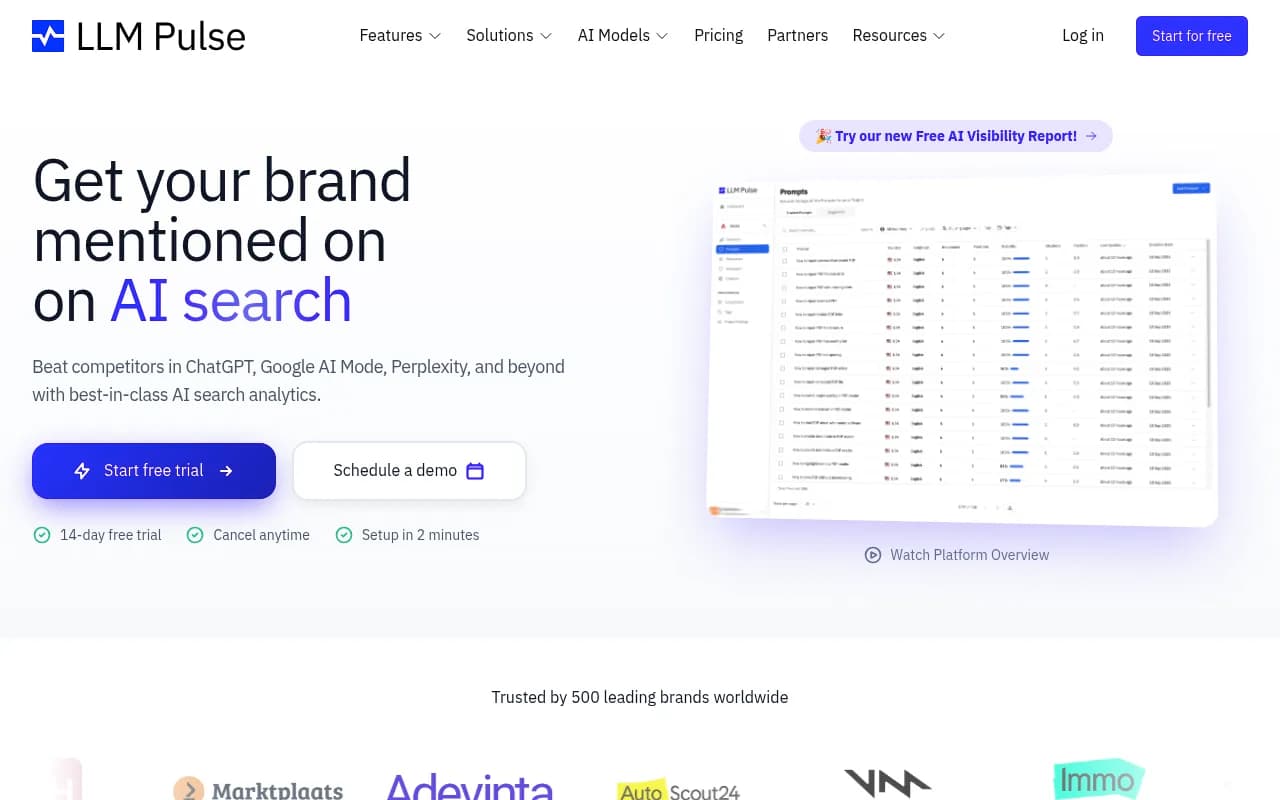
4. LLM Pulse -- best budget option with brand sentiment
LLM Pulse is a bootstrapped platform that competes hard on price. At €49/month, it covers 5 AI models (10+ at Enterprise tier) and includes Brand Sentiment analysis -- a feature most competitors at this price point skip entirely. Unlimited seats is a meaningful differentiator for growing teams that don't want per-user pricing.
It also tracks app store visibility, which is unusual in this space and useful for mobile-first brands. What it doesn't have: crawler logs, content generation, traffic attribution, or the depth of prompt intelligence you get from higher-end platforms. For teams with tight budgets who need solid monitoring and sentiment tracking, it's a reasonable choice.
5. Otterly.AI -- best entry-level option
Otterly.AI starts at $29/month, making it the most accessible entry point in this comparison. It covers 4 base AI engines with add-ons available, and it has a Semrush integration that's useful if you're already in that ecosystem. There are also free GEO tools that let you test the platform before committing.
It's genuinely monitoring-only -- no crawler logs, no visitor analytics, no content generation. For small teams or solo operators who just want to start tracking AI visibility without a big investment, Otterly.AI is a reasonable starting point. You'll likely outgrow it, but the barrier to entry is low.
Otterly.AI

6. AthenaHQ -- solid monitoring for mid-market teams
AthenaHQ positions itself as a monitoring and optimization platform, though in practice it leans heavily toward the monitoring side. It covers multiple AI engines and has a clean interface that's easy to navigate. Pricing is custom (you'll need to contact them), which makes it harder to evaluate without a sales conversation.
The main gap: no content generation capabilities and no crawler logs. If you're a mid-market brand that wants clean visibility dashboards and doesn't need to generate content from within the platform, AthenaHQ is worth evaluating. If you need the full optimization loop, it falls short.

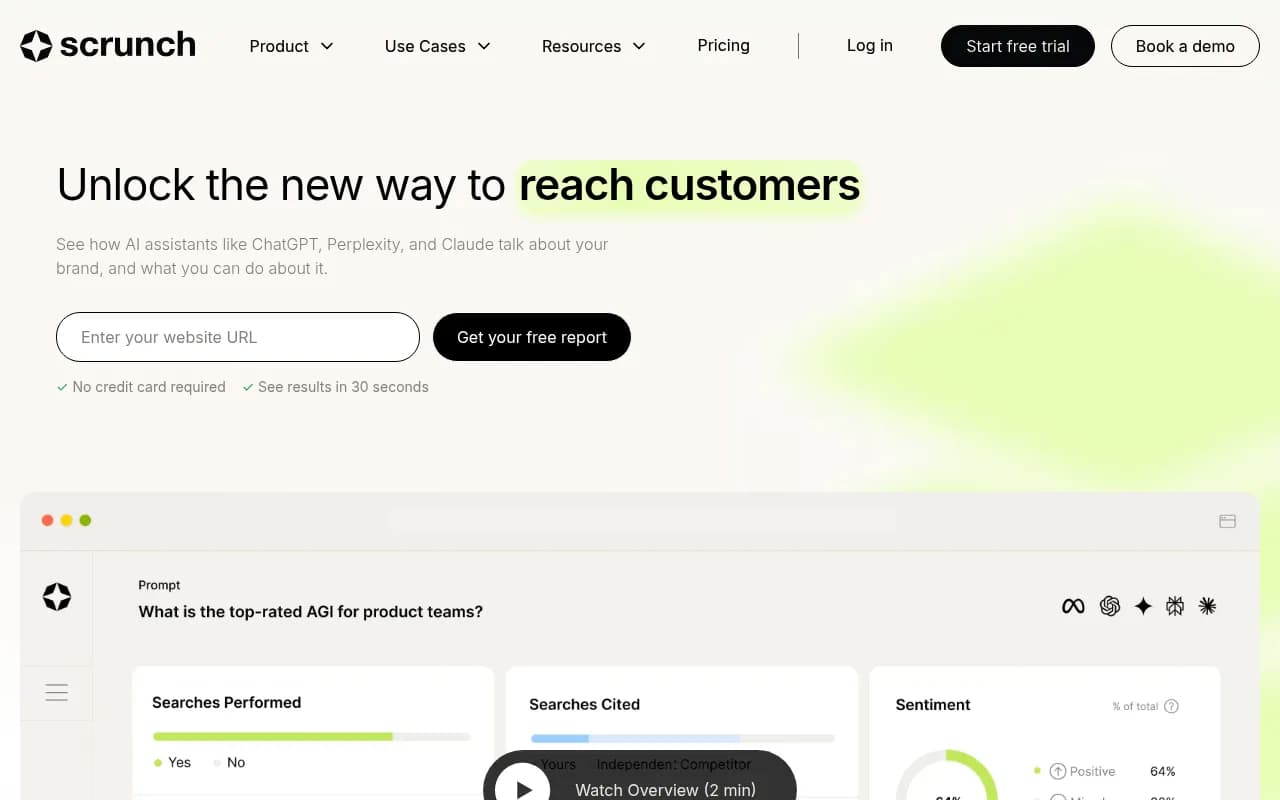
7. Scrunch AI -- for brands that want response-level analysis
Scrunch AI focuses on analyzing the actual content of AI responses -- not just whether your brand appears, but what the AI says about you and your competitors. That's a useful angle for brand safety and competitive intelligence. Pricing is custom and the platform is aimed at mid-market and enterprise brands.
Like most platforms in this space, Scrunch AI is monitoring-focused. There's no built-in content generation or traffic attribution. The response analysis depth is genuinely useful for brand teams, but SEO and content teams will find it incomplete.
8. Semrush -- if you want AI visibility inside an existing SEO platform
Semrush has added AI visibility tracking to its platform, which is useful if you're already paying for Semrush and want to consolidate tools. The AI Toolkit covers some of the major engines and fits into the broader Semrush workflow for keyword research, site audits, and content optimization.
The limitation is depth. Semrush uses fixed prompts rather than letting you define your own tracking queries, and there's no AI traffic attribution. It's a reasonable add-on if you're already a Semrush customer, but it's not a replacement for a dedicated AI visibility platform if that's your primary need.
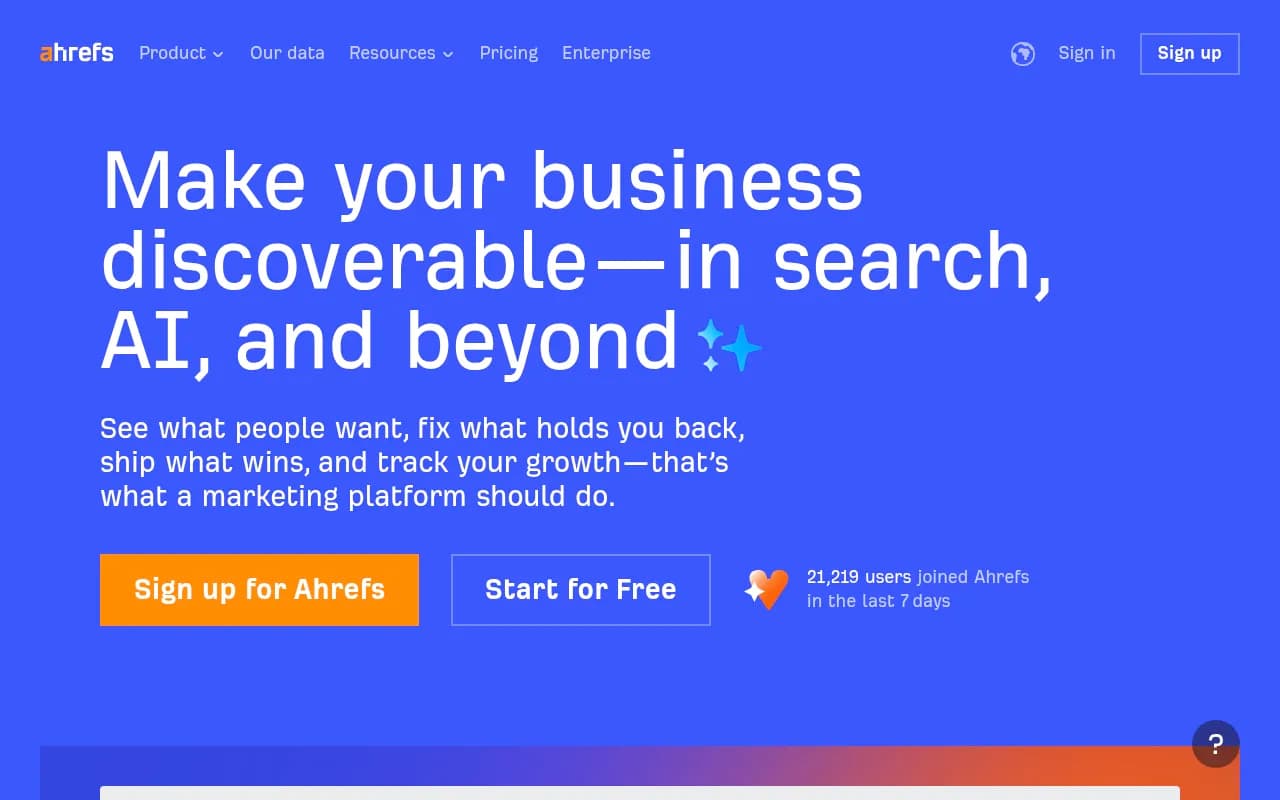
9. Ahrefs -- traditional SEO with some AI visibility features
Ahrefs added Brand Radar for AI visibility tracking, but it has fixed prompts and no AI traffic attribution. Like Semrush, it's most useful as a supplement to an existing Ahrefs subscription rather than a standalone AI visibility solution. The traditional SEO capabilities (backlink analysis, keyword research, site audits) remain strong, but the AI visibility layer is thin compared to dedicated platforms.
How to choose the right Rankshift alternative
The decision mostly comes down to one question: do you need monitoring only, or do you need to act on what you find?
If you need monitoring only and want to keep costs low, LLM Pulse (€49/month) or Otterly.AI ($29/month) are the most sensible starting points. Both cover the major AI engines and give you the visibility data you need without a large commitment.
If you're an agency managing multiple clients, Peec AI's workspace structure is worth the premium. Rankshift itself is also a reasonable choice here given the unlimited seats and flexible credit allocation -- the gaps are in optimization, not monitoring.
If you're in a regulated industry and compliance is non-negotiable, Profound is the only platform in this comparison with SOC 2 Type II and HIPAA certifications.
If you want to actually improve your AI visibility -- not just measure it -- Promptwatch is the clear choice. The combination of Answer Gap Analysis, AI content generation grounded in real citation data, crawler logs, and traffic attribution is something no other platform in this comparison offers end-to-end. Most tools show you the problem. Promptwatch helps you fix it.
What Rankshift does well (and where it falls short)
It's worth being fair to Rankshift here. The credit-based model is genuinely flexible -- being able to allocate more credits to high-priority engines and less to others is a real advantage over fixed-tier platforms. Unlimited seats and unlimited projects mean you're not paying per user or per client, which matters at scale. The Looker Studio integration and API access make it easier to build custom reporting workflows.
The gaps are structural rather than cosmetic. Without content generation, you're dependent on a separate content workflow. Without white-label reporting, agencies need to export and reformat data for client presentations. Without GA4 or traffic attribution, you can't connect AI visibility to actual business outcomes. These aren't minor missing features -- they're the difference between a monitoring dashboard and an optimization platform.
Bottom line
Rankshift is a capable monitoring tool with a flexible pricing model. If credit-based allocation and unlimited seats are your top priorities, it's a solid choice. But if you're looking for a platform that helps you move from "here's where you're invisible" to "here's what to do about it," you need something with content generation, gap analysis, and traffic attribution built in.
For most teams evaluating Rankshift alternatives in 2026, the shortlist looks like this: Promptwatch if you want the full optimization loop, Profound if compliance is the priority, Peec AI if agency workflows matter most, and LLM Pulse or Otterly.AI if budget is the primary constraint.