Key Takeaways
- Reputation.com is the enterprise leader for multi-location businesses needing centralized review management, local SEO, and social listening across 200+ sites
- Yext excels at maintaining consistent business listings and local search presence across directories, maps, and voice assistants, with growing AI search capabilities
- Trustpilot is the go-to platform for collecting verified customer reviews and displaying social proof that drives conversions on e-commerce and B2B websites
- Brand24 focuses on real-time social media monitoring and sentiment analysis, tracking brand mentions across social platforms, news sites, and online discussions
- The right choice depends on your primary need: enterprise review management (Reputation), local listings accuracy (Yext), verified review collection (Trustpilot), or social listening (Brand24)
What Reputation Management Actually Means in 2026
Your online reputation exists whether you actively manage it or not. Every Google review, social media mention, Reddit thread, and customer complaint shapes how potential buyers perceive your business. The data is clear: 93% of consumers say online reviews influence their purchasing decisions, and the online reputation management market is forecast to reach $12.57 billion by 2030.
Reputation management software pulls scattered feedback from dozens of sources into a single dashboard. Instead of logging into Google Business Profile, Yelp, Facebook, Trustpilot, industry review sites, and social media separately, these platforms aggregate everything in one place. You can monitor what people are saying, respond quickly to both positive and negative feedback, and turn your best testimonials into conversion-driving social proof on your website.
But here's what's changed: reputation management in 2026 extends beyond traditional review sites and social media. AI-powered answer engines like ChatGPT, Perplexity, Claude, and Google AI Overviews now shape brand perception by synthesizing information from across the web and presenting it directly to users. When someone asks "What's the best CRM for small businesses?" or "Is [your brand] reliable?", AI models generate answers based on the content they've indexed -- including reviews, mentions, and discussions about your brand.
This means modern reputation management requires two parallel strategies: managing your presence on traditional review platforms where customers leave feedback, and ensuring AI search engines accurately represent your brand when users ask questions. Platforms like Promptwatch help with the latter by tracking how your brand appears in AI-generated responses and identifying content gaps that cause you to be overlooked.

Reputation.com: Enterprise Multi-Location Review Management
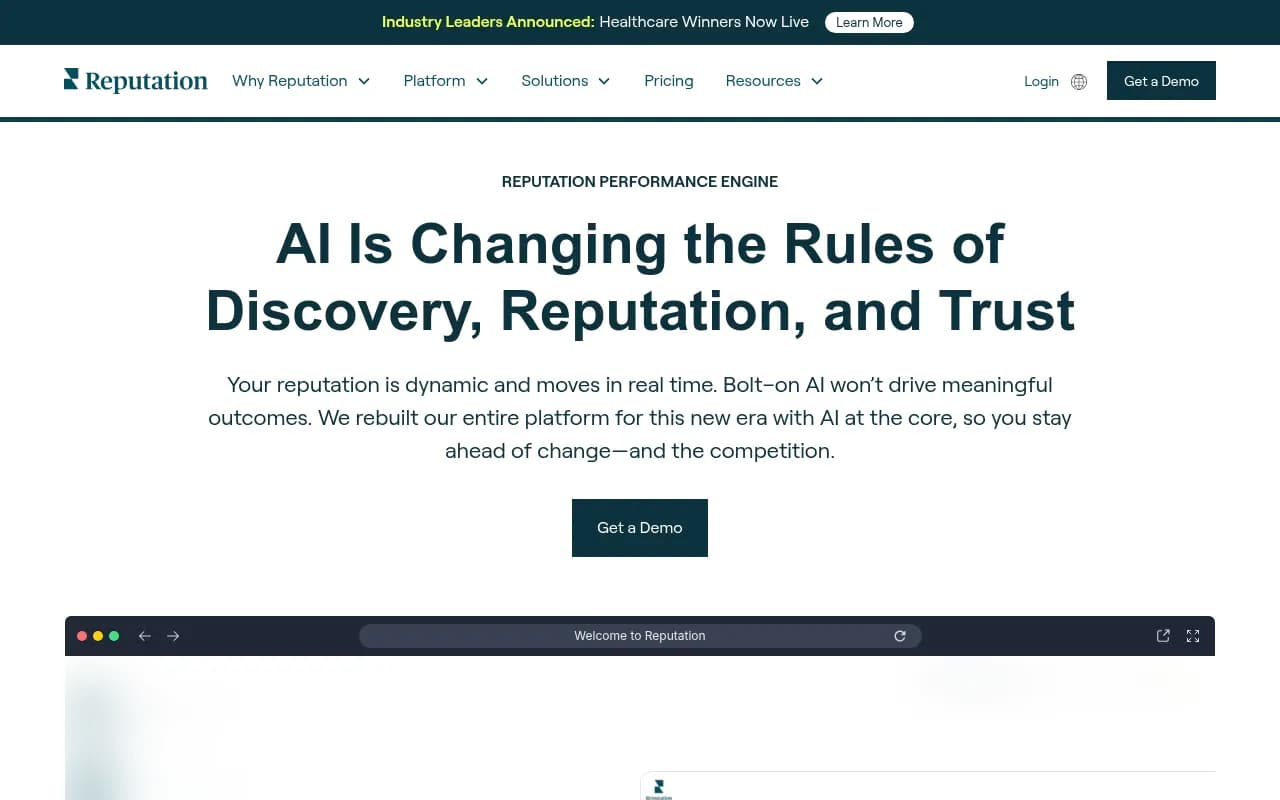
Reputation (formerly Reputation.com) is built for enterprises and multi-location businesses that need centralized control over their online reputation. The platform monitors reviews and mentions across 200+ sites including Google, Facebook, Yelp, TripAdvisor, Healthgrades, and industry-specific platforms. If you're managing reputation for a franchise, healthcare network, retail chain, or hospitality brand, Reputation provides the scale and automation you need.
Core Capabilities
Reputation's strength lies in its comprehensive approach to multi-location management. The platform centralizes review monitoring, response workflows, and performance analytics across all your locations. You can set up automated review requests via SMS and email, respond to reviews directly from the dashboard, and use AI-powered response suggestions to maintain consistent brand voice at scale.
The platform includes robust local SEO features that help improve your visibility in map searches and local results. It manages business listings across directories, monitors local search rankings, and provides recommendations for optimizing location pages. For businesses where local search drives foot traffic and phone calls, these features directly impact revenue.
Reputation also includes social listening capabilities that track brand mentions across social media, news sites, forums, and blogs. The sentiment analysis dashboard shows whether conversations are positive, negative, or neutral, helping you identify reputation risks before they escalate. You can set up alerts for specific keywords, competitors, or crisis scenarios.
Best Use Cases
- Multi-location franchises: Centralize review management for hundreds of locations while giving local managers appropriate access
- Healthcare networks: Monitor patient reviews across Healthgrades, Vitals, and Google while maintaining HIPAA compliance
- Hospitality brands: Track guest feedback across TripAdvisor, Google, Booking.com, and Expedia from a single dashboard
- Retail chains: Generate review requests at point-of-sale and monitor feedback across all store locations
Pricing and Considerations
Reputation uses custom enterprise pricing based on the number of locations, review volume, and features required. Expect pricing to start in the thousands per month for multi-location deployments. The platform is overkill for single-location businesses or those with limited review volume.
The learning curve is steeper than simpler tools, and implementation typically requires dedicated training and onboarding. However, for enterprises managing reputation at scale, Reputation provides the workflows, automation, and reporting needed to maintain brand consistency across hundreds or thousands of locations.
Yext: Local Listings and Digital Knowledge Management
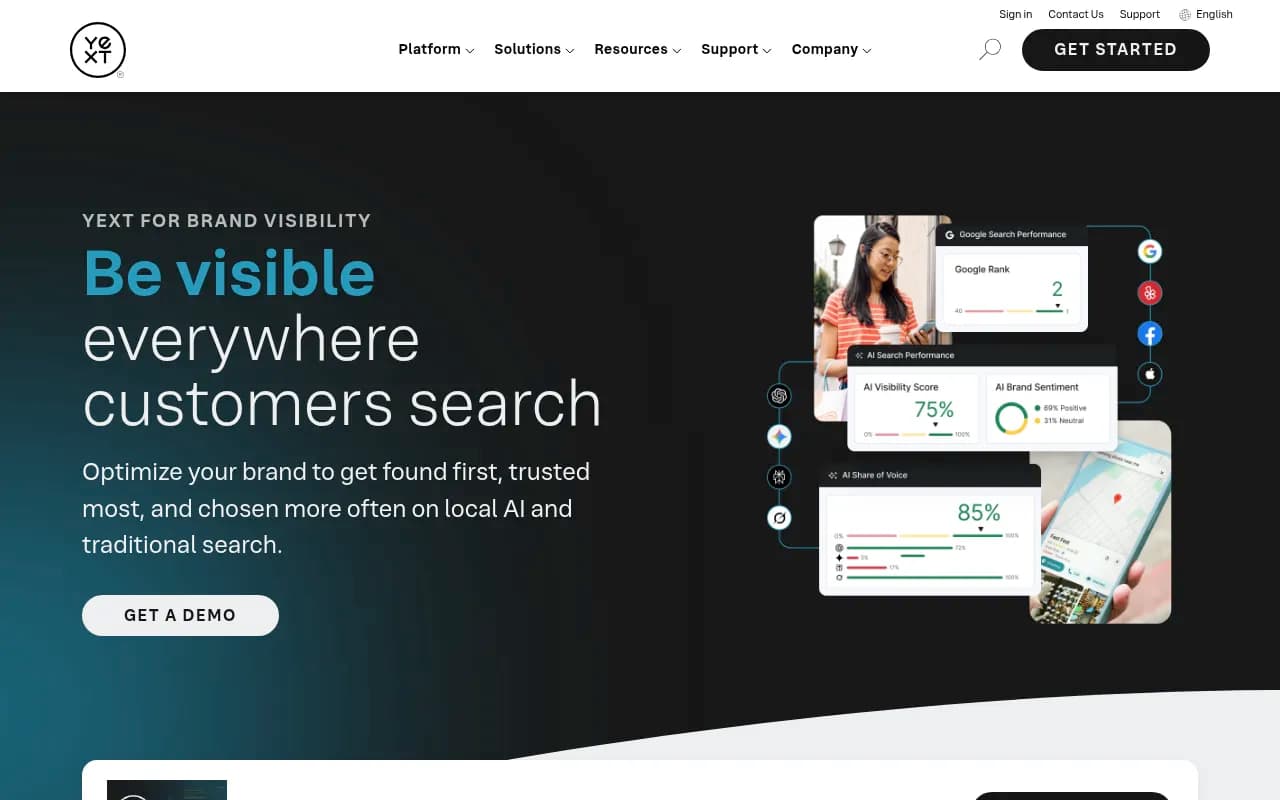
Yext takes a different approach to reputation management by focusing on the accuracy and consistency of your business information across the digital ecosystem. The platform is built around the concept of "digital knowledge management" -- ensuring that your business name, address, phone number, hours, services, and other details are correct everywhere they appear online.
The Listings Management Foundation
Yext's core value is maintaining consistent business listings across 200+ directories, maps, voice assistants, and search engines. This includes Google Business Profile, Apple Maps, Bing, Facebook, Yelp, TripAdvisor, and dozens of industry-specific directories. Instead of manually updating each platform when your hours change or you add a new location, Yext pushes updates from a central dashboard.
This matters because inconsistent business information confuses both customers and search engines. If your hours are different on Google vs your website vs Yelp, you lose trust and potentially lose customers who show up when you're closed. Search engines also use listing consistency as a local SEO ranking factor.
Yext includes review monitoring and response management, but it's not as robust as dedicated review platforms like Reputation or Trustpilot. The review features are sufficient for businesses that prioritize listings accuracy over deep review analytics.
Growing AI Search Capabilities
Yext has been investing in AI search visibility, recognizing that voice assistants and AI answer engines increasingly pull business information from structured data sources. The platform helps ensure your business appears correctly when users ask Siri, Alexa, or Google Assistant for recommendations, and it's expanding tracking for how brands appear in AI-generated answers.
However, Yext's AI search capabilities are still developing compared to specialized GEO platforms. If your primary goal is understanding and optimizing how your brand appears in ChatGPT, Perplexity, or Google AI Overviews, dedicated tools like Promptwatch provide deeper insights and optimization workflows.
Best Use Cases
- Multi-location businesses: Maintain accurate listings for dozens or hundreds of locations without manual updates
- Businesses with complex information: Restaurants with changing menus, healthcare providers with multiple specialties, retailers with varying hours
- Voice search optimization: Ensure accurate answers when customers use Siri, Alexa, or Google Assistant
- Local SEO foundation: Build citation consistency as part of a broader local search strategy
Pricing Structure
Yext pricing starts around $199/month for single-location businesses and scales based on the number of locations and features required. Enterprise pricing is custom. The platform is most cost-effective for businesses with multiple locations where manual listing management would be time-prohibitive.
Trustpilot: Verified Review Collection and Social Proof
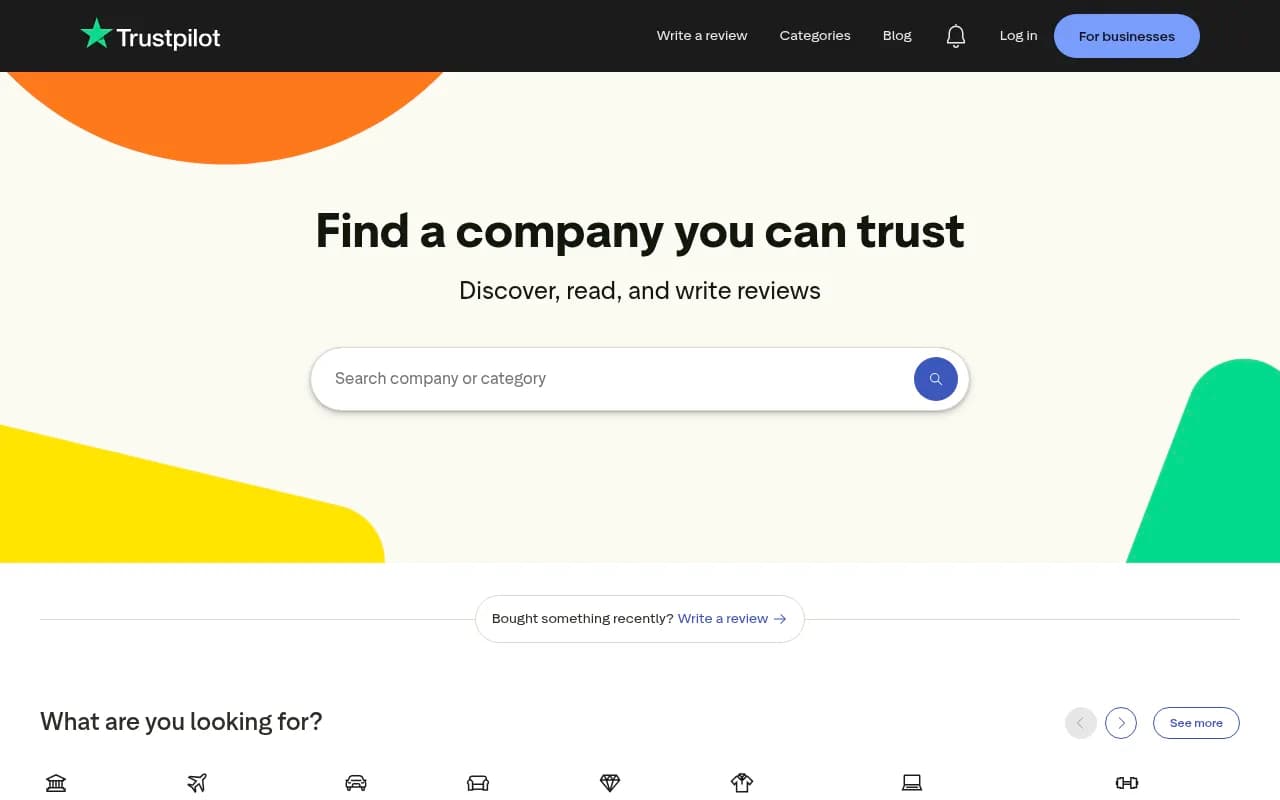
Trustpilot operates as an independent review platform where customers can leave verified feedback about their experiences with your business. Unlike review monitoring tools that aggregate reviews from multiple sites, Trustpilot is itself a review destination -- similar to how Yelp or TripAdvisor function for specific industries.
The Verified Review Advantage
Trustpilot's core differentiator is review verification. The platform confirms that reviewers are actual customers by requiring proof of purchase or transaction before they can leave feedback. This verification builds trust with potential customers who know the reviews are authentic, not fake or incentivized testimonials.
The platform makes it easy to collect reviews through automated email and SMS invitations sent after purchase or service completion. You can customize the timing, messaging, and frequency of review requests to maximize response rates without annoying customers. Trustpilot integrates with major e-commerce platforms (Shopify, WooCommerce, Magento) and CRMs to automate the review collection process.
Displaying Social Proof That Converts
Trustpilot provides embeddable widgets that display your reviews, star rating, and review count directly on your website. These social proof elements can be placed on product pages, checkout pages, landing pages, and anywhere else you want to build credibility. The widgets are customizable to match your brand design.
The platform also offers TrustBoxes -- pre-designed review display formats like carousels, grids, and popups that showcase your best reviews. For e-commerce businesses, product review widgets let you collect and display reviews for specific products, not just your overall brand.
Trustpilot reviews appear in Google search results and Google Shopping, giving you additional visibility and credibility in organic search. The platform's domain authority means Trustpilot pages often rank well for "[brand name] reviews" searches.
Best Use Cases
- E-commerce businesses: Collect verified product and seller reviews that drive conversions
- B2B SaaS companies: Build credibility with verified customer testimonials displayed on your website
- Service businesses: Showcase client feedback to differentiate from competitors
- Brands fighting fake reviews: Use verification to prove authenticity and combat review fraud
Pricing and Limitations
Trustpilot offers a free plan that lets you claim your profile and respond to reviews, but you can't actively collect reviews or use widgets without a paid plan. Paid plans start around $199/month and scale based on features and review volume. Enterprise pricing is custom.
The main limitation is that Trustpilot is a single review platform. You still need to monitor and manage reviews on Google, Facebook, Yelp, and industry-specific sites separately. Trustpilot works best as part of a broader reputation strategy, not as your only review management tool.
Brand24: Real-Time Social Media Monitoring and Sentiment Analysis
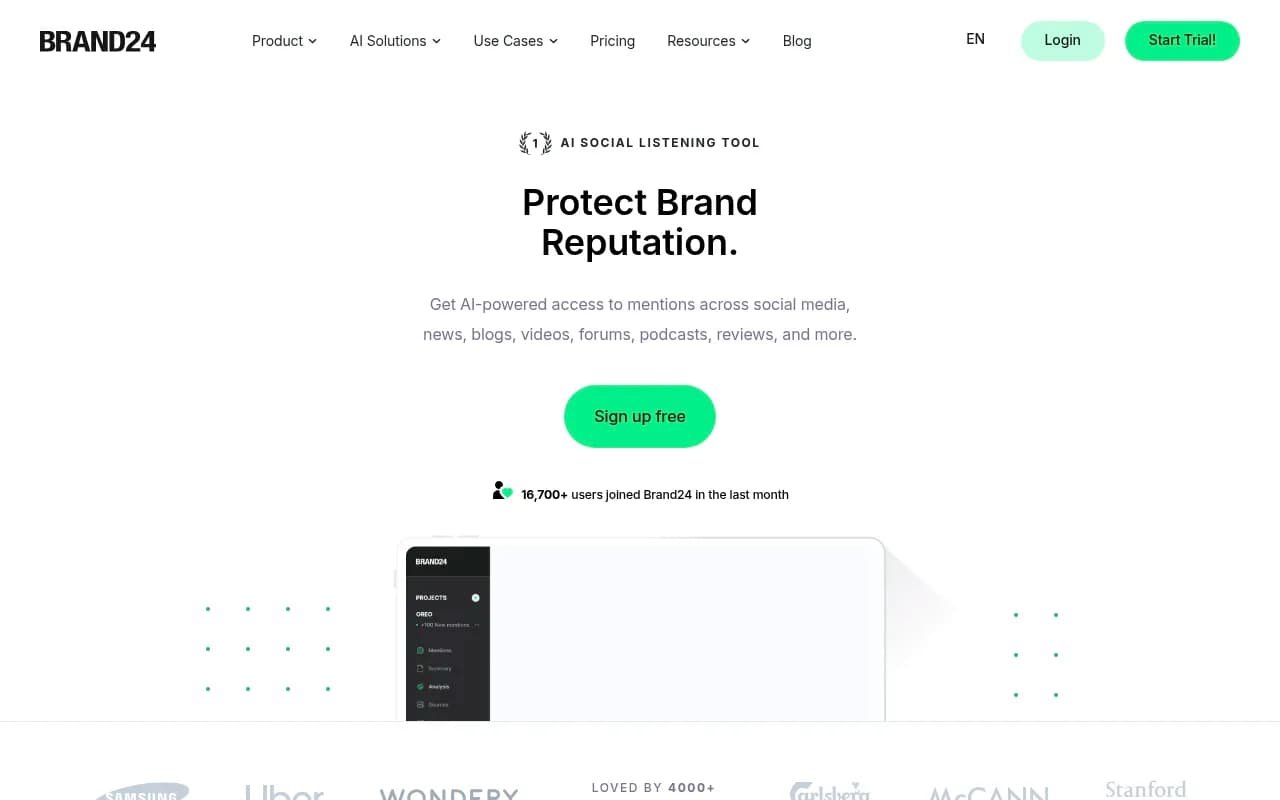
Brand24 focuses on social listening -- tracking mentions of your brand, products, competitors, and industry keywords across social media, news sites, blogs, forums, and online discussions. If your reputation management priority is understanding what people are saying about you on social platforms and responding quickly, Brand24 delivers real-time monitoring and sentiment analysis.
Comprehensive Social Listening
Brand24 monitors mentions across Twitter/X, Facebook, Instagram, LinkedIn, YouTube, TikTok, Reddit, news sites, blogs, forums, and review sites. You set up projects for specific keywords (your brand name, product names, competitor names, industry terms) and the platform tracks every public mention in near real-time.
The sentiment analysis engine automatically categorizes mentions as positive, negative, or neutral, helping you quickly identify reputation risks and opportunities. You can filter by sentiment, source, reach, and engagement to prioritize which mentions require response or action.
Brand24 provides influencer identification, showing you which accounts have the largest reach when discussing your brand. This helps you identify partnership opportunities and understand who's shaping the conversation about your industry.
Real-Time Alerts and Response
The platform sends instant notifications when your brand is mentioned, when sentiment shifts negatively, or when mentions spike unusually. These alerts let you respond to customer complaints, PR crises, or viral moments before they escalate.
You can respond to social media mentions directly from the Brand24 dashboard without switching to each platform. This centralized response workflow saves time when you're managing mentions across multiple social networks.
Analytics and Reporting
Brand24 provides detailed analytics on mention volume, sentiment trends, reach, engagement, and share of voice compared to competitors. You can track how reputation changes over time, measure the impact of campaigns or PR events, and identify which topics drive the most conversation.
The platform generates automated reports that you can customize and schedule for stakeholders. For agencies managing multiple clients, Brand24 offers white-label reporting.
Best Use Cases
- Social media teams: Monitor brand mentions and respond quickly across all social platforms
- PR and communications: Track media coverage, identify reputation risks, and measure campaign impact
- Competitive intelligence: Monitor competitor mentions and sentiment to identify market opportunities
- Crisis management: Receive instant alerts when negative sentiment spikes or mentions surge
Pricing Structure
Brand24 pricing starts at $99/month for the Individual plan (up to 3 keywords, 2,000 mentions/month) and scales to $399/month for the Enterprise plan (unlimited keywords, 100,000 mentions/month). The platform is affordable for small businesses and agencies, with transparent pricing and a 14-day free trial.
The main limitation is that Brand24 focuses on social listening and doesn't include review management features like automated review requests, review response workflows, or review widgets. It's best used alongside a dedicated review platform if you need both social monitoring and review management.
Choosing the Right Platform for Your Needs
The best reputation management platform depends on your business model, primary reputation challenges, and where your customers leave feedback. Here's how to decide:
Choose Reputation if:
- You manage reputation for multiple locations (franchises, retail chains, healthcare networks)
- You need centralized review management across 200+ sites
- Local SEO and map search visibility are critical to your business
- You require enterprise-grade workflows, permissions, and reporting
- Budget allows for enterprise pricing (thousands per month)
Choose Yext if:
- Maintaining accurate business listings across directories is your top priority
- You have multiple locations with frequently changing information (hours, menus, services)
- Voice search and AI assistant visibility matter to your business
- You need a foundation for local SEO but don't require deep review analytics
- You want a platform that's evolving toward AI search visibility
Choose Trustpilot if:
- You're an e-commerce business that needs verified product and seller reviews
- Displaying social proof on your website is critical for conversions
- You want reviews that appear in Google search results and Shopping
- Fighting fake reviews and proving authenticity is important
- You're willing to invest in building a presence on a third-party review platform
Choose Brand24 if:
- Social media monitoring and sentiment analysis are your primary needs
- You need real-time alerts for brand mentions and reputation risks
- Competitive intelligence and share of voice tracking matter to your strategy
- You're managing reputation for a social-first brand or influencer
- Budget is limited and you need affordable social listening
The AI Search Visibility Gap
What none of these platforms fully address is the growing importance of AI search engines in shaping brand reputation. When potential customers ask ChatGPT, Perplexity, Claude, or Google AI Overviews about your brand, competitors, or industry, the answers they receive directly influence purchasing decisions -- yet most businesses have no visibility into these responses.
Traditional reputation management platforms monitor where you're mentioned (review sites, social media, news), but they don't track how AI models synthesize that information into recommendations. A brand with excellent Google reviews might never be mentioned by ChatGPT because the content on their website doesn't match what AI models are looking for.
This is where Generative Engine Optimization (GEO) platforms like Promptwatch become essential. Promptwatch tracks how your brand appears across ChatGPT, Perplexity, Claude, Gemini, and other AI search engines. It shows you which prompts competitors are visible for but you're not, identifies the content gaps causing you to be overlooked, and provides AI-powered content generation to help you rank in AI search results.
The platform goes beyond monitoring by closing the action loop: find the gaps in your AI visibility, create content that AI models want to cite, and track the results as your visibility improves. For businesses where AI search is becoming a primary discovery channel, this capability is increasingly critical to reputation management.
Building a Complete Reputation Strategy
The most effective reputation management strategies combine multiple tools based on where your customers are and how they discover your brand:
For multi-location businesses: Use Reputation or Yext as your foundation for review management and local listings, add Brand24 for social listening, and consider Promptwatch for AI search visibility.
For e-commerce brands: Start with Trustpilot for verified reviews and social proof, add Brand24 for social media monitoring, and use Promptwatch to ensure AI models recommend your products when users ask for buying advice.
For B2B SaaS companies: Combine Trustpilot for customer testimonials, Brand24 for industry conversation monitoring, and Promptwatch to track how AI models position your solution compared to competitors.
For service businesses: Use Reputation for review management across Google and industry sites, add Brand24 for social listening, and implement Promptwatch to capture AI search traffic from users asking for service provider recommendations.
The key is understanding that reputation management in 2026 requires presence across traditional review platforms, social media, and AI search engines. No single tool does everything, but the right combination ensures you're visible, credible, and accurately represented wherever potential customers are looking.
Implementation Best Practices
Regardless of which platforms you choose, follow these best practices to maximize the impact of your reputation management efforts:
Set up comprehensive monitoring: Don't just track your brand name -- monitor product names, executive names, common misspellings, and branded hashtags. Track competitor mentions to understand your relative position.
Establish response workflows: Define who responds to reviews and mentions, how quickly responses should happen, and what tone to use. Consistency matters more than perfection.
Automate review requests: The best time to ask for a review is immediately after a positive experience. Set up automated requests triggered by purchase completion, service delivery, or positive support interactions.
Respond to negative feedback publicly: Potential customers read your responses to negative reviews to judge how you handle problems. A thoughtful, helpful response to a complaint can actually improve your reputation.
Use reviews for product development: Negative feedback often reveals product issues, missing features, or service gaps. Share review insights with product and operations teams.
Track metrics that matter: Monitor review volume, average rating, response rate, response time, sentiment trends, and share of voice. Set goals and measure progress monthly.
Create content from reviews: Turn positive customer feedback into case studies, testimonials, and social media content. Use common questions from reviews to create FAQ content.
Optimize for AI search: Ensure your website content answers the questions AI models are being asked about your industry. Tools like Promptwatch show you exactly what's missing.
The Future of Reputation Management
Reputation management is evolving from reactive monitoring to proactive optimization. The platforms that win in 2026 and beyond will be those that don't just show you what people are saying, but help you actively shape the narrative.
AI search engines are accelerating this shift. When ChatGPT or Perplexity generates an answer about your brand, it's not pulling from a single review or social post -- it's synthesizing information from dozens of sources to create a narrative. Managing that narrative requires understanding what content AI models value, what questions they're being asked, and what information is missing from your digital presence.
The businesses that thrive will be those that combine traditional reputation management (reviews, social listening, listings) with AI search optimization. They'll monitor their presence across all channels, respond quickly to feedback, and proactively create content that ensures AI models accurately represent their brand when users ask for recommendations.
Whether you choose Reputation, Yext, Trustpilot, Brand24, or a combination of tools, the goal is the same: ensure that when potential customers search for information about your brand, products, or industry -- whether on Google, social media, or AI search engines -- they find accurate, positive information that drives them toward a purchase decision.