Trustpilot Review 2026
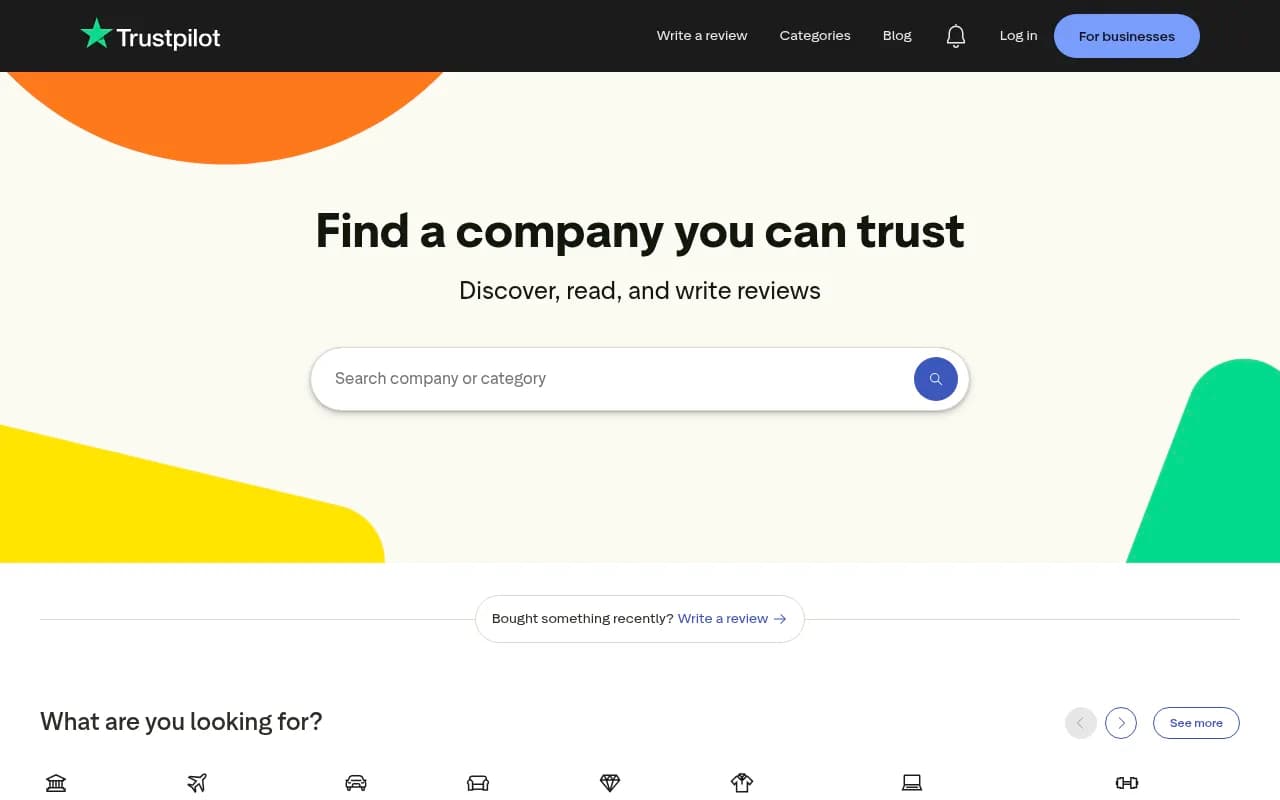
Trustpilot is the world's leading review platform, connecting 1.17+ million businesses with consumers through verified customer feedback. Used by brands like Samsung, Sony, and Booking.com, it helps companies collect, manage, and showcase authentic reviews to build trust, improve products, and drive
Key Takeaways:
- Trustpilot is the dominant global review platform with 1.17+ million businesses and over 219 million reviews, offering verified customer feedback that drives trust and conversions
- Best for e-commerce brands, SaaS companies, service businesses, and agencies that need social proof to increase conversion rates and improve SEO
- Pricing starts at $299/mo (Plus) up to $1,099/mo (Advanced), with Enterprise custom pricing -- significantly more expensive than alternatives like Google Reviews or Yelp
- Strengths include verified reviews, extensive integrations, SEO benefits, and TrustBox widgets that display reviews on your site
- Limitations: high cost for small businesses, review gating concerns, and some businesses report difficulty removing fake negative reviews
Trustpilot has become synonymous with online reviews since its founding in Copenhagen in 2007. What started as a platform to help consumers make informed purchasing decisions has evolved into the world's most recognized review ecosystem, processing millions of reviews monthly and influencing billions in purchasing decisions. The platform is publicly traded on the London Stock Exchange and operates in over 100 countries, making it the de facto standard for businesses that want to leverage customer feedback as a growth engine.
The core value proposition is simple: Trustpilot collects verified customer reviews and helps businesses display them everywhere that matters -- on their website, in Google search results, in email campaigns, and across social media. For consumers, it's a trusted source of unfiltered feedback. For businesses, it's a conversion optimization tool that turns satisfied customers into your best salespeople.
Who Uses Trustpilot
Trustpilot serves three primary audiences. First, e-commerce brands (fashion retailers, electronics stores, subscription boxes) use it to overcome purchase hesitation by displaying star ratings and review snippets on product pages. A Trustpilot TrustScore of 4+ stars can increase conversion rates by 15-30% according to internal case studies. Second, SaaS companies and B2B service providers (agencies, consultancies, financial services) use it to build credibility in competitive markets where trust is the primary differentiator. Third, local service businesses (contractors, healthcare providers, real estate agents) use it as an alternative to Google Reviews, particularly when they want more control over how reviews are collected and displayed.
The platform scales from solo entrepreneurs to Fortune 500 enterprises. A Shopify store owner might use the Plus plan ($299/mo) to collect reviews and display a TrustBox widget on their homepage. A mid-market SaaS company might use Premium ($629/mo) to integrate reviews into their email marketing and run review campaigns. An enterprise brand like Samsung uses Advanced or Enterprise plans to manage reviews across multiple brands, countries, and product lines with dedicated account management and custom integrations.
Trustpilot is particularly strong for businesses in industries where trust is paramount: financial services, healthcare, travel, insurance, and high-ticket e-commerce. It's less ideal for businesses with very low transaction volumes (fewer than 50 customers per month) or those operating in highly localized markets where Google Reviews or Facebook recommendations carry more weight.
Core Features Breakdown
Review Collection & Automation: Trustpilot's review invitation system is the engine that drives everything. After a purchase or interaction, customers receive an email or SMS asking them to leave a review. The platform supports automatic review invitations via integrations with Shopify, WooCommerce, Magento, Salesforce, and 100+ other platforms. You can customize invitation timing (e.g., 7 days after delivery), personalize email templates, and A/B test subject lines. The system also supports service reviews (for B2B or non-transactional businesses) where you manually invite customers via CSV upload or API. Advanced plans include multi-language support, so a global brand can send review invitations in 20+ languages with localized templates.
Verified Reviews & Fraud Prevention: Trustpilot's verification system is what separates it from open platforms like Google Reviews. Reviews are marked as "Verified" when Trustpilot can confirm a genuine customer relationship (via order confirmation emails, unique invitation links, or integration data). This reduces fake reviews and increases consumer trust. The platform also uses AI and human moderation to detect suspicious patterns (review farms, incentivized reviews, competitor sabotage). However, some businesses report that Trustpilot's moderation can be slow to remove obviously fake negative reviews, and the appeals process can take weeks.
TrustBox Widgets: These are embeddable review widgets that display your Trustpilot score and recent reviews on your website. Options include carousel widgets (rotating reviews), mini widgets (star rating + review count), product review widgets (for specific SKUs), and category widgets (for service businesses). TrustBoxes are responsive, customizable (colors, fonts, layout), and designed to increase conversion rates by showing social proof at key decision points (product pages, checkout, landing pages). They also pass SEO value by displaying structured data that Google can index.
Google Stars & SEO Integration: One of Trustpilot's biggest advantages is that it helps you earn star ratings in Google search results. When you have a Trustpilot profile with enough reviews, Google may display your star rating next to your organic search listings, which can increase click-through rates by 20-35%. Trustpilot also provides structured data markup (schema.org) that you add to your site, helping Google understand and display your review data. This is a major SEO benefit that alternatives like Yelp or Facebook Reviews don't offer as seamlessly.
Review Management Dashboard: The dashboard is where you monitor incoming reviews, respond to customers, and track performance metrics. You can filter reviews by star rating, keyword, product, or date range. The response feature lets you reply publicly to reviews (critical for reputation management), and you can flag reviews for moderation if they violate Trustpilot's guidelines. The dashboard also shows trends over time (average rating, review volume, sentiment analysis) and benchmarks your performance against competitors in your industry.
Integrations & API: Trustpilot integrates with 100+ platforms including Shopify, WooCommerce, Magento, BigCommerce, Salesforce, HubSpot, Klaviyo, Mailchimp, Zendesk, and Google Ads. These integrations automate review collection, sync customer data, and display reviews in email campaigns or ad creative. The API (available on Advanced and Enterprise plans) allows custom integrations for businesses with unique workflows. For example, a SaaS company might use the API to trigger review invitations after a customer completes onboarding or reaches a usage milestone.
Product Reviews: Beyond company-level reviews, Trustpilot supports product-specific reviews (SKU-level feedback). This is critical for e-commerce brands with large catalogs. Customers can rate individual products, and you can display product review widgets on product pages. Product reviews also feed into Google Shopping ads, where star ratings can significantly improve ad performance. However, product reviews require the Premium plan or higher, and setup can be complex for businesses with thousands of SKUs.
Review Campaigns & Incentives: Trustpilot allows you to run campaigns to boost review volume during key periods (product launches, seasonal sales). You can also offer incentives (discounts, loyalty points) to encourage reviews, but Trustpilot has strict rules: incentives must be offered to all customers (not just those who leave positive reviews), and you must disclose the incentive. Violating these rules can result in account suspension.
Analytics & Reporting: Advanced and Enterprise plans include detailed analytics: review volume trends, average rating over time, response rate, sentiment analysis, and competitor benchmarking. You can export reports as PDFs or CSV files for internal stakeholders. The competitor benchmarking feature shows how your Trustpilot score compares to similar businesses in your category, which is useful for setting performance goals.
Multi-location & Multi-brand Management: Enterprise plans support businesses with multiple locations (e.g., a retail chain with 50 stores) or multiple brands under one parent company. You can manage reviews for each location or brand separately, with centralized reporting and role-based access controls for different teams.
Integrations & Ecosystem
Trustpilot's integration library is one of its strongest assets. Native integrations include Shopify, WooCommerce, Magento, BigCommerce, Salesforce Commerce Cloud, Klaviyo, Mailchimp, HubSpot, Zendesk, Google Ads, Facebook Ads, and Zapier. These integrations automate review invitations, sync customer data, and embed reviews in marketing campaigns. For example, the Klaviyo integration lets you include recent Trustpilot reviews in your email flows, while the Google Ads integration displays your star rating in search ads.
The platform also offers browser extensions (Chrome, Firefox) for managing reviews on the go, and a mobile app (iOS, Android) for responding to reviews and monitoring performance. API access (Advanced/Enterprise plans) allows custom integrations for businesses with unique needs, such as triggering review invitations based on in-app events or syncing reviews to a custom CRM.
Pricing & Value
Trustpilot's pricing is tiered and significantly higher than free alternatives like Google Reviews or Yelp:
- Plus ($299/mo): 1 user, basic review invitations, TrustBox widgets, Google Stars integration, email support. Best for small e-commerce stores or solo service providers just starting with reviews.
- Premium ($629/mo): 3 users, product reviews, advanced TrustBox customization, Salesforce/HubSpot integrations, priority email support. Best for growing e-commerce brands or SaaS companies with 100-500 customers per month.
- Advanced ($1,099/mo): 10 users, API access, multi-location support, custom integrations, dedicated account manager, phone support. Best for mid-market brands or agencies managing multiple clients.
- Enterprise (custom pricing): Unlimited users, white-label options, advanced analytics, custom SLAs, strategic consulting. Best for large enterprises or brands with complex needs.
All plans include unlimited review invitations and unlimited reviews. Annual billing offers a discount (typically 10-15%). Free trials are available for Plus and Premium plans.
Compared to competitors, Trustpilot is expensive. Google Reviews is free but offers no automation or widgets. Yelp is free for basic listings but charges for ads. Reviews.io (from $99/mo) and Feefo (from £150/mo) offer similar features at lower price points. Trustpilot's premium is justified by its brand recognition, SEO benefits, and extensive integrations, but small businesses may find better value elsewhere.
Strengths & Limitations
Strengths:
- Brand Recognition: Trustpilot is the most recognized review platform globally, which increases consumer trust and click-through rates
- Verified Reviews: The verification system reduces fake reviews and increases credibility
- Google Stars Integration: Seamless integration with Google search results for star ratings in organic listings
- Extensive Integrations: 100+ native integrations with e-commerce, CRM, and marketing platforms
- TrustBox Widgets: Highly customizable widgets that display reviews on your site and increase conversions
- Product Reviews: SKU-level reviews for e-commerce brands with large catalogs
Limitations:
- High Cost: Significantly more expensive than alternatives, especially for small businesses or startups
- Slow Moderation: Some businesses report that Trustpilot is slow to remove fake or malicious reviews, and the appeals process can take weeks
- Review Gating Concerns: Trustpilot's policies prohibit review gating (only inviting happy customers), but enforcement is inconsistent, and some competitors use gating to inflate scores
- Limited Customization on Lower Plans: Plus and Premium plans have limited TrustBox customization and no API access
- No Free Plan: Unlike Google Reviews or Yelp, Trustpilot requires a paid subscription to collect and display reviews
Bottom Line
Trustpilot is the gold standard for businesses that want to leverage customer reviews as a growth engine. It's best for e-commerce brands, SaaS companies, and service businesses that need verified social proof to increase conversions, improve SEO, and build trust with new customers. The platform's brand recognition, Google Stars integration, and extensive integrations make it a powerful tool for mid-market and enterprise brands.
However, the high cost and slow moderation make it less ideal for small businesses, startups, or local service providers who may find better value with Google Reviews, Yelp, or lower-cost alternatives like Reviews.io or Feefo. If you're a growing e-commerce brand doing $500K+ in annual revenue or a SaaS company with 100+ customers per month, Trustpilot is worth the investment. If you're just starting out or operating on a tight budget, start with free alternatives and upgrade to Trustpilot once you have the volume and budget to justify it.
Best use case in one sentence: Trustpilot is the best choice for established e-commerce brands and SaaS companies that need verified customer reviews to drive conversions, improve SEO, and build trust at scale.
Tags:
Similar and alternative tools to Trustpilot