Summary
- Traditional search traffic is projected to drop 25% by 2026, with AI search overtaking Google entirely by 2028
- E-commerce, publishing, and B2B SaaS are the first industries losing traffic to AI-generated answers
- Business Insider lost 55% of organic search traffic between April 2022 and April 2025 due to AI features
- AI search visitors convert 4.4x better than traditional organic visitors, making the shift potentially profitable
- Brands that optimize for AI visibility now (through GEO strategies) can capture traffic competitors are losing
The shift isn't coming—it's already here
Google processed 15 billion searches per day in 2025. ChatGPT handled tens of millions. By early 2028, those numbers flip. Research from Semrush predicts AI-powered search will surpass traditional search traffic entirely by the first half of 2028. Gartner forecasts a 25% drop in traditional search volume by 2026 alone.
This isn't a slow fade. It's a rapid displacement happening right now, and some industries are getting hit first.
The data shows traditional search still crushes AI tools in raw volume today. Google's 15+ billion daily queries dwarf ChatGPT's tens of millions. But the growth curves tell a different story. ChatGPT's weekly active users grew 8x from October 2023 to April 2025, now exceeding 800 million users. AI search traffic is up 527% year over year as of 2025.
The question isn't whether AI search will overtake Google. It's which industries lose traffic first, and what you do about it.
Industries losing traffic right now (2025-2026)
Publishing and media
Publishers are the canary in the coal mine. Business Insider saw organic search traffic fall 55% between April 2022 and April 2025. The company cut 21% of its staff as a direct result. When users ask ChatGPT or Perplexity a question, they get an answer synthesized from multiple sources. No click required.
Traditional publishers relied on Google sending readers to articles. AI search engines read the articles, extract the information, and present it directly. The reader never leaves the AI interface. No pageview, no ad impression, no revenue.
Other media sites report similar drops. Sites that monetize through display ads are especially vulnerable—AI answers eliminate the need to visit the page at all.
Timeline: Already happening. Expect 30-40% traffic drops for ad-supported publishers by end of 2026.
E-commerce and product discovery
E-commerce sites reported a 22% drop in search traffic in 2025 due to AI-generated product suggestions. When someone asks "best running shoes for flat feet," ChatGPT or Perplexity returns a curated list with reasoning. The user doesn't need to click through to a listicle or comparison page.
ChatGPT Shopping launched in 2025, letting users browse and purchase products directly within the AI interface. Google AI Overviews surfaces product recommendations at the top of search results, often answering the query without requiring a click to a retailer's site.
Product pages still get traffic when users want to buy. But the top-of-funnel discovery traffic—"best X for Y" searches—is migrating to AI interfaces.
Timeline: 20-30% drop in discovery traffic by mid-2026. Direct product page traffic holds steady longer.
B2B SaaS and software tools
B2B buyers increasingly use AI to research vendors and solutions. Instead of Googling "best CRM for small business" and clicking through 10 listicles, they ask Claude or Perplexity. The AI returns a shortlist with pros, cons, and use cases.
SaaS companies that relied on SEO-driven content marketing (comparison pages, "best X" articles, feature breakdowns) are seeing traffic declines. The content still exists, but AI models read it and synthesize the information for users.
67% of organizations adopted large language models for operations in 2025. That means B2B buyers are comfortable using AI for vendor research. The shift is already underway.
Timeline: 15-25% drop in top-of-funnel traffic by late 2026. Bottom-of-funnel traffic (branded searches, demo requests) more stable.
Local services and professional services
Local businesses face a different challenge. When someone asks "best dentist near me," Google still dominates through Maps and local pack results. But AI search is creeping in. Perplexity and ChatGPT can pull reviews, hours, and recommendations from multiple sources.
The risk for local businesses: AI models might recommend competitors based on factors the business can't control (review volume, citation frequency, content depth). A dentist with 50 reviews might lose to one with 200, even if both are equally qualified.
Timeline: Slower disruption. 10-15% impact by 2027 as AI models improve local data integration.
Industries with delayed impact (2027-2028)
Healthcare and medical information
Healthcare queries are tricky for AI models. They need accuracy, citations, and disclaimers. Google still dominates medical searches because users trust established sources (Mayo Clinic, WebMD, NIH).
But AI models are improving. ChatGPT and Claude can synthesize medical information from multiple authoritative sources and present it clearly. As trust in AI-generated health information grows, traffic to medical content sites will decline.
Timeline: 10-20% impact by 2028. Regulatory concerns and trust issues slow adoption.
Financial services and advice
Financial queries face similar trust barriers. Users want authoritative, accurate information when making money decisions. AI models can provide it, but adoption is slower.
Financial comparison sites (credit cards, loans, insurance) are vulnerable. AI can compare products and explain trade-offs without requiring a click to a comparison page.
Timeline: 15-25% impact by 2028. Trust and regulatory factors delay full disruption.
Education and how-to content
Tutorial content is already shifting. Instead of Googling "how to change a tire" and clicking through to a blog post, users ask ChatGPT. The AI walks them through the steps.
Educational content sites (Khan Academy, Coursera, tutorial blogs) face competition from AI tutors. But structured learning (courses, certifications) remains valuable. AI can't replace a full curriculum or credential.
Timeline: 20-30% impact on how-to queries by 2027. Structured education more resilient.
The 2028 tipping point: when AI search overtakes Google
Multiple forecasts converge on 2028 as the year AI search surpasses traditional search in daily usage and query volume. Here's why:
- Adoption curves intersect: ChatGPT's 8x growth in 18 months puts it on track to match Google's query volume by 2028 if growth continues.
- Google's AI Mode becomes default: If Google makes AI Mode the default search experience (likely by 2027), traditional blue-link results become secondary. This accelerates the shift.
- Generational preferences: Younger users prefer conversational AI interfaces over keyword-based search. As Gen Z enters peak earning years, their search behavior becomes dominant.
- Enterprise adoption: 67% of organizations use LLMs now. By 2028, that number approaches 90%. Business users default to AI for research and discovery.
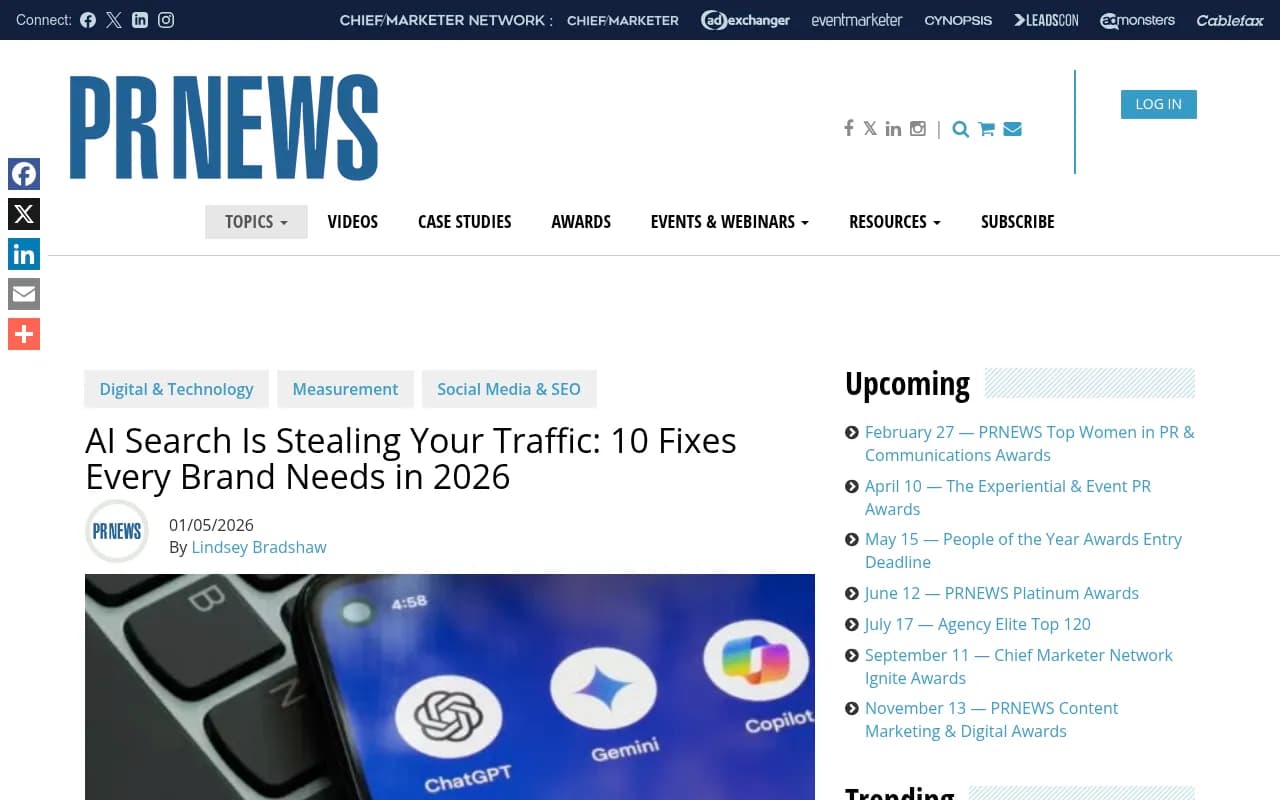
The chart above shows how different industries experience the shift. Publishing and e-commerce hit first (2025-2026). B2B SaaS and local services follow (2026-2027). Healthcare and finance lag (2027-2028). By 2030, AI search is the dominant paradigm across all verticals.
Why this might not be bad news
Here's the counterintuitive part: AI search visitors convert 4.4x better than traditional organic search visitors. The average AI search visitor is higher quality.
Why? AI models pre-qualify users. When ChatGPT recommends your product, the user arrives with context and intent. They've already been told why your solution fits their needs. Traditional search sends unqualified traffic—users clicking around, comparing, leaving.
Brands that optimize for AI visibility can boost brand citations by over 150% through GEO (Generative Engine Optimization) strategies. Instead of losing traffic, they capture higher-quality traffic from AI interfaces.
The key: you need to be visible in AI responses. If ChatGPT, Claude, and Perplexity don't mention your brand, you're invisible to 800+ million users.
How to prepare: the GEO playbook for 2026
1. Track your AI visibility now
You can't optimize what you don't measure. Start tracking how often AI models mention your brand, which prompts trigger citations, and which competitors appear instead.
Tools like Promptwatch monitor your brand across ChatGPT, Perplexity, Claude, Gemini, and other AI engines. You see exactly which prompts return your brand, which pages get cited, and where you're invisible.

Other options include Rankshift, Omnia, and TrackMyBusiness. The key: monitor multiple AI models, not just one. ChatGPT might cite you while Perplexity doesn't.

2. Optimize for citations, not clicks
Traditional SEO optimized for clicks. GEO optimizes for citations. You want AI models to reference your content when answering queries.
How:
- Structured data: Schema markup helps AI models understand your content. Mark up products, reviews, FAQs, and how-to guides.
- Clear, factual content: AI models prefer authoritative, well-cited content. Write like you're explaining to an expert, not a beginner.
- Answer questions directly: Use question-based headings ("How does X work?") and answer them clearly in the first paragraph.
- Cite your sources: AI models trust content that cites authoritative sources. Link to research, data, and expert opinions.
3. Create content AI models want to cite
ChatGPT primarily cites content from positions 21+ in traditional search results. That means AI models look beyond page one. They want depth, not just keyword optimization.
Content types AI models prefer:
- Comparison guides: "X vs Y" articles that objectively compare options
- Data-driven research: Original surveys, studies, and statistics
- How-to guides: Step-by-step tutorials with clear instructions
- Expert roundups: Quotes and insights from industry experts
- Case studies: Real examples with specific outcomes
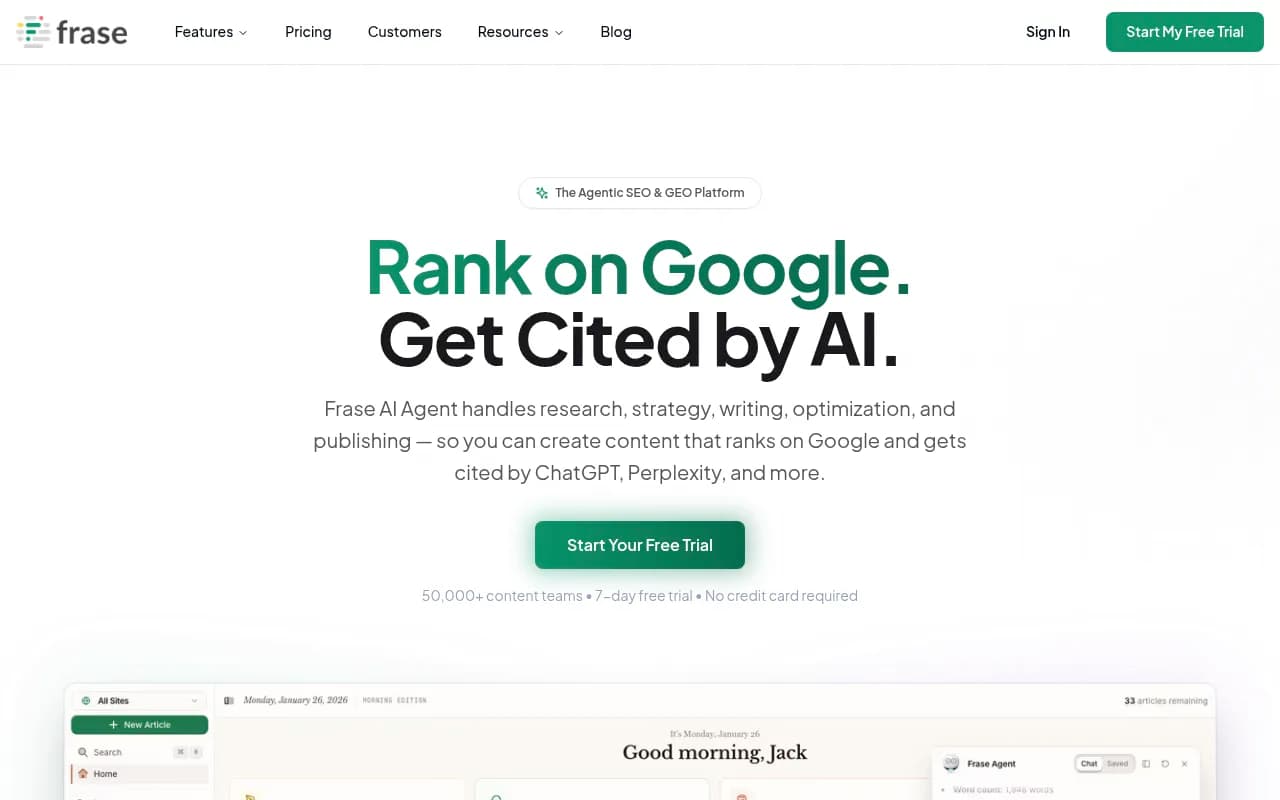
Tools like Frase, MarketMuse, and Clearscope help you research and optimize content for AI visibility.

4. Claim your brand in AI directories
AI models pull data from multiple sources. Make sure your brand information is accurate and consistent across:
- Your website (About page, product pages)
- Wikipedia (if applicable)
- Industry directories and databases
- Review sites (G2, Capterra, Trustpilot)
- Social media profiles
- Press releases and news coverage
Inconsistent information confuses AI models. They might cite a competitor instead.
5. Monitor AI crawler logs
AI models send crawlers (GPTBot, Claude-Web, PerplexityBot) to read your website. If they can't access your content, they can't cite it.
Check your server logs to see which AI crawlers visit your site, which pages they read, and whether they encounter errors. Tools like Promptwatch include AI crawler log monitoring.
Common issues:
- Robots.txt blocking AI crawlers
- Slow page load times causing timeouts
- JavaScript-heavy pages that don't render for crawlers
- Paywalls or login requirements blocking content
6. Test prompts your customers use
Don't guess which prompts matter. Research the actual questions your customers ask AI models.
Start with:
- Customer support tickets (common questions)
- Sales calls (objections and comparisons)
- Forum discussions (Reddit, Quora)
- Social media mentions
- Competitor analysis (prompts where they appear)
Then test those prompts in ChatGPT, Claude, Perplexity, and Gemini. See which brands get cited and why.
Comparison: Traditional SEO vs GEO strategies
| Factor | Traditional SEO | GEO (AI Search) |
|---|---|---|
| Goal | Rank on page one | Get cited in AI responses |
| Metric | Click-through rate | Citation frequency |
| Content focus | Keywords and backlinks | Factual depth and structure |
| Optimization target | Google algorithm | Multiple AI models |
| Traffic quality | Mixed (high bounce rates) | Pre-qualified (4.4x conversion) |
| Timeline | 3-6 months to rank | 1-3 months to citations |
| Tools | Ahrefs, Semrush, Moz | Promptwatch, Rankshift, Omnia |
The hidden opportunity: AI search rewards depth over domain authority
Traditional SEO favored established sites with high domain authority. A new blog couldn't outrank Forbes or HubSpot, even with better content.
AI search changes that. ChatGPT cites content from positions 21+ in search results. It doesn't care about domain authority—it cares about content quality and relevance.
This levels the playing field. A startup with deep, well-researched content can get cited alongside industry giants. The barrier to entry is lower.
What accelerates (or slows) the timeline
Factors that speed up AI search adoption:
- Google makes AI Mode default: If Google switches all users to AI-first search, the timeline compresses by 12-18 months.
- ChatGPT integrates commerce: If users can research and purchase products entirely within ChatGPT, e-commerce traffic shifts faster.
- AI models improve accuracy: As hallucinations decrease and citations improve, user trust grows.
- Mobile-first AI interfaces: Younger users prefer mobile. AI chat interfaces work better on mobile than traditional search.
Factors that slow adoption:
- Regulatory intervention: Governments might require AI models to cite sources more prominently or limit commercial recommendations.
- Accuracy concerns: High-profile AI errors (wrong medical advice, bad financial recommendations) could slow trust.
- Publisher lawsuits: Media companies might sue AI providers for using their content without compensation.
- Google's market power: Google could use its dominance to slow AI search adoption (though this seems unlikely given their own AI investments).
2030 and beyond: what the post-Google world looks like
By 2030, AI search is the dominant paradigm. Traditional search still exists, but it's secondary. Most users start with an AI interface.
What changes:
- Content discovery: AI models curate and recommend content based on user preferences and context
- Advertising: Brands pay to be recommended by AI models, not to appear in search results
- SEO evolves: GEO becomes the primary optimization discipline. Traditional SEO is niche.
- Traffic patterns: Fewer but higher-quality visitors. Conversion rates improve but total traffic drops.
- Content strategy: Depth and authority matter more than volume. Brands invest in fewer, better pieces.
Your move: start tracking AI visibility today
The disruption timeline is clear. Publishing and e-commerce lose traffic first (2025-2026). B2B SaaS and local services follow (2026-2027). Healthcare and finance lag (2027-2028). By 2030, AI search dominates across all industries.
You can't stop the shift. But you can prepare for it.
Start by tracking your AI visibility. Tools like Promptwatch show exactly where you appear (or don't) in AI responses. You see which prompts trigger citations, which competitors win, and which content gaps cost you visibility.
Then optimize. Create content AI models want to cite. Fix technical issues blocking AI crawlers. Monitor your progress and adjust.
The brands that win in 2028 are the ones that started optimizing in 2026. The question isn't whether AI search will overtake Google. It's whether you'll be visible when it does.