Summary
- AI search is projected to surpass traditional search by 2028, making citation tracking essential for brand visibility across ChatGPT, Perplexity, Google AI Overviews, and other generative engines
- Citation tracking measures how often AI models mention, cite, and recommend your brand in conversational responses -- not just whether your URL ranks on a SERP
- Leading platforms like Promptwatch go beyond monitoring to help you fix visibility gaps with content generation, answer gap analysis, and page-level tracking across 10+ AI models
- Key metrics include Share of Model (your brand mentions / total market mentions), citation frequency, sentiment analysis, and prompt-level visibility scores
- Unlike traditional SEO tools that scrape HTML, AI citation tracking uses API-driven prompt engineering to analyze unstructured text outputs and measure probabilistic entity inclusion

What is AI citation tracking and why it matters in 2026
AI citation tracking measures how frequently generative AI platforms reference your brand, content, or website in their responses. This is fundamentally different from traditional web analytics. When someone asks ChatGPT "What are the best project management tools?" or Perplexity "How do I track AI visibility?", you need to know if your brand appears in the answer -- and if competitors are being recommended instead.
The shift is real. Gartner predicted traditional search volume would drop 25% in 2026 as users move to AI-powered answer engines. Google's AI Overviews now reach over 2 billion monthly users. ChatGPT serves 800 million users each week. Perplexity processes hundreds of millions of queries every month. If your brand isn't being cited in these responses, you're invisible to a massive and growing audience.
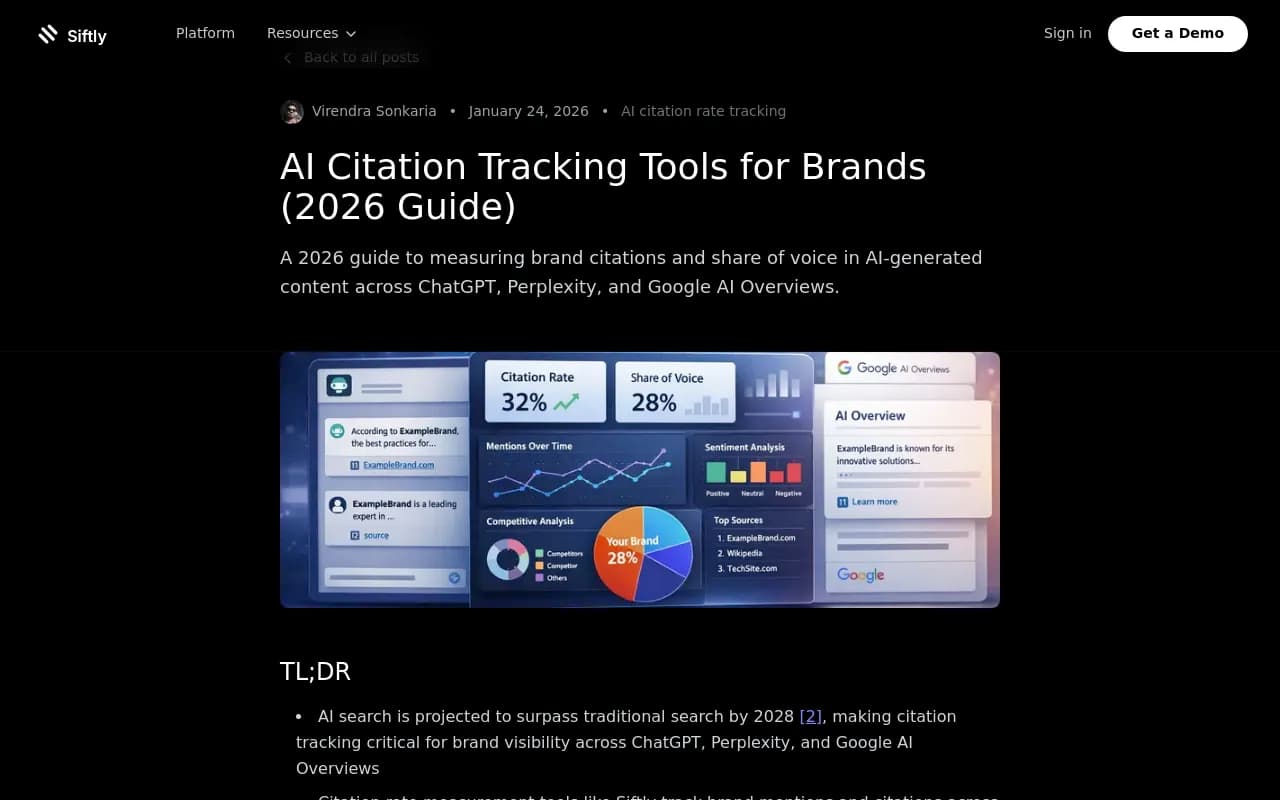
Traditional SEO metrics -- rank position, click-through rate, blue link visibility -- don't capture what's happening in AI search. A page ranking #1 on Google means nothing if ChatGPT never cites it. Citation tracking fills that gap by measuring the probability your entity gets constructed into a natural language answer.
How AI citation tracking works under the hood
AI citation tracking tools operate by simulating user interactions with generative models through diverse prompt variations. Instead of scraping HTML like traditional rank trackers, these platforms connect directly to LLM APIs (OpenAI's GPT-4, Anthropic's Claude, Google's Gemini) and execute thousands of semantic queries related to specific solution categories.
The core mechanism involves analyzing the vector embeddings of generated responses to identify entity presence. When an answer engine generates a response, the tracking tool parses the text to detect if a specific brand entity is cited as a solution, a reference, or a competitor. Advanced tools go beyond simple mentions -- they evaluate the semantic distance between the user's intent and the brand's recommendation, determining if the citation carries positive sentiment or high transactional relevance.
Here's what makes AI citation tracking different from traditional SEO monitoring:
| Feature | AI Citation Tracking | Traditional SEO Tracking |
|---|---|---|
| Core mechanism | Prompt engineering & API response parsing | HTML scraping & rank checking |
| Primary metric | Share of Model (SoM) & Citation Frequency | Rank Position & Click-Through Rate |
| Data source | LLM inference (ChatGPT, Gemini, Perplexity) | Search engine index (Google, Bing) |
| Visibility definition | Inclusion in the synthesized answer | Position of the blue link |
| Measurement approach | Probabilistic citation analysis | Deterministic rank position |
| Content format analyzed | Unstructured natural language text | Structured HTML and metadata |
Key metrics for measuring AI citation performance
Share of Model (SoM)
Share of Model measures your brand's percentage of total mentions within a specific market category. Calculate it as (Your Brand Mentions / Total Market Mentions) × 100. If ChatGPT mentions your brand 15 times and competitors 85 times across 100 queries, your SoM is 15%.
This metric matters because it shows competitive positioning. A rising SoM means you're gaining ground. A falling SoM means competitors are winning the AI visibility war.
Citation frequency
Citation frequency tracks how often AI models reference your brand across a defined set of prompts. Run 100 queries related to your solution category and count how many times your brand appears. Track this weekly or monthly to spot trends.
Frequency alone doesn't tell the full story -- a brand mentioned 50 times as a cautionary example is worse than a brand mentioned 10 times as the top recommendation. That's where sentiment comes in.
Sentiment and recommendation quality
Sentiment analysis evaluates whether citations are positive, neutral, or negative. Advanced platforms measure semantic distance between the user's intent and your brand's recommendation. If someone asks "best email marketing tools" and the AI says "Mailchimp is popular but expensive; consider Sender for better value", Mailchimp gets a neutral citation while Sender gets a positive one.
Recommendation quality matters more than raw mentions. Being cited as the solution beats being mentioned as an also-ran.
Prompt-level visibility scores
Prompt-level tracking shows exactly which queries trigger citations and which don't. Promptwatch provides volume estimates and difficulty scores for each prompt, plus query fan-outs that show how one prompt branches into sub-queries. This lets you prioritize high-value, winnable prompts instead of guessing.
Page-level citation tracking
Knowing which specific pages AI models cite is critical for optimization. If your homepage gets cited but your product pages don't, you know where to focus. Promptwatch shows page-level tracking with citation frequency, which models are citing each page, and how often they return.
The citation tracking workflow: assess, optimize, measure, iterate
Phase 1: Assess your AI search readiness
Start by establishing a baseline. Run queries across ChatGPT, Perplexity, Claude, Google AI Overviews, and other relevant models using your target topic keywords. Document whether your brand appears, how it's positioned, and what competitors are being cited instead.
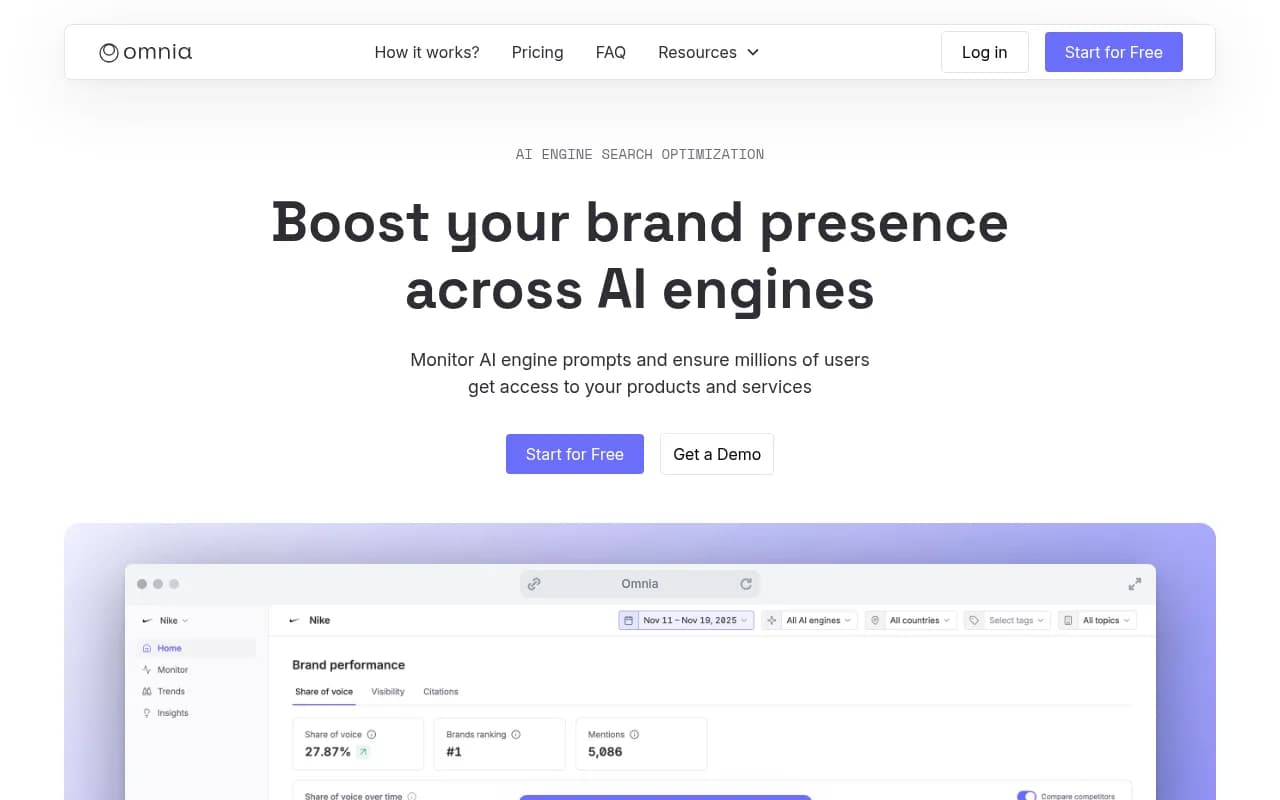
Tools like Promptwatch automate this process by tracking 10 AI models simultaneously and providing competitive heatmaps that show who's winning for each prompt and why. You'll quickly see gaps -- prompts where competitors are visible but you're not.

Phase 2: Optimize your content for AI engines
Once you know where the gaps are, fix them. This is where most monitoring-only tools leave you stuck. Promptwatch is built around taking action: it shows you what's missing, then helps you create content that ranks in AI.
The Answer Gap Analysis feature shows exactly which prompts competitors are visible for but you're not. You see the specific content your website is missing -- the topics, angles, and questions AI models want answers to but can't find on your site.
The built-in AI writing agent generates articles, listicles, and comparisons grounded in real citation data (880M+ citations analyzed), prompt volumes, persona targeting, and competitor analysis. This isn't generic SEO filler -- it's content engineered to get cited by ChatGPT, Claude, Perplexity, and other AI models.
Phase 3: Measure your AI search performance
After publishing optimized content, track the results. See your visibility scores improve as AI models start citing your new content. Promptwatch provides real-time monitoring across all major models, with page-level tracking that shows exactly which pages are being cited, how often, and by which models.
Close the loop with traffic attribution. Promptwatch offers three methods: code snippet, Google Search Console integration, or server log analysis. Connect visibility to actual revenue so you can prove ROI.
Phase 4: Iterate and scale
AI citation optimization is continuous. Models update, competitors publish new content, and user behavior shifts. Set up automated monitoring to catch changes early. Promptwatch sends alerts when your visibility drops or competitors gain ground.
Use AI Crawler Logs to see real-time logs of AI crawlers (ChatGPT, Claude, Perplexity) hitting your website -- which pages they read, errors they encounter, how often they return. Understand how AI engines discover your content and fix indexing issues. Most competitors lack this entirely.
Advanced citation tracking capabilities
Reddit and YouTube citation analysis
AI models frequently cite Reddit threads and YouTube videos in their responses. Surface discussions that directly influence AI recommendations -- a channel most competitors ignore entirely. Promptwatch tracks Reddit and YouTube insights to show you where to publish and what to optimize.
ChatGPT Shopping tracking
Monitor when your brand appears in ChatGPT's product recommendations and shopping carousels. This is critical for e-commerce brands and SaaS companies selling through AI-assisted discovery.
Multi-language and multi-region monitoring
Monitor AI responses in any language, from any country, with customizable personas that match how your actual customers prompt. This matters because AI models return different results based on location and language context.

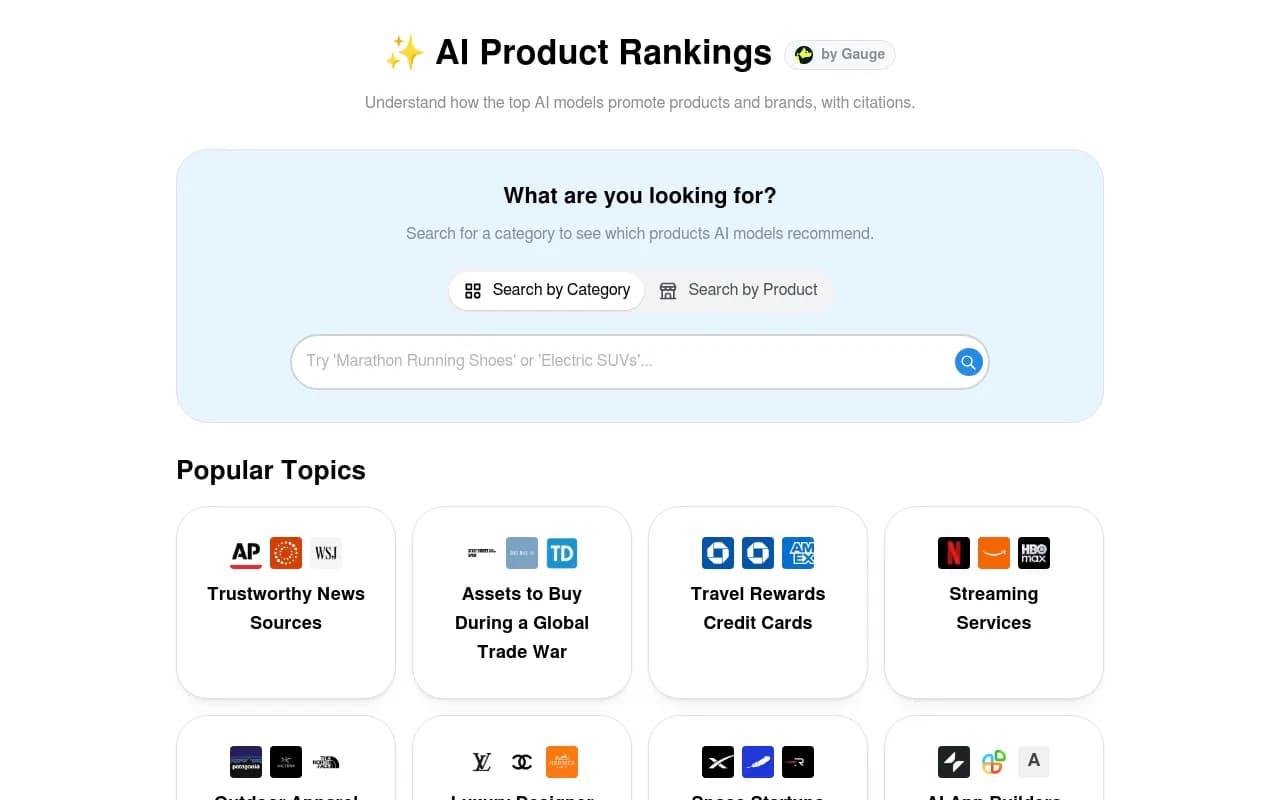
Competitor heatmaps
Compare your AI visibility vs competitors across LLMs. See who's winning for each prompt and why. Identify content gaps and opportunities where you can overtake competitors with targeted optimization.
Choosing the right citation tracking platform
Not all AI citation tracking tools are created equal. In a 2026 comparison of 12 GEO platforms, Promptwatch is the only platform rated as a "Leader" across all categories. The core difference: most competitors are monitoring-only dashboards that show you data but leave you stuck. Promptwatch is built around taking action.
Here's what to look for:
| Capability | Why it matters | Available in Promptwatch |
|---|---|---|
| Multi-model tracking | Monitor ChatGPT, Perplexity, Claude, Gemini, Google AI Overviews, and others in one platform | Yes (10 models) |
| Answer Gap Analysis | Identify content gaps and optimization opportunities | Yes |
| AI content generation | Create content engineered to get cited by AI models | Yes (built-in agent) |
| AI crawler logs | See which pages AI engines crawl and fix indexing issues | Yes |
| Page-level tracking | Know exactly which pages get cited | Yes |
| Traffic attribution | Connect visibility to revenue | Yes (3 methods) |
| Reddit & YouTube tracking | Surface discussions that influence AI recommendations | Yes |
| ChatGPT Shopping | Monitor product recommendations | Yes |
| Prompt intelligence | Volume estimates and difficulty scores | Yes |
| Multi-language support | Track AI responses in any language | Yes |
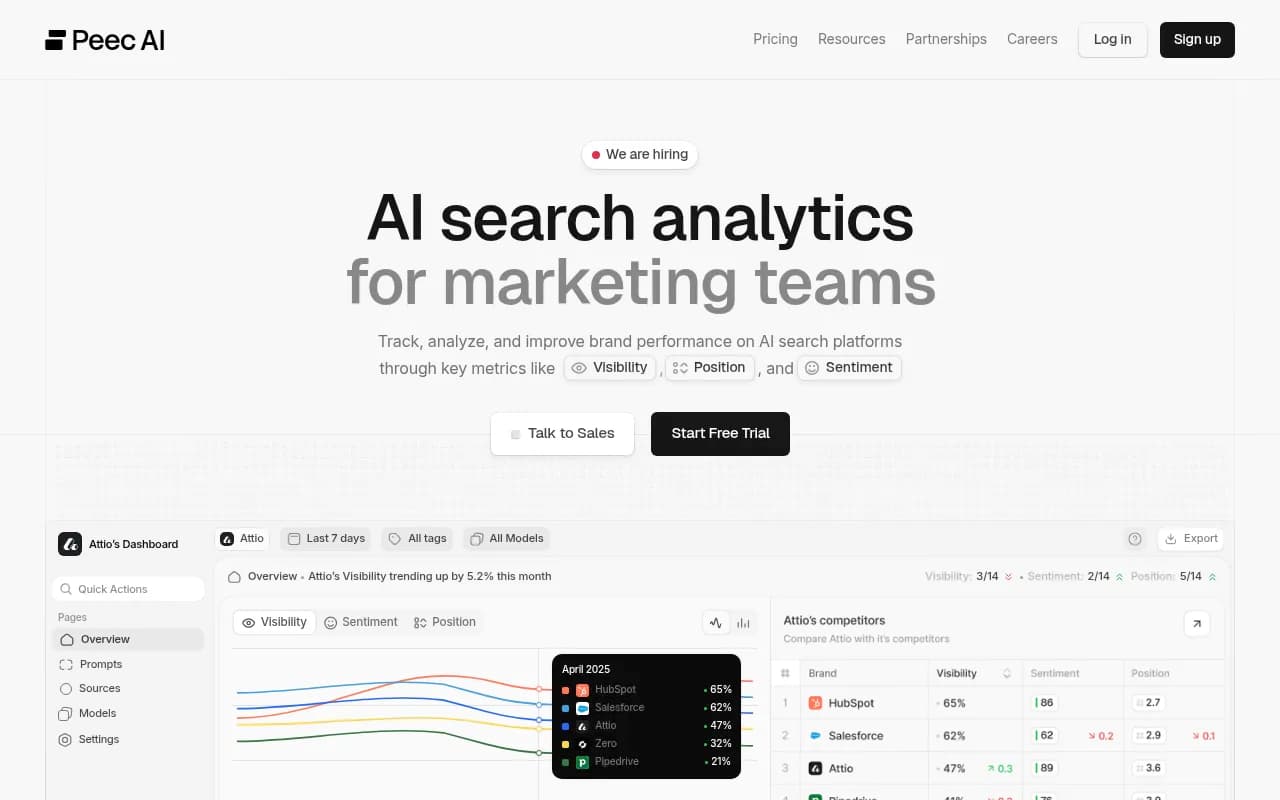
Otterly.AI


Common citation tracking mistakes to avoid
Tracking vanity metrics instead of actionable insights is the biggest mistake. Knowing your brand was mentioned 47 times last month means nothing if you don't know which prompts triggered those mentions, whether the sentiment was positive, or how to replicate the success.
Another mistake: monitoring without optimization. Citation tracking should drive content creation and website improvements. If your tool only shows you data without helping you fix gaps, you're stuck.
Ignoring AI crawler behavior is a third mistake. AI models crawl websites differently than traditional search engines. If ChatGPT's crawler encounters errors or can't access key pages, your visibility suffers. Promptwatch provides real-time crawler logs so you can spot and fix issues immediately.
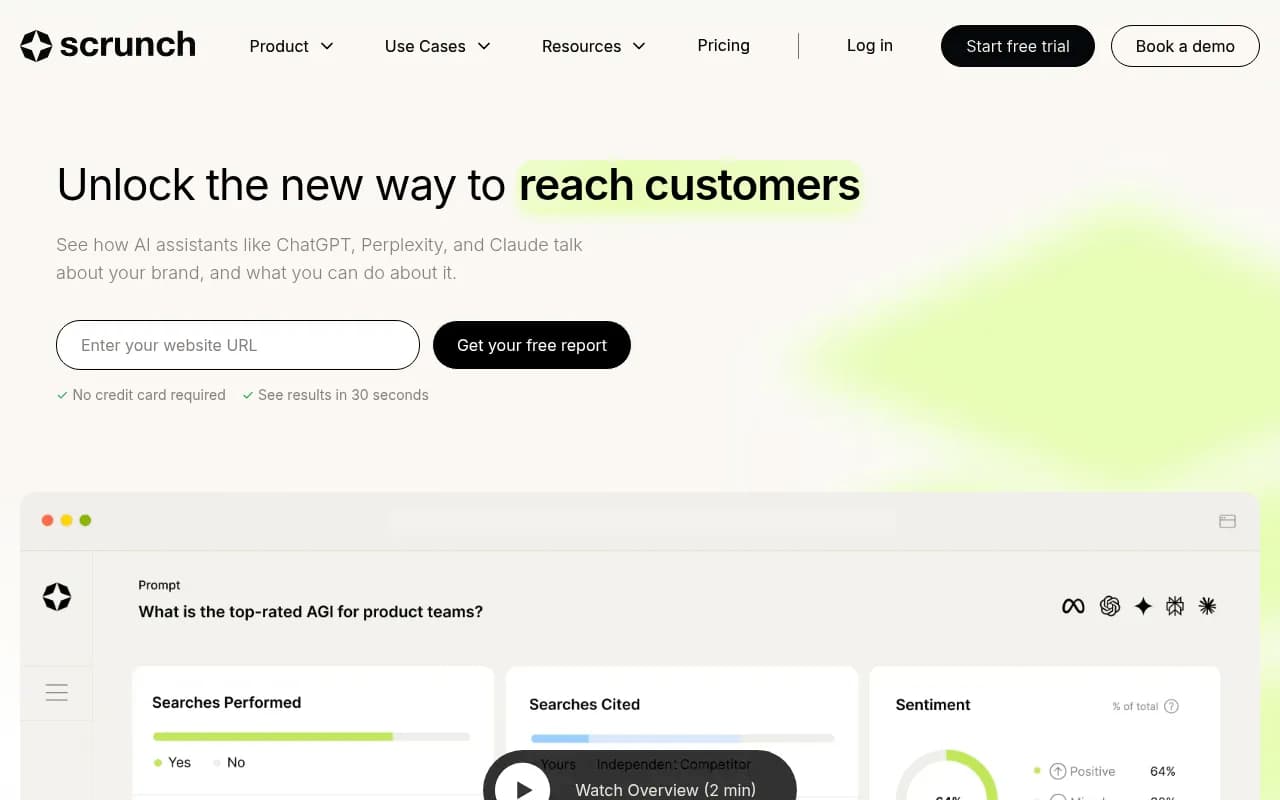
Connecting citation tracking to revenue
Citation tracking is pointless if it doesn't connect to business outcomes. The goal is revenue, not vanity metrics. Promptwatch offers three methods to tie AI visibility to actual traffic:
- Code snippet: Add a tracking script to your website to capture visitors arriving from AI search engines
- Google Search Console integration: Connect GSC to see which queries drive traffic from AI-enhanced search results
- Server log analysis: Parse server logs to identify AI crawler activity and correlate it with traffic spikes
Once you connect visibility to traffic, you can calculate ROI. If optimizing for a specific prompt costs $500 in content creation and drives $5,000 in revenue, that's a 10x return. Most competitors can't make this connection.
The future of AI citation tracking
AI search is still evolving. New models launch regularly. Existing models update their citation behavior. User prompting patterns shift as people learn how to get better answers. Citation tracking needs to keep pace.
The platforms that win will be the ones that don't just monitor -- they help you optimize. Promptwatch is already there. The action loop (find gaps, generate content, track results) is what separates leaders from monitoring-only dashboards.
As AI search continues to grow, citation tracking will become as essential as traditional SEO rank tracking. The brands that start now will have a massive advantage over those who wait.
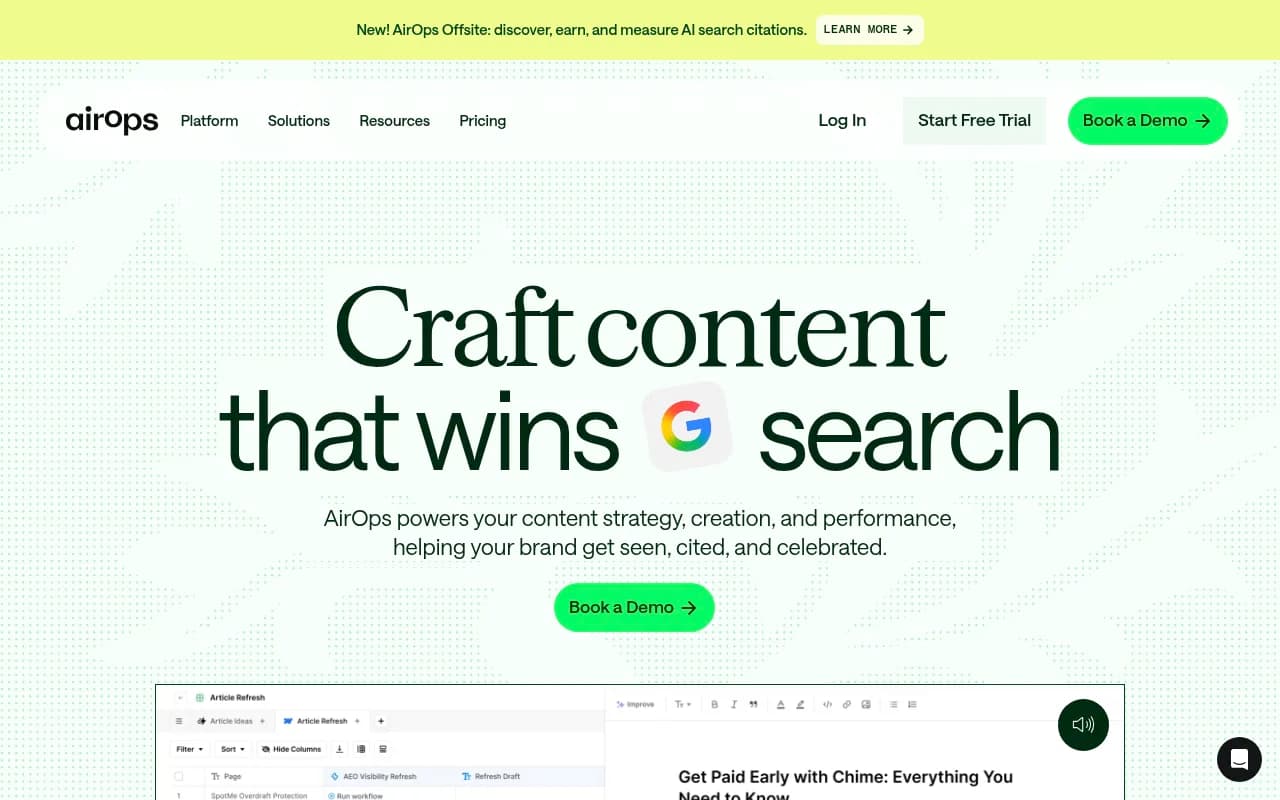
Profound

Getting started with citation tracking
Start by establishing a baseline. Pick 20-50 prompts that represent how your target customers search for solutions in your category. Run those prompts across ChatGPT, Perplexity, Claude, and Google AI Overviews. Document which brands get cited and how often.
Then identify gaps. Which prompts return competitor citations but not yours? Which topics are you missing entirely? Which pages on your site should be getting cited but aren't?
Finally, take action. Create content that fills the gaps. Optimize existing pages for AI visibility. Monitor the results and iterate. Promptwatch automates this entire workflow, from gap analysis to content generation to tracking.
The shift to AI search is happening now. Citation tracking is how you measure, optimize, and win in this new landscape. The brands that master it will dominate their categories. The ones that ignore it will become invisible.