Analyze AI Review 2026
Analyze AI helps marketing teams monitor how AI search engines like ChatGPT, Perplexity, Claude, Gemini, and Copilot represent their brand. Track rankings, sentiment, and competitor mentions across AI-generated answers, then connect GA4 to see which AI engines drive actual traffic and conversions.
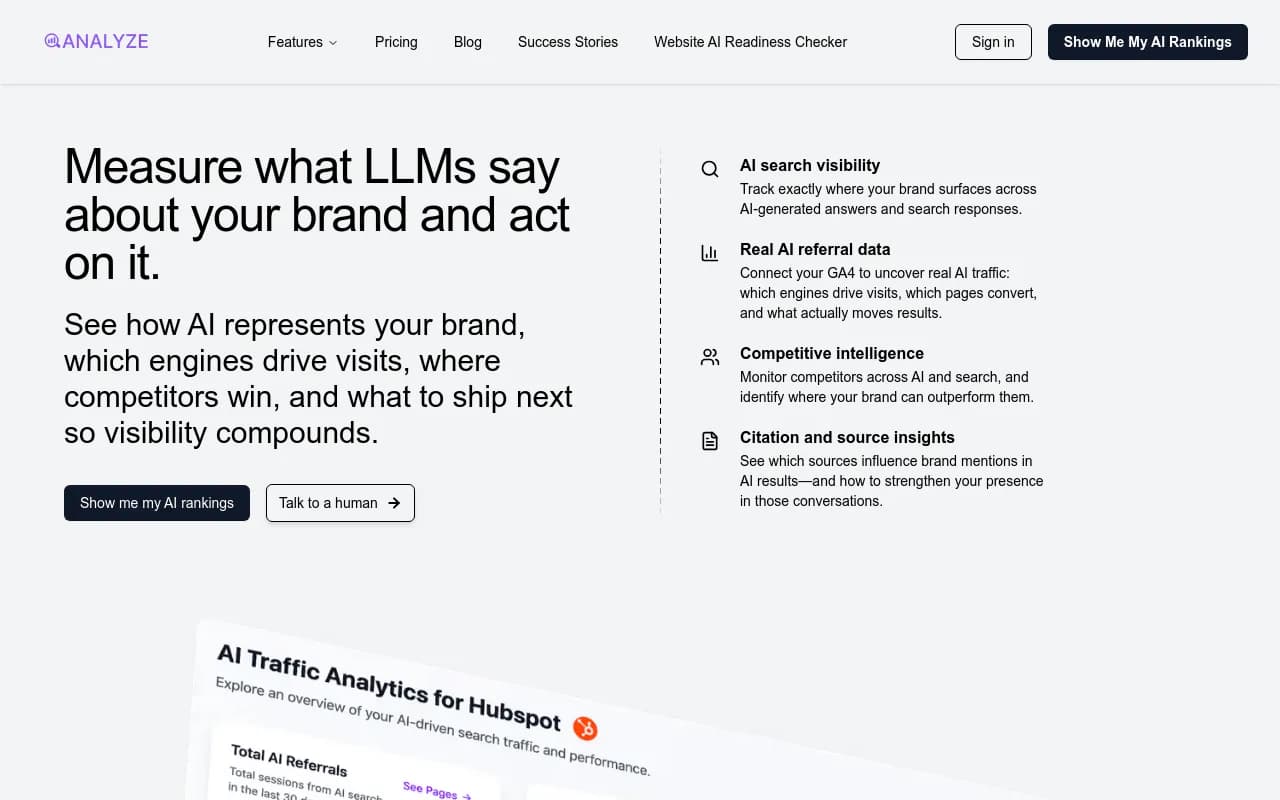
Analyze AI is an AI search analytics platform built for marketing teams who need to understand how their brand appears in AI-generated search results—and more importantly, whether that visibility translates to traffic and revenue. Unlike traditional SEO tools that focus on Google's ten blue links, Analyze AI tracks how large language models like ChatGPT, Perplexity, Claude, Gemini, and Copilot mention your brand when users ask questions.
The platform was built in response to a growing problem: companies were being sold expensive "AI visibility" dashboards that showed vanity metrics without proving business impact. Marketing teams were told to treat GEO (Generative Engine Optimization) as a standalone channel and invest heavily in it, even though AI search still represents a small fraction of total traffic for most companies. Analyze AI takes a different approach by connecting AI visibility data directly to Google Analytics 4, allowing teams to see which AI engines actually drive visits, which pages convert, and what content investments deliver measurable results.
The target audience is marketing leaders, SEO teams, and product marketing managers at B2B SaaS companies, agencies, and content-driven brands who want to prepare for AI search without abandoning the fundamentals that already work. The platform is particularly relevant for companies in competitive categories where AI-generated answers are starting to influence purchase decisions—think software tools, online education, financial services, and professional services.
Discover: AI Visibility Mapping The Discover module shows where your brand appears (and doesn't appear) across major AI answer engines. You can see which prompts trigger mentions of your brand, how often you're included in responses, and which sources the models cite when they reference you. This goes beyond simple keyword tracking—it maps the actual questions users ask and shows the full context of how AI models position your brand relative to competitors. The platform tracks ChatGPT, Perplexity, Claude, Copilot, and Gemini, giving you a comprehensive view of the AI search landscape rather than focusing on a single engine.
Measure: Rankings and Share of Voice The Measure module tracks your rankings across AI-generated answers, calculates your share of voice by topic and product category, and monitors sentiment over time. You can segment data by specific topics, products, or competitor sets to understand where you're winning and where you're losing ground. Unlike competitors that rely on API simulations, Analyze AI appears to track actual AI responses, though the exact methodology isn't fully detailed on the site. The sentiment analysis flags whether AI models portray your brand positively, neutrally, or negatively—critical for reputation management as AI search grows.
Improve: Content Gap Analysis The Improve module identifies specific citations, entities, and content gaps that influence how AI models respond to prompts in your category. It shows which sources AI engines prefer to cite, what topics you're missing coverage on, and what content formats perform best for getting mentioned. This is where the platform moves from monitoring to action—giving you a roadmap for content creation and optimization that's grounded in what actually gets cited by AI models. The recommendations are tied to specific prompts and competitor analysis, so you're not creating content in a vacuum.
Govern: Reputation Monitoring The Govern module monitors risk terms and reputational drift, catching negative narratives before they spread. You can set up alerts for specific topics or sentiment shifts, track how AI models handle sensitive queries about your brand, and see which sources are influencing negative portrayals. This is particularly valuable for brands in regulated industries or those dealing with PR challenges, where a single negative mention in AI search results could reach thousands of users without appearing in traditional search monitoring tools.
Real AI Referral Data via GA4 Integration This is where Analyze AI differentiates itself most clearly from competitors. The platform connects to your Google Analytics 4 account to show actual traffic from AI search engines—not just visibility metrics. You can see which AI engines drive visits, which landing pages convert AI-referred traffic, and what the conversion rates look like compared to traditional search. The case study with Kylian AI shows this in action: they tracked 1,000+ monthly visits from AI search with a 5% conversion rate, and could attribute it down to specific source pages. This integration turns AI visibility from a vanity metric into a channel you can actually optimize for ROI.
Competitive Intelligence The competitive intelligence features let you monitor how competitors appear across AI search results, identify prompts where they outrank you, and spot gaps where your brand can win. You can track multiple competitors simultaneously, compare share of voice across different topic clusters, and see which sources give competitors an advantage. This is more granular than traditional competitive SEO—you're not just tracking keyword rankings, you're seeing the full narrative context of how AI positions you versus alternatives.
Citation and Source Insights Analyze AI shows which sources influence brand mentions in AI results—the specific articles, pages, and domains that AI models cite when they mention your brand or competitors. This lets you identify high-value citation opportunities, understand which publishers and platforms carry the most weight with AI models, and prioritize outreach or content partnerships accordingly. If a particular industry publication consistently gets cited in your category, you know where to focus your PR efforts.
Who Is It For
Analyze AI is built for marketing teams at B2B SaaS companies with 20-500 employees who are starting to see AI search traffic in their analytics and want to understand it better. The ideal user is a VP of Marketing, Head of Growth, or SEO lead who's being asked by leadership whether the company should invest in "GEO" but doesn't have data to make that decision. It's particularly valuable for companies in competitive software categories—project management tools, CRM platforms, analytics software, developer tools—where AI-generated recommendations are starting to influence buyer research.
Product marketing managers will find the competitive intelligence and sentiment tracking especially useful for understanding how AI positions their product versus alternatives. Content strategists and SEO teams can use the content gap analysis and citation insights to prioritize what to create or optimize. The platform is also relevant for agencies managing multiple clients who need a scalable way to monitor AI search performance across different brands and industries.
The platform is less relevant for local businesses, e-commerce brands focused on transactional keywords, or companies in categories where AI search isn't yet influencing purchase decisions. If your target audience isn't using ChatGPT or Perplexity to research solutions in your category, the investment probably doesn't make sense yet. Similarly, if you're a small startup with limited content and no existing SEO presence, you'll get more value from building foundational content and traditional SEO before worrying about AI visibility.
Integrations & Ecosystem
The primary integration is with Google Analytics 4, which powers the real traffic attribution features. This is the core differentiator—connecting AI visibility to actual business outcomes. The platform covers ChatGPT, Perplexity, Claude, Copilot, and Gemini, though it's not clear whether this requires API access or uses another tracking methodology. There's no mention of other integrations with SEO tools like Ahrefs or Semrush, CRM platforms, or marketing automation tools, which suggests the platform is designed to be a standalone analytics solution rather than part of a larger martech stack. The site mentions an app interface at app.tryanalyze.ai, indicating a separate web application for the actual platform.
Pricing & Value
Analyze AI doesn't publish pricing on the main website, instead directing users to a "Show Me My AI Rankings" call-to-action that likely leads to a demo or sales conversation. This suggests custom pricing based on company size, number of prompts tracked, or other variables. The positioning and feature set indicate this is likely a mid-market to enterprise product, probably starting in the low hundreds per month rather than a self-serve tool with transparent pricing tiers. The case study mentions working with Kylian AI, an online English learning platform, which suggests the platform works for both B2B SaaS and education/content businesses.
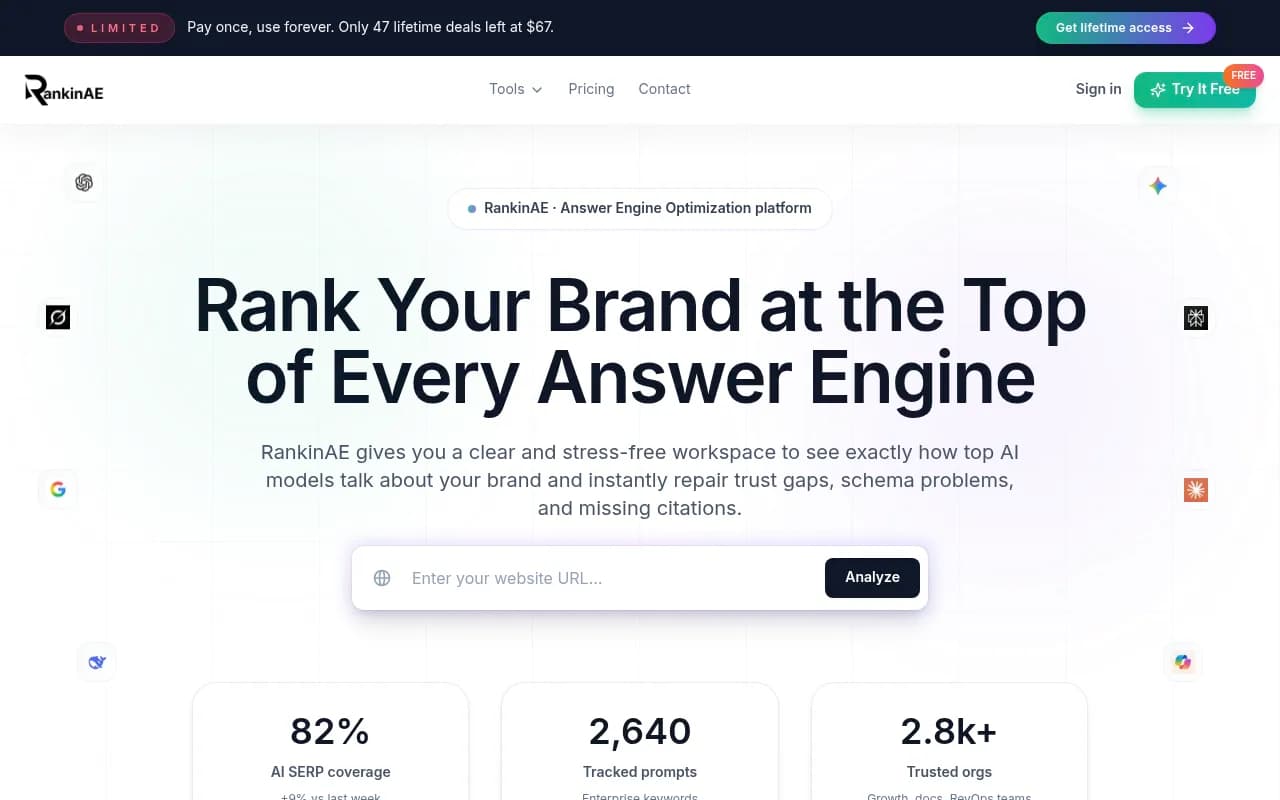
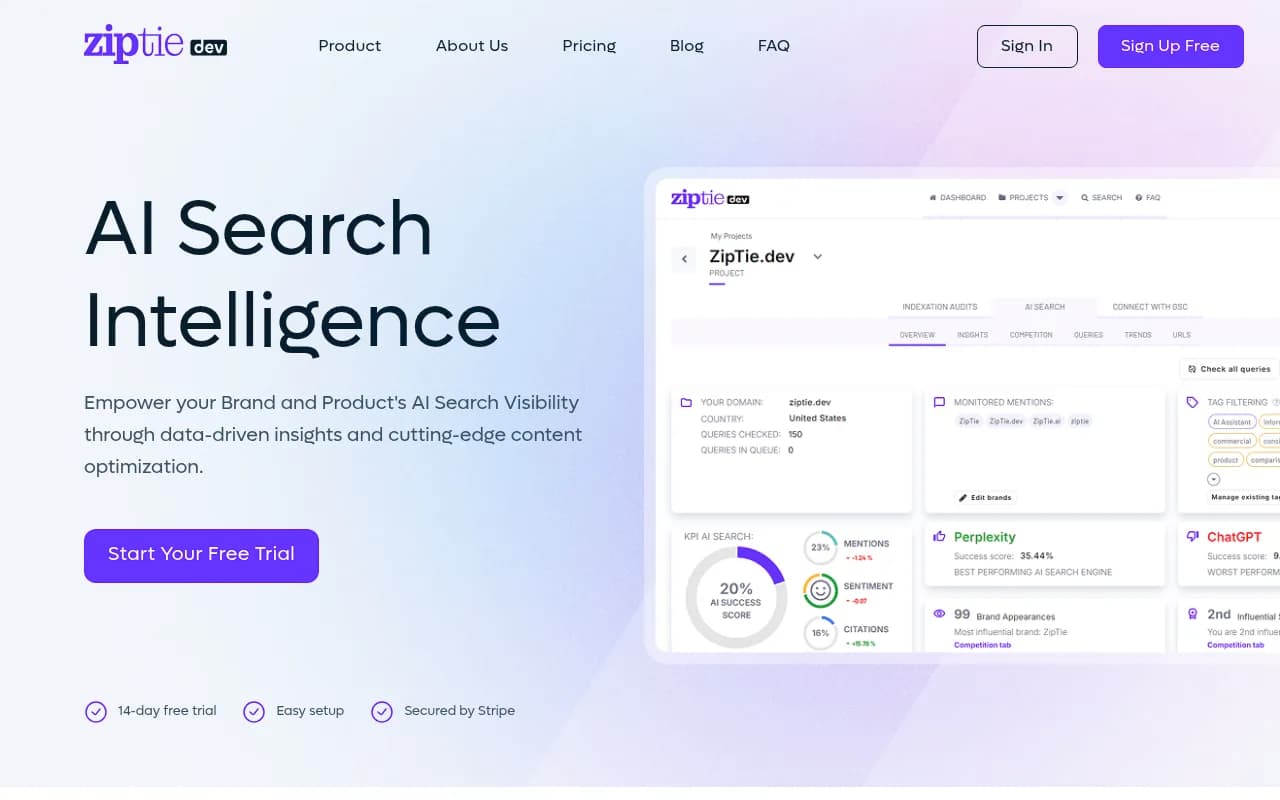
Compared to competitors mentioned on the site—Profound, Peec, and Athena—Analyze AI positions itself as more focused on business outcomes rather than vanity metrics. The manifesto explicitly criticizes competitors for "fear-based upsells" and "vanity metrics," suggesting Analyze AI is positioned as a more honest, data-driven alternative. Without public pricing for any of these tools, it's hard to compare value directly, but the GA4 integration and focus on attributable traffic suggests Analyze AI may deliver more actionable insights per dollar spent.
Strengths & Limitations
Analyze AI excels at connecting AI visibility to business outcomes through the GA4 integration—this is a genuine differentiator that solves the "so what?" problem with AI search monitoring. The multi-engine coverage across ChatGPT, Perplexity, Claude, Gemini, and Copilot is comprehensive, giving you a full picture rather than focusing on a single platform. The content gap analysis and citation insights provide actionable recommendations rather than just reporting on current state. The positioning and manifesto demonstrate clear thinking about how AI search fits into broader marketing strategy, avoiding the hype and FOMO that characterizes much of the GEO conversation. The Kylian case study provides concrete proof of value with specific numbers—1,000+ monthly visits, 5% conversion rate—which is more transparent than most competitors.
On the limitations side, the lack of transparent pricing makes it hard to evaluate whether this fits your budget without going through a sales process. The platform appears to be relatively new, and there's limited information about the size of the prompt database, how frequently data refreshes, or how the tracking methodology works. The site doesn't mention API access, bulk export capabilities, or white-label options that agencies might need. There's no mention of historical data—if you sign up today, it's unclear whether you can see how your AI visibility has changed over the past 6-12 months or if you're starting from zero. The focus on B2B SaaS and content businesses means it may not be optimized for e-commerce, local, or other verticals.
Bottom Line
Analyze AI is the right choice for marketing teams at B2B SaaS companies who are seeing early AI search traffic and want to understand whether it's worth investing in before committing to a full GEO strategy. The GA4 integration and focus on attributable traffic make it more useful than pure visibility dashboards, and the competitive intelligence features help you identify specific opportunities rather than just tracking your own performance. Best use case: a VP of Marketing at a 50-200 person software company who needs to present data-driven recommendations to leadership about whether to invest in AI search optimization, and if so, where to focus first.
Tags:
Similar and alternative tools to Analyze AI