Summary
- Traditional keyword tools are blind to AI search: Platforms like Semrush and Ahrefs track Google rankings but can't see what ChatGPT, Claude, or Perplexity recommend when users ask for solutions
- The data infrastructure is completely different: Keyword research pulls from historical search volume databases; prompt intelligence requires real-time LLM querying, citation tracking, and UI-level screenshot verification
- Metrics that matter have changed: Position #1 means nothing if you're not cited in the AI-generated answer. Prompt tracking measures mention frequency, competitive positioning, and source attribution instead of rank
- The optimization playbook is inverted: SEO chases backlinks and on-page signals; GEO (Generative Engine Optimization) requires citation-worthy content, Reddit discussions, and structured data that LLMs can parse
- No single tool does both well: The platforms built for traditional SEO lack the infrastructure to track AI visibility, and AI-native tools like Promptwatch are purpose-built for a fundamentally different problem

Why your keyword tracker can't see AI search
I've watched marketing teams stare at their Semrush dashboards, confused. They're ranking #1 for a high-value keyword. Traffic is down 40%. The explanation usually isn't algorithm volatility or seasonal trends -- it's that their "#1 ranking" now sits 1,200 pixels below an AI Overview that answers the question without requiring a click.
Traditional keyword tracking tools were built for a world where Google returned ten blue links and your job was to be one of them. That world is gone. According to research from Gartner, traditional search volume is projected to drop 25% by 2026 as AI platforms like ChatGPT, Perplexity, and Google AI Mode capture an increasing share of informational and commercial queries.
The problem isn't that keyword tools are bad at what they do. It's that they're solving a different problem entirely.
The data infrastructure gap
Keyword research tools pull from decades of accumulated search volume data, competition metrics, and historical trend patterns. When you type a keyword into Ahrefs or Semrush, you're querying a database built from:
- Google Search Console API data
- Clickstream data from browser extensions
- Historical SERP snapshots stored over years
- Aggregated cost-per-click information from ad platforms
Prompt intelligence requires none of this and all of something else entirely. To track what ChatGPT recommends when someone asks "what's the best CRM for small teams," you need:
- Real-time API access to OpenAI, Anthropic, Google, Perplexity, and other LLM providers
- UI-level screenshot verification (because API responses often differ from what users actually see)
- Citation extraction and source attribution tracking
- Competitor mention frequency analysis
- Cross-model consistency checking (what Claude says vs what ChatGPT says)
These are fundamentally different technical problems. A keyword tracker that adds "AI search monitoring" as a feature usually means they're running a fixed set of prompts once a day and showing you whether your domain appeared in the response. That's not intelligence -- it's a boolean check.
The metrics that actually matter in AI search
Traditional keyword research gives you:
- Search volume (monthly searches)
- Keyword difficulty (competition score)
- SERP position (where you rank)
- Click-through rate estimates
- Cost-per-click data
Prompt intelligence tracks:
- Mention frequency: How often your brand appears when users ask category questions
- Citation position: Are you the first source cited or buried in a footnote?
- Competitive displacement: Which competitors are mentioned instead of you, and for which decision contexts?
- Source attribution: Which of your pages, Reddit threads, or YouTube videos are being cited?
- Prompt volume estimates: How many people are asking this type of question across LLMs?
- Answer consistency: Does your brand appear reliably or only in certain phrasings?
The difference is stark. A keyword tool tells you that "project management software" gets 50,000 monthly searches and you rank #8. A prompt intelligence platform tells you that when users ask ChatGPT for project management recommendations, Asana appears in 87% of responses, Monday.com in 64%, and your product in 12% -- and shows you exactly which content gaps are causing the invisibility.
The "Great Decoupling" of 2025
Many budget keyword trackers became less reliable after Google disabled the num=100 parameter in late 2025. This technical change broke the mechanism these tools used to scrape ranking data cheaply. The platforms that survived either built expensive verified data infrastructure or pivoted to focus on AI search instead.
This wasn't just a technical hiccup. It marked the moment when traditional rank tracking and AI visibility tracking diverged into separate product categories. Tools like AccuRanker and SE Ranking doubled down on accurate SERP position tracking with verified data pipelines. Tools like Promptwatch, Profound, and Peec.ai emerged to solve the AI visibility problem from scratch.
Profound

Why traditional SEO metrics mislead in AI search
Over 60% of searches now end without a click, according to recent industry data. This "zero-click" reality means that traditional success metrics -- organic traffic, click-through rate, conversion from search -- increasingly fail to capture what's actually happening.
Consider this scenario: Your brand ranks #1 for "best email marketing platform." Your organic traffic from that keyword drops 70% year-over-year. Your keyword tracker shows you're still #1. What happened?
Google's AI Overview now answers the question directly, citing three platforms (not including yours) and providing a comparison table. Users get their answer without clicking. Your #1 ranking is technically accurate but commercially meaningless.
A prompt intelligence platform would have caught this months earlier by tracking:
- Whether your brand appears in AI-generated comparison tables
- Which competitor content is being cited instead of yours
- What specific questions trigger AI responses that exclude you
- Which Reddit threads and YouTube videos are influencing the AI's recommendations
This is the core insight: traditional keyword research tells you where people look; prompt intelligence tells you who people trust. Revenue lives in that second category.
The optimization playbook is completely different
SEO optimization in 2026 still follows a familiar pattern:
- Find keywords with search volume and manageable difficulty
- Build content targeting those keywords
- Optimize on-page elements (title tags, headers, internal links)
- Acquire backlinks from authoritative domains
- Track rankings and adjust
GEO (Generative Engine Optimization) requires a different approach:
- Identify prompt gaps: Find the specific questions where competitors are cited but you're not
- Create citation-worthy content: Write articles, comparisons, and guides that answer questions directly with structured data LLMs can parse
- Build social proof: Get mentioned in Reddit discussions, YouTube reviews, and community forums that LLMs index
- Optimize for source attribution: Use schema markup, clear headings, and factual statements that are easy to extract and cite
- Track citation frequency: Monitor which pages are being cited, how often, and by which models
The difference shows up in the content itself. SEO content is optimized for Google's algorithm -- keyword density, semantic relevance, topical authority. GEO content is optimized for citation -- clear answers, structured comparisons, verifiable facts, and social proof.
A traditional keyword tool will tell you to write a 2,000-word article targeting "best CRM software" with related keywords sprinkled throughout. A prompt intelligence platform will tell you that ChatGPT cites Reddit threads more often than blog posts for this query, that users asking for "CRM for small teams" get different recommendations than those asking for "enterprise CRM," and that your competitor appears because they have a detailed comparison page that directly answers the question "HubSpot vs Salesforce."
The infrastructure problem: why retrofitting doesn't work
Several established SEO platforms added "AI search tracking" features in 2025. Semrush launched AI Toolkit. Ahrefs added Brand Radar. SE Ranking introduced "Prompt Monitoring."
These additions are useful but limited. The core problem is that these platforms were built with a database-first architecture optimized for storing and querying historical SERP data. Adding AI search tracking means bolting on a completely different data pipeline:
- Real-time LLM API calls (expensive and rate-limited)
- Screenshot capture and storage (bandwidth-intensive)
- Citation extraction and parsing (requires NLP)
- Cross-model consistency checking (computationally expensive)
- Prompt volume estimation (no historical data exists)
Platforms purpose-built for AI visibility -- like Promptwatch, Profound, Otterly.AI, and Peec.ai -- were designed around this infrastructure from day one. They can track 10+ AI models simultaneously, capture UI-level screenshots to verify what users actually see, analyze 880M+ citations to understand what content gets cited, and provide prompt volume estimates based on query fan-outs and difficulty scoring.
Otterly.AI


The difference shows up in the data quality. A retrofitted keyword tool might run 50 prompts once per day and tell you whether your domain appeared. A purpose-built prompt intelligence platform runs thousands of prompts across multiple models, tracks citation position and frequency, monitors Reddit and YouTube discussions that influence AI responses, and shows you exactly which competitor content is being cited instead of yours.
What prompt intelligence actually looks like in practice
Let's make this concrete with a real example. Imagine you're marketing a project management tool called "TaskFlow."
Traditional keyword research approach:
- Use Ahrefs to find "project management software" has 50K monthly searches, difficulty 65
- Identify related keywords: "best project management tools," "project management app," "task management software"
- Write a 2,500-word article targeting these keywords
- Optimize title tag, meta description, headers
- Build backlinks from relevant sites
- Track ranking position over time
Result: You rank #6 for "project management software." Traffic is modest. Conversions are low.
Prompt intelligence approach:
- Use Promptwatch to track what ChatGPT, Claude, and Perplexity recommend when users ask "what's the best project management tool for remote teams"
- Discover that Asana appears in 87% of responses, Monday.com in 64%, TaskFlow in 8%
- Run Answer Gap Analysis to see which prompts competitors are visible for but you're not
- Find that users asking "project management with time tracking" get Clockify and Toggl recommendations, but TaskFlow (which has time tracking) never appears
- Identify that the AI models are citing a Reddit thread from r/projectmanagement where users discuss time tracking features -- TaskFlow isn't mentioned
- Create content that directly answers "does TaskFlow have time tracking" with structured data, publish it, and engage in the Reddit discussion
- Track citation frequency over time -- TaskFlow now appears in 34% of responses for time tracking queries
Result: You're not ranking #1 in Google, but you're being recommended by AI models to users with high purchase intent. Traffic from AI referrals is converting at 3x the rate of organic search.
This is the fundamental difference. Keyword research optimizes for visibility in a list. Prompt intelligence optimizes for being the answer.
The hybrid stack: why you need both
Here's the uncomfortable truth: you can't abandon traditional SEO. Google still drives significant traffic, and organic search rankings still matter. But you also can't ignore AI search -- it's growing faster than any channel in digital marketing history.
The solution is a hybrid stack:
| Tool category | Purpose | Example tools |
|---|---|---|
| Traditional SEO intelligence | Keyword research, backlink analysis, rank tracking | Semrush, Ahrefs, Moz |
| AI visibility tracking | Prompt monitoring, citation analysis, competitor positioning | Promptwatch, Profound, Peec.ai |
| Content optimization | SEO + GEO optimization, gap analysis | Clearscope, Surfer SEO, Frase |
| Technical infrastructure | Crawler logs, indexing, structured data | Screaming Frog, Google Search Console |

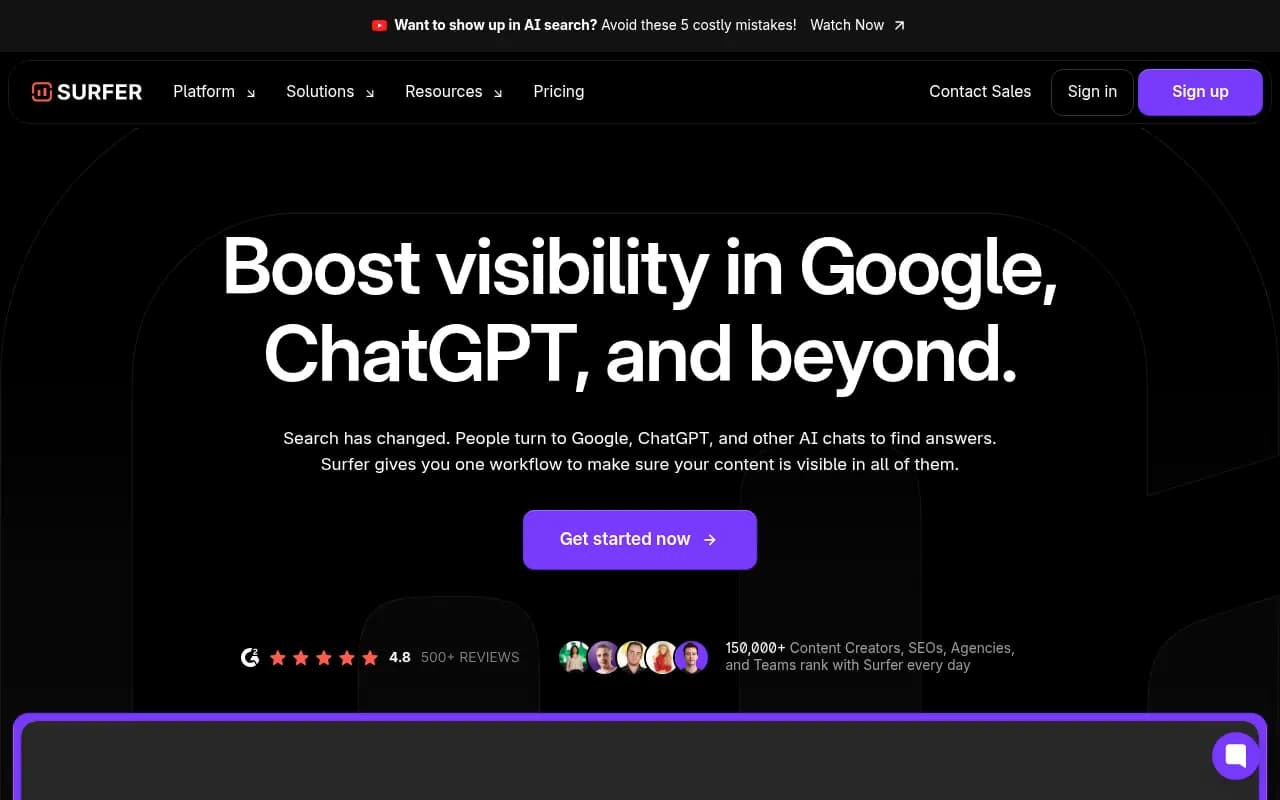
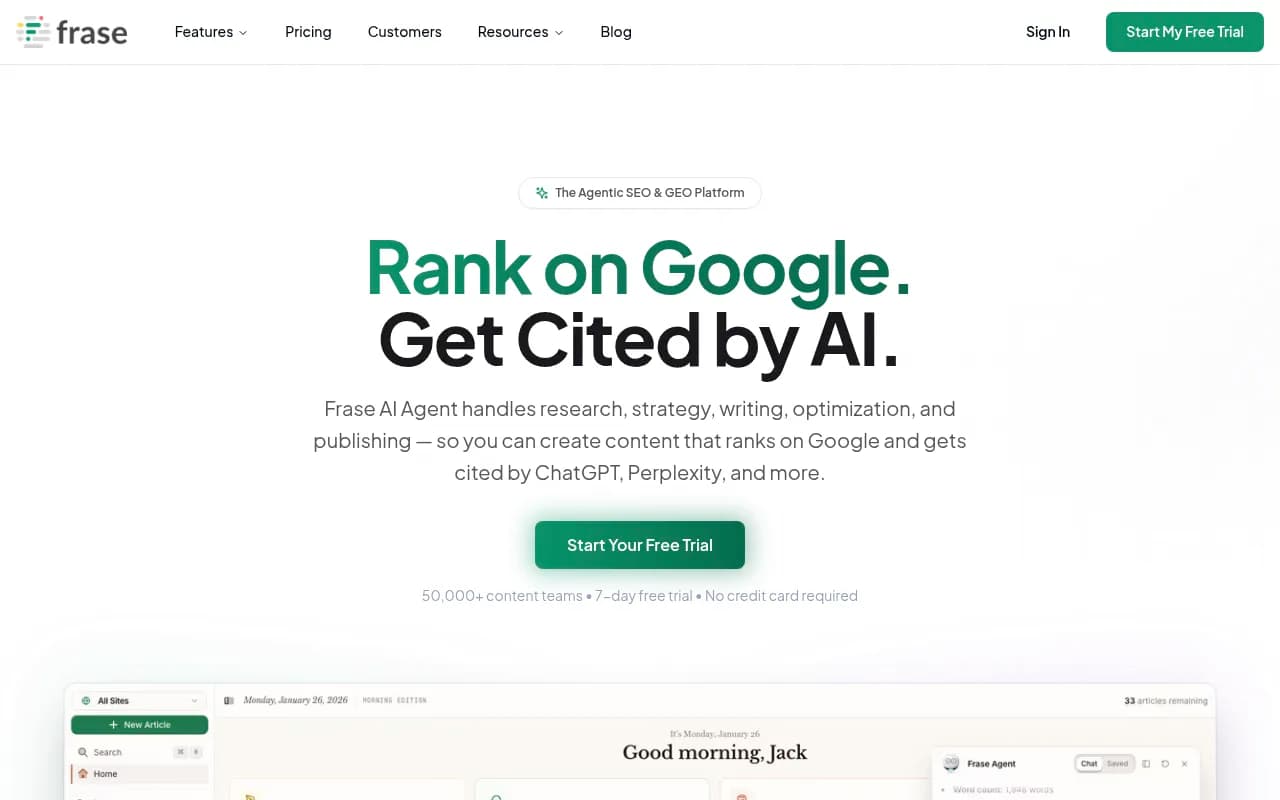
The platforms that try to do everything -- SEO, GEO, content creation, technical audits -- usually do none of it particularly well. The best approach is to pick specialized tools for each category and connect them through your workflow.
For example:
- Use Ahrefs for traditional keyword research and backlink analysis
- Use Promptwatch for AI visibility tracking and prompt intelligence
- Use Clearscope for content optimization that works for both Google and LLMs
- Use Screaming Frog for technical SEO audits
This hybrid approach lets you optimize for both traditional search and AI search without compromising on either.
The data that traditional tools can't capture
Prompt intelligence platforms track data points that simply don't exist in traditional keyword research:
AI crawler logs
When ChatGPT, Claude, or Perplexity crawl your website, they leave traces in your server logs. These crawlers behave differently than Googlebot:
- They read entire pages, not just snippets
- They follow different crawl patterns
- They encounter different errors
- They return at different frequencies
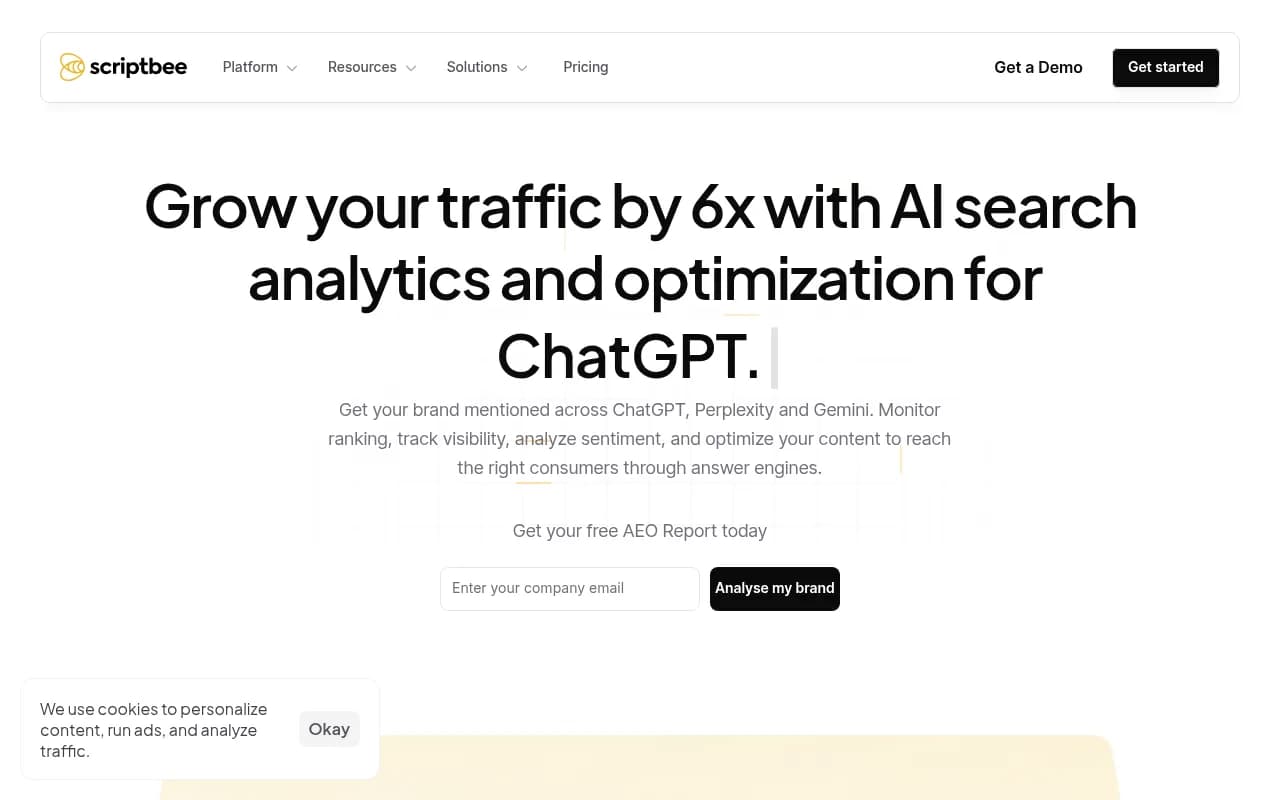
Platforms like Promptwatch and Scriptbee provide real-time AI crawler logs showing which pages AI models are reading, which errors they're encountering, and how often they return. This data is invisible to traditional SEO tools.
Reddit and YouTube influence tracking
AI models cite Reddit discussions and YouTube videos more frequently than many marketers realize. When someone asks ChatGPT for product recommendations, it often pulls from community discussions where real users share experiences.
Prompt intelligence platforms surface these discussions and show you:
- Which Reddit threads are being cited in AI responses
- What YouTube videos are influencing recommendations
- Where your competitors are being discussed
- Which community questions remain unanswered
This social proof data doesn't exist in traditional keyword research. You can't find it in Semrush or Ahrefs because those tools weren't built to track it.
Citation source analysis
When an AI model cites your brand, which specific page is it pulling from? Is it your homepage, a blog post, a comparison page, or a third-party review?
Prompt intelligence platforms provide page-level citation tracking:
- Which URLs are being cited most frequently
- Which content formats get cited (articles, comparisons, lists)
- Which pages are cited by which AI models
- How citation frequency changes over time
This granular data lets you double down on what's working and fix what's not. Traditional SEO tools show you which pages rank; prompt intelligence shows you which pages get cited.
Prompt volume and difficulty
Keyword tools provide search volume estimates based on historical data. Prompt intelligence platforms estimate prompt volume based on:
- Query fan-outs (how one prompt branches into sub-queries)
- Cross-model consistency (prompts that appear across multiple LLMs)
- Semantic clustering (related prompts that users ask)
- Difficulty scoring (how hard it is to get cited for this prompt)
These estimates are less precise than traditional search volume data (because the historical data doesn't exist yet), but they're directionally useful for prioritizing which prompts to optimize for.
The competitive intelligence gap
Traditional keyword research tells you which competitors rank for which keywords. Prompt intelligence tells you which competitors are being recommended by AI models -- and why.
This is a critical distinction. A competitor might rank #8 in Google but appear in 90% of ChatGPT recommendations because they have strong Reddit presence and citation-worthy comparison content. Traditional SEO tools would tell you to ignore this competitor (they're ranking below you). Prompt intelligence would tell you to study them closely (they're capturing AI-driven demand you're missing).
Promptwatch provides competitor heatmaps showing:
- Which competitors appear for which prompts
- Citation frequency by competitor and AI model
- Content gaps where competitors are cited but you're not
- Reddit and YouTube discussions where competitors dominate
This competitive intelligence is invisible in traditional keyword tools. You're flying blind if you're only tracking Google rankings.
The attribution problem: connecting AI visibility to revenue
One of the hardest problems in prompt intelligence is attribution. When someone asks ChatGPT for a recommendation, clicks through to your site, and eventually converts, how do you connect that revenue back to your AI visibility efforts?
Traditional SEO attribution is straightforward: Google Analytics shows organic search traffic, you track conversions, you calculate ROI. AI search attribution is messier:
- Users might see your brand in ChatGPT but Google your name later
- They might click a cited link but arrive with a referrer you don't recognize
- They might see multiple AI recommendations before converting
- The path from AI mention to conversion might take weeks
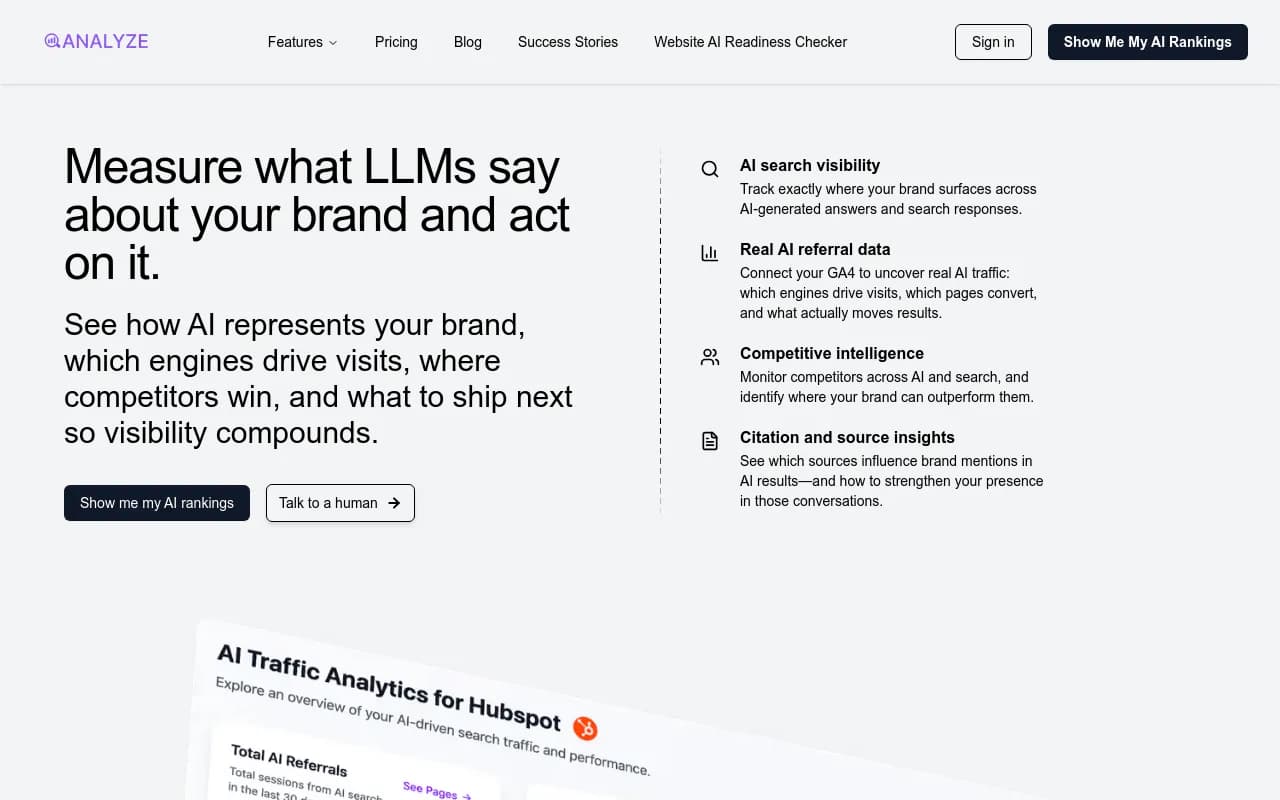
Platforms like Promptwatch and Analyze AI provide traffic attribution through:
- JavaScript tracking snippets that identify AI referrals
- Google Search Console integration to catch branded searches
- Server log analysis to identify AI crawler patterns
- Multi-touch attribution models that credit AI visibility appropriately
This attribution infrastructure doesn't exist in traditional keyword tools. They're built to track clicks from Google, not citations from ChatGPT.
Why the tool landscape is fragmenting
In 2020, you could pick one SEO platform (Semrush or Ahrefs) and cover 80% of your needs. In 2026, the landscape has fragmented into specialized categories:
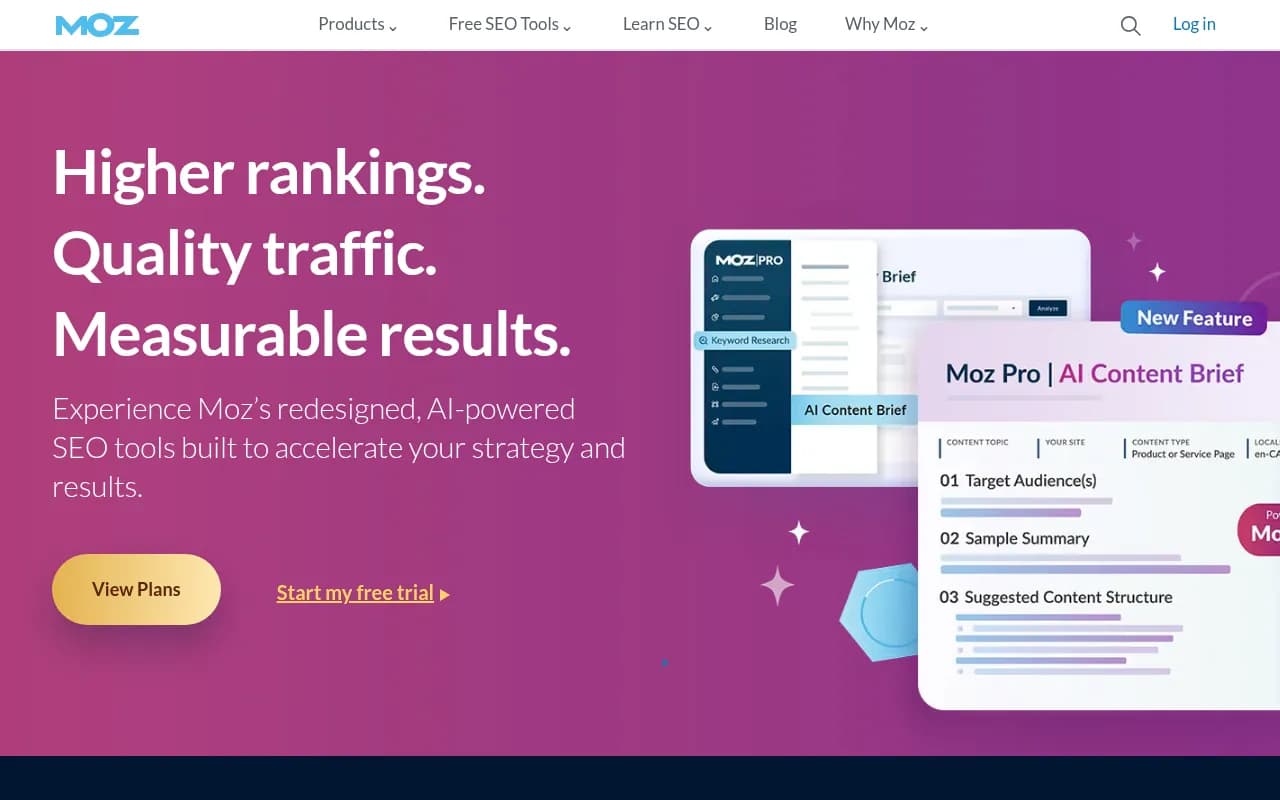
Traditional SEO intelligence: Semrush, Ahrefs, Moz -- still essential for keyword research, backlink analysis, and Google rank tracking
AI visibility tracking: Promptwatch, Profound, Otterly.AI, Peec.ai -- purpose-built for tracking brand mentions across ChatGPT, Claude, Perplexity, and other LLMs
Content optimization: Clearscope, Surfer SEO, Frase -- optimize content for both traditional search and AI citations
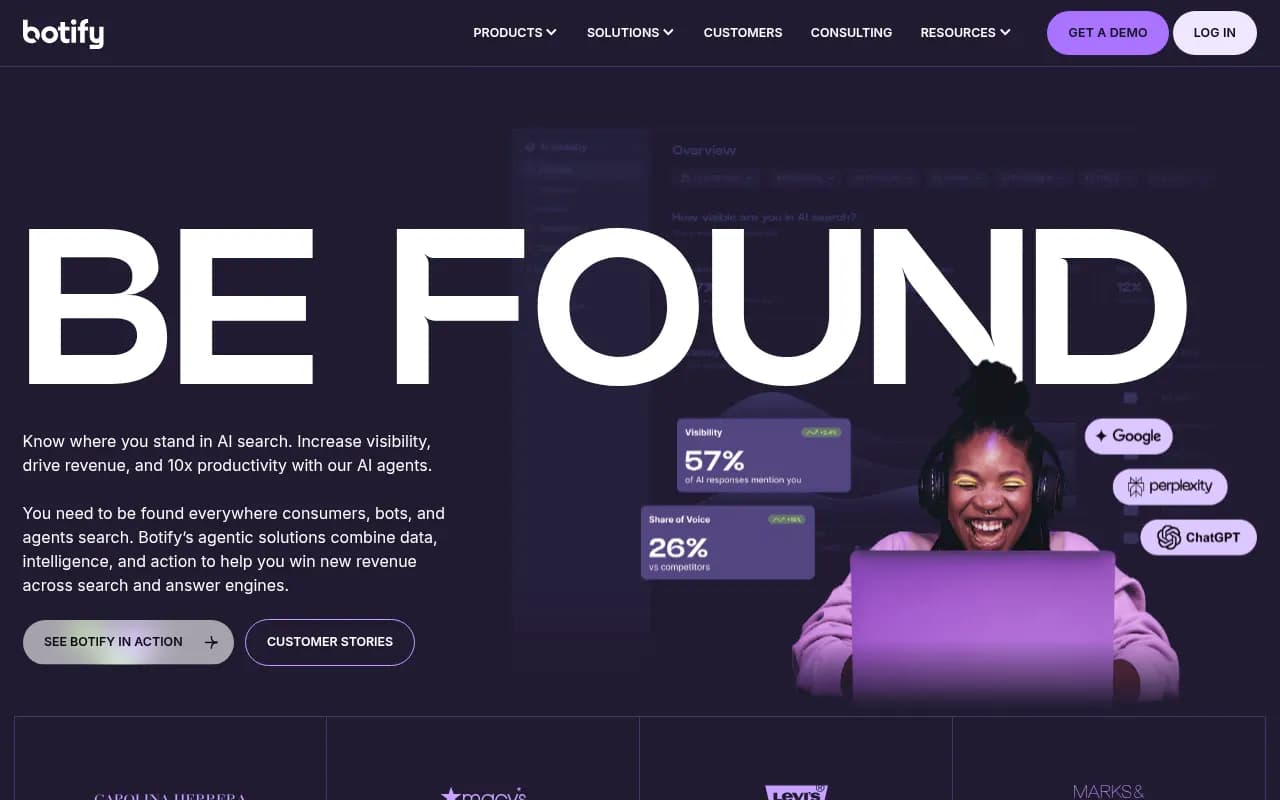
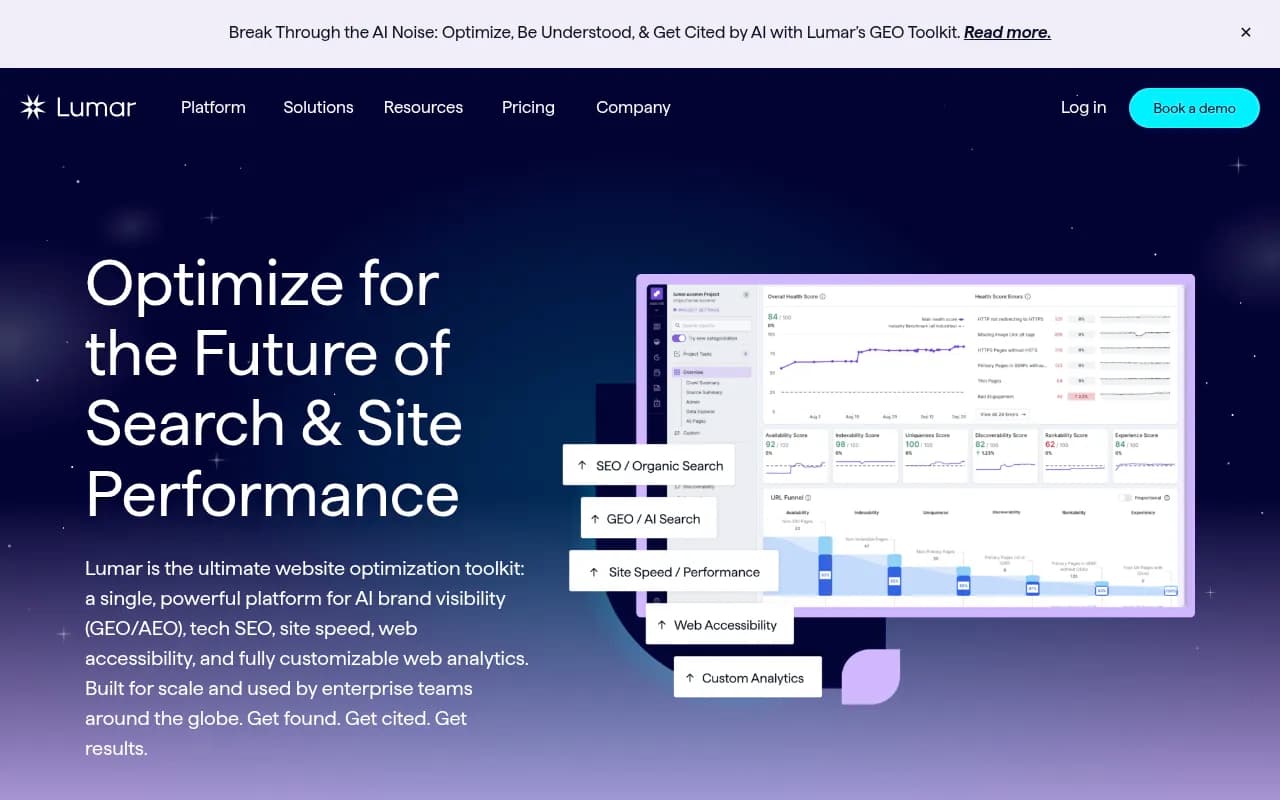
Technical GEO: Screaming Frog, Botify, Lumar -- ensure AI crawlers can access and parse your content
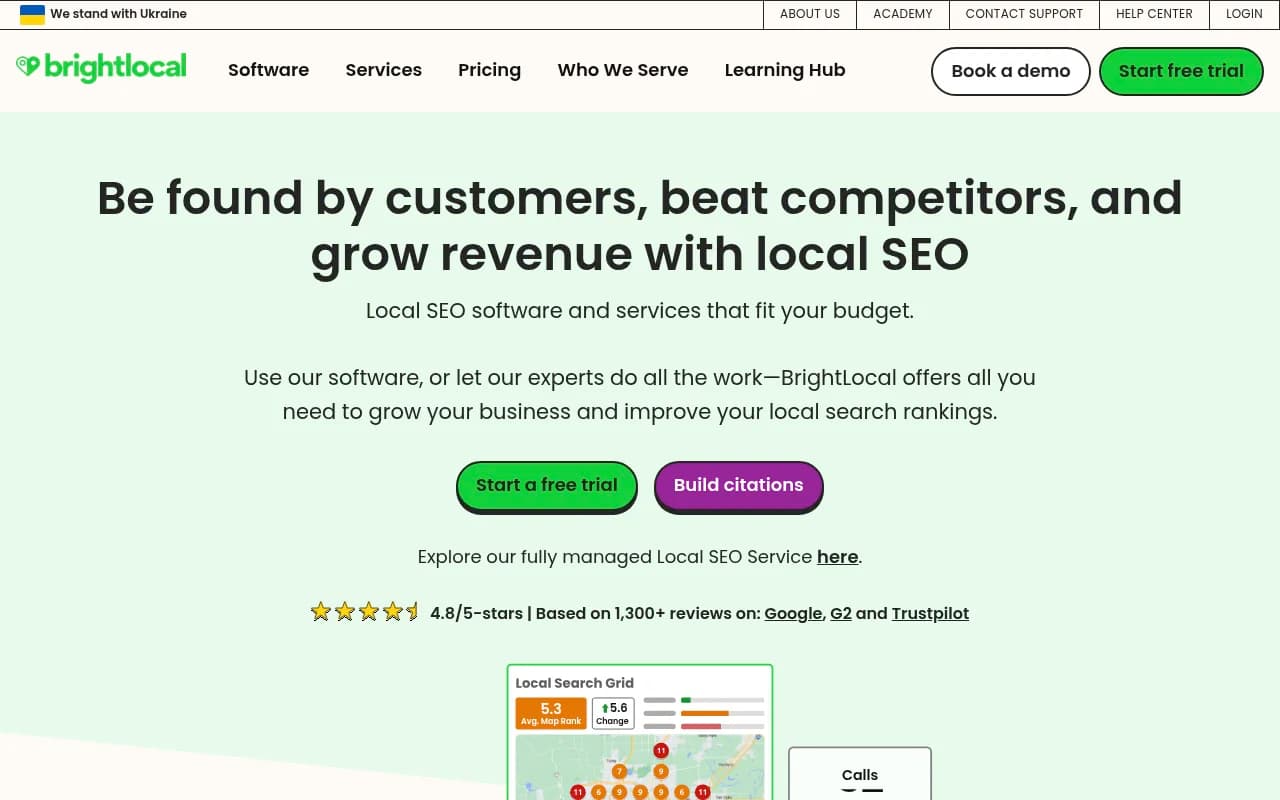
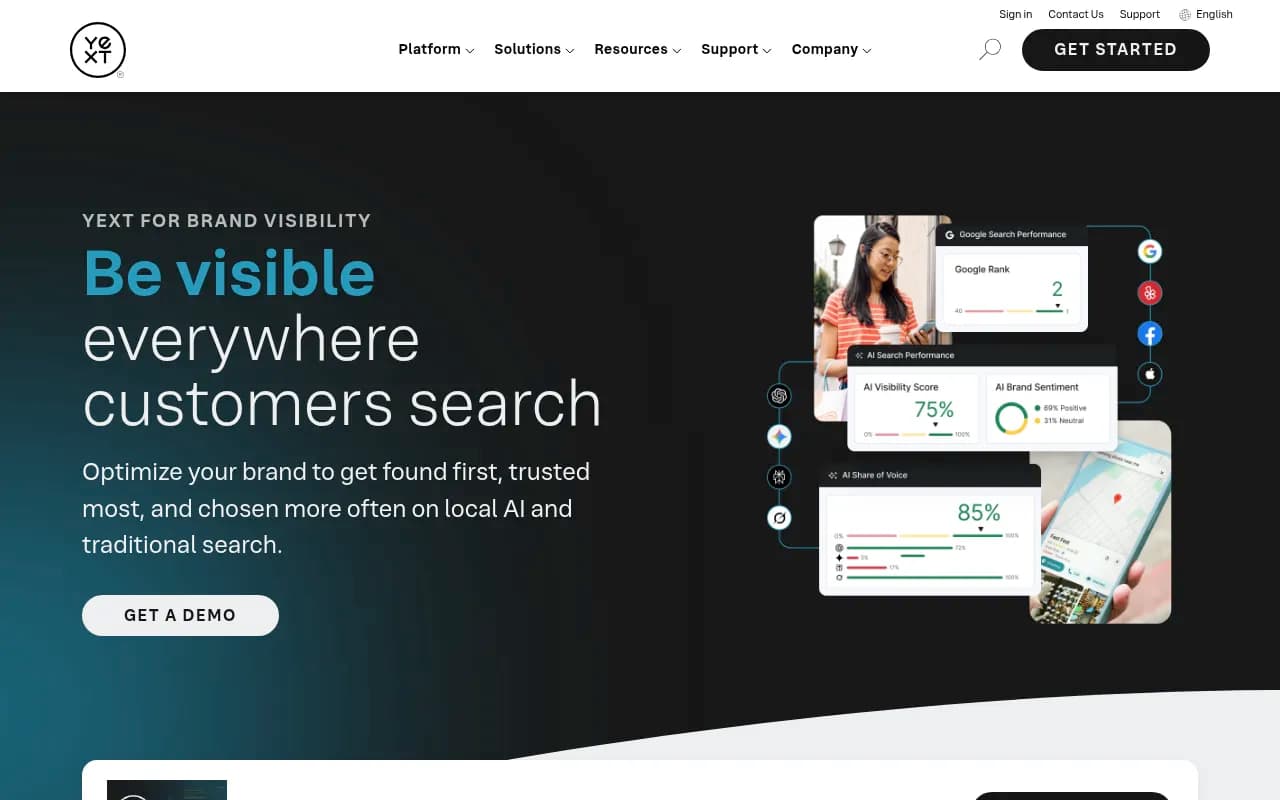
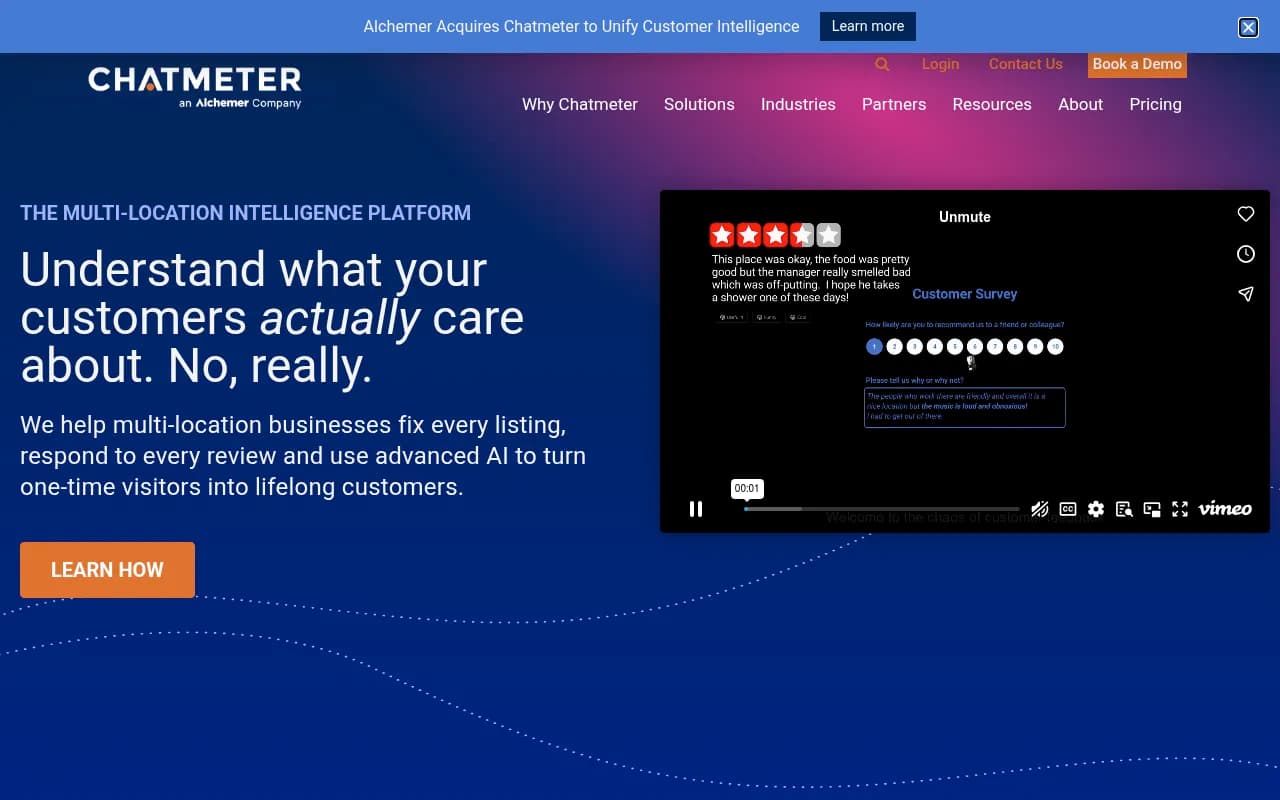
Local AI visibility: BrightLocal, Yext, Chatmeter -- track AI recommendations for local businesses
This fragmentation is frustrating but inevitable. The technical infrastructure required to track AI visibility is fundamentally different from traditional SEO. Platforms that try to do both usually compromise on one or the other.
The best approach is to accept the fragmentation and build a stack of specialized tools rather than looking for an all-in-one solution that doesn't exist yet.
What to look for in a prompt intelligence platform
If you're evaluating tools for AI search tracking, here's what actually matters:
Platform coverage
How many AI models does the tool track? The minimum viable set in 2026 is:
- ChatGPT (OpenAI)
- Claude (Anthropic)
- Gemini (Google)
- Perplexity
- Google AI Overviews
Better platforms also track Grok, DeepSeek, Meta AI, Mistral, and Copilot. Promptwatch monitors 10+ models; Profound tracks 9+; most budget tools track 3-4.
UI-level verification
Does the tool capture screenshots of what users actually see, or does it only query APIs? This matters because API responses often differ from the UI. A tool that only checks APIs might miss visual elements like product carousels, comparison tables, and featured snippets that appear in the actual user interface.
Citation and source analysis
Can the tool show you which specific pages, Reddit threads, or YouTube videos are being cited? This granular data is essential for understanding why you're visible (or invisible) and what content to create next.
Competitor tracking
Can you track competitors' AI visibility alongside your own? Competitive intelligence is half the value of prompt tracking -- knowing which competitors dominate which prompts tells you where to focus.
Content gap analysis
Does the tool identify prompts where competitors are cited but you're not? This is the most actionable data a prompt intelligence platform can provide.
Crawler log monitoring
Can you see real-time logs of AI crawlers hitting your website? This technical data helps you fix indexing issues and understand how AI models discover your content.
Prompt volume estimates
Does the tool provide estimates of how many people are asking each prompt? Without volume data, you're optimizing blind.
Traffic attribution
Can the tool connect AI visibility to actual website traffic and conversions? Attribution is hard but essential for proving ROI.
The future: convergence or specialization?
The big question for 2026 and beyond: will traditional SEO platforms and AI visibility platforms converge into unified tools, or will they remain separate categories?
My bet is on continued specialization, at least for the next 2-3 years. The technical infrastructure is too different, the optimization playbooks are too divergent, and the data pipelines are too expensive to maintain in parallel.
We'll likely see:
- Traditional SEO platforms adding basic AI visibility features (fixed prompt sets, daily checks, boolean presence/absence)
- AI-native platforms adding traditional SEO features (keyword research, backlink analysis)
- Most serious teams running both types of tools in parallel
The platforms that will win are those that pick a lane and dominate it. Promptwatch is winning in AI visibility by building the most comprehensive prompt intelligence platform with 10+ models tracked, 880M+ citations analyzed, and end-to-end optimization tools. Semrush and Ahrefs are winning in traditional SEO by maintaining the most comprehensive keyword and backlink databases.
Trying to be both usually means being neither.
Practical recommendations for 2026
If you're building a search visibility strategy for 2026, here's what to do:
-
Keep your traditional SEO tools: Don't abandon Semrush or Ahrefs. Google still drives traffic, and organic search rankings still matter.
-
Add a dedicated AI visibility platform: Pick a tool purpose-built for prompt intelligence. Promptwatch is the most comprehensive; Profound and Peec.ai are solid alternatives.
-
Track both metrics in parallel: Monitor Google rankings AND AI citation frequency. They're both important, and they don't always correlate.
-
Optimize content for both channels: Write articles that rank in Google AND get cited by LLMs. This means clear answers, structured data, and social proof.
-
Monitor AI crawler logs: Make sure ChatGPT, Claude, and Perplexity can actually access your content. Indexing issues are invisible in traditional SEO tools.
-
Build Reddit and YouTube presence: AI models cite community discussions more than most marketers realize. Participate in relevant subreddits and create YouTube content that answers common questions.
-
Track attribution carefully: Connect AI visibility to actual revenue. Use tracking snippets, GSC integration, or server log analysis to prove ROI.
The brands that win in 2026 will be those that optimize for both traditional search and AI search. The brands that lose will be those that assume their keyword tracker is showing them the full picture.
It's not.