Key takeaways
- Sales intelligence tools split into two broad camps: contact databases (ZoomInfo, Lusha, Cognism) and workflow/enrichment platforms (Clay, Apollo). Knowing which gap you're trying to fill saves a lot of money.
- ZoomInfo has the largest database but the highest price. Apollo gives you a usable all-in-one at mid-market pricing. Cognism is the right call if GDPR compliance in EMEA is non-negotiable.
- Clay is not a database -- it's an enrichment orchestration layer. It pulls from 150+ providers and lets you build custom workflows. Powerful, but it requires more setup than the others.
- Data quality matters more than data volume. A list of 50,000 stale contacts will perform worse than 5,000 verified ones.
- Most teams end up combining tools: a primary database for prospecting plus a workflow layer for enrichment and sequencing.
The sales intelligence market is genuinely crowded right now. Gartner estimates it'll exceed $5 billion by the end of 2026, and new tools keep appearing every quarter. But more options haven't made the buying decision easier -- if anything, the overlap between platforms makes it harder to figure out what you actually need.
This guide focuses on the five tools that come up most often in real buying conversations: ZoomInfo, Apollo.io, Cognism, Clay, and Lusha. They're not all the same type of product, which is part of what makes comparing them tricky. Let's break down what each one actually does, who it's for, and where it falls short.
What "sales intelligence" actually means in 2026
The term covers a lot of ground. At its most basic, sales intelligence is the data layer between "here's a list of companies" and "here's a conversation with the right person at the right time." That includes:
- Verified contact data (emails, direct dials, job titles)
- Company firmographics (size, revenue, industry, tech stack)
- Buying signals and intent data (who's actively researching your category)
- Enrichment workflows (keeping CRM data clean and current)
Not every platform covers all of these. ZoomInfo and Cognism are primarily databases. Clay is primarily a workflow tool. Apollo tries to do everything. Lusha sits somewhere in the middle. Understanding this distinction is the most important thing before you start a trial.
The five tools at a glance
| Tool | Primary use case | Best for | Starting price | GDPR-ready | Built-in sequencing |
|---|---|---|---|---|---|
| ZoomInfo | Contact database + org intelligence | Enterprise teams, NA-heavy | Custom ($$$$) | Partial | Yes |
| Apollo.io | All-in-one prospecting + outreach | Mid-market, budget-conscious | $49/user/mo | Partial | Yes |
| Cognism | GDPR-compliant contact data | EMEA-focused teams | Custom ($$$) | Yes | No |
| Clay | Data enrichment workflows | RevOps, technical teams | $134/mo | Depends on sources | No |
| Lusha | Quick contact lookup | Individual reps, SMBs | Free / $36/user/mo | Partial | No |
ZoomInfo
ZoomInfo is the category leader by database size. Over 100 million B2B profiles, deep org chart data, technographic signals, and a suite of add-ons covering intent, website visitor tracking, and conversation intelligence. If you need breadth of coverage -- especially in North America -- nothing else comes close on raw volume.
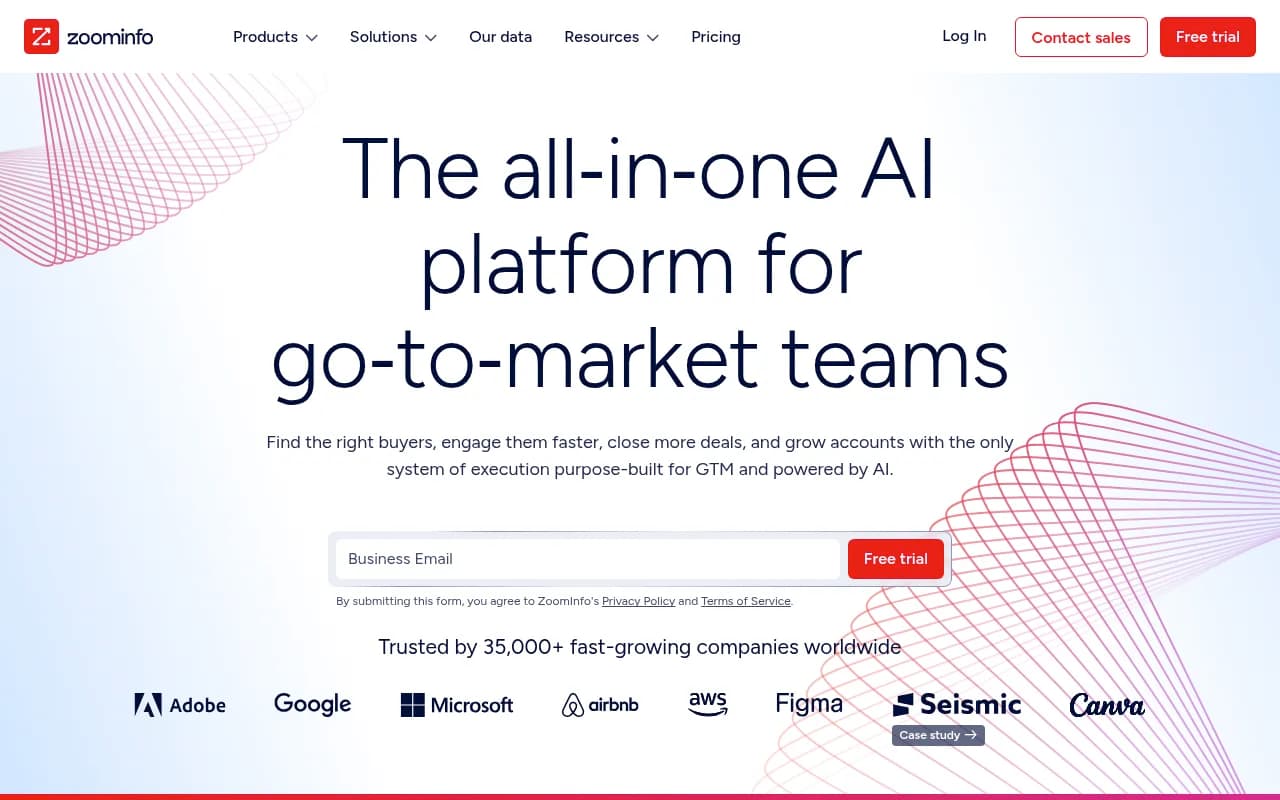
The tradeoff is cost and complexity. ZoomInfo pricing is custom and almost always lands in the five-figure annual range. For a mid-sized team, you're often paying for features you won't use. The platform has also grown through acquisitions (Chorus.ai, Insideview, RingLead), which means the interface can feel stitched together in places.
Data accuracy is strong for NA but drops noticeably in EMEA and APAC. One Reddit user comparing coverage across platforms put it plainly: "ZoomInfo was stronger on org charts and company-level data, but Apollo + Lusha together beat it on raw email coverage for SaaS in NA/EU."
Who it's for: Enterprise sales teams with large TAMs, heavy NA focus, and budget to match. If you're running ABM at scale and need org chart depth, ZoomInfo is hard to beat. If you're a 10-person team, it's probably overkill.
Apollo.io
Apollo positions itself as the all-in-one platform: contact database, email sequencing, dialer, and analytics in one product. The database has grown significantly -- over 275 million contacts as of 2026 -- and the pricing is genuinely accessible at $49/user/month for the basic plan.
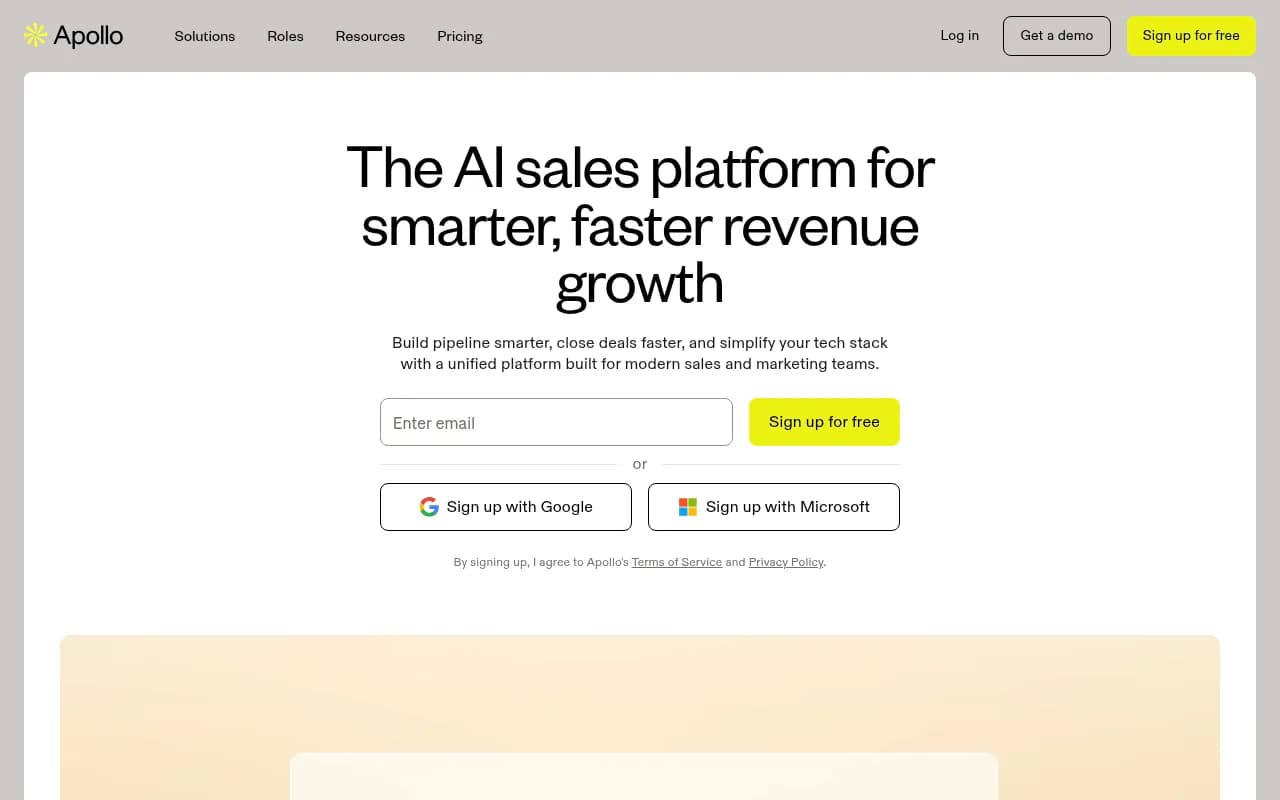
The appeal is obvious. Instead of paying separately for a data provider, a sequencing tool, and a dialer, you get everything under one roof. For teams that are just building out their outbound motion, that simplicity has real value.
The honest caveat: Apollo's data quality is good but not best-in-class. Email coverage is solid; direct dial accuracy is more variable. The sequencing tool is functional but less sophisticated than dedicated platforms like Salesloft or Outreach. And because Apollo is trying to do everything, it sometimes does each thing at a 7/10 rather than a 9/10.
That said, for the price point, Apollo is hard to argue with. Most mid-market teams running outbound should at least trial it before committing to a more expensive stack.
Who it's for: Mid-market teams that want a single platform for prospecting and outreach without enterprise-level spend. Also a strong choice for startups building their first outbound process.
Cognism
Cognism's core differentiator is GDPR compliance. While most data providers operate in a legal gray area in Europe, Cognism has invested heavily in phone-verified contact data and compliance infrastructure. Their "Diamond Data" product phone-verifies mobile numbers before they go into the database -- a meaningful difference when you're running outbound in Germany, France, or the UK.
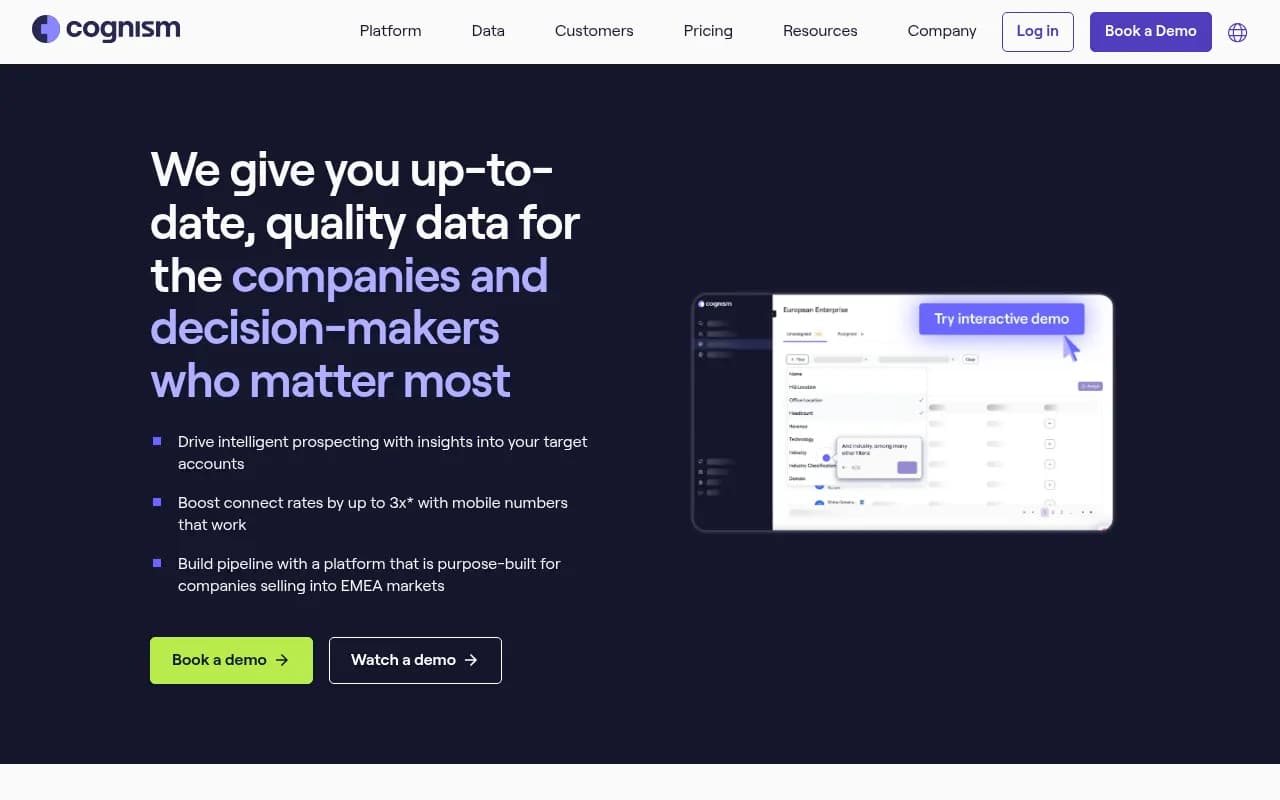
The database is smaller than ZoomInfo's, but the quality in EMEA is noticeably better. If you're prospecting into European markets, the accuracy gap more than justifies the tradeoff on volume.
Cognism doesn't have built-in sequencing -- you'll need to connect it to your outreach tool of choice (Salesloft, Outreach, HubSpot, etc.). Pricing is custom and typically lands in the mid-to-high range, though it's generally more accessible than ZoomInfo.
Who it's for: Any team with meaningful EMEA pipeline. Also a strong choice for companies in regulated industries where data compliance is a hard requirement.
Clay
Clay is a different kind of tool. It's not a database -- it's an enrichment orchestration platform. You bring your own list (from LinkedIn, a CRM export, a CSV, wherever), and Clay pulls data from 150+ providers in a waterfall: if Provider A doesn't have the email, try Provider B, then Provider C. You only pay for successful enrichments.
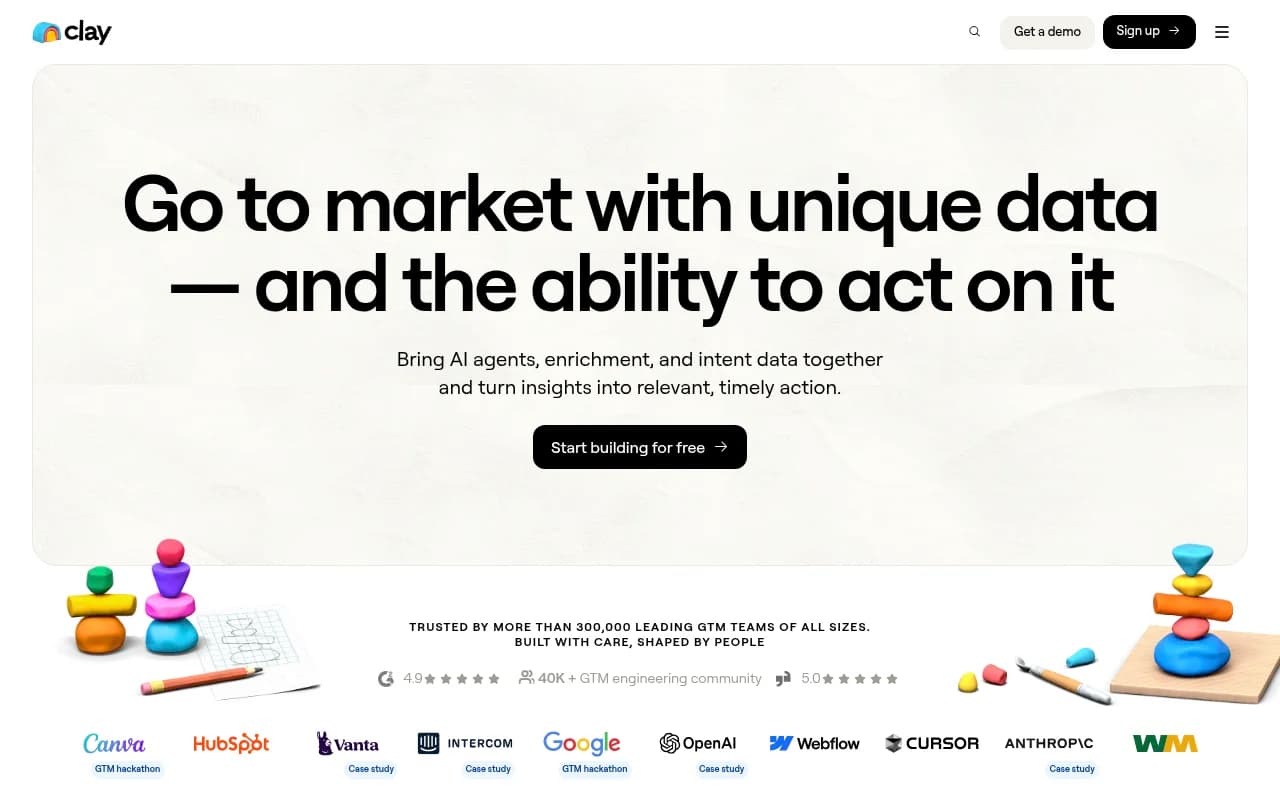
The result is dramatically higher match rates than any single provider can offer. Clay also lets you build custom AI workflows -- for example, automatically researching a company's recent funding rounds, summarizing their tech stack, and drafting a personalized first line for your outreach, all triggered when a new lead enters your CRM.
The learning curve is real. Clay is built for RevOps and technically-minded teams. If you want to click a button and get a list of contacts, this isn't your tool. But if you're willing to invest in setup, the output quality is significantly better than what you'd get from a traditional database.
Pricing starts at $134/month, but costs scale with the number of credits you use. Heavy enrichment workflows can get expensive quickly.
Who it's for: RevOps teams, growth engineers, and any team that wants to build a custom data pipeline rather than rely on a single provider's coverage. Often used alongside Apollo or ZoomInfo rather than instead of them.
Lusha
Lusha is the lightest-weight option in this comparison. It started as a Chrome extension for quick contact lookups on LinkedIn and has grown into a fuller platform with a database, CRM integrations, and basic prospecting features.
The free tier is genuinely useful -- you get a handful of credits per month to look up contacts directly from LinkedIn profiles. The paid plans start at $36/user/month, making it the most accessible option here.
Data quality is decent for NA and Western Europe, though it doesn't match ZoomInfo's depth or Cognism's EMEA verification. There's no built-in sequencing, no intent data, and no enrichment workflows. It's a lookup tool, and it's good at being a lookup tool.
Who it's for: Individual reps who need quick contact lookups without a full platform. Also works well as a supplementary tool alongside a primary database -- the Reddit comparison mentioned earlier found that Apollo + Lusha together beat ZoomInfo on email coverage for SaaS in NA/EU, at a fraction of the price.
Head-to-head: feature comparison
| Feature | ZoomInfo | Apollo.io | Cognism | Clay | Lusha |
|---|---|---|---|---|---|
| Database size | 100M+ profiles | 275M+ contacts | Smaller, higher quality | No native database | Mid-size |
| EMEA data quality | Moderate | Moderate | Excellent | Depends on sources | Moderate |
| GDPR compliance | Partial | Partial | Strong | Depends on sources | Partial |
| Built-in sequencing | Yes | Yes | No | No | No |
| Intent data | Yes (add-on) | Basic | No | No | No |
| Enrichment workflows | Limited | Limited | No | Core feature | No |
| Org chart depth | Excellent | Moderate | Moderate | N/A | Basic |
| Starting price | Custom ($$$$) | $49/user/mo | Custom ($$$) | $134/mo | Free / $36/user/mo |
| Best for | Enterprise, NA | Mid-market, all-in-one | EMEA compliance | RevOps workflows | Individual reps |
How to choose
The honest answer is that the right tool depends on your specific bottleneck. Here's a quick decision framework:
If your biggest problem is finding contacts in North America at scale: ZoomInfo is the safest bet. The database depth and org chart data are unmatched, and the intent add-ons can meaningfully improve timing. Just make sure the budget is there.
If you want one platform for prospecting and outreach without enterprise pricing: Apollo is the obvious choice. It won't be best-in-class at any single thing, but the combination of decent data and built-in sequencing at $49/user is hard to beat at the mid-market.
If you're running outbound into Europe: Cognism. The GDPR compliance and phone-verified data quality in EMEA are worth the premium. Pair it with your existing sequencing tool.
If your data quality is the problem (not data volume): Clay. If you're sitting on a list of 10,000 accounts and struggling with match rates or stale data, Clay's waterfall enrichment will likely outperform any single provider. Requires technical setup but delivers better results.
If you're an individual rep or a small team on a tight budget: Start with Lusha's free tier and Apollo's basic plan. You can cover a lot of ground before you need to invest in a more expensive stack.
The combination play
Many teams don't pick just one. A common setup in 2026:
- Apollo or ZoomInfo as the primary prospecting database
- Clay for enrichment workflows and custom research
- Lusha as a quick-lookup supplement for individual reps
This isn't necessarily more expensive than a single enterprise contract -- especially if you're replacing ZoomInfo with Apollo + Clay + Lusha, which often comes out cheaper with better coverage.
A few things to watch out for
Credit systems are confusing. Most of these tools sell credits rather than unlimited access. Before signing, get clarity on exactly what counts as a credit, what happens when you run out, and whether unused credits roll over. The math can change the effective cost significantly.
Data decay is real. B2B contact data goes stale fast -- estimates range from 25-30% annually. Whatever platform you choose, build a process for regular enrichment. A database that was accurate when you bought it may not be accurate six months later.
Intent data is only as good as your follow-up. ZoomInfo and 6sense sell intent signals as a premium feature. They're valuable, but only if your team has the capacity to act on them quickly. Intent signals have a short half-life.
GDPR is not optional. If you're prospecting into the EU, "we use a reputable data provider" is not a compliance strategy. Cognism is the safest choice here, but whatever you use, make sure you understand the legal basis for outreach in each country.
Other tools worth knowing
The five platforms above cover most use cases, but a few others are worth mentioning depending on your situation:
[tool:fullenrich] is a solid option for waterfall email enrichment at lower cost than Clay, without the workflow complexity.
[tool:smarte] offers B2B prospect data with strong coverage in specific verticals and regions, worth evaluating if the main five don't cover your target market well.
[tool:persana-ai] is a newer entrant positioning itself as a cost-effective AI prospecting platform -- worth trialing if budget is the primary constraint.
[tool:6sense] is the right call if you're running full ABM with predictive intent scoring. It's expensive and complex, but for enterprise teams doing account-based plays, nothing else does what 6sense does.
[tool:demandbase-one] is another ABM-focused option that combines account intelligence with advertising and sales activation.
Bottom line
There's no single best sales intelligence tool in 2026 -- there's the right tool for your specific motion. ZoomInfo wins on database depth. Apollo wins on all-in-one value. Cognism wins on EMEA compliance. Clay wins on enrichment flexibility. Lusha wins on simplicity and price.
The teams that get the most out of sales intelligence aren't the ones with the biggest contract -- they're the ones who've matched the tool to the actual bottleneck in their pipeline. Start there.