Key takeaways
- Scrunch AI's core limitation for B2B SaaS teams is that it identifies visibility gaps but provides no tools to close them — no content generation, no optimization workflows, no implementation guidance.
- The $250/mo Core plan covers only 4 LLMs (ChatGPT, Perplexity, Google AI Overviews, Copilot), while Claude, Gemini, Grok, and Meta AI require an Enterprise contract.
- B2B SaaS buyer research queries — "best CRM for mid-market," "top project management tools for agencies" — are exactly the prompts where AI citation matters most, and most monitoring-only tools leave you guessing how to win them.
- The platforms below range from $29/mo to enterprise pricing, and several include built-in content generation, crawler analytics, and competitor gap analysis that Scrunch doesn't offer at any tier.
Scrunch raised over $15M, landed customers like Lenovo and Crunchbase, and built something genuinely interesting with its Agent Experience Platform (AXP). The idea of delivering AI-optimized content directly to AI agents visiting your site — reducing page size by up to 98% — is unlike anything else in the category.
But here's the problem for B2B SaaS marketing teams: Scrunch is a monitoring platform at its core. It tells you where you're not showing up when a buyer asks ChatGPT "what's the best [category] software for [use case]." Then it stops. No recommendations on what to write. No content tools. No implementation path. You find the gap and then go find another tool to fix it.
For B2B SaaS specifically, that's a real limitation. Buyer research queries are long, intent-rich, and competitive. When someone asks an AI assistant to recommend project management software for a 50-person engineering team, the AI pulls from a specific set of sources. Knowing you're not cited is step one. Knowing what to publish to get cited is step two. Most teams need both.
There's also the pricing friction. Scrunch's Core plan runs $250/mo and covers four LLMs. Claude, Gemini, Grok, and Meta AI are Enterprise-only. The AXP feature — the most differentiated thing Scrunch offers — is also Enterprise-only. And G2 reviewers consistently flag that prompt credits deplete quickly when tracking multiple engines, with "minimal" optimization suggestions.
The seven platforms below are worth evaluating if you're a B2B SaaS company that needs more than a dashboard.
What to look for in a Scrunch alternative for B2B SaaS
Before getting into specific tools, it's worth being clear about what "better than Scrunch" actually means for B2B SaaS teams.
Buyer research queries in B2B SaaS tend to be specific and comparison-heavy: "best Salesforce alternative for startups," "HubSpot vs. Pipedrive for sales teams," "top customer success platforms for enterprise SaaS." These queries have real purchase intent behind them. When an AI model answers them, it's essentially making a recommendation to a buyer who may never click through to Google.
That means you need:
- Coverage of the AI models your buyers actually use (ChatGPT, Perplexity, Claude, Gemini at minimum)
- Prompt tracking that's specific enough to capture comparison and category queries, not just brand mentions
- Some way to understand why competitors are cited and you're not
- Tools to actually fix the gap — content creation, optimization guidance, or both
- Traffic attribution to connect AI visibility to pipeline
Most monitoring-only tools handle the first two. Very few handle the last three.
The 7 best Scrunch AI alternatives for B2B SaaS in 2026
1. Promptwatch
Promptwatch is the most complete option on this list for B2B SaaS teams who want to move from "we know we're invisible" to "we're doing something about it."

The core difference from Scrunch is the action loop. Promptwatch's Answer Gap Analysis shows exactly which prompts competitors rank for that you don't — including the specific content your site is missing that AI models want to cite. That's useful for any company, but for B2B SaaS it's particularly valuable because you can see exactly which comparison queries ("best [your category] software for [use case]") your competitors are winning and you're not.
From there, the built-in AI writing agent generates articles, listicles, and comparisons grounded in citation data from over 880 million analyzed citations. This isn't generic content — it's engineered around what AI models actually cite in responses to buyer research queries.
Coverage spans 10 AI models: ChatGPT, Perplexity, Google AI Overviews, Google AI Mode, Claude, Gemini, Meta/Llama, DeepSeek, Grok, Mistral, and Copilot. That's every model Scrunch reserves for Enterprise, available from the Professional plan at $249/mo.
The AI Crawler Logs feature is worth calling out specifically. You get real-time logs of AI crawlers hitting your website — which pages they read, errors they encounter, how often they return. For B2B SaaS companies with complex site structures (docs, blog, product pages, comparison pages), this is genuinely useful for understanding what AI engines can and can't access.
Pricing: Essential $99/mo (1 site, 50 prompts), Professional $249/mo (2 sites, 150 prompts, crawler logs), Business $579/mo (5 sites, 350 prompts). Free trial available.
2. Profound
Profound is the most credible enterprise alternative if compliance is a hard requirement. SOC 2 and HIPAA compliance matter for B2B SaaS companies selling into healthcare, finance, or regulated industries — and Profound is one of the few platforms in this category that checks those boxes.
Profound

The Conversation Explorer is Profound's strongest differentiator: it lets you see full AI conversation threads, not just whether your brand appeared. For B2B SaaS, that means you can read the actual recommendation context — whether the AI is citing you as a top pick, a niche option, or a "also consider" mention. That nuance matters when you're trying to understand how buyers are encountering your brand.
The Starter plan ($99/mo) covers only ChatGPT, which is a real limitation for teams tracking Claude or Gemini. Broader model coverage requires higher tiers. Like Scrunch, Profound is primarily a monitoring platform — content generation and optimization tools are not part of the core product.
3. AthenaHQ
AthenaHQ positions itself around mid-market B2B teams and has built a cleaner interface than most competitors in this space.

The platform covers the major AI models and provides share-of-voice tracking across competitors — useful for B2B SaaS teams doing quarterly competitive reviews. The prompt library is reasonably flexible for building out category and comparison query sets.
The honest limitation: AthenaHQ is monitoring-focused. Content optimization and generation aren't part of the platform. If your team already has strong content production capacity and just needs better visibility data, that's fine. If you need the full loop from gap identification to content creation, you'll need to supplement it.
4. Otterly.AI
Otterly.AI is one of the more affordable options in the category and has a clean, fast setup process that appeals to smaller B2B SaaS marketing teams.
Otterly.AI

Daily monitoring across ChatGPT, Perplexity, and Google AI Overviews covers the three models that drive the most B2B buyer research traffic. The interface is straightforward enough that non-technical marketers can set up prompt tracking without help from an SEO specialist.
The tradeoff is depth. Otterly.AI doesn't include crawler logs, content generation, or detailed competitor gap analysis. It's a solid starting point for teams that want basic visibility data before committing to a more expensive platform — but it's not where you'd want to stay long-term if AI search is a serious channel for you.
5. LLM Pulse
LLM Pulse is worth considering for B2B SaaS companies with international buyer bases. The platform covers 115+ languages and offers daily data refresh — both meaningful advantages over Scrunch's 3-day refresh cycle.
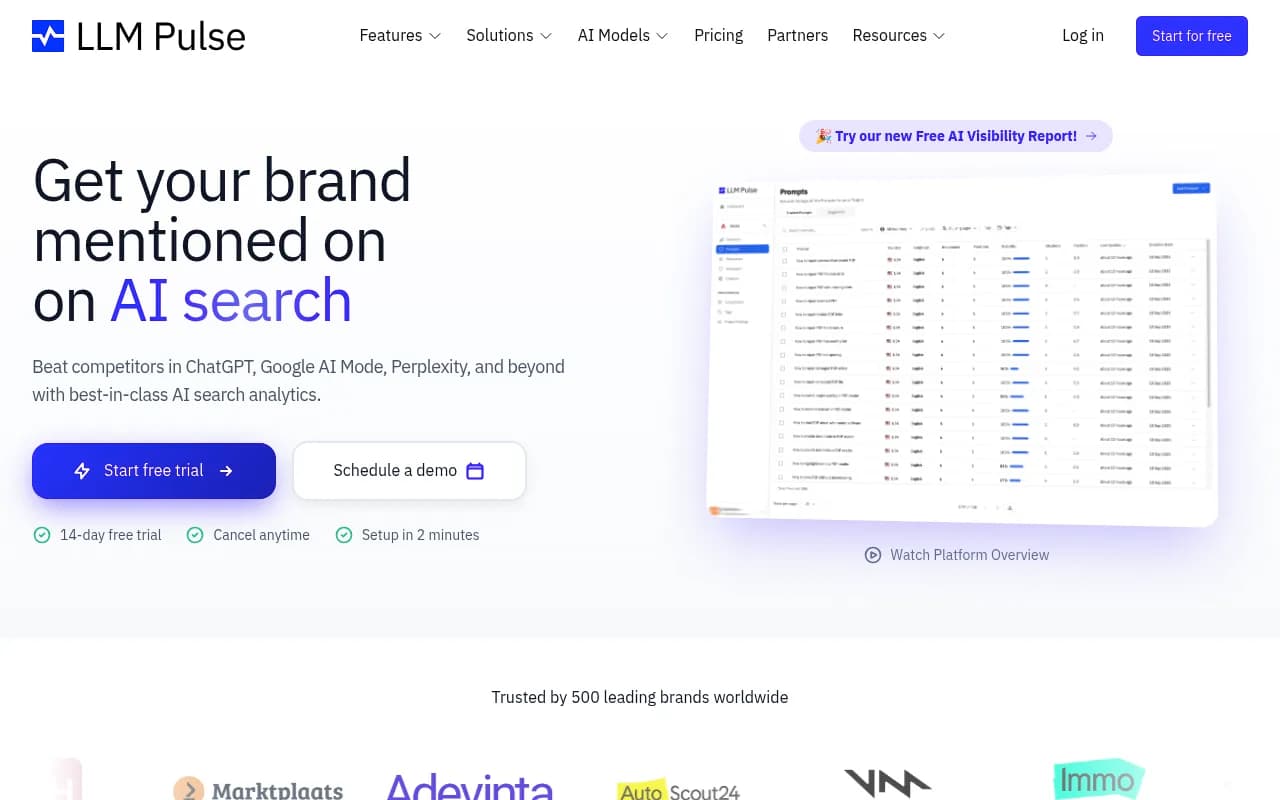
The Brand Sentiment feature is genuinely useful for B2B SaaS: it tracks not just whether you're mentioned but whether the AI's framing is positive, neutral, or negative. For companies in competitive categories where AI models sometimes add caveats ("X is popular but has a steep learning curve"), sentiment tracking helps you understand the full picture of how you're being represented.
Unlimited seats across all plans is a practical advantage for larger marketing teams. Starting price is around €49/month with a 14-day trial.
6. Peec AI
Peec AI's main differentiator is language coverage — 115+ languages with daily refresh, making it the strongest option for B2B SaaS companies with significant non-English buyer audiences.
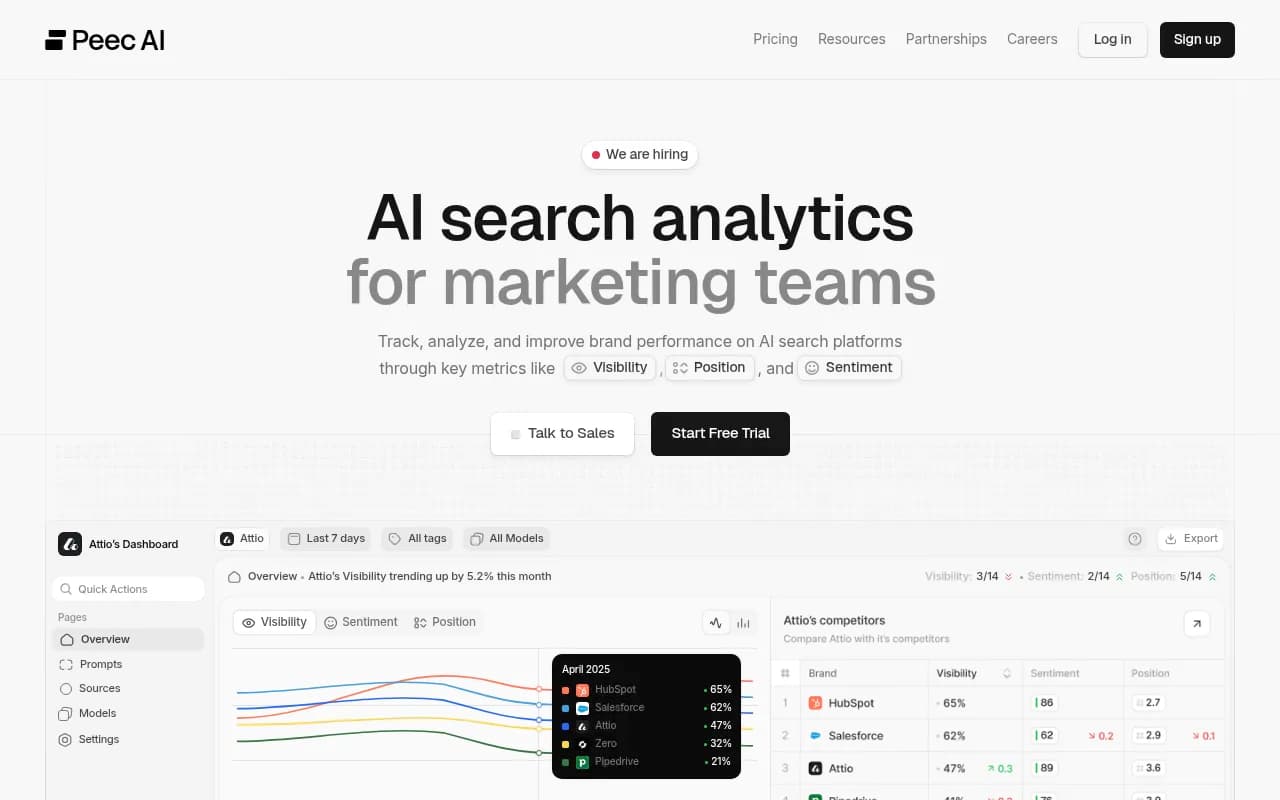
The platform covers three base AI models with add-ons available, which is more limited than Promptwatch or Profound but sufficient for teams primarily focused on ChatGPT and Perplexity. Daily refresh is a real advantage over Scrunch's 3-day cycle for fast-moving competitive categories.
Like most alternatives in this price range, Peec AI is monitoring-focused. Content optimization tools aren't part of the product.
7. Gauge
Gauge takes a different approach: white-glove onboarding across all pricing tiers, GA4 integration, and coverage across 7 AI platforms. For growth-stage B2B SaaS companies that don't have a dedicated SEO or GEO specialist, the hands-on support model is a real differentiator.
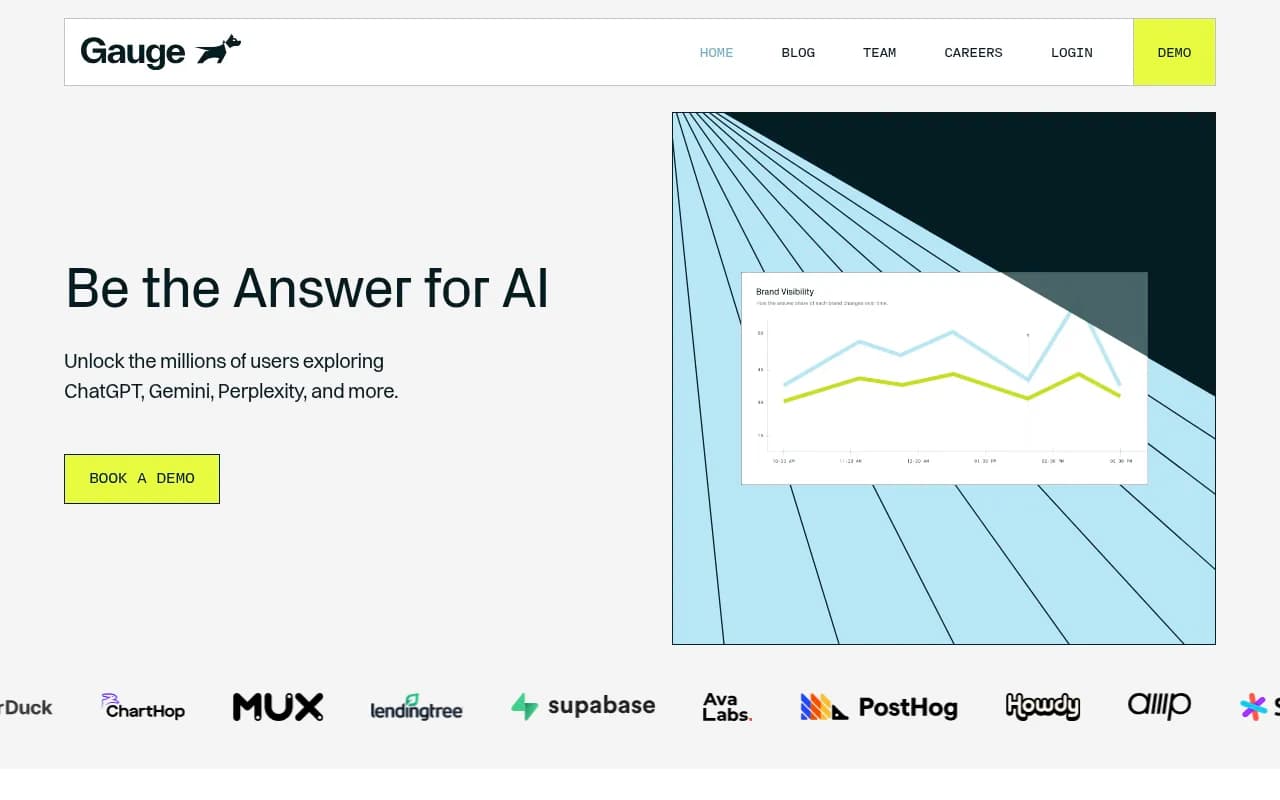
GA4 integration is particularly relevant for B2B SaaS teams that need to connect AI visibility data to existing analytics workflows. If your marketing team is already reporting in GA4, Gauge's integration means you don't have to build a separate reporting layer.
The platform is primarily monitoring-focused, but the analyst support model means you're not left figuring out what to do with the data on your own.
Platform comparison
| Platform | Starting price | AI models covered | Content generation | Crawler logs | Best for |
|---|---|---|---|---|---|
| Promptwatch | $99/mo | 10 | Yes (built-in AI writer) | Yes | Full action loop: gap analysis + content + tracking |
| Profound | $99/mo | 1 on Starter (ChatGPT) | No | No | Enterprise compliance (SOC 2, HIPAA) |
| AthenaHQ | Contact | 5+ | No | No | Mid-market monitoring with clean UX |
| Otterly.AI | ~$49/mo | 3 | No | No | Affordable entry-level monitoring |
| LLM Pulse | €49/mo | 5 (10+ Enterprise) | No | No | Sentiment tracking, unlimited seats |
| Peec AI | €85/mo | 3 base | No | No | Global brands, 115+ languages |
| Gauge | Contact | 7 | No | No | Growth-stage teams needing hands-on support |
| Scrunch AI | $250/mo | 4 on Core | No | No | Enterprise AXP (Enterprise-only) |
How to choose the right platform for your B2B SaaS team
The honest answer is that it depends on where you are in the GEO maturity curve.
If you're just starting to track AI visibility and want to understand the landscape before committing to a larger platform, Otterly.AI or LLM Pulse give you a low-cost entry point. You'll get basic monitoring data and can build a case internally for more investment.
If you're past the "we should probably track this" stage and into "we need to actually improve our AI search visibility," the monitoring-only platforms will frustrate you quickly. You'll know you're invisible for certain buyer research queries, but you won't know what to do about it. That's where the gap between Promptwatch and most competitors becomes concrete — the Answer Gap Analysis and built-in content generation mean you can move from insight to action without switching tools.
If compliance is a hard requirement (healthcare SaaS, fintech, HR tech), Profound's SOC 2 and HIPAA credentials make it the most defensible choice for procurement conversations.
If your buyers are distributed across multiple languages and geographies, Peec AI or LLM Pulse's language coverage matters more than content generation features.
One thing worth noting: the B2B SaaS buyer research query landscape is moving fast. Six months ago, most of these platforms didn't exist or were in early beta. The category is consolidating around platforms that can demonstrate a connection between AI visibility and actual pipeline — not just dashboards showing share-of-voice metrics. Whichever platform you choose, make sure it has some path to traffic attribution, even if that's a future roadmap item. Visibility data that can't be connected to revenue is hard to defend in a budget conversation.
The bottom line
Scrunch AI is a real product with real enterprise customers. But for B2B SaaS marketing teams who need to win buyer research queries — the "best [category] software for [use case]" prompts that drive actual purchase decisions — its monitoring-only approach and limited LLM coverage at non-Enterprise pricing create genuine friction.
The alternatives above solve different parts of that problem. If you want one recommendation: Promptwatch is the only platform on this list that covers the full cycle from gap identification to content creation to traffic attribution, at a price point that doesn't require an Enterprise contract to access meaningful features. That's a meaningful difference when your goal isn't just to measure AI visibility but to actually improve it.